In This Article
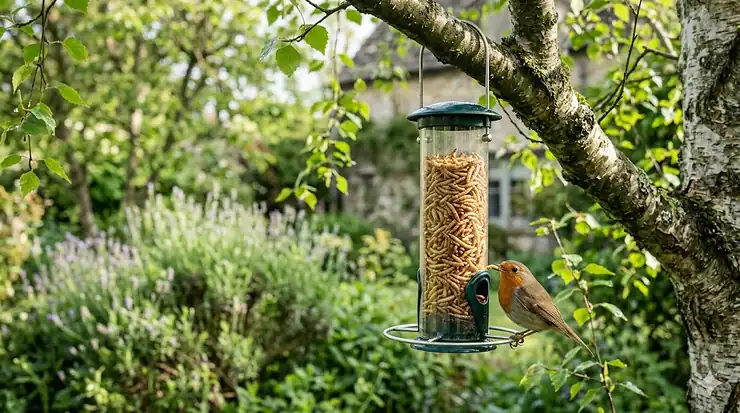
Picture this: a crisp February morning, and your garden suddenly erupts with the cheerful warble of robins, the acrobatic antics of blue tits, and the melodious song of blackbirds—all clamouring for one thing. Not your premium seed mix, not your expensive suet balls, but those humble, protein-packed morsels you’ve just scattered: dried mealworms for birds.
The RSPB now recommends offering small amounts of mealworms year-round as a safe feeding option, particularly during spring and summer when birds require high-protein foods whilst moulting. Following their 2026 guidance on seasonal feeding to combat trichomonosis disease, mealworms have become more crucial than ever for supporting our feathered friends’ health.
Mealworms are the larval form of the yellow mealworm beetle (Tenebrio molitor), containing significant nutrient content with every 100 grams providing 206 kilocalories and anywhere from 14 to 25 grams of protein. For garden birds facing habitat loss and declining insect populations, these nutritional powerhouses offer a lifeline—especially for insectivorous garden birds like robins, wrens, and blue tits.
In this comprehensive guide, I’ll walk you through the seven best mealworms for wild birds available on Amazon.co.uk in 2026, reveal the feeding secrets that’ll transform your garden into an avian paradise, and help you understand why choosing quality matters more than you might think. Whether you’re wondering where to buy mealworms UK gardeners trust, or seeking the perfect high protein bird food to support breeding season, you’re in the right place.
Quick Comparison Table
| Product | Size | Price Range | Protein Content | Best For | Rating |
|---|---|---|---|---|---|
| Chubby Mealworms Premium | 5L (775g) | £19.99-£24.99 | 55% | Year-round feeding | ⭐⭐⭐⭐⭐ 4.7/5 |
| RSPB Dried Mealworms | 500g-2kg | £13.99-£38.00 | 50-53% | Supporting conservation | ⭐⭐⭐⭐⭐ 4.6/5 |
| Superpet Premium | 5kg | £49.99-£59.99 | 53% | Bulk buyers | ⭐⭐⭐⭐ 4.5/5 |
| Extra Select | 800g-5L | £9.99-£19.99 | 48-52% | Budget option | ⭐⭐⭐⭐ 4.4/5 |
| UKGROW Wormys | 10L Bucket | £21.99-£29.99 | 52% | Families with multiple feeders | ⭐⭐⭐⭐ 4.6/5 |
| Hatortempt Premium | 1.6kg | £29.99-£34.99 | 51% | Mid-range quality | ⭐⭐⭐⭐ 4.5/5 |
| Pet Ting Natural | 5L (820g) | £17.99-£21.99 | 53% | First-time buyers | ⭐⭐⭐⭐ 4.3/5 |
💬 Just one click – help others make better buying decisions too!😊
Top 7 Dried Mealworms for Birds: Expert Analysis
1. Chubby Mealworms Premium Dried Mealworms (5 Litre Bucket)
When it comes to the best mealworms for wild birds, Chubby Mealworms consistently tops the charts amongst British garden bird enthusiasts. This family-run business has built a sterling reputation since 2003, and their 5-litre bucket delivers exceptional value.
Key Specifications:
- Weight: Approximately 775g (5L volume)
- Protein content: 55% with 28% essential fats
- 100% natural, packed with vitamins and high-grade edible oils
Price: £19.99-£24.99
These mealworms are EU-grown (Valencia, Spain) rather than sourced from China, which matters for quality consistency. UK buyers repeatedly praise their plump size and the enthusiastic response from robins, blue tits, and blackbirds. One customer noted her robin literally waits on the fence each morning for replenishment!
✅ Pros:
- Premium EU-sourced quality with full traceability
- Resealable bucket maintains freshness brilliantly
- Exceptional protein-to-fat ratio for breeding birds
❌ Cons:
- Slightly pricier than budget alternatives
- Volume can be misleading (5L ≠ 5kg)
2. RSPB Dried Mealworms (500g-2kg Options)
Supporting conservation whilst feeding your garden visitors? The RSPB Dried Mealworms tick both boxes. Available in recyclable pouches (100g, 200g, 500g) or cardboard boxes (2kg), every purchase directly supports the RSPB’s vital conservation work.
Key Specifications:
- Available sizes: 100g to 2kg
- Additive-free with natural beetle larvae goodness
- Protein content: 50-53% (typical analysis)
Price: £13.99 (500g) to £38.00 (2kg)
The RSPB specifically recommends soaking dried mealworms in water during spring and summer to make them easier for nestlings to eat and increase their water content. Their mealworms are particularly beloved by robins and blackbirds, with numerous UK customers reporting that these are the first items to disappear from bird tables.
✅ Pros:
- Supports RSPB conservation efforts
- Excellent quality control and safety standards
- Resealable, recyclable packaging
❌ Cons:
- Premium pricing (£38 for 2kg versus £27 for 12kg seed mix)
- Magpies and jackdaws can monopolise feeders
3. Superpet Dried Mealworms for Wild Birds (5kg Bulk Pack)
For serious bird feeders managing multiple feeding stations, Superpet’s 5kg pack offers unbeatable value. These mealworms undergo freeze-drying or heating processes that preserve maximum nutrition.
Key Specifications:
- Weight: 5kg bulk supply
- Typical analysis: 53% protein, 28% fat, 6% fibre, 5% moisture
- Fed on natural diet of grain, cereals, and vegetables
Price: £49.99-£59.99
Superpet provides detailed nutritional transparency, explaining that variations occur naturally depending on the mealworm’s age at drying and the drying method used. UK buyers appreciate the bulk format, with many noting it lasts 2-3 months even with daily feeding across multiple stations.
✅ Pros:
- Outstanding bulk value (approximately £10-£12 per kg)
- Comprehensive nutritional information provided
- Attracts diverse species from finches to thrushes
❌ Cons:
- Storage requires airtight container after opening
- Large quantity may overwhelm smaller gardens
4. Extra Select Dried Mealworms (800g Bag)
Extra Select has supplied premium nutrition since 1970, and their dried mealworms represent excellent mid-range quality. The 800g bag size hits the sweet spot for regular feeders who don’t need massive bulk.
Key Specifications:
- Weight: 800g in resealable bag
- Protein-rich formulation: 48-52%
- Suitable for robins through to swans
Price: £9.99-£14.99
British customers consistently rate these as “excellent value,” with starlings and blackbirds showing particular enthusiasm. The resealable bag maintains freshness well, and the company’s long-standing reputation provides peace of mind.
✅ Pros:
- Competitive pricing without quality compromise
- Perfect mid-range size for testing preferences
- Trusted brand with nearly 50 years’ experience
❌ Cons:
- Some reports of occasional live beetles (natural occurrence)
- Protein content slightly lower than premium brands
5. UKGROW Wormys Premium Dried Mealworms (10L Reusable Bucket)
The UKGROW Wormys 10L bucket combines generous capacity with practical reusable packaging. The substantial bucket can be repurposed for garden storage, tool organisation, or even DIY projects once empty.
Key Specifications:
- Volume: 10 litres (approximately 1.5-1.7kg)
- High-protein natural insect treat: 52%
- Fresh, crunchy texture birds adore
Price: £21.99-£29.99
UK families with children particularly appreciate the reusable bucket—one reviewer mentioned it’s now their daughter’s favourite toy storage! The mealworms themselves attract excellent variety, from tiny wrens to larger woodpeckers.
✅ Pros:
- Exceptional value for 10L capacity
- Sturdy reusable bucket (genuinely useful)
- Fresh batch quality with good crunch
❌ Cons:
- Volume measurements can confuse weight expectations
- Larger birds can dominate if placed in open feeders
6. Hatortempt Dried Mealworms (1.6kg Pack)
Hatortempt positions itself as versatile protein supplementation, suitable for wild birds, hedgehogs, and even bearded dragons. Their 1.6kg pack offers solid mid-range capacity.
Key Specifications:
- Weight: 1.6kg
- Multi-purpose formulation: 51% protein
- Natural processing without additives
Price: £29.99-£34.99
Whilst primarily marketed for wild birds, UK hedgehog rescuers also recommend these for supplementary feeding. The mealworms are consistently sized, which matters for smaller birds that struggle with overly large specimens.
✅ Pros:
- Versatile for multiple garden wildlife species
- Consistent sizing aids smaller bird species
- Good middle-ground capacity
❌ Cons:
- Slightly expensive per kilogramme versus bulk options
- Packaging less robust than bucket alternatives
7. Pet Ting Premium Dried Mealworms (5L Tub)
Pet Ting’s 5L tub delivers approximately 820g of 100% natural dried mealworms, ideal for first-time buyers exploring whether their garden birds will embrace mealworm feeding.
Key Specifications:
- Weight: Approximately 820g (5L volume)
- 100% natural with effective vitamins
- High-grade edible oils included
Price: £17.99-£21.99
UK customers report attracting blue tits, great spotted woodpeckers, robins, and starlings, with many soaking mealworms overnight to provide an extra special treat. The protein levels (53%) rival premium brands, making this excellent starter value.
✅ Pros:
- Perfect introduction size for new bird feeders
- Competitive pricing for quality offered
- Successfully attracts diverse British garden birds
❌ Cons:
- Some buyers expected more than 820g from “5 litres”
- Tub less durable than premium bucket options
✨ Don’t Miss These Exclusive Deals!
🔍 Take your garden bird feeding to the next level with these carefully selected products. Click on any highlighted item to check current pricing and availability on Amazon.co.uk. These tools will help you create authentic wildlife-watching experiences your family will love!
What Are Dried Mealworms for Birds?
Dried mealworms for birds represent one of nature’s most efficient protein delivery systems, cleverly packaged by human ingenuity. Despite their name, mealworms aren’t actually worms at all—they’re the larval form of the yellow mealworm beetle (Tenebrio molitor), a species of darkling beetle. These larvae undergo either freeze-drying or heating to remove moisture whilst preserving nutritional integrity.
The Life Cycle Connection
Understanding what you’re feeding helps appreciate why birds find them irresistible. In nature, the darkling beetle progresses through four life stages: egg, larva (the mealworm), pupa, and finally the adult beetle. Commercial dried mealworms capture larvae at their nutritional peak—when they’re bursting with protein and fats designed to fuel metamorphosis.
The drying process (either freeze-drying or gentle heating) removes approximately 60-65% moisture content, concentrating the nutrients whilst creating a shelf-stable product. This means a 100g serving of dried mealworms delivers protein density equivalent to roughly 300g of live larvae—remarkable efficiency for garden bird feeding.
Nutritional Powerhouse Profile
A typical analysis of dried mealworms reveals approximately 53% protein, 28% fat, 6% fibre, and 5% moisture. To put this in perspective, that’s higher protein content than most premium dog foods, and rivals beef for amino acid completeness. Mealworms contain significant nutrient content, with every 100 grams of raw larvae providing 206 kilocalories.
For robins feeding preferences and other insectivorous garden birds, this nutritional profile mirrors their natural diet of beetles, caterpillars, and other invertebrates. During breeding season when parent birds are making upwards of 100 feeding trips daily to satisfy ravenous chicks, these concentrated calories become absolutely crucial.
Why Robins, Blue Tits & Other Birds Go Mad for Mealworms
Ever wondered why a robin will ignore perfectly good sunflower hearts yet practically perform backflips for mealworms? The answer lies in millions of years of evolutionary programming combined with practical nutritional needs.
Natural Protein Sources Birds Recognise Instinctively
Some birds that feed on invertebrates and their larvae in spring and summer, such as house sparrows and blue tits, can switch their diet to seeds in winter, whilst others like dunnocks and wrens still need invertebrate food year-round. Dried mealworms trigger the same feeding response as live invertebrates because birds recognise the shape, size, and even the slight movement when wind catches scattered mealworms.
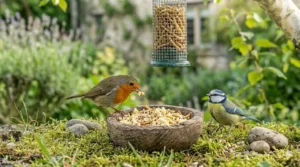
Robins, Britain’s beloved garden companions, are particularly enthusiastic mealworm consumers. Their natural diet comprises approximately 60% invertebrates, with beetles, caterpillars, and fly larvae forming the bulk. Mealworms slot perfectly into this preference, providing familiar texture and taste cues.
The Breeding Season Protein Crisis
Here’s where mealworms become genuinely transformative rather than merely supplementary. A pair of blue tits raising a typical brood of 8-12 chicks requires approximately 1,000 caterpillars daily to meet their offspring’s protein demands. With urbanisation reducing natural invertebrate populations by up to 75% in some areas, dried mealworms bridge this critical gap.
During spring and summer months, birds require high-protein foods especially whilst moulting, with mealworms being an excellent choice at this time. The RSPB specifically recommends soaking dried mealworms before offering during breeding season, making them easier for nestlings to swallow whilst boosting moisture content—a clever double benefit.
Which UK Garden Birds Love Mealworms Most?
Whilst robins steal the show, they’re far from alone in their mealworm appreciation:
Enthusiastic Consumers:
- Robins (absolute fanatics)
- Blue tits and great tits
- Blackbirds and song thrushes
- Wrens (particularly in winter)
- Starlings (competitive feeders)
- Great spotted woodpeckers
Occasional Visitors:
- Dunnocks
- Pied wagtails
- Nuthatches
- Coal tits and long-tailed tits
Unexpected Opportunists:
- House sparrows (increasingly interested)
- Greenfinches (when insects scarce)
How to Feed Dried Mealworms for Birds: Expert Techniques
Simply scattering mealworms and hoping for the best works, but employing strategic techniques dramatically increases success whilst reducing waste and deterring unwanted visitors.
The Soaking Method: When and Why It Matters
Dried mealworms can be soaked in water before offering to make them easier for chicks to eat and increase their water content. I recommend soaking during March through July (breeding season) and whenever temperatures exceed 20°C. The process is beautifully simple:
Quick Soak (15-30 minutes): Add dried mealworms to room-temperature water. They’ll plump up partially, becoming softer for young birds whilst retaining some structure. Perfect for robins and adult birds.
Deep Soak (Overnight): Leave mealworms in water refrigerated overnight. They’ll fully rehydrate, becoming almost indistinguishable from live larvae. Ideal for parent birds feeding tiny nestlings, though use within 24 hours as they spoil quickly.
Mealworm Feeders for Garden Birds: Choosing Wisely
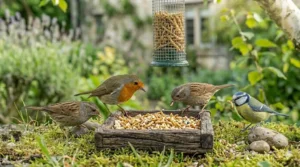
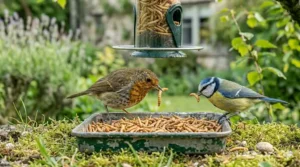
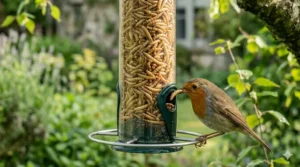
Research has confirmed there’s a higher risk of disease spreading on flat surfaces where contaminated food can collect, so the RSPB advises avoiding bird tables, window feeders, and feeders with trays. Instead, opt for:
Dedicated Mealworm Feeders: These typically feature clear plastic tubes with small feeding ports and perches. The Extra Select Flip-Top Mealworm Feeder (around £8-£12 on Amazon.co.uk) works brilliantly, allowing robins and tits to feed whilst deterring larger birds.
Hanging Mesh Feeders: Standard peanut feeders work excellently for dried mealworms. The mesh prevents spillage whilst allowing multiple birds to feed simultaneously.
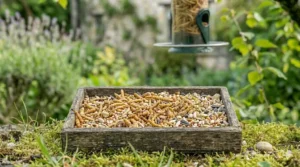
Ground Feeding Stations: Robins particularly prefer ground feeding. Use a raised platform (10-15cm high) with drainage holes to keep mealworms dry whilst making them accessible. Position near shrubs for quick escape routes.
Quantity Guidelines: How Much Is Enough?
Start conservatively and adjust based on consumption patterns. For a typical suburban garden:
- Beginning: 50-100g daily, split between morning (two-thirds) and afternoon (one-third)
- Established Feeding: 150-250g daily during peak spring/summer
- Winter Maintenance: 75-150g daily
One fascinating observation: robins often cache mealworms during winter, burying them in sheltered spots for later retrieval. Don’t panic if you see this behaviour—it’s natural food security strategy.
Top Benefits of Feeding Mealworms to Garden Birds
Beyond the obvious joy of watching avian acrobatics at your feeders, mealworm feeding delivers profound benefits for both birds and broader ecosystems.
Supporting Declining Insectivorous Species
Britain’s insectivore populations face alarming declines. Spotted flycatchers have crashed by 89% since 1970, whilst willow warblers show 58% reduction. Whilst habitat loss drives these trends, supplementary high protein bird food helps resident birds maintain healthy populations and successful breeding.
Wrens—those tiny, territorial bundles of ferocity—particularly benefit. They cannot switch to seed-based diets as easily as tits or finches, making winter mealworm provision potentially life-saving during harsh weather.
Enhancing Breeding Success Rates
Studies from the British Trust for Ornithology suggest gardens providing consistent protein sources through breeding season show measurably higher fledgling success rates. Parent birds spend less energy hunting, meaning more trips to the nest and better-fed chicks with improved survival odds.
Creating Wildlife Corridors in Urban Areas
Your garden, connected to neighbours’ gardens, forms vital wildlife corridors. By providing reliable nutrition, you’re essentially creating invertebrate-free “stepping stones” that allow birds to thrive despite reduced natural food sources. The Royal Horticultural Society emphasises that combining supplementary feeding with native plantings creates the most sustainable support for garden birds.
Research published by the British Trust for Ornithology shows how garden feeding has transformed British bird communities over the past 40 years, with species diversity at feeders increasing by nearly 50% since the 1970s.
Comparison: Dried vs Live Mealworms for Birds
The dried versus live debate sparks passionate discussion amongst British bird enthusiasts. Both have merits; understanding the distinctions helps make informed choices.
| Feature | Dried Mealworms | Live Mealworms |
|---|---|---|
| Shelf Life | 12-18 months (sealed) | 3-4 weeks (refrigerated) |
| Storage | Ambient, dry location | Refrigerator essential |
| Nutritional Density | Higher protein concentration | Higher moisture (68%) |
| Bird Response | Excellent once habituated | Immediate enthusiasm |
| Price per Kg | £8-£15 | £15-£30 |
| Convenience | Maximum | Requires feeding/maintenance |
| Breeding Season | Excellent (especially soaked) | Marginally superior |
Practical Recommendation: Use dried mealworms as your staple, introducing live mealworms occasionally during peak breeding season (May-June) for maximum impact. This strategy balances practicality, cost-effectiveness, and nutritional benefit.
Where to Buy Mealworms UK Gardeners Trust
Amazon.co.uk dominates the UK mealworm market for excellent reasons: competitive pricing, reliable delivery, and genuine customer reviews providing quality assurance. The seven products reviewed earlier represent the best balance of quality, value, and availability.
Alternative UK Sources Worth Exploring
RSPB Shop Direct: Shopping at shopping.rspb.org.uk ensures 100% of profits support conservation. Their seasonal offers (particularly autumn/winter) can rival Amazon pricing.
Chubby Mealworms Direct Website: Ordering from chubbymealworms.co.uk sometimes offers bulk discounts unavailable through Amazon, particularly for 10kg+ orders.
Local Garden Centres: Increasingly stocking dried mealworms, often from Extra Select or similar brands. Prices typically run 10-20% higher than online, but immediate availability appeals.
Red Flags When Shopping
Avoid products claiming impossibly high volumes at suspiciously low prices. If 5kg of mealworms costs £10, quality and sourcing are questionable. Similarly, beware vague “dried insects” labels—you want specifically Tenebrio molitor larvae, not mystery beetle species.
Storing Dried Mealworms: Maximising Freshness & Value
Proper storage transforms mealworms from good value to exceptional value, preventing moisture absorption, pest invasion, and nutrient degradation.
The Airtight Imperative
Once opened, transfer mealworms to genuinely airtight containers. Those clip-top Kilner jars work brilliantly, as do purpose-made pet food storage bins. Exposure to humidity causes mealworms to absorb moisture, becoming soft and eventually mouldy.
Storage Location Hierarchy:
- Optimal: Cool, dark cupboard (15-18°C)
- Acceptable: Pantry or garage (10-20°C)
- Avoid: Near radiators, in greenhouses, or anywhere temperature fluctuates dramatically
Beetle Prevention Strategy
Occasionally, despite best efforts, you’ll discover tiny black beetles in stored mealworms. These are simply adult darkling beetles that emerged from pupae mixed with dried larvae—completely harmless but indicating storage conditions allowed metamorphosis.
Prevention method: Freeze newly purchased mealworms for 48 hours before transferring to storage containers. This kills any pupae, preventing subsequent beetle emergence.
Shelf Life Expectations
Properly stored dried mealworms maintain peak quality for 12-18 months. Signs of degradation include:
- Powdery residue (breakdown)
- Musty smell (moisture absorption)
- Colour darkening beyond golden-brown
- Obvious mould growth
When in doubt, birds are excellent quality assessors. If they suddenly ignore previously popular mealworms, freshness has likely deteriorated.
Seasonal Feeding: When Birds Need Mealworms Most
Contrary to popular belief, birds benefit from mealworm provision year-round, though requirements vary significantly across seasons.
Spring (March-May): Breeding Season Peak Demand
This represents the absolute premium period for mealworm feeding. Parent birds are simultaneously feeding ravenous chicks whilst replacing worn feathers through moult—both processes demanding enormous protein input. During spring and summer, birds require high-protein foods especially whilst moulting.
Increase daily provision by 50-100% compared to winter baseline. Consider adding a midday top-up if morning offerings disappear rapidly.
Summer (June-August): Continued but Modified Feeding
Following scientific evidence review, the RSPB recommends continuing to offer small amounts of mealworms whilst pausing seeds and peanuts between 1 May and 31 October to prevent disease transmission. This positions mealworms as the primary safe supplementary food during summer months.
Soak mealworms more frequently during hot weather, providing vital hydration alongside nutrition.
Autumn (September-November): Building Winter Reserves
Migrant visitors like redwings and fieldfares arrive seeking food. Whilst these thrush species prefer berries, resident robins and wrens stock up on mealworms, building fat reserves for winter’s challenges.
Winter (December-February): Survival Support
Cold weather increases birds’ metabolic rates by up to 30%, meaning they require more food simply to maintain body temperature. Mealworms’ high fat content (28%) provides concentrated calories that seeds can’t match.
Position feeders in sheltered locations to prevent rain/snow contamination, and refresh offerings more frequently to prevent freezing.
Common Mealworm Feeding Mistakes to Avoid
Even experienced bird feeders stumble into these surprisingly common pitfalls. Learning from others’ mistakes saves both frustration and mealworms.
Mistake #1: Introducing Too Many Mealworms Initially
Birds require time to recognise dried mealworms as food, especially if they’ve never encountered them before. Dumping 500g into feeders on day one typically results in wastage and attracting unwanted visitors (rats particularly love mealworms).
Solution: Start with 25-50g daily for the first week. Patience rewards—once robins discover your mealworm station, word spreads through the garden bird community remarkably quickly.
Mistake #2: Failing to Address Larger Bird Dominance
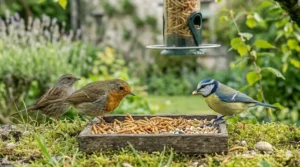
Magpies, jackdaws, and pigeons will monopolise unprotected mealworm feeders, leaving smaller birds hungry and frustrated. One Amazon reviewer noted magpies clearing their tray feeder “in minutes.”
Solution: Invest in caged feeders where outer mesh prevents large bird access whilst allowing robins and tits through. Position feeders near dense shrubs providing quick escape routes for nervous smaller species.
Mistake #3: Neglecting Hygiene Protocols
Bird feeder hygiene is very important—brush off debris every time you put out fresh food and scrub feeders with mild disinfectant solution weekly. Mealworm feeders collect residue and bird droppings that can harbour harmful bacteria. If you notice sick or dead birds, report them to the Garden Wildlife Health project, a collaborative initiative between the Zoological Society of London, BTO, Froglife, and RSPB.
Hygiene Schedule:
- Daily: Remove uneaten mealworms if rain-soaked
- Weekly: Scrub feeders with hot water and diluted disinfectant
- Fortnightly: Rotate feeder locations to prevent ground contamination buildup
Special Considerations: Mealworms for Specific Bird Species
Whilst most UK garden birds appreciate mealworms, certain species show particular preferences and requirements worth accommodating.
Robin Feeding Preferences: The Mealworm Connoisseurs
Robins exhibit fascinating territorial behaviour around mealworm feeders. Unlike gregarious starlings or tits, robins prefer solitary feeding. Position a small dedicated robin feeder slightly away from main feeding stations, ideally on a low platform (30-50cm high) near protective cover.
Robins also demonstrate remarkable individual recognition of feeding schedules. Many UK gardeners report “their” robin appearing precisely when they emerge to replenish feeders each morning—a delightful interaction strengthening the human-wildlife connection.
Blue Tits & Great Tits: Acrobatic Opportunists
The tit family approaches mealworms with characteristic enthusiasm and ingenuity. They’ll use virtually any feeder design, though hanging feeders allowing aerial approaches suit their acrobatic prowess.
Interestingly, tits often cache mealworms during winter, wedging them into bark crevices or under roof tiles for later retrieval. This behaviour explains why consumption seems to spike suddenly—they’re stock-piling rather than immediately eating.
Blackbirds & Thrushes: Ground Feeding Specialists
Blackbirds rarely use hanging feeders, preferring ground-based offerings. Scatter mealworms across raised platforms or directly on clean paving where you can monitor for contamination. These larger birds consume mealworms rapidly but also defend feeding areas aggressively from smaller species.
Budget vs Premium: Does Quality Really Matter?
The price spectrum for dried mealworms spans from approximately £10/kg (budget brands) to £20+/kg (premium offerings). Understanding what drives these differences helps evaluate whether premium products justify increased expenditure.
Quality Factors Affecting Price
Source Location: EU-sourced mealworms (like Chubby’s Valencia-grown larvae) typically cost 20-30% more than Asian imports. European production follows stricter hygiene and feed protocols, resulting in more consistent quality.
Processing Methods: Freeze-drying preserves more nutrients than standard heat-drying but increases production costs. The nutritional difference isn’t dramatic (perhaps 5-10% enhanced retention) but appeals to dedicated bird enthusiasts.
Size Consistency: Premium brands sort larvae by size, removing very small or damaged specimens. This matters for smaller birds that struggle with oversized mealworms.
Value Analysis: When Premium Makes Sense
For most garden bird feeders managing 2-3 feeders and purchasing 2-5kg annually, mid-range products like RSPB or Superpet deliver optimal value. The quality-to-price ratio proves most favourable, and any marginal benefits from ultra-premium options don’t justify the cost differential.
However, if you’re:
- Running multiple feeding stations (5+ locations)
- Specifically targeting rare or declining species
- Purchasing bulk volumes (10kg+)
Then premium brands’ consistency and EU sourcing may warrant the investment.
Environmental & Ethical Considerations
As consciousness around environmental impact grows, bird feeders increasingly question the sustainability of their feeding practices. Dried mealworms present an interesting ethical proposition.
Sustainability Profile of Mealworm Production
Mealworms have been investigated as ingredients in livestock feed due to high protein content and balanced amino acid profiles, though life cycle assessment studies show mealworm protein performs worse than soybean or fish meal protein in terms of energy use, greenhouse gas emissions, acidification, and eutrophication.
This sounds concerning initially, but context matters. Compared to traditional vertebrate protein (chicken, beef), mealworm farming shows dramatically lower environmental impact. The studies compare mealworms against absolute best-case scenarios (sustainable fisheries, optimised soy production), and when we’re discussing bird feeding rather than human nutrition, the equation shifts.
UK vs Imported Mealworms: The Provenance Question
EU-sourced mealworms (particularly those from established UK suppliers like Extra Select) reduce transportation emissions whilst supporting European farming economies. Chinese-sourced mealworms travel approximately 8,000 miles to UK retailers, adding significant carbon footprint.
However, many budget brands import from China because UK/EU production hasn’t scaled sufficiently to meet demand at competitive prices. This represents a genuine ethical tension between environmentalism and accessibility.
Pragmatic Approach: If budget allows, choose EU-sourced products. If not, buying any dried mealworms and feeding garden birds represents a net positive for urban biodiversity, outweighing the transportation impact concerns.
Combining Mealworms with Other Bird Foods
Mealworms shine brightest as part of diversified feeding strategies rather than sole nutritional sources. Strategic combinations attract wider species variety whilst meeting broader nutritional needs.
The Perfect Feeding Station Setup
Station 1 (Protein Focus):
- Mealworm feeder (hanging)
- Ground platform with scattered mealworms
- Suet feeder with insect-enriched blocks
Station 2 (Seed Variety):
- Nyjer seed feeder (goldfinches)
- Sunflower heart feeder (general seed-eaters)
- Mixed seed ground scatter
Station 3 (Specialist Foods):
- Peanuts in mesh feeder
- Fat balls
- Fruit (apples, raisins during winter)
Position stations 3-5 metres apart to reduce competition and allow different species to feed comfortably.
Seasonal Combination Strategies
Spring/Summer (Breeding Season): Priority to mealworms (60% of feeding effort), supplemented with sunflower hearts and limited suet. The RSPB recommends pausing seed and peanut feeding between May and November but continuing small amounts of mealworms and fatballs.
Autumn/Winter (Survival Support): Balance mealworms (40%) with high-fat foods like suet pellets and sunflower hearts. Add dried fruit (soaked to prevent choking) for thrushes.
Frequently Asked Questions About Dried Mealworms for Birds
❓ How long do dried mealworms last once opened?
❓ Can dried mealworms harm garden birds if fed incorrectly?
❓ Do dried mealworms attract rats or other pests to gardens?
❓ Are dried mealworms suitable for feeding hedgehogs as well as birds?
❓ How quickly will garden birds discover newly offered mealworms?
Conclusion: Transforming Your Garden with Dried Mealworms for Birds
We’ve journeyed through the fascinating world of dried mealworms for birds, from understanding their nutritional powerhouse status to selecting the seven finest products available on Amazon.co.uk in 2026. The evidence is compelling: whether you’re supporting declining insectivorous garden birds, enhancing breeding success for robins and blue tits, or simply craving closer connections with wildlife, dried mealworms deliver transformative results.
The best mealworms for wild birds balance quality, value, and ethical sourcing. Products like Chubby Mealworms Premium and RSPB Dried Mealworms represent the gold standard, whilst budget-conscious feeders find excellent value with Extra Select or Pet Ting offerings. Whatever your choice, you’re participating in vital conservation, creating wildlife corridors through urban landscapes, and providing natural protein sources birds desperately need.
Remember the key principles we’ve explored: store mealworms properly in airtight containers, soak them during breeding season for easier nestling consumption, maintain rigorous feeder hygiene, and embrace patience as birds discover your offerings. Combined with strategic feeder placement and seasonal feeding adjustments, these practices maximise both bird welfare and your enjoyment.
As the RSPB emphasises through their Feed Safely, Feed Seasonally campaign, thoughtful supplementary feeding makes genuine conservation difference. Your garden, however modest, becomes refuge and restaurant combined—a small but significant victory for Britain’s beleaguered bird populations.
So fill those feeders, grab your binoculars, and prepare for the daily theatre that is garden bird feeding. That robin eyeing you from the fence? He knows what you’ve got, and he’s absolutely ready for his next high protein bird food delivery.
Recommended for You
- 7 Best Niger Seed for Goldfinches UK: 2026
- 7 Best Fat Balls for Garden Birds UK 2026
- 7 Best Wild Bird Food Options UK 2026
Disclaimer: This article contains affiliate links. If you purchase products through these links, we may earn a small commission at no additional cost to you. Prices shown are approximate and may vary.
✨ Found this helpful? Share it with your mates! 💬🤗
