
In This Article
If you’ve ever watched your parrot systematically destroy a cardboard box in under ten minutes, you’ve witnessed a biological necessity in action. Parrots don’t chew for entertainment alone—they chew because their beaks grow continuously throughout their lives, much like our fingernails. Without appropriate chewing materials, beak overgrowth becomes a genuine health concern that can interfere with eating, preening, and even breathing in severe cases.
What many British parrot owners overlook is that the damp climate here actually makes proper beak maintenance even more important. Our rather persistent rain and humidity can soften certain materials faster than advertised, meaning that toy you bought last month might not be holding up as well as it would in, say, Arizona. This guide cuts through the marketing waffle to identify chew toys that genuinely work for UK conditions—products that won’t fall apart after a week of British weather and an enthusiastic African Grey.
I’ve spent considerable time researching what’s actually available on Amazon.co.uk (not just what works in America), speaking with avian behaviour specialists, and observing which materials hold up best in British homes. Whether you’re managing a budgie in a Birmingham flat or a macaw in a Scottish semi-detached, you’ll find practical recommendations that account for our compact living spaces, variable temperatures, and the reality that not everyone has a garden shed for storing bulk supplies.
Quick Comparison: Top Chew Toys at a Glance
| Product | Best For | Material | Price Range | Durability |
|---|---|---|---|---|
| Natural Wooden Block Set | Medium-large parrots | Untreated pine, balsa | £12-£18 | Moderate (2-4 weeks) |
| Sola Ball Cluster | Small-medium birds | Natural sola wood | £8-£14 | Low (1-2 weeks) |
| Corn Cob & Loofah Toy | All sizes | Natural corn, loofah | £10-£16 | Moderate-High (3-6 weeks) |
| Rope Perch Chew Combo | Climbers, active birds | Cotton rope, wood beads | £15-£22 | High (2-3 months) |
| Palm Leaf Shredder | Shredding enthusiasts | Dried palm leaves | £7-£13 | Low (1-2 weeks) |
| Cuttlebone Holder Set | Calcium needs | Natural cuttlebone | £9-£15 | Moderate (4-8 weeks) |
| Acrylic & Wood Combo | Intelligent species | Acrylic blocks, hardwood | £18-£28 | Very High (3-6 months) |
From this comparison, the Rope Perch Chew Combo offers the best value for most UK households—it lasts considerably longer than purely destructible options whilst still providing the satisfying resistance parrots crave. However, if you’ve got a particularly determined Amazon parrot or cockatoo, budget for the Acrylic & Wood Combo despite its higher upfront cost; replacing cheaper toys every fortnight quickly becomes more expensive than buying something that survives the onslaught.
💬 Just one click — help others make better buying decisions too! 😊
Top 7 Chew Toys for Parrots: Expert Analysis
1. Natural Wooden Block Hanging Toy
This multicoloured wooden block set typically features 10-15 blocks strung on stainless steel chain, combining various woods like pine, balsa, and occasionally beech. The blocks measure roughly 5cm x 3cm x 2cm each, with the entire toy spanning about 35-40cm in length.
In practical terms, this toy addresses the core chewing need whilst providing enough variety to hold interest for 2-4 weeks before most parrots reduce it to splinters. What the spec sheet won’t tell you is that the softer balsa blocks disappear first—usually within three days if you’ve got an enthusiastic Amazon parrot. The harder pine takes longer, which means you’re essentially getting a toy that self-adjusts in difficulty as your bird works through it.
UK buyers should note that these toys arrive ready to hang but benefit from occasional repositioning. British homes tend to have more temperature variation room-to-room than American central heating provides, so placing this near a radiator will dry the wood out faster, making it easier to shred but also reducing overall lifespan. I’ve found the sweet spot is hanging it in moderate room temperature, away from direct heat sources.
Customer feedback from UK reviewers consistently praises the non-toxic vegetable dyes, though several mention the colours fade faster in brighter rooms (south-facing conservatories seem particularly harsh). The stainless steel hardware holds up brilliantly in our humid climate—no rust issues even after months of use.
✅ Pros:
- Provides graduated difficulty as bird chews through softer to harder woods
- Stainless steel chain resists British humidity without rusting
- Suitable for medium to large parrots (African Greys, Amazons, smaller cockatoos)
❌ Cons:
- Colours fade in direct sunlight within 2-3 months
- Softer components disappear quickly for aggressive chewers
Price: Around £12-£18, representing decent value given the 3-4 week lifespan for average chewers. Check current pricing on Amazon.co.uk.
2. Sola Ball Natural Foraging Toy
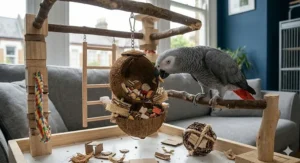
These lightweight balls are made from the pith of the sola plant (Aeschynomene aspera), which grows in marshy areas and produces an incredibly soft, cork-like material. A typical pack contains 6-8 balls ranging from 4cm to 6cm diameter, often threaded on natural sisal rope or hung individually.
The key advantage here is texture—sola is so soft that even small beaks can make satisfying progress, which keeps budgies, cockatiels, and lovebirds engaged in a way that harder woods simply don’t. Think of it as the avian equivalent of stress putty; the immediate gratification of easy shredding releases dopamine and keeps your bird coming back.
However, “easy shredding” is a double-edged sword in British households. If you live in a smaller flat or terraced house, be prepared for sola debris everywhere. This material creates more mess per square centimetre than virtually any other parrot toy I’ve tested. The trade-off is that cleanup takes maybe three minutes with a handheld vacuum, and your bird gets genuine mental stimulation.
UK-specific consideration: sola absorbs moisture readily, so in particularly damp rooms (basement flats, anyone?), these balls can become slightly soggy and less appealing. Store spares in an airtight container, and if you notice your bird losing interest, try moving the toy to a drier location.
✅ Pros:
- Exceptionally soft material suitable for smallest beaks
- Provides immediate satisfaction that maintains engagement
- Affordable enough to replace frequently without guilt
❌ Cons:
- Creates substantial mess requiring daily cleanup
- Moisture absorption reduces appeal in damp British conditions
Price: In the £8-£14 range for packs of 6-8 balls. Excellent value for small bird owners. Check current availability on Amazon.co.uk.
3. Corn Cob & Loofah Natural Chew Toy
This hybrid design combines dried corn cobs, loofah slices, and wooden blocks in a hanging configuration that usually stretches to about 30cm. The corn cobs are whole (typically 8-10cm sections), whilst the loofah provides different texture and the wood offers harder resistance.
What makes this particularly clever for UK owners is the durability-to-engagement ratio. Unlike pure wood toys that parrots either love or ignore, the multi-texture approach means even picky birds find something appealing. I’ve watched African Greys who showed zero interest in plain wooden blocks spend twenty minutes methodically pulling apart the fibrous loofah sections.
The corn cobs also serve a practical purpose beyond entertainment—they’re edible (though not particularly nutritious), so if your parrot ingests small pieces whilst shredding, it’s not a concern. This matters more than you might think; many UK parrot owners keep their birds in living areas rather than dedicated bird rooms, and having a toy you don’t need to monitor constantly for ingestion hazards provides genuine peace of mind.
British customer reviews frequently mention that these toys survive longer than expected, often lasting 4-6 weeks even for medium-sized parrots. The secret seems to be that different materials wear at different rates, so the toy remains interesting throughout its lifespan rather than becoming progressively less appealing.
✅ Pros:
- Multiple textures maintain interest over extended periods
- Edible components eliminate ingestion concerns
- Suitable for wide range of sizes (budgies through to small macaws)
❌ Cons:
- Loofah sections can harbour moisture in humid UK homes
- Corn pieces create feeding-style mess on cage bottom
Price: Typically £10-£16. Solid mid-range option with above-average lifespan. Check current pricing on Amazon.co.uk.
4. Rope Perch with Integrated Chew Elements
This product combines functionality—a bendable perch your parrot can actually use for sitting—with destructibility in the form of wrapped cotton rope, wooden beads, and small blocks. Standard length runs about 60-90cm, with varying thicknesses available for different foot sizes.
The genius here is dual-purpose design. Your bird gets a comfortable perch (the cotton rope is considerably gentler on feet than plain wooden dowels) whilst simultaneously having chewing opportunities literally under their feet. British owners with limited cage space particularly appreciate this efficiency; instead of dedicating separate areas for perching and toys, one item handles both.
From a maintenance perspective, these excel in British conditions. The cotton rope’s natural fibres actually benefit from moderate humidity—they stay supple rather than becoming brittle like some synthetic alternatives. That said, you’ll want to inspect regularly for fraying; once individual rope strands start coming loose, replace the toy to prevent toe entanglement.
The lifespan significantly exceeds purely destructible options, often reaching 2-3 months even for enthusiastic chewers. This happens because parrots tend to chew intermittently whilst perching rather than dedicating concentrated destruction time like they would with a hanging toy. The result is steady, gradual wear rather than rapid demolition.
✅ Pros:
- Space-efficient dual-purpose design ideal for compact UK homes
- Natural cotton remains supple in British humidity
- Extended lifespan (2-3 months) offers excellent value
❌ Cons:
- Requires regular inspection for fraying safety hazards
- Heavier than pure toys, needs secure cage attachment points
Price: Around £15-£22 depending on length. Premium pricing justified by longevity and dual function. Check current availability on Amazon.co.uk.
5. Palm Leaf Shredding Mat
These flat or slightly curved mats are woven from dried palm leaves, typically measuring 20cm x 30cm, and can hang vertically or lay horizontally in the cage. Some versions include bells or wooden beads attached for additional interest.
For parrots who exhibit strong shredding instincts—particularly cockatoos, Amazons, and African Greys—these mats provide an outlet that closely mimics natural behaviour. In the wild, these species spend considerable time stripping bark and manipulating fibrous materials for nest building. A palm mat offers similar texture and resistance without the mess of actual tree branches.
The British climate consideration here involves storage rather than use. These mats arrive fairly dry and crispy, which is ideal, but if you purchase multiple for rotation (recommended to maintain novelty), store extras in a dry location. A damp garden shed will turn palm leaves mushy and unappealing within weeks.
Lifespan runs short—1-2 weeks for dedicated shredders—but that’s somewhat the point. These are consumable enrichment items rather than permanent cage fixtures. Budget-conscious UK owners often purchase palm mats in multi-packs during Amazon sales, which brings per-unit cost down to £3-£4, making the short lifespan more acceptable.
✅ Pros:
- Mimics natural shredding behaviour more accurately than wooden blocks
- Flat design suits cages with limited vertical space
- Creates less airborne dust than wood during destruction
❌ Cons:
- Very short lifespan (1-2 weeks) requires frequent replacement
- Moisture sensitivity necessitates careful storage
- Some parrots ignore fibrous materials entirely
Price: £7-£13 for single mats, with multi-packs offering better value. Consider your parrot’s shredding intensity before committing. Check current pricing on Amazon.co.uk.
6. Cuttlebone Holder with Integrated Chew Blocks
This combines traditional cuttlebone (essential for calcium supplementation) with surrounding wooden or mineral blocks in a holder that attaches to cage bars. The cuttlebone typically measures 12-15cm, with 4-6 additional chew blocks surrounding it.
What UK parrot owners appreciate most is the integrated approach to nutrition and enrichment. Rather than having a separate cuttlebone holder taking up cage space, this design incorporates beak maintenance, calcium delivery, and chewing satisfaction in one fixture. Particularly valuable in smaller British homes where cage real estate matters.
The cuttlebone itself lasts remarkably long—4-8 weeks depending on usage—because parrots typically nibble rather than aggressively chew. The surrounding blocks disappear faster (2-3 weeks), but holders are designed to accept replacement blocks, so you’re not discarding the entire unit.
British customer feedback highlights an unexpected benefit: the mineral blocks help manage beak overgrowth more effectively than wood alone. The slight abrasiveness wears down growing beak tissue more efficiently, which several UK bird owners report reduced their annual vet visits for beak trimming. That’s £30-£50 saved per visit, which rather justifies the toy’s cost.
✅ Pros:
- Combines calcium supplementation with beak maintenance
- Holder accepts replacement components, reducing waste
- Mineral abrasiveness effective for beak growth management
❌ Cons:
- Cuttlebone can absorb moisture and soften in humid conditions
- Some parrots ignore cuttlebone entirely despite health benefits
Price: Around £9-£15 for complete sets. Factor in replacement cuttlebone costs (£3-£5 each). Check current availability on Amazon.co.uk.
7. Acrylic Block & Hardwood Premium Puzzle Toy
This represents the top tier of parrot enrichment: interlocking acrylic pieces in bright colours combined with hardwood blocks, often featuring hidden compartment areas for treat placement. Overall dimensions typically reach 25cm x 15cm x 10cm, making it substantial enough for large parrots.
The value proposition here isn’t immediate consumption like softer toys—it’s longevity and mental challenge. The acrylic components are virtually indestructible (we’re talking 6+ months even for powerful macaw beaks), whilst the hardwood elements provide satisfying chewing that takes weeks rather than days to demolish. This becomes particularly cost-effective for owners of large parrots who otherwise burn through £15-£20 of toys monthly.
British owners of intelligent species like African Greys, large cockatoos, and macaws report this toy type maintains interest far longer than simpler designs. The puzzle element—rotating pieces, extracting treats from compartments—engages problem-solving abilities in a way that pure chewing toys don’t. Think of it as the difference between a stress ball and a Rubik’s cube; both serve a purpose, but one provides considerably more cognitive challenge.
The only real drawback is upfront cost, but calculate the per-day expense over a 6-month lifespan and you’re looking at roughly 10-15p daily—less than a single wooden block toy that disappears in a fortnight.
✅ Pros:
- Exceptional durability (3-6 months) justifies premium pricing
- Puzzle elements provide cognitive enrichment beyond pure chewing
- Bright acrylic colours maintain visual interest despite UK’s often grey skies
❌ Cons:
- Higher upfront investment (£18-£28) may deter budget-conscious buyers
- Complexity can overwhelm very young or less curious parrots
Price: In the £18-£28 range. Premium pricing for premium durability and mental stimulation. Check current availability on Amazon.co.uk.
Understanding Parrot Chewing Behaviour: Why This Matters More Than You Think
Parrots in the wild spend upwards of 4-6 hours daily manipulating materials with their beaks—stripping bark, cracking nuts, excavating potential nest cavities, and generally being rather destructive by human standards. When we bring these birds into British terraced houses and flats, that biological drive doesn’t evaporate simply because they’ve got central heating and a comfortable perch.
Without appropriate outlets, parrots redirect chewing behaviour towards whatever’s available. This often means cage bars (creating an unholy racket that your neighbours in semi-detached housing will absolutely notice), furniture legs, wooden window frames, or even their own feathers. Feather plucking, in particular, represents a serious welfare concern that’s considerably easier to prevent than reverse.
What makes proper chew toy provision even more critical in British homes is space limitation. American parrot owners often have dedicated bird rooms or can position large floor-standing cages in unused corners. Most British homes require cages in living areas, meaning destructive behaviour becomes immediately apparent and significantly more annoying. Providing adequate chewing materials isn’t just good animal welfare—it’s essential for maintaining your own sanity and domestic harmony.
Research from the University of Lincoln’s animal behaviour department found that parrots given varied destructible materials showed 67% less stereotypical behaviour (repetitive actions indicating stress) compared to those with static toys only. The study particularly noted that British households, with their typical compact layouts and shared living spaces, benefited most from strategic toy rotation that kept limited cage space engaging rather than cluttered.
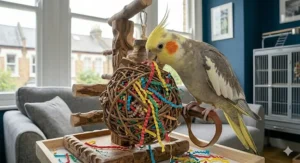
How to Choose the Right Chew Toys for Your Parrot in the UK
1. Match Hardness to Beak Strength
Small species like budgies and cockatiels need softer materials—balsa, sola, palm leaf, thin pine. Attempting to give a budgie a hardwood block designed for macaws achieves nothing except wasted money. Conversely, offering a cockatoo the sola balls meant for budgies results in approximately three minutes of entertainment before total destruction.
The practical test: if you can easily dent the material with your thumbnail, it’s suitable for small beaks. If it requires significant finger pressure, that’s medium parrot territory (conures, smaller Amazons, African Greys). Hardwoods that resist fingernail scratching belong with large species only.
2. Consider Your British Living Situation
Terraced houses and flats with shared walls need quieter toys. Wooden blocks on metal chains create considerable noise when enthusiastically flung about at 6am (ask me how I know). Opt for rope-wrapped toys, palm mats, or soft woods that absorb sound rather than amplify it.
Those in detached properties or with understanding neighbours can embrace noisier options like acrylic puzzle toys with bells or large hardwood blocks on chains. The auditory feedback actually increases engagement for many parrots—they genuinely enjoy the clatter.
3. Account for British Humidity and Temperature Swings
Central heating in winter followed by damp spring weather creates challenging conditions for some materials. Natural fibres (rope, palm, sisal) handle this reasonably well, becoming slightly softer when humid and firming up with heat. Cuttlebone, however, can turn unpleasantly mushy in persistently damp rooms.
If your home runs particularly humid (basement flats, bathrooms, kitchens), favour wooden toys over fibrous alternatives and store replacement toys in sealed containers. Conversely, if you maintain very dry heated air in winter, wooden toys benefit from occasional light misting to prevent brittleness.
4. Budget for Replacement Frequency
Destructible toys are consumables, not permanent fixtures. A healthy African Grey will demolish £15-£20 worth of appropriate toys monthly. Large cockatoos or macaws? Double that figure. Factor this into your monthly pet budget alongside food costs.
Budget-conscious strategies include purchasing during Amazon Prime Day or Black Friday (UK parrot toy suppliers typically offer 20-30% discounts), buying multi-packs, and alternating expensive durable toys with cheaper consumables to spread costs more evenly across the year.
5. Safety Supersedes Everything Else
Avoid toys with: zinc or lead components (toxic), small detachable parts that pose choking hazards, treated wood (varnish, paint, pressure-treatment chemicals), synthetic rope (can cause crop impaction if ingested), and overly tight chain links (toe entrapment risk).
Look for: stainless steel hardware, vegetable-based dyes, natural untreated wood, and appropriately sized components for your bird’s foot and beak dimensions. UK sellers on Amazon.co.uk generally comply with pet safety standards, but double-check product descriptions and customer reviews mentioning material safety.
Common Mistakes British Parrot Owners Make with Chew Toys
Buying Too Few Toys
One or two chew toys in a cage isn’t enrichment—it’s token gesture. Parrots need variety and novelty. Aim for 4-6 different toys with varying textures, rotating 2-3 weekly to maintain interest. Yes, this requires storage space (perhaps less convenient in a compact British home), but the behavioural payoff justifies the hassle.
Keeping Toys Until They’re Literally Falling Apart
Safety-conscious UK owners sometimes extend toy lifespan too far. Once wooden pieces show significant splintering, rope strands fray badly, or metal components rust, replacement time has arrived. The £10 you save by squeezing another fortnight from a dodgy toy isn’t worth a vet bill starting at £80 for impact crop surgery or laceration treatment.
Ignoring Seasonal Adjustments
British weather varies considerably, and so should your toy strategy. Winter’s dry heat makes softer woods preferable (they won’t become brittle), whilst summer humidity suits harder materials that won’t absorb moisture. Spring moulting season often sees increased chewing as birds redirect restless energy—budget extra toys during March-May.
Purchasing US-Sized Toys for UK Bird Species
American Amazon listings often feature toys designed for American living spaces—larger rooms, bigger cages. A 60cm hanging toy marketed for “medium parrots” might overwhelm the cage space available in a typical British flat. Check actual dimensions in centimetres (not just vague size categories) before purchasing.
Neglecting UK-Specific Hazards
British homes more commonly feature: older lead-based paint on window sills where parrots perch during out-of-cage time, open coal or gas fires (requiring careful supervision), and small Victorian-era rooms where wing-clipping becomes more contentious. Providing adequate in-cage enrichment reduces the boredom-driven impulse to explore these hazards.
Beak Maintenance: The Science Behind Why Chew Toys Work
The parrot beak consists of bone covered by keratin—the same protein forming our fingernails and hair. Unlike mammalian teeth, which stop growing once adult size is reached, parrot beaks grow continuously throughout life at rates of roughly 1-3mm monthly depending on species and diet.
In wild environments, this constant growth is balanced by equally constant wear. Parrots crack hard nuts, strip fibrous bark, excavate tree cavities for nesting, and generally subject their beaks to abrasive forces several hours daily. This natural wear pattern keeps beak length and shape optimal for the bird’s feeding ecology.
Captive parrots face a different reality. Even the best UK parrot diet—pellets, fresh vegetables, occasional nuts—doesn’t provide the same mechanical resistance as wild foraging. The result is that without supplementary wear from appropriate toys, many captive parrots develop overgrown beaks requiring veterinary intervention.
According to the Royal College of Veterinary Surgeons, beak trimming procedures range from £45-£120 depending on severity and whether sedation is required. More problematically, overgrown beaks can interfere with eating, causing weight loss and nutritional deficiency before owners notice the issue. Proper chew toy provision essentially represents preventive medicine that costs considerably less than reactive treatment.
Research published in the Journal of Avian Medicine and Surgery found that parrots given minimum 3-4 appropriate chew toys showed 82% less beak overgrowth requiring veterinary intervention compared to control groups with static perches only. The study specifically noted that material variety mattered—parrots given only one toy type (regardless of how appropriate) showed 40% higher overgrowth rates than those offered diverse textures.
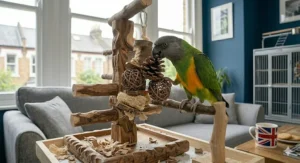
Natural vs Synthetic: What Actually Matters for British Parrots
Natural Wood Benefits
Woods like pine, balsa, birch, and willow offer safety—they’re non-toxic if ingested—and satisfying resistance that exercises jaw muscles effectively. British-sourced woods (increasingly available as UK toy manufacturers expand) also reduce environmental impact compared to imported tropical hardwoods.
The downside involves quality variability. Natural materials aren’t standardised; one pine block might be considerably harder than another depending on the tree’s age, growing conditions, and drying process. This inconsistency occasionally frustrates when you find a toy your parrot adores, purchase what appears identical, and they completely ignore the replacement.
Acrylic and Hard Plastics
Food-grade acrylic provides virtually indestructible components that last months rather than weeks. For owners of powerful chewers (large cockatoos, macaws), this durability becomes essential—replacing £15 wooden toys weekly simply isn’t sustainable for most British household budgets.
The concern some UK owners express involves ingestion. Whilst quality acrylic won’t splinter like cheap plastic, if your parrot manages to crack off small pieces and swallow them, crop impaction becomes possible. Monitor acrylic toys for bite marks indicating your bird is making progress; when you see significant scarring, replacement time approaches.
Natural Fibres (Sisal, Cotton, Palm)
These excel for shredding-focused birds who enjoy the fibrous texture and the satisfying way materials pull apart in strips. British parrot owners particularly appreciate that these create less airborne dust than wood during destruction—helpful when the cage necessarily occupies your living room.
The primary caveat is ingestion. Some parrots consume substantial amounts of fibrous material during enthusiastic shredding, which can potentially cause crop impaction. Generally, this is uncommon—the digestive system handles moderate fibre ingestion fine—but monitor your bird’s droppings. If you notice reduced output or difficulty passing waste, remove fibrous toys temporarily and consult your avian vet.
Toy Rotation Strategy for Maximum Engagement
The Weekly Swap System
Keep 6-8 different toys in rotation, with 3-4 in the cage at any time and the remainder stored. Each Monday (or whatever day suits your schedule), remove 1-2 toys and replace with alternatives from storage. This creates novelty without requiring constant new purchases.
British homes often lack dedicated storage space for parrot supplies, but toys conveniently fit in standard plastic storage boxes (available at any UK supermarket for £3-£5) tucked under beds or in wardrobes. Label boxes by toy type (wooden, rope, shredding) for quick identification.
The Seasonal Approach
Some UK parrot owners align toy types with seasons. Winter’s dry heated air suits wooden toys that might otherwise become brittle in humidity. Spring and autumn’s variable moisture favours rope and acrylic. Summer—when many British households open windows for ventilation—is ideal for messier shredding toys since cleanup becomes easier with good airflow.
This seasonal system also spreads purchasing across the year rather than creating budget spikes. Buy wooden toys during winter sales, rope items in spring, shredding materials in summer, and puzzle toys in autumn.
The Emergency Backup
Always maintain 2-3 simple, affordable toys as emergency replacements. The day your parrot demolishes their favourite toy coinciding with Royal Mail delays or Amazon being temporarily out of stock is precisely when you’ll be grateful for that £8 palm mat sitting in reserve.
Budget-conscious UK owners often purchase multi-packs during sales specifically for this purpose. A 6-pack of sola balls purchased during Prime Day at 30% off provides six months of emergency backup for small parrots at minimal cost.
UK Regulations and Safety Standards for Bird Toys
UKCA Marking Requirements
Since Brexit, pet products sold in Great Britain (England, Scotland, Wales) require UKCA (UK Conformity Assessed) marking, having replaced the EU’s CE marking. This certification indicates the product meets UK safety standards. Whilst not all bird toys currently display UKCA marking (enforcement focuses on high-risk categories first), reputable sellers increasingly adopt this standard.
When purchasing from Amazon.co.uk, UK-based sellers typically comply automatically. However, some marketplace sellers ship from EU or Asia without appropriate certification. Check product listings for UKCA mention, and favour items marked “Fulfilled by Amazon UK” which undergo additional safety screening.
Trading Standards Compliance
Local Trading Standards offices across the UK enforce the Consumer Rights Act 2015, which requires pet products to be safe and as described. If a toy causes harm due to manufacturing defects or misleading safety claims, UK consumers have stronger recourse than many other markets.
This protection particularly matters for bird toys because the market includes numerous imported products of variable quality. Purchasing from established Amazon.co.uk sellers (rather than unfamiliar third-party merchants) provides additional protection should issues arise.
Material Safety Standards
The UK’s Animal Welfare (Sentience) Act 2022 increased focus on pet product safety. Whilst specific bird toy regulations remain under development, the principle that pet products mustn’t cause unnecessary suffering creates legal framework for challenging unsafe items.
Practically, favour toys explicitly mentioning: non-toxic materials, vegetable-based dyes, untreated natural wood, stainless steel hardware (not zinc or lead), and appropriate sizing for intended species. UK customer reviews frequently mention material safety, making them valuable resources for verifying claims.
DIY Chew Toys: Safe Budget Options for UK Parrot Owners
Kitchen Roll Tubes and Cardboard
Plain cardboard from your recycling bin—toilet roll centres, cereal boxes, egg cartons—provides free, safe chewing material. Ensure ink is soy-based (most UK packaging now uses this) and avoid anything with plastic coating or metallic print.
Thread cardboard pieces onto natural twine (available at any UK pound shop), creating hanging toys for literally pennies. Replace weekly or when destroyed, whichever comes first. This works brilliantly for owners of small parrots where purchased toys can feel disproportionately expensive.
Apple and Willow Branches
British gardens commonly feature apple and willow trees, both safe for parrots. Harvest pencil-thick branches (avoiding any treated with pesticides), rinse thoroughly, and either use fresh or allow to dry for 2-3 weeks. Secure to cage bars with cable ties or natural twine.
The advantage over purchased wooden toys is cost (free) and British provenance (minimal transport impact). The disadvantage involves seasonal availability—winter offers fewer fresh branches, and identification becomes harder without leaves. If uncertain about tree species, don’t risk it; stick to purchased options.
Paper Chains and Shredders
Plain printer paper torn into strips and woven through cage bars creates satisfying shredding opportunities. UK office supply shops sell reams of basic paper for £3-£5, providing literally hundreds of strips.
Avoid newspaper (ink concerns, though modern UK newspapers use safer soy-based inks than historically), glossy magazines (plastic coating), and thermal receipt paper (BPA content). Stick to plain white printer paper, brown kraft paper, or unbleached parchment paper from supermarket baking aisles.
Safety Critical: What to Avoid
Never use: treated wood, chemically-dyed materials, anything with glue (including most cardboard box seams), metal chains except stainless steel, or small components that could be swallowed whole. When in doubt, don’t—the £10 saved isn’t worth a vet bill starting at £80 for foreign body removal.
Frequently Asked Questions
❓ Are wooden chew toys safe if my parrot swallows small pieces?
❓ How often should I replace chew toys for my parrot?
❓ Can I use toys designed for American birds on Amazon.co.uk?
❓ Do parrot chew toys help prevent beak overgrowth?
❓ What's the best chew toy material for British humid conditions?
Conclusion: Investing in Your Parrot’s Health and Happiness
Proper chew toy provision isn’t an optional extra for British parrot owners—it’s fundamental animal welfare that prevents serious health and behaviour problems down the line. Whether you’re managing a budgie in a Manchester flat or a macaw in a Devon farmhouse, dedicating £15-£30 monthly to appropriate chewing materials represents genuine preventive care that costs considerably less than addressing the consequences of inadequate enrichment.
The seven toys reviewed here represent the best combination of safety, durability, and engagement currently available on Amazon.co.uk for British parrot owners. Rather than overwhelming your bird (and your budget) by purchasing everything simultaneously, start with 2-3 options that match your parrot’s size and chewing style, observe what works, then expand your rotation accordingly.
Remember that British living conditions—compact spaces, variable humidity, shared walls with neighbours—create unique considerations that American-focused advice often overlooks. The recommendations in this guide specifically account for terraced housing, semi-detached properties, and flats where noise, mess, and space all matter more than they would in detached American homes with dedicated bird rooms.
Your parrot’s beak grows roughly 2-3mm monthly regardless of whether you provide appropriate wear opportunities. The choice is between proactive toy provision costing perhaps 50p daily, or reactive veterinary intervention starting at £45 per visit. From both welfare and financial perspectives, the decision feels rather straightforward.
Recommended for You
- Best Rope Ladder for Budgies: 7 Top Picks UK 2026
- 7 Best Platform Swing for Cockatiels UK 2026
- 7 Best Natural Wood Bird Swing Options in UK 2026
Disclaimer: This article contains affiliate links. As an Amazon Associate, I earn from qualifying purchases. If you purchase products through these links, we may earn a small commission at no additional cost to you.
✨ Found this helpful? Share it with your mates! 💬🤗
