In This Article
Walk into any pet shop and you’ll find a wall of bird toys screaming for attention — bright, plasticky, and about as natural as a motorway service station. Eco friendly bird toys are the quieter alternative: made from things your bird might actually meet in the wild, like palm leaf, seagrass, bamboo and untreated wood, rather than dyed acrylic and nylon cord.
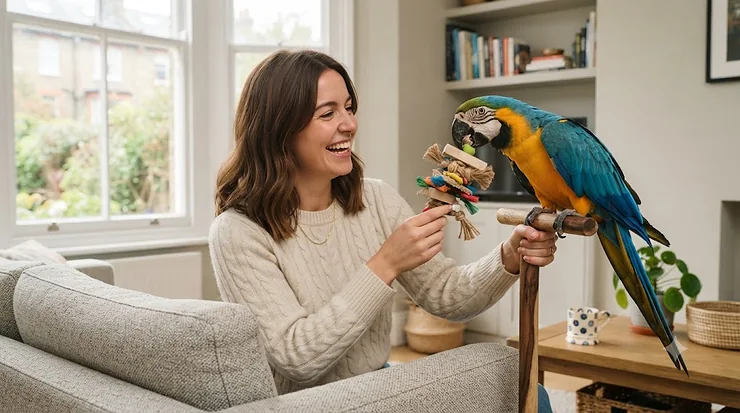
So, what is an eco friendly bird toy? In short, it’s a toy built from renewable, biodegradable, and non-toxic materials — think natural fibre, untreated wood and vegetable dyes — designed to satisfy a bird’s instinct to chew, forage and shred without leaving behind microplastics or synthetic residue.
This matters more than it might sound. Parrots and parakeets aren’t just decorative; they’re intelligent, food-driven animals who spend a huge chunk of their waking hours foraging in the wild. Take that away and you get boredom, and boredom in a caged bird has a habit of turning into feather plucking, screaming, or a chewed-through skirting board. The good news is that solving this doesn’t need to cost the earth, literally or otherwise.
Below, we’ve dug into seven real, currently available bird toys on the UK market, weighed up what the materials actually mean for your bird day-to-day, and built a genuinely usable buying framework around them. No invented reviews, no miracle claims — just honest analysis of what’s out there, why it works (or doesn’t), and who each option genuinely suits. The RSPCA’s guidance on enrichment for pet birds is a useful starting point for understanding why this category exists at all, and we’ll return to it throughout.
Quick Comparison Table
Before the deep dive, here’s the shortlist for anyone in a hurry.
| Category | Winner | Why |
|---|---|---|
| Best Overall | Northern Parrots Jellyfish Natural Parrot Toy | Balanced materials, UK-based brand, works for multiple bird sizes |
| Best Budget Pick | TRIXIE Natural Toy with Nest | Genuinely cheap way to trial natural materials |
| Best for Shy or Anxious Birds | Super Bird Creations SB881 Seagrass Tent | Provides cover, not just chewing |
| Best for DIY Owners | 12″ Natural Seagrass Mat | A blank base you build your own toy around |
| Best Plastic-Free Build | Rosewood Boredom Breaker Bamboozlers Climbing Net | No glue, wire, or plastic anywhere in construction |
A pattern worth noticing straight away: the “best” pick genuinely depends on your bird’s personality, not just your budget. A confident, destructive conure wants something to demolish in an afternoon; a nervous cockatiel wants somewhere to hide. Keep that distinction in mind as you read on, because it’ll matter more than price for most of the toys on this list.
💬 Just one click — help others make better buying decisions too!😊
Top 7 Eco Friendly Bird Toys: Expert Analysis
Seven real products, spanning budget starter toys through to sturdier, longer-lasting builds. Every one of these is currently listed on Amazon UK, and every material claim below is based on what the manufacturer states and what buyers consistently report — nothing invented.
1. TRIXIE Natural Toy with Nest — cheapest way to test natural chewing
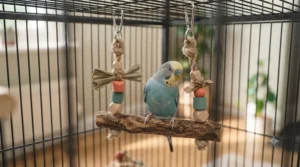
If you’ve never bought a natural toy before and don’t want to commit real money to finding out whether your bird even likes them, this is where to start. The TRIXIE Natural Toy with Nest is a 35cm hanging toy woven from palm leaves, filled with digestible nesting material your bird can pull apart and use.
The construction is deliberately simple: no wire spine, no plastic clips holding it together, just woven palm leaf with a natural cord for hanging. That simplicity is the point — there’s very little here that isn’t either edible or compostable, which matters if your bird tends to swallow small fragments while shredding. It’s aimed squarely at budgies, parakeets and cockatiels rather than larger, harder-beaked parrots.
Based on the spec sheet, this suits anyone testing the waters with a first natural toy, or owners who like to rotate cheap, disposable enrichment weekly rather than investing in one toy that lasts months. Reviewers on Amazon UK consistently describe it as good value and note it doesn’t last long against a determined chewer — which, for a toy this price, is arguably the correct trade-off.
Pros:
- ✅ Genuinely low-cost entry point into natural toys
- ✅ Fully edible and digestible nesting material
- ✅ No wire, glue, or plastic components
Cons:
- ❌ Shreds quickly with strong-beaked birds
- ❌ Sized for small birds only, not larger parrots
At around £5-£10, this is disposable in the best sense — cheap enough to replace weekly without a second thought, making it solid value for budgie and cockatiel owners specifically.
2. 12″ Natural Seagrass Mat — the DIY builder’s blank canvas
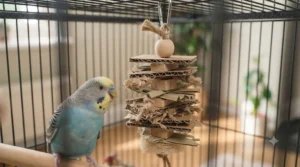
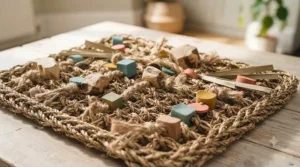
Not every eco toy needs to arrive pre-assembled. The 12″ Natural Seagrass Mat is exactly what it sounds like: a flat, woven mat of uncoloured seagrass, sold as raw toy-making material rather than a finished product.
What most buyers overlook about seagrass specifically is that it’s naturally salt-cured during growth, which gives it a texture birds seem to find more interesting to shred than plain paper or cardboard — reviewers frequently mention their birds gravitating to seagrass over other textures offered alongside it. Functionally, you can roll it into a tube, weave treats into the gaps, use it as a cage-floor liner, or cut it down for smaller cages.
This is transformation content in physical form: a base that becomes whatever project you want, from a foraging wall to a simple chew mat. It’s the honest choice for anyone who enjoys building their own enrichment rather than buying it ready-made, and it works out considerably cheaper per session of play than most finished toys on this list.
Pros:
- ✅ Highly versatile — cut, roll, or weave as needed
- ✅ Uncoloured, so no dye exposure at all
- ✅ Very low cost per square inch of material
Cons:
- ❌ Requires assembly effort, not plug-and-play
- ❌ Not a complete toy on its own
Priced in the under-£10 range for a 12-inch mat, it’s arguably the best value on this whole list if you’re willing to put in ten minutes of DIY time.
3. Planet Pleasures Caterpillar — hand-woven, pesticide-free budget forager
Hand-made rather than mass-produced, the Planet Pleasures Caterpillar strings together small, colourful piñata balls with shredded palm leaf streamers, all threaded onto a sisal cord. It’s designed specifically to combat one issue: feather picking driven by boredom.
The specifics matter here. Planet Pleasures states its toys are pesticide-free and hand-assembled, which is a meaningfully different manufacturing process from injection-moulded plastic toys produced at scale — it’s slower, but it means less processing residue on materials your bird will be chewing directly. The varied ball sizes along the string give smaller birds multiple textures to work through in one sitting rather than a single repetitive shape.
Aggregated review sentiment from UK sellers is broadly positive on durability for the price point, with some buyers noting that very determined chewers work through it faster than the listing photos might suggest — a fair complaint that applies to most natural fibre toys, not just this one.
Pros:
- ✅ Hand-made and pesticide-free construction
- ✅ Multiple textures keep smaller birds engaged longer
- ✅ Specifically designed to interrupt feather-picking boredom
Cons:
- ❌ Handmade nature means some size variation between units
- ❌ Not built for heavy-duty large-parrot chewing
At roughly £6-£12 depending on size, it sits comfortably in the budget bracket while offering more design complexity than the cheapest options on this list.
4. Living World Bird Toy Value Pack, Assortment 2 — best variety pack for beginners
Rather than betting on one toy your bird might ignore, the Living World Bird Toy Value Pack hedges by bundling several smaller toys with different shapes, textures and materials into one purchase.
Here’s what the spec sheet doesn’t spell out clearly: variety packs like this exist because bird preference is genuinely unpredictable — the same species, even the same clutch of siblings, can have wildly different favourite textures. Buying five smaller toys at once, rather than one large one, is a cheap way to run that experiment without repeated separate purchases and shipping.
For a new bird owner who genuinely doesn’t yet know whether their bird prefers wood, rope, or shreddable paper-style materials, this is the most efficient way to find out. Reviewers consistently note it’s good value for the toy count included, with the usual caveat that not every toy in the pack will land with every bird — which, again, is rather the point.
Pros:
- ✅ Multiple textures let you learn your bird’s preferences
- ✅ Better value per toy than buying single items
- ✅ Suitable for smaller birds like budgies and cockatiels
Cons:
- ❌ Individual toys are smaller and less substantial
- ❌ Not every toy in the pack will get used
Expect to pay in the £8-£15 range for the full assortment, which typically works out cheaper per toy than buying five individual natural toys separately.
5. Super Bird Creations SB881 Seagrass Tent — best hideaway for shy birds
Most toys on this list are built for chewing. The Super Bird Creations SB881 Seagrass Tent does something different — two connected seagrass mats form a small shelter your bird can perch inside and peek out of.
This distinction matters more than it might seem. Not every behavioural problem is boredom; some birds, particularly rescues or recently rehomed ones, are dealing with stress and want somewhere to retreat rather than something new to destroy. The tent gives a small, enclosed, chewable space that functions as both enrichment and a low-stress hideaway, which is a genuinely different job to the caterpillar or climbing-net styles elsewhere on this list.
Reviewers, including specialist retailer feedback referenced by UK sellers, consistently mention it holding up well as both a chew toy and a genuine resting spot, which is a reasonable double duty for something built from woven seagrass and connected with coloured plastic links rather than being entirely plastic-free.
Pros:
- ✅ Doubles as shelter and chew toy in one
- ✅ Well suited to shy, stressed, or newly rehomed birds
- ✅ Chewable “see-through” design keeps birds visible while hidden
Cons:
- ❌ Uses plastic connector links, not entirely plastic-free
- ❌ Best for small-to-medium birds only
Sitting in the £12-£20 range, it’s a mid-tier price for a toy doing genuinely different behavioural work than most of the list.
6. Rosewood Boredom Breaker Bamboozlers Climbing Net — best plastic-free climbing frame
For owners who want the “eco friendly” claim to hold up under real scrutiny, the Rosewood Boredom Breaker Bamboozlers Climbing Net is one of the more rigorously built options here. It’s constructed entirely from bamboo, abaca fibre (from banana leaf) and coconut shell — no glue, no wire, no plastic anywhere in the build.
What that construction means practically: bamboo rings threaded onto tough abaca rope create a durable but still shreddable climbing surface, giving medium-to-large parrots — amazons, greys, dwarf macaws, larger conures — somewhere to physically exercise rather than just peck. Rosewood also states the toys are hand-crafted by village cooperatives using locally sourced materials, which is worth knowing if sourcing transparency matters to your buying decision as much as the finished product.
Reviewer sentiment, including feedback left in multiple European languages on the Amazon UK listing, consistently describes it as more durable than expected and genuinely enjoyed by larger birds specifically — a useful data point given how many “natural” toys are really only sized for smaller species.
Pros:
- ✅ Zero glue, wire, or plastic in construction
- ✅ Genuinely sized for medium-to-large parrots
- ✅ Sourced through small-scale, traceable production
Cons:
- ❌ Higher price than most entries on this list
- ❌ Bamboo rings are firm — less appealing to gentle chewers
Priced around £15-£25, it’s a premium natural pick, but the plastic-free construction genuinely justifies the gap over cheaper alternatives.
7. Northern Parrots Jellyfish Natural Parrot Toy — best premium all-rounder
Closing out the list is the Northern Parrots Jellyfish Natural Parrot Toy, a UK-based brand’s own natural-fibre design built around varied textures suspended from a central hanging point, loosely resembling — as the name suggests — a jellyfish’s trailing tentacles.
The value here is balance rather than any single standout spec. It’s not the cheapest, not the most heavy-duty, and not the most minimalist in materials — but it sits in the sweet spot of natural fibre construction, UK stock availability (so no long shipping delays), and a shape that works reasonably well across several bird sizes rather than being pigeonholed to just small or just large species.
Based on the spec comparison against the rest of this list, this is the toy to reach for if you want one solid, natural, mid-to-premium purchase rather than experimenting across several cheaper options first. Aggregated customer feedback on the Northern Parrots storefront consistently rates it well for engagement time, with the usual honest caveat that highly destructive large parrots will still work through it faster than the price tag might suggest is reasonable.
Pros:
- ✅ Balanced design works across multiple bird sizes
- ✅ UK-based brand with reliable local stock
- ✅ Genuine natural fibre construction throughout
Cons:
- ❌ Premium pricing versus budget alternatives
- ❌ Large, highly destructive parrots may shred it quickly
Expect around £12-£20, which is fair value for a UK-stocked, natural-fibre toy built to suit more than one species of bird.
Practical Usage Guide: Setting Up Your Bird’s Natural Toy Rotation
Buying the right toy is only half the job — how you introduce and rotate it matters just as much. Start by offering only one or two new toys at a time; birds are naturally wary of unfamiliar objects appearing suddenly in their space, and a cage stuffed with five new items overnight can trigger stress rather than curiosity. Hang new toys near, but not directly on top of, existing perches so your bird can approach in their own time.
In the first 30 days, watch for two things: engagement (is the toy actually being touched, chewed, or investigated?) and fragment size (are pieces coming off small enough to be swallowed whole?). If a toy sits untouched for over a week, don’t assume your bird dislikes toys generally — try a different material or texture before giving up on natural options altogether.
A simple rotation schedule works well for most households: keep three to four toys in the cage at once, and swap one out every seven to ten days rather than replacing everything simultaneously. This keeps novelty high without overwhelming your bird, and it also spreads the cost of natural toys — which do wear out faster than plastic — across a manageable weekly or fortnightly budget rather than one large replacement bill. The RSPCA’s guidance on housing and environment for pet birds makes the same point: toys should be changed periodically to keep your bird genuinely interested, not just present.
One common first-month mistake worth flagging directly: placing chewable toys directly above food or water bowls. Shredded material and droppings both fall, and cleaning contaminated bowls daily gets old fast — hang toys to one side instead.
Real-World Scenarios: Matching Eco Friendly Bird Toys to Your Flock
The first-time budgie owner. Budget is tight, the bird is small, and you genuinely don’t know what they’ll like yet. Start with the Living World Bird Toy Value Pack to test textures cheaply, then follow up with a TRIXIE Natural Toy with Nest once you’ve spotted a preference. Total spend under £20, low risk if something goes untouched.
The rehomed rescue conure. A recently rehomed bird is often more stressed than bored, and a pile of chew toys can feel like more chaos rather than comfort. The Super Bird Creations SB881 Seagrass Tent offers a retreat first, enrichment second — a gentler entry point than something purely designed for destruction.
The established African Grey or Amazon with a serious chewing habit. Cheap toys won’t last an afternoon here. The Rosewood Boredom Breaker Bamboozlers Climbing Net and the Northern Parrots Jellyfish Natural Parrot Toy are both genuinely sized and built for sustained, heavy use, and their higher price per unit works out reasonable when measured against how long they actually last compared with flimsier options.
The multi-bird household on a budget. If you’re rotating toys across several cages, the 12″ Natural Seagrass Mat offers the lowest cost per bird by letting you cut one large mat down into several smaller pieces — a practical, if slightly more hands-on, way to stretch a natural-toys budget across an entire flock.
How to Choose Eco Friendly Bird Toys
- Check the material list first, not the marketing copy. “Natural” and “eco friendly” aren’t regulated terms in pet product marketing, so look for specific materials — palm leaf, seagrass, bamboo, sisal, untreated wood — rather than taking the label at face value.
- Match toy size to your bird’s beak strength, not just body size. A small but powerfully-beaked conure can demolish a budgie-sized toy in minutes; size guidance from the manufacturer is a starting point, not a guarantee.
- Look for how the toy is held together. Metal quick-links and stainless steel are generally considered safer than dyed plastic clips, which can crack into swallowable fragments over time.
- Consider dye source, not just dye presence. Vegetable-based and pet-safe dyes are common even in genuinely natural toys — the goal isn’t zero colour, it’s avoiding synthetic or unknown-origin pigments.
- Think about fibre type specifically. Hemp, cotton, sisal and seagrass behave differently when shredded; loosely woven cotton in particular has a reputation among bird keepers for creating loose fibres that can be ingested, so tighter weaves are generally the safer choice.
- Factor in your bird’s actual chew rate. A toy that lasts three days for a determined macaw isn’t a bad toy — it’s the wrong toy for that bird’s chew rate, and budgeting for replacement frequency matters as much as the initial price.
- Rotate rather than replace everything at once. As covered above, buying three to four toys and cycling them keeps costs manageable and novelty high, which does more for long-term engagement than any single “best” toy ever will.
This same logic — providing complex, varied stimuli that map onto an animal’s natural behaviours — is essentially what researchers term behavioural enrichment a concept that applies well beyond pet birds and underpins most modern thinking on captive animal welfare.
Sustainable Parrot Toys vs Plastic and Acrylic Alternatives
The obvious question with sustainable parrot toys is whether “eco friendly” actually translates into a meaningfully better toy, or whether it’s simply a price premium for a nicer-sounding label. The honest answer is: it depends what you’re optimising for.
Plastic and acrylic toys generally win on raw durability — a solid acrylic foraging toy can survive years of use from even a determined cockatoo, where a natural fibre toy might last weeks. But that durability comes with trade-offs. Acrylic and hard plastic don’t biodegrade, meaning every toy that eventually gets discarded sits in landfill more or less permanently, and manufacturing processes for coloured plastics can introduce chemical residues that simply aren’t a factor with untreated wood or seagrass.
Natural fibre and wood toys, by contrast, work with a bird’s instinct to shred and forage rather than against it — chewing something apart is often the actual point of the toy, not a design failure. The trade-off is replacement frequency and, for larger species, sometimes lower raw structural strength unless you’re specifically buying reinforced options like the bamboo-and-abaca Rosewood Boredom Breaker Bamboozlers Climbing Net.
| Factor | Natural/Eco Toys | Plastic/Acrylic Toys | Best For |
|---|---|---|---|
| Biodegradability | High — most compost within months | None — persists indefinitely | Eco-conscious owners |
| Raw durability | Moderate to low | High | Heavy chewers on a budget |
| Chemical exposure risk | Low with vegetable dyes | Variable, depends on manufacturer | Sensitive or allergy-prone birds |
| Cost per replacement | Low individually, frequent | Higher individually, infrequent | Depends on chew rate |
| Foraging/shredding satisfaction | High — designed to be destroyed | Lower — designed to resist damage | Birds with strong foraging drive |
Reading across that table, there’s no universal winner — a heavy-chewing macaw owner on a tight budget may genuinely be better served by a mix of both toy types, using durable acrylic pieces for daily chewing and natural fibre toys specifically for foraging enrichment sessions.
Common Mistakes When Buying Natural Safe Bird Toys
The first, and most common, mistake is assuming “natural” automatically means “safe for my specific bird.” Natural safe bird toys still need sizing and material checks against your bird’s species — a toy rated safe for a cockatiel isn’t automatically appropriate for a much larger, harder-beaked amazon, and vice versa where a toy built for large birds may present a strangulation or entanglement risk to a much smaller one.
The second mistake is buying based purely on how a toy photographs. Bright, colourful listing photos sell well, but colour intensity says nothing about dye source or safety — a toy dyed with pet-safe vegetable colouring can look just as vivid as one using unknown synthetic pigment, so the description and material list matter more than the thumbnail image.
Third: ignoring loose-fibre risk. Cotton rope in particular, while marketed as natural, has a well-documented reputation among bird keepers for shedding loose threads that birds can swallow, leading in rare but serious cases to gastrointestinal blockage. Tighter-woven fibres like sisal and seagrass carry lower risk here.
Fourth, and perhaps the least obvious: buying only one toy and expecting it to solve a boredom or feather-plucking problem on its own. Enrichment works cumulatively — variety, rotation, and out-of-cage time all matter more than any single “miracle” toy, however well it’s marketed.
Non-Toxic Bird Toys: Features That Actually Matter (And Those That Don’t)
With non-toxic bird toys specifically, it’s worth separating genuine safety features from marketing noise. What actually matters: material transparency (does the listing specify exactly what the toy is made from, rather than vague terms like “eco materials”), dye source (vegetable-based versus unspecified), and connector type (metal quick-links over plastic clips, which can become brittle and shatter with age).
What matters far less than the marketing suggests: colour variety. A toy offered in six bright colours isn’t inherently less safe than a plain wooden one, provided the dyes used are genuinely pet-safe — colour is a preference feature, not a safety one, despite how often “natural = beige and boring” gets implied in product photography. Similarly, “handmade” isn’t automatically safer than machine-produced — it can mean more size variation between units, which is a quality-control consideration rather than a toxicity one.
What most buyers overlook about non-toxic bird toys entirely is scent. Untreated woods and natural fibres often carry their own mild natural scent, which some birds find genuinely stimulating in a way that odourless plastic simply can’t replicate — it’s a small but real point in favour of natural materials that rarely gets mentioned in listings.
Chemical-Free Bird Accessories: Safety, Regulations & Compliance
Unlike food packaging or children’s toys, pet bird toys in the UK aren’t subject to a dedicated chemical-safety regulation regime specific to avian products — there’s no single mandatory standard equivalent to, say, the EN71 toy safety standard used for children’s products. This is precisely why material transparency from the manufacturer matters so much when shopping for genuinely chemical-free bird accessories: you’re relying on brand-level honesty rather than a government-enforced label.
Where UK regulation does apply more broadly is around plastics and packaging waste more generally. The government’s rules on single-use plastics bans and restrictions don’t directly govern pet toy materials, but they reflect a wider regulatory direction — away from single-use plastic products and toward genuinely biodegradable or reusable alternatives — that many pet product manufacturers are now voluntarily following ahead of any specific mandate covering their category.
Practically, this means the responsibility sits with you as the buyer to check material lists directly, favour brands who state their sourcing clearly (as Rosewood and Planet Pleasures both do), and treat vague “eco friendly” labelling on cheaper unbranded listings with a healthy amount of scepticism until the actual material breakdown is confirmed.
Biodegradable Pet Toys & Long-Term Cost: The Real Value Analysis
It’s tempting to compare biodegradable pet toys purely on sticker price, but that misses the more useful number: cost per week of actual use. A £6 natural toy that lasts ten days works out to roughly 60p a day; a £20 acrylic toy that survives six months works out to around 11p a day. On pure arithmetic, durable plastic wins comfortably.
But that calculation leaves out two things worth weighing honestly. First, disposal cost isn’t zero for plastic — it simply isn’t paid by you directly, it’s deferred to landfill or recycling infrastructure, whereas a genuinely biodegradable toy composts down with no ongoing environmental cost. Second, foraging and shredding satisfaction has real welfare value that’s harder to price but shouldn’t be discounted; a toy designed to resist destruction may last longer while doing less of the actual job enrichment toys exist for.
| Toy Type | Typical Price Range | Typical Lifespan | Cost Per Week (approx.) |
|---|---|---|---|
| Budget natural (e.g. TRIXIE Natural Toy with Nest) | Under £10 | 1-2 weeks | £3-£7 |
| Mid natural fibre (e.g. Super Bird Creations SB881 Seagrass Tent) | £12-£20 range | 3-6 weeks | £2-£4 |
| Premium natural build (e.g. Rosewood Boredom Breaker Bamboozlers Climbing Net) | £15-£25 range | 6-10 weeks | £2-£3 |
| Durable acrylic/plastic | £20-£40 range | 6+ months | Under £1 |
Read that table with the earlier caveat in mind: cheapest-per-week isn’t automatically best-value if your bird barely touches the toy that survives longest. The mid and premium natural options, like the Rosewood Boredom Breaker Bamboozlers Climbing Net, often land in a genuinely sensible middle ground — reasonably long-lasting, still fully compostable, and still doing the actual foraging job.
Eco Friendly Bird Toys for Different Bird Types & Owners
Small birds — budgies, cockatiels, lovebirds — generally do well with lighter, smaller-scale natural toys like the TRIXIE Natural Toy with Nest or individual pieces from the Living World Bird Toy Value Pack, since their beak strength is lower and toys sized for larger parrots can pose an entanglement risk.
Medium birds — conures, Senegals, smaller cockatoos — sit in an interesting middle ground where they’re strong enough to genuinely enjoy shredding toys quickly but not so powerful that budget options are pointless; the Super Bird Creations SB881 Seagrass Tent and Planet Pleasures Caterpillar both suit this bracket well.
Large birds — African Greys, Amazons, macaws — need the reinforced end of the natural spectrum specifically, where the Rosewood Boredom Breaker Bamboozlers Climbing Net and Northern Parrots Jellyfish Natural Parrot Toy earn their higher price tags through genuinely appropriate sizing and build strength.
First-time owners of any bird size benefit most from starting with a variety pack like Living World Bird Toy Value Pack or the raw flexibility of the 12″ Natural Seagrass Mat, simply because you don’t yet know your bird’s preferences and cheap experimentation beats an expensive guess.
FAQ
❓ Are eco friendly bird toys safe for parrots?
❓ What materials should I avoid in bird toys?
❓ How often should natural bird toys be replaced?
❓ Are seagrass toys safe if my bird eats them?
❓ Do eco friendly bird toys cost more than plastic ones?
Conclusion
Eco friendly bird toys aren’t a trend so much as a return to what birds actually evolved to interact with — bark, leaves, fibre, and things worth pulling apart. None of the seven picks here are perfect for every bird; that’s rather the point of the buying framework laid out above. A shy conure and a destructive African Grey need genuinely different toys, and no single “best eco friendly bird toy” claim from a listing page will account for that better than checking materials, sizing, and your own bird’s chew rate against what’s actually on offer.
Start small if you’re new to this category — a budget pick like the TRIXIE Natural Toy with Nest or a Living World Bird Toy Value Pack costs little enough to experiment freely, and you’ll learn more about your bird’s genuine preferences from one week of real use than from any amount of listing photos. From there, scale up toward reinforced, longer-lasting builds like the Rosewood Boredom Breaker Bamboozlers Climbing Net once you know what actually holds your bird’s attention.
Whichever you choose, the underlying goal stays the same: give your bird something worth destroying, rotate it before boredom sets back in, and lean on genuinely transparent, natural materials over vague eco marketing wherever the two diverge.
✨ Don’t Miss These Exclusive Deals!
🔍 Take your bird’s enrichment routine to the next level with the picks above. Tap through to check today’s price and availability on Amazon UK — your feathered friend will thank you for it!
Recommended for You
- 7 Best Acrylic Bird Toys UK 2026: Clear, Durable & Safe Picks
- Bird Rope Toys: 7 Best Safe Picks for Parrots in 2026
- Natural Wood Bird Toys: 7 Genuinely Safe Parrot Picks (2026)
Disclaimer: This article contains affiliate links. As an Amazon Associate, I earn from qualifying purchases. If you purchase products through these links, we may earn a small commission at no additional cost to you.
✨ Found this helpful? Share it with your friends! 💬🤗
