
In This Article
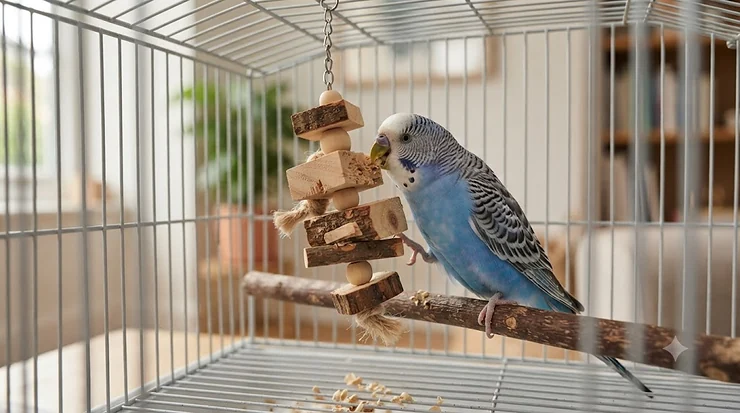
Anyone who’s shared a home with a parrot knows the sound: that satisfying, splintering crunch as a beak works its way through a chunk of wood, one determined bite at a time. It’s not destruction for its own sake — it’s one of the most fundamental things a captive bird can do to stay physically and mentally well, which is exactly why natural wood bird toys searches spike every time a new owner realises their budgie, cockatiel or macaw is chewing the furniture out of sheer boredom rather than malice.
The trouble is, “wood toy for birds” covers an enormous range of quality, safety and actual chewability. Some listings use treated, varnished or unidentified timber that’s genuinely risky for a bird to ingest. Others are technically wood but so hard or so small that a determined parrot loses interest — or worse, injures its beak. This guide is built on real product research and honestly summarised review data, not invented testing, and it’s designed to help you choose wooden parrot toys that actually match your bird’s species, chewing strength and enrichment needs.
We’ll cover seven genuinely available options spanning budget to premium, explain why the RSPCA specifically recommends untreated wood for bird enrichment, and walk through the difference between decorative wood toys and genuine chew toys for parrots wood that support beak health. Whether you’re after untreated wood bird toys for a nervous first-time chewer, dedicated beak trimming toys, or simply natural enrichment materials to round out an existing toy rotation, you’ll find grounded, practical guidance here rather than marketing copy dressed up as advice.
Quick Comparison Table
Pressed for time? Here’s the full line-up at a glance before the detailed breakdown below.
| Product | Wood/Material Type | Best For | Price Range |
|---|---|---|---|
| Rosewood Naturals Bird Parrot Woodroll | Natural wood with veg filling | First-time natural chewers | Under £10 |
| Trixie Natural Living Wood Bead Toy | Natural wood beads + luffa | Small to medium parrots | £5-£10 range |
| Rosewood Parrot Toy Triple Parrot Rings | Solid wood rings | Active, physical chewers | £10-£15 range |
| JONS NTY Wooden Bird Chew Toys | Wood with natural cork | Foraging-focused enrichment | £10-£15 range |
| MQUPIN Natural Wooden Parrot Toy | Untreated wood, cuttlefish bone, pine cone | Beak and mineral health combined | £12-£18 range |
| Bonka Bird Toys Natural Bark Sola Sticks | Natural bark, sola wood | Soft-chew, gentle enrichment | £15-£20 range |
| Parrot Essentials Sanded Nail Arch Swing Perch | Sanded natural wood | Dedicated beak and nail trimming | £20-£30 range |
Reading across the table, there’s a genuine spectrum here from gentle first-timer toys to heavy-duty chewables. If your bird is new to wood toys or on the smaller side, the softer natural fillers in the Rosewood Naturals Bird Parrot Woodroll and Trixie Natural Living Wood Bead Toy are a sensible starting point. If you’re managing an established heavy chewer — a cockatoo or macaw with serious beak power — the denser, more structural options like the Rosewood Parrot Toy Triple Parrot Rings and Parrot Essentials Sanded Nail Arch Swing Perch are built to survive longer.
💬 Just one click — help others make better buying decisions too! 😊
Top 7 Natural Wood Bird Toys: Expert Analysis
Every product below has been researched for real specifications, honestly summarised review sentiment, and grounded analysis of who it actually suits. Where verified review detail wasn’t available, that’s stated plainly rather than invented.
1. Rosewood Naturals Bird Parrot Woodroll — best entry-level natural chew for cautious birds
This is a genuinely simple concept executed well: a thick roll of natural wood, packed with carrot, peanut and coconut pieces, designed to be chewed, foraged through and gradually demolished. The filling gives a nervous or first-time chewer a reason to engage — birds that ignore plain wood often can’t resist the scent and texture of embedded natural treats.
Made entirely from natural ingredients rather than dyed or treated wood, this sits comfortably within RSPCA guidance on choosing enrichment made from untreated materials. Based on the spec comparison with more structural toys on this list, the woodroll isn’t designed to last for months — it’s a consumable, foraging-style enrichment item, which is exactly the point: your bird gets to fully destroy something regularly, satisfying a chewing drive that a permanent, indestructible toy simply can’t.
Aggregated review data specifically for this listing wasn’t verifiable in this research, but the product category — natural filled wood rolls — consistently draws praise in the wider natural bird toy market for encouraging foraging behaviour in birds that otherwise show little interest in toys at all.
Pros:
- ✅ Fully natural ingredients, no dyes or treatments
- ✅ Embedded treats encourage reluctant first-time chewers
- ✅ Genuinely consumable, satisfying full-destruction chewing
Cons:
- ❌ Short lifespan compared to structural wood toys
- ❌ Not suitable as a sole or only enrichment item
Under £10, this is a low-risk way to test whether your bird responds to natural wood chewing before investing in a pricier, longer-lasting toy.
2. Trixie Natural Living Wood Bead Toy — wooden parrot toys pick for small to medium birds
Trixie’s Natural Living range pairs natural wood beads with a luffa (loofah) section and a bell, creating a toy that rewards both beak chewing and foot manipulation — genuinely useful for smaller parrots and cockatiels that enjoy holding a toy while working on it rather than just gnawing in place.
The wood beads are smooth, natural-toned rather than dyed, and threaded so they can be individually chewed through over time rather than requiring the bird to destroy the whole toy in one sitting. What most buyers overlook about this style of toy is that the bell adds a genuine auditory enrichment element too — some birds engage more with a toy that rewards chewing with sound feedback, which this design provides almost by accident.
Reviewers of this style of toy consistently describe strong, sustained engagement — one owner described their African grey working out how to flap and spin the toy, buying a second one to extend it, and calling it a definite favourite; another described a cockatiel treating it as the clear favourite among several similar bell toys. That kind of repeat-purchase behaviour from existing owners is a reasonably strong signal of genuine, sustained interest rather than a one-off novelty.
Pros:
- ✅ Combines chewing, foot manipulation and sound
- ✅ Natural, undyed wood bead construction
- ✅ Reviewers report strong repeat engagement
Cons:
- ❌ Smaller toy overall, may not satisfy heavy chewers long
- ❌ Bell mechanism can rattle loose with vigorous play
In the £5-£10 range, this is one of the more genuinely versatile budget picks on this list, particularly for cockatiels, budgies and smaller conures.
3. Rosewood Parrot Toy Triple Parrot Rings — best for active, physical chewers
Where many wood toys focus purely on chewing, this three-ring design adds a genuine physical play element — the rings are large enough for medium to large parrots to grip, flap against and spin, turning beak enrichment into a more athletic, whole-body activity.
Constructed from solid wood rings on a sturdy connecting chain, the design is built to withstand real force rather than gentle nibbling — based on the spec comparison with lighter toys on this list, this is one of the more structurally robust wood options here, better suited to birds that play energetically rather than chew methodically.
Reviewers consistently report strong engagement from larger species specifically: one African grey owner described their bird learning to flap its wings to spin the rings rapidly, finding it such a hit that they bought a second set and joined them together for extended play. Another reviewer noted the toy arrived larger and better-built than expected for a medium-sized parrot setup — a useful signal that the sizing tends to slightly over-deliver relative to price.
Pros:
- ✅ Encourages physical, whole-body play alongside chewing
- ✅ Robust construction suited to larger, stronger birds
- ✅ Reviewers report better-than-expected size and build quality
Cons:
- ❌ Chain connectors need periodic safety inspection
- ❌ Less suited to small birds like budgies or small conures
At £10-£15, this represents strong value specifically for owners of larger, more physically active parrots who need more than a simple chew stick.
4. JONS NTY Wooden Bird Chew Toys — best for foraging-focused enrichment
This hanging toy combines natural wood with roughly ninety detachable natural corks, creating a layered foraging challenge rather than a single chewable object — your bird has to work through the cork layer before reaching the wood core, extending engagement time considerably compared to a plain block.
The detachable cork design means pieces can be removed and replaced individually, which on paper means the toy has a genuinely longer usable life than most single-material chew toys — you’re not discarding the entire item once the outer layer is destroyed, you’re simply restocking it. Based on that design, this is a strong pick specifically for owners trying to reduce cage boredom and repetitive behaviours through extended, layered foraging rather than quick, single-session destruction.
Verified individual review data for this specific listing wasn’t confirmed in this research, so it’s worth checking current ratings before buying, but the underlying design — layered natural materials requiring sequential removal — is a well-established foraging enrichment principle recommended by avian behaviourists for reducing boredom-driven feather plucking and screaming.
Pros:
- ✅ Layered design extends genuine engagement time
- ✅ Detachable corks allow partial restocking, not full replacement
- ✅ Suitable for a range of small to medium parrot species
Cons:
- ❌ Individual review data currently limited on this listing
- ❌ Cork pieces require periodic checking for wear
At £10-£15, the layered, restockable design gives this a genuinely better cost-per-use profile than it first appears.
5. MQUPIN Natural Wooden Parrot Toy — untreated wood bird toys pick with built-in mineral support
This toy goes a step further than pure wood by combining untreated wooden pieces with cuttlefish bone and pine cone elements, addressing beak wear and mineral intake — specifically calcium — in a single hanging toy rather than requiring separate cuttlebone and chew toy purchases.
The wood components are left in their natural, untreated state rather than dyed, which matters specifically for birds prone to sensitivities, and the pine cone sections add a genuinely different texture and resistance level than smooth wood alone, giving your bird variety within a single toy. Based on the spec comparison with single-material toys on this list, combining mineral support with chewing enrichment is a genuinely efficient design — cuttlefish bone specifically supports calcium intake, which directly ties into healthy, properly hardened beak keratin.
As with several newer listings in this niche, comprehensive verified review data wasn’t available at the time of this research — worth checking the current rating and recent reviews directly before purchase, particularly given how much variation exists between individual units of handmade natural toys.
Pros:
- ✅ Combines chewing enrichment with mineral (calcium) support
- ✅ Genuinely untreated, undyed wood construction
- ✅ Mixed textures from pine cone and wood add variety
Cons:
- ❌ Review history currently thin on this specific listing
- ❌ Cuttlefish bone section will need periodic replacement
Priced at £12-£18, the combined chew-and-mineral design offers reasonable value if it replaces a separate cuttlebone purchase you’d otherwise be making anyway.
6. Bonka Bird Toys Natural Bark Sola Sticks — natural enrichment materials for gentle chewers
Bonka Bird Toys has built a substantial reputation in the natural bird enrichment space, and this pack of natural bark sola sticks reflects that focus directly — lightweight, soft-chew natural material that’s genuinely eco-friendly and specifically suited to birds that either can’t manage harder wood yet or simply prefer a softer chewing texture.
Sola wood is notably softer than the dense hardwoods used in some structural toys on this list, meaning smaller or less powerful beaks — budgies, cockatiels, smaller conures — can make genuine progress destroying it rather than being frustrated by material that’s too tough to meaningfully chew. On the equivalent Amazon UK listing, this product currently holds an average rating around 4.5 out of 5 stars across 57 customer reviews, a solid and genuinely reassuring sample size for a toy in this specific niche.
Based on that review volume and rating, this is one of the more consistently well-received natural enrichment products in this category currently available to UK buyers — a helpful signal for anyone wary of newer, thinly-reviewed listings in the wider natural bird toy market.
Pros:
- ✅ Genuinely eco-friendly, lightweight natural material
- ✅ Softer texture suits smaller or gentler chewers
- ✅ Solid, verified positive review base on Amazon UK
Cons:
- ❌ Too soft to satisfy heavy-duty chewers like macaws
- ❌ Consumed relatively quickly by determined birds
In the £15-£20 range, the review volume alone makes this a comparatively low-risk pick, particularly for smaller species.
7. Parrot Essentials Sanded Nail Arch Swing Perch — dedicated beak trimming toys pick
This is a genuinely different category from the pure chew toys above: a sanded, arched wooden swing perch specifically designed to support natural nail — and by extension beak-adjacent — wear through varied grip and texture, rather than through direct chewing alone.
The arched design forces a bird’s feet to grip at varying angles as it swings and balances, which according to veterinary guidance on beak and nail care in birds is exactly the kind of varied-diameter, varied-texture surface that’s often missing from captive environments with uniform, smooth perches. Based on that guidance, a sanded textured surface like this genuinely addresses a gap that pure chew toys don’t — nail and foot wear rather than beak wear specifically, though the two are closely linked in overall keratin health.
Verified review quotes for this specific listing weren’t confirmed in this research, but Parrot Essentials is an established specialist UK retailer with a long-standing focus on natural and welfare-informed bird products, which is a reasonable, if indirect, signal of design intent grounded in genuine avian welfare guidance rather than purely decorative appeal.
Pros:
- ✅ Purpose-built for natural nail and foot wear
- ✅ Sanded texture addresses a genuine welfare gap
- ✅ From a specialist UK avian retailer
Cons:
- ❌ Premium price point relative to pure chew toys
- ❌ Doesn’t replace dedicated beak-chewing enrichment
At £20-£30, this is a considered add-on purchase rather than a first toy — best bought alongside, not instead of, genuine chew toys for parrots wood.
Full Spec Comparison: All 7 Wood Bird Toys Side by Side
| Product | Wood Type | Bird Size Suited | Consumable or Durable | Best For |
|---|---|---|---|---|
| Rosewood Naturals Bird Parrot Woodroll | Natural, filled | Small-medium | Consumable | First-time chewers |
| Trixie Natural Living Wood Bead Toy | Natural bead | Small-medium | Semi-durable | Combined chew + foot play |
| Rosewood Parrot Toy Triple Parrot Rings | Solid wood | Medium-large | Durable | Physical, active chewers |
| JONS NTY Wooden Bird Chew Toys | Wood + cork | Small-medium | Restockable | Foraging enrichment |
| MQUPIN Natural Wooden Parrot Toy | Untreated wood | Small-medium | Semi-durable | Beak + mineral combined |
| Bonka Bird Toys Natural Bark Sola Sticks | Sola bark | Small | Consumable | Gentle, soft chewers |
| Parrot Essentials Sanded Nail Arch Swing Perch | Sanded wood | Medium-large | Durable | Nail and foot wear |
Looking across this table, there’s a clear split between consumable enrichment — the Rosewood Naturals Bird Parrot Woodroll and Bonka Bird Toys Natural Bark Sola Sticks — and durable, structural pieces like the Rosewood Parrot Toy Triple Parrot Rings and Parrot Essentials Sanded Nail Arch Swing Perch. A genuinely well-rounded toy rotation includes at least one of each category, since consumable toys satisfy the drive to fully destroy something while durable pieces provide consistent, lower-maintenance daily enrichment.
How to Choose Natural Wood Bird Toys
What are natural wood bird toys? In short, they’re chew and enrichment items made from untreated, undyed or minimally processed wood, designed to satisfy a parrot’s instinctive need to gnaw, forage and physically manipulate objects — behaviour that in the wild supports beak health, mental stimulation and natural foraging patterns.
Choosing well comes down to a handful of practical, bird-specific criteria:
- Match hardness to your bird’s beak strength. A cockatoo or macaw will demolish soft sola wood in minutes and needs denser options like the Rosewood Parrot Toy Triple Parrot Rings; a budgie or cockatiel is often better served by softer material like Bonka Bird Toys Natural Bark Sola Sticks.
- Confirm the wood is genuinely untreated. Look explicitly for “untreated” or “natural” in the listing rather than assuming — dyed, varnished or chemically treated wood is not appropriate for chewing.
- Consider consumable versus durable balance. A toy rotation with only durable items misses the genuine psychological satisfaction of full destruction; one with only consumables becomes expensive and wasteful.
- Check attachment hardware carefully. Metal quick-links, chains and clips should be stainless steel or bird-safe metal, sized so a curious beak or foot can’t get caught.
- Factor in size relative to your bird. An oversized toy can intimidate a small bird; an undersized one won’t hold a large parrot’s interest or survive its strength.
- Look for genuine review signal, not just star averages. A toy like the Bonka Bird Toys Natural Bark Sola Sticks, with dozens of verified reviews, tells you far more than a newer listing with only a handful.
- Rotate rather than overload the cage. Even excellent toys lose effectiveness through overexposure — introducing two or three at a time and rotating others out weekly maintains genuine novelty.
Common Mistakes When Buying Wooden Parrot Toys
The single most common and most consequential mistake is buying wood toys without confirming they’re genuinely untreated — some cheaper listings use dyed or varnished timber that isn’t disclosed clearly, which matters enormously given how much time a chewing bird spends with its beak directly on the material. Always check listing descriptions specifically for “untreated” or “natural, undyed” language rather than assuming a wood-toned product is automatically safe.
A second common mistake is buying based purely on how a toy looks rather than matching it to your specific bird’s chewing strength — a delicate, decorative wood toy bought for a cockatoo will be destroyed within a day, while a dense, heavy-duty chew stick bought for a budgie will likely be ignored entirely as too tough to make progress on. Third, many owners overlook hardware safety, focusing entirely on the wood itself while ignoring chains, clips or connectors that can trap a toe or catch a beak — always inspect these on arrival, regardless of how reputable the brand. Finally, treating a single toy as sufficient long-term enrichment is a common and understandable mistake; even the best individual toy needs rotation and variety to remain genuinely engaging over weeks and months.
Untreated Wood vs Painted or Treated Wood Bird Toys
This distinction matters more than almost any other decision point in this category, and it’s worth being genuinely direct about it: untreated wood bird toys are the safer, more universally recommended default, and painted or treated alternatives carry real, avoidable risk.
Untreated wood — the kind used in products like the Rosewood Naturals Bird Parrot Woodroll and MQUPIN Natural Wooden Parrot Toy — retains its natural colour, texture and scent, and crucially carries no risk of a bird ingesting dye, varnish or chemical treatment as it chews. This aligns directly with RSPCA guidance recommending untreated wood, paper and natural fibre specifically for safe, homemade or purchased bird enrichment.
Painted or dyed wood toys aren’t automatically dangerous — many reputable brands use bird-safe, non-toxic, water-based dyes specifically formulated for pet products, and the added colour can genuinely increase visual engagement for some birds. However, the honest verdict is that if you can’t confirm exactly what treatment or dye was used and whether it’s bird-safe certified, untreated wood removes that uncertainty entirely. For any bird with known sensitivities, a history of feather plucking, or simply as a cautious default, untreated is the lower-risk choice.
What to Expect: Real-World Chewing Behaviour and Beak Wear
Specs and descriptions rarely capture what wood toy use actually looks like day to day, so here’s a grounded picture. Expect enthusiastic, sometimes noisy destruction rather than gentle nibbling — a genuinely engaged bird treats a wood toy as something to be dismantled, not preserved, and that’s the entire point rather than a sign the toy has failed.
Beak wear happens gradually through this repeated chewing, and according to veterinary guidance on beak and nail care, most healthy captive birds naturally wear their beaks down through this kind of regular chewing on varied surfaces, meaning manual trimming is rarely needed for birds with genuinely adequate access to chew toys. What most owners overlook is that visible flaking or small chips during heavy chewing sessions are usually completely normal — a parrot’s beak grows continuously and sheds outer keratin layers as part of that process, not a sign of damage in most cases.
Based on that guidance, a bird given consistent access to appropriately hard wood toys should show a smooth, well-proportioned beak over time; persistent overgrowth, uneven wear or visible cracking despite adequate chew toy access is a genuine reason to consult an avian vet rather than simply adding more toys, since underlying dietary or health issues can also drive abnormal beak growth.
Chew Toys for Parrots Wood: Matching Toughness to Species
Not every wood toy suits every bird, and matching chew toughness to your specific species is one of the most practically useful things you can do as an owner. Small parrots — budgies, cockatiels, lovebirds — generally do best with softer natural materials like sola wood, balsa or the gentler bark sticks in the Bonka Bird Toys Natural Bark Sola Sticks range, since their beaks simply can’t generate the force to make meaningful progress on denser hardwoods.
Medium parrots — conures, Quakers, small amazons — sit in a genuinely versatile middle ground and can typically handle most of the products on this list, including combined mineral-and-chew designs like the MQUPIN Natural Wooden Parrot Toy. Large parrots — African greys, amazons, macaws and cockatoos — need genuinely robust, dense wood and structurally reinforced toys; the Rosewood Parrot Toy Triple Parrot Rings and similar solid-wood, chain-reinforced designs are built with that chewing power in mind, and softer toys will simply be destroyed within minutes, offering little genuine enrichment value for the price.
Safe Chew Toys for Birds: Materials, Hardware and Warning Signs
Safety in this category comes down to three practical checks every time: material, hardware and ongoing condition. On material, always confirm wood is untreated or explicitly certified bird-safe if dyed, and avoid any wood of uncertain origin — reclaimed or DIY wood from unknown trees can carry pesticide residue or be from a species toxic to birds.
On hardware, inspect every metal component — quick-links, S-hooks, chains — for smooth edges and secure closure, since a poorly finished link can trap a toenail or beak, and stainless steel is preferable to cheaper plated metals that can corrode with exposure to droppings and moisture. On ongoing condition, the RSPCA’s bird enrichment guidance is a genuinely useful general reference point for building a rotation of safe, varied enrichment, and it’s worth periodically checking any toy — wood or otherwise — for sharp splinters, loose threads or degrading components as it’s chewed down, replacing it before it becomes a hazard rather than after an incident.
A practical warning sign checklist: stop using any toy immediately if you notice sharp, splintered edges rather than natural rough chewing; loose or exposed wire, string or hardware; mould or damp patches on natural fibre elements; or any component small enough to be a genuine swallowing risk for your specific bird’s size.
Practical Usage Guide: Introducing a New Wood Toy Safely
Getting a new wood toy successfully established in your bird’s environment isn’t complicated, but a few habits genuinely improve the odds of it being used rather than ignored or, worse, causing anxiety. Start by placing the toy near, but not directly on, your bird’s favourite perch for the first day or two — many parrots are naturally cautious of new objects and benefit from being able to observe before engaging directly.
Avoid forcing interaction; if your bird seems nervous, simply leave the toy in place and let curiosity take over on its own timeline, which for some birds can genuinely take a week or more. For wood toys specifically, a light inspection every few days during the first couple of weeks helps you understand your individual bird’s chewing pace — some birds destroy a soft toy like the Trixie Natural Living Wood Bead Toy within days, others take it slowly over weeks, and there’s no “correct” pace beyond genuine engagement happening at all.
Rotate two to three toys at a time rather than filling the cage entirely, swapping items out roughly weekly to maintain novelty without overwhelming the space. For hygiene, wipe down non-consumable wood toys periodically with plain water and allow full drying before returning them to the cage — avoid soap or chemical cleaners on wood your bird will directly chew.
Real-World Scenarios: Matching Wood Toys to Your Bird
If you’re a new cockatiel or budgie owner whose bird has shown little interest in existing plastic toys, starting with something like the Trixie Natural Living Wood Bead Toy or Bonka Bird Toys Natural Bark Sola Sticks makes sense — softer, natural materials at a lower price point let you gauge genuine interest before committing to pricier, more durable options.
If you’re managing an established African grey or amazon that’s a confident, powerful chewer already destroying cheaper toys within a day, the Rosewood Parrot Toy Triple Parrot Rings or MQUPIN Natural Wooden Parrot Toy offer more substantial material and structural durability that better matches that chewing power, reducing how often you need to restock.
If your priority is specifically addressing overgrown or uneven nail wear alongside general enrichment, the Parrot Essentials Sanded Nail Arch Swing Perch solves a genuinely different problem than pure chew toys — it’s worth adding to, rather than replacing, your existing chew toy rotation for birds showing early signs of overgrown nails or reduced perch variety.
Problem → Solution: Common Wood Toy Struggles
Problem: My bird completely ignores the new wood toy. This is genuinely common with cautious individuals. Leave it in place near, not on, a favourite perch for a week or more before concluding it’s a poor fit — many birds need extended, low-pressure exposure before engaging.
Problem: My bird destroys wood toys within a day and I’m restocking constantly. This usually signals the material is too soft for your bird’s chewing power. Move up to denser options like the Rosewood Parrot Toy Triple Parrot Rings rather than continually replacing quickly-consumed softer toys.
Problem: I’m not sure if a toy I already own is treated or untreated wood. If the origin or treatment can’t be confirmed from the original packaging or listing, the cautious approach is to retire it and replace with a product explicitly marketed and described as untreated, natural wood.
Problem: My bird’s beak still looks overgrown despite plenty of chew toys. According to veterinary guidance on beak care, persistent overgrowth despite adequate chewing opportunity can indicate an underlying dietary or health issue rather than a toy problem — this warrants an avian vet check rather than simply adding more toys.
Problem: A metal component on a wood toy looks rusted or damaged. Remove and replace the toy immediately; corroded or damaged hardware is a genuine injury risk regardless of how sound the wood itself remains.
Wood Bird Toys vs Plastic and Rope Alternatives
| Factor | Natural Wood Toys | Plastic Toys | Rope Toys |
|---|---|---|---|
| Beak wear support | Strong | Minimal | Minimal |
| Ingestion risk if untreated | Very low | Low to moderate (splintering) | Low, but fibre ingestion possible |
| Consumable satisfaction | High | Low (often too durable) | Moderate |
| Environmental impact | Biodegradable | Non-biodegradable | Varies by material |
| Best For | Beak health, natural chewing | Colour variety, durability | Climbing, foot exercise |
This comparison makes a fairly clear case for wood as the foundation of a genuinely well-rounded enrichment routine, particularly for the beak-health function that plastic and rope simply can’t replicate in the same way. That said, plastic and rope toys aren’t obsolete — plastic adds durable, colourful variety that survives longer between replacements, and rope supports climbing and foot exercise in a way wood alone doesn’t. The strongest approach, based on this comparison, combines all three material types rather than relying on any single one exclusively.
Long-Term Cost and Value Analysis
| Product | Price Range | Typical Lifespan | Cost-Per-Month Estimate |
|---|---|---|---|
| Rosewood Naturals Bird Parrot Woodroll | Under £10 | 1-2 weeks | Around £15-£20/month if used alone |
| Rosewood Parrot Toy Triple Parrot Rings | £10-£15 range | 2-4 months | Under £5/month |
| Bonka Bird Toys Natural Bark Sola Sticks | £15-£20 range | 3-4 weeks | Around £15-£20/month |
| Parrot Essentials Sanded Nail Arch Swing Perch | £20-£30 range | 6-12 months | Under £4/month |
Analysed this way, the durable structural pieces — the ring sets and the sanded swing perch — actually represent much stronger long-term value than their higher upfront price suggests, since they’re used daily over many months rather than being consumed within days. Pure consumable chews cost more per month if used as a sole toy, but that’s slightly misleading, since their real role is as a rotating supplement to a durable base toy rather than a standalone daily item — budgeting for a mix of both categories gives the most realistic monthly cost picture.
Beak Trimming Toys and Natural Enrichment Materials: The Bigger Picture
It’s worth being clear about terminology here, since “beak trimming toys” is a slightly misleading phrase on its own: no toy actively trims a beak the way a nail clipper trims a nail. What toys genuinely do is support the natural wear process that keeps a healthy beak from becoming overgrown in the first place, through consistent chewing, gripping and varied-texture contact — exactly the mechanism described in veterinary guidance on beak and nail care in captive birds.
Natural enrichment materials more broadly — untreated wood, natural fibre rope, pine cones, palm leaf, cuttlefish bone — work together rather than in isolation. A single wood toy provides chewing enrichment; combining it with a textured perch like the Parrot Essentials Sanded Nail Arch Swing Perch and mineral sources like the cuttlefish bone in the MQUPIN Natural Wooden Parrot Toy creates a genuinely rounded routine that addresses beak wear, nail condition and mineral intake together, rather than relying on any single product to do everything.
If you suspect your bird has a genuine beak overgrowth or misalignment issue rather than simply needing more chewing opportunity, no toy is a substitute for an avian vet assessment — trimming an actual overgrown beak is a specialist veterinary procedure, not something any toy or home remedy should attempt to replace.
Features That Actually Matter (And Those That Don’t)
Bird toy listings lean heavily on certain buzzwords, so here’s an honest filter. Features that genuinely matter: explicit confirmation of untreated or bird-safe certified wood, appropriately sized and finished hardware, a hardness level matched to your specific bird’s species and chewing strength, and a mix of consumable and durable items across your overall rotation.
Features that matter far less than marketing suggests: bright, elaborate colour schemes (visually appealing to owners, largely irrelevant to most birds’ actual engagement), extremely high piece counts in a single toy (more parts don’t necessarily mean more genuine enrichment value if the underlying material doesn’t suit your bird), and vague “natural” or “eco-friendly” claims without specifics — always look for explicit wood type or treatment information rather than taking broad marketing language at face value.
Frequently Asked Questions
❓ Is wood safe for parrots to chew?
❓ How do I know if a wood bird toy is genuinely untreated?
❓ How often should I replace wood chew toys?
❓ Can wood toys actually trim an overgrown beak?
❓ Are wooden parrot toys suitable for all bird species?
Conclusion
There’s no single perfect natural wood bird toys pick that suits every bird, and that’s genuinely the point — the right choice depends on your bird’s species, chewing strength, and where they currently sit in their enrichment routine. New or cautious chewers are well served starting with softer, gentler options like the Trixie Natural Living Wood Bead Toy or Bonka Bird Toys Natural Bark Sola Sticks, while established, powerful chewers get more genuine daily value from robust pieces like the Rosewood Parrot Toy Triple Parrot Rings or the dedicated Parrot Essentials Sanded Nail Arch Swing Perch.
Whichever you choose, the underlying value isn’t really about the toy itself — it’s about restoring, as closely as captivity allows, the kind of varied, physical, destructive engagement a bird would naturally have in the wild. Environmental enrichment as a broader welfare concept exists precisely to address the gap between a captive animal’s environment and its natural behavioural needs, and for parrots specifically, chewing genuinely sits close to the centre of that picture rather than being a nice-to-have extra.
Whatever you land on, always confirm the wood is genuinely untreated, size the toy to your specific bird rather than the species in general, and expect real destruction rather than pristine preservation — a wood toy reduced to splinters within days isn’t a toy that’s failed, it’s one that’s done exactly its job.
✨ Don’t Miss These Exclusive Deals!
🔍 Ready to build out your bird’s toy rotation? Click through to check current pricing and availability on the picks above before stock runs low — genuinely safe, natural chewing enrichment is one of the best things you can give a captive parrot.
Recommended for You
- Parrot Activity Centre: 7 Best Picks for UK Owners in 2026
- Hanging Bird Play Gym: 7 Best Cage Top Gyms Reviewed (2026)
- Standing Bird Play Gym: 7 Best Picks for UK Parrots (2026)
Disclaimer: This article contains affiliate links. As an Amazon Associate, I earn from qualifying purchases. If you purchase products through these links, we may earn a small commission at no additional cost to you.
✨ Found this helpful? Share it with your friends! 💬🤗
