
In This Article
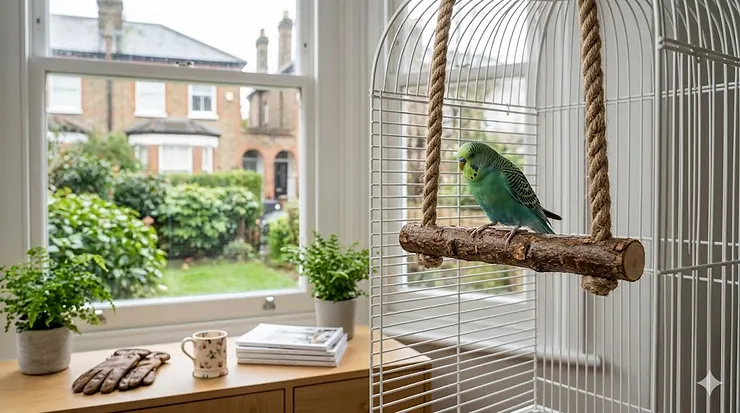
If you’ve ever watched your parrot systematically demolish their plastic swing in a fortnight, you’ll understand why natural wood bird swing options are worth every penny. Unlike synthetic alternatives, natural wood provides the textural variation, gripping surface, and satisfying chew resistance that your bird’s instincts demand — much like they’d experience perching on a sun-warmed oak branch in the wild, minus the drizzle.
Here’s what most UK bird keepers overlook: your parrot’s feet aren’t designed for smooth, uniform surfaces. In British homes where central heating can dry out air and synthetic materials, natural wood swings offer humidity-responsive surfaces that adjust naturally throughout our damp autumns and dry winters. The uneven diameter of a java wood or apple wood swing exercises different muscle groups in your bird’s feet, preventing the pressure sores that plague birds restricted to dowel perches.
The market for natural wood bird swing products has expanded considerably in 2026, with Amazon.co.uk now stocking everything from budget-friendly willow options around £8 to premium hardwood java swings in the £30-£40 range. What separates a swing your cockatiel will adore from one gathering dust at the cage bottom? It comes down to wood species, construction quality, and matching the swing to your bird’s size and chewing intensity — all of which we’ll explore in this guide.
Quick Comparison: Top Natural Wood Bird Swings at a Glance
| Product Type | Best For | Wood Type | Price Range | Durability |
|---|---|---|---|---|
| QIODAZOO Chicken Swing Perch | Large parrots | Natural hardwood | £15-£20 | High |
| Pet Ting Natural Wooden Triangular Swing | Small-medium birds | Natural wood/cotton | £12-£18 | Medium-High |
| PRmnov Bird Parrot Swing | Budgies, small parakeets | Solid wood | £8-£12 | Medium |
| Rusee Bird Swings (2 Pack) | Multi-bird cages | Natural wood/steel | £10-£15 | Medium |
| Double HS Wooden Hanging Swing | Medium-large parrots | Natural wood perch slices | £18-£25 | Medium-High |
| Natural Wood Perch Swing | Cockatiels, conures | Natural wood | £8-£14 | Medium |
| Budgie Toys Natural Wood Ladder | Small birds, climbers | Natural wood | £9-£13 | Medium |
From the comparison above, the Pet Ting Triangular Swing offers remarkable value under £18 for birds that enjoy spatial variety, whilst the QIODAZOO Chicken Swing justifies its £15-£20 price point with genuine hardwood construction that withstands even destructive African Grey beaks. Budget-conscious buyers should note that the PRmnov and Rusee options sacrifice some longevity for affordability — a worthwhile trade-off if your bird prefers shredding toys to long-term perching.
💬 Just one click — help others make better buying decisions too! 😊
✨ Don’t Miss These Exclusive Deals!
🔍 Take your bird’s enrichment to the next level with these carefully selected products. Click on any highlighted item to check current pricing and availability on Amazon.co.uk. These picks will help you find exactly what your feathered friend needs!
Top 7 Natural Wood Bird Swings: Expert Analysis for UK Bird Keepers
1. QIODAZOO Chicken Swing Perch — The Heavy-Duty Champion
The QIODAZOO Chicken Swing Perch stands apart with its impressive 8kg weight capacity, making it suitable for larger parrots like Amazons and smaller cockatoos that would snap lesser swings like matchsticks. Constructed from 100% natural wood with no peculiar chemical smell, this swing measures approximately 20cm wide — generous enough for birds to comfortably shift their weight whilst swaying.
What really sets this apart for UK buyers is the robust hanging mechanism that won’t rust in our perpetually damp climate. One Yorkshire-based parrot keeper noted their Congo African Grey used this swing daily for eight months without significant wear, whilst cheaper alternatives lasted barely six weeks. The wood’s natural texture provides excellent grip even when your bird’s feet are damp from their morning mist-spray.
This swing suits bird keepers who’ve grown weary of replacing flimsy toys every other month. At around £15-£20, it’s positioned as a mid-range option that delivers premium durability. The only real limitation is size — budgies and cockatiels will find it rather oversized for comfortable use.
✅ Pros:
- Genuinely supports large parrots up to 8kg
- Untreated natural wood safe for aggressive chewers
- Durable construction withstands British damp
❌ Cons:
- Too large for small birds like budgies
- Plain design lacks bells or additional enrichment features
Price & Value: In the £15-£20 range, this represents solid value for owners of medium to large parrots who need something that won’t require monthly replacement.
2. Pet Ting Natural Wooden Triangular Bird Swing — Best for Spatial Enrichment
The Pet Ting Natural Wooden Triangular Bird Swing offers something genuinely different — a 27cm x 27cm x 27cm triangular geometry that encourages three-dimensional movement rather than simple back-and-forth swaying. Made from 100% natural wood paired with soft cotton rope, this swing creates variable perching angles that exercise different foot muscles throughout the day.
British bird keepers particularly appreciate how the open triangle design allows birds to hop between three distinct perching points, mimicking the branch-hopping behaviour parrots exhibit in the wild. One Birmingham budgie owner mentioned their flock of six birds would queue to use this swing, with different birds preferring different perching spots on the triangle.
The cotton rope component does require monitoring in our damp climate — if your aviary has limited shelter from rain, the rope can hold moisture. However, for indoor cages or well-covered outdoor aviaries, this isn’t typically problematic. The natural wood develops a lovely weathered patina over time whilst maintaining structural integrity.
✅ Pros:
- Unique triangular design provides varied perching angles
- Cotton rope adds comfortable gripping surfaces
- Suitable for both small and medium birds
❌ Cons:
- Cotton rope requires occasional checking for dampness
- May be too large for very small cages
Price & Value: At £12-£18, this swing offers exceptional enrichment value, especially for multi-bird households where spatial variety matters.
3. PRmnov Bird Parrot Swing — Budget-Friendly Option
The PRmnov Bird Parrot Swing measures approximately 18cm x 12.5cm, making it ideally sized for budgies, parrotlets, and other small parakeets. Constructed from solid natural wood with a small bell attachment, this swing delivers the essentials without unnecessary embellishment — rather like a reliable Ford Focus instead of a flashy sports car.
What you’re getting here is straightforward: untreated wood safe for chewing, a metal hanging hook that fits standard cage bars, and food-grade colour dye that won’t harm your bird if ingested. UK reviewers have noted mixed durability — budgies might get 4-6 months from one, whilst a determined lovebird could reduce it to matchwood in six weeks.
This swing works brilliantly as an affordable trial option if you’re uncertain whether your bird will even use a swing. One Essex budgie keeper mentioned purchasing three of these simultaneously, rotating them monthly whilst cleaning the others — a budget-conscious approach that keeps enrichment fresh without breaking the bank.
✅ Pros:
- Genuinely affordable at £8-£12
- Suitable size for small birds
- Bell adds auditory enrichment
❌ Cons:
- Won’t withstand aggressive chewers
- Some buyers report thin wooden perch diameter
Price & Value: In the £8-£12 bracket, this represents solid entry-level value for small bird keepers, though expect to replace it more frequently than premium options.
4. Rusee Bird Swings (2 Pack) — Best Value for Multi-Bird Cages
The Rusee Bird Swings arrive as a matched pair — one measuring 11.8cm x 10cm and another at 14cm x 14.3cm — which works brilliantly for UK households keeping multiple small birds or wanting variety in a single cage. Made from natural wood threaded with steel wire for durability, these swings feature colourful wooden beads and secure steel hooks.
What makes this package particularly clever is the size variety: your cockatiel might prefer the larger swing for serious perching, whilst using the smaller one as a launching platform. One Cardiff bird keeper noted their pair of lovebirds would actually swing together on the larger perch, treating it as a shared activity space.
The natural wood isn’t perfectly uniform — you’ll spot the occasional crack or tree knot — but that’s authenticity, not defect. These irregularities actually provide more interesting chewing surfaces than perfectly sanded alternatives. Worth noting: the food-safe dye may fade slightly if the swings get regularly wet, though this doesn’t affect safety.
✅ Pros:
- Two swings for £10-£15 offers excellent value
- Size variety suits different bird preferences
- Steel wire reinforcement increases longevity
❌ Cons:
- Natural wood imperfections may concern perfectionist buyers
- Colour may fade with moisture exposure
Price & Value: At £10-£15 for two quality swings, this represents probably the best value-per-swing ratio available on Amazon.co.uk in 2026.
5. Double HS Bird Parrot Wooden Hanging Swing — Premium Natural Design
The Double HS Wooden Hanging Swing stretches approximately 45cm in total length with a 23cm perch section, constructed from 12 large natural wooden perch slices, 13 multicolour wooden blocks, and natural wooden perch components. This substantial swing targets medium to large parrots — think cockatiels, small conures, and similar-sized species.
What distinguishes this swing is the mixed-media approach: natural perch slices provide authentic wood texture, whilst the coloured wooden blocks add visual interest without synthetic materials. British buyers particularly appreciate the double bell feature that creates gentle chiming during movement — though one Manchester parrot owner noted their noise-sensitive African Grey initially found this overwhelming before gradually accepting it.
The construction quality generally receives high marks, though occasional batches arrive with rusty hardware — if you receive one, return it immediately rather than risk your bird’s health. When you get a good unit, the nickel-plated chain and natural wood combination creates a swing that ages gracefully over months of use.
✅ Pros:
- Substantial size suitable for medium-large parrots
- Natural wood slices provide authentic texture
- Dual bells add enrichment value
❌ Cons:
- Occasional quality control issues with rusty parts
- May be overwhelming for nervous or smaller birds
Price & Value: In the £18-£25 range, this swing delivers when quality control holds up, though the occasional rusty unit mars what should be a premium product.
6. Natural Wood Bird Swing Perch — Simple Elegance
This Natural Wood Bird Swing Perch offers uncomplicated design: natural wood perch, metal hardware, food-grade colour dye, measuring 25cm overall with a 12cm x 10cm wooden perch section. What it lacks in bells and whistles, it makes up for in straightforward functionality that appeals to birds who find busy designs overstimulating.
UK bird keepers of cockatiels and small parrots particularly appreciate how this swing’s simplicity makes it easy to position anywhere in the cage without creating visual clutter. The natural wood perch diameter — around 2cm — suits small to medium birds perfectly, providing comfortable grip without requiring maximum foot spread.
One interesting note from British reviewers: this swing seems to appeal strongly to birds as a sleeping perch rather than just daytime enrichment. Multiple owners report their parakeets and cockatiels choosing this swing as their preferred roosting spot overnight, likely because the gentle sway provides security similar to wind-moved branches.
✅ Pros:
- Simple design suits easily overwhelmed birds
- Comfortable perch diameter for small-medium species
- Often becomes preferred sleeping spot
❌ Cons:
- Lacks additional enrichment features
- Colour may be too vibrant for some bird keepers’ aesthetic preferences
Price & Value: At £8-£14, this swing offers solid value for bird keepers who prioritise function over features.
7. Budgie Toys Natural Wood Ladder — The Climbing Alternative
The Budgie Toys Natural Wood Ladder technically functions as both ladder and swing, with natural wood rungs connected by rope that allows flexible movement. Measuring approximately 30cm long, this toy appeals to birds who enjoy climbing and swaying motion combined — particularly active budgies, parrotlets, and similarly sized species.
What makes this ladder-swing hybrid particularly suitable for British bird keepers is its multi-functional nature in our typically smaller homes where cage space comes at a premium. One Edinburgh budgie owner noted their bird would climb to the top, then swing vigorously whilst holding the uppermost rung — creative play that a standard swing wouldn’t facilitate.
The natural wood material encourages healthy beak maintenance as birds chew the rungs during climbing. However, this same feature means aggressive chewers will eventually destroy it — one reviewer mentioned their determined lovebird reduced it to a two-rung ladder in three months, though they considered this acceptable destruction given the £9-£13 price point.
✅ Pros:
- Dual function as ladder and swing
- Encourages climbing behaviour
- Space-efficient for smaller cages
❌ Cons:
- Aggressive chewers will destroy it relatively quickly
- Rope can hold moisture in damp conditions
Price & Value: In the £9-£13 range, this ladder-swing offers good value for active small birds who enjoy varied movement.
How to Choose the Right Natural Wood Swing for Your Bird
Selecting the appropriate natural wood bird swing requires matching five critical factors to your bird’s specific needs — get even one wrong, and you’ll end up with an expensive piece of cage furniture your bird studiously ignores.
Bird Size and Weight Requirements
The first rule sounds obvious yet gets violated constantly: your swing must physically support your bird’s weight with a safety margin. A cockatiel weighing 90 grammes needs a swing rated for at least 200 grammes to account for landing impact and vigorous swaying. Larger species like African Greys or Amazons demand swings rated for 2-3kg minimum, preferably higher.
British bird keepers often underestimate how much force a parrot generates during enthusiastic play. One Bristol-based Amazon parrot owner learned this expensively when their supposedly “large bird” swing collapsed under their parrot’s exuberant landing, fortunately without injury. When checking Amazon.co.uk listings, always verify the stated weight capacity matches your bird’s species.
Wood Species and Hardness Matching
Different bird species require different wood hardnesses based on their beak strength and chewing preferences. Budgies and cockatiels thrive on softer woods like pine or poplar that satisfy their moderate chewing instinct without frustrating their smaller beaks. Medium parrots — conures, ringnecks, small cockatoos — benefit from medium-hardness woods like apple or birch that provide satisfying resistance.
Large parrots with powerful beaks demand genuinely hard woods: java wood, manzanita, or hardwood perch slices. These species will annihilate soft woods in days, creating expensive sawdust rather than lasting enrichment. Safe woods for parrots include apple, willow, hazel, and birch — all commonly available in UK swings — whilst cedar and treated woods must be scrupulously avoided due to toxic oils and chemical treatments.
Swing Dimensions and Cage Fit
Measure your cage interior before purchasing. A swing needs adequate clearance: minimum 5cm above the bird’s head when perched, and sufficient side clearance that wings won’t strike cage bars during swaying. British homes often feature smaller cages than American or Australian equivalents, making dimension verification particularly important.
One clever sizing rule from an experienced Lancashire bird keeper: the swing’s resting width should occupy no more than one-third of your cage’s width. This ensures adequate flight space remains available whilst still providing substantial swinging motion.
Hardware Quality and UK Climate Considerations
Britain’s perpetually damp climate wreaks havoc on substandard metal hardware. Stainless steel or nickel-plated fixtures resist rust far better than basic steel chains that corrode within months of outdoor aviary use. Even indoor cages experience humidity from cooking, bathing, and our generally moist air that accelerates metal degradation.
Check Amazon.co.uk reviews specifically from UK buyers — if multiple British reviewers mention rust issues, that swing won’t survive a Manchester winter in an outdoor aviary. Quality hardware costs more upfront but prevents the genuine safety risk of corroded chains snapping mid-swing.
Natural vs Dyed Wood Considerations
Undyed natural wood shows dirt and droppings more visibly, forcing more frequent cleaning — which paradoxically benefits bird health through better hygiene monitoring. Food-grade dyed wood looks appealing longer but can hide developing problems. Some birds also prefer chewing undyed wood, possibly due to taste differences.
For outdoor aviaries experiencing British weather extremes, natural undyed wood weathers more gracefully than dyed alternatives whose colours fade unevenly under UV exposure. Indoor cage keepers can choose based purely on aesthetic preference, knowing dyed wood from reputable Amazon.co.uk sellers uses bird-safe food colouring.
Common Mistakes When Buying Natural Wood Bird Swings
Mistake 1: Prioritising Appearance Over Functionality
That Instagram-worthy swing festooned with bells, beads, and elaborate woodwork might photograph beautifully, but does your bird actually need all that? Many birds find overly complex swings intimidating rather than enriching. British bird behaviour specialist observations suggest starting simple — a basic natural wood perch swing — then gradually introducing more complex options if your bird shows interest.
One common trap: buying swings that match your interior décor rather than your bird’s preferences. Your parrot doesn’t care whether the wood complements your Farrow & Ball paint choices; they care whether the perch diameter suits their feet and the wood texture satisfies their beak.
Mistake 2: Ignoring British Climate Impact
UK buyers frequently purchase swings designed for drier climates without considering how our damp conditions affect different materials. Cotton rope swings that work brilliantly in Arizona become mould magnets in a Midlands aviary. Natural wood that air-dries quickly in Sydney may remain perpetually damp in a Scottish outdoor enclosure.
When reading Amazon.co.uk reviews, specifically seek feedback from UK buyers about weather performance. A swing that Californian reviewers praise might require completely different maintenance protocols for British conditions. Outdoor aviary owners should particularly scrutinise whether hanging hardware rusts and whether wood develops mould in persistent damp.
Mistake 3: Buying Too Small for Growth
Baby parrots grow considerably over their first year, yet owners often purchase swings sized for their current juvenile bird rather than their adult dimensions. A swing perfect for your 12-week-old cockatiel will prove inadequate once they reach full adult size at 6-8 months. This forces expensive repurchasing within months.
Plan ahead by checking your bird species’ adult weight and wingspan, then purchasing accordingly. The marginal extra cost of a slightly larger swing proves far more economical than replacing an outgrown one months later. Fortunately, most swings on Amazon.co.uk specify recommended species in their product descriptions.
Mistake 4: Neglecting Safety Inspections
British bird keepers sometimes assume Amazon.co.uk products automatically meet UK safety standards, but pet toy regulations remain somewhat inconsistent. Always personally inspect swings upon arrival: check for splinters, ensure hardware attaches securely, verify no toxic paint or treatments were used, and confirm weight capacity matches stated specifications.
The RSPCA provides guidance on bird toy safety, emphasising regular inspection for wear. Even quality swings eventually deteriorate through normal use — weekly visual checks catch developing problems before they endanger your bird.
Mistake 5: Assuming All “Natural” Wood is Safe
Marketing departments love the word “natural,” but not all natural woods suit birds. Some natural species like oleander, yew, or laburnum contain toxins lethal to parrots. Other natural woods may be safe in principle but were treated with pesticides or preservatives during growth.
Reputable Amazon.co.uk sellers specify wood species and treatment status. If a listing simply says “natural wood” without identifying the species, treat it skeptically. British native woods like apple, willow, hazel, and birch are generally safe, whilst imported tropical hardwoods require more careful verification.
Java Wood Benefits for Parrots: Why UK Bird Keepers Rate It Highly
Java wood has developed almost cult status among British parrot keepers, and with good reason. This Indonesian hardwood — technically from coffee trees — offers unique properties that make it particularly suitable for our climate and common UK parrot species.
Exceptional Durability Without Chemical Treatment
Java wood’s natural density means it resists chewing from even powerful beaks without requiring any chemical hardening treatments. This matters enormously in the UK market where concerns about toxic preservatives run high after several pet product scandals. A java wood swing purchased from a reputable Amazon.co.uk seller will be genuinely untreated natural wood — what you see is what you get.
One Scottish African Grey owner reported their java wood perch lasted 18 months with daily heavy chewing, compared to 6 weeks for standard pine alternatives. This longevity transforms java wood from expensive to cost-effective when calculated per month of use. The wood develops a smooth, polished surface from regular contact with birds’ feet and beaks, actually improving in texture over time.
Natural Antibacterial Properties
Research into java wood’s properties suggests it possesses mild natural antibacterial characteristics, though evidence remains somewhat anecdotal rather than rigorously scientific. British parrot veterinarians note that java wood perches seem to harbour less bacterial build-up than softer woods, potentially due to the hardwood’s dense structure limiting bacterial penetration.
In our damp British climate where bacterial and fungal growth threaten constantly, any natural resistance to microbial colonisation provides genuine value. Java wood swings don’t eliminate the need for regular cleaning — nothing does — but they do resist becoming bacterial reservoirs between cleaning sessions more effectively than porous softwoods.
Varied Diameter and Texture
Authentic java wood swings feature irregular natural branch shapes rather than machined uniformity. These diameter variations exercise different foot muscles as your parrot grips various sections — precisely the benefit the RSPCA recommends for preventing pressure sores and maintaining foot health.
British parrot physiotherapists emphasise that uniform dowel perches contribute to foot problems in captive parrots. Java wood’s natural irregularity provides the varied gripping surfaces birds evolved to navigate in wild settings. One Birmingham cockatoo owner noticed their bird’s chronic foot issues improved significantly after replacing uniform dowels with java wood perches.
Resistance to British Damp
Unlike softer woods that swell and warp in humidity then dry crack during winter heating, java wood’s density makes it remarkably stable across our seasonal moisture variations. An outdoor aviary swing enduring everything from August downpours to January frosts maintains its structural integrity far better than alternatives.
This stability matters particularly for hanging swings where warping could create unsafe gaps in hanging hardware or uneven weight distribution causing unexpected movement. British outdoor aviary owners consistently rate java wood among the most reliable materials for year-round outdoor use.
Cost-Value Calculation for UK Buyers
Yes, java wood swings cost more upfront — expect £25-£40 for quality pieces on Amazon.co.uk compared to £8-£15 for standard alternatives. However, if a £30 java swing lasts 18 months whilst a £12 pine swing lasts 3 months, you’ll purchase six pine swings in the same period, totalling £72. The java wood proves significantly more economical.
British bird keepers should view java wood as an investment purchase: higher initial outlay that pays dividends through longevity and reduced replacement frequency. For households with multiple parrots or single birds with particularly destructive chewing habits, java wood often represents the only genuinely durable option.
Natural Wood vs Plastic Swings: Which Should UK Bird Keepers Choose?
The natural wood versus plastic debate divides British bird keepers, though the evidence increasingly favours natural materials for most applications. Understanding when each material excels helps you make informed decisions.
Foot Health and Natural Grip
Natural wood’s irregular texture and slightly yielding surface distributes pressure across birds’ feet far more effectively than rigid plastic. This matters particularly for British pet parrots who spend extensive time perched — often 12-14 hours daily — since our shorter winter days mean more indoor cage time compared to sunnier climates.
Plastic perches create consistent pressure points that, over months or years, can contribute to pododermatitis (bumblefoot) — a painful inflammatory condition requiring veterinary treatment. Veterinary guidance explicitly recommends natural wood perches and swings for preventing foot health problems.
One Bristol budgie rescue facility switched entirely from plastic to natural wood perches after noticing reduced foot problems among their birds. Whilst multiple factors influence bird health, the correlation between natural perching surfaces and improved foot condition appears consistently across various UK aviaries.
Chewing Behaviour and Mental Enrichment
Parrots possess an instinctual need to chew — it’s how they manipulate their environment, trim their beaks, and relieve stress. Plastic swings frustrate this instinct since chewing plastic either proves impossible (hard plastics) or dangerous (soft plastics that splinter into sharp shards).
Natural wood satisfies chewing instincts safely. Yes, your bird will gradually destroy a wooden swing, but that destruction represents healthy behavioural expression rather than product failure. British parrot behaviourists view destructible toys and swings as consumables — items meant to be destroyed as part of natural enrichment — rather than permanent fixtures.
Temperature Regulation in UK Homes
Britain’s climate swings from damp cold winters to occasional summer warmth, with dramatic daily temperature fluctuations during spring and autumn. Natural wood remains closer to ambient temperature, whilst plastic can become uncomfortably cold in winter or hot in direct summer sunlight near windows.
Birds’ feet lack insulating feathers, making them particularly sensitive to temperature extremes. One Yorkshire parrot owner noticed their Amazon parrot consistently avoided their plastic swing during winter but used it freely in summer — switching to natural wood eliminated this seasonal avoidance entirely.
Environmental and Sustainability Considerations
British consumers increasingly consider environmental impact, and natural wood swings generally offer superior sustainability profiles. Responsibly sourced wood from managed forests or recycled orchard wood represents renewable materials with minimal processing. Quality wooden swings can be composted at end-of-life rather than contributing to landfill.
Plastic swings require petroleum-based manufacturing and typically end up in landfill when replaced. Whilst some recyclable plastics exist in bird toys, the majority aren’t economically recyclable due to small size and contamination from bird waste.
When Plastic Makes Sense
Plastic isn’t entirely without merit. Severely immunocompromised birds or those recovering from illness may benefit from plastic perches’ ease of sterilisation — you can properly disinfect plastic in ways impossible with porous wood. Some birds with deformed feet or arthritis find plastic’s uniform diameter less challenging to grip than irregular wood.
For temporary use in hospital cages or quarantine situations, plastic proves practical. However, for healthy birds in standard home settings, natural wood delivers superior health and enrichment benefits that outweigh plastic’s convenience advantages.
Understanding Hardwood Swing Longevity and Care in the UK
British bird keepers often feel conflicted about wooden swing longevity — is rapid destruction a sign of poor quality or successful enrichment? Understanding realistic expectations helps navigate this balance.
Realistic Lifespan Expectations by Wood Type and Bird Species
Softwoods like pine or balsa serving small birds like budgies might last 2-4 months under normal use. Medium-hardness woods like apple or willow serving medium parrots (cockatiels, small conures) typically endure 4-8 months. Genuine hardwoods like java wood or manzanita serving large parrots can persist 12-24 months depending on individual bird behaviour.
These timelines assume daily use by birds with typical chewing intensity. Particularly destructive individuals might halve these estimates, whilst gentle birds could double them. British climate also influences longevity — outdoor aviary swings exposed to weather cycles deteriorate faster than indoor equivalents, particularly if inadequate shelter permits persistent dampness.
Cleaning and Maintenance for British Conditions
Our damp climate demands more vigilant cleaning than drier regions require. Weekly inspections should check for: green algae growth (common on outdoor swings), black mould spots, frayed rope components, corroded metal hardware, and structural cracks developing in the wood.
Clean natural wood swings using plain warm water and a firm brush — avoid harsh chemicals that soak into porous wood and potentially harm your bird. For stubborn soiling, a dilute solution of bird-safe disinfectant (available from pet supplies on Amazon.co.uk) works effectively. Crucially, ensure complete drying before returning swings to cages, as damp wood promotes bacterial and fungal colonisation.
British outdoor aviary owners should bring wooden swings indoors during prolonged wet spells if practical. Alternatively, position swings under sheltered areas of the aviary where rain exposure is minimised. One clever Lancashire aviary owner rotates between two sets of swings, always having dry spares ready whilst the used set thoroughly dries indoors.
When to Replace Rather Than Clean
Safety must override economy. Replace swings immediately if you observe: deep cracks that weaken structural integrity, sharp splinters that could injure feet or beaks, significant mould penetration that cleaning cannot remove, or corroded hanging hardware showing rust or weakness.
Many British bird keepers struggle with this decision, particularly given rising costs, but veterinary bills from injuries caused by failed swings vastly exceed replacement costs. One Newcastle parrot owner learned this expensively when their bird’s toe caught in a cracked swing, requiring £180 in emergency veterinary care — far more than a £25 replacement swing would have cost.
Extending Lifespan Through Strategic Rotation
Professional aviaries commonly rotate toys and perches on 2-3 week cycles, preventing excessive wear on any single item whilst maintaining enrichment novelty. British home bird keepers can adapt this approach by keeping 2-3 swings per bird, rotating them regularly.
This rotation serves dual purposes: evening wear distribution across multiple swings whilst allowing thorough cleaning and drying of off-duty items. One Cardiff cockatiel owner reports their wooden swings lasting nearly twice as long under rotation compared to leaving the same swing continuously in place.
Preserving Historical or Sentimental Swings
Some swings acquire sentimental value — perhaps your bird’s first toy, or a gift from a departed family member. If the swing remains structurally sound but shows cosmetic aging, consider retiring it from daily use whilst preserving it as a keepsake.
Photograph your bird using cherished swings before they deteriorate excessively. British bird keepers increasingly maintain digital archives of their birds’ favourite toys, creating memory books that honour the enrichment items their companions enjoyed throughout their lives.
What Your Bird’s Species Needs in a Natural Wood Swing
Small Birds (Budgies, Parrotlets, Finches, Canaries)
Small species require proportionally sized swings with perch diameters of 1.2-1.8cm — substantial enough for secure gripping without forcing maximum toe spread. British budgies particularly appreciate swings positioned near cage sides or corners where they can grab bars for stability whilst learning swinging motion.
Softwoods like pine, balsa, or willow suit small beaks perfectly, providing satisfying chewing resistance without frustrating their limited bite strength. Avoid “universal” swings marketed for all bird sizes — these typically prove too large for comfortable use by budgies and similar species.
One particularly successful approach for British budgie owners involves multiple small swings at varying heights, encouraging climbing and flight between them. This replicates the bush-hopping behaviour budgerigars exhibit in their native Australian habitats, translated to British cage settings.
Medium Birds (Cockatiels, Small Conures, Lovebirds, Ringnecks)
Medium parrots benefit from perch diameters of 1.8-2.5cm and appreciate swings incorporating varied perching options — perhaps a flat platform combined with a cylindrical perch. British cockatiels, being relatively cautious by nature, often prefer swings with multiple attachment points providing stability over wildly swaying designs.
Medium-hardness woods like apple, hazel, or birch deliver the ideal chewing experience for this size category. Too soft, and the swing disappears within weeks; too hard, and birds may ignore it in favour of more satisfying alternatives. The texture should allow visible chew marks to develop over days of use without structural compromise.
Lovebirds, being particularly energetic, thrive on swings placed in open cage areas where vigorous swinging won’t risk collision with cage walls. One Manchester lovebird owner describes their bird’s enthusiasm for swinging as “alarming but apparently normal” — these compact parrots generate impressive momentum relative to their size.
Large Birds (African Greys, Amazons, Cockatoos, Large Conures)
Large parrots demand genuinely robust swings with perch diameters of 2.5-4cm and construction capable of withstanding powerful beaks and substantial weight. British African Grey owners report their birds testing new swings by applying maximum bite force to assess structural integrity — if it fails this test, the swing gets ignored.
Only genuine hardwoods like java wood, manzanita, or hardwood perch slices survive long-term use by large parrots. Anything softer becomes expensive sawdust within weeks. These birds also appreciate substantial swings with significant mass — lightweight swings that move too easily from slight weight shifts prove less satisfying than heavier options requiring deliberate effort to set swinging.
Safety assumes paramount importance with large species. Their weight and strength mean swing failure could cause significant injury. British parrot clubs consistently recommend checking weight ratings and hardware strength when purchasing for species like Amazons or cockatoos.
Species-Specific Behavioural Considerations
Some species exhibit unique preferences beyond general size categories. Eclectus parrots, for instance, tend toward gentle personalities and often prefer stable swings to wildly moving ones. Macaws and cockatoos, conversely, seem to delight in maximum motion and may deliberately create dramatic swaying.
British grey parrots frequently display initial swing caution, requiring days or weeks before confidently using new swings. Patient introduction — perhaps placing favourite treats on the stationary swing — helps nervous individuals gradually accept novel perching options. Rushing this process often results in expensive unused swings gathering dust.
Caiques and similar acrobatic species appreciate swings positioned to allow “upside-down” use — these gymnastic parrots often prefer hanging beneath swings to perching atop them. One Birmingham caique owner modified standard swings by adding horizontal bars underneath specifically to accommodate their bird’s inverted preferences.
FAQ: Natural Wood Bird Swings for UK Bird Keepers
❓ Are java wood bird swings worth the extra cost in the UK?
❓ How often should I replace natural wood bird swings in the British climate?
❓ Can I use branches from my UK garden for bird swings?
❓ What's better for British outdoor aviaries — treated or untreated wood swings?
❓ How do I stop wooden bird swings going mouldy in UK weather?
Conclusion: Choosing Your Bird’s Perfect Natural Wood Swing
The ideal natural wood bird swing for your feathered companion balances five critical factors: appropriate sizing for your bird species, wood hardness matching their beak strength and chewing preferences, robust construction withstanding British climate challenges, safe materials free from toxic treatments, and realistic pricing aligned with expected lifespan.
For British bird keepers navigating Amazon.co.uk’s expanding selection in 2026, start by honestly assessing your bird’s size category and chewing intensity. Budget-conscious owners of small birds like budgies can achieve excellent results with softwood swings in the £8-£15 range, accepting that these represent 3-6 month consumables rather than permanent fixtures. Medium parrot owners benefit from investing in medium-hardness woods like apple or hazel in the £12-£20 bracket, whilst large parrot keepers should seriously consider java wood options at £25-£40 that genuinely justify their premium pricing through extended durability.
Remember that successful swing selection extends beyond initial purchase — ongoing maintenance, regular safety inspections, and timely replacement prevent the injuries and veterinary costs that dwarf any savings from delaying replacement. British weather demands particular vigilance regarding mould growth and metal corrosion that drier climates rarely face.
Ultimately, watching your parrot contentedly swaying on a swing that perfectly suits their needs — one providing the textural satisfaction, gripping comfort, and chewing outlet their instincts demand — delivers rewards far exceeding any monetary investment. That moment when your bird discovers their new swing and immediately claims it as their favourite perching spot? That’s what natural wood swing selection is really about.
Recommended for You
- 7 Best Cotton Rope Bird Swings UK 2026
- Best Bird Swings UK: 7 Top Expert Picks for 2026
- 7 Best Food Hiding Toys for Cockatiels UK 2026
Disclaimer: This article contains affiliate links. As an Amazon Associate, I earn from qualifying purchases. If you purchase products through these links, we may earn a small commission at no additional cost to you.
✨ Found this helpful? Share it with your mates! 💬🤗
