In This Article
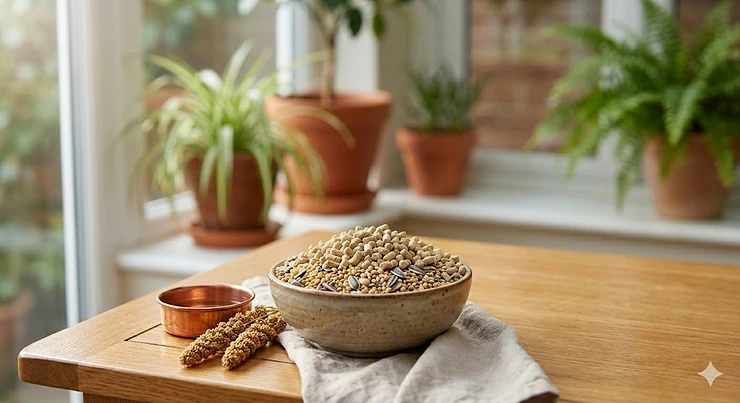
If you’ve ever watched your parrot meticulously pick through a seed mix—gleefully chomping sunflower seeds whilst flinging everything else to the bottom of the cage—you’ve witnessed the core problem with seed-based diets. Your feathered friend isn’t being difficult; they’re being instinctive. In the wild, parrots fly dozens of kilometres daily, burning off those fatty seed calories. In your flat in Manchester or your semi-detached in Bristol, they simply don’t.
Seed-only diets frequently lead to obesity, fatty liver syndrome, and critical deficiencies in vitamin A and calcium. Pellets, by contrast, deliver balanced nutrition in every bite—no selective eating, no nutritional gaps. The challenge? Getting a seed-addicted cockatiel or Amazon to embrace this alien beige food willingly.
This guide walks you through proven methods for how to convert bird to pellets safely and successfully, drawing on veterinary guidance and real-world UK experience. Whether you’re dealing with a stubborn African Grey or a finicky budgie, you’ll find practical strategies that work—without resorting to starvation tactics or watching your bird’s weight plummet.
Quick Comparison: Top 7 Pellet Brands for UK Birds
| Brand | Best For | Price Range | Key Feature | Availability |
|---|---|---|---|---|
| Harrison’s High Potency | Moulting birds, breeding | £15-£45 | Certified organic, vet-formulated | Amazon.co.uk, Prime eligible |
| ZuPreem FruitBlend | Picky eaters, young birds | £12-£25 | Colourful, fruity appeal | Amazon.co.uk, wide availability |
| Roudybush Daily Maintenance | Adult birds, daily feeding | £15-£70 | No added sugar, steam-processed | Amazon.co.uk, specialist sellers |
| TOP’s Organic Pellets | Health-focused owners | £25-£80 | Cold-pressed, USDA organic | Amazon.co.uk, premium option |
| ZuPreem Natural | Birds sensitive to colours | £18-£28 | No artificial dyes, vegetable-enriched | Amazon.co.uk, good stock |
| Harrison’s Adult Lifetime | Mature birds, maintenance | £15-£40 | Long-term nutrition, organic | Amazon.co.uk, reliable stock |
| Lafeber’s Premium Daily | Conures, small parrots | £13-£20 | Molasses-flavoured, high acceptance | Specialist UK retailers |
💬 Just one click — help others make better buying decisions too!😊
Top 7 Bird Pellets Available on Amazon UK: Expert Analysis
1. Harrison’s High Potency Fine – The Veterinary Gold Standard
Harrison’s dominates UK avian vet recommendations for good reason. This certified organic formula contains no synthetic preservatives, colours, or sweeteners—just whole grains, vegetables, and fruits processed to retain maximum nutrition. The High Potency variant packs extra nutrients for birds undergoing moult, breeding, or recovering from illness.
Key specs: 95% organic ingredients, USDA certified, available in Fine (cockatiels, small conures), Coarse (Amazons, Greys), and Super Fine (budgies, parrotlets) sizes. Each pellet delivers consistent vitamin A, calcium, and amino acids—the precise nutrients seed diets lack.
Expert opinion: What sets Harrison’s apart for UK owners is its suitability for Britain’s damp climate. Organic ingredients resist mould better during our humid summers, and the sealed bags maintain freshness through those long, grey months when you’re buying in bulk to save on delivery. Worth noting: some birds find the earthy, unsweetened taste initially unappealing, but the nutritional payoff justifies patience during conversion.
Customer feedback: UK reviewers consistently praise visible feather quality improvements within 4-6 weeks. One Hampshire owner reported their African Grey’s chronic feather-plucking decreased noticeably after switching from supermarket seed mix.
Pros:
✅ Certified organic—no pesticides or GMOs
✅ Vet-recommended globally and throughout UK
✅ Excellent for birds with liver issues or obesity
Cons:
❌ Higher price point (around £15-£45 depending on size)
❌ Plain taste may require gradual introduction
Price range: Around £15 for 454g, £35-£45 for larger 2.27kg bags. Prime delivery typically available from UK sellers.
Value verdict: Premium pricing, but the organic certification and veterinary backing justify the cost for serious parrot keepers. Calculate roughly £0.15-£0.25 per day for a medium-sized parrot—less than a Pret coffee, for significantly better long-term health.
2. ZuPreem FruitBlend Medium – The Picky Eater’s Gateway Pellet
If your cockatiel treats pellets like suspect Brussels sprouts, ZuPreem FruitBlend is your conversion ally. These vibrant, multicoloured pellets smell faintly fruity (natural flavours, not artificial) and feel approachable to birds raised on seed variety. The visual appeal alone often triggers curiosity—parrots investigate the rainbow colours, taste-testing before they realise they’re eating gasp healthy food.
Key specs: 14% crude protein, 4% crude fat, fortified with vitamins D and E. Available in Small (budgies), Medium (conures, Greys), and Large (macaws, cockatoos). Each pellet is uniform, preventing selective feeding.
Expert opinion: ZuPreem’s strength for UK households is versatility. Got multiple birds of varying sizes? One brand, different pellet sizes. The fruity scent works particularly well during Britain’s dreary winter months when birds (like their owners) crave anything remotely cheerful. However, be aware: some avian nutritionists prefer pellets without added flavours, arguing natural is better long-term. ZuPreem sits in the middle—not as pure as Harrison’s, but far superior to seed-only diets.
Customer feedback: UK buyers report high acceptance rates, especially with cockatiels and budgies. A London-based owner noted their sun conure transitioned in just 5 days using ZuPreem mixed with favourite millet.
Pros:
✅ High acceptance rate—birds actually eat it
✅ Affordable (£12-£25 range)
✅ Widely available on Amazon.co.uk with quick delivery
Cons:
❌ Contains natural flavours—purists may prefer unflavoured options
❌ Coloured pellets produce more vibrant droppings (startling but harmless)
Price range: Typically £12-£14 for 900g, around £22-£25 for 1.5kg bags. Excellent value for conversion phase.
Value verdict: Best bang for your pound during the tricky conversion period. Once your bird accepts the concept of pellets, you can graduate to plainer options if desired.
3. Roudybush Daily Maintenance Medium – The Science-Backed Staple
Developed by avian nutritionist Tom Roudybush after 16 years of research at UC Davis, this steam-processed formula avoids the nutrient loss common in baked pellets. No added sugars, no artificial colours—just nutritionally dense, naturally tan pellets that work particularly well for adult birds in maintenance mode.
Key specs: Scientifically formulated, steam-processed (not extruded), suitable for small cockatoos, Pionus, caiques, and similarly-sized species. Contains balanced protein and fat for non-breeding adult birds.
Expert opinion: Roudybush appeals to UK owners who appreciate evidence-based nutrition. Research flocks of Orange-winged Amazons at the University have thrived on Roudybush pellets since 1981—no other commercially available diet has such long-term data. For British birds spending winters indoors with limited natural light, Roudybush’s vitamin D fortification proves especially valuable. The texture—firm but not rock-hard—suits most beak strengths, though budgies may prefer the Mini or Crumble size.
Customer feedback: Mixed reviews on Amazon.co.uk regarding palatability. Some birds devour it; others require persuasion. UK reviewers suggest moistening pellets slightly for initial acceptance.
Pros:
✅ Extensive research backing
✅ No added sugar—excellent for weight management
✅ Steam processing preserves nutrients
Cons:
❌ Plain appearance may not attract picky eaters initially
❌ Less widely stocked than ZuPreem or Harrison’s
Price range: Around £17 for 1.25kg (44oz), £65-£70 for larger 11kg bags. Best value when buying bulk.
Value verdict: Solid mid-range option for owners prioritising nutrition over palatability gimmicks. The larger bags offer genuine savings for committed parrot households.
4. TOP’s Organic Small Pellets – The Premium Wellness Choice
For UK owners who scrutinise ingredients lists like they’re choosing baby food, TOP’s delivers. USDA Organic certified, cold-pressed rather than baked, and formulated without corn, soy, or peanut fillers—just rice, millet, barley, alfalfa, and a symphony of vegetables and herbs. Rosemary, lemon peel, and orange peel act as natural preservatives.
Key specs: 13% crude protein, 6% crude fat, 11% crude fibre. Cold-pressed manufacturing retains natural enzymes and vitamins. Available in Mini (budgies), Small (conures, quakers), and Large (Amazons, macaws) sizes.
Expert opinion: TOP’s occupies a unique space—it’s technically not marketed as a “complete” diet, which initially seems concerning until you understand the philosophy. The manufacturer argues no pellet alone provides 100% nutrition; birds need fresh vegetables, fruits, and occasional seeds regardless. This honesty resonates with UK owners who reject the “pellets fix everything” mentality. For British households already committed to daily chopping fresh veg (kale from the allotment, carrots from the farmer’s market), TOP’s integrates beautifully as the vitamin-fortified base.
Customer feedback: Reviews on Amazon.co.uk are polarised. Some birds refuse it entirely; others demolish it enthusiastically. The kale addition in recent formulations proved divisive—one Scottish reviewer lamented their macaw now tosses pellets cage-wide.
Pros:
✅ Certified organic with transparent ingredient sourcing
✅ Cold-pressed process maximises nutrient retention
✅ No fillers—rice, millet, and quality ingredients only
Cons:
❌ Premium pricing (£25-£80)
❌ Not labelled “complete”—requires supplementation
❌ Mixed acceptance rates
Price range: Around £9 for 450g, £25-£30 for 1.8kg, up to £80 for 11kg bulk bags.
Value verdict: Excellent for health-conscious owners already providing varied fresh foods. Possibly overkill if your bird’s diet resembles a student’s (oven chips and optimism).
5. ZuPreem Natural Medium – The Compromise Pellet
ZuPreem Natural bridges the gap between colourful FruitBlend and austere unflavoured pellets. These naturally tan pellets now include ground carrots, celery, beets, watercress, and spinach for a subtle vegetable flavour—appealing without being garish. No artificial colours or preservatives, making it suitable for birds with sensitivities.
Key specs: Same nutritional profile as FruitBlend (14% protein, 4% fat) but with added vegetable powder. Suitable for conures, caiques, African Greys, Senegals, Amazons, and small cockatoos.
Expert opinion: Natural works brilliantly for UK birds transitioning from FruitBlend as they mature. Start juveniles on the colourful version, then gradually shift to Natural around 12-18 months. The vegetable addition provides micronutrients without the candy-shop appearance. Particularly useful for owners embarrassed to serve rainbow pellets to visiting bird-savvy friends who judge silently.
Customer feedback: UK reviewers report smoother conversions than with completely plain pellets. One Surrey owner successfully switched their elderly Amazon from 20 years of sunflower seeds using Natural as a stepping stone.
Pros:
✅ No artificial colours—cleaner droppings
✅ Vegetable enrichment adds nutritional variety
✅ Good middle-ground for picky eaters
Cons:
❌ Still contains some natural flavouring
❌ Slightly higher price than FruitBlend
Price range: Around £18-£28 depending on size. Often available with Subscribe & Save discounts on Amazon.co.uk.
Value verdict: Worth the £5-£8 premium over FruitBlend if you’re philosophically opposed to dyed food but still need palatability assistance.
6. Harrison’s Adult Lifetime Coarse – The Long-Haul Maintenance Formula
Once your bird successfully converts to pellets and reaches adulthood, Harrison’s Adult Lifetime provides balanced maintenance nutrition without the high-calorie punch of High Potency. Designed for healthy, non-breeding, non-moulting adults who need steady, reliable nutrition year-round.
Key specs: Lower protein (14%) and fat (6%) than High Potency. Organic certification maintained. Available in Fine, Coarse, and Super Fine to accommodate different beak sizes.
Expert opinion: Adult Lifetime shines for UK owners with stable adult birds—think your 5-year-old African Grey who’s done growing, not breeding, and just needs quality daily nutrition. The reduced calorie content helps prevent obesity, particularly relevant for British birds spending winters indoors without extensive flight opportunities. Many UK vets recommend keeping both High Potency and Adult Lifetime on hand: use High Potency during moult (typically spring/autumn in Britain’s seasonal climate), switch to Adult Lifetime otherwise.
Customer feedback: Long-term UK users report excellent feather condition and stable weight. One Devon-based owner has fed their Blue-fronted Amazon exclusively Adult Lifetime for 8 years with spotless vet check-ups.
Pros:
✅ Lower calorie—ideal for less active birds
✅ Organic certification and vet backing
✅ Perfect for long-term maintenance
Cons:
❌ Not suitable for breeding pairs or growing chicks
❌ Plain taste requires committed conversion effort
Price range: Similar to High Potency—£15-£40 depending on bag size.
Value verdict: Essential for the “second act” after conversion. Don’t feed High Potency forever; graduate to Adult Lifetime once appropriate.
7. Lafeber’s Premium Daily Pellets Parrot – The Molasses-Sweetened Middle Path
Lafeber’s occupies an interesting niche: pellets naturally flavoured with molasses, which enhances acceptance without relying on artificial sweeteners. The company boasts 50 years of pelleted food experience, and their Premium Daily line balances nutrition with palatability.
Key specs: Includes ground non-GMO corn and soybean meal, whole egg protein, Omega 3 & 6 fatty acids. Naturally preserved and flavoured. Available for various parrot sizes.
Expert opinion: Molasses adds a subtle sweetness that helps convert stubborn seed addicts—particularly useful for UK budgies and cockatiels who find plain pellets depressing. However, some nutritionists prefer pellets without any sweeteners, arguing birds should learn to eat pellets for nutrition, not taste. Lafeber counters that compliance matters: a bird eating molasses-pellets gets better nutrition than one stubbornly refusing Harrison’s.
Customer feedback: Reviews emphasise high acceptance, especially among smaller parrots. Limited Amazon.co.uk availability compared to Harrison’s or ZuPreem—often requires ordering from specialist UK bird retailers.
Pros:
✅ High acceptance rate due to molasses
✅ 50-year company history
✅ Omega fatty acid balanced
Cons:
❌ Contains sweetener (natural, but still)
❌ Less available on Amazon.co.uk
❌ Some UK sellers charge higher prices
Price range: Around £13-£20 for 567g when available.
Value verdict: Excellent conversion tool, though Harrison’s or Roudybush may be better long-term choices once your bird accepts the pellet concept.
Understanding Why how to convert bird to pellets Requires Strategy
Simply tossing pellets into your cockatiel’s bowl and hoping for the best ranks alongside other parenting fails: “they’ll eat when they’re hungry” works for toddlers refusing vegetables, not for birds who can literally starve themselves out of sheer stubbornness. Parrots on hunger strikes during diet transitions have been documented, and Fresca’s owner discovered this the hard way when her red-lored Amazon refused new food despite critical liver disease.
The biological reality: seed-eating creates dopamine responses. Sunflower seeds, in particular, deliver fat and energy in concentrated hits—they’re avian crack cocaine. Your parrot’s brain registers “good food = high-calorie seeds” because wild ancestors needed maximum calories for 50-kilometre daily flights across rainforest canopies. Your pet, meanwhile, flies approximately 3 metres between cage and sofa whilst you watch Gogglebox. The maths doesn’t work.
Pellets deliver balanced nutrition: consistent protein (12-18%), controlled fat (4-8%), essential amino acids, vitamins A and D3, calcium, and trace minerals. Every bite is nutritionally complete—no selective feeding means no deficiencies. For UK birds spending October through March indoors under artificial lighting, vitamin D3 fortification becomes critical for calcium absorption and bone health.
What UK Owners Need to Know
British parrot keepers face unique considerations:
Climate impact: Our damp, mild weather encourages mould growth in open food bags. Pellets stored improperly during humid summer months can develop mycotoxins invisible to the naked eye. Always use airtight containers and inspect regularly.
Indoor housing reality: Most UK birds live indoors year-round due to unpredictable weather and shorter daylight hours (16 hours of darkness in December in Scotland). Limited natural light reduces vitamin D synthesis; quality pellets help compensate.
Compact living spaces: British homes average smaller than American or Australian equivalents. Your parrot likely has less flight space, burning fewer calories. Lower-fat pellet formulations (like Harrison’s Adult Lifetime or Roudybush Maintenance) suit this lifestyle better than high-energy seed mixes.
Veterinary access: UK avian vets generally support pellet-based diets, but finding specialists can prove challenging outside major cities. The RSPCA recommends pellets form roughly three-quarters of a parrot’s diet, with fresh fruits and vegetables comprising the remainder.
Step-by-Step Conversion Guide: The Gradual Mix Method
This method works best for patient owners with reasonably healthy birds. Expect 2-4 weeks for small parrots (budgies, cockatiels), 4-8 weeks for medium birds (conures, caiques), and potentially 8-12 weeks for stubborn large parrots (Amazons, Greys, macaws).
Week 1: Introduction Without Pressure
Morning: Offer regular seed mix as always—no changes yet.
Midday: Place 5-10 pellets in a separate, brightly-coloured bowl (parrots notice novelty). Position it prominently on a favourite perch. Don’t remove seeds.
Evening: Remove pellet bowl, even if untouched. Replace seed bowl as normal.
Goal: Familiarisation. Your bird should recognise pellets exist without feeling threatened by hunger.
Week 2: The 90/10 Mix
Combine 90% regular seed mix with 10% crushed or whole pellets in one bowl. Mix thoroughly so your bird can’t easily pick around them.
Critical: Weigh your bird every other day using a gram scale. Write it down. A 5% weight loss signals trouble—pause conversion and consult an avian vet immediately.
UK-specific tip: British autumn and winter reduce natural light, potentially affecting appetite. Consider a full-spectrum UV lamp (available on Amazon.co.uk, £25-£50) to maintain normal feeding rhythms during dark months.
Week 3-4: The 75/25 Mix
Increase pellet ratio to 25%, reduce seeds to 75%. Some birds accept this readily; others stage protests. Watch for:
- Normal signs: Increased drinking (pellets are dry; birds compensate), slightly looser droppings (expected with diet change)
- Warning signs: Lethargy, fluffed feathers, significant weight loss, drastically reduced droppings
Week 5-6: The 50/50 Mix
Half seeds, half pellets. This is often the trickiest stage—your bird may hunger-strike, hoping you’ll cave. Don’t. But monitor weight obsessively.
Encouragement tactics for stubborn UK birds:
- Flock feeding: Eat “pellets” yourself whilst making exaggerated “mmm” sounds (use safe-for-human pellets or just pretend)
- Foraging: Hide pellets in shredded paper, cardboard tubes, or foot toys
- Social pressure: If you have multiple birds, convert the greediest one first; others often follow
- Temperature variation: Slightly warm pellets appeal more than refrigerator-cold ones (think warm British summer afternoon, not nuclear)
Week 7-8: The 25/75 Mix
75% pellets, 25% seeds. By now, your bird should be eating pellets reliably. Seeds become a treat rather than the foundation.
Week 9+: Full Transition
Offer pellets as the base diet. Provide seeds (5-10% of diet) during foraging time or as training rewards. Add fresh vegetables (25% of diet) daily: kale, rocket, carrots, broccoli—preferably organic from British farms to avoid pesticide residues.
Real-World UK Scenario: Matching Birds to Conversion Methods
Scenario 1: The London Flat Budgie
Profile: Single budgie, 2 years old, lives in a Zone 2 flat, eats basic seed mix from Pets at Home, minimal vegetable exposure, owner works full-time.
Challenge: Limited supervision time, small bird = fast metabolism = can’t skip meals, picky eater.
Recommended method: ZuPreem FruitBlend Small as gateway pellet. Use the Gradual Mix Method but accelerate slightly—budgies adapt faster than large parrots. Invest in a second food bowl (£3-£5 on Amazon.co.uk) so pellets and seeds stay separate initially.
Expected timeline: 2-3 weeks
Budget: £12 for 900g ZuPreem, £8 for spare bowls and gram scale, total ~£20
Scenario 2: The Suburban African Grey
Profile: 7-year-old African Grey, lives in semi-detached house in Birmingham, currently on premium seed mix plus occasional vegetables, owner has time for gradual approach.
Challenge: Intelligent and therefore stubborn, seed-addicted for 7 years, requires monitoring due to species predisposition to calcium deficiency.
Recommended method: Harrison’s High Potency (calcium-rich) using the Mash Method. Grind pellets in a blender, mix 50/50 with favourite seeds (sunflower) and enough warm water to create sticky paste. Gradually reduce seeds over 4-6 weeks.
UK consideration: African Greys often develop vitamin D deficiency in British winters. Combine pellet conversion with UVB lighting upgrade (£40-£60 investment, available Amazon.co.uk).
Expected timeline: 6-8 weeks
Budget: £35 for Harrison’s High Potency 2.27kg, £50 for UV lamp, £10 for gram scale if needed, total ~£95
Scenario 3: The Multi-Bird Household (Manchester)
Profile: Two cockatiels, one green-cheeked conure, shared living space, currently all on mixed seed diet, varying acceptance levels.
Challenge: Different species = different pellet sizes needed, social dynamics (one bird influences others), owner wants one conversion process for all.
Recommended method: Start with the conure (typically greediest eater) on ZuPreem FruitBlend Medium. Once conure eats pellets enthusiastically (usually 3-5 days), introduce ZuPreem FruitBlend Small for cockatiels in shared foraging area. Social learning accelerates conversion.
UK angle: Northern homes often stay cooler (energy costs!); slightly warming pellets in microwave (5 seconds, stir well) increases palatability during Manchester’s damp autumns.
Expected timeline: 3-4 weeks for all birds
Budget: £14 for Medium bag, £12 for Small bag, total ~£26
Common Mistakes When Converting Birds to Pellets (And How UK Owners Can Avoid Them)
Mistake #1: The Cold Turkey Catastrophe
What it is: Removing all seeds immediately, offering only pellets, assuming hunger will force compliance.
Why it fails: Parrots raised on seed mixes don’t switch to pellets overnight—attempting to force it usually backfires. Birds can starve themselves for days out of sheer suspicion of unfamiliar food. Small birds, particularly budgies and cockatiels, have fast metabolisms; 24 hours without eating can trigger life-threatening hypoglycaemia.
UK-specific danger: British owners often attempt conversion during winter when birds’ natural appetite may already be suppressed by reduced daylight. This compounds the risk.
Solution: Always use gradual methods. If you must accelerate, consult an avian vet first and weigh your bird twice daily.
Mistake #2: Ignoring UKCA Marking and UK Electrical Standards
What it is: Purchasing bird supplies (heat lamps, UV lighting, food warmers) from non-UK sources without verifying 230V compatibility or UKCA certification.
Why it matters: Imported American products designed for 110V can malfunction or create fire hazards when plugged into UK sockets. After Brexit, UKCA marking replaced CE marking for many products sold in Britain.
Example: Buying a US-market heat lamp to warm pellets might seem economical, but without proper voltage conversion, it poses genuine danger.
Solution: Always verify Amazon.co.uk product listings specify “UK plug” or “230V compatible.” Check for UKCA or BS (British Standards) certification where applicable.
Mistake #3: Underestimating British Weather’s Impact
What it is: Storing pellets in garden sheds, garages, or conservatories exposed to Britain’s infamous damp.
Why it fails: Our humid climate encourages rapid mould growth. Pellets stored in non-airtight containers can develop mycotoxins within 2-3 weeks during wet British summers or mild, damp winters.
True story: A Somerset owner stored Harrison’s in a garage; mild December temperatures combined with condensation created invisible mould. Bird developed respiratory issues within 10 days.
Solution: Store pellets in airtight containers (available £8-£15 on Amazon.co.uk) inside the house. Consider vacuum-sealed bags for bulk purchases. Check regularly for off smells or discolouration.
Mistake #4: Forgetting to Monitor Weight in Grams
What it is: Assessing conversion progress by eye or using inaccurate bathroom scales.
Why it fails: Parrots hide illness brilliantly—evolutionary survival trait. By the time lethargy becomes obvious, 10-15% body weight may be lost. A 400g African Grey losing 40g is clinically significant; you won’t notice visually.
UK resource: The RSPCA emphasises regular weight monitoring for diet transitions.
Solution: Purchase a gram-accurate digital scale (£12-£20 on Amazon.co.uk). Weigh at the same time daily (morning works best). Record in a notebook or spreadsheet. A 5% drop triggers immediate vet consultation.
Mistake #5: Buying Pellets Not Available on Amazon.co.uk
What it is: Falling in love with American brand reviews on YouTube, ordering from US Amazon, then facing £30+ shipping, 2-week delays, and potential customs charges post-Brexit.
Why it’s problematic: Many excellent US pellet brands (Pretty Bird, Higgins) either aren’t stocked on Amazon.co.uk or cost prohibitively when imported. You start conversion with one brand, run out, can’t reorder affordably, and disrupt the process by switching brands mid-stream.
Solution: Stick to reliably available UK options: Harrison’s, ZuPreem, Roudybush, TOP’s all stock consistently on Amazon.co.uk with Prime delivery. Check “Dispatched from and sold by” to ensure UK warehouse stock.
The Mash Method: For Stubborn Seed Addicts
When the Gradual Mix Method fails—your cockatoo still picks through pellets like a toddler excavating peas from shepherd’s pie—the Mash Method provides a craftier approach.
How It Works
- Grind pellets to powder using a blender or food processor (£25-£40 on Amazon.co.uk if you don’t own one)
- Select favourite seed: Usually sunflower for large parrots, millet for budgies/cockatiels
- Create sticky mixture: Combine ground pellets (50%), favourite seeds (50%), and warm water until it forms a graham-cracker-crust consistency
- Serve small portions: 3-4 tablespoons for medium parrots, adjust for size
- Remove after 2-3 hours: Moist food spoils quickly, especially in warm British homes with central heating
Daily Progression
Days 1-3: Equal parts ground pellets and seeds. Bird forages through mash to find seeds, inevitably eating pellet powder.
Days 4-7: Reduce seeds to 40%, increase pellets to 60%. Bird adjusts to taste.
Days 8-14: Decrease seeds to 25%, increase pellets to 75%. Begin introducing whole pellets alongside mash.
Days 15+: Eliminate mash entirely. Offer only whole pellets. Seeds become training rewards only.
UK Winter Modification
British homes in winter often sit around 18-20°C with central heating. Mash served at room temperature may not appeal. Try warming it slightly—tepid bathwater temperature, not scalding tea. Test on your wrist before offering.
Liz Wilson successfully converted her macaw Sam using the mash method with ground pellets and favourite foods, achieving full conversion in just 10 days through determination and careful monitoring.
Troubleshooting Guide: When Conversion Stalls
Problem: Bird Loses More Than 5% Body Weight
Immediate action: Reintroduce favourite seeds immediately. Pause conversion.
Next steps: Consult UK avian vet within 24 hours. Many vet practices now offer telephone consultations (£15-£30) if physical visits prove difficult.
Prevention: Weigh daily during conversion. Catch 3% loss before it becomes 8%.
Problem: Bird Refuses All Pellets After 4 Weeks
Possible causes:
- Wrong pellet size (too large for beak)
- Texture preference (try crumbles instead of whole pellets)
- Brand-specific aversion (switch from Harrison’s to ZuPreem or vice versa)
Solutions:
- Size adjustment: If feeding Medium to a conure, try Small
- Texture variation: Roudybush Crumbles work for birds who dislike hard pellets
- Brand rotation: Order 2-3 small bags (ZuPreem FruitBlend, Harrison’s, TOP’s) and offer daily choice
Problem: Bird Eats Pellets But Develops Loose Droppings
Normal vs concerning:
- Normal: Slightly looser consistency for 5-7 days as digestive system adjusts. Increased water drinking is expected.
- Concerning: Persistently watery droppings, visible blood, sudden colour changes (green to brown), drastic volume decrease
Action: A change in dropping colour, thickness, frequency or amount might indicate illness and warrants consultation with an avian vet. Don’t wait beyond 3 days of abnormal droppings.
Problem: One Bird Converts, Others Refuse (Multi-Bird Household)
Strategy: Exploit flock dynamics.
- Feed converted bird pellets in full view of resistant birds
- Make exaggerated “yummy” sounds when successful bird eats
- Remove seed bowls temporarily (max 1 hour) during shared playtime; offer only pellets
- Provide individual bowls—eliminate competition
Long-Term Cost Analysis: Pellets vs Seeds in the UK
Seed-Based Diet (Annual Cost for One Medium Parrot)
- Premium seed mix: £12 per kg, ~500g consumed weekly = £312/year
- Vitamin supplements: £15 every 3 months = £60/year
- Veterinary costs for deficiency-related issues: £100-£500/year (conservative estimate)
- Total: £472-£872/year
Pellet-Based Diet (Annual Cost for One Medium Parrot)
- Harrison’s Adult Lifetime: £35 for 2.27kg bag, ~200g consumed weekly = £160/year
- Fresh vegetables: £3/week from Tesco/Morrisons = £156/year
- Occasional seeds as treats: £20/year
- Reduced vet visits: £50/year (preventative check-ups only)
- Total: £386/year
Net savings: £86-£486 annually, plus significantly improved quality of life and lifespan. Over a 25-year African Grey lifespan, pellets save £2,150-£12,150 whilst dramatically reducing obesity, liver disease, and calcium deficiency risks.
UK Regulations and Compliance for Bird Food
Post-Brexit Considerations
Since January 2021, UKCA marking has begun replacing EU’s CE marking for products sold in Great Britain (England, Scotland, Wales). Northern Ireland follows different rules under the Protocol. When purchasing bird food, heating lamps, or supplements from EU sellers, be aware:
- Potential customs charges on orders over £135
- Longer delivery times (10-14 days vs 2-3 days from UK sellers)
- Return complications for unsatisfactory products
Recommendation: Prioritise “Dispatched from and sold by Amazon.co.uk” or UK-based sellers on Amazon.co.uk to avoid Brexit-related complications.
UK Animal Welfare Standards
The Animal Welfare Act 2006 requires owners to provide appropriate diet for pet birds. Whilst not specifically mandating pellets, the RSPCA—Britain’s leading animal welfare charity—explicitly recommends pellet-based diets for parrots to prevent obesity and nutritional deficiencies.
Local councils can investigate welfare complaints. Provably malnourished birds may be removed from inadequate owners, though this is rare and typically involves severe neglect.
FAQ: Most Asked Questions About Converting Birds to Pellets
❓ How long does it take to convert a bird to pellets in the UK?
❓ Are pellets available on Amazon.co.uk safe for British birds?
❓ Can I mix different pellet brands during conversion?
❓ Do pellets need refrigeration in the UK climate?
❓ What if my bird is already overweight—should I still convert to pellets?
Conclusion: Your Bird’s Health Transformation Starts Today
Converting your parrot from seeds to pellets ranks among the most impactful decisions you’ll make as a UK bird owner. The process demands patience, consistency, and vigilance—qualities British bird keepers demonstrate daily whilst navigating our unpredictable weather, compact living spaces, and premium pricing on quality products.
Whether you choose Harrison’s for its organic credentials and veterinary backing, ZuPreem for its picky-eater appeal, Roudybush for science-backed nutrition, or TOP’s for premium wellness, you’re committing to your bird’s long-term health. Seed-only diets inevitably lead to obesity, liver disease, and calcium deficiency. Pellets, supplemented with fresh British vegetables (kale from the allotment, carrots from the farmer’s market) and occasional seeds as treats, provide balanced nutrition impossible to achieve otherwise.
Key takeaways for UK owners:
- Start with high-acceptance brands (ZuPreem FruitBlend, Lafeber’s) if your bird is stubbornly seed-addicted
- Graduate to premium options (Harrison’s, TOP’s) once converted
- Monitor weight obsessively using gram scales
- Account for British climate: store pellets properly, consider UV lighting for winter vitamin D
- Never cold-turkey; always gradual over 4-12 weeks depending on species
- Budget £12-£45 monthly for quality pellets plus fresh vegetables
- Expect total investment of £250-£400 annually for significantly improved health
The transformation won’t happen overnight—your African Grey won’t suddenly embrace Harrison’s after decades of sunflower seeds. But persistence pays dividends. Improved feather quality within 6-8 weeks. Stable weight and energy levels. Veterinary check-ups that make your avian vet smile rather than wince. And potentially 10-15 additional years with your feathered companion.
You’ve got this. Your parrot’s healthier future begins with that first bag of pellets ordered from Amazon.co.uk, a reliable gram scale, and the determination to see it through.
Recommended for You
- Best Bird Pellets UK 2026: Top 7 Complete Nutrition Brands
- 7 Best No Mess Wild Bird Seed Mix UK 2026 – Clean Garden Feeding
- 7 Best Dried Mealworms for Birds UK 2026
Disclaimer: This article contains affiliate links. As an Amazon Associate, I earn from qualifying purchases. If you purchase products through these links, we may earn a small commission at no additional cost to you.
✨ Found this helpful? Share it with your mates! 💬🤗
