
In This Article
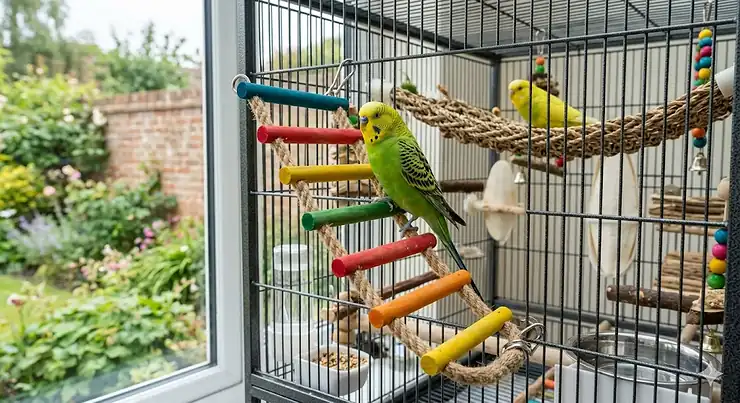
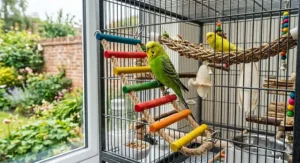
If your budgie spends most of its cage time hopping between two dowel perches, you’re missing out on one of the simplest ways to boost your bird’s physical and mental wellbeing. A rope ladder for budgies transforms a static cage into a dynamic climbing playground — and the difference in your bird’s behaviour can be rather remarkable.
In the wild, budgerigars navigate complex eucalyptus branches, constantly adapting to different angles, textures, and gripping surfaces. Climbing and perching activities help budgies strengthen their muscles, improve coordination and balance, whilst providing essential mental stimulation. Captive budgies denied this natural enrichment often develop boredom-related behaviours, from feather plucking to excessive vocalisation. A quality climbing ladder for parrot cage setups addresses this need directly, offering variable diameter gripping surfaces that keep feet healthy and minds engaged.
What most UK budgie owners overlook is that cage size alone doesn’t guarantee enrichment — it’s what you put inside that counts. According to the Animal Welfare Act 2006, UK pet owners must meet the ‘five welfare needs,’ including providing space for normal behaviour. For budgies, normal behaviour includes climbing, exploring vertical spaces, and exercising different muscle groups. The right rope ladder for budgie cage environments delivers all three.
In this guide, I’ll walk you through seven outstanding budgie exercise ladder options available on Amazon.co.uk right now, from budget-friendly jute designs to premium natural wood combinations. We’ll examine what separates a safe, durable ladder from a cheap knock-off that’ll fray within a fortnight, and I’ll share practical setup tips I’ve learned from years of keeping these clever little parrots in British homes.
Quick Comparison: Top Rope Ladders for Budgies
| Product | Material | Length | Price Range | Best For |
|---|---|---|---|---|
| Prevue Naturals Rope Ladder | Hevea wood + jute | 43-51 cm | £8-£12 | Natural texture variety |
| Tfwadmx Bird Rope Net | Hemp rope | 61 x 61 cm | £14-£18 | Multi-directional climbing |
| Happy Pet Wooden Ladder | Wood + rope | 28 cm (11 steps) | £3-£5 | Budget-conscious owners |
| ESRISE 7-Piece Toy Set | Mixed materials | Varies | £10-£15 | Complete cage setup |
| Trixie Gantry Ladder Frame | Wood + rope | Variable | £6-£10 | Compact cages |
From the comparison above, the Prevue Naturals strikes the best balance between natural enrichment and durability under £12, whilst the Tfwadmx net offers exceptional value for owners wanting multi-dimensional climbing experiences. Budget buyers should note that the Happy Pet ladder sacrifices material thickness for price — perfectly adequate for light chewers, but heavier beaked budgies might need replacing every 4-6 months rather than annually.
💬 Just one click — help others make better buying decisions too! 😊
Top 7 Rope Ladders for Budgies: Expert Analysis
1. Prevue Pet Products Naturals Rope Ladder
The Prevue Naturals represents what I consider the gold standard for climbing ladder for parrot cage installations in the UK market. What sets this apart is the sustainable hevea wood branches paired with untreated jute rope — no artificial dyes, no chemical treatments, just honest materials your budgie can safely chew on between climbing sessions.
The irregular branch diameters (varying between 8-12 mm) force your budgie’s feet to constantly adapt their grip, which is precisely what prevents the pressure sores and repetitive strain you’d see from identical dowel perches. The overall length ranges from 43-51 cm depending on branch thickness, making it suitable for most standard UK budgie cages (typically 50-60 cm height). What the manufacturer doesn’t advertise but you’ll discover quickly: the natural jute develops a slightly rough texture after a few weeks of use, giving budgies even better purchase when their feet are damp — rather handy in our perpetually humid British climate.
UK buyers particularly appreciate that this arrives quickly through Amazon.co.uk Prime, typically within 1-2 days to most mainland postcodes. The quick-link attachments make installation straightforward, though I’d recommend positioning it at a slight angle rather than purely vertical — budgies tend to climb more confidently when they can see the destination perch.
Customer feedback from UK reviewers consistently praises the durability, with most reporting 12-18 months of heavy use before rope replacement becomes necessary. One London-based owner noted their budgie pair used it so frequently that the bottom three rungs developed a polished sheen within four months.
Pros:
✅ Natural, untreated materials safe for chewing
✅ Variable branch diameter promotes foot health
✅ Quick-link attachment simplifies cage installation
Cons:
❌ Slightly pricier than budget alternatives
❌ Hand-made variations mean exact length varies
Around £8-£12 depending on availability — exceptional value for a ladder that’ll genuinely last beyond a single season of enthusiastic climbing.
2. Tfwadmx Natural Bird Rope Net (61 x 61 cm)
The Tfwadmx rope net takes vertical climbing enrichment in a completely different direction — literally. Rather than a traditional ladder configuration, this 61 x 61 cm hemp rope net creates a climbing wall effect inside your cage, encouraging multi-directional movement that exercises different muscle groups.
The hemp construction deserves particular attention. Hemp rope resists mould and mildew far better than cotton alternatives, which matters considerably when you’re dealing with British damp and the inevitable water bowl splashes. The 5 mm rope diameter strikes a sweet spot for budgie feet — thick enough for secure gripping but not so chunky that smaller budgies struggle to wrap their toes around it. What most buyers discover after a fortnight: budgies don’t just climb straight up; they’ll navigate diagonally, hang upside down from the horizontal strands, and even use it as a swinging perch when the mood strikes.
For UK homes with larger flight cages (76 cm width or more), this net provides genuine enrichment value that simple ladders can’t match. You can hang it flat against one cage wall or suspend it at an angle to create a more challenging climbing experience. The stainless steel hooks include a swivel mechanism that prevents tangling — a small detail that makes repositioning far less frustrating.
UK customer reviews frequently mention that budgies initially approach it cautiously (the webbed structure looks unfamiliar), but within 2-3 days most birds confidently navigate the entire surface. One Manchester owner reported their previously sedentary budgie lost noticeable chest fat within six weeks of daily net climbing — proper exercise delivering visible health benefits.
Pros:
✅ Multi-directional climbing exercises varied muscle groups
✅ Hemp naturally resists mould in damp UK conditions
✅ Large surface area suits spacious flight cages
Cons:
❌ Requires cage dimensions of at least 60 cm width
❌ Initial unfamiliarity may deter nervous budgies
In the £14-£18 range — premium pricing justified by the hemp quality and the sheer climbing surface you’re getting.
3. Happy Pet Wooden Bird Ladder (11 Steps)
The Happy Pet ladder earns its place on this list purely through accessible pricing and practical functionality. At 28 cm length with 11 wooden rungs, it’s compact enough for smaller UK budgie cages whilst still providing meaningful climbing opportunities.
What you’re getting here is straightforward: natural wood rungs connected by basic rope, no bells and whistles, no premium materials. The wood isn’t hevea or sustainably harvested anything — it’s standard untreated timber that does the job without pretence. For budget-conscious UK owners setting up their first budgie cage or those needing multiple ladders across several cages, this represents sensible value in the £3-£5 bracket.
The reality check: this won’t survive a determined chewer for more than 4-6 months. The rope tends to fray faster than premium alternatives, particularly where it threads through the wooden rungs. But here’s the thing — at this price point, you can replace it twice yearly and still spend less than one premium ladder. If your budgie is a light to moderate chewer and you’re vigilant about trimming loose threads, this delivers adequate vertical climbing enrichment without breaking the bank.
UK delivery through Amazon.co.uk typically arrives within 2-3 days to most postcodes. The simplicity means zero assembly confusion — hook it up and you’re done. Several Scottish Highlands buyers noted it arrived intact despite the longer delivery route, which speaks to reasonable packaging quality.
Pros:
✅ Genuinely affordable at £3-£5
✅ Compact size suits smaller standard cages
✅ Simple installation with no assembly required
Cons:
❌ Shorter lifespan with heavy chewers
❌ Basic materials lack premium durability
Budget pricing doesn’t mean worthless — it means accepting you’ll replace it more frequently in exchange for upfront savings.
4. ESRISE 7-Piece Bird Toy Set with Climbing Ladder
The ESRISE set approaches budgie enrichment through quantity and variety rather than single-item excellence. This seven-piece collection includes a rope ladder alongside swings, bells, wooden perches, and chewing toys — essentially a complete cage enrichment kit for under £15.
The climbing ladder itself measures approximately 30 cm and combines wooden rungs with cotton rope. It’s not the most sophisticated ladder you’ll encounter, but context matters: you’re not buying this for the ladder alone. The strategic value lies in providing multiple enrichment types simultaneously, which keeps budgies engaged through novelty rotation. When your bird loses interest in the ladder, the swing becomes fascinating. When the swing grows dull, the bell demands attention. This variety prevents the boredom-induced behavioural problems that plague under-enriched caged birds.
UK buyers should note that this represents particularly good value if you’re setting up a cage from scratch or significantly upgrading an existing setup. Purchasing equivalent items individually would easily exceed £25-£30, whilst this arrives as a coordinated set. The materials won’t match premium standalone products, but for new budgie owners uncertain about their bird’s preferences, this collection provides low-risk exploration across multiple enrichment types.
The rope ladder for budgie cage applications in this set works best as part of the rotation strategy rather than as your sole climbing option. One Birmingham owner cleverly rotates three toys in and three toys out every fortnight, maintaining perpetual novelty whilst the unused toys get cleaned and inspected for wear.
Pros:
✅ Complete enrichment variety in one purchase
✅ Excellent value for comprehensive cage setup
✅ Low-risk way to discover your budgie’s preferences
Cons:
❌ Individual components lack premium quality
❌ Cotton rope requires more frequent replacement than hemp
Around £10-£15 for the complete set — outstanding value for breadth of enrichment, though dedicated climbers will eventually need something more robust.
5. Trixie Gantry Ladder Frame
The Trixie Gantry brings a slightly different structural approach: rather than a simple hanging ladder, this creates a three-dimensional climbing frame that attaches to cage bars on multiple points. This stability advantage matters significantly for nervous budgies who dislike swinging ladders.
The frame design combines natural wood branches with rope connections, creating what’s essentially a miniature climbing gym. What makes this particularly suitable for UK budgie cages is the compact footprint — it occupies vertical space efficiently without monopolising the entire cage width. For terraced house owners dealing with space constraints (a distinctly British problem), this delivers substantial enrichment value without requiring a massive cage.
UK customer reviews consistently highlight that budgies take to this immediately, with multiple buyers noting their birds perched on it within minutes of installation. The stability seems to inspire confidence — budgies will hang upside down, sleep on the upper perches, and generally treat it as prime real estate within the cage.
The variable branch angles force your budgie to problem-solve their climbing route, which provides the mental stimulation that prevents feather-plucking and other stress behaviours. One Zooplus UK reviewer mentioned their budgie pair uses it to reach their preferred hammock, treating it as essential cage infrastructure rather than optional enrichment.
Pros:
✅ Three-dimensional structure provides varied climbing angles
✅ Multiple attachment points create stable, non-swinging platform
✅ Compact footprint suits space-constrained UK homes
Cons:
❌ Limited availability compared to mainstream ladder designs
❌ Requires specific cage bar spacing for secure attachment
Typically £6-£10 when available — the stability advantage justifies the premium over basic hanging ladders.
6. CQJ Bird Climbing Rope Net (46 x 51 cm)
The CQJ rope net represents a middle-ground option between basic ladders and premium climbing structures. At 46 x 51 cm, it provides substantial climbing surface area whilst remaining manageable for standard UK budgie cages (typically 60-76 cm dimensions).
The natural jute construction handles British dampness reasonably well, though not quite matching hemp’s mould resistance. What you’re gaining here is a generous climbing surface at a moderate price point — typically £10-£14, which undercuts the Tfwadmx whilst delivering similar multi-directional climbing benefits. The rope diameter sits around 4-5 mm, slightly thinner than premium alternatives but perfectly adequate for budgie feet.
UK customers appreciate the straightforward hanging system — metal hooks on each corner with quick-link attachments that clip onto cage bars in seconds. The net arrives slightly wrinkled from packaging, but a gentle shake and overnight hang sorts that quickly enough. One practical limitation: the jute fibres tend to shed slightly during the first week, leaving bits of fibre at the cage bottom. This is normal for natural rope and settles after initial use, but fastidious cage cleaners find it mildly irritating.
The climbing rope ladder functionality particularly suits budgies recovering from illness or injury, as the multiple gripping points throughout the net provide numerous rest stops during ascent. Your bird isn’t committed to climbing the full height in one go — they can pause halfway, move laterally, then continue when ready.
Pros:
✅ Generous climbing surface at mid-range pricing
✅ Natural jute construction safe for chewing
✅ Multiple hook points allow varied hanging angles
Cons:
❌ Initial fibre shedding requires extra cage cleaning
❌ Jute less mould-resistant than hemp in very damp conditions
Around £10-£14 — sensible compromise between budget options and premium hemp alternatives.
7. Natural Wood Parrot Ladder with Rope (60 cm)
This 60 cm natural wood ladder represents the maximum practical length for most UK budgie cages. The extended height creates genuine vertical climbing challenges, forcing your budgie to engage in sustained physical activity rather than quick hops between levels.
The construction combines chunky wooden rungs (approximately 10-12 mm diameter) with heavy-duty jute rope, creating a notably robust feel compared to budget alternatives. This durability matters for households with multiple budgies — two or three birds simultaneously climbing won’t stress the connections or bend the rungs. The natural wood varies slightly in colour and texture, which actually enhances the enrichment value as budgies respond to natural variation.
What UK buyers discover: this length works brilliantly in taller flight cages but overwhelms standard cages. If your cage height sits below 60 cm, the ladder will bunch at the bottom, defeating the climbing purpose. For those with proper flight cages (76 cm height or taller), this delivers the full ladder length cage size benefit that shorter options simply can’t match. Your budgie can genuinely exercise through sustained climbing rather than abbreviated efforts.
The vertical climbing enrichment at this length provides cardiovascular benefits similar to extended free-flight sessions — heart rate elevation, deep breathing, and full-body muscle engagement. One Surrey-based owner tracks her budgie’s weight and noted improved muscle tone after three months of daily climbing on this extended ladder.
Pros:
✅ Extended 60 cm length provides sustained climbing exercise
✅ Heavy-duty construction withstands multiple simultaneous climbers
✅ Natural wood variation maintains visual interest
Cons:
❌ Requires minimum 60 cm cage height to function properly
❌ Longer length commands premium pricing
Typically £12-£16 — premium cost justified by the extended climbing benefits for properly sized cages.
Setting Up Your Rope Ladder: Maximising Climbing Enrichment
Getting a rope ladder into your budgie’s cage is straightforward — getting your budgie to actually use it requires slightly more thought. Position matters enormously, and most new owners make the same mistakes.
Optimal Placement Strategy
Hang your ladder at a 15-20 degree angle rather than perfectly vertical. This slight incline gives budgies better visual confirmation of the destination perch, reducing hesitation on first attempts. Perfectly vertical ladders work fine once your bird’s confident, but angled placement accelerates the learning phase.
Connect the top of the ladder near a preferred perch or feeding station. Budgies are food-motivated creatures — if climbing the ladder provides access to something desirable, they’ll overcome initial nervousness remarkably quickly. One clever tactic: place a small treat on the third rung for the first few days, creating positive associations with ladder exploration.
For multi-budgie households, install the ladder where it doesn’t block primary flight paths. Budgies need horizontal space for their characteristic rapid flights between perches. A ladder positioned across the cage centre creates an obstacle rather than enrichment. Instead, attach it along one side wall, preserving the horizontal flight corridor whilst adding vertical climbing options.
UK Climate Considerations
British dampness affects natural rope materials more than most buyers anticipate. Even with windows closed, UK homes maintain relatively high humidity (typically 60-70% during autumn and winter). Natural jute and hemp handle this reasonably well, but you’ll extend ladder lifespan significantly with these simple measures:
Weekly inspection for mould or mildew, particularly where rope contacts metal hooks or wooden rungs. Early detection allows spot-cleaning before replacement becomes necessary. A stiff brush removes accumulated dust and feather dander that retains moisture. Position ladders away from water bowls if possible — splash radius matters more than you’d think. One particularly wet Cornwall owner reports rotating between two ladders, with one always drying completely whilst the other remains in active use.
For budgies with particularly damp droppings (often diet-related), avoid placing the ladder directly below prime perching spots. Wet droppings accelerate rope deterioration faster than normal use.
Breaking In New Ladders
Your budgie won’t necessarily recognise a new ladder as climbable infrastructure — remember, wild budgerigars never encountered rope. Some gentle encouragement helps:
Days 1-2: Simply hang the ladder. Let your budgie observe it from safe perching distance. Budgies process new objects cautiously, and forced interaction creates negative associations.
Days 3-4: Place favourite treats on lower rungs. Most budgies will tentatively investigate within this timeframe, especially if they see you placing the treats.
Days 5-7: Gradually move treats higher up the ladder. You’re not training climbing specifically — you’re demonstrating that the ladder provides stable support and leads somewhere rewarding.
If your budgie remains hesitant after a week, they may need to see another bird climb first. UK budgie owners with solo birds sometimes play YouTube videos of budgies climbing — it sounds daft, but visual learning genuinely works for these social birds.
Budgie Climbing Behaviour: What the Research Actually Shows
The benefits of climbing enrichment for budgies extend well beyond simple exercise. Physical climbing activities help budgies strengthen muscles and improve coordination and balance, whilst simultaneously challenging problem-solving skills and providing essential mental stimulation. Different perch textures and diameters prevent pressure sores and promote healthy blood circulation in feet and legs.
The mental stimulation component deserves particular emphasis. According to RSPCA guidance on bird welfare, experts recommend having at least 3 to 5 different types of toys in a budgie’s cage to promote mental engagement and prevent stress. A climbing ladder contributes to this variety by offering dynamic interaction — the experience changes based on climbing direction, speed, and destination. Static perches, regardless of quantity, can’t provide this same cognitive challenge.
What many UK owners overlook: climbing behaviour connects directly to natural foraging instincts. Wild budgerigars climb through vegetation whilst searching for seeds, constantly adapting to branch flexibility and varying surfaces. Research from Oxford University’s Department of Zoology has shown that captive birds denied climbing opportunities miss not just exercise but also the problem-solving stimulation that accompanies navigating three-dimensional space. This deprivation manifests as boredom-related behaviours, from excessive noise to feather damaging.
Horizontal cage bars are preferred over vertical configurations specifically because they facilitate easier climbing. This same principle applies to ladder selection — rungs placed horizontally (perpendicular to the climbing direction) feel more natural to budgies than vertically oriented designs.
Rope Ladder Safety: What UK Budgie Owners Must Know
Natural rope materials — jute, hemp, sisal — represent the safest options for budgie ladders, but even safe materials require proper maintenance. Loose threads present the primary safety concern, as budgie toes can become entangled, potentially causing injury or circulation problems.
Inspect rope connections weekly, particularly where rope threads through wooden rungs or metal attachments. These friction points develop wear fastest. According to guidance from UK avian veterinarians, whenever fray appears on climbing accessories, trim it immediately to eliminate entanglement possibility. Don’t wait until the next cage cleaning — address loose threads the moment you spot them.
Avoid cotton rope ladders for long-term use. Cotton absorbs moisture readily, promotes bacterial growth, and frays significantly faster than jute or hemp alternatives. Budget cotton ladders appear economical initially but require replacement every 2-3 months in typical UK humidity, whilst quality jute ladders last 12-18 months under similar conditions.
Material Selection for British Conditions
Hemp: Naturally mould and mildew resistant, handles British dampness excellently. Premium pricing (typically £12-£18) but extends replacement intervals significantly.
Jute: Good moisture resistance at moderate pricing (£6-£12). Develops slight fuzziness over time but remains functional. Most popular choice for UK budgie owners.
Sisal: Extremely durable but rougher texture. Some budgies find it scratchy; others don’t notice. Less common in UK market.
Cotton: Soft feel but poor moisture handling. Only suitable for very dry environments or disposable short-term use.
Avoid synthetic ropes entirely. Nylon, polyester, and polypropylene may seem durable, but they’re completely unsuitable for chewing birds. Budgies will chew rope — it’s natural behaviour. Synthetic fibres don’t digest and can cause crop impaction if swallowed.
Common Mistakes When Buying Budgie Climbing Ladders
Mistake 1: Prioritising Length Over Cage Height
New owners frequently purchase the longest ladder available, assuming bigger equals better. Then they discover their 60 cm ladder bunches uselessly in their 50 cm tall cage. Measure your cage interior height before shopping, and select a ladder 5-10 cm shorter than maximum height to allow proper hanging angle.
Mistake 2: Ignoring UK Delivery and Returns
Not all Amazon.co.uk sellers ship from UK warehouses. EU-based sellers may add unexpected delivery time (5-10 days versus 1-2 days Prime) and complicate returns under post-Brexit regulations. Check seller location before purchasing — look for “Dispatched from and sold by Amazon” or UK-based third parties for fastest delivery and straightforward returns under UK consumer protection.
Mistake 3: Assuming All Natural Rope Is Safe
“Natural” doesn’t automatically mean safe. Hemp, jute, and sisal rope products imported from certain regions might be treated with pesticides during cargo transport. Purchase from reputable brands that explicitly state untreated, bird-safe materials. In the UK market, Prevue, Trixie, and Happy Pet maintain consistent safety standards.
Mistake 4: Single Ladder Syndrome
One ladder provides enrichment. One ladder also becomes territorial property in multi-budgie households, potentially creating conflict. For pairs or groups, install at least two climbing structures in different cage areas, reducing competition and encouraging simultaneous use.
Mistake 5: Neglecting Post-Brexit UKCA Marking
Whilst pet toys don’t typically require UKCA certification, post-Brexit import considerations affect availability and pricing for EU-manufactured products. UK-stocked items generally arrive faster and cost less than those requiring customs processing. Amazon.co.uk’s filter tools help identify UK warehouse stock — use them.
How to Choose the Right Rope Ladder for Your Budgie’s Age and Ability
For Young Budgies (3-8 Months)
Younger birds benefit from shorter ladders (25-35 cm) positioned at gentle angles. Their coordination is still developing, making extended vertical climbs unnecessarily challenging. Select ladders with closely spaced rungs (4-6 cm apart) that provide frequent grip opportunities without large gaps. The Trixie Gantry Ladder Frame works brilliantly for this age group — the multiple branch angles allow young budgies to find comfortable routes whilst building climbing confidence.
For Adult Budgies (8 Months – 7 Years)
Peak physical condition allows for maximum climbing challenges. Full-length ladders (45-60 cm), climbing nets, and multi-dimensional structures all suit this age range. This is when you can genuinely push enrichment boundaries — install the Tfwadmx rope net or extended natural wood ladder and watch your budgie’s athleticism shine. Adult budgies in good health will navigate complex climbing structures with impressive agility, particularly if they’ve had consistent enrichment throughout development.
For Senior Budgies (7+ Years)
Arthritis and reduced muscle strength affect climbing ability as budgies age. Shorter ladders with thicker rungs (10-12 mm diameter) reduce foot strain. Position ladders at shallower angles (10-15 degrees from vertical) to make climbing less strenuous. Senior budgies still want to climb — it’s hardwired behaviour — but they need accommodations similar to those we’d make for elderly humans. One considerate approach: maintain the climbing ladder at an easy height whilst keeping other perches relatively low, preserving climbing enrichment without forcing exhausting efforts.
Rope Ladder vs Traditional Perches: The Enrichment Difference
Standard dowel perches serve a purpose — stable resting platforms with predictable diameter. But they’re passive enrichment at best. Your budgie perches, rests, perhaps preens a bit, then… perches some more.
Rope ladders transform this static experience into active engagement. Climbing requires decision-making (which route?), physical effort (sustained movement rather than hop-and-rest), and problem-solving (how do I reach that upper perch?). This cognitive and physical engagement prevents the boredom that leads to behavioural problems.
Consider the muscle groups involved: climbing engages chest muscles, leg muscles, grip strength, and core stabilisation simultaneously. Perching exercises… grip strength. That’s it. For budgies prone to obesity (remarkably common in captivity), climbing provides genuine cardiovascular exercise that simple perch-to-perch hopping can’t match.
The enrichment difference becomes obvious in budgie behaviour. Birds with climbing structures spend more time actively exploring their environment, vocalise less out of boredom, and develop better physical condition. One Norfolk owner noticed her budgie’s flight endurance improved noticeably after introducing a climbing net — stronger chest muscles translated directly to better flight capability during supervised out-of-cage time.
FAQ: Your Rope Ladder Questions Answered
❓ How long do rope ladders for budgies typically last?
❓ Can rope ladders be cleaned, or must they be replaced when soiled?
❓ What's the minimum cage size needed for a rope ladder?
❓ Are rope ladders safe for budgies who chew excessively?
❓ Do rope ladders work for nervous or hand-shy budgies?
Conclusion: Transforming Your Budgie’s Cage into a Climbing Paradise
A rope ladder for budgies represents one of the simplest yet most impactful enrichment additions you’ll make to your bird’s environment. For under £15, you’re providing natural climbing opportunities that exercise muscles, challenge cognitive abilities, and prevent the boredom-related behaviours that plague under-stimulated captive birds.
The products reviewed here — from the budget-friendly Happy Pet wooden ladder to the premium Tfwadmx hemp climbing net — all deliver meaningful vertical climbing enrichment when properly installed and maintained. Your choice ultimately depends on cage dimensions, budget constraints, and your budgie’s personality. Nervous birds appreciate the Trixie Gantry’s stability; athletic climbers thrive on extended natural wood ladders; multi-budgie households benefit from the Tfwadmx net’s generous climbing surface.
Remember that enrichment isn’t a one-time purchase but an ongoing commitment. Rotate climbing structures every few months to maintain novelty, inspect rope connections weekly for safety, and don’t hesitate to replace worn ladders before they become hazardous. Your budgie’s physical and mental wellbeing depends on these seemingly small details.
The budgie exercise ladder you choose today will shape your bird’s daily experience for the next year or more. Choose wisely, install thoughtfully, and watch your budgie transform from a sedentary percher into an enthusiastic climber. The behavioural difference is genuinely rather remarkable.
Recommended for You
- 7 Best Platform Swing for Cockatiels UK 2026
- 7 Best Natural Wood Bird Swing Options in UK 2026
- 7 Best Cotton Rope Bird Swings UK 2026
Disclaimer: This article contains affiliate links. As an Amazon Associate, I earn from qualifying purchases. If you purchase products through these links, we may earn a small commission at no additional cost to you.
✨ Found this helpful? Share it with your mates! 💬🤗
