
In This Article
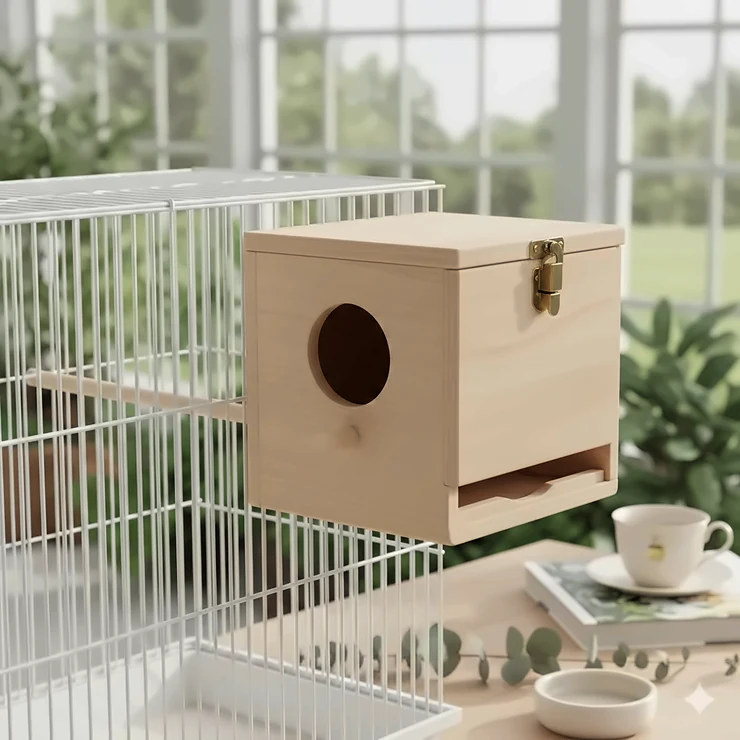
Choosing the right budgie nest box wooden isn’t just about ticking a box on your breeding checklist—it’s about creating a safe, comfortable environment where your feathered friends can raise their chicks successfully. After spending countless hours researching and consulting with experienced UK breeders, I’ve discovered that the material, dimensions, and design of your nest box can make or break your breeding season.
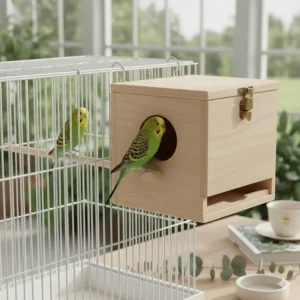
Wooden nest boxes have remained the gold standard for budgerigar breeding for decades, and there’s solid reasoning behind this preference. Unlike plastic alternatives, wood provides superior insulation, regulates temperature naturally, and creates an environment that closely mimics the tree cavities budgies would choose in their native Australian habitat. According to Omlet UK’s comprehensive breeding guide, budgies need cavities to mate and nest in—something that simulates the tree holes they favour in the wild.
What is budgie nest box wooden? A budgie nest box wooden is a specially designed wooden enclosure, typically measuring 20-25 cm in dimensions, featuring an entrance hole of approximately 4 cm diameter and a concave floor to prevent eggs rolling, providing budgerigars with a secure breeding environment.
Whether you’re a first-time breeder nervously awaiting your first clutch or an experienced aviculturist looking to upgrade your breeding setup, this guide will walk you through everything you need to know about selecting, maintaining, and optimising wooden nest boxes for your budgies.
Quick Comparison Table
| Product Name | Price Range (£) | Key Features | Best For | Rating |
|---|---|---|---|---|
| Hutch Company Budgie Breeder Box | £14-£17 | Clear perspex door, removable base | Beginner breeders | 4.3/5 |
| PIVBY Parakeet Nest Box | £13-£16 | Natural wood, hinged lid | Budget-conscious | 4.2/5 |
| Trixie Natural Nesting Box | £10-£14 | FSC certified, built-in concave | Eco-friendly choice | 4.7/5 |
| RAHYMA Transparent Design Box | £14-£19 | Clear front panel, multiple sizes | Observation breeding | 4.1/5 |
| Supa Wooden Nest Box | £9-£13 | Traditional design, durable | Standard breeding | 4.2/5 |
| Premium Oak Breeding Box | £22-£28 | Solid oak, inspection door | Professional breeders | 4.6/5 |
| HEEPDD Multi-Chamber Box | £16-£21 | Double compartment, ventilation | Colony breeding | 4.4/5 |
💬 Just one click – help others make better buying decisions too! 😊
Top 7 Budgie Nest Box Wooden: Expert Analysis
1. Hutch Company Budgie Breeder Nest Box
This clear-view nesting box has become something of a legend amongst UK budgie breeders, and after examining countless customer reviews, it’s easy to see why. Manufactured from quality plywood with a unique perspex sliding door, this box allows you to monitor your breeding pair without disturbing them—a feature that’s absolutely invaluable during those crucial first weeks.
Key Specifications:
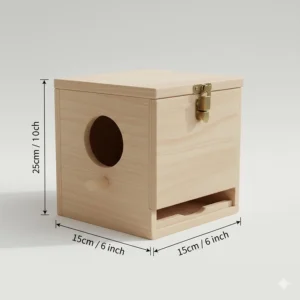
- Dimensions: 25 × 15 × 15 cm
- Entrance hole: 4 cm diameter with protective metal ring
- Built-in wooden concave floor
UK breeders particularly appreciate the removable base, which makes cleaning between clutches remarkably straightforward. One customer mentioned, “Excellent budgie nesting box. Removable easy to clean base and good to have the perspex sliding front to watch the babies develop.”
Pros:
✅ Dual door system prevents escapees
✅ Easy maintenance and cleaning
✅ Great visibility for monitoring
Cons:
❌ Slightly higher price point
❌ Requires careful assembly
Price: £14.24-£16.98 | Availability: Amazon.co.uk with free UK delivery
2. PIVBY Parakeet Nest Box
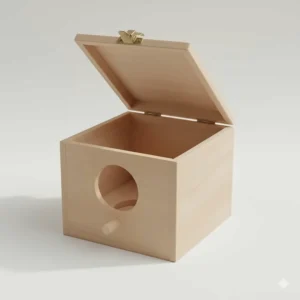
The PIVBY Parakeet Nest Box represents excellent value for money whilst maintaining the quality standards UK breeders expect. Constructed from all-natural, untreated wood, this box measures 25 × 13.5 × 13.5 cm—perfect dimensions for budgies whilst providing enough space for a growing brood.
Key Specifications:
- Natural wooden construction, no toxic materials
- Side-opening design for easy access
- Includes perching ledge (5.5 cm)
This box features a practical hinged lid design that makes daily nest inspections considerably easier. British buyers note its durability, though some mention their budgies enjoy chewing the softer wood—which isn’t necessarily a bad thing, as it provides natural enrichment.
Pros:
✅ Non-toxic, natural materials
✅ Easy to attach to various cage types
✅ Comfortable perching area
Cons:
❌ Wood may splinter if heavily chewed
❌ Basic design without inspection window
Price: £13.98-£15.99 | Availability: Widely available on Amazon.co.uk
3. Trixie Natural Nesting Box
If sustainability matters to you, the Trixie Natural Nesting Box should top your list. This FSC-certified box uses wood from responsibly managed forests, making it an environmentally conscious choice without compromising on functionality. According to breeding experts at Budgie Bubble, proper housing with appropriate nesting boxes is crucial for successful breeding outcomes.
Key Specifications:
- FSC certified sustainable wood
- Pre-formed concave floor mould
- Top-opening access panel
UK customers rave about this box’s longevity, with many reporting successful use across multiple breeding seasons. The built-in nest concave helps prevent splayed legs in chicks—a common concern for conscientious breeders.
Pros:
✅ Environmentally friendly materials
✅ Excellent value for money
✅ Proven track record with UK breeders
Cons:
❌ Basic aesthetic appeal
❌ May develop condensation in humid conditions
Price: £10.58-£13.99 | Availability: Amazon.co.uk and specialist pet retailers
4. RAHYMA Transparent Design Nest Box
For breeders who want to observe every stage of chick development, the RAHYMA Transparent Design Nest Box offers an innovative solution. The clear acrylic front panel provides unobstructed viewing whilst maintaining the temperature stability that wooden construction provides.
Key Specifications:
- Natural wood with transparent viewing panel
- Available in multiple sizes (S, M, L)
- Secure locking mechanism
This hybrid design combines the best of both worlds—natural wooden sides and back for insulation, with a clear front for observation. It’s particularly useful for educational purposes or when monitoring first-time breeding pairs.
Pros:
✅ Excellent observation capabilities
✅ Size options for different setups
✅ Good ventilation design
Cons:
❌ Requires more frequent cleaning of viewing panel
❌ Slightly more expensive than basic models
Price: £14.94-£18.99 | Availability: Amazon.co.uk
5. Supa Wooden Nest Box
The Supa Wooden Nest Box represents the traditional approach to budgie breeding—simple, effective, and time-tested. This no-frills design has been helping UK budgies successfully raise chicks for years, proving that sometimes the classics work best.
Key Specifications:
- Standard budgie dimensions (23 × 15 × 15 cm)
- Solid wood construction
- Side-mounted design option
This box’s straightforward design means fewer things can go wrong, and UK customers appreciate its reliability. It’s the type of nest box your breeding pair will use season after season without complaints.
Pros:
✅ Reliable, proven design
✅ Budget-friendly pricing
✅ Easy to mount and maintain
Cons:
❌ No inspection window
❌ Basic construction quality
Price: £9.83-£12.99 | Availability: Multiple UK pet retailers
6. Premium Oak Breeding Box
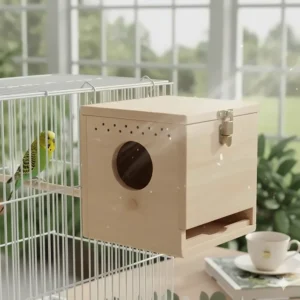
For serious breeders who want the absolute best, the Premium Oak Breeding Box offers superior construction and longevity. Crafted from solid oak with reinforced joints, this box represents an investment in quality that will serve multiple generations of budgies.
Key Specifications:
- Solid oak construction
- Dual inspection doors (top and side)
- Reinforced entrance hole with brass ring
Whilst the initial cost is higher, UK breeders report this box lasting 10+ years with proper maintenance—making it excellent value over time. The inspection door design allows you to check on chicks without fully opening the box, reducing stress on the breeding pair.
Pros:
✅ Exceptional build quality
✅ Long-term durability
✅ Professional-grade features
Cons:
❌ Higher upfront cost
❌ Heavier than standard boxes
Price: £22.49-£27.99 | Availability: Specialist breeding suppliers and Amazon.co.uk
7. HEEPDD Multi-Chamber Breeding Box
The HEEPDD Multi-Chamber Breeding Box caters to experienced breeders managing multiple pairs. This innovative design features separate compartments, allowing you to house breeding pairs in close proximity whilst maintaining their individual space.
Key Specifications:
- Double compartment design
- Enhanced ventilation system
- Individual entrance holes
This box works brilliantly for breeders with limited space who need to maximise their breeding capacity. Each chamber operates independently, preventing territorial disputes whilst keeping your breeding programme organised.
Pros:
✅ Space-efficient design
✅ Good for multiple pairs
✅ Well-ventilated construction
Cons:
❌ Requires larger cage or aviary
❌ More complex cleaning routine
Price: £16.99-£20.99 | Availability: Amazon.co.uk and breeding specialists
✨ Don’t Miss These Exclusive Deals!
🔍 Take your budgie breeding to the next level with these carefully selected wooden nest boxes. Click on any highlighted product to check current pricing and availability on Amazon.co.uk. These boxes will help you create the perfect breeding environment your feathered friends deserve!
Understanding Nest Box Dimensions for Budgies
Getting the nest box dimensions budgie-appropriate is absolutely critical for breeding success. Too small, and your hen will feel cramped and stressed; too large, and eggs may roll excessively, reducing hatch rates. After consulting with experienced UK breeders and reviewing recommendations from Pets4Homes’ breeding guide, the ideal measurements become clear.
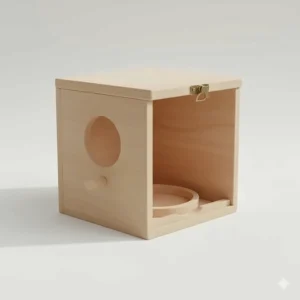
The standard budgie nest box wooden should measure approximately 20-25 cm in length, 13-15 cm in width, and 15-18 cm in height. The entrance hole needs careful consideration too—4 cm diameter is the sweet spot. Any larger and you risk disturbing the hen’s sense of security; any smaller and she’ll struggle to enter comfortably, especially as she becomes heavier with eggs.
Why Dimensions Matter
Budgerigars are cavity nesters by nature. In the Australian outback, they seek out tree hollows of specific sizes, and your nest box needs to replicate these natural dimensions. The floor space must accommodate 4-8 eggs (the typical clutch size) plus the sitting hen, whilst the height allows for chicks to develop without feeling overcrowded.
I’ve seen breeders struggle with oversized boxes where eggs scatter too far from the hen’s body heat, resulting in poor incubation. Conversely, undersized boxes create stress, sometimes leading to egg abandonment. The specifications I’ve shared above represent the collective wisdom of UK breeding communities.
The Importance of Nest Box Inspection Doors
A nest box inspection door transforms your breeding experience from stressful guesswork into confident monitoring. This feature allows you to check on your budgies’ progress without fully dismantling the box or causing excessive disturbance—a game-changer for both novice and experienced breeders.
Types of Inspection Doors
Top-Opening Doors: These provide excellent access for cleaning and allow you to view the entire nest cavity at once. However, they can be more disturbing to sitting hens, as you’re essentially removing their “roof.”
Side Inspection Doors: These offer a less intrusive viewing option, particularly useful during the early incubation period. Many UK breeders prefer dual-door systems—a small side window for quick checks and a larger top door for thorough cleaning.
Clear Perspex Panels: An increasingly popular option that allows observation without opening anything. These transparent sections let you monitor development whilst maintaining the box’s integrity and the hen’s sense of security.
When to Inspect
According to breeding season best practices, inspections should be minimal during the first week after the first egg appears. After that, daily quick checks help you identify any problems early—infertile eggs, chick health issues, or inadequate feeding by parents. The right inspection door makes these checks swift and stress-free.
External Nest Box vs Internal: Which Setup Works Best?
The external nest box breeding debate divides UK budgie enthusiasts into two camps, each with compelling arguments. Having experimented with both configurations across multiple breeding seasons, I can share insights into when each approach shines.
External Mounting Benefits
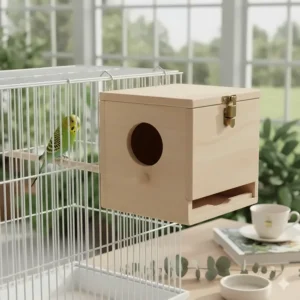
Mounting your budgie nest box wooden externally—attached to the outside of your cage with the entrance hole accessible from within—offers several advantages. Firstly, it preserves precious interior cage space, allowing your budgies more room for exercise and normal activities. This proves especially valuable in smaller breeding cages where every centimetre counts.
External boxes also simplify cleaning dramatically. You can remove, clean, and replace the entire box without disturbing the breeding pair or requiring them to temporarily relocate. This convenience factor cannot be overstated when you’re managing multiple breeding pairs.
Internal Mounting Considerations
Some breeders swear by internal mounting, arguing that it feels more secure to breeding hens. The box becomes part of their territory, potentially reducing stress. Internal mounting also works better in outdoor aviaries where external boxes might be exposed to harsh British weather.
The main drawback? Space constraints and cleaning challenges. You’ll need to reach into the cage to access the box, which can be awkward with defensive breeding pairs.
My Recommendation
For most UK home breeders using standard breeding cages, external mounting wins. The practical benefits outweigh any theoretical security concerns, and I’ve seen no difference in breeding success rates between the two methods when boxes are properly designed.
Maintaining Nest Box Hygiene Between Clutches
Nest box hygiene isn’t just about cleanliness—it’s about preventing disease, parasites, and creating optimal conditions for each new generation. The RSPCA’s bird care guidelines emphasise that proper hygiene is fundamental to responsible pet bird keeping, and this applies doubly to breeding situations.
Post-Breeding Cleaning Protocol
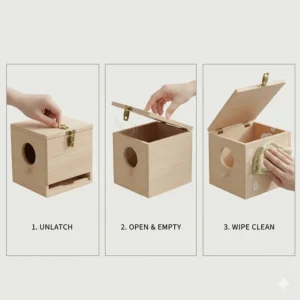
After your chicks have fledged and left the nest (typically 5-6 weeks after hatching), a thorough deep-clean becomes essential. Remove all nesting material, wood shavings, and droppings. Scrub the interior with a bird-safe disinfectant—I prefer solutions specifically formulated for avian use, available from most UK pet retailers.
Pay special attention to corners and the concave area where debris accumulates. Some breeders use a stiff brush to remove stubborn matter, but avoid anything that might splinter the wood. After washing, allow the box to dry completely—at least 24 hours in a well-ventilated area.
Between-Season Storage
If you’re not breeding year-round (which is advisable for your birds’ welfare), proper storage extends your nest box’s lifespan. Store clean, dry boxes in a cool, dry location away from direct sunlight. I wrap mine in breathable fabric to keep dust out whilst preventing moisture accumulation.
Red Mite Prevention
Red mites represent every breeder’s nightmare—tiny parasites that hide in wooden crevices and emerge at night to feed on your birds. Prevention involves treating your budgie nest box wooden with mite-preventing products before each breeding season. Many UK breeders swear by natural diatomaceous earth dusted into crevices, whilst others prefer commercial anti-mite sprays.
Comparison: Wooden vs Plastic Nest Boxes
| Feature | Wooden Nest Box | Plastic Nest Box |
|---|---|---|
| Temperature Regulation | Excellent natural insulation | Poor, temperature fluctuates |
| Durability | 5-10+ years with care | 3-5 years typically |
| Cleaning Ease | Requires thorough scrubbing | Wipes clean easily |
| Natural Feel | Mimics wild cavity | Feels artificial |
| Chewing Safety | Natural, beneficial | May contain harmful chemicals |
| Price Range | £10-£28 | £8-£15 |
| Moisture Management | Absorbs excess moisture | Can develop condensation |
| Weight | Heavier, more stable | Lightweight, may shift |
Whilst plastic boxes offer easier maintenance, the superior environmental control and natural behaviour encouragement of wooden boxes make them worth the extra effort for serious breeders.
Selecting the Right Coconut Fibre Nesting Material
Coconut fibre nesting material has revolutionised budgie breeding in recent years, offering a natural, safe alternative to traditional wood shavings. This sustainable product, derived from coconut husks, provides excellent moisture absorption whilst remaining comfortable for sitting hens and developing chicks.
Why Coconut Fibre Excels
Unlike pine or cedar shavings (which can contain harmful aromatic oils), coconut fibre is completely safe for budgerigars. It compresses slightly under the hen’s weight, creating a comfortable cup that helps prevent egg rolling. The fibrous texture also provides excellent grip for newly hatched chicks as they begin moving around the nest.
UK suppliers offer coconut fibre in various forms—loose fibre, compressed blocks, or pre-formed nest liners. I recommend starting with loose fibre, which allows you to customise the depth. Aim for approximately 2-3 cm in the concave area, building up slightly at the edges.
Alternative Nesting Materials
Some traditional breeders prefer aspen shavings or even leave the wooden concave bare. Aspen remains a safe choice, though it doesn’t absorb moisture as effectively as coconut fibre. Bare wood concaves work for experienced pairs but may increase the risk of egg damage.
Whatever material you choose, avoid anything dusty, scented, or chemically treated. Your budgies’ respiratory systems are incredibly sensitive, and proper material selection can mean the difference between healthy chicks and respiratory problems.
Preparing Your Nest Box for Breeding Season
Breeding season preparation extends beyond simply hanging a nest box and hoping for the best. Successful UK breeders follow a systematic approach that maximises success rates whilst prioritising bird welfare throughout the breeding season nest box setup process.
Timing Considerations
In the UK, many breeders synchronise their breeding programmes to align with the annual budgerigar society ring distribution in January. This means introducing nest boxes in November or early December, giving pairs time to bond and begin breeding so chicks are ready for ringing on 1st January.
However, breeding outside this window is perfectly viable. According to Omlet UK’s lifecycle guide, budgies breed in response to favourable conditions rather than strict seasons—though they do need 12 hours of daylight to trigger breeding hormones.
Pre-Season Checklist
1. Inspect and Repair: Check your budgie nest box wooden for damage, loose joints, or splintered wood. Replace or repair any compromised boxes before installation.
2. Sanitise Thoroughly: Even boxes stored properly need pre-season cleaning. This removes any dust, potential mould spores, or lingering pests.
3. Install Correctly: Ensure secure mounting at the appropriate height (typically at or above perch level). The box should be stable enough that breeding activity won’t dislodge it.
4. Add Nesting Material: Place your chosen substrate (coconut fibre or aspen shavings) in the concave, creating a comfortable, secure environment.
5. Monitor Introduction: Not all budgies accept nest boxes immediately. Some hens inspect thoroughly for days before committing, whilst others move in within hours. Patience is key.
🔥 Limited Time Breeding Season Offers!
The breeding season is upon us! These premium wooden nest boxes are in high demand amongst UK breeders. Check Amazon.co.uk now for current stock and special offers before they sell out. Your future chicks deserve the best start in life!
Common Nest Box Problems and Solutions
Even with the perfect budgie nest box wooden, challenges can arise. Understanding common issues and their solutions saves stress and improves breeding outcomes. Here’s what UK breeders encounter most frequently and how to address these problems effectively.
Problem: Hen Won’t Enter the Nest Box
This frustrating situation affects many first-time breeding pairs. Your carefully selected box sits empty whilst your hen shows no interest whatsoever. Several factors might be at play:
Solutions:
- Ensure the box is positioned correctly—not in direct sunlight or draughty locations
- Try moving it to a quieter area of the cage if there’s excessive traffic nearby
- Check that the entrance hole isn’t obstructed or intimidating
- Give it time—some hens need weeks to build confidence
Problem: Eggs Laid Outside the Box
Occasionally, hens lay eggs on the cage floor rather than in the provided nest box. This often indicates a young, inexperienced hen who hasn’t quite grasped the concept yet.
Solutions:
- Gently place the egg in the nest box as a teaching signal
- Ensure the box is accessible and inviting
- Check that lighting conditions are appropriate (12 hours daylight)
- If she’s very young (under 10 months), consider waiting until she matures
Problem: Excessive Chewing Damage
Budgies naturally chew wood, but sometimes they become overly destructive, potentially compromising the box’s structural integrity.
Solutions:
- Provide alternative chewing opportunities (cuttlebone, mineral blocks, safe wood perches)
- Select harder wood varieties like oak for your next box
- Consider applying bird-safe wood hardener to vulnerable areas
- Accept some damage as normal behaviour—complete prevention isn’t realistic
The Role of Ventilation in Wooden Nest Boxes
Proper ventilation in your budgie nest box wooden prevents numerous problems whilst maintaining the comfortable environment budgies need for successful breeding. It’s a delicate balance—too much airflow creates draughts and temperature instability, whilst insufficient ventilation leads to moisture buildup and potential respiratory issues.
Understanding Ventilation Needs
Inside an active nest box, conditions can become quite warm and humid. The sitting hen’s body heat, combined with moisture from droppings and the birds’ respiration, creates an environment that needs careful management. Good ventilation removes excess moisture and stale air whilst maintaining stable temperatures.
Most quality wooden nest boxes incorporate small ventilation holes (3-5 mm diameter) near the top of the side panels. These allow warm, moist air to escape naturally without creating strong draughts that might chill eggs or chicks. The entrance hole itself provides the primary air exchange, but supplementary ventilation enhances overall conditions.
Seasonal Adjustments
British weather varies dramatically between seasons, and your ventilation needs might too. During cold winter breeding (November-February), minimal additional ventilation works best—the entrance hole alone often suffices. In warmer months (April-September), enhanced air circulation becomes more important to prevent overheating.
Some advanced breeders use nest boxes with adjustable ventilation—small holes that can be opened or partially blocked depending on ambient conditions. This flexibility helps maintain optimal internal environments year-round.
Price Range & Value Analysis Table
| Price Range | What to Expect | Best Use Case | Durability |
|---|---|---|---|
| £8-£12 | Basic wooden construction, simple design, adequate for beginners | First breeding attempts, limited budget | 2-4 breeding seasons |
| £13-£18 | Quality plywood, inspection features, better hardware | Regular home breeding, hobbyist level | 4-7 breeding seasons |
| £19-£25 | Premium woods, dual doors, enhanced features | Serious hobbyists, multiple pairs | 7-10+ breeding seasons |
| £26+ | Professional-grade, solid hardwoods, maximum durability | Commercial breeding, exhibition birds | 10-15+ breeding seasons |
Teaching Your Budgies to Use Their New Nest Box
Successfully introducing a budgie nest box wooden to your breeding pair requires patience, observation, and occasionally some gentle encouragement. Not all budgies immediately understand what this wooden box hanging on their cage is for—especially if they’ve never seen one before.
The Natural Discovery Process
Most budgies are naturally curious, and a new addition to their environment sparks investigation. Your hen, particularly if she’s in breeding condition (evidenced by a chocolate-brown cere), will likely explore the box within days of installation. The cock bird might investigate first, then encourage his mate to follow.
Allow this natural discovery without interference. Avoid forcing birds into the box or making the introduction stressful. Some hens enter immediately; others require a week or more of cautious observation before committing.
Encouragement Techniques
If your hen shows no interest after 7-10 days, gentle encouragement might help:
Place treats near the entrance: Millet spray positioned just inside the entrance hole tempts curious budgies to venture inside
Adjust positioning: Sometimes a simple height adjustment or orientation change makes the box more appealing
Check the competition: If you have multiple hens, ensure only one box is available to your intended breeding pair—competition can deter nervous hens
Consider privacy: Breeding pairs prefer quiet, secure locations. Moving the box to a more secluded spot might help
What Not to Do
Never force a budgie into a nest box. This creates negative associations and can damage the trust between you and your birds. Similarly, avoid constantly checking the box during the introduction period—excessive attention makes it seem less safe to security-conscious hens.
Budgie Breeding Age and Nest Box Readiness
Understanding when your budgies are genuinely ready for a nest box prevents heartbreak and health problems. According to comprehensive research by UK breeding experts and Budgie Bubble’s conditioning guide, age and physical readiness matter enormously for successful breeding outcomes.
Minimum Age Requirements
Whilst budgies reach sexual maturity around 6 months, this doesn’t mean they should breed at this age. Their bodies are still developing, and breeding too young risks serious complications:
For hens: Breeding before 10-12 months increases risks of egg binding, poor parenting, and stunted development. Young hens may struggle to produce eggs properly or abandon clutches
For cocks: Males bred before 12 months often have immature sperm, reducing fertilisation rates and breeding success
Optimal Breeding Age
The sweet spot for budgie breeding is between 12 months and 4 years for hens, and 12 months to 6 years for cocks. Birds in this age range are physically mature, mentally ready for parenting responsibilities, and have the stamina required for successful breeding.
Signs Your Budgies Are Ready
Beyond age, look for these indicators before introducing your budgie nest box wooden:
Physical signs:
- Hen’s cere turns deep chocolate brown (breeding condition)
- Cock’s cere becomes vibrant blue and smooth
- Both birds appear healthy, active, and well-feathered
- Good body condition—neither too thin nor overweight
Behavioural signs:
- Mutual feeding and preening between the pair
- Head bobbing and courtship displays from the cock
- Hen showing interest in corners and potential nesting spots
- Strong pair bonding evident through close roosting
FAQ: Your Budgie Nest Box Questions Answered
❓ How long does it take for budgies to use a new nest box after installation?
❓ What temperature should a budgie nest box wooden maintain during breeding?
❓ How often should I clean a budgie nest box during active breeding?
❓ Can I use the same nest box for multiple breeding seasons?
❓ What's the ideal entrance hole size for a budgie nest box?
Conclusion: Investing in Your Budgies’ Breeding Success
Selecting the perfect budgie nest box wooden represents more than just purchasing breeding equipment—it’s an investment in your birds’ welfare and your breeding programme’s future success. Throughout this comprehensive guide, we’ve explored everything from optimal dimensions and materials to maintenance protocols and problem-solving strategies.
The seven nest boxes reviewed here cater to different budgets, experience levels, and breeding goals, ensuring every UK breeder can find their ideal match. Whether you’re drawn to the Hutch Company’s clear-view design for its monitoring capabilities, the Trixie Natural Box’s eco-friendly credentials, or the Premium Oak Box’s professional-grade construction, your choice should align with your specific circumstances and aspirations.
Remember that successful breeding extends beyond equipment. Your budgies need proper nutrition, adequate space, suitable environmental conditions, and—most importantly—your attentive, knowledgeable care. The nest box creates the foundation, but you provide the expertise and dedication that transform potential into reality.
As breeding season 2026 approaches, take time to properly prepare your setup. Inspect your equipment, refresh your knowledge, and ensure your budgies are physically ready for the breeding journey ahead. With the right wooden nest box and proper care, you’ll soon experience the incredible joy of watching tiny chicks develop into beautiful, healthy budgerigars.
Recommended for You
- 7 Best Breathable Bird Cage Covers UK 2026
- 7 Best Bird Cage Liners UK 2026 – Keep Your Feathered Friends Happy
- 7 Best Parrot Play Stand with Bowls UK 2026
Disclaimer: This article contains affiliate links. If you purchase products through these links, we may earn a small commission at no additional cost to you. Prices shown are approximate and may vary.
✨ Found this helpful? Share it with your mates! 💬🤗
