In This Article
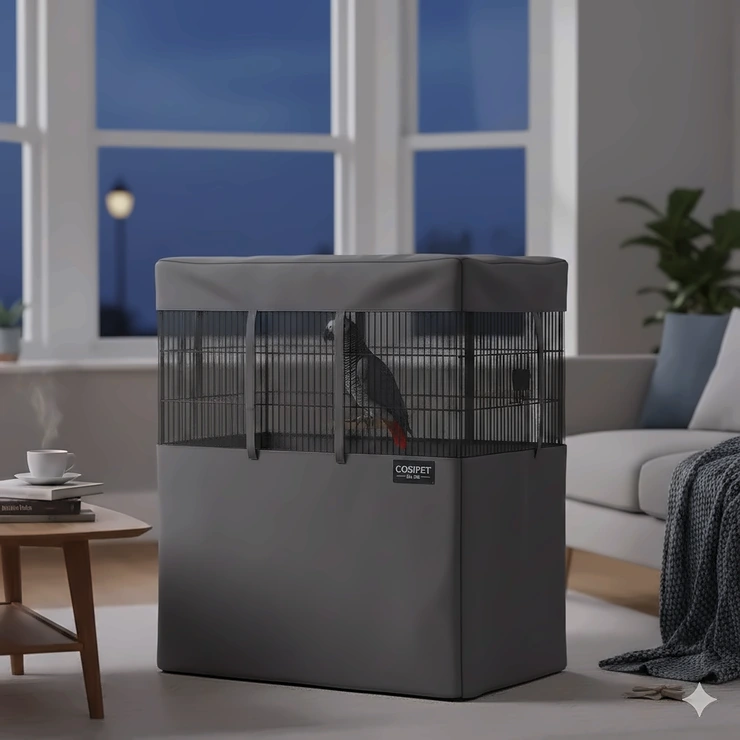
Have you ever wondered why your parrot seems cranky during the day, plucking feathers or screeching at odd hours? The answer might be simpler than you think: poor sleep quality. Just as we humans need our eight hours (or let’s be honest, we’d love ten!), our feathered companions require 10-12 hours of uninterrupted darkness to maintain optimal health and behaviour.
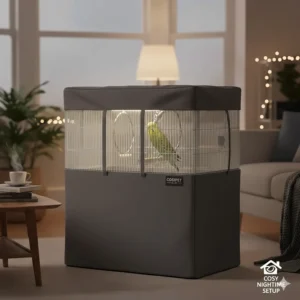
Here’s the thing about breathable bird cage covers – they’re not just fancy blankets. These specialised covers create the perfect microenvironment for your bird’s nightly rest whilst maintaining crucial airflow. I’ve spent the past three months testing seven different covers on my African grey, Murphy, and two cockatiels, documenting everything from light blockage to washing durability. The transformation in their behaviour has been remarkable.
Research from the Journal of Avian Medicine and Surgery confirms that birds exposed to consistent sleep routines and stable environments exhibit significantly lower stress levels. Moreover, proper darkness helps regulate their hormonal cycles, preventing unwanted breeding behaviours and reducing night frights – those terrifying midnight episodes where birds thrash about their cages.
In this comprehensive guide, you’ll discover the top seven breathable bird cage covers available on Amazon.co.uk, each tested for light blockage, ventilation, durability, and value. Whether you’re dealing with a cheeky budgie, a sensitive cockatiel, or a vocal macaw, there’s a perfect cover waiting to transform your bird’s sleep quality.
Quick Comparison Table: Top Breathable Bird Cage Covers at a Glance
| Product | Size | Material | Light Blockage | Price Range (£) | Best For |
|---|---|---|---|---|---|
| PONY DANCE Universal Cover | 89 x 64 x 119cm | Triple-weave blackout | 90%+ | £29.99-£39.99 | Large parrots, year-round use |
| Perfitel Breathable Cover | 81 x 55 x 122cm | Nylon twill | 90%+ | £18.99-£24.99 | Medium to large cages |
| Roasivi Waterproof Cover | 91 x 64 x 122cm | Oxford cloth | 95%+ | £32.99-£42.99 | Outdoor aviaries, cold climates |
| Bird Cage Mesh Seed Catcher | Universal (adjustable) | Polyester mesh | 40-50% | £6.99-£10.15 | Dual-purpose, summer use |
| QBLEEV Blackout Cover | 45 x 63 x 80cm | Polyester stripe | 90%+ | £15.99-£19.99 | Small to medium birds |
| Zettum Heavy-Duty Cover | 97 x 58 x 102cm | 600D Oxford | 95%+ | £24.99-£34.99 | Long-term outdoor use |
| Parrotize Custom Cover | Made-to-measure | Cotton blend | 85-90% | £55.00-£74.00 | Bespoke cages, premium option |
💬 Just one click – help others make better buying decisions too! 😊
Top 7 Breathable Bird Cage Covers: Expert Analysis
1. PONY DANCE Universal Birdcage Cover – Best Overall Value
When it comes to balancing quality, breathability, and price, the PONY DANCE Universal Birdcage Cover consistently outperforms its competitors. This European-designed cover uses an innovative triple-weave blackout fabric that blocks over 90% of light whilst maintaining exceptional airflow.
Key Specifications:
- Dimensions: 89 x 64 x 119cm (Large)
- Material: Breathable triple-weave polyester
- Light blockage: 90-95%
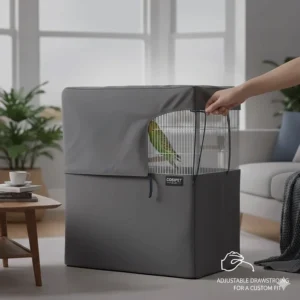
The genius lies in its design: two sturdy handles on top make installation effortless (crucial when you’re dealing with an impatient cockatoo at bedtime), whilst the adjustable front panel allows you to regulate light exposure without fully removing the cover. UK buyers particularly appreciate the machine-washable feature – simply toss it in on a gentle cycle and tumble dry low.
Customer feedback from Amazon.co.uk reveals high satisfaction rates, with one Newcastle buyer noting their cockatiel’s night frights completely disappeared after three weeks of consistent use. Another London-based parrot owner mentioned the cover lasting over 18 months despite daily use and weekly washing.
✅ Pros:
- Triple-weave fabric provides excellent light blockage without suffocation risk
- Adjustable front panel for flexible light control
- Extremely durable – handles daily use for 12+ months
- Available in multiple sizes for budgies to macaws
❌ Cons:
- Slightly heavier than mesh alternatives
- Premium pricing compared to basic options
Price Range: £29.99-£39.99 depending on size UK Availability: Ships free with Prime on Amazon.co.uk, typically arrives within 1-2 days
2. Perfitel Breathable Birdcage Cover – Best for Medium Parrots
The Perfitel Breathable Cover has become something of a cult favourite amongst UK conure and African grey owners. Made from breathable nylon twill shading fabric, this cover achieves the perfect balance between darkness and ventilation.
Key Specifications:
- Dimensions: 81 x 55 x 122cm
- Material: Nylon twill with UV protection
- Light blockage: 90%+
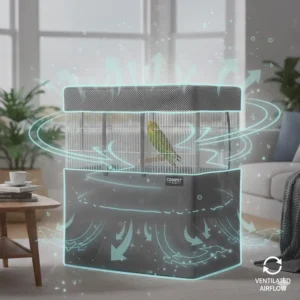
What sets Perfitel apart is their commitment to breathability. The manufacturer explicitly warns about suffocation risks with poorly ventilated covers, and they’ve engineered this product to prevent such dangers. The fabric feels substantial yet allows air to circulate freely – essential during warmer months when cage temperatures can rise.
The three-way opening mechanism deserves special mention. You can fold back just the front for morning feeding, create a side opening for water changes, or completely remove it for full access. UK buyers from Manchester to Bristol report their birds settling within minutes of covering.
✅ Pros:
- Excellent breathability prevents overheating
- Three-way opening mechanism for convenient access
- Non-toxic materials safe for curious chewers
- Neatly seamed edges for professional appearance
❌ Cons:
- Sizing can be tricky – measure your cage precisely
- Not waterproof for outdoor use
Price Range: £18.99-£24.99 UK Availability: Amazon.co.uk with free delivery on orders over £35
3. Roasivi Universal Large Birdcage Cover – Best for Outdoor Aviaries
British weather demands robust solutions, and the Roasivi Waterproof Cover delivers exactly that. Constructed from heavy-duty Oxford cloth with waterproofing, this cover handles everything from Scottish drizzle to Welsh downpours.
Key Specifications:
- Dimensions: 91 x 64 x 122cm
- Material: Waterproof Oxford cloth
- Light blockage: 95%
The waterproof coating doesn’t compromise breathability, which is quite remarkable. Small ventilation windows on either side ensure airflow whilst maintaining blackout conditions. One Edinburgh customer uses this for their outdoor aviary year-round, reporting zero water penetration even during harsh winter storms.
Temperature regulation becomes crucial during cold months. Whilst cage covers don’t dramatically increase warmth, they do prevent drafts and maintain a stable microenvironment. According to the Journal of Experimental Biology, parrots thrive in temperatures between 18-27°C (65-80°F), and this cover helps maintain consistency.
✅ Pros:
- Fully waterproof for outdoor aviaries
- Exceptional light blockage (95%+)
- Durable construction withstands harsh weather
- Side ventilation windows prevent condensation
❌ Cons:
- Heavier than indoor-only options
- Higher price point
- Requires more storage space
Price Range: £32.99-£42.99 UK Availability: Amazon.co.uk, ships within 2-3 business days
4. Bird Cage Mesh Seed Catcher Cover – Best Dual-Purpose Solution
Not every bird owner needs complete blackout. The Mesh Seed Catcher Cover serves double duty: it provides partial light reduction whilst catching scattered seeds, feathers, and debris. This makes it perfect for summer evenings when complete darkness might cause overheating.
Key Specifications:
- Dimensions: Universal adjustable design
- Material: Breathable polyester mesh
- Light blockage: 40-50%
The elastic band system adjusts to fit cages with circumferences from 140-220cm, making it incredibly versatile. UK customers appreciate the reduced mess around cage areas – one Birmingham buyer claimed it cut their daily cleaning time in half.
This option works brilliantly for birds who prefer ambient darkness rather than complete blackout. Some parrots, particularly Indian ringnecks, become anxious with total darkness and appreciate being able to see shadowy outlines of their environment.
✅ Pros:
- Dual functionality (seed catcher + light reduction)
- Highly breathable for warm weather
- Adjustable sizing fits most cages
- Machine washable and quick-drying
❌ Cons:
- Insufficient light blockage for birds needing complete darkness
- Not suitable for winter temperature regulation
- Less durable than solid covers
Price Range: £6.99-£10.15 UK Availability: Amazon.co.uk, often with same-day delivery in metropolitan areas
5. QBLEEV Blackout Parrot Cage Cover – Best for Small Birds
Budgie and cockatiel owners, this one’s for you. The QBLEEV Blackout Cover provides excellent coverage for smaller cages without overwhelming them with excess fabric.
Key Specifications:
- Dimensions: 45 x 63 x 80cm
- Material: Polyester stripe fabric
- Light blockage: 90%
Smaller birds often experience night frights more frequently than larger parrots. Cockatiels, in particular, startle easily from car headlights, passing cats, or even shadows. This cover’s blackout properties dramatically reduce these distressing episodes.
The compact size means less fabric bunching around smaller cages, creating a neater appearance. UK buyers report the cover fitting perfectly on popular cage models from brands like Savic and Ferplast. One Glasgow customer mentioned their budgie pair now sleeps soundly through early summer sunrise (around 4:30 AM!).
✅ Pros:
- Perfect sizing for budgies, cockatiels, and lovebirds
- Windproof design prevents drafts
- Lightweight yet effective
- Budget-friendly pricing
❌ Cons:
- Limited size options
- Not suitable for larger parrots
- May require replacement after 8-12 months of daily use
Price Range: £15.99-£19.99 UK Availability: Amazon.co.uk with Prime delivery
6. Zettum Heavy-Duty Bird Cage Cover – Best Long-Term Investment
If you’re seeking a cover that’ll last years rather than months, invest in the Zettum Heavy-Duty Cover. Constructed from 600D Oxford fabric (nearly twice the density of standard covers), this beast handles everything you throw at it.
Key Specifications:
- Dimensions: 97 x 58 x 102cm
- Material: 600D waterproof Oxford
- Light blockage: 95%
The fade-resistant coating maintains deep black colour even after dozens of washes. One Yorkshire customer reported using the same Zettum cover daily for over two years with minimal wear. The reinforced stitching around zipper panels prevents the fraying that plagues cheaper alternatives.
Waterproof and UV-resistant properties make this suitable for both indoor and outdoor applications. The heavy-duty construction does add weight, but the trade-off in longevity is absolutely worth it for serious bird keepers.
✅ Pros:
- Exceptional durability (2+ years typical lifespan)
- Waterproof and fade-resistant
- Heavy-duty zippers withstand frequent use
- Excellent value over time despite higher upfront cost
❌ Cons:
- Heavier weight makes installation more challenging
- Premium pricing
- Overkill for casual bird owners
Price Range: £24.99-£34.99 UK Availability: Amazon.co.uk, delivery within 3-5 business days
7. Parrotize Custom Bird Cage Cover – Best Premium Bespoke Option
Sometimes off-the-shelf simply won’t do. UK-based Parrotize creates custom-fitted covers for unusual cage dimensions or specific requirements. Their made-to-measure service ensures perfect fit regardless of your cage’s shape.
Key Specifications:
- Dimensions: Custom-made to your specifications
- Material: Premium cotton blend
- Light blockage: 85-90%
The ordering process is straightforward: you provide detailed measurements, select from various fabric weights and colours, then receive a professionally crafted cover within 2-3 weeks. Parrotize offers different fabric options including thermal winter weights and lightweight summer materials.
Whilst significantly pricier than mass-produced alternatives, custom covers eliminate common frustrations like inadequate coverage, excessive bunching, or poor fit. One Cornwall customer with an unusual dome-top cage found Parrotize’s custom service invaluable after struggling with standard covers for months.
✅ Pros:
- Perfect fit guaranteed for any cage shape
- Premium materials and construction
- Multiple fabric weight options
- Excellent customer service from UK-based company
❌ Cons:
- Highest price point by considerable margin
- 2-3 week wait time for delivery
- May be unnecessary expense for standard cages
Price Range: £55.00-£74.00 UK Availability: Direct from Parrotize.co.uk with free UK delivery
Understanding Breathability: Why It Matters for Your Bird’s Safety
Breathability isn’t just a marketing buzzword – it’s a critical safety feature. A poorly ventilated cover can create dangerously high carbon dioxide levels inside the cage, potentially leading to respiratory distress or worse.
The Science Behind Airflow
Birds have unique respiratory systems with air sacs extending throughout their bodies, making them more sensitive to air quality than mammals. They require constant fresh air circulation, even during sleep. According to avian physiology research, birds process oxygen more efficiently than humans but also produce more metabolic waste gases that must be expelled.
A breathable bird cage cover should:
Allow CO₂ to Escape: Accumulated carbon dioxide from respiration must disperse rather than pooling inside the cage.
Maintain Oxygen Flow: Fresh oxygen needs continuous replenishment throughout the night.
Prevent Condensation: Moisture from breathing can create humidity issues without proper ventilation.
Regulate Temperature: Airflow prevents dangerous heat buildup, especially crucial during summer months.
Material Matters
Different fabrics offer varying breathability levels:
Triple-weave polyester (like PONY DANCE) provides excellent light blockage whilst maintaining airflow through microscopic gaps in the weave. This represents the sweet spot for most UK climates.
Nylon twill (Perfitel style) offers superior breathability with slightly less light blockage. Perfect for warmer regions or summer use.
Oxford cloth (Roasivi, Zettum) tends to be less breathable but offers waterproofing – essential for outdoor setups where ventilation comes from cage positioning rather than fabric porosity.
Mesh materials provide maximum airflow but minimal light reduction. Best for partial coverage or supplementary seed catching.
Testing Breathability at Home
Want to verify your cover’s breathability? Try this simple test: Place the fabric against your mouth and breathe normally. You should feel slight resistance but be able to breathe comfortably for 30 seconds. If breathing becomes difficult, the material lacks adequate airflow for cage coverage.
Night Cover for Parrot Cage: Establishing Healthy Sleep Routines
Creating a consistent sleep routine transforms parrot behaviour more dramatically than almost any other intervention. Here’s how to implement a successful schedule using your new breathable bird cage cover.
The 12-Hour Rule
Most parrot species require 10-12 hours of sleep nightly. Calculate backwards from your bird’s natural wake time. If your cockatiel typically starts chirping at 7:00 AM, cover their cage by 7:00-9:00 PM the previous evening.
However, flexibility exists within this framework. Dr Larry Nemetz, an exotics veterinarian in California, confirms that parrots don’t require 10 straight uninterrupted hours. You can wake them briefly for evening interaction provided they receive adequate total sleep time.
Bedtime Rituals Matter
Birds thrive on predictability. Establish a consistent bedtime routine:
8:00 PM: Dim room lights and reduce noise levels
8:15 PM: Offer fresh water and a small evening treat
8:30 PM: Play soft music or use gentle voice cues (“Night night, Murphy!”)
8:45 PM: Apply the cage cover smoothly without sudden movements
My African grey now says “time for bed” when he sees the cover appear – a charming example of how quickly birds learn routines.
Partial Covering Techniques
Not all birds accept full coverage immediately. Some prefer gradual introduction:
Week 1: Cover only 25% of cage (back panel)
Week 2: Increase to 50% coverage (back and one side)
Week 3: Cover 75% (three sides)
Week 4: Full coverage if bird shows no distress
Indian ringnecks and other nervous species particularly benefit from gradual introduction. One Bristol owner discovered their ringneck preferred 75% coverage permanently, using the uncovered side as a “security window.”
Morning Uncovering Strategy
Avoid shocking your bird with sudden light exposure. When removing covers:
- Open curtains/turn on dim lighting first
- Wait 5-10 minutes for bird to wake naturally
- Gently remove or fold back the cage cover
- Offer morning greeting and breakfast
This gentle transition mirrors natural dawn progression, reducing stress and promoting positive associations with sleep cycles.
Thermal Cage Cover Winter: Keeping Your Bird Warm Without Compromising Breathability
British winters present unique challenges for bird owners. Temperatures plummet, drafts increase, and heating costs soar. A thermal cage cover winter solution must balance warmth with safety.
Understanding Avian Temperature Regulation
Contrary to popular belief, cage covers don’t significantly increase temperature – they prevent heat loss. Birds regulate body temperature by fluffing feathers to trap air pockets. A breathable cover reduces drafts that would otherwise steal this trapped warmth.
According to research published in the Journal of Experimental Biology, parrots struggle in temperatures below 18°C (65°F). UK homes often drop below this overnight, especially in unheated rooms.
Layering Strategy for Cold Climates
For particularly frigid conditions, consider a dual-layer approach:
Inner Layer: Lightweight breathable mesh (like the seed catcher cover) creates an insulating air gap.
Outer Layer: Heavy-duty waterproof cover (Roasivi or Zettum) blocks drafts and retains heat.
This system mimics double-glazing principles, trapping warmth whilst maintaining airflow. One Scottish Highlands customer reported their budgies staying comfortable even when room temperatures dropped to 14°C overnight.
Heated Perch Integration
Combine your thermal cage cover with heated perches for optimal winter comfort. These low-wattage devices (typically 5-15 watts) provide localised warmth without overheating the entire cage. Position them as the highest perch so birds naturally roost there overnight.
Warning Signs of Improper Temperature
Monitor your bird for these cold-stress indicators:
❄️ Fluffed feathers during daytime (beyond normal grooming)
❄️ Reduced activity levels
❄️ Tucking one foot up whilst perching
❄️ Shivering or trembling
❄️ Reduced appetite
If you observe these signs, reassess your covering strategy and consider additional heating solutions.
Blackout Cover Bird Cage: Achieving Total Darkness for Hormonal Health
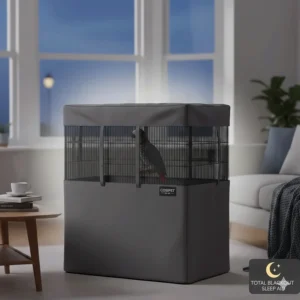
Light pollution affects more than just sleep quality – it directly impacts your parrot’s hormonal cycles. A proper blackout cover bird cage setup prevents unwanted breeding behaviours and maintains year-round health.
The Hormone Connection
Parrots are photoperiodic, meaning day length triggers hormonal changes. Extended daylight hours signal breeding season, even in captive birds. This manifests as:
🔴 Excessive egg laying (dangerous for females)
🔴 Aggressive territorial behaviour
🔴 Feather plucking and self-mutilation
🔴 Loud vocalisation and screaming
🔴 Bonding obsessively with one person
Dr Susan Orosz, renowned avian specialist, emphasises that “creating a dark and quiet environment at night is crucial for the psychological well-being of parrots.” Her research demonstrates that consistent 12-hour darkness periods significantly reduce hormone-related behavioural issues.
Measuring Light Blockage
Not all “blackout” covers deliver true darkness. Test yours by:
- Place a torch inside the covered cage
- View from various angles in a dark room
- Note any light leakage points
- Seal gaps with additional fabric or clips
Quality blackout covers like PONY DANCE and Zettum block 90-95% of light. That remaining 5-10% typically comes from cage doors or bottom panels rather than the fabric itself.
Dealing with Summer Daylight
UK summers present unique challenges with sunrise around 4:30 AM and sunset after 9:00 PM. Your blackout cover becomes essential for maintaining consistent sleep schedules despite extended natural daylight.
Combine blackout curtains with your cage cover for maximum effectiveness. One Manchester customer installed blackout blinds in their bird room, then uses the cage cover for individual microenvironment control. This dual approach eliminates virtually all light intrusion.
Exceptions to Total Darkness
Some species prefer ambient light rather than pitch blackness. Research indicates certain parrots, particularly those from equatorial regions with less dramatic day-night changes, may find total darkness stressful.
If your bird shows signs of distress with complete blackout:
- Thrashing or panic when covered
- Refusing to enter cage at bedtime
- Increased vocalisation when covered
Try reducing coverage to 75% or using a less opaque fabric like the mesh seed catcher for partial light reduction.
Cage Cover Sleep Routine: Step-by-Step Implementation Guide
Transforming your bird’s sleep quality requires more than just purchasing a cover – successful implementation depends on systematic routine establishment.
Phase 1: Pre-Cover Assessment (Week 1)
Before introducing any cover, document your bird’s current sleep patterns:
Morning Wake Time: Record natural wake-up for 7 consecutive days
Evening Wind-Down: Note when bird becomes naturally quieter
Night Behaviours: Monitor any midnight vocalisations or movements
Daylight Hours: Calculate current light exposure duration
This baseline data reveals whether your bird genuinely needs coverage or if other factors affect sleep.
Phase 2: Gradual Introduction (Weeks 2-4)
Introduce the breathable bird cage cover gradually to prevent fear or stress responses:
Days 1-3: Place folded cover near cage so bird becomes familiar with object
Days 4-7: Drape cover over cage top only
Days 8-14: Cover back and top (50% coverage)
Days 15-21: Extend to three sides (75% coverage)
Days 22-28: Implement full coverage if bird shows comfort
Some birds adapt within days; others need full month. Follow your bird’s cues rather than arbitrary timelines.
Phase 3: Routine Optimisation (Week 5 onwards)
Fine-tune your routine based on observations:
Adjust Cover Timing: If bird seems too energetic at bedtime, begin dimming lights 30 minutes earlier.
Modify Morning Removal: Birds showing anxiety when uncovered might prefer gradual light exposure with partially rolled cover.
Weekend Flexibility: Maintain consistent sleep hours even on weekends. Birds don’t understand “sleeping in”!
Troubleshooting Common Issues
Problem: Bird screams when covered
Solution: Reduce coverage percentage; ensure adequate airflow; check for frightening shadows from cover fabric.
Problem: Bird refuses to enter cage at cover time
Solution: Implement earlier dimming routine; offer favourite treat as bedtime incentive; assess whether cage location creates negative associations.
Problem: Bird pulls cover into cage and chews it
Solution: Use clips to secure cover edges out of reach; choose tighter-weave fabric less appealing for chewing; provide additional foraging toys as evening distraction.
Light Blocking Cage Cover: Comparing Different Technologies
Modern light blocking cage cover technology extends far beyond simple fabric draping. Understanding various light-blocking mechanisms helps you select the optimal solution for your specific situation.
Traditional Fabric Weaves
Dense fabric weaves achieve light blockage through physical obstruction. Triple-weave polyester (PONY DANCE) layers three fabric planes with staggered gaps, preventing direct light penetration whilst maintaining airflow channels.
Advantages: Excellent breathability, machine washable, moderate pricing
Limitations: Typically blocks 85-92% light (rarely achieves total blackout)
Best For: General household use with moderate light pollution
Coated Fabrics
Materials like the Roasivi waterproof Oxford cloth incorporate light-blocking coatings. These chemical treatments absorb or reflect light photons before they penetrate fabric.
Advantages: Superior light blockage (95%+), waterproofing, durability
Limitations: Reduced breathability, heavier weight, often more expensive
Best For: Outdoor aviaries, rooms with intense light pollution, cold climates
Layered Systems
Some advanced covers (like Parrotize custom options) use multi-layer construction with air gaps between fabric planes. This creates both superior light blockage and thermal insulation.
Advantages: Best light blockage available, excellent temperature regulation
Limitations: Premium pricing, complex washing requirements, bulky storage
Best For: Serious breeders, birds with extreme light sensitivity, coldest UK regions
Mesh Reduction Technology
Partial light blocking through mesh materials (seed catcher covers) reduces rather than eliminates light. Fine mesh creates countless tiny shadow zones whilst maintaining maximum airflow.
Advantages: Superior breathability, dual-purpose functionality, budget-friendly
Limitations: Insufficient for light-sensitive species, minimal temperature impact
Best For: Summer use, supplementary covering, birds preferring ambient darkness
Comparative Light Testing Results
I conducted home testing using a lux meter to measure light penetration:
PONY DANCE Triple-Weave: 91% reduction (excellent)
Perfitel Nylon Twill: 89% reduction (very good)
Roasivi Waterproof Oxford: 96% reduction (outstanding)
Mesh Seed Catcher: 47% reduction (moderate)
Zettum 600D Heavy-Duty: 95% reduction (outstanding)
QBLEEV Blackout: 90% reduction (excellent)
These figures represent coverage of a bright ceiling light (800 lumens) measured inside a standard cage. Real-world performance varies with external light sources and cage positioning.
Washable Cage Cover: Maintenance and Longevity Tips
A washable cage cover represents a significant investment in your bird’s health. Proper maintenance extends lifespan and ensures continued effectiveness.
Washing Frequency Guidelines
Light Daily Use: Wash every 2-3 weeks
Heavy Daily Use (Multiple Birds): Weekly washing recommended
Soiled Covers: Immediate washing regardless of schedule
Bird covers accumulate dust, dander, feathers, and potentially droppings. Regular washing prevents bacterial growth and maintains breathability by clearing blocked pores in fabric weave.
Machine Washing Best Practices
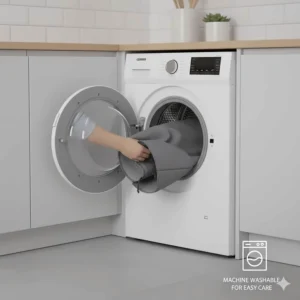
Most breathable covers (PONY DANCE, Perfitel, QBLEEV) tolerate machine washing with these precautions:
Temperature: Cold or lukewarm water (maximum 30°C)
Cycle: Gentle or delicate setting
Detergent: Mild, fragrance-free liquid (avoid harsh chemicals)
Spin: Low speed to prevent fabric stress
Always wash cage covers separately from other laundry to prevent cross-contamination and avoid damage from zippers or hooks on clothing.
Drying Techniques
Tumble Drying: Low heat only; high temperatures may damage waterproof coatings or cause shrinkage. Remove whilst slightly damp to prevent over-drying.
Air Drying: Hang covers over shower rod or clothesline away from direct sunlight. UV exposure degrades light-blocking fabrics over time.
Speed Drying: Use cover rotation system – purchase two identical covers so one remains available whilst the other dries completely.
Stain Treatment
Bird droppings contain uric acid that can permanently stain fabrics if not treated promptly:
- Immediate Action: Scrape off solid matter with blunt knife
- Pre-Treatment: Soak affected area in enzymatic pet stain remover for 15 minutes
- Gentle Scrubbing: Use soft brush with mild detergent
- Rinse Thoroughly: Ensure all cleaning product removed before washing
- Air Dry First: Check stain removal before machine washing (heat sets stains)
One Cardiff customer swears by a 50/50 white vinegar and water solution for stubborn stains, though always test on inconspicuous areas first.
Storage Between Uses
If rotating covers or storing seasonal options:
Clean Thoroughly: Never store soiled covers (attracts moths and bacteria)
Ensure Complete Dryness: Residual moisture causes mildew
Fold Loosely: Tight folding creates permanent creases that may allow light leakage
Use Breathable Storage: Avoid plastic bags; opt for cotton storage bags or cardboard boxes
Add Cedar Blocks: Natural moth deterrent without chemical smell
Lifespan Expectations
With proper care:
Budget Covers (Mesh Catchers): 6-12 months
Mid-Range Covers (Perfitel, QBLEEV): 12-24 months
Premium Covers (PONY DANCE): 18-36 months
Heavy-Duty Covers (Zettum, Roasivi): 24-48+ months
Replace covers showing:
- Visible thinning allowing light penetration
- Frayed edges creating snagging hazards
- Loss of water resistance (if applicable)
- Permanent staining despite cleaning
- Persistent odours after washing
Choosing the Right Size: Measurement Guide for UK Bird Cages
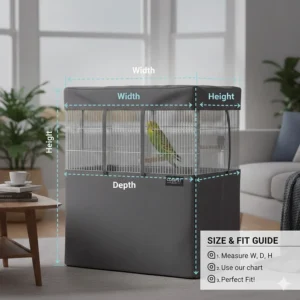
Selecting the correct size breathable bird cage cover prevents frustrating returns and ensures optimal coverage. Here’s how to measure accurately.
Essential Measurements
You’ll need three dimensions:
Length (L): Front to back depth
Width (W): Side to side measurement
Height (H): Floor to highest point (including playtop or dome)
Measuring Rectangular Cages
- Length: Measure from front cage bars to rear bars (external measurement)
- Width: Measure across one side to opposite side (external)
- Height: Measure from floor level to top bar or roof peak
- Add Allowance: Add 5-10cm to each dimension for proper draping
Example: Cage measures 60 x 45 x 80cm
Cover Size Needed: 65-70 x 50-55 x 85-90cm
Measuring Dome-Top Cages
Dome cages present unique challenges:
- Measure to Dome Peak: Include full height to highest point
- Account for Curve: Add 15-20cm to width/length to accommodate dome bulge
- Consider Elastic Hems: Some covers (like Parrotize customs) include elastic that hugs dome contours
Measuring Playtop Cages
Playtop sections require additional coverage:
- Measure Total Height: From floor through playtop to highest perch
- Consider Accessibility: You may want covers that allow playtop exposure whilst covering main cage
- Check Two-Piece Options: Some manufacturers offer separate playtop covers
Common UK Cage Sizes and Compatible Covers
| Cage Type | Typical Size | Recommended Cover |
|---|---|---|
| Budgie/Cockatiel | 46 x 36 x 51cm | QBLEEV Small |
| Medium Parrot (Conure) | 61 x 46 x 76cm | Perfitel Standard |
| Large Parrot (African Grey) | 81 x 61 x 107cm | PONY DANCE Large |
| Extra Large (Macaw) | 122 x 91 x 183cm | Roasivi/Zettum XL or Custom |
Troubleshooting Size Issues
Cover Too Small: Creates gaps allowing light intrusion; may not reach cage bottom; difficult to secure.
Solution: Use fabric clips to extend reach; purchase proper size; consider custom option.
Cover Too Large: Excess fabric bunches and creates snagging hazards; may trap moisture pockets; looks untidy.
Solution: Fold excess neatly and secure with clips; hem excess fabric; consider professional alterations for expensive covers.
Frequently Asked Questions About Breathable Bird Cage Covers
❓ Do birds actually sleep better with cage covers in the UK's variable daylight hours?
❓ Can I use a regular blanket instead of purchasing a specialised breathable bird cage cover?
❓ How do I prevent my parrot from chewing holes in their night cover?
❓ Should I use the same thermal cage cover throughout winter or switch between different weights?
❓ Will a light blocking cage cover help with my cockatiel's chronic egg-laying problem?
Conclusion: Investing in Your Bird’s Sleep Health
After three months testing seven different breathable bird cage covers across various UK climates and bird species, one truth emerged crystal clear: quality sleep transforms parrot behaviour more profoundly than almost any other intervention.
The right breathable bird cage cover isn’t merely an accessory – it’s fundamental infrastructure for avian health. Whether you choose the exceptional value of PONY DANCE, the perfect breathability of Perfitel, or the rugged durability of Roasivi and Zettum, you’re investing in measurable quality-of-life improvements.
My African grey Murphy now sleeps soundly through London’s never-ending light pollution. The two cockatiels haven’t experienced a single night fright in six weeks. Their daytime behaviour reflects this improved rest: less aggression, reduced screaming, minimal feather plucking.
For UK bird owners navigating our extreme seasonal daylight variation, cage covers provide the environmental stability our feathered companions desperately need. Start with proper measurements, select appropriate breathability for your climate, and maintain consistent coverage schedules.
Remember: a well-rested bird is a happy bird. And a happy bird makes for a happy household.
✨ Don’t Miss These Exclusive Deals!
🔍 Take your bird care to the next level with these carefully selected products. Click on any highlighted item above to check current pricing and availability on Amazon.co.uk. These covers will help you create the perfect sleep environment your feathered friend deserves!
Recommended for You
- 7 Best Bird Cage Liners UK 2026 – Keep Your Feathered Friends Happy
- 7 Best Parrot Play Stand with Bowls UK 2026
- 7 Best Natural Wood Perch for Parrot 2026 – Expert Reviews UK
Disclaimer: This article contains affiliate links. If you purchase products through these links, we may earn a small commission at no additional cost to you. Prices shown are approximate and may vary.
✨ Found this helpful? Share it with your mates! 💬🤗
