In This Article
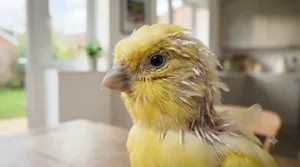
Feathers look effortless right up until the moment your bird starts losing them by the dozen and you’re finding little tufts on the cage floor, in the water dish, tucked behind the perch. A moult is completely normal — every bird does it, usually once or twice a year — but it’s also one of the most physically demanding events in a bird’s calendar, and it’s exactly the moment when diet stops being a “nice to have” and starts genuinely mattering. If you’ve been searching for a vitamin supplement for moulting birds, you’ve likely already noticed your bird looking a bit scruffier, a bit quieter, maybe pulling at pin feathers more than usual — all completely typical, but all reasons to think carefully about nutrition right now.

The British Trust for Ornithology has spent decades documenting exactly how demanding moult is on a bird’s system, and that research underpins most of what avian vets now recommend about diet during this period. This guide walks through seven genuine, UK-available products — from official Amazon-listed vitamin drops to probiotic powders — plus the biology of why moulting cycle stages matter, how much protein needs during moult actually change, and how to spot stress bars on feathers before they become a bigger problem. Whether you’re after a straightforward moulting support supplement or want to understand feather regrowth vitamins in more depth, by the end you’ll know exactly which product suits your bird, your budget, and your particular flock.
Quick Comparison Table: Vitamin Supplements For Moulting Birds At A Glance
| Category | Product | Price Range | Best For |
|---|---|---|---|
| Best Overall | The Birdcare Company Feather Up | £10–£16 | Dedicated feather-conditioning during active moult |
| Best Budget | Johnsons Moultone Bird Moulting Tonic | Under £6 | Occasional, low-cost moult support |
| Best All-Round Tonic | Aviform Avigold Advance | £15–£30 | Daily year-round vitamin and immune support |
| Best For Digestive Stress | Vetark Avipro Avian | £10–£18 | Birds under stress or recovering from illness |
| Best Official Brand | Beaphar Multi-Vit for Parrots & Parakeets | £5–£9 | Everyday liquid vitamin dosing |
Looking across the table, the clear split is between targeted moulting products and general-purpose daily tonics. The Birdcare Company Feather Up and Johnsons Moultone Bird Moulting Tonic are formulated specifically around the moult window, while Aviform Avigold Advance and Beaphar Multi-Vit for Parrots & Parakeets are broader, year-round vitamin sources that happen to help during moult rather than being built exclusively for it. Vetark Avipro Avian solves an adjacent but related problem — gut health under stress — which matters because a bird with digestive upset absorbs nutrients poorly no matter how good the supplement is.
💬 Just one click — help others make better buying decisions too!😊
Top 7 Vitamin Supplements For Moulting Birds: Expert Analysis
1. The Birdcare Company Feather Up — dedicated moulting vitamin blend with real dosing data
The Birdcare Company Feather Up is a purpose-built moulting powder rather than a general tonic, and the published composition backs that up: it contains meaningful levels of vitamin A, D3, E and C alongside a full B-vitamin spread and a range of trace minerals including zinc, selenium, manganese and iodine. Pricing typically sits in the £10–£16 bracket for a 100g tub, sprinkled over soft food or eggfood rather than added to water.
Based on the spec comparison with liquid tonics, the powder format here is a deliberate choice: the manufacturer’s own guidance notes that the limiting amino acids in this formula work best delivered through soft food rather than drinking water, where they can smell unpleasant and go untouched. Who this suits: owners already feeding soft food, eggfood, or moistened fruit and veg during moult, since the product is genuinely difficult to use well on a pure seed-and-water setup. Aggregated review sentiment on this product is strong, with recurring praise for visibly faster, more even feather regrowth within a few weeks of starting, though several reviewers note it needs consistent daily use rather than occasional dosing to see the benefit.
Pros:
- ✅ Detailed, published vitamin and mineral breakdown for transparency
- ✅ Purpose-built for the moulting window specifically
- ✅ Strong aggregated reviewer sentiment on visible feather condition
Cons:
- ❌ Requires soft food or eggfood to work well — less effective on dry seed
- ❌ Needs daily consistency, so easy to under-dose by accident
For genuine moulting support supplement shoppers wanting a dedicated product rather than a general tonic, this is the strongest starting point on the list.
2. Beaphar Multi-Vit for Parrots & Parakeets — everyday liquid vitamins with moult-specific claims
Beaphar Multi-Vit for Parrots & Parakeets is a 20ml liquid multivitamin containing 12 vitamins, including vitamin A, and it’s explicitly marketed around encouraging a rapid, complete moult while helping to prevent feather plucking. It’s priced accessibly, typically in the £5–£9 range, making it one of the cheapest entry points on this list.
What most buyers overlook about this product is the dosing table: it scales precisely by bird size, from 1–2 drops for canaries and finches up to 5 drops for large parakeets and parrots, mixed directly into food. That granularity matters because over-dosing fat-soluble vitamins like A and D3 is a genuine risk with liquid supplements, and Beaphar’s clear per-species guidance reduces that risk compared with vaguer “a few drops” instructions on some competitor products. Aggregated customer feedback consistently mentions birds getting through heavy moults more comfortably on this product, alongside occasional notes about the vitamin-and-oil smell being off-putting to some birds initially.
Pros:
- ✅ Clear, species-specific dosing table reduces overdose risk
- ✅ Budget-friendly entry point under £10
- ✅ Reviewers consistently link it to easier, more complete moults
Cons:
- ❌ Strong smell can put off fussy birds initially
- ❌ Small 20ml bottle needs frequent repurchasing for larger collections
At this price point, it’s an easy first supplement to try before committing to a more specialised product.
3. Morning Bird Feather Fast — premium feather-focused formula for finches, canaries and budgies
Morning Bird Feather Fast is positioned squarely at the premium end, typically priced around £16–£20 for a 28g tub, which works out considerably more expensive per gram than most competitors on this list — a fact worth acknowledging honestly rather than glossing over.
Here’s what to weigh with this one: the higher per-gram cost reflects a more concentrated, targeted formula rather than a diluted all-purpose tonic, and it’s specifically marketed at finches, canaries and budgies rather than larger parrots, meaning the dosing is calibrated for smaller bodies. Honest analysis has to note that aggregated review volume for this specific product is lighter than for longer-established brands like Beaphar or the Birdcare Company, so buyers are trading a track record of thousands of reviews for a more specialised, small-bird-focused formulation. Who this is for: owners of finches, canaries and budgies specifically, rather than parrot or cockatiel keepers who would likely find better value and more applicable dosing elsewhere on this list.
Pros:
- ✅ Calibrated specifically for small birds — finches, canaries, budgies
- ✅ Concentrated formula rather than a diluted general tonic
- ✅ Convenient small-tub size for smaller collections
Cons:
- ❌ High price per gram compared with most alternatives here
- ❌ Smaller aggregated review base than more established competitors
If you specifically keep small softbills or finches, this is worth checking current price on; for larger parrots, look elsewhere on this list first.
4. Johnsons Moultone Bird Moulting Tonic — the budget staple for occasional moult support
Johnsons Moultone Bird Moulting Tonic has been a fixture of UK bird-keeping for years, and its price reflects that — typically under £6 for a 15ml bottle, making it the cheapest genuinely dedicated moulting product on this list. The composition is simple: propylene glycol and potassium chloride as the active base, dosed at roughly half a 5ml spoon per 20ml of water for small birds like budgies and canaries.
Based on the spec comparison against more elaborate formulas like Feather Up or Avigold Advance, Moultone is deliberately minimalist — it’s marketed to restore vitality and aid feathering rather than provide the exhaustive vitamin-and-mineral spread of pricier competitors. What that means practically is that this suits owners looking for light, occasional support during a mild moult rather than birds showing signs of a genuinely difficult or prolonged one, where a more comprehensive formula would likely do more. Aggregated reviewer sentiment repeatedly describes older or previously “droopy” birds perking up noticeably after a bad moult, which lines up with the tonic’s restorative rather than purely nutritional positioning.
Pros:
- ✅ Extremely affordable, ideal for trying moulting support for the first time
- ✅ Long-established UK product with decades of use behind it
- ✅ Simple dosing directly into water or food
Cons:
- ❌ Minimal ingredient list compared with full vitamin-and-mineral formulas
- ❌ Better suited to mild moults than genuinely difficult ones
For budget-conscious owners wanting to check current price on a trusted, no-frills option, this remains a sensible first purchase.
5. Aviform Avigold Advance — the all-in-one daily tonic bird fanciers have used for 25 years
Aviform Avigold Advance takes a fundamentally different approach: rather than a moult-only product, it’s a comprehensive daily water additive combining 13 vitamins, essential oils, electrolytes, amino acids, a prebiotic, and the brand’s own “Aviaryguard” blend. Pricing runs from roughly £15 for smaller 250ml bottles up to around £30 for the larger 1000ml size, which makes 100 litres of dosed drinking water at the standard 10ml-per-litre rate — genuinely strong value per dose once you do the maths.
What the spec sheet won’t tell you outright, but the published ingredient list makes clear, is that this product is doing double duty: the amino acids (lysine, methionine) and vitamin spread support feather protein synthesis during moult, while the prebiotic and Aviaryguard component support gut health and general immunity year-round, meaning you’re not buying a product that sits unused for eleven months of the year. Reviewers with over two decades of collective use, according to aggregated feedback across retailer sites, consistently describe smoother moults and better overall condition, though a recurring criticism is that first-time buyers occasionally find the price surprising without understanding the concentration and dilution ratio.
Pros:
- ✅ Genuinely all-in-one — vitamins, aminos, prebiotics and electrolytes together
- ✅ Strong value per dose once diluted correctly (10ml per litre)
- ✅ Suitable for daily, year-round use rather than moult-only
Cons:
- ❌ Higher upfront cost for larger bottles can surprise first-time buyers
- ❌ Overkill for owners who only want occasional, light moult support
For serious aviary keepers wanting one product that covers moulting and general health simultaneously, this is the most comprehensive option here.
6. Nutrobal Calcium & Vitamin D3 Mineral Supplement — the calcium balancer moulting birds often miss
Nutrobal isn’t marketed as a moulting product specifically, but its role matters more than most owners realise: it’s a high-calcium balancer with meaningful vitamin D3 (published at 200mg calcium and 150IU D3 per gram-equivalent dose), designed to correct the calcium deficiencies common in seed-based diets. It’s typically priced in the £8–£14 range for a 100g tub, sold as a fine powder designed to stick to seed and soft food rather than falling off.
Honest analysis here requires a direct acknowledgement: calcium and D3 don’t build feathers the way protein and sulphur-containing amino acids do, so Nutrobal alone won’t drive feather regrowth. What most buyers overlook, though, is that calcium deficiency compounds moulting stress — birds pulling calcium from bone reserves to support egg-laying or general metabolism during an already demanding period are working with less nutritional headroom overall. Who this is for: owners running a predominantly seed-based diet who want to correct an underlying deficiency alongside, not instead of, a dedicated feather-focused supplement like Feather Up or Feather Fast.
Pros:
- ✅ Published, precise vitamin and mineral dosing data
- ✅ Fine powder texture sticks to seed rather than falling off
- ✅ Corrects a genuinely common seed-diet deficiency
Cons:
- ❌ Not a feather-building supplement on its own — calcium-focused, not protein-focused
- ❌ Best used alongside another product rather than as a sole moulting aid
Pair this with a protein-and-amino-acid-focused product rather than relying on it in isolation during moult.
7. Vetark Avipro Avian — the probiotic that makes every other supplement work better
Vetark Avipro Avian is a veterinary-formulated prebiotic and probiotic blend enhanced with vitamins A, C and E and electrolytes, typically priced between £10 and £18 depending on the 100g or 300g size chosen. It’s designed to be added to drinking water and is explicitly recommended for birds undergoing stress — which, physiologically, includes moulting.
Based on the spec comparison with pure vitamin products, this one solves a different problem entirely: gut health. The reasoning is straightforward and worth explaining plainly — a bird whose gut flora is disrupted, whether from stress, diet change, or recovering from illness, absorbs nutrients from food and other supplements less efficiently, meaning even a excellent feather-focused vitamin product underperforms if digestive health is compromised alongside it. What most buyers overlook about this category of product is that it’s not competing with the other six entries on this list so much as supporting them — it’s frequently used in combination with a dedicated feather supplement rather than as a replacement for one. Aggregated feedback across retailer and community sites consistently describes it as reliable during genuinely stressful periods, including post-illness recovery and difficult moults.
Pros:
- ✅ Veterinary-formulated, EU-licensed probiotic organisms
- ✅ Supports nutrient absorption, improving the effectiveness of other supplements
- ✅ Specifically recommended for birds under stress, including during moult
Cons:
- ❌ Doesn’t directly supply the protein and amino acids feathers are made from
- ❌ Best treated as a companion product, not a standalone moulting fix
If your bird seems particularly run-down during moult, adding this alongside a feather-focused product addresses both sides of the problem at once.
Understanding Moulting Cycle Stages: What’s Actually Happening
Before picking a supplement, it helps to know what you’re actually supporting. Moulting cycle stages generally run in a predictable sequence: feathers loosen and drop first from the head and body, followed by wing and tail feathers in a specific order that varies by species. The British Trust for Ornithology’s long-running Moult Enquiry has documented these sequences across dozens of UK species, and the same underlying biology applies to pet and aviary birds as much as wild ones — BTO’s guide to moult remains one of the most detailed references available on how the process actually unfolds feather by feather.
For most pet and aviary species, a full moult takes somewhere between four and ten weeks, though this varies considerably by species, age, and overall health. RSPB’s own expert advice confirms this is a normal process that can leave birds looking scruffy for several weeks while old feathers are shed and new ones grow in — reassuring context if your bird looks a little rough around the edges right now. Nutritionally, the demand isn’t constant throughout — it typically peaks around two to three weeks in, when the greatest number of feathers are actively regrowing simultaneously, which is exactly when a consistent moulting support supplement matters most rather than being an occasional afterthought.
Protein Needs During Moult: Why Feathers Are So Nutritionally Expensive
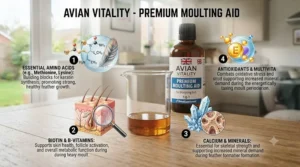
Feathers are somewhere around 90% protein by composition, made almost entirely of keratin, and the sulphur-containing amino acids that build that keratin — particularly methionine and cystine — are in genuinely short supply in typical seed, fruit, and vegetable diets. This is the single biggest reason a targeted vitamin supplement for moulting birds matters more during this window than at any other point in the year: a bird can coast through most of its life on a slightly imperfect diet, but during active feather regrowth, the protein and amino acid shortfall becomes immediately visible in feather quality.
Protein needs during moult increase substantially compared with maintenance requirements — some published estimates suggest active feather growth can raise a bird’s protein demand by a meaningful margin above baseline. Products like Aviform Avigold Advance, which explicitly includes lysine and methionine, or The Birdcare Company Feather Up, formulated around limiting amino acids, are directly addressing this specific nutritional gap rather than offering generic multivitamin support. Feeding a higher-protein soft food or eggfood alongside any supplement compounds the benefit, since the supplement corrects micronutrient gaps while the food itself supplies the raw amino acid material feathers are built from.
Practical Usage Guide: How To Introduce A Moulting Support Supplement
Start any new moulting support supplement gradually rather than switching overnight — birds are notoriously cautious about sudden changes to food or water taste, and a supplement refused outright provides zero benefit regardless of how well-formulated it is. For liquid products like Beaphar Multi-Vit or Aviform Avigold Advance, begin at half the recommended dose for the first three to four days, watching that water or food intake doesn’t drop, before moving to the full amount.
Powder-based products such as Feather Up or Nutrobal work best mixed into moist soft food, eggfood, or slightly dampened fruit and vegetables rather than dry seed, since powder sprinkled onto husked seed largely falls to the bottom of the dish unused — a genuinely common and easily avoided mistake. Consistency matters more than intensity: daily dosing throughout the moult period, maintained even once feathers appear to be filling in nicely, supports the full regrowth process rather than just the initial dramatic feather loss. Most avian-specific guidance recommends continuing supplementation for one to two weeks after visible moulting appears to have finished, since the final feathers to fully mature often lag behind the ones that grow in first.
Real-World Scenarios: Matching Supplements To Your Bird’s Moult
The first-time moulter (young bird, generally healthy): A straightforward, budget-friendly option like Johnsons Moultone Bird Moulting Tonic or Beaphar Multi-Vit for Parrots & Parakeets is usually sufficient — healthy young birds with a reasonably varied diet typically don’t need an intensive formula for a normal, uncomplicated moult.
The heavy seed-diet bird showing patchy or slow regrowth: This is where The Birdcare Company Feather Up paired with Nutrobal makes sense — the feather-specific amino acids address the protein gap directly, while Nutrobal corrects the calcium shortfall that seed-heavy diets almost always carry, tackling two separate deficiencies simultaneously.
The older or previously unwell bird moulting sluggishly: Johnsons Moultone has a long track record specifically with older, “droopy” birds recovering vitality during a difficult moult, and combining it with Vetark Avipro Avian addresses gut health alongside general vitality, which matters more in birds whose digestive efficiency may already be compromised by age or prior illness.
The serious aviary or multi-bird collection: Cost-per-dose becomes the deciding factor at scale, and Aviform Avigold Advance in its larger 1000ml format works out considerably cheaper per bird per day than smaller specialist products, while still providing comprehensive year-round coverage rather than requiring separate products for different times of year.
Problem → Solution: Fixing Common Feather Regrowth Vitamins Mistakes
Problem: Powder supplements aren’t being eaten. Sprinkling powder onto dry husked seed rarely works — the powder falls away before the bird eats the seed. Switch to moist soft food, eggfood, or dampened fruit as the carrier instead, which is exactly what manufacturers of feather regrowth vitamins like Feather Up recommend in their own dosing guidance.
Problem: Feathers are growing back thin, brittle, or unevenly coloured. This is a classic sign of an amino acid or protein shortfall rather than a general vitamin deficiency. A targeted product containing methionine and lysine, such as Aviform Avigold Advance, addresses this more directly than a broad multivitamin alone.
Problem: The bird seems lethargic and slow throughout the whole moult, not just at the start. Rule out digestive or gut-flora issues rather than assuming it’s purely nutritional — Vetark Avipro Avian is specifically formulated for birds under this kind of stress, and pairing it with a feather-focused supplement often resolves sluggish moults that a vitamin product alone hasn’t fixed.
Problem: Owner isn’t sure if they’re over- or under-dosing. Liquid products with clear, species-specific dosing tables — Beaphar Multi-Vit is a good example — remove much of the guesswork compared with vaguer “a few drops” instructions, and are worth prioritising for exactly this reason if dosing confidence is a concern.
How To Choose A Vitamin Supplement For Moulting Birds
- Match the format to your bird’s existing diet. Powder supplements need a moist food carrier; liquid tonics need to go in water or wet food. Buying a format your bird’s diet can’t actually deliver wastes the product entirely.
- Check for amino acids, not just vitamins. Products listing methionine or lysine specifically target feather protein synthesis, which matters more during moult than general multivitamin coverage alone.
- Consider whether you need moult-only or year-round support. Dedicated moulting products are more concentrated for the window but sit unused otherwise; all-in-one daily tonics cover more of the year but at ongoing cost.
- Look for clear, species-specific dosing. Vague instructions increase the risk of under- or over-dosing, particularly with fat-soluble vitamins like A and D3, which can accumulate if consistently over-dosed.
- Factor in your bird’s underlying diet quality. A heavily seed-based diet likely needs both a feather-focused product and a calcium balancer like Nutrobal, rather than a single supplement doing everything.
- Don’t ignore gut health if your bird seems generally run-down. A probiotic like Vetark Avipro Avian can meaningfully improve how well any other supplement is actually absorbed.
- Budget for the full moult window, not just the obvious peak. A four-to-ten-week process needs consistent daily dosing throughout, so factor total cost across the whole period rather than the first couple of weeks.
Seasonal Bird Supplement Needs: Adjusting Through The Year
Most pet and aviary birds moult once annually, typically after the breeding season in late summer to early autumn, though some species and individual birds moult twice a year or run a more continuous, lighter moult throughout. A seasonal bird supplement approach means adjusting dosing intensity rather than running the same regime year-round: heavier, more targeted supplementation with a product like Feather Up or Morning Bird Feather Fast during active moult, tapering to lighter maintenance dosing — or switching to an all-year product like Aviform Avigold Advance — the rest of the year.
Daylight and temperature changes are the typical seasonal triggers, and indoor pet birds under artificial lighting can sometimes moult on a less predictable schedule than outdoor aviary birds following natural seasonal cues. Watching your specific bird’s pattern over a year or two, rather than assuming a fixed calendar date, is the most reliable way to time when to step up supplementation ahead of the next moult.
✨ Don’t Miss These Exclusive Deals!
🔍 Take your bird’s moulting season to the next level with the picks above. Click through to check current pricing and availability — getting the right support in place before a heavy moult starts makes a genuine difference to feather quality.
Recognising Stress Bars On Feathers: What They Tell You
Stress bars — sometimes called fault bars — are visible pale or weakened lines running across a feather, and they form when a bird experiences a genuine nutritional or physical setback on a specific day during active feather growth. Birding researchers note that these bars reflect exactly how much protein was available for feather growth on any given day during the moult, meaning a visible fault bar is essentially a dated record of a bad day nutritionally or physically — you can read more detail on how ageing experts use growth and fault bars in the field for a deeper technical explanation of how this works.
Practically, for a pet or aviary bird owner, spotting a stress bar after a moult is useful diagnostic information rather than something to panic about after the fact — it tells you there was a nutritional dip, illness, or stressful event during that specific growth window, which is worth noting for next time. Consistent daily supplementation throughout the entire moult, rather than dosing intermittently or stopping once feathers look “mostly” grown in, is the most reliable way to prevent these bars appearing in the first place, since even a few missed days during peak growth can show up as a visible weak point in the finished feather.
Common Mistakes When Buying Moulting Supplements
The most common mistake is buying a general-purpose multivitamin and expecting it to address feather-specific protein needs — most broad tonics genuinely do help, but a product with published amino acid content, like Feather Up or Avigold Advance, more directly targets what feathers are actually made from. A close second is inconsistent dosing: starting a supplement with enthusiasm in week one and tapering off by week three, right around when nutritional demand actually peaks.
Third, many owners assume a single product should cover everything — vitamins, calcium, gut health, and protein simultaneously — when in practice, combining a targeted feather supplement with a calcium balancer like Nutrobal, or a probiotic like Vetark Avipro Avian, often produces better real-world results than searching for one perfect all-in-one product. Finally, ignoring the underlying base diet is a persistent issue: no supplement fully compensates for a diet that’s almost entirely dry seed, and fresh soft food or eggfood as the delivery vehicle for powder supplements matters as much as the supplement itself.
Liquid Tonics Vs Powder Supplements: Which Actually Works Better
| Factor | Liquid Tonics (e.g. Beaphar, Avigold Advance) | Powder Supplements (e.g. Feather Up, Nutrobal) |
|---|---|---|
| Delivery method | Drinking water or wet food | Soft food, eggfood, or dampened fruit/veg |
| Dosing precision | Generally very precise (drops or ml) | Can be inconsistent if not mixed well |
| Works with dry seed diets | Reasonably well via water | Poorly — needs a moist carrier |
| Shelf life once opened | Shorter, especially in warm conditions | Generally longer if kept dry |
| Best For | Birds mainly drinking plain water | Birds already eating soft food or eggfood |
Interpreting the table, liquid tonics have the edge for birds on a fairly standard seed-and-water setup, since dosing through water requires no change to feeding habits at all. Powder supplements, by contrast, deliver more concentrated, targeted nutrition — particularly for amino acid-rich formulas — but only if the bird’s diet already includes a moist food component to carry the powder; sprinkled onto dry seed, most of it is simply wasted. Many experienced keepers end up running both formats, using a liquid tonic in water for baseline coverage and a powder supplement in soft food for the more concentrated, feather-specific boost during active moult.
Long-Term Cost & Maintenance
Cost-per-dose varies more than the sticker price suggests once you account for concentration and dilution. Aviform Avigold Advance, despite its higher upfront price for larger bottles, works out to some of the cheapest cost-per-litre-of-drinking-water on this list once diluted correctly at 10ml per litre, making it genuinely economical for multi-bird households used consistently. Smaller, single-purpose products like Morning Bird Feather Fast or Johnsons Moultone cost less upfront but need more frequent repurchasing relative to the volume of bird care they cover, particularly across larger collections.
Maintenance is straightforward across the category: most powders and liquids have a defined shelf life once opened, generally shorter for liquids kept in warm conditions, so buying enormous quantities to save money only pays off if you’re genuinely working through the product before it degrades. For most single-bird or small-collection households, a mid-sized bottle or tub that lasts through one full moulting season without excessive leftover product represents the most sensible long-term cost balance.
Safety, Overdosing And Veterinary Guidance
Fat-soluble vitamins — particularly A and D3, both present in most products on this list — can accumulate in the body if consistently over-dosed, unlike water-soluble vitamins which are simply excreted in excess. This is precisely why products with clear, species-specific dosing tables, like Beaphar Multi-Vit, are genuinely valuable beyond convenience: they meaningfully reduce the risk of unintentional over-supplementation compared with vague dosing guidance.
The Merck Veterinary Manual’s guidance on pet bird nutrition notes that birds eating a properly balanced, pelleted diet often need little to no additional vitamin supplementation, and that powdered supplements sprinkled directly onto seed largely go to waste since most birds discard the seed hull along with any powder coating — a detail worth reading in full via the Merck Veterinary Manual’s nutritional disorders guidance if you want the fuller clinical picture. Practically, this means supplementation should complement rather than substitute for a genuinely varied diet, and any bird showing prolonged, severe, or unusually patchy feather loss well beyond a normal moulting cycle should see an avian vet rather than relying on supplementation alone — persistent feather problems can indicate underlying illness that a vitamin supplement won’t resolve.
FAQ
❓ How long does a bird's moult usually last?
❓ Do all birds need a vitamin supplement during moult?
❓ What's the difference between a moulting tonic and a general bird vitamin?
❓ Can too much vitamin supplement harm a moulting bird?
❓ What do stress bars on feathers actually mean?
Conclusion
There’s no single perfect vitamin supplement for moulting birds, and the honest answer is that most well-supported birds end up on a combination rather than one product doing everything. A young, healthy bird having a routine moult probably needs nothing more than Johnsons Moultone Bird Moulting Tonic or Beaphar Multi-Vit for Parrots & Parakeets, while a bird on a heavy seed diet showing patchy regrowth benefits more from pairing The Birdcare Company Feather Up with a calcium balancer like Nutrobal. Birds under genuine stress — recovering from illness, older, or simply having a difficult moult — often do best with Vetark Avipro Avian supporting gut health alongside a feather-focused product, and serious aviary keepers running larger collections tend to find the best long-term value in an all-in-one daily tonic like Aviform Avigold Advance.
Whatever combination you land on, the underlying principle holds: consistency throughout the full moulting cycle stages matters more than any single “best” product, and pairing the right supplement with a genuinely varied diet — soft food, fresh vegetables, and not purely dry seed — gives your bird the actual raw materials, not just the vitamins, that a full, even, healthy moult requires.
Recommended for You
- 7 Best Bird Probiotic Supplement Review Picks for 2026 (UK)
- Cockatiel Calcium Supplement Buy Guide: 7 Best Picks 2026
- Bird Multivitamin Drops: 7 Proven UK Picks for 2026
Disclaimer: This article contains affiliate links. As an Amazon Associate, I earn from qualifying purchases. If you purchase products through these links, we may earn a small commission at no additional cost to you.
✨ Found this helpful? Share it with your friends! 💬🤗
