In This Article
A parrot that’s just finished a course of antibiotics, a budgie who’s gone off its food after a house move, or a canary that’s had a rough few days at a bird show — these are the moments when owners start typing “bird probiotic supplement review” into a search bar at 11pm, phone torch pointed at a cage. This guide exists because that search deserves a proper answer, not just a list of five-star badges.
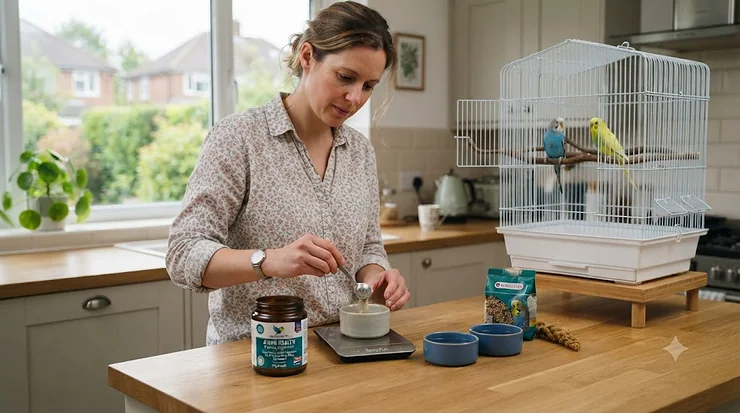
What is a bird probiotic supplement, in plain terms? It’s a powder, liquid or tablet containing live or freeze-dried beneficial bacteria — strains such as Bacillus subtilis, Lactobacillus or Enterococcus faecium — designed to repopulate a bird’s crop and intestinal tract with the microorganisms that support digestion, nutrient absorption and immune defence. According to a study from Newcastle University published via PubMed, introducing probiotic strains has been shown to measurably change the bacterial community structure within the avian gastrointestinal tract, which is the scientific basis every product in this review rests on, whether or not the marketing copy says so directly.
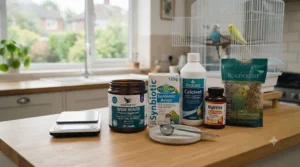
We’ve researched seven genuinely available UK products, from vet-formulated all-rounders to emergency sick-bird formulas, covering the full spread of what owners actually search for: a gut health supplement for parrots after a stressful vet visit, probiotic powder for birds recovering from illness, general digestive support for birds with loose droppings, and targeted help for antibiotic recovery in birds whose gut flora has been wiped out by medication. We’ll also look honestly at avian gut flora science and the genuine, if less discussed, link between stress-related digestive issues and a bird’s day-to-day environment.
Quick Comparison Table
| Product | Format | Key Strains/Focus | Price Range | Best For |
|---|---|---|---|---|
| Vetark Avipro Avian Prebiotic & Probiotic | Powder | EU-licensed Bacillus subtilis, vitamins A/C/E | £15-£20 range | All-round daily gut support |
| Nekton-Biotic-Bird Probiotic | Powder | Bacillus subtilis, mannan-oligosaccharides | £10-£15 range | Stress and transport support |
| PROLYTE C Avian Probiotic Health Tonic | Powder | EU-approved probiotic + electrolytes | £10-£15 range | Rapid recovery after illness/medication |
| BioPlus Powdered Probiotic | Powder | L. casei casei, E. faecium, vitamins/minerals | £10-£15 range | Weekly maintenance, budget-friendly |
| Guardian Angel Sick Bird Supplement | Powder | Probiotics + energy system + immune support | £10-£15 range | Emergency/first-aid for sick birds |
| Aviform AVIGOLD ADVANCE Liquid Tonic | Liquid | Prebiotics, vitamins, amino acids | £10-£15 range | Convenient all-in-one daily tonic |
| Vetafarm Probotic | Powder | 7 live microbial strains | under £15 | Hand-reared chicks & post-antibiotic recovery |
Looking at the table, a genuine split emerges between daily maintenance products and recovery-focused formulas. Vetark Avipro Avian Prebiotic & Probiotic and Aviform AVIGOLD ADVANCE Liquid Tonic are built for ongoing, everyday gut support, while PROLYTE C Avian Probiotic Health Tonic, Guardian Angel Sick Bird Supplement and Vetafarm Probotic are explicitly positioned around recovery after illness, antibiotics or acute stress. Knowing which category your bird actually needs — routine maintenance versus active recovery — matters more than any single ingredient list.
💬 Just one click — help others make better buying decisions too!😊
Top 7 Bird Probiotic Supplements: Expert Analysis
1. Vetark Avipro Avian Prebiotic & Probiotic — the vet-recommended all-rounder
The standout feature of Vetark Avipro Avian Prebiotic & Probiotic is its EU-licensed probiotic organism, Bacillus subtilis C-3102, combined with a fructo-oligosaccharide prebiotic fibre and added vitamins A, C and E — a genuinely complete formula rather than a single-strain powder.
Key specs worth interpreting: the product is designed to be added directly to drinking water or sprinkled onto food, with the electrolyte component specifically aimed at supporting hydration during bouts of diarrhoea. In practice, that dual prebiotic-probiotic structure matters because prebiotic fibre feeds the beneficial bacteria already present, while the added strain works to recolonise ground lost during stress or treatment — a combination that single-ingredient probiotics can’t replicate. Based on the spec comparison with simpler powders in this list, Avipro Avian earns its position as an all-rounder precisely because it doesn’t force owners to choose between prebiotic and probiotic support.
Reviewers consistently note that the product is genuinely palatable, with several accounts describing birds readily drinking treated water without the fussiness sometimes seen with strongly flavoured supplements. A recurring theme in aggregated feedback is appreciation for the clear vet backing, which matters to owners who want evidence-based reassurance rather than marketing claims alone.
Pros:
- ✅ EU-licensed probiotic organism with published dosing guidance
- ✅ Combines prebiotic fibre, probiotic bacteria and vitamins in one product
- ✅ Genuinely palatable in drinking water, per aggregated feedback
Cons:
- ❌ Premium pricing compared with single-strain alternatives
- ❌ Not species-specific dosing, so smaller birds need careful measuring
At around £15-£20, Vetark Avipro Avian Prebiotic & Probiotic sits toward the premium end, and the honest verdict is that the vet formulation and multi-ingredient approach genuinely justify the cost for owners wanting a single, dependable daily product.

2. Nekton-Biotic-Bird Probiotic — built for stress and travel
What most buyers overlook about Nekton-Biotic-Bird Probiotic is that it’s explicitly formulated around stress events — transport, bird shows, breeding season — rather than only illness recovery, which sets it apart from the more general-purpose powders in this review.
The formula centres on Bacillus subtilis alongside mannan-oligosaccharides, a prebiotic that promotes the natural composition of crop and intestinal flora, mixed daily into soft food at a rate of roughly one gram per 100g of feed. Here’s what to weigh: because Nekton positions this specifically for “preparing” birds for stressful situations, it’s designed for proactive use ahead of a known stressor, not purely reactive use once symptoms appear — a distinction worth understanding before dosing. On paper this means an owner planning a bird show trip or a house move gets more targeted value from starting the course a few days ahead, rather than waiting for a problem to show up.
Aggregated review sentiment for the Nekton range broadly praises consistency of manufacturing and the brand’s decades of use among European aviculturists, though a common complaint across the wider Nekton line concerns the relatively small 100g pot size versus the daily dosing rate, meaning regular users reorder more frequently than they might expect.
Pros:
- ✅ Purpose-built for known stress events like transport or shows
- ✅ Long-established European manufacturer with consistent formulation
- ✅ Prebiotic mannan-oligosaccharide component supports natural flora
Cons:
- ❌ Smaller 100g pot means frequent reordering for regular users
- ❌ Less suited to acute illness recovery than dedicated recovery formulas
Priced around £10-£15, Nekton-Biotic-Bird Probiotic offers solid value specifically for the stress-prevention use case, though it’s a narrower tool than some of the broader all-rounders on this list.
3. PROLYTE C Avian Probiotic Health Tonic — the antibiotic recovery specialist
The PROLYTE C Avian Probiotic Health Tonic stands out for one specific job: rapid recovery after illness or medication, and its manufacturer describes it as containing the only probiotic with EU approval specifically for cage and aviary birds at the time of formulation.
The 125g powder combines a soluble probiotic and prebiotic with electrolytes, designed to be added directly to drinking water following illness, antibiotic treatment or transport stress. Based on the spec comparison with general maintenance products, what makes Prolyte C genuinely different is the electrolyte inclusion specifically targeted at birds experiencing wet droppings — a common and concerning symptom after gut flora disruption, where fluid balance becomes as urgent a concern as bacterial recolonisation. What the spec sheet won’t tell you, but the manufacturer notes directly, is that Prolyte C is explicitly marketed as replenishing gut flora that’s been depleted by antibiotic treatment, making it one of the more targeted antibiotic recovery in birds options in this review rather than a general wellness product.
Reviewers consistently note visible improvement in droppings consistency within a few days of use, and the product’s compatibility with other Aviform-brand supplements is a recurring point of praise among owners managing multiple supplements simultaneously.
Pros:
- ✅ Electrolyte formulation specifically targets post-illness fluid balance
- ✅ EU-approved probiotic organism for cage and aviary birds
- ✅ Compatible for combined use with other Aviform products
Cons:
- ❌ Marketed primarily for recovery, less suited to long-term daily maintenance
- ❌ 125g size may run out quickly during an extended recovery period
At around £10-£15, PROLYTE C Avian Probiotic Health Tonic represents strong targeted value for the specific and genuinely common scenario of post-antibiotic or post-illness recovery.
4. BioPlus Powdered Probiotic — the budget maintenance choice
The BioPlus Powdered Probiotic from The Birdcare Company earns its place through affordability combined with a genuinely broad ingredient list — vitamins, minerals, glucose polymers and a multi-strain probiotic blend including L. casei casei and E. faecium.
Used twice weekly rather than daily, the product is added to drinking water or mixed into soft food, with dosing scaled by species from finches through to macaws. In practice, that twice-weekly dosing schedule is precisely what keeps the cost down relative to daily-use products, while the manufacturer positions it as sufficient to maintain, rather than actively repair, a healthy gut flora baseline. Here’s what to weigh: BioPlus is explicitly a maintenance product rather than a recovery formula, so it’s a poor substitute for a targeted product like Prolyte C or Guardian Angel during an active illness, but an efficient long-term choice for otherwise healthy birds.
A common thread in customer sentiment describes owners using BioPlus as a weekly follow-up after a recovery-focused product like Guardian Angel has done the initial heavy lifting, which reflects the product’s own stated positioning as a maintenance rather than emergency formula.
Pros:
- ✅ Twice-weekly dosing keeps ongoing cost genuinely low
- ✅ Broad vitamin and mineral profile alongside the probiotic blend
- ✅ Scaled dosing guidance across finches through to macaws
Cons:
- ❌ Not formulated as a stand-alone recovery product for acute illness
- ❌ Lower CFU count per gram than some daily-dose competitors
At around £10-£15 depending on pack size, BioPlus Powdered Probiotic is the clearest budget maintenance pick in this review, genuinely well suited to routine, ongoing gut support rather than crisis management.
5. Guardian Angel Sick Bird Supplement — emergency first aid in a tub
The Guardian Angel Sick Bird Supplement distinguishes itself as, in the manufacturer’s own words, one of the most established “sick bird” products on the market, combining probiotics with what The Birdcare Company calls its Energy System of supporting ingredients.
The formula blends freeze-dried beneficial bacteria (including L. casei casei and E. faecium) with a comprehensive vitamin and mineral profile, glucose polymers for immediate energy, and allicin concentrate, designed to be given in water or sprinkled onto food at species-specific doses. On paper this means Guardian Angel is addressing several problems simultaneously that a sick bird typically faces at once: depleted energy reserves, disrupted gut flora, and a weakened immune response, rather than tackling gut flora in isolation. Based on the spec comparison with narrower single-purpose probiotics, this breadth is precisely why owners and the manufacturer alike position it as a genuine first-response product rather than routine maintenance.
Aggregated review sentiment is strongly positive around visible energy improvements within a day or two of use, with several accounts describing its use following antibiotic courses specifically, then transitioning to a lighter maintenance product like BioPlus once the bird has stabilised — a sequencing pattern that reflects genuine, practical owner experience rather than marketing suggestion alone.
Pros:
- ✅ Combines probiotics with an energy-support system for genuinely sick birds
- ✅ Comprehensive vitamin, mineral and immune-support ingredient profile
- ✅ Widely used as a first response following antibiotic treatment
Cons:
- ❌ Not intended for long-term daily use once a bird has recovered
- ❌ More expensive per gram than simple maintenance-only powders
Priced around £10-£15 for a 40-80g pot, Guardian Angel Sick Bird Supplement delivers strong value specifically for its intended crisis-response role, though it’s genuinely not designed to be a everyday product.
6. Aviform AVIGOLD ADVANCE All-in-One Liquid Tonic — the convenient daily liquid
The Aviform AVIGOLD ADVANCE All-in-One Liquid Tonic takes a different format entirely from every other product on this list — a 500ml liquid rather than a powder — combining prebiotics with an extensive vitamin, mineral, amino acid and essential oil profile in a single daily dose.
The specification runs to an unusually long ingredient list, including vitamins A, D3, E and K, B-complex vitamins, amino acids and what the manufacturer terms an “Aviaryguard” nucleotide component. What most buyers overlook about liquid tonics generally is that they dissolve instantly and evenly through drinking water with no measuring-spoon guesswork, which practically matters for owners managing multiple birds or larger aviaries where consistent dosing across many water bowls is genuinely harder to achieve with powders. Here’s what to weigh: AVIGOLD ADVANCE leans more heavily toward prebiotic and vitamin support than live probiotic bacteria specifically, so owners wanting a dedicated high-CFU probiotic may prefer to pair it with, rather than replace, a targeted product like Nekton-Biotic-Bird or Vetafarm Probotic.
Reviewers consistently highlight the convenience of liquid dosing for larger aviary setups, and a recurring theme in feedback is appreciation for the broad nutritional coverage in a single product, reducing the number of separate supplements an aviary owner needs to juggle.
Pros:
- ✅ Liquid format dissolves evenly with no powder measuring required
- ✅ Broad vitamin, mineral and amino acid coverage in one product
- ✅ Genuinely practical for larger aviaries with multiple water bowls
Cons:
- ❌ Lighter on live probiotic bacteria than dedicated probiotic powders
- ❌ 500ml bottle is bulkier to store than compact powder pots
At around £10-£15, Aviform AVIGOLD ADVANCE All-in-One Liquid Tonic offers strong value as a broad daily tonic, best paired with a targeted probiotic powder rather than used as the sole gut-health product.
7. Vetafarm Probotic — the hand-rearing and post-antibiotic specialist
The Vetafarm Probotic stands out for its seven-strain live microbial blend, positioned specifically for two scenarios: hand-reared baby birds establishing gut flora for the first time, and birds recovering immediately after antibiotic treatment.
The powder is water-soluble and can be mixed into drinking water, food, or combined directly with hand-rearing formula for chicks, with dosing guidance scaled between aviary birds and poultry. In practice, that hand-rearing application matters more than it might initially seem: chicks raised away from their parents miss out on the natural gut flora transfer that happens through parent feeding in the wild, and Vetafarm Probotic is explicitly designed to fill that specific gap. Based on the spec comparison with general-purpose products, its recommendation to use “immediately following antibiotics” places it firmly alongside PROLYTE C and Guardian Angel as a targeted recovery tool rather than routine maintenance.
Aggregated review sentiment across retailer listings consistently praises its use for hand-reared chicks specifically, with owners of newly-weaned or recently rehomed birds reporting it as a reliable first supplement, while a recurring theme in feedback notes that, being an Australian-formulated product, availability and stock consistency in the UK can occasionally vary between sellers.
Pros:
- ✅ Seven-strain blend specifically suited to hand-reared chicks
- ✅ Explicitly recommended immediately following antibiotic treatment
- ✅ Flexible dosing via water, food or hand-rearing formula
Cons:
- ❌ UK stock availability can vary between third-party sellers
- ❌ Less documented UK-specific vet backing than the Vetark or Aviform ranges
At under roughly £15, Vetafarm Probotic rounds out this review as the strongest specialist pick for breeders and anyone hand-rearing chicks, or managing the critical days immediately after an antibiotic course.
Practical Usage Guide: Introducing and Storing a Bird Probiotic Supplement
Introducing any new probiotic powder or tonic goes more smoothly with a gradual approach rather than switching a bird’s entire water supply overnight. For the first few days, most owners find success mixing the supplement at a lower concentration than the label suggests, gradually increasing to the full dose over three to four days — this avoids the sudden taste or colour change that can make some birds avoid drinking altogether, a genuinely common and avoidable first-week mistake. Always prepare fresh solution daily; live probiotic bacteria in a stagnant water bowl left over 24 hours can actually encourage unwanted bacterial or fungal growth rather than the beneficial flora intended, so yesterday’s mixed solution should always be discarded rather than topped up.
Storage matters more than many owners realise: powders like Vetark Avipro Avian Prebiotic & Probiotic and Nekton-Biotic-Bird Probiotic should be kept dry, away from direct sunlight, and at stable room temperature rather than refrigerated, since damp conditions can degrade live bacterial cultures well before the printed use-by date. Never mix two different probiotic or prebiotic products in the same water bowl unless a manufacturer specifically states compatibility — several brands, including The Birdcare Company’s range, explicitly warn against combining products like BioPlus with certain water treatments such as Aviclens, since interactions can reduce efficacy of both.
Real-World Scenarios: Matching the Supplement to the Situation
Consider three genuinely different bird-keeping households reaching for very different products on this list. First, an African Grey just finished a ten-day antibiotic course prescribed by an avian vet for a respiratory infection, and the owner has been told gut flora needs rebuilding. Here, PROLYTE C Avian Probiotic Health Tonic or Vetafarm Probotic are the sensible immediate choices — both are explicitly formulated around post-antibiotic recovery, addressing the specific problem of medication having wiped out beneficial bacteria alongside the harmful ones it targeted.
Second, picture a breeder hand-rearing a clutch of cockatiel chicks who never received the natural gut flora transfer that comes from parent feeding. Vetafarm Probotic, with its explicit hand-rearing application and compatibility with formula feeds, directly addresses this scenario in a way general maintenance products don’t.
Third, consider a budgie owner managing a small, otherwise healthy flock who simply wants routine, ongoing gut support without the cost or intensity of a recovery-focused product. BioPlus Powdered Probiotic, used at its intended twice-weekly maintenance rate, or Aviform AVIGOLD ADVANCE Liquid Tonic as a daily broad-spectrum tonic, both suit this lower-intensity, preventative use case far better than a specialist recovery formula would.
Problem to Solution: Fixing Common Probiotic Supplement Issues
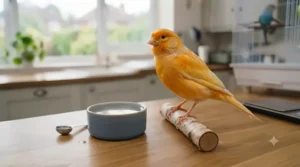
A bird refusing treated water is the most frequently reported issue, and the fix is usually gradual dilution rather than persistence at full strength — start at a quarter of the recommended dose and step up over several days rather than assuming the bird will simply adjust. Powder clumping in humid environments, a genuinely common complaint with products like BioPlus Powdered Probiotic and Nekton-Biotic-Bird Probiotic, is best solved by storing the tub with a small silica desiccant sachet and always using a completely dry scoop, since moisture introduced during scooping is the usual culprit rather than any manufacturing fault.
Uncertainty about correct dosing for smaller species is another recurring problem, and the honest solution is to follow the manufacturer’s species-specific breakdown precisely rather than estimating — products like Guardian Angel Sick Bird Supplement and Vetark Avipro Avian Prebiotic & Probiotic publish detailed per-species pinch or scoop guidance for exactly this reason. Finally, for owners managing a genuinely sick bird showing signs of lethargy, fluffed feathers or abnormal droppings, the most important solution isn’t a supplement at all — as the RSPCA and avian vets consistently emphasise, any bird showing these signs needs a same-day veterinary assessment, with a probiotic supplement supporting recovery alongside, not instead of, proper diagnosis and treatment.
How to Choose a Bird Probiotic Supplement
Choosing the right gut health supplement for parrots and other birds comes down to six practical criteria, roughly in order of importance:
- Maintenance versus recovery purpose — decide first whether your bird needs ongoing daily support or targeted help after illness, antibiotics or stress, since this single factor should guide every other choice on this list.
- EU-approved or vet-formulated strains — products like Vetark Avipro Avian Prebiotic & Probiotic and PROLYTE C Avian Probiotic Health Tonic carry specific regulatory or veterinary backing worth checking on the label.
- Format that fits your routine — powder mixed into water or food suits most single-bird households, while a liquid tonic like Aviform AVIGOLD ADVANCE may suit larger aviaries better.
- Compatibility with existing products — always check whether a probiotic can be safely combined with any water treatment or supplement already in use.
- Species-specific dosing guidance — the clearer and more detailed the per-species dosing table, the easier it is to dose small birds like finches accurately.
- Shelf life and pack size relative to your usage rate — a large pot is poor value if the recommended dose means it goes stale before it’s used up, and vice versa for frequent users buying too-small packs.
Common Mistakes When Buying Bird Probiotics
The single most common mistake is buying a maintenance-focused product like BioPlus Powdered Probiotic for an acute illness situation, when a dedicated recovery formula like Guardian Angel Sick Bird Supplement or PROLYTE C Avian Probiotic Health Tonic would address the immediate problem far more directly. A close second is assuming all probiotic strains are interchangeable — Bacillus subtilis, Lactobacillus species and Enterococcus faecium each play somewhat different roles in avian gut flora, and a product’s specific strain blend genuinely matters more than the word “probiotic” on the front label alone.
Skipping a vet consultation before starting antibiotic recovery in birds is another recurring error; while every recovery-focused product in this review is designed to support gut flora after medication, none replaces the professional guidance a vet can give on timing and combination with any ongoing treatment. Finally, as the Newcastle University-affiliated study on avian gastrointestinal probiotics demonstrates, different probiotic strains genuinely change gut bacterial communities in measurably different ways — a reminder that switching between brands isn’t a neutral decision, and consistency with one well-matched product often serves a bird better than frequent brand-hopping.
Probiotic Powder for Birds vs Liquid Tonics
The core practical difference between probiotic powder for birds and liquid tonic formats comes down to dosing precision versus convenience. Powders like Vetark Avipro Avian Prebiotic & Probiotic, Nekton-Biotic-Bird Probiotic and Vetafarm Probotic allow precise, scoop-based dosing scaled to a bird’s exact size, which matters for smaller species like finches and canaries where overdosing vitamins in particular can be a genuine concern. Liquid tonics such as Aviform AVIGOLD ADVANCE All-in-One Liquid Tonic, by contrast, dissolve instantly and evenly through an entire aviary’s water supply, trading some dosing precision for significantly easier administration across multiple birds or cages at once.
For a single pet parrot or budgie, the precision of a powder generally wins out, particularly during a recovery period where getting the electrolyte and probiotic balance right matters. For a larger aviary or breeding collection, the practical convenience of a liquid tonic that treats every water bowl identically often outweighs the marginal precision loss, especially when paired with a targeted powder for any individual bird needing extra recovery support.
✨ Ready to Support Your Bird’s Gut Health?
🔍 Whichever product suits your bird’s situation, always check current pricing, pack size and stock availability before ordering — formulations and pack sizes are occasionally updated by manufacturers. A well-chosen probiotic supplement, used consistently and for the right purpose, can make a genuine difference to your bird’s digestive comfort and recovery.
Long-Term Cost and Maintenance
Cost-per-use tells a more complete story than sticker price alone across this category. BioPlus Powdered Probiotic, dosed only twice weekly, works out as one of the most economical long-term maintenance options despite a mid-range upfront price, simply because a single pot lasts considerably longer than a daily-dose product. By contrast, PROLYTE C Avian Probiotic Health Tonic and Guardian Angel Sick Bird Supplement, while similarly priced per pot, are designed for shorter, more intensive recovery courses rather than indefinite daily use, so their genuine cost-per-use is better measured against how quickly they support a full recovery rather than against ongoing monthly spend.
Vetark Avipro Avian Prebiotic & Probiotic, priced at the premium end, arguably delivers the strongest long-term value for owners wanting one single, dependable daily product rather than switching between a maintenance and a recovery formula depending on circumstances — the EU-licensed strain and multi-ingredient formulation mean it can reasonably serve both roles at a slightly higher, but simplified, cost. Across this entire category, maintenance costs beyond the supplement itself are minimal: no equipment, no batteries, no ongoing veterinary monitoring required for routine use, though any bird showing persistent symptoms should always see a vet regardless of which supplement is in use.
Features That Actually Matter (And Those That Don’t)
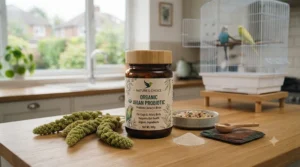
CFU (colony-forming unit) count is heavily marketed but, on its own, a less reliable indicator of quality than strain diversity and documented avian-specific research — a product with a modest CFU count but genuine EU licensing or vet backing, like Vetark Avipro Avian Prebiotic & Probiotic, often outperforms a higher-CFU product with no comparable regulatory or research backing. What genuinely matters more is whether the strains included have documented relevance to avian (rather than generic mammalian) gut flora, since bird digestive systems differ meaningfully from those of dogs or cats.
Added vitamins and electrolytes matter enormously in recovery-focused products like PROLYTE C Avian Probiotic Health Tonic, where fluid balance during illness is a genuine concern, but matter far less in a routine maintenance product where a bird’s regular diet should already be providing adequate vitamin coverage. Flavouring and palatability claims, meanwhile, are worth taking with some scepticism from marketing copy alone — aggregated review sentiment across this category shows genuine variation in how readily individual birds accept any given product, regardless of what the packaging promises, so a degree of trial and gradual introduction remains sensible whichever product is chosen.
Buyer’s Decision Framework
If your bird has just finished a course of antibiotics, choose a dedicated recovery formula — PROLYTE C Avian Probiotic Health Tonic or Vetafarm Probotic — over a general maintenance product, since antibiotic recovery in birds specifically requires active gut flora repopulation. If your bird is showing signs of acute illness such as lethargy or abnormal droppings, choose Guardian Angel Sick Bird Supplement for its combined energy-and-immune support profile, while also arranging a same-day vet visit rather than relying on the supplement alone. If you’re managing an otherwise healthy bird or flock and simply want ongoing gut support, choose BioPlus Powdered Probiotic for cost-effective twice-weekly maintenance, or Aviform AVIGOLD ADVANCE Liquid Tonic if you’re managing multiple birds and want convenient, consistent daily dosing across several water bowls. And if you’re hand-rearing chicks, Vetafarm Probotic is the most directly relevant specialist choice on this list.
Stress-Related Digestive Issues: What’s Actually Going On
Stress-related digestive issues in birds are a genuinely well-recognised phenomenon among avian vets, and the underlying mechanism is fairly intuitive once explained: acute stress redirects blood flow and physiological resources away from digestion, which can both slow gut motility and disrupt the balance of beneficial bacteria that keep harmful organisms in check. Common stress triggers include transport, a change of cage location, the arrival of a new pet or family member, veterinary visits, and — a factor the RSPCA’s guidance on pet bird behaviour highlights specifically — insufficient social interaction or environmental enrichment, since birds are highly social animals whose wellbeing is closely tied to engagement rather than isolation.
Products like Nekton-Biotic-Bird Probiotic, explicitly formulated around known stress events, and Vetark Avipro Avian Prebiotic & Probiotic, valuable during veterinary treatment or environmental change according to its own formulation notes, are the most directly relevant choices for this specific category of digestive disruption. It’s worth being honest, though, that no supplement addresses the root cause of chronic stress on its own — if a bird is showing persistent stress-related digestive symptoms, addressing the underlying environmental or social trigger matters at least as much as any probiotic product, and a supplement works best as one part of a broader response rather than a complete fix.
Frequently Asked Questions
❓ What is the best bird probiotic supplement for antibiotic recovery?
❓ How do I know if my bird needs a probiotic supplement?
❓ Can I give my parrot probiotic powder every day?
❓ Are liquid or powder bird probiotics more effective?
❓ Is stress really linked to digestive issues in birds?
Conclusion
There’s no single best bird probiotic supplement — only the right one for the specific situation your bird is in, and that’s genuinely the clearest takeaway from comparing these seven products. A bird recovering from antibiotics needs the targeted repopulation offered by PROLYTE C Avian Probiotic Health Tonic or Vetafarm Probotic; a genuinely sick bird benefits most from the combined support of Guardian Angel Sick Bird Supplement, alongside prompt veterinary care; and a healthy bird or flock needing routine maintenance is well served by the affordability of BioPlus Powdered Probiotic or the convenience of Aviform AVIGOLD ADVANCE Liquid Tonic.
What unites every genuinely worthwhile product on this list isn’t brand recognition — it’s a clear, honest match between the product’s actual formulation and the specific digestive challenge your bird is facing, backed where possible by EU licensing, vet involvement, or documented avian-specific research rather than vague wellness claims alone.
Recommended for You
- Cockatiel Calcium Supplement Buy Guide: 7 Best Picks 2026
- Bird Multivitamin Drops: 7 Proven UK Picks for 2026
- Budgie Vitamin Drops Under £15: 7 Real Picks Tested (2026)
Disclaimer: This article contains affiliate links. As an Amazon Associate, I earn from qualifying purchases. If you purchase products through these links, we may earn a small commission at no additional cost to you.
✨ Found this helpful? Share it with your friends! 💬🤗
