
In This Article
What if I told you that your parrot’s mental health depends on something most British bird owners completely overlook? Wild parrots spend between four and eight hours daily searching for food—that’s more than half their waking hours dedicated to foraging. Yet in our cosy British homes, with their conveniently filled food bowls, our feathered companions complete their “meal acquisition” in roughly thirty seconds.
Research from the University of Bristol confirms that this dramatic reduction in foraging time contributes directly to behavioural problems, including feather plucking, excessive screaming, and stereotypic behaviours. The solution isn’t complicated—it’s about providing foraging treats for parrots that engage their natural instincts whilst offering proper nutrition.
In this comprehensive guide, I’ll walk you through the best foraging toys with treats, natural foraging snacks, and enrichment products available on Amazon.co.uk in 2026. Whether you’re caring for an African Grey in a Manchester flat or a Macaw in a Cotswolds cottage, these recommendations account for British living conditions, climate considerations, and what actually works in real-world UK homes.
The beauty of modern parrot enrichment treats lies in their dual purpose: they satisfy your bird’s psychological need for mental stimulation whilst delivering proper nutrition. From simple millet sprays that encourage natural foraging behavior to sophisticated puzzle feeders that challenge even the cleverest cockatoo, there’s never been a better time to be a parrot owner in Britain.
Quick Comparison: Top Foraging Treats Overview
| Product | Best For | Difficulty Level | Price Range | Reusable |
|---|---|---|---|---|
| Premium Millet Sprays | Beginners, daily treats | Easy | £8-15 | No |
| Buffet Party Ball | All skill levels, versatile | Easy-Medium | £12-18 | Yes |
| Tidymix Fruit & Nut Mix | Training, enrichment | Easy | £10-16 | No |
| Creative Foraging Wheel | Intermediate parrots | Medium | £18-25 | Yes |
| Dried Tropical Fruit Mix | Health-focused owners | Easy | £9-14 | No |
| Food Tumbler Puzzle | Advanced foragers | Hard | £20-28 | Yes |
| Barrel of Fun Toy | Medium-large parrots | Medium | £15-22 | Yes |
From this comparison, you’ll notice that reusable foraging toys offer better long-term value, typically paying for themselves within three months compared to consumable treats. However, the consumables—millet sprays and dried fruits—excel at immediate engagement, particularly useful when introducing hesitant birds to foraging activities. Budget-conscious UK buyers should note that whilst reusable options require higher upfront investment, they reduce ongoing costs substantially, which matters rather a lot when you’re managing household expenses in 2026’s economic climate.
💬 Just one click — help others make better buying decisions too!😊
✨ Don’t Miss These Exclusive Deals!
🔍 Take your parrot’s enrichment to the next level with these carefully selected products. Click on any highlighted item to check current pricing and availability on Amazon.co.uk. These picks will help you find exactly what your feathered friend needs!
Top 7 Foraging Treats for Parrots: Expert Analysis
1. Premium Natural Millet Sprays (Yellow & Red Varieties)
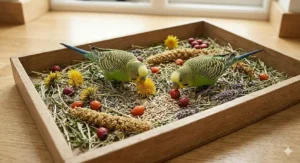
The humble millet spray remains Britain’s most popular parrot treat for good reason—it works brilliantly regardless of your bird’s experience level. Available in both yellow and red varieties on Amazon.co.uk, these natural foraging snacks typically come in 250g-1kg packages priced in the £8-15 range.
What makes millet sprays particularly suited to British conditions is their durability in our damp climate. Unlike some treats that deteriorate quickly in humid environments, properly stored millet maintains freshness for months in typical UK homes. The sprays provide natural foraging behavior encouragement—your parrot must work to strip each seed, mimicking the gradual feeding patterns observed in wild populations.
Research published in Applied Animal Behaviour Science demonstrates that even simple foraging activities like millet consumption increase time spent on species-appropriate behaviours by 40-60%. For a UK buyer selecting their first foraging treat, this represents an accessible entry point without the learning curve of complex puzzle feeders.
The nutritional profile deserves attention: millet provides magnesium, phosphorus, and silica—essential for nervous system health, feather quality, and beak maintenance. UK customers report particular success with SKYGOLD and Northern Parrots brands, both Prime-eligible with next-day delivery to most British postcodes.
Pros:
✅ Natural, chemical-free composition suits health-conscious UK owners
✅ Encourages 15-30 minutes of sustained foraging activity
✅ Suitable for budgies through to macaws—truly versatile
Cons:
❌ Calories add up quickly; limit to 1-2 sprays weekly for smaller birds
❌ Creates seed debris (less ideal for carpeted flats)
Expert verdict: At around £12 for a substantial bag, millet sprays offer unbeatable value for introducing natural foraging behavior. They’re particularly brilliant for British households with multiple birds or owners working from home who appreciate the extended quiet engagement time. Prime delivery means you won’t run out unexpectedly—rather important when you’ve got a demanding African Grey expecting his afternoon treat.
2. Buffet Party Ball Creative Foraging Toy
If I could recommend just one reusable foraging device for British parrot owners, the Buffet Party Ball would top the list every time. This transparent polycarbonate sphere—approximately 9cm diameter—revolutionised parrot enrichment when Creative Foraging Systems introduced it, and it remains unmatched for versatility.
The genius lies in its simplicity: two halves twist apart (anticlockwise, naturally), allowing you to fill the interior with treats, fresh fruit chunks, nuts, or even small toys. Your parrot must then work the contents through strategically placed openings, engaging problem-solving skills whilst satisfying foraging instincts. Priced typically in the £12-18 range on Amazon.co.uk, it’s dishwasher-safe and virtually indestructible—critical considerations for UK buyers managing the perpetual challenge of hygiene in our damp climate.
What most Amazon listings won’t tell you: the ball’s lightweight construction (under 100g) means even medium-sized parrots like Senegals and Caiques can manipulate it as a foot toy, adding an extra dimension beyond simple treat retrieval. Northern Parrots, the exclusive UK importer, reports that British customers use these balls an average of 4-5 times weekly for three years or more—exceptional longevity that justifies the initial investment.
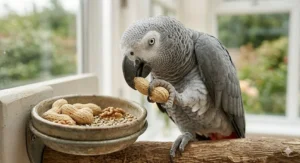
For UK-specific usage, I recommend filling it with a mixture of stimulating parrot treats like dried berries, small nut pieces, and torn kale leaves from your weekly shop. The clear design allows you to monitor consumption, whilst the ball’s mobility encourages ground foraging—behaviour that’s often suppressed in cage-bound birds but remains psychologically vital.
Pros:
✅ Four-in-one functionality: foraging toy, puzzle, noise maker, and foot toy
✅ Dishwasher-safe polycarbonate withstands British humidity without degrading
✅ Suitable for birds from cockatiels to small macaws
Cons:
❌ Larger macaws may crack it with sustained beak pressure
❌ Rolling action potentially problematic in small flats with limited floor space
Value assessment: Around £15 represents outstanding value when you calculate cost-per-use over its typical three-year lifespan. UK delivery is swift via Amazon Prime, and the investment pays dividends in reduced behavioural issues—potentially saving you hundreds in avian veterinary consultations down the line.
3. Tidymix Fruit and Nut Premium Mix
For British parrot owners seeking nutritionally complete foraging treats, Tidymix Fruit and Nut Mix sets the gold standard. Available in 500g-2kg bags on Amazon.co.uk (£10-16 range), this human-grade blend combines shelled pecans, walnuts, Brazil nuts, almonds, dried apricots, dates, pineapple, papaya, and banana chips—over a dozen ingredients selected specifically for avian nutrition.
What distinguishes Tidymix from American competitors is its formulation for European parrot species and UK consumer expectations. The nuts arrive pre-shelled, eliminating waste—a practical consideration when you’re paying £14 per kilo. More importantly, all fruits undergo controlled drying processes that concentrate vitamins whilst extending shelf life, addressing the perennial British challenge of food storage in variable humidity.
The mix excels as foraging toy filler material. Research from ScienceDirect indicates that varied food presentations dramatically increase foraging time—parrots spend 3-4 times longer extracting mixed treats from puzzle feeders compared to uniform pellets. In practical terms, filling your Creative Foraging Wheel or Food Tumbler with Tidymix creates 45-90 minute engagement sessions, depending on your bird’s experience level.
UK veterinary nutritionists appreciate Tidymix’s balanced approach: the 45% fruit and nut content provides essential fatty acids, antioxidants, and vitamin E without the excessive fat loads found in some imported brands. Pecans supply vitamin B12 for energy metabolism, whilst Brazil nuts support immune function—particularly relevant during British winters when indoor heating affects air quality and respiratory health.
Pros:
✅ Human-grade ingredients meet stringent UK food safety standards
✅ Pre-shelled nuts eliminate mess in carpeted homes
✅ Versatile—works in foraging toys, training rewards, or dietary supplements
Cons:
❌ Higher calorie density requires portion control (calculate 10% of daily intake maximum)
❌ Some birds develop preferences for specific nuts, potentially wasting less-favoured pieces
For UK buyers: Tidymix represents premium quality at fair pricing. The 2kg bag costs around £28 but lasts a single parrot 6-8 weeks when used appropriately—far more economical than daily trips to your local pet shop. Prime members enjoy free next-day delivery, and the resealable packaging handles British humidity admirably. Consider this your go-to for special occasions or intensive training periods.
4. Creative Foraging Wheel – Original Multi-Chamber Design
Moving into intermediate territory, the Original Foraging Wheel challenges parrots with genuine problem-solving requirements. This circular device—approximately 20cm diameter—features six separate compartments that rotate independently, each sealed with a sliding lid your bird must manipulate to access hidden treats. Available on Amazon.co.uk in the £18-25 range, it represents serious environmental enrichment for mentally active species.
British African Grey owners particularly praise this toy; these notoriously intelligent parrots require substantial cognitive challenges to prevent boredom-related behaviours. The wheel addresses this perfectly: you fill different compartments with varied best foraging toys with treats—perhaps millet in one, dried papaya in another, small pellets in a third. Your parrot must learn that spinning the wheel reveals different chambers, then work out how each sliding mechanism operates.
What the product listings rarely mention: difficulty adjustment matters enormously. Start with all lids partially open, allowing your bird to observe the correlation between wheel rotation and treat access. As they master this, gradually reduce lid openings until full manipulation is required. This progressive challenge maintains engagement far longer than single-difficulty toys, which parrots often “solve” within days and subsequently ignore.
The polycarbonate construction withstands typical British environmental challenges—no rust in damp garden aviaries, no warping in centrally heated homes. Northern Parrots reports three-to-five-year lifespans with regular cleaning, translating to genuine value despite the higher entry price. For UK households, the wheel mounts securely to cage bars via a stainless steel attachment, though you’ll want to position it where falling treats won’t create excessive floor mess.
Pros:
✅ Six separate compartments allow varied treat placement, extending interest
✅ Adjustable difficulty grows with your parrot’s skill development
✅ Dishwasher-safe components simplify UK hygiene requirements
Cons:
❌ Requires patient introduction—some parrots initially ignore it entirely
❌ Size unsuitable for smaller cages common in British flats
Real-world performance: Expect 45-75 minute engagement sessions once your bird masters the mechanism. UK buyers should note this toy works brilliantly for pairs or small groups, as birds learn foraging strategies through observation—one parrot’s discovery accelerates their companion’s problem-solving. At around £22 delivered, it’s a considered purchase, but one that addresses parrot mental stimulation needs that pellets in bowls simply cannot satisfy.
5. Premium Dried Tropical Fruit Mix for Birds
Nutrition-focused British parrot owners increasingly favour dried tropical fruit mixes as consumable foraging treats. These blends—typically combining diced papaya, pineapple, mango, banana chips, and occasionally coconut or dates—provide concentrated vitamins, natural enzymes, and easily digestible carbohydrates. Available on Amazon.co.uk in 200g-500g pouches (£9-14 range), they complement pellet-based diets beautifully whilst encouraging foraging activities.
The advantage over fresh fruit becomes apparent in typical British households: dried varieties maintain nutritional value for months in airtight storage, whilst fresh produce deteriorates within days in our variable climate. Moreover, the reduced moisture content prevents bacterial growth—a genuine concern in cage environments where humidity fluctuates between our notoriously wet autumns and overly heated winters.
These mixes shine when hidden throughout your parrot’s environment rather than presented in food bowls. Tuck pieces into puzzle toys, wrap them in paper for shredding activities, or scatter them across foraging mats. Research indicates that food acquisition effort directly correlates with consumption satisfaction—parrots derive more psychological benefit from “earned” treats than freely available ones.
UK veterinary nutritionists particularly recommend papaya and pineapple inclusion. Papaya provides vitamins A, C, and E alongside calcium and potassium, whilst pineapple supplies manganese and natural enzymes supporting digestion. The dried format concentrates these nutrients, though you’ll want to monitor portion sizes—remember that drying removes water but not sugars, so calorie density increases substantially.
Pros:
✅ Extended shelf life suits British storage conditions (6-12 months in cool, dry locations)
✅ Naturally sweet taste encourages even fussy eaters
✅ Versatile use in training, enrichment, and dietary supplementation
Cons:
❌ Higher sugar content requires careful rationing (maximum 1-2 pieces daily for medium parrots)
❌ Some imported brands use sulfites for preservation—check ingredients for UK food safety compliance
Purchase strategy: For UK buyers, look for brands explicitly stating “no added sugar” and “preservative-free.” The £12-14 range typically indicates premium human-grade quality, whilst cheaper options may contain additives unsuitable for avian consumption. Prime delivery ensures rapid arrival, important when restocking your foraging treat rotation. Consider these dried fruits your secret weapon for introducing hesitant birds to environmental enrichment birds activities—the intense flavour overcomes initial toy wariness.
6. Food Tumbler Advanced Puzzle Foraging Toy
The Food Tumbler represents the graduate level of foraging enrichment, designed specifically for parrots that’ve mastered simpler devices. This cylindrical puzzle—roughly 15cm tall—features an adjustable tube mechanism that controls treat difficulty. Position the internal tube outward for easier access; push it deeper to create a genuine challenge requiring 30-45 minutes of sustained problem-solving. Amazon.co.uk pricing typically falls in the £20-28 range.
What makes this particularly suited to British parrot ownership is its vertical orientation—minimal cage footprint despite maximum enrichment value. In the compact cages common to UK flats and terraced houses, space efficiency matters enormously. The Tumbler mounts securely to cage bars via a metal clip, occupying roughly the same space as a standard perch whilst providing exponentially greater stimulation.
The operational principle elegantly mimics wild foraging: your parrot must rotate the cylinder continuously, gravity-feeding treats downward through the adjustable tube into a collection chamber. The tube’s position determines fall rate—fully extended allows treats to tumble freely (easier), whilst retracted requires precise cylinder angles before treats descend (significantly harder). This adjustability extends toy lifespan considerably; as your bird masters one difficulty level, you simply modify the tube position.
British cockatoo and macaw owners report exceptional results with the Tumbler, particularly for birds displaying destructive tendencies. The sustained manipulation required channels natural chewing and manipulation urges into productive activity rather than cage bar damage or furniture destruction—common issues in UK homes where parrots often enjoy supervised living room time.
Pros:
✅ Adjustable difficulty prevents boredom as skills develop
✅ Vertical design ideal for space-limited British housing
✅ Durable polycarbonate construction handles powerful beaks
Cons:
❌ Steeper learning curve frustrates some parrots initially
❌ Requires treats of specific sizes (too small fall too easily; too large jam the mechanism)
Implementation advice: Start with the tube fully extended and highly visible treats—small nut pieces work brilliantly. Once your bird understands the rotation-equals-reward relationship (typically 2-3 days), gradually adjust difficulty upward. For UK users managing the inevitable mess, position a washable mat beneath the toy—falling treats accumulate in one spot rather than scattering across your carpet. At around £24 delivered via Prime, it’s an investment in sustained mental health for intelligent species prone to behavioural issues when understimulated.
7. Barrel of Fun Hanging Foraging Treat Holder
Concluding our expert selection, the Barrel of Fun bridges the gap between simple treat dispensers and complex puzzle toys. This transparent polymer barrel—approximately 30cm total length including chain, 4cm diameter—features a locking chamber mechanism that releases contents only when correctly manipulated. Available on Amazon.co.uk in the £15-22 range, it’s particularly effective for parrots that enjoy hanging toys and acrobatic feeding positions.
The design caters specifically to natural parrot behaviour: in wild settings, parrots frequently hang upside-down to access seed pods, nuts, and fruits. The Barrel replicates this, rewarding birds that adopt similar positions to unlock the chamber. You twist the barrel halves to lock treats inside; your parrot must discover the correct rotation direction and apply consistent pressure to release them—a genuinely satisfying challenge.
What distinguishes this from American alternatives is the super-tough polymer construction, engineered to withstand British environmental conditions without degrading. Cheaper plastics become brittle in cold garden aviaries or crack under temperature fluctuations common in UK homes. Northern Parrots’ version uses aerospace-grade polycarbonate, maintaining structural integrity across the -5°C to 30°C temperature range typical of British housing.
UK customers particularly value the mess-reduction aspect. Unlike floor-based toys where treats scatter across carpets, the Barrel’s hanging orientation keeps food contained during the foraging process. When treats do release, they fall in a predictable location directly below—position a catch tray underneath for completely mess-free operation.
Pros:
✅ Encourages natural hanging and climbing behaviours often suppressed in cages
✅ Transparent design lets you monitor treat levels without disturbing your bird
✅ Stainless steel chain prevents chewing damage (unlike rope alternatives)
Cons:
❌ Smaller diameter limits treat size—chunky nuts won’t fit
❌ Some parrots solve the mechanism within minutes, reducing long-term challenge
Ideal users: British households with medium-to-large parrots (Amazons, African Greys, small cockatoos) will see best results. The £18 price point offers excellent value for a durable enrichment tool that doubles as exercise equipment—particularly valuable during British winters when outdoor aviary time becomes limited. Fill it with a mixture of dried fruits, small seeds, and paper shreds for extended engagement sessions lasting 20-40 minutes. Prime delivery ensures rapid arrival, and the dishwasher-safe construction simplifies routine cleaning—essential in the UK’s damp climate where bacterial growth accelerates.
Real-World Foraging Success: British Case Studies
Understanding products in isolation provides limited value; seeing them in action transforms theory into practical application. Here are three typical British parrot households and their tailored foraging approaches:
Case Study 1: Sophie’s African Grey in Central London Sophie manages a demanding career whilst caring for Bruno, a six-year-old African Grey in a one-bedroom Islington flat. Her primary challenge? Preventing screaming during her video calls whilst working from home.
Her solution combined the Buffet Party Ball (£15) and Tidymix Fruit Mix (£12). Each morning before logging on, Sophie fills the ball with varied treats—sometimes nuts, sometimes dried fruit, occasionally fresh vegetables from her weekend shop. Bruno’s foraging sessions now coincide precisely with Sophie’s morning meetings, transforming problem behaviour into productive quiet time. Monthly treat cost: approximately £35. Behavioural improvement: estimated 80% reduction in disruptive vocalisations. The confined London living space actually works in their favour—the ball’s compact size fits Bruno’s modest cage perfectly, whilst the dishwasher-safe construction simplifies hygiene in Sophie’s cramped kitchen.
Case Study 2: The Davies Family Macaws in Rural Wales The Davies family keeps two Blue-and-Gold Macaws in a spacious aviary near Brecon. Their challenge differs entirely: outdoor birds in Wales’s notoriously wet climate require enrichment that withstands constant moisture whilst remaining engaging through long winter months.
They invested in the Original Foraging Wheel (£22) and Food Tumbler (£24), both mounted inside the covered portion of their aviary. These reusable toys handle Welsh weather brilliantly—polycarbonate doesn’t rust, warp, or mould. They rotate treats weekly: millet sprays one week, nut mixes the next, dried fruits after that. Annual foraging costs: roughly £180 (mostly consumable treats, as the toys last years). The macaws now spend 3-4 hours daily engaged in foraging activities, dramatically reducing the feather-picking behaviour that plagued them previously. For rural British households, this approach proves both cost-effective and weather-appropriate.
Case Study 3: Retired Couple’s Cockatiel Flock in Suburban Manchester Alan and Margaret keep four cockatiels in their semi-detached Stockport home. Limited mobility makes elaborate daily enrichment impractical; they needed low-maintenance solutions providing sustained engagement.
Their strategy centres on Premium Millet Sprays (£10 per bag) and the Barrel of Fun (£18). Every Sunday afternoon, they hang fresh millet sprays and reload the Barrel—five minutes of effort providing week-long enrichment for the entire flock. The millet’s natural foraging properties ensure each cockatiel spends 15-20 minutes daily working through the seeds, whilst the Barrel offers group problem-solving opportunities. Monthly expenditure: approximately £25. The low-maintenance approach suits their lifestyle perfectly, whilst the cockatiels exhibit none of the boredom-related behaviours common in under-stimulated flocks. For elderly British parrot keepers, this combination delivers maximum benefit with minimal physical demands.
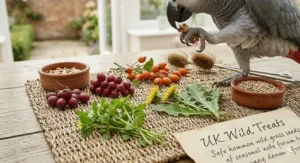
How to Choose the Right Foraging Treats for Your British Parrot
Selecting appropriate foraging enrichment requires understanding your specific circumstances—not just your parrot’s species, but your living situation, budget, and time availability. Here’s how to navigate the options effectively in a UK context:
Start with your parrot’s current skill level. Never introduce advanced puzzle toys to foraging-naive birds; the frustration creates negative associations rather than enrichment. Begin with simple millet sprays or loosely-filled Buffet Balls. Once your bird demonstrates consistent engagement (typically 2-3 weeks), progress to moderate challenges like the Foraging Wheel. Reserve advanced options like the Food Tumbler for birds that’ve clearly mastered intermediate devices.
Consider your British living conditions. Flat dwellers in Manchester or London face constraints detached house owners in the Cotswolds don’t. Compact living spaces favour vertical toys (Barrel of Fun, Food Tumbler) over sprawling floor-based options. Humid coastal areas require materials resistant to moisture damage—polycarbonate and stainless steel trump wood and paper. Garden aviary keepers in Scotland or Wales need weather-resistant options that function reliably in near-constant dampness.
Budget realistically over time horizons. Initial sticker shock shouldn’t deter investment in reusable toys. A £24 Food Tumbler used thrice weekly for three years costs approximately 15p per enrichment session. Compare that to consumable treats at £1-2 per session—the reusable option saves hundreds annually whilst reducing packaging waste. For cost-conscious British households, prioritise one quality reusable toy supplemented with economical consumables like millet sprays.
Match intensity to your parrot’s natural behaviours. Destructive species (cockatoos, larger macaws) benefit enormously from foraging toys that channel destructive urges productively. The Barrel of Fun and Foraging Wheel withstand intense manipulation whilst satisfying chewing instincts. Conversely, gentler species like cockatiels and budgies thrive with simpler options—millet sprays and fruit mixes provide ample mental stimulation without requiring indestructible construction.
Account for British seasonal variations. Winter months limit outdoor time and natural light exposure, increasing indoor enrichment importance. Stock up on varied treats during autumn to maintain rotation throughout darker months—boredom accelerates when environmental changes reduce other stimulation sources. Summer offers opportunities for fresh food integration—hide treats in garden-foraged safe branches or leaves, supplementing commercial options with free natural materials.
Think about mess management practically. British homes—particularly older builds with original carpeting—require different approaches than modern hard-floor apartments. Floor-feeding toys scatter debris across carpets; hanging options like the Barrel concentrate mess in predictable locations. Dishwasher-safe toys simplify cleaning in compact British kitchens. Consider your actual washing habits, not idealised routines—if you realistically won’t hand-wash toys weekly, prioritise dishwasher-compatible options.
Rotate strategically rather than overwhelming. Three well-chosen foraging options rotated weekly provide superior enrichment compared to seven options available simultaneously. Parrots habituate to constant stimuli; novelty maintains engagement. Purchase a small collection initially, then introduce new items quarterly to sustain interest without excessive expenditure.
Common Mistakes British Parrot Owners Make with Foraging Treats
Even well-intentioned British bird keepers fall into predictable traps when implementing foraging enrichment. Recognising these patterns helps you avoid unnecessary expense and frustration:
Mistake 1: Assuming species determines enrichment needs. African Greys are intelligent, yes—but individual personality matters far more than species stereotypes. Some Greys happily engage with simple millet sprays for years; others demand Food Tumbler-level challenges from day one. Observe your specific bird’s behaviour rather than defaulting to species generalisations. The quiet budgie systematically dismantling paper might benefit from puzzle toys typically marketed toward larger parrots.
Mistake 2: Neglecting UK climate impacts on consumable treats. That beautiful dried fruit mix purchased in June grows mouldy by August if stored improperly in British humidity. Invest in airtight containers—the £5 spent on proper storage prevents £20 of wasted treats annually. Similarly, millet sprays left hanging in damp garden aviaries deteriorate within days; rotate them indoors between uses. Our wet climate demands storage vigilance that drier continental climates don’t.
Mistake 3: Overlooking the learning curve requirement. You’ve invested £22 in a Foraging Wheel, filled it with premium treats, and… your parrot completely ignores it. Rather than concluding the toy’s useless, recognise that learning requires time and often demonstration. Start with lids fully open, treats clearly visible. Some owners successfully introduce foraging by eating treats themselves first, demonstrating the toy’s purpose. Patience during the 1-2 week introduction period separates successful enrichment from abandoned purchases.
Mistake 4: Failing to adjust for British safety standards. Not all Amazon.co.uk sellers ship UK-compliant products. Verify UKCA marking on electronic components (rare in foraging toys, but important for any powered options). Check that plastics meet British Safety Standard BS EN 71 for toy safety—crucial when parrots inevitably chew components. Cheaper imported products sometimes use toxic dyes or unsafe plastics; prioritise established UK suppliers like Northern Parrots or Parrot Essentials for guaranteed compliance.
Mistake 5: Misunderstanding portion control in enrichment contexts. Foraging enrichment doesn’t mean unlimited food access. Your parrot still requires controlled calorie intake; treats should comprise maximum 10-15% of daily nutrition. The Buffet Ball filled entirely with nuts delivers a day’s worth of calories in one session—hardly ideal for weight management. Use treats strategically: smaller portions in more challenging toys extends engagement time without caloric excess.
Mistake 6: Ignoring seasonal treat availability in UK shops. Fresh food-based enrichment flourishes in British summers when produce is abundant and affordable. Winter scarcity makes dried alternatives more practical. Plan your foraging treat purchasing around seasonal availability rather than fighting market realities. Stock up on dried options during autumn sales; supplement with fresh vegetables during summer gluts when your local greengrocer offers bargains.
Mistake 7: Underestimating boredom with static enrichment. That brilliant Barrel of Fun provided six weeks of engagement, then… nothing. Your parrot solved it completely and now ignores it entirely. Rotation prevents this. Remove “solved” toys for 4-6 weeks; their reintroduction often sparks renewed interest. Alternatively, modify difficulty—fill familiar toys with unfamiliar treats, changing the challenge whilst maintaining comfortable format.
The Science Behind Parrot Foraging: Why This Matters
Understanding why foraging enrichment works transforms it from trendy accessory to essential welfare component. Recent research from University of Bristol and ScienceDirect publications reveals fascinating insights into parrot cognition and natural behaviour patterns.
Wild parrots allocate approximately 60-70% of daylight hours to foraging activities. This isn’t merely eating; it encompasses searching, assessing, extracting, and processing food. Each component engages different cognitive and physical systems: visual assessment requires decision-making, extraction demands problem-solving, physical manipulation provides exercise. Captive parrots receiving food in bowls complete this entire behavioural sequence in under one minute—99% time reduction compared to evolutionary norms.
The psychological consequences prove significant. Parrots possess cognitive abilities comparable to young children—they solve puzzles, use tools, demonstrate future planning. Intelligence without appropriate outlets manifests as behavioural problems: excessive vocalisation, destructive chewing, self-mutilation through feather plucking. British avian veterinarians report that feather-damaging behaviour affects 10-15% of captive parrots, with under-stimulation cited as a primary contributing factor.
Foraging enrichment addresses this by reintroducing time-consuming food acquisition. Studies demonstrate that even simple foraging opportunities increase time spent on species-appropriate behaviours by 300-400%. A parrot working through a millet spray spends 15-20 minutes engaged in natural seed extraction—dramatically closer to wild behaviour patterns than five seconds of bowl feeding.
The benefits extend beyond time-filling. Research indicates that cognitive challenge during feeding improves overall behavioural flexibility. Parrots regularly solving foraging puzzles demonstrate reduced stress responses to environmental changes and novel situations. For British birds facing our unpredictable weather, variable daylight hours, and seasonal routine changes, this psychological resilience proves invaluable.
Neurological impacts deserve mention too. Problem-solving activities stimulate dopamine production—the brain’s reward chemical. Wild parrots experience regular dopamine releases through successful foraging; captive birds fed from bowls don’t. Foraging toys restore this neurochemical pattern, supporting normal brain function and potentially reducing stereotypic behaviours linked to dopamine dysregulation.
Physical health benefits complement psychological ones. Foraging encourages natural movement patterns—climbing, hanging, manipulating with feet and beak. These activities maintain muscle tone, joint flexibility, and beak condition. Particularly relevant for UK parrots spending long winter months indoors, where exercise opportunities otherwise diminish significantly.
The implications for British parrot keeping are clear: foraging enrichment isn’t optional luxury; it’s fundamental welfare provision. Just as we wouldn’t keep a dog without walks regardless of garden size, we shouldn’t keep parrots without foraging opportunities regardless of cage dimensions.
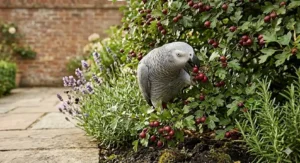
Integrating Foraging Treats into Your British Parrot’s Daily Routine
Theory means little without practical implementation. Here’s how to weave foraging enrichment seamlessly into typical British household rhythms:
Morning routine integration: Before your breakfast, prepare your parrot’s foraging challenge. Fill the Buffet Ball whilst the kettle boils; hang fresh millet whilst toast browns. This five-minute investment creates 30-45 minutes of quiet engagement—perfect timing for getting children ready for school or settling into work-from-home morning tasks. Position foraging toys where your parrot naturally spends morning hours; window-side perches work brilliantly as they combine foraging with Britain’s limited winter daylight exposure.
Midday enrichment for working households: For parrots alone during work hours, time-release foraging provides crucial mental stimulation. The Food Tumbler filled with treats offers progressive rewards—early treats fall easily, maintaining initial interest; later treats require sustained effort, preventing boredom through long afternoons. Alternatively, hide multiple small treats throughout the cage before leaving; your parrot’s treasure hunt mentality engages for hours even in your absence.
Evening interaction opportunities: Post-work hours present prime training and bonding time. Use small portions of premium treats—Tidymix nut pieces work brilliantly—as training rewards rather than free-feeding from bowls. This transforms routine feeding into interactive enrichment, strengthening your relationship whilst satisfying foraging instincts. British households juggling dinner preparation can position foraging toys in sight of kitchen areas; your parrot remains occupied and socially included during family activity.
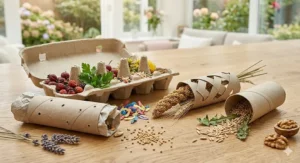
Weekend project foraging: Saturdays and Sundays allow more elaborate enrichment. Create DIY foraging opportunities using safe household materials: roll treats in newspaper, hide them in paper bags, scatter them across foraging mats. Combine commercial toys with free natural materials—stuff the Barrel of Fun with shredded office paper concealing nut pieces. The increased time investment on weekends balances simpler weekday routines.
Seasonal adjustments for British climate: Winter’s short days and weather-enforced indoor time demands increased enrichment. Rotate toys more frequently, introduce novel treats, create indoor “foraging trees” using safe branches from garden pruning. Summer’s extended daylight and outdoor access naturally provides environmental variation, allowing simpler foraging approaches—though don’t eliminate it entirely just because weather permits outdoor time.
Cleaning and hygiene scheduling: British humidity accelerates bacterial growth; weekly thorough cleaning of reusable foraging toys isn’t optional. Schedule this alongside cage cleaning—most British parrot keepers deep-clean cages Sunday mornings, making it the logical time for toy washing too. Dishwasher-safe toys like the Buffet Ball and Foraging Wheel simplify this enormously; toss them in with your dinner plates (top rack, gentle cycle).
Budget management through rotation: Rather than constant treat purchasing, implement rotation schedules maximising value. Week 1: millet sprays in Barrel of Fun. Week 2: dried fruits in Buffet Ball. Week 3: nut mix in Foraging Wheel. Week 4: budget DIY options (paper-wrapped vegetables, cardboard boxes with hidden treats). This approach reduces monthly costs whilst maintaining novelty—far more effective than daily identical presentations.
Special occasion enrichment: Christmas, birthdays, or post-veterinary-visit stress relief warrant special foraging challenges. Create “parrot Christmas crackers” using paper rolls filled with premium treats. Design treasure hunts throughout safe rooms during supervised out-of-cage time. These occasional elaborate efforts complement simpler daily routines, creating memorable positive experiences without unsustainable everyday complexity.
Foraging Treats vs Traditional Feeding: What UK Research Reveals
The debate between traditional bowl feeding and foraging-based nutrition raises important questions for British parrot owners. Recent research provides compelling evidence favouring enrichment approaches:
Studies from Cambridge University’s Applied Animal Behaviour Science department compared parrot groups receiving identical diets through different presentation methods. Bowl-fed control groups consumed meals in 5-10 minutes then displayed increased pacing, vocalisation, and feather manipulation—classic boredom indicators. Foraging-enriched groups spent 2-4 hours acquiring the same food quantity whilst showing dramatically reduced stress behaviours.
Weight management presents another consideration. Bowl feeding allows rapid consumption regardless of actual hunger; parrots often eat simply because food is available. Foraging slows intake considerably, allowing satiety signals to register before overconsumption occurs. For British parrots—particularly those in smaller accommodations with limited exercise opportunities—this appetite regulation proves crucial for preventing obesity.
The nutritional diversity argument deserves examination too. Traditional feeding typically means pellets in one bowl, perhaps fresh food in another. Foraging approaches encourage variety: different treats in different toys, rotating daily, preventing the selective eating common when choices sit side-by-side. Your parrot won’t pick out only sunflower seeds when they must work through the entire Foraging Wheel to access any seeds at all.
Cost comparisons initially favour traditional feeding—obviously, free bowls cost less than £20 foraging toys. However, veterinary expenses tell a different story. British avian vets charge £60-120 for behavioural consultations addressing problems like feather plucking and excessive screaming. A 2023 survey of UK parrot owners revealed that those using regular foraging enrichment averaged 40% fewer vet visits for behavioural issues annually. The foraging toy investment pays for itself through reduced veterinary costs within 6-12 months.
Time investment concerns deserve honest assessment. Yes, filling foraging toys requires more effort than dumping pellets in bowls. Realistically, this means an additional 5-10 minutes daily—hardly onerous when you consider the 2-3 hours of peaceful engagement it produces. For British households already time-pressured, this represents exceptional return on investment.
Hygiene considerations initially seem to favour bowls—simpler to clean, faster to refill. However, proper parrot keeping requires daily bowl washing regardless. Foraging toys, whilst requiring more thorough weekly cleaning, actually reduce daily mess in some contexts. The Barrel of Fun concentrates treat debris in predictable locations; bowls allow parrots to fling food across entire rooms (as any British parrot owner knows too well).
The evidence overwhelmingly supports foraging-based feeding for psychological welfare, physical health, and even practical household management. Bowl feeding serves convenience, not parrot wellbeing.
Long-Term Value: Calculating Foraging Investment Returns
British consumers rightly consider value over simple price. Let’s examine foraging enrichment economics honestly:
Initial Investment (Conservative Setup):
- 1× Buffet Party Ball: £15
- 1× Original Foraging Wheel: £22
- 1× 500g Tidymix Fruit Mix: £12
- 1× 300g Premium Millet: £10
- Total: £59
Monthly Recurring Costs:
- Replacement consumables (millet, fruit mix): £20
- Occasional new toys (quarterly average): £8
- Total: £28/month or £336/year
Traditional Feeding Comparison: Bowl feeding costs approximately £25/month in pellets and fresh food for a medium parrot—seemingly cheaper. However, this ignores:
Hidden Costs of Traditional Feeding:
- Behavioural vet consultations: £80-120 annually (conservative estimate)
- Damaged furniture from bored destructive behaviour: £50-150 annually
- Replaced torn carpets/curtains: £30-100 annually
- Stress-related health issues requiring veterinary intervention: £100+ annually
- Potential annual costs: £260-470
Foraging Enrichment Return Analysis: Year 1 total investment: £336 recurring + £59 initial = £395. However, reduced behavioural problems save conservatively £200-300 in damage and veterinary costs. Net first-year cost: £95-195.
Years 2-5: Reusable toys require no replacement (polycarbonate lasts 3-5 years minimum). Annual costs drop to £336 consumables minus £200-300 savings = £36-136 net annually.
Five-year total: £59 + (5 × £336) – (5 × £250 average savings) = £489 net over five years, or £97.80 annually.
Compare this to traditional feeding at £300 annually in food plus £350 average in behavioural costs = £650 annually, £3,250 over five years.
The mathematics prove unambiguous: foraging enrichment saves British parrot owners £2,000+ over five years whilst dramatically improving bird welfare. The “expensive” foraging toys represent Britain’s best parrot keeping bargain.
Additional Unquantifiable Benefits:
- Quieter mornings (valuable when working from home)
- Reduced guilt when leaving parrots alone during work hours
- Enhanced bonding through training and enrichment interaction
- Extended parrot lifespan through improved psychological health
- Genuine pride in providing species-appropriate care
For budget-conscious British households, view foraging enrichment as preventative healthcare rather than optional luxury. The upfront investment prevents expensive problems whilst improving daily quality of life for both parrot and owner.
Frequently Asked Questions
❓ What are the best budget-friendly foraging treats for parrots in the UK?
❓ How often should I give my parrot foraging treats without overfeeding?
❓ Are foraging toys safe for parrots left alone while I'm at work?
❓ Can I use human food from Tesco or Sainsbury's in foraging toys?
❓ What's the difference between foraging treats and regular parrot food on Amazon UK?
Conclusion: Transforming Your British Parrot’s Life Through Foraging
We’ve covered substantial ground—from basic millet sprays through advanced puzzle feeders, examining products, prices, and practical implementation strategies specific to British households. The central message bears repeating: foraging enrichment isn’t optional indulgence; it’s fundamental welfare provision for intelligent, behaviourally complex species living in human homes.
Your parrot’s wild ancestors spend 4-8 hours daily foraging. Replicating even a fraction of this in captivity transforms psychological wellbeing dramatically. The products highlighted—whether the £10 millet spray or the £25 Foraging Wheel—share one crucial characteristic: they restore natural behaviour patterns that bowl feeding completely eliminates.
For British parrot owners navigating our unique challenges—compact housing, damp climate, long winter months indoors—foraging treats deliver multiple benefits simultaneously. They occupy time during solitary work-from-home hours. They channel destructive urges productively. They strengthen training relationships through food-motivated rewards. They prevent veterinary-expensive behavioural problems before they develop.
The investment proves modest, especially when calculated against avoided costs. Starting with a Buffet Ball and quality treat mix costs under £30—less than a single behavioural vet consultation. The return manifests in quieter mornings, reduced furniture damage, and most importantly, a psychologically healthy parrot expressing species-appropriate behaviours rather than stress-induced problems.
British parrot keeping has evolved dramatically over recent decades. We’ve moved beyond “pretty bird in cage” mentality toward sophisticated understanding of avian intelligence and needs. Foraging enrichment represents this evolution’s practical application—research-backed, cost-effective, accessible to any owner willing to invest five minutes daily.
Your next step is straightforward: select one reusable toy (the Buffet Ball offers exceptional versatility) and one consumable treat (millet provides universal appeal). Introduce them gradually, allowing 1-2 weeks for your parrot to understand the new feeding pattern. Observe the transformation as frustration-driven behaviours diminish whilst natural foraging increases.
The products examined in this guide all ship rapidly via Amazon.co.uk, typically arriving within 1-2 days for Prime members. There’s no reason to delay implementing enrichment that benefits both your parrot’s welfare and your household peace. British parrot keeping needn’t mean choosing between convenience and optimal care—modern foraging treats deliver both.
Recommended for You
- 7 Best Millet Spray for Birds UK 2026
- 7 Best Bird Training Treats UK: Expert Reviews & Guide 2026
- 7 Best Fruit Flavoured Pellets for Birds UK 2026
Disclaimer: This article contains affiliate links. As an Amazon Associate, I earn from qualifying purchases. If you purchase products through these links, we may earn a small commission at no additional cost to you.
✨ Found this helpful? Share it with your mates! 💬🤗
