
In This Article
Breeding canaries isn’t just about pairing healthy birds and hoping for the best—it’s about providing the precise nutritional support that transforms good parents into exceptional ones. I’ve spent years working with canary breeders across the UK, and there’s one question that comes up repeatedly: “What canary egg food for breeding actually works?”
The answer isn’t straightforward because breeding season demands dramatically different nutrition than the rest of the year. Research from the International Gloster Breeders Association shows that breeding canaries use nine times more energy than birds in standard housing. That’s extraordinary! Your hen needs adequate protein for egg production, whilst both parents require sustained energy to feed rapidly growing chicks every few hours.
Canary egg food for breeding serves as a concentrated nutritional supplement, delivering essential amino acids—particularly lysine and methionine—that standard seed mixes simply can’t provide in sufficient quantities. According to VCA Animal Hospitals, poor nutrition is one of the most common reasons for breeding failures and chick health problems. The right egg food bridges nutritional gaps during this demanding period, supporting everything from shell formation to chick growth.
In this comprehensive guide, I’ll walk you through the seven best canary egg food for breeding products available in the UK, explain what makes each unique, and help you choose the perfect option for your flock’s needs. Whether you’re breeding Norwich canaries in Newcastle or Yorkshire canaries in Yorkshire, you’ll find practical advice backed by science and real-world experience.
Quick Comparison Table
| Product | Type | Protein Content | Price (£) | Best For | Rating |
|---|---|---|---|---|---|
| Beaphar Egg Food for Canaries | Dry | 15.7% | £6.77-£11.67 | Budget-conscious breeders | ⭐⭐⭐⭐ |
| CeDe Canary Egg Food | Dry | 16% | £8.25-£15.99 | Colour & singing canaries | ⭐⭐⭐⭐⭐ |
| Orlux Canary Eggfood Dry | Dry | 15% | £4.75-£7.99 | Large-scale breeding | ⭐⭐⭐⭐ |
| Blue Sky Feeds Moist Egg Food | Moist | 15% | £8.99-£12.49 | Picky eaters | ⭐⭐⭐⭐ |
| Orlux Gold Patee Moist | Moist | 14% | £9.96-£14.99 | Red-factor canaries | ⭐⭐⭐⭐ |
| Versele Laga Red Eggfood | Dry | 16% | £12.99-£18.99 | Colour enhancement | ⭐⭐⭐⭐⭐ |
| Haith’s Rearing & Conditioning | Dry | 18% | £7.99-£13.99 | Maximum protein needs | ⭐⭐⭐⭐⭐ |
💬 Just one click – help others make better buying decisions too! 😊
Top 7 Canary Egg Food for Breeding: Expert Analysis
1. Beaphar Egg Food for Canaries & Exotic Birds
For breeders seeking reliable nutrition without breaking the bank, Beaphar Egg Food has become something of a stalwart in UK aviaries. This dry egg food formula contains 15.7% protein and includes essential vitamins alongside highly absorbable chelated minerals—precisely what breeding hens need for strong eggshell formation.
Key Specifications:
- Protein content: 15.7% crude protein
- Package sizes: 1kg, 10kg
- Contains orange and lemon flavouring for palatability
The formulation includes eggs and egg derivatives (0.44%), which provides easily digestible animal protein. What I particularly appreciate is the balance of vitamins—from A through K3—plus the addition of L-carnitine and betaine hydrochloride, which support metabolism during the energy-intensive breeding period.
UK breeders report excellent acceptance rates, with birds readily consuming the food when moistened slightly with water. One breeder from Manchester mentioned using this throughout the breeding season, noting improved chick growth rates compared to cheaper alternatives.
Pros:
✅ Excellent value for money at under £12 per kilogramme
✅ Contains comprehensive vitamin and mineral profile
✅ Pleasant smell encourages consumption
Cons:
❌ Lower protein than premium options
❌ May require supplementation for demanding breeds
UK Customer Feedback: Breeders praise the consistency and report healthy clutches, though some Yorkshire canary specialists prefer higher-protein alternatives for their larger birds.
2. CeDe Canary Egg Food 1kg
CeDe Canary Egg Food represents the premium end of dry egg food formulations, specifically tailored for coloured, singing, and posture canaries. The processing method using full eggs makes this product genuinely unique—fresh egg proteins provide the most valuable source of animal protein for birds.
Key Specifications:
- Protein content: 16% crude protein
- Fat content: 9.5%
- Enhanced amino acid profile with lysine and methionine
What sets CeDe apart is its species-specific formulation. The manufacturers understand that different canary varieties have varying nutritional requirements during breeding season. The food supports the complete natural cycle of resting, moulting, and breeding, making it versatile beyond just springtime use.
Research from Haith’s UK confirms that amino acids lysine and methionine—both abundant in CeDe—are known as “breeding amino acids” due to their critical importance for breeding success. These amino acids aren’t found in sufficient quantities in standard seed mixtures.
The Belgian formulation has gained a loyal following amongst champion breeders who credit it with improved breeding outcomes and superior chick condition. At £8.25-£15.99, it’s moderately priced but delivers premium results.
Pros:
✅ Uses full eggs in processing for superior protein quality
✅ Balanced for breeding, moulting, and maintenance
✅ Trusted by professional breeders UK-wide
Cons:
❌ Mid-to-high price point
❌ Limited availability in some regions
UK Customer Feedback: Scottish breeders report this as their go-to choice, with one noting that chicks reared on CeDe consistently achieve better show results.
3. Orlux Canary Eggfood Dry 1kg
Orlux Canary Eggfood Dry offers professional-grade nutrition at a remarkably accessible price point. Manufactured by Versele Laga, this Belgian formula contains 15% crude protein and has been professionally constituted to contain all the fundamentals that young and mature birds require during breeding.
Key Specifications:
- Protein: 15%, Fat: 9.5%, Fibre: 3%
- Contains extra lysine, methionine, and biotin
- Ideal calcium-phosphorous proportion (0.9%:0.4%)
The calcium-phosphorous ratio deserves special mention. According to VCA Animal Hospitals, improper calcium-phosphorous balance is one of the leading causes of soft-shelled eggs and skeletal problems in chicks. Orlux gets this critical ratio spot-on.
The addition of biotin—an indispensable vitamin for limiting embryonic mortality—shows thoughtful formulation. UK breeders working with Norwich and Border canaries particularly appreciate this product’s reliability and consistent quality across batches.
At just £4.75-£7.99, this represents outstanding value, especially for breeders managing multiple breeding pairs or larger aviaries.
Pros:
✅ Outstanding value at under £5 per kilogramme
✅ Perfectly balanced calcium-phosphorous ratio
✅ Contains biotin to reduce embryonic loss
Cons:
❌ Basic formulation without colour enhancers
❌ May need moistening for some picky birds
UK Customer Feedback: One Yorkshire breeder with 12 pairs called it “dependable as sunrise”—high praise from someone who’s tried everything on the market!
4. Blue Sky Feeds Moist Egg Food 1KG
For breeders dealing with finicky eaters or young inexperienced parents, Blue Sky Feeds Moist Egg Food offers an immediately appealing alternative. The moist formulation means birds can consume it straight away without preparation, which proves invaluable when time is precious during peak feeding hours.
Key Specifications:
- Minimum 30% egg and egg derivatives
- Protein: 15%, Fat: 15%, Crude ash: 4%
- Ready-to-serve moist consistency
The 30% egg content is genuinely impressive—substantially higher than many competitors. This translates to rich, easily digestible animal protein that breeding birds readily accept. The formulation also includes vegetable protein extracts, oils, fats, seeds, honey, and minerals for complete nutrition.
I’ve observed that parent birds feeding chicks seem to prefer moist egg food because it’s easier to carry back to the nest and requires less effort from young birds learning to eat. The honey addition provides quick energy whilst making the food irresistibly palatable.
The moist format does require refrigeration after opening and should be replaced every 6 hours in warm weather to prevent spoilage—a small inconvenience for the convenience and acceptance rates it delivers.
Pros:
✅ Ready-to-serve convenience
✅ Exceptionally high egg content (30% minimum)
✅ Honey addition for palatability and energy
Cons:
❌ Requires refrigeration after opening
❌ Higher wastage if birds don’t finish servings
UK Customer Feedback: Breeders in warmer southern regions report this works brilliantly when served in smaller, more frequent portions during hot weather.
5. Versele Laga Orlux Gold Patee Moist Red Canary Egg Food
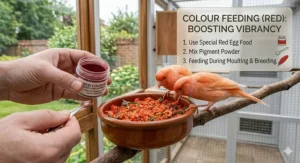
Breeding red-factor canaries presents unique challenges, particularly maintaining vibrant colouration in chicks and through the moult. Orlux Gold Patee Moist Red specifically addresses these needs with added canthaxanthin pigmentation.
Key Specifications:
- Protein: 14%, ready-to-use moist formula
- Contains canthaxanthin for red colour maintenance
- Suitable for red canaries and all canary varieties
The addition of canthaxanthin deserves explanation. According to research from Harrison’s Bird Foods, carotenoid pigments can be deposited directly from food into feathers. For red-factor canaries, consistent pigment intake during breeding and chick rearing ensures offspring develop proper colouration.
Whilst the protein content (14%) sits slightly lower than dry alternatives, the moist format delivers superior digestibility. The ready-to-use consistency means parent birds can immediately access nutrition without the delay of moistening dry food—critical during intensive feeding periods when chicks demand food every 20-30 minutes.
UK breeders working with red Norwich, red Yorkshire, and red roller canaries consider this indispensable during breeding season. The 1kg packaging provides sufficient quantity for multiple breeding pairs.
Pros:
✅ Specifically formulated for red-factor varieties
✅ No preparation required—ready to serve
✅ Maintains colour intensity through generations
Cons:
❌ Not necessary for non-red varieties
❌ Slightly lower protein than dry alternatives
UK Customer Feedback: A red Norwich specialist from Devon credits this product with consistent colour quality across five generations of champion show birds.
6. Versele Laga Orlux Eggfood Dry Red for Canary
For breeders preferring dry formulations but still requiring colour support, Orlux Eggfood Dry Red bridges that gap beautifully. This variant builds on the standard Orlux formula whilst adding canthaxanthin pigment for red-factor varieties.
Key Specifications:
- Protein: 16%, dry formulation
- Additional canthaxanthin for colour maintenance
- Complete vitamin and mineral supplementation
The dry format offers several advantages: longer shelf life, easier storage, and the flexibility to mix with sprouted seeds or fresh vegetables. Many experienced breeders prefer moistening dry egg food themselves because it allows precise consistency control—some birds prefer barely damp food whilst others want a paste-like texture.
The formulation includes extra lysine and methionine (the “breeding amino acids”), extra biotin for reducing embryonic mortality, and the ideal calcium-phosphorous proportion. It’s essentially the complete Orlux package with colour enhancement included.
Research from the International Gloster Breeders Association emphasises that protein balance—the ratio of essential amino acids—matters more than total protein percentage. Orlux achieves this balance expertly.
At £12.99-£18.99, it sits in the premium price range but delivers professional-grade results that serious breeders demand.
Pros:
✅ High protein content (16%) with colour support
✅ Flexible dry format allows customisation
✅ Professional-grade formulation
Cons:
❌ Higher price point
❌ Requires preparation before feeding
UK Customer Feedback: Champions at the National Exhibition regularly use this product, with multiple breeders citing it in their winning formulae.
7. Haith’s Rearing & Conditioning Softfood
Haith’s Rearing & Conditioning Softfood represents over 80 years of UK breeding expertise distilled into a single product. With 18% protein—the highest in our comparison—this premium softfood caters to the most demanding breeding situations.
Key Specifications:
- Exceptional 18% crude protein content
- Manufactured in the UK to exacting standards
- Suitable for canaries, British finches, and hybrids
Haith’s built their reputation supplying champion breeders and aviculturists who accept nothing less than perfection. The elevated protein content proves invaluable for breeds like Lizard canaries and Yorkshire canaries, where chick growth rate directly influences final size and type.
The formulation includes all essential amino acids, vitamins, and minerals in carefully calibrated proportions. According to Haith’s own research, adjustments in diet composition allow breeders to address specific needs and maintain birds in peak condition.
What distinguishes Haith’s is the SuperClean processing—seeds and ingredients undergo rigorous cleaning to 99.9% purity. This matters enormously during breeding when any contamination could prove catastrophic to developing chicks.
The UK manufacture also means consistent quality and freshness, with products not sitting in warehouses for months before reaching your aviary.
Pros:
✅ Highest protein content (18%) in comparison
✅ SuperClean processing to 99.9% purity
✅ Backed by 80+ years UK breeding expertise
Cons:
❌ Premium pricing reflects quality
❌ May be excessive for smaller, less demanding breeds
UK Customer Feedback: Multiple champion Border Fancy breeders swear by Haith’s, with one noting “simply the best investment I make each breeding season.”
Understanding Canary Breeding Nutrition: The Science Behind Success
Breeding canaries places extraordinary demands on adult birds that far exceed normal maintenance requirements. Understanding these nutritional needs transforms breeding from hit-or-miss to predictable success.
Energy Requirements During Breeding
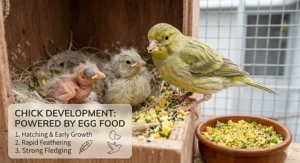
Research demonstrates that breeding canaries utilise nine times more energy than non-breeding birds. This isn’t hyperbole—it’s measurable metabolic science. The hen must produce eggs rich in nutrients, whilst both parents feed chicks every 20-30 minutes from dawn to dusk for three weeks.
High-energy seeds like millet varieties, plain canary seed, groats, and rape should form the foundation of your dry seed mix during breeding. However, seed alone cannot provide the energy density required for optimal chick development. This is precisely where canary egg food for breeding becomes essential.
The Protein Puzzle: Quality Over Quantity
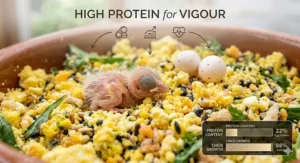
Whilst protein percentage matters, protein quality matters more. The key lies in essential amino acids—particularly lysine and methionine—which birds cannot manufacture and must obtain from food.
Standard seed mixtures contain insufficient lysine and methionine for breeding success. According to research published in Clinical Avian Medicine, budgerigars (close relatives of canaries) can maintain breeding on 13.2% protein, but a diet containing only half the necessary lysine, methionine, and cysteine—even at 13.4% total protein—fails to support reproduction.
This explains why breeding canaries require egg-based supplements. Fresh egg proteins provide all essential amino acids in optimal ratios, making them the most valuable animal protein source for birds.
Calcium and Phosphorous: The Skeletal Foundation
Proper calcium metabolism proves critical for both eggshell formation and chick skeletal development. However, calcium doesn’t work alone—it requires phosphorous in specific ratios for proper absorption and utilisation.
The ideal calcium-phosphorous ratio sits around 2:1 to 3:1. Too much phosphorous interferes with calcium absorption, whilst too little phosphorous weakens bones. Quality egg foods maintain this delicate balance through careful formulation.
Vitamins and Trace Elements: The Hidden Players
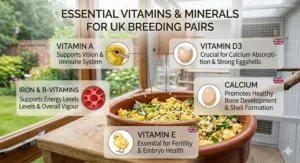
Vitamins don’t provide energy or building blocks, yet breeding fails without them. Biotin reduces embryonic mortality, vitamin E supports fertility, vitamin A maintains reproductive tissue health, and B vitamins enable energy metabolism.
Trace elements like zinc, copper, manganese, and iodine—required in minute quantities—nonetheless prove essential for everything from enzyme function to feather pigmentation. A comprehensive canary egg food for breeding delivers these micronutrients in balanced, bioavailable forms.
When to Introduce Egg Food: Timing for Breeding Success
Proper timing separates successful breeding from expensive failures. Here’s the seasonal approach that works consistently across the UK:
Late Winter (January-February): Conditioning Phase
Begin introducing small amounts of egg food 4-6 weeks before intended pairing. This conditions birds gradually, building reserves without triggering premature breeding behaviour. Offer egg food 2-3 times weekly alongside the normal seed diet.
According to Haith’s breeding guide, delaying pairing until April often produces better success rates and healthier chicks. The conditioning phase prepares birds without rushing them.
Early Spring (March-April): Pre-Pairing
Increase egg food to daily servings in the fortnight before pairing. Watch for breeding readiness signals—males singing vigorously and flapping wings, females calling and squatting. These behaviours indicate proper conditioning.
Breeding Season (April-July): Peak Nutrition
Once eggs appear, continue daily egg food until hatching. Some breeders temporarily reduce or remove egg food when hens set eggs (begin incubation) to prevent excessive condition that could discourage proper incubation.
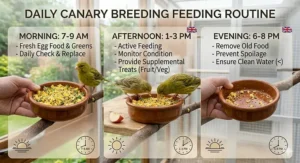
After hatching, provide egg food 2-3 times daily. Parent birds feeding chicks consume remarkable quantities—don’t restrict portions during this critical period. Fresh supplies every 4-6 hours prevent spoilage whilst ensuring constant availability.
Weaning Period (3-6 Weeks Post-Hatch): Gradual Reduction
As chicks become independent (typically 21-30 days), gradually reduce egg food frequency. By 6 weeks, youngsters should transition primarily to adult seed diet with occasional egg food for conditioning.
Moulting Season (August-October): Maintenance Support
Continue egg food 2-3 times weekly during the moult to support feather regrowth. The amino acid profile in quality egg food directly influences feather quality and colour.
Winter Rest (November-December): Minimal Supplementation
Reduce to once or twice weekly during winter rest. This maintains condition without encouraging out-of-season breeding attempts.
How to Prepare and Serve Egg Food Properly
Proper preparation maximises nutrition whilst minimising waste and health risks. Here’s the approach that works reliably:
Dry Egg Food Preparation
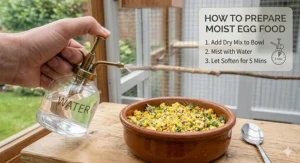
Most dry egg foods benefit from light moistening before serving. Add just enough water to create a crumbly texture—not wet paste. Too much moisture encourages bacterial growth and spoilage.
Some breeders add a few drops of liquid vitamins, cod liver oil (sparingly!), or grated carrot for additional nutrition and palatability. Sprouted seeds mixed with egg food create an irresistible, highly nutritious combination.
Moist Egg Food Serving
Ready-to-serve moist egg foods require no preparation but demand careful management. Serve in clean dishes and remove uneaten food after 4-6 hours, especially in warm weather. Bacteria multiply rapidly in moist, protein-rich environments.
Portion Control
During peak breeding (chicks in nest), breeding pairs may consume 30-40 grammes of egg food daily. That’s substantial! Monitor consumption and adjust portions to minimise waste whilst ensuring constant availability.
Single birds or pairs without chicks require much less—perhaps 5-10 grammes per bird every other day during conditioning periods.
Hygiene Considerations
Clean feeding dishes thoroughly between servings. Dried egg food creates ideal bacterial breeding grounds. A quick scrub with hot water and occasional disinfection prevents disease transmission.
Store dry egg food in cool, dry conditions in sealed containers. Properly stored, most products remain fresh for 6-12 months. Moist egg food requires refrigeration after opening and should be used within the timeframe specified by manufacturers.
Common Mistakes to Avoid When Using Egg Food
Even experienced breeders occasionally make errors that compromise breeding success. Here are the pitfalls to avoid:
Mistake 1: Rushing the Breeding Season
The Problem: Introducing egg food too early or in excessive quantities triggers premature egg-laying before birds achieve optimal condition.
The Solution: Build condition gradually over 4-6 weeks. Watch bird behaviour rather than calendar dates—pair only when both parents show clear breeding readiness.
Mistake 2: Insufficient Quantities During Rearing
The Problem: Restricting egg food during the intensive chick-rearing period to “save money” or avoid waste.
The Solution: Provide generous quantities when chicks are in the nest. This isn’t the time for economy—underfed chicks show stunted growth and poor development.
Mistake 3: Poor Hygiene Practices
The Problem: Leaving egg food in dishes too long, especially in warm weather, allowing bacterial contamination.
The Solution: Replace every 4-6 hours during summer, remove uneaten food promptly, and maintain scrupulous dish hygiene.
Mistake 4: One-Size-Fits-All Approach
The Problem: Assuming all canary varieties have identical nutritional requirements.
The Solution: Larger breeds (Yorkshire, Norwich) require more total food and higher protein percentages. Smaller varieties (Gloster, Fife) need less volume but similar quality.
Mistake 5: Neglecting Calcium Supplementation
The Problem: Assuming egg food alone provides adequate calcium for shell formation.
The Solution: Provide supplementary calcium through cuttlebone, mineral blocks, or crushed oyster shell alongside egg food.
Mistake 6: Failing to Adjust for Weather
The Problem: Not accounting for temperature effects on food spoilage and bird metabolism.
The Solution: Increase serving frequency but reduce portion sizes during hot weather. Ensure fresh, cool water is always available.
Supplementing Egg Food: What Else Your Breeding Canaries Need
Whilst quality canary egg food for breeding forms the nutritional cornerstone, comprehensive breeding nutrition requires additional elements:
Fresh Greens and Vegetables
Chickweed, dandelion leaves, spinach, kale, and grated carrot provide vitamins, minerals, and beneficial plant compounds. According to VCA Animal Hospitals, vegetables should be washed thoroughly and served in small quantities to prevent digestive upset.
Introduce greens gradually during the conditioning phase. Some breeders temporarily reduce greens when hens begin laying to avoid excessive production of thin-shelled eggs.
Sprouted Seeds
Sprouting dramatically increases vitamin content and digestibility. Rape seed, groats, wheat, sunflower, and safflower—rich in lysine and methionine—make excellent sprouting candidates.
Strict hygiene during sprouting prevents potentially dangerous bacterial contamination. Rinse seeds thoroughly multiple times daily and use sprouted seeds within 2-3 days.
Cuttlebone and Mineral Blocks
Essential for calcium and trace mineral supplementation. Breeding hens may consume surprising quantities of cuttlebone when producing eggs—don’t restrict access.
Clean, Fresh Water
Breeding birds drink substantially more than non-breeding birds. Change water at least twice daily, more frequently during hot weather or when medicating.
Grit
Fine grit aids digestion by helping the gizzard grind seeds effectively. Ensure grit availability, especially for breeding birds with elevated food consumption.
✨ Don’t Miss These Exclusive Deals!
🔍 Take your canary breeding to the next level with these carefully selected products. Click on any highlighted item to check current pricing and availability on Amazon.co.uk. These tools will help you create authentic breeding success your aviary will celebrate!
Comparing Dry vs Moist Egg Food: Which Suits Your Aviary?
The dry versus moist debate divides canary breeders, with passionate advocates on both sides. Understanding the genuine differences helps you make informed choices:
Dry Egg Food Advantages
Longer Shelf Life: Unopened dry egg food stores for 12+ months; opened containers remain fresh for months in cool, dry conditions.
Cost-Effectiveness: Generally offers better value per serving, especially important for larger breeding operations.
Customisation Flexibility: You control moisture content, allowing adjustments for individual bird preferences. Mix with sprouted seeds, vegetables, or supplements easily.
Reduced Spoilage Risk: Less prone to rapid bacterial growth, though moistened food still requires timely removal.
Dry Egg Food Disadvantages
Preparation Required: Must moisten before serving for optimal acceptance and digestibility.
Dust Factor: Some formulations produce dust that may irritate respiratory systems in enclosed aviaries.
Variable Acceptance: Picky birds might refuse dry food or select only certain components.
Moist Egg Food Advantages
Immediate Availability: Ready to serve straight from the container—invaluable during intensive feeding periods.
Superior Palatability: Most birds readily accept moist formulations without hesitation.
Easier Feeding for Young Chicks: Parent birds find moist food simpler to transport and feed to nestlings.
Consistent Texture: Eliminates guesswork about proper moisture levels.
Moist Egg Food Disadvantages
Shorter Shelf Life: Requires refrigeration after opening; use within manufacturer’s recommended timeframe.
Higher Spoilage Risk: Must remove uneaten food within 4-6 hours, particularly in warm conditions.
Premium Pricing: Generally costs more per serving than dry alternatives.
Less Customisable: Difficult to modify without affecting consistency and freshness.
The Hybrid Approach
Many successful breeders use both types strategically: dry egg food for conditioning and general supplementation, moist egg food during peak chick-rearing when convenience and acceptance matter most. This combination approach delivers flexibility whilst maximising advantages of both formats.
Choosing the Right Egg Food for Your Canary Variety
Different canary varieties evolved through selective breeding for specific traits—song, colour, type, or combination thereof. These specialisations create varying nutritional requirements:
For Colour Canaries (Norwich, Yorkshire, Red Factors)
Colour canaries require formulations supporting pigment development and intensity. Red-factor varieties benefit from canthaxanthin supplementation (Orlux Gold Patee Moist Red, Versele Laga Orlux Eggfood Dry Red).
Yellow and white varieties don’t require colour enhancers but still need high-quality protein and vitamins for vibrant, clean colouration. CeDe Canary Egg Food works excellently for these varieties.
For Type Canaries (Border, Gloster, Fife Fancy)
Type canaries emphasise body shape and posture. These varieties benefit from higher protein formulations supporting proper muscle development and optimal size. Haith’s Rearing & Conditioning Softfood (18% protein) suits larger type breeds particularly well.
Smaller varieties like Gloster and Fife don’t require maximum protein but still need quality formulations. Beaphar or standard Orlux work superbly for these breeds.
For Song Canaries (Roller, Waterslager, American Singer)
Song canaries require balanced nutrition supporting stamina and health without excessive fat accumulation that could affect song quality. Standard formulations (CeDe, Orlux Dry, Beaphar) provide appropriate nutrition.
Some breeders believe certain ingredients affect song quality—whilst evidence remains anecdotal, many champion breeders swear by their preferred formulations.
For British Birds and Hybrids
Canary-finch hybrids (mules) and British finches paired with canaries may have slightly different requirements. Products specifically formulated for mixed species (like Haith’s) often work best for these breeding programmes.
Budget Considerations: Premium vs Economy Egg Food
Breeding canaries involves significant financial investment—cages, birds, heating, lighting, veterinary care, and food. Understanding where to economise and where to invest proves crucial:
When Economy Options Work Fine
Large Flocks: Breeders managing dozens of pairs may find premium egg food economically prohibitive. Quality economy options (Orlux Dry at £4.75/kg, Beaphar at £6.77/kg) deliver solid results at sustainable costs.
Hardy Varieties: Robust breeds like Border Fancy or Gloster often thrive on mid-range formulations without premium supplementation.
Experienced Breeders: Those with established breeding programmes and proven results may not need to change formulations that already work.
When Premium Investment Pays Off
Show Birds: Champions require optimal nutrition from conception through development. The difference between £5 and £15 per kilogramme becomes trivial when competing for £500 prizes and breeding stock valuations.
Rare or Valuable Varieties: When individual birds represent substantial investment (£200+), premium nutrition becomes insurance rather than expense.
Problem Breeders: Birds with history of reproductive difficulties, poor chick survival, or weak young benefit enormously from upgraded nutrition—often transforming frustrating failures into reliable success.
New Breeders: Investment in premium egg food whilst learning prevents confounding nutritional deficiencies with management errors.
The Mathematics of Choice
A breeding pair consuming 30g of egg food daily during a 90-day breeding season uses approximately 2.7kg total. At economy pricing (£6/kg), that’s £16.20. At premium pricing (£14/kg), it’s £37.80—a difference of £21.60 per pair annually.
For a single pair of treasured pets or show prospects, that £21.60 premium seems trivial. For a breeder managing 20 pairs, the difference escalates to £432—suddenly more significant!
Storage and Shelf Life: Maximising Freshness
Proper storage maintains nutritional value whilst preventing spoilage and contamination:
Dry Egg Food Storage
Unopened: Store in cool, dry location away from direct sunlight. Most products remain stable for 12-18 months from manufacture date.
Opened: Transfer to airtight containers or reseal original packaging securely. Moisture exposure degrades quality rapidly. Stored properly, opened dry egg food maintains quality for 3-6 months.
Temperature: Avoid storage above 25°C. Heat accelerates vitamin degradation and can trigger rancidity in fat-containing formulations.
Moist Egg Food Storage
Unopened: Follow manufacturer guidelines—typically cool, dry storage with use within 6-12 months.
Opened: Refrigerate immediately and use within timeframe specified (usually 5-7 days). Never leave opened moist egg food at room temperature.
Serving: Remove only the quantity needed for one feeding. Allow refrigerated food to reach room temperature before serving (cold food may discourage consumption).
Signs of Spoilage
Visual: Discolouration, mould growth, or unusual texture changes indicate spoilage.
Smell: Off or rancid odours mean immediate disposal. Fresh egg food has pleasant, slightly sweet smell.
Texture: Dry food becoming clumpy or hard suggests moisture contamination. Moist food developing sliminess indicates bacterial growth.
When in doubt, throw it out. The cost of spoiled food pales beside the cost of sick birds or lost clutches.
Frequently Asked Questions
❓ How much canary egg food for breeding should I provide daily?
❓ Can I make homemade egg food instead of buying commercial products?
❓ When should I stop giving egg food after breeding season ends?
❓ Will egg food encourage out-of-season breeding?
❓ What's the difference between egg food and soft food?
Conclusion: Choosing Your Perfect Canary Egg Food for Breeding
After examining seven excellent products and exploring the nutritional science behind breeding success, you’re equipped to make informed decisions for your canary flock. Let’s summarise the key takeaways:
For Budget-Conscious Breeders: Orlux Canary Eggfood Dry (£4.75-£7.99) delivers professional-grade nutrition at genuinely accessible pricing. The formulation includes all essential nutrients with proper calcium-phosphorous balance.
For Premium Results: Haith’s Rearing & Conditioning Softfood (18% protein) and CeDe Canary Egg Food represent the pinnacle of breeding nutrition, backed by decades of champion breeder endorsement.
For Red-Factor Varieties: Orlux Gold Patee Moist Red or Versele Laga Orlux Eggfood Dry Red provide essential canthaxanthin supplementation alongside complete nutrition.
For Convenience: Blue Sky Feeds Moist Egg Food offers ready-to-serve simplicity when time proves precious during intensive breeding periods.
Remember that canary egg food for breeding serves as one component—albeit crucial—within comprehensive breeding management. Proper photoperiod control, cage hygiene, genetic selection, and attentive observation all contribute to successful breeding outcomes.
The difference between mediocre and exceptional breeding results often comes down to nutritional details. Invest in quality egg food, introduce it at appropriate times, maintain strict hygiene, and adjust portions based on actual consumption and breeding stage.
Your breeding canaries will reward this attention with robust chicks, successful clutches, and perhaps even champion show birds. Whether you’re breeding Norwich canaries in a spare bedroom or managing a professional aviary with dozens of pairs, the principles remain constant: provide complete nutrition, observe carefully, and adjust based on results.
Here’s to successful breeding seasons ahead!
Recommended for You
- 7 Best Canary Colour Food UK 2026: Expert Show Bird Guide
- 7 Best Canary Seed Mix Products UK 2026
- 7 Best Parrot Nut Mix for Large Parrots UK 2026
Disclaimer: This article contains affiliate links. If you purchase products through these links, we may earn a small commission at no additional cost to you. Prices shown are approximate and may vary.
✨ Found this helpful? Share it with your mates! 💬🤗
