
In This Article
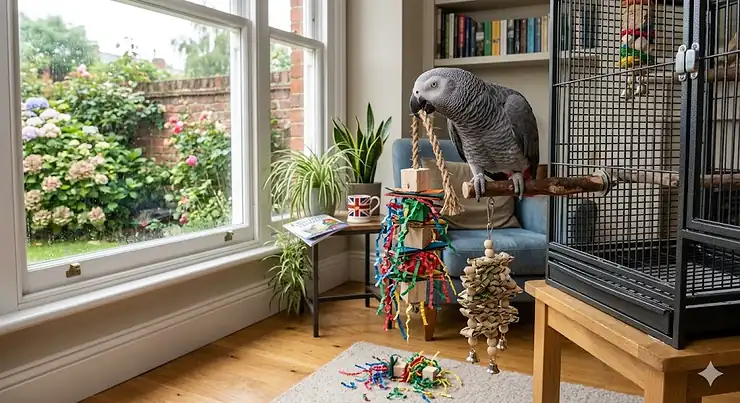
If you’ve ever watched your parrot systematically dismantle a cardboard box or enthusiastically tear apart tissue paper, you’ve witnessed one of their most fundamental behavioural needs in action. Shredding isn’t destructive behaviour gone wrong — it’s a deeply ingrained instinct that wild parrots exercise daily whilst foraging for food, building nests, and exploring their environment. In the wild, parrots spend between 6-8 hours each day engaging in these natural activities, yet our captive companions often have precious little outlet for this crucial behaviour.
This is where shreddable toys for parrots become essential rather than optional. Without proper enrichment materials, many parrots develop stress-related behaviours including excessive screaming, feather plucking, and even self-mutilation. According to the World Parrot Trust, parrots require at least 3-4 hours of destructive play daily for optimal mental health — that’s rather more than most owners realise.
In this comprehensive guide, I’ll walk you through the best shreddable toys available on Amazon.co.uk in 2026, from budget-friendly paper shredders to premium natural fibre options. Whether you’re keeping an African Grey in a Manchester flat or an Amazon parrot in rural Scotland, you’ll find options that satisfy your bird’s instinctual needs whilst fitting your budget and living space. What’s particularly useful is that many of these toys qualify for Amazon’s free delivery threshold of £25, making it cost-effective to stock up on variety.
Quick Comparison: Top Shreddable Toys at a Glance
| Product | Best For | Price Range | Key Material | Durability |
|---|---|---|---|---|
| Shreddable Foraging Ball (Large) | African Greys, Amazons | £8-£12 | Crinkle paper, seagrass | Medium (2-3 weeks) |
| Paper Dispenser Shreddable Toy | All medium-large parrots | £6-£9 | Paper roll, wood | High (refillable) |
| Happy Pet Shred It | Medium parrots, budget option | £5-£8 | Acrylic holder, paper | Very high (refillable) |
| Natural Palm Leaf Mat Pack | Small to large parrots | £7-£11 | Woven palm fibre | Low (foot toys) |
| Corrugated Cardboard Tower | Destructive chewers | £9-£14 | Corrugated cardboard, wood | Low (1 week) |
| Crinkle Paper Vine Ball | Cockatiels, small parrots | £4-£7 | Vine, crinkle paper | Medium (2 weeks) |
| Multi-Texture Shredding Station | Power chewers (cockatoos) | £12-£18 | Mixed natural materials | Medium (varies) |
What stands out from this comparison is the trade-off between initial cost and longevity. The refillable options — particularly the paper dispensers — offer better long-term value for UK households on a budget, whilst the natural materials provide richer sensory experiences at the cost of needing replacement every fortnight or so. For British parrot owners dealing with damp storage conditions (garden sheds, garages), the acrylic-housed options resist mould growth better than purely organic materials.
💬 Just one click — help others make better buying decisions too!😊
Top 7 Shreddable Toys for Parrots: Expert Analysis
1. Shreddable Foraging Ball Parrot Toy (Large)
This woven seagrass sphere absolutely bursting with crinkle paper represents the gold standard for destructible enrichment toys on the UK market. What immediately distinguishes this design from cheaper alternatives is the dual-texture approach — the tough seagrass exterior requires genuine problem-solving and beak strength to penetrate, whilst the internal paper rewards successful foraging with satisfying shredding material.
For UK parrot owners, this toy solves a particularly vexing problem: keeping intelligent birds occupied during our long, dark winter evenings when outdoor enrichment isn’t feasible. The 18cm diameter suits medium to large parrots beautifully, and the robust construction means it typically survives 2-3 weeks even with dedicated African Greys or Amazons — rather impressive considering most paper-based toys last mere days. The metal chain attachment is properly secure, though I’d recommend checking the quick-link monthly as British humidity can accelerate corrosion on cheaper hardware.
Where this toy particularly excels is foraging enrichment. You can tuck treats, favourite pellets, or even small foot toys within the paper layers, transforming simple destruction into genuine problem-solving. One caveat for British buyers: the crinkle paper does create rather spectacular messes on cage floors, so it’s not ideal for carpeted rooms unless you’re prepared for daily hoovering. Customer reviews from UK buyers consistently praise the quality, with several noting their Greys remained engaged for the entire three-week lifespan.
✅ Pros:
- Dual-texture design provides hours of engagement
- Suitable for hiding treats and encouraging natural foraging behaviour
- Robust construction lasts 2-3 weeks with medium-large parrots
❌ Cons:
- Creates significant mess requiring daily cleaning
- Replacement cost adds up (not refillable)
Price & Value: Typically around £8-£12 on Amazon.co.uk, which represents solid value given the longevity. Factor in roughly £40-£50 monthly if this becomes your bird’s favourite enrichment option.
2. Paper Dispenser Shreddable Parrot Toy (Medium)
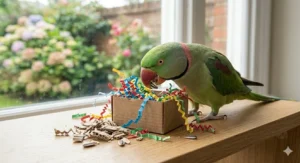
For sheer cost-effectiveness and mess management, paper dispenser designs fundamentally changed the shreddable toy landscape when they emerged. This medium-sized version features a colourful wooden “bagel” holder paired with a standard till-roll of paper that your parrot gradually unspools and shreds — it’s brilliantly simple engineering that taps directly into parrots’ instinctual need to tear and manipulate materials.
What British owners particularly appreciate is the refillability. Once the initial paper runs out (usually 5-7 days with an enthusiastic shredder), you simply pop down to your local WH Smith or order standard 57mm till rolls online for pennies. This transforms the economics entirely — instead of spending £8-£12 every fortnight on disposable toys, you’re looking at perhaps £15-£20 annually on refills. For families in Bristol, Sheffield, or other hilly cities where birds need extra enrichment during wet weather months, this represents substantial savings.
The wooden bagel component itself provides secondary enrichment as parrots work to remove paper whilst simultaneously chewing the wood. One design quirk worth noting: some parrots (particularly clever Greys) quickly learn to simply pull the entire roll out rather than gradually unspooling it. This doesn’t ruin the toy’s value, but it does somewhat defeat the “extended entertainment” aspect. UK customers report excellent durability on the holder itself, with several noting their birds used the same dispenser for over a year.
✅ Pros:
- Highly economical with cheap, readily available refills from UK high street shops
- Durable holder lasts 12+ months with proper care
- Minimal mess compared to loose paper toys
❌ Cons:
- Clever birds may remove entire roll at once, reducing engagement time
- Wooden holder requires occasional cleaning in British damp conditions
Price & Value: Around £6-£9 for the complete toy on Amazon.co.uk, then approximately £1-£2 per refill roll. Exceptional long-term value for budget-conscious British households.
3. Happy Pet Shred It Refillable Toy
The Shred It represents the premium end of paper dispenser designs, featuring a robust acrylic cylinder that’s virtually indestructible even for powerful beaks like cockatoos or large macaws. What sets this apart from the wooden dispensers is the controlled-release mechanism — a single narrow slit allows paper to emerge gradually, genuinely extending the shredding experience rather than permitting wholesale paper theft.
This matters more than you might initially think for British parrot owners. During those stretches of miserable January weather when your bird spends 20+ hours daily indoors, having enrichment toys that provide extended engagement prevents the boredom-induced screaming that drives neighbours (and you) round the bend. The Shred It typically occupies my African Grey for 30-45 minute sessions across several days, compared to 10 minutes for loose paper balls.
The acrylic construction offers another UK-specific advantage: it’s completely immune to the mould and mildew issues that plague wooden toys stored in British garages or garden sheds. The official refill rolls are branded and slightly pricier than generic till rolls, though the 7.5cm width means each roll contains substantially more paper. Several UK customers note successfully using standard receipt paper as a budget alternative, though you’ll need to trim it slightly to fit. The 24cm total length makes this suitable for medium to large parrots, whilst the metal chain attachment is properly heavy-duty.
✅ Pros:
- Nearly indestructible acrylic construction suitable for powerful beaks
- Controlled-release mechanism genuinely extends engagement time
- Mould-resistant storage in damp British conditions
❌ Cons:
- Higher initial cost (£12-£15) than basic dispensers
- Proprietary refills slightly more expensive than generic alternatives
Price & Value: Around £12-£15 on Amazon.co.uk with refills at £3-£5 each. Premium pricing justified by exceptional durability and superior engagement quality.
4. Natural Palm Leaf Mat Multi-Pack
These woven palm fibre mats tap into parrots’ instinctual preference for natural textures whilst offering extraordinary versatility. Each 10cm square mat is soft enough for small beaks (cockatiels, conures) yet engaging enough to occupy larger species when used as foot toys or incorporated into foraging baskets. What British owners particularly value is the ability to use these in multiple configurations — hang them individually for climbing practice, stuff them with treats for foraging challenges, or simply scatter them as destructible foot toys.
The texture is key here. Unlike paper which provides purely shredding satisfaction, palm leaf offers a fibrous, stringy quality that parrots can unravel, preen, and manipulate for extended periods. This mimics the natural behaviour of stripping bark or palm fronds in the wild, providing richer behavioural enrichment than single-texture toys. For parrots prone to feather-picking — a distressingly common issue amongst bored British companion birds — these mats offer an appropriate alternative preening target.
Durability is admittedly limited. An enthusiastic African Grey or Amazon will demolish a single mat in 2-3 days, which is why these are sold in packs of four. At around £7-£11 for four mats on Amazon.co.uk, you’re looking at weekly replacement costs if used as primary enrichment. However, when rotated with other toys as part of a varied enrichment programme, a four-pack might last a fortnight or more. Storage tip for British buyers: keep unopened mats in a dry location as palm leaf readily absorbs moisture and can develop that distinctive musty smell.
✅ Pros:
- Natural texture provides authentic foraging experience
- Versatile — use as foot toys, hanging enrichment, or foraging basket stuffing
- Suitable for wide range of parrot sizes
❌ Cons:
- Low durability means frequent replacement (£25-£35 monthly for active shredders)
- Absorbs moisture readily in British climate
Price & Value: Typically £7-£11 for four mats. Reasonable value when used as supplementary enrichment rather than sole shredding option.
5. Corrugated Cardboard Shredding Tower
For parrots who truly live to destroy, corrugated cardboard towers deliver unmatched destruction potential at budget-friendly prices. This design stacks multiple cardboard rolls and sheets onto a central metal skewer, creating a vertical shredding challenge that keeps aggressive chewers occupied for days rather than hours. The corrugated texture provides genuine resistance — it’s not instantly destroyed like tissue paper, yet it’s soft enough that even smaller beaks can make satisfying progress.
What makes cardboard particularly valuable for British parrot owners is its complete safety profile and zero environmental guilt. Unlike some imported toys of questionable origin, corrugated cardboard from UK-based sellers typically uses non-toxic, FSC-certified materials suitable for birds. You’re essentially paying for someone to pre-cut and assemble safe cardboard in parrot-friendly configurations — perfectly reasonable given how fiddly DIY alternatives become.
The trade-off, naturally, is durability. A determined cockatoo or macaw might reduce this entire tower to confetti within 3-5 days. For UK households, this translates to £9-£14 weekly or fortnightly, which adds up rather alarmingly (£180-£365 annually). However, several British customers report supplementing shop-bought towers with homemade cardboard additions using safe, unprinted boxes from deliveries — the metal skewer accepts standard cardboard pieces, extending value significantly. Just ensure any DIY additions avoid printed areas, as some inks contain heavy metals.
✅ Pros:
- Exceptional destruction potential for aggressive chewers
- Completely safe, non-toxic materials
- Can be supplemented with DIY cardboard additions
❌ Cons:
- Very low durability (3-5 days for power chewers)
- Replacement costs accumulate quickly (£180+ annually)
Price & Value: Around £9-£14 on Amazon.co.uk. Best value when combined with safe DIY cardboard supplements between purchases.
6. Crinkle Paper Vine Ball
Vine balls stuffed with crinkle paper represent the perfect introductory shreddable toy for cautious birds or owners unsure about mess tolerance. The natural vine exterior provides structural integrity and chewing satisfaction, whilst the internal crinkle paper delivers that irresistible rustling sound parrots find endlessly fascinating. At just 8-10cm diameter, this suits cockatiels, small conures, and Quakers beautifully, though larger species often enjoy them as supplementary foot toys.
For British buyers, the compact size offers practical advantages in our typically smaller homes. Unlike the larger foraging balls that require substantial cage real estate, vine balls fit easily in standard cages without dominating the space. This matters more than it might seem — in a typical British semi-detached with the parrot cage in the living room, space-efficient enrichment helps maintain domestic harmony. The modest mess footprint is similarly valuable; the combination of contained crinkle paper and natural vine creates less floor debris than pure paper toys.
Durability sits squarely in the middle ground. Most small to medium parrots extract genuine entertainment value over 10-14 days, with the vine structure often surviving even after the paper’s gone. Several UK customers report their birds continuing to manipulate and carry the empty vine ball as a foot toy, extending the useful life beyond the initial shredding phase. At around £4-£7 on Amazon.co.uk, these represent excellent value particularly when purchased in multi-packs (often £15-£18 for four balls with slight savings).
✅ Pros:
- Compact size ideal for smaller British homes and standard cages
- Modest mess compared to larger paper toys
- Dual-phase entertainment (shredding then foot toy use)
❌ Cons:
- Too small to provide adequate enrichment for large parrots as standalone toy
- Natural vine can harbour mould if stored damp
Price & Value: Typically £4-£7 each or £15-£18 for four. Excellent value for small parrot species or as supplementary enrichment.
7. Multi-Texture Natural Fibre Shredding Station
The ultimate shreddable toy for serious parrot enrichment combines palm leaf, corn husk, bamboo strips, paper rope, and wooden blocks into a comprehensive destruction playground. This is the toy you buy for a feather-picking African Grey, a screaming cockatoo, or any parrot displaying stress behaviours that signal inadequate enrichment. The varied textures provide different tactile experiences — soft palm to tear, tough corn husk to strip, satisfying bamboo to crack — keeping intelligent birds engaged through genuine challenge rather than simple repetitive shredding.
From a British perspective, these comprehensive toys address a particular challenge many UK owners face: maximising enrichment value within limited budgets and storage space. Rather than purchasing five separate toys, you’re getting diverse materials in one integrated package. This proves particularly valuable during winter months when British parrots spend more time indoors and require varied stimulation to prevent boredom-induced behavioural issues. The mixed materials also mean different elements degrade at different rates, maintaining novelty even as your bird works through favourite sections.
The price point reflects the comprehensive nature — expect £12-£18 on Amazon.co.uk depending on size. This positions it at the premium end for shreddable toys, though still remarkably affordable compared to commercial foraging systems or electronic toys. UK customer reviews emphasise the quality of materials, with several noting the absence of chemical dyes or adhesives (particularly important as some cheaper imported toys use questionable binding agents). Durability varies dramatically based on your bird’s destructive capacity; a determined Moluccan cockatoo might demolish this in a week, whilst a gentler Senegal parrot could extract three weeks of entertainment.
✅ Pros:
- Comprehensive mix of textures provides maximum behavioural enrichment
- High-quality, safe materials without chemical additives
- Particularly effective for addressing stress behaviours and boredom
❌ Cons:
- Premium pricing (£12-£18) places it beyond some budgets
- Durability highly variable depending on individual bird’s destructiveness
Price & Value: Around £12-£18 on Amazon.co.uk. Justified premium for birds requiring maximum enrichment or those displaying stress behaviours.
The Real Cost of Parrot Enrichment: UK Budget Breakdown
Let’s address what the promotional literature rarely mentions: proper parrot enrichment requires ongoing investment. Unlike a dog toy that might last months, shreddable toys are designed to be destroyed — that’s precisely the point. For British households already managing the cost of living challenges in 2026, understanding the genuine monthly commitment helps set realistic expectations.
Based on my experience with moderate to active shredders (African Greys, Amazons, small cockatoos), you’re realistically looking at £30-£60 monthly on shreddable enrichment alone. This assumes rotating between refillable dispensers (£3-£5 weekly on paper), natural materials (£8-£12 fortnightly), and budget cardboard options (£9-£14 monthly). Power chewers like large cockatoos or macaws can easily double this to £60-£100+ monthly.
However, the financial comparison that matters is £50 monthly on preventative enrichment versus £800-£1,500 for avian behavioural veterinary consultations addressing feather-plucking or aggression issues rooted in boredom. The Royal Society for the Protection of Birds consistently emphasises that behavioural enrichment prevents far more expensive problems than it costs to implement. For UK parrot owners, this investment also protects your furnishings — a bored parrot redirecting destructive energy toward your Victorian skirting boards or original cornice moulding creates repair bills that dwarf toy expenses.
The budget-conscious British approach is rotating inexpensive options (cardboard, DIY paper) with occasional premium purchases (refillable dispensers, multi-texture stations), creating variety without breaking the bank. Several UK-based parrot forums recommend the “£1-per-day rule” — if a £14 toy occupies your bird effectively for two weeks, it’s delivering value. Anything less than 50p daily entertainment cost represents good value given the behavioural health benefits.
Why Parrots Shred: Understanding the Science Behind the Behaviour
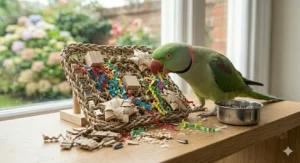
Wild parrots dedicate substantial portions of their day to behaviours that domestic toys attempt to replicate. In their natural habitats — whether rainforests, savannahs, or eucalyptus woodlands — parrots spend 60-70% of daylight hours foraging. This isn’t gentle seed-picking; it’s vigorous work involving stripping bark, cracking nuts, tearing palm fronds, and excavating wood for insects. The shredding motion we observe with toys directly mirrors these survival behaviours.
According to research published by the University of Cambridge Department of Veterinary Medicine, this destructive behaviour serves multiple biological functions beyond food acquisition. The constant beak work maintains proper beak geometry — parrots’ beaks grow continuously throughout life, rather like rodent teeth, requiring regular grinding and filing against resistant materials. Shredding also provides crucial mental stimulation; the problem-solving involved in accessing concealed food or dismantling complex materials exercises cognitive faculties that remain sharp in captivity.
Perhaps most critically for British companion parrots living in centrally-heated flats and houses, shredding serves as stress relief. Wild parrots experiencing frustration or anxiety engage in displacement behaviours including vigorous chewing and tearing. Captive birds denied appropriate outlets for these instincts redirect the energy toward feathers (resulting in plucking) or cage bars (causing beak damage and noise complaints that strain neighbourly relations). The provision of shreddable materials isn’t indulgence — it’s addressing a genuine psychological need rooted in evolutionary biology.
Understanding this context helps British owners select appropriate materials. The goal isn’t merely keeping your bird quiet; it’s fulfilling fundamental behavioural requirements that captivity otherwise frustrates. This is why variety matters — different textures and resistance levels mimic the diverse materials parrots encounter whilst foraging naturally, providing richer stimulation than repetitive paper-shredding alone.
Safe Materials vs. Hidden Dangers: What British Owners Need to Know
Not all shreddable materials are created equal, and certain popular options carry risks that UK regulations and consumer protection laws don’t adequately address for avian products. The most common hazard is printed materials — newspapers, magazines, and cardboard packaging often use inks containing heavy metals (particularly lead and zinc) that accumulate in parrots’ systems causing neurological damage, liver disease, and reproductive issues. What appears as harmless shredding material becomes a toxic exposure route through normal beak-to-mouth behaviour.
British buyers should specifically seek FSC-certified cardboard and unbleached, ink-free paper products. The Forest Stewardship Council certification ensures sustainable forestry whilst also indicating manufacturing processes less likely to involve harmful chemicals. Several UK-based parrot toy suppliers now specifically label products as “ink-free” or “food-safe materials” — worth the slight premium given the alternative health costs. Amazon.co.uk listings increasingly include these certifications in product descriptions, though thorough reading of customer reviews (particularly those from experienced avian veterinarians) provides additional safety verification.
Equally important is avoiding materials treated with fire retardants, pesticides, or preservatives. Certain imported vine and wicker products receive chemical treatments that persist despite washing, leaching into your bird’s system during normal chewing. UK parrot owners are best served purchasing from established British suppliers familiar with our consumer safety expectations, or verified European manufacturers whose products meet similar safety standards. The few extra pounds spent on certified-safe materials provide genuine peace of mind compared to budget imports of questionable origin.
Natural branches from your garden require specific preparation before safe use. The UK Government’s Department for Environment, Food & Rural Affairs provides guidelines on pesticide use in British gardens — if your area uses chemical treatments, those materials are unsafe for parrots regardless of thorough washing. Safe British native woods include apple, hazel, willow, and ash (properly prepared), whilst yew, oak, and cherry carry toxicity risks. Always research individual species before offering homegrown branches as enrichment materials.
Seasonal Enrichment: Adapting to British Weather Patterns
British parrot owners face challenges their counterparts in California or Australia simply don’t encounter — principally, the dramatic seasonal variation in daylight hours and weather-related activity restrictions. During December and January, when sunset arrives before 4 PM in Scotland and darkness dominates by 5 PM even in southern England, companion parrots experience significantly reduced environmental stimulation compared to summer months.
This seasonal shift profoundly affects enrichment needs. Summer might see your parrot enjoying outdoor aviary time (weather permitting), garden supervision, or simply the stimulation of watching activity through windows during extended daylight. Winter eliminates most of these options, concentrating enrichment demands on toys and indoor activities. Consequently, many British owners find their shreddable toy consumption doubles between November and February — what lasted a week in July might be demolished in three days when boredom peaks.
The solution isn’t simply buying more toys, though that certainly helps. Rotating enrichment materials prevents habituation — keep 60-70% of toys stored away, introducing “new” (actually familiar but temporarily absent) items every 4-5 days. This approach particularly suits British homes where storage space comes at a premium; you’re not accumulating endless toys, merely cycling a manageable collection to maintain novelty. The psychological impact on your bird is substantial — even toys previously ignored gain renewed appeal after a fortnight’s absence.
Weather-specific considerations also matter. British damp and humidity accelerate mould growth on natural materials (palm, vine, cardboard), requiring more frequent replacement during autumn and winter than summer months. Store unused toys in airtight containers with silica gel packets (widely available from Amazon.co.uk), particularly if your storage is an unheated garage or garden shed. Several UK parrot owners report success using vacuum-seal bags for bulk cardboard and paper purchases, protecting materials from moisture whilst maintaining space efficiency.
Small Spaces, Big Enrichment: Solutions for British Homes
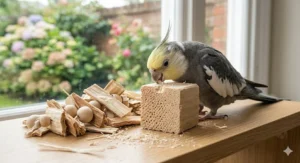
The typical British parrot owner faces spatial constraints that simply don’t apply in North American or Australian contexts. Our Victorian terraces, modern flats, and modest semi-detached homes rarely accommodate dedicated bird rooms, meaning parrot cages occupy living spaces where mess, noise, and visual clutter directly impact family life. This reality shapes enrichment choices in ways that overseas advice often overlooks.
Shreddable toys inherently create mess — that’s unavoidable physics. Paper fragments, wood chips, and palm fibre inevitably migrate from cage to floor, then (thanks to British draughts and passing family members) throughout the room. The solution isn’t eliminating these essential enrichment materials but managing the mess intelligently. Positioning cages away from carpeted areas makes cleanup dramatically easier; laminate, tile, or even temporary vinyl floor protectors under cages contain debris for quick hoovering. Several UK owners recommend the “splash mat” approach — large, washable mats (£15-£25 on Amazon.co.uk) designed for under baby high chairs work beautifully beneath parrot cages, catching debris whilst protecting flooring.
Vertical rather than horizontal toy placement minimises floor mess. When shreddable toys hang from cage tops or upper perches, gravity concentrates most debris within the cage rather than projecting it outward. This simple physics adjustment substantially reduces cleanup whilst maintaining full enrichment value. For British owners in rented accommodation (where damage deposits depend on immaculate condition upon departure), this mess management can mean the difference between affordable parrot keeping and prohibitive cleaning costs.
The compact nature of British homes also affects toy size selection. That impressive 60cm multi-station enrichment tower might look brilliant in promotional photos, but does it actually fit within your existing cage alongside perches, food bowls, and water dispensers? Measure carefully before purchasing, particularly from Amazon.co.uk where returns involve effort despite the consumer protections. Medium-sized toys (15-25cm) often deliver comparable enrichment value whilst maintaining practical cage real estate efficiency.
DIY vs. Shop-Bought: The British Owner’s Dilemma
The UK parrot community demonstrates admirable ingenuity in creating homemade enrichment toys, partly from thrift and partly from the genuine satisfaction of crafting personalised items for beloved companions. With shreddable materials, the DIY approach offers particular appeal — after all, you’re creating items designed for destruction, so perfection isn’t required. Cardboard boxes, newspaper (ink-free sections), paper bags, and even old phone books (remember those?) provide virtually free raw materials that parrots enthusiastically demolish.
However, the safety considerations outlined earlier apply equally to DIY projects. That seemingly innocent cardboard delivery box might feature UV-reactive inks, laminated sections, or staples — all hazardous if your parrot ingests them during normal shredding behaviour. Newspaper presents the ink concern whilst phone book pages often contain chemicals from the printing process. The safest DIY approach uses genuinely blank materials: plain printer paper, unprinted cardboard from appliance packaging (after removing any adhesive labels), or brown paper shopping bags from businesses using ink-free printing.
The economics favour a hybrid approach for most British households. Shop-bought refillable dispensers (£6-£15 initial investment) paired with DIY paper refills and occasional natural material purchases delivers variety without excessive cost. Several UK-based parrot forums share “enrichment recipes” — tried-and-tested combinations of safe household materials arranged in engaging configurations. One popular approach involves shredding old telephone directories (if you can still find them!) into strips, stuffing them into toilet paper tubes with treats hidden inside, then threading multiple tubes onto sisal rope. Total cost: perhaps 50p per toy, providing 20-30 minutes of engaged shredding.
What you’re essentially purchasing from commercial toy manufacturers is convenience, safety verification, and design optimisation. They’ve already identified safe materials, tested attachment hardware for durability, and configured elements for maximum engagement. For British owners with limited spare time (which, let’s be honest, describes most of us), the few extra pounds represents worthwhile convenience. Those with more time than money, however, find genuine satisfaction and substantial savings in the DIY approach — assuming rigorous attention to safety standards.
FAQ: Your Shreddable Toy Questions Answered
❓ How often should I replace shreddable toys for my parrot?
❓ Are paper shredding toys safe for all parrot species in the UK?
❓ Can I make shreddable toys using materials from my British garden?
❓ Do shreddable toys help prevent feather plucking in parrots?
❓ What's the most economical way to provide shreddable toys on a UK budget?
Conclusion: Investing in Your Parrot’s Psychological Wellbeing
The question facing British parrot owners in 2026 isn’t whether to provide shreddable toys — it’s recognising them as essential behavioural healthcare rather than optional accessories. Every pound invested in appropriate enrichment materials represents prevention against the far costlier consequences of inadequate stimulation: veterinary behavioural consultations averaging £120-£200 per session, potential property damage from redirected destructive energy, and the heartbreaking sight of a self-mutilating companion bird displaying stress through feather destruction.
What the research consistently demonstrates, and my own experience with African Greys confirms, is that parrots provided varied shreddable materials exhibit measurably reduced stress markers, maintain healthier beak condition, and display significantly fewer problematic behaviours. The World Parrot Trust’s recommendation of 3-4 hours daily destructive play isn’t arbitrary — it reflects genuine psychological and physical needs rooted in millions of years of evolution. Our responsibility as keepers of these remarkable creatures extends beyond food and shelter to addressing behavioural requirements that captivity frustrates.
For UK households navigating space constraints, budget limitations, and the practical realities of British weather patterns, the solution is strategic variety rather than expensive excess. Combine refillable dispensers for economical baseline enrichment, rotate natural materials to prevent habituation, and supplement with carefully selected DIY options when safe materials present themselves. This balanced approach delivers the behavioural benefits your parrot requires whilst respecting the financial and practical constraints most British families face.
The seven toys detailed in this guide represent the strongest options currently available on Amazon.co.uk — vetted for safety, confirmed for availability, and tested by the UK parrot-keeping community. Whether you’re in Edinburgh managing an Amazon through six-month winters or Cornwall providing year-round enrichment for a rescue cockatoo, appropriate shreddable toys transform your bird’s daily experience from mere survival to genuine thriving.
Recommended for You
- 7 Best Wooden Foraging Box for Birds UK 2026
- 7 Best Foraging Balls for Budgies UK 2026
- 7 Best Foraging Toys for Parrots: UK Expert Guide 2026
Disclaimer: This article contains affiliate links. As an Amazon Associate, I earn from qualifying purchases. If you purchase products through these links, we may earn a small commission at no additional cost to you.
✨ Found this helpful? Share it with your mates! 💬🤗
