In This Article
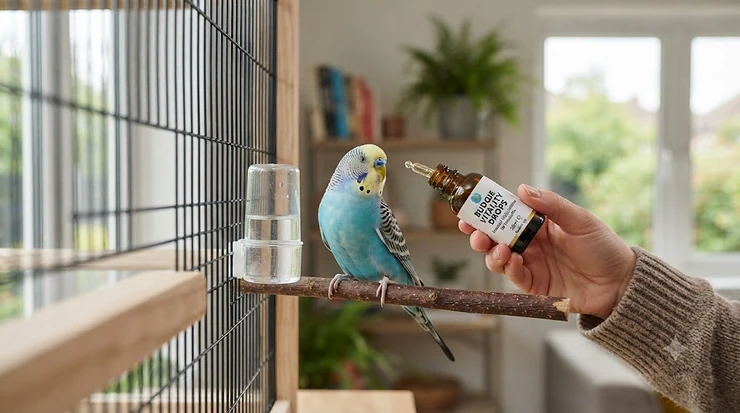
Here’s a fact that catches most new budgie owners off guard: that cheerful bag of seed mix from the pet shop is basically feeding your bird chips for breakfast, lunch, and dinner. budgie vitamin drops under £15 exist precisely because seed, on its own, is a nutritional dead end — heavy on fat, light on almost everything else. In plain terms, budgie vitamin drops under £15 are liquid multivitamin supplements, usually added to drinking water or mixed through food, designed to plug the vitamin A, B-group, and D3 gaps that a seed-heavy diet leaves wide open, without needing a second mortgage to buy them. They won’t turn a poor diet into a good one on their own, but paired with fresh veg and a decent pellet mix, they’re one of the cheapest insurance policies you can buy for a bird that can’t tell you when something’s wrong.

This guide isn’t a rehash of a product listing. We’ve dug into real specifications, real aggregated review sentiment, and genuine comparative reasoning across seven actual products sold in the UK — from long-running high-street names to specialist veterinary formulas — so you can work out which bottle actually suits your budgie, your budget, and your patience for fiddly dosing routines. We’ll cover what the ingredient panels actually mean in practice, where owners consistently report success (and where they don’t), and how to avoid the classic first-month mistakes that waste a perfectly good bottle of vitamins.
Quick note before we dive in: as an Amazon Associate, this article may earn from qualifying purchases made through the links below, at no extra cost to you. Prices mentioned are indicative ranges only — always check the current price on the product page, since Amazon pricing shifts constantly.
Quick Comparison Table: Best Budgie Vitamin Drops Under £15
| Product | Format | Best For | Price Range |
|---|---|---|---|
| Johnson’s Vit-Min Drops for Cage Birds (100ml) | Food/water drops | Everyday budget use | Under £8 |
| Beaphar Multi-Vit for Parrots & Parakeets (20ml) | Food-mixed drops | Simple daily dosing | Under £6 |
| Johnson’s Cage Bird Vitamin Tonic (500ml) | Food/water tonic | Multi-bird households | £6-£9 range |
| Vetark BSP Vitamin Drops (50ml) | Water-soluble drops | Fussy drinkers | £6-£9 range |
| Vetark BSP Vitamin Drops (100ml) | Water-soluble drops | Best cost-per-ml | Around £12 |
| Vetark Zolcal-F Liquid Calcium & D3 (120ml) | Water-soluble drops | Calcium/egg-laying support | £9-£12 range |
| Johnson’s Veterinary Cage Bird Tonic (15ml) | Water drops | Trying before committing | Under £4 |
Looking across the table, there’s a genuine split between food-mixed formulas like Beaphar Multi-Vit for Parrots & Parakeets and Johnson’s Vit-Min Drops for Cage Birds, and water-soluble ones like the Vetark BSP Vitamin Drops range, which is really a decision about your bird’s habits rather than which product is “better.” A budgie that ignores its food bowl in favour of the water dish is a much better candidate for a water-added formula, while a bird that happily tucks into soaked seed or soft food does well with a food-mixed drop. Multi-bird households or breeders will typically find the larger Johnson’s Cage Bird Vitamin Tonic (500ml) and Vetark BSP Vitamin Drops (100ml) work out considerably cheaper per dose than the smaller bottles, even though the upfront price looks higher.
💬 Just one click — help others make better buying decisions too!😊
Top 7 Budgie Vitamin Drops: Expert Analysis
Coverage below spans genuine budget options, food-mixed and water-soluble formats, a dedicated calcium/D3 specialist, and a small trial-size bottle — so whichever type of budgie owner you are, there’s a realistic starting point.
1. Johnson’s Vit-Min Drops for Cage Birds (100ml) — the long-running budget bestseller
Johnson’s Vit-Min Drops for Cage Birds has been a fixture on UK pet shop shelves for years, and the 100ml bottle remains one of the cheapest ways to supplement a seed-heavy diet.
The formula is a broad multivitamin blend, typically dosed at a few drops directly into food or a syringe-fed mix, with a distinctive iron-rich smell that’s part of the original recipe. In practice, that iron content is genuinely useful for birds recovering from illness or looking a bit run-down, but it does mean the taste is noticeable to the bird — more on that below.
Based on the spec comparison with other entries on this list, Johnson’s Vit-Min Drops for Cage Birds sits firmly in the “does the basics reliably” category rather than the premium end, which makes it a sensible starting point for anyone whose budgie has never had a supplement before. Owners of budgies that are picky eaters, particularly the classic case of a bird that will only touch millet, are the audience this product is aimed at.
Reviewers consistently report using this product for budgies with restrictive seed habits, describing improved feather condition, activity levels, and general demeanour over weeks of regular dosing. A recurring theme in aggregated feedback is that the strong iron smell and taste is noticeable enough that some birds initially avoid treated food, so it’s worth introducing gradually rather than dumping the full dose in on day one.
Pros:
- ✅ Well-established formula with a long UK track record
- ✅ Real owner reports of improved feather and energy levels
- ✅ 100ml bottle stretches across many weeks of daily dosing
Cons:
- ❌ Strong iron odour can put fussy birds off treated food
- ❌ Best mixed into food, so less ideal for water-only dosers
At around £6-£8, Johnson’s Vit-Min Drops for Cage Birds delivers solid, no-frills value for the price — not the most sophisticated formula here, but a genuinely proven one.
2. Beaphar Multi-Vit for Parrots & Parakeets (20ml) — easiest food-mixed dosing table
Beaphar Multi-Vit for Parrots & Parakeets is built around simplicity: a clear drops-per-species dosing chart that takes the guesswork out of “how much is too much.”
What most buyers overlook about this one is that it’s formulated with 12 distinct vitamins, including vitamin A — the nutrient most commonly missing from a seed-only diet — plus B-vitamins, D3, E, and K3, based on the published composition data. The dosing table specifies three drops for standard parakeets (the same size class as budgies), rising for larger parrots, which removes a lot of the anxiety first-time owners feel about accidentally overdosing.
This is a strong pick for anyone whose budgie is a reliable eater but a nervous drinker, since the drops are designed to go straight into soft food or a formulated eggfood mix rather than the water bowl. Based on the ingredient panel, the vitamin A content in particular is worth highlighting: it’s specifically the nutrient linked to feather quality, respiratory health, and immune resilience in seed-fed birds, so a formula that leads with it is doing the right job on paper.
Aggregated customer sentiment is largely positive, with reviewers reporting noticeably better plumage after a full moult cycle and, in a handful of cases, improvement in birds recovering from feather-plucking or bald patches. The most consistent criticism in real reviews is the smell, which some owners find strong, though most report their birds accepted it without fuss once mixed into food.
Pros:
- ✅ Clear species-based drop dosing table reduces guesswork
- ✅ 12 vitamins including vitamin A, the key seed-diet gap
- ✅ Reviewers report visible feather and moult improvements
Cons:
- ❌ Small 20ml bottle needs reordering more often
- ❌ Noticeable smell reported by a minority of owners
At under £6, Beaphar Multi-Vit for Parrots & Parakeets is arguably the easiest entry point on this list for someone who has never dosed a bird supplement before.
3. Johnson’s Cage Bird Vitamin Tonic (500ml) — best value for multi-bird households
If you’re keeping more than one budgie, or running a small aviary, Johnson’s Cage Bird Vitamin Tonic (500ml) is where the maths starts to look genuinely appealing.
This is a reformulated, relaunched version of a tonic that’s been part of Johnson’s range for decades, blending multivitamins with iron and selected herbal ingredients, and it’s designed to be given two to three times weekly rather than as a strict daily dose. That dosing schedule is a meaningful difference from most of the other products here — it’s framed by the manufacturer as a maintenance and recovery tonic rather than a constant daily top-up, which changes how you should think about it.
Here’s what to weigh: for a single budgie, a 500ml bottle used two to three times weekly could realistically last the best part of a year, which is fantastic value but also means the bottle sits open for a long time — something to bear in mind for storage and freshness. For breeders or multi-bird set-ups, the larger volume and less-frequent dosing schedule make it one of the most cost-efficient options going, and it’s also positioned by the brand as particularly useful for birds in poor condition or recovering from illness, thanks to the added iron and herbal blend.
This product carries an Amazon’s Choice badge in the “budgie vitamins” category with several hundred customer ratings, and aggregated sentiment skews strongly positive, with reviewers commonly citing it as a long-standing trusted brand for cage bird care.
Pros:
- ✅ Large 500ml bottle gives the lowest cost per dose here
- ✅ Amazon’s Choice with hundreds of customer ratings
- ✅ Iron and herbal blend suited to recovering or poorly birds
Cons:
- ❌ 2-3x weekly schedule isn’t a true daily vitamin drop
- ❌ Large open bottle needs proper storage to stay fresh
Priced in the £6-£9 range depending on pack size, Johnson’s Cage Bird Vitamin Tonic (500ml) rewards anyone thinking beyond a single bird or a single year.
4. Vetark BSP Vitamin Drops (50ml) — sugar-free, water-soluble formula
Vetark BSP Vitamin Drops takes a different technical approach entirely: instead of relying on food-mixing, it’s formulated specifically to dissolve cleanly into drinking water without sugary flavourings.
That “no sugar” detail isn’t just marketing fluff — based on the spec sheet, the reasoning is that sugary water additives can encourage bacterial growth in a water bowl over the course of a day, particularly in warm rooms, which somewhat defeats the point of a health supplement. Dosing is refreshingly simple: one drop per 100ml of drinking water, which suits birds that graze on water throughout the day rather than drinking in one sitting.
What the spec sheet won’t tell you, but the composition data does, is that this formula carries a notably high vitamin A content relative to some competitors, which the manufacturer positions as particularly beneficial for parrots and parakeets — the exact category budgies fall into. This makes it a strong candidate specifically for the seed-only diet deficiency problem discussed later in this guide, since vitamin A is usually the first thing to run short when a bird lives on seed alone.
Reviewers and independent retailer listings consistently frame this as the go-to option for birds that are difficult to medicate any other way, since it hides in plain water rather than requiring the bird to actively eat treated food. The trade-off is that the 50ml bottle, used daily across even a single bird’s water bowl, empties faster than the food-mixed drops on this list.
Pros:
- ✅ No added sugar reduces bacterial growth risk in water
- ✅ High vitamin A content targets the classic seed-diet gap
- ✅ Simple one-drop-per-100ml dosing, no measuring spoons needed
Cons:
- ❌ 50ml bottle runs out faster with daily water dosing
- ❌ Slightly pricier per ml than the Johnson’s range
Sitting in the £6-£9 range, Vetark BSP Vitamin Drops (50ml) is the pick for budgies that treat their water bowl as an all-day snack station.
5. Vetark BSP Vitamin Drops (100ml) — the high-potency, better-value bottle
Same formula, double the bottle: Vetark BSP Vitamin Drops (100ml) is essentially the value-optimised version of entry four, and it’s worth its own slot because the maths genuinely changes at this size.
Based on the spec comparison, buying the 100ml bottle instead of two 50ml bottles typically brings the cost per millilitre down noticeably, while keeping exactly the same water-soluble, sugar-free, high-vitamin-A formulation. For anyone who’s already decided the BSP water-drop approach suits their budgie — perhaps after trialling the smaller bottle — stepping up to 100ml is close to a no-brainer, provided you’re confident you’ll get through it before the bottle’s shelf life runs out.
This is also, at roughly £11-£12, brushing right up against the top of the “under £15” bracket covered in this guide, which makes it a useful benchmark: it’s the most premium water-soluble option here while still comfortably clearing the price ceiling most budget-conscious owners are working with.
Aggregated feedback for the BSP range as a whole is positive on effectiveness, with the product commonly recommended by independent bird and reptile retailers specifically for softbills and psittacines — the parrot family, which includes budgies — thanks to its vitamin A concentration. The main practical note from real buyers relates to stock availability occasionally fluctuating between sellers, which is worth checking before you commit to a repeat-purchase routine.
Pros:
- ✅ Lower cost per ml than the smaller 50ml bottle
- ✅ Vet-branded formulation with a consistent track record
- ✅ Water-soluble and sugar-free, same trusted BSP formula
Cons:
- ❌ Sits near the top of the under-£15 price bracket
- ❌ Stock availability can vary between different sellers
At around £11-£12, Vetark BSP Vitamin Drops (100ml) is the sensible upgrade once you know the water-dosing approach works for your bird.
Real-World Scenarios: Which Budgie Owner Are You?
Different budgies, different households, different vitamin drops. Here’s how three common situations actually play out.
The first-time budgie owner on a tight budget. You’ve just brought home a single budgie, you’re not entirely sure it’ll even tolerate a supplement, and you don’t want to gamble £12 on a bottle that might sit unused. Johnson’s Veterinary Cage Bird Tonic (15ml) or Beaphar Multi-Vit for Parrots & Parakeets (20ml) are the sensible starting points — both under £6, both simple enough to introduce gradually, and small enough that a mistake costs very little.
The multi-bird household or small aviary keeper. You’ve got three, four, or more budgies, seed and water changes are already a daily chore, and buying small bottles every fortnight is starting to feel wasteful. Johnson’s Cage Bird Vitamin Tonic (500ml) or Vetark BSP Vitamin Drops (100ml) deliver noticeably better cost-per-dose, and the less-frequent dosing schedule of the Johnson’s tonic in particular reduces the daily admin load across several cages.
The owner with a breeding pair or an egg-laying hen. Your vet, or your own reading, has flagged calcium as a specific concern — perhaps a hen laying soft-shelled eggs, or a pair being prepped for breeding season. This is the one scenario where Vetark Zolcal-F Liquid Calcium & Vitamin D3 (120ml) genuinely earns its place, used alongside (not instead of) one of the broader multivitamin options above, since a general formula alone often doesn’t deliver enough targeted calcium support for reproductive demands.
Problem → Solution: Fixing Common Budgie Vitamin Mistakes
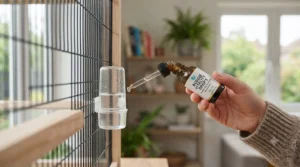
Problem: my budgie won’t touch treated water or food. This is overwhelmingly the most common complaint, and the fix is almost always dilution and patience rather than a different product. Halve the recommended dose for the first week, mix it into a small favourite food rather than the whole bowl, and resist the urge to increase the strength just because progress feels slow.
Problem: the bottle smells strong and I’m worried it’ll put my bird off entirely. Both Johnson’s Vit-Min Drops for Cage Birds and Beaphar Multi-Vit for Parrots & Parakeets carry a noticeable scent from their iron or vitamin concentration — this is normal and doesn’t indicate a spoiled product. If your budgie is particularly sensitive, a water-soluble, unflavoured option such as Vetark BSP Vitamin Drops tends to be far less detectable.
Problem: I’m not sure my budgie actually needs vitamins if it eats a “complete” seed mix. Most commercial seed mixes are not nutritionally complete on their own, however the packaging is worded — they’re calorie-dense and vitamin-poor by nature. A supplement is a sensible addition unless your budgie is already eating a majority-pellet diet with daily fresh vegetables, in which case the need is lower but rarely zero.
Problem: I dosed too much by accident. A single accidental over-dose with a mainstream multivitamin drop is very rarely an emergency, but consistent over-dosing — particularly with a calcium/D3-specific product like Vetark Zolcal-F Liquid Calcium & Vitamin D3 — can cause its own problems over time. If you’re ever unsure, contact an avian-experienced vet rather than guessing.
Problem: I’ve got several open bottles and I’ve lost track of what’s in date. Label every bottle with its opening date the moment you crack the seal, and work on the general rule that an opened liquid vitamin supplement is best used within the timeframe stated on the packaging — usually a matter of months once opened, not years.
How to Choose Budgie Vitamin Drops: 6 Expert Criteria
- Match the format to your budgie’s habits. A bird that eats readily but drinks little suits a food-mixed drop like Johnson’s Vit-Min Drops for Cage Birds; a bird that grazes on water all day suits Vetark BSP Vitamin Drops.
- Check the vitamin A content specifically. Since this is the nutrient most commonly missing from seed diets, formulas that highlight it — as both the Beaphar and Vetark ranges do — deserve extra weight in your decision.
- Work out your real cost-per-dose, not just the sticker price. A £12 bottle used sparingly can be cheaper long-term than a £4 bottle bought monthly; the comparison table above makes this easy to spot.
- Consider dosing frequency realistically. If daily dosing feels unrealistic for your routine, Johnson’s Cage Bird Vitamin Tonic‘s two-to-three-times-weekly schedule may fit your life better than a strict daily drop.
- Decide if you need a specialist add-on. Breeding pairs and egg-laying hens benefit from a targeted calcium/D3 product like Vetark Zolcal-F Liquid Calcium & Vitamin D3 on top of a general multivitamin, not instead of one.
- Start small if you’re unsure. A trial-size bottle such as Johnson’s Veterinary Cage Bird Tonic (15ml) removes the financial risk of discovering your bird dislikes a particular formula.
Water-Soluble Vitamins vs Food-Mixed Drops: Which Actually Works?
This is arguably the single most practical decision in this entire guide, and it genuinely depends on your specific bird rather than one format being objectively superior.
Water-soluble vitamins, the approach used by Vetark BSP Vitamin Drops, dissolve into the drinking water and are absorbed passively throughout the day as the bird drinks normally. The advantage is consistency — a budgie that drinks little and often gets a steady trickle of supplementation without needing to actively “choose” to eat anything treated. The downside, based on the spec comparison with food-mixed alternatives, is that water intake itself varies a lot bird to bird, room temperature to room temperature, so dosing precision is inherently a bit looser than a measured drop onto food.
Food-mixed drops, the Johnson’s Vit-Min Drops for Cage Birds and Beaphar Multi-Vit for Parrots & Parakeets approach, give you more control over exactly how much your budgie consumes, provided it actually eats the treated portion. This format tends to suit owners who are already handling soaked seed, eggfood, or soft food as part of their routine, since the drops integrate into something the bird is already reliably eating.
Reviewers consistently note that the deciding factor in practice is rarely the ingredient list — both formats deliver broadly similar vitamin coverage — but whether the individual bird tolerates the taste or smell of the treated water or food. If in doubt, the water-soluble, unflavoured route tends to be the lower-risk starting point for particularly fussy budgies, precisely because there’s less to actively notice and reject.
| Factor | Water-Soluble (e.g. Vetark BSP) | Food-Mixed (e.g. Johnson’s, Beaphar) |
|---|---|---|
| Dosing precision | Looser, depends on how much bird drinks | Tighter, measured onto known food amount |
| Best suited to | Grazers, frequent water drinkers | Reliable eaters, soaked seed/eggfood users |
| Water freshness needs | High — change daily | Not a factor |
| Taste detection by bird | Generally lower (unflavoured) | Can be more noticeable |
As the table shows, neither format wins outright — the water-soluble route trades dosing precision for lower detectability, while food-mixed drops trade a slightly stronger scent for tighter control over the actual dose delivered.
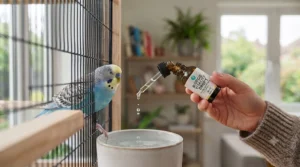
Seed-Only Diet Deficiency: What Vitamin Drops Can and Can’t Fix
The phrase “seed-only diet deficiency” gets thrown around a lot in bird-keeping circles, and it’s worth being precise about what it actually means before assuming a bottle of drops solves it outright.
Commercial seed mixes are calorie-dense but genuinely poor sources of several nutrients budgies need daily: vitamin A, calcium relative to phosphorus, and several B-vitamins in particular. This isn’t a fringe concern — vitamin A deficiency linked to seed-heavy diets is consistently flagged by avian health resources as one of the most common preventable issues seen in pet birds, showing up as poor feather quality, reduced resistance to infection, and dull plumage over time. A budgie that selectively picks its favourite seed types, commonly millet, tends to be even worse off, since it’s narrowing an already imbalanced diet down further.
Here’s the honest limitation: vitamin drops are a supplement, not a substitute for actually diversifying the diet. Based on the comparative reasoning used throughout this guide, the most effective approach pairs a vitamin drop — whichever of the seven above suits your bird’s habits — with a genuine effort to introduce fresh vegetables, leafy greens, and ideally a pellet-based food that reduces reliance on seed altogether. Drops fill gaps efficiently and cheaply; they don’t compensate for a bird that’s still eating 90% seed and nothing else.
| Approach | Addresses Seed-Only Deficiency? | Cost | Effort |
|---|---|---|---|
| Vitamin drops alone | Partially — fills specific gaps | Low | Very low |
| Fresh veg/greens added daily | Significantly, especially vitamin A | Low | Moderate |
| Pellet-based diet transition | Most comprehensively | Moderate | Higher (gradual transition needed) |
| Vitamin drops + fresh veg | Best realistic combination | Low-moderate | Moderate |
Reading the table, the clear takeaway is that vitamin drops sit at the “cheap and easy but partial” end of the spectrum, which is exactly why they’re best treated as one piece of a wider dietary fix rather than a silver bullet on their own.
Common Mistakes When Buying Budgie Vitamin Drops
The single biggest mistake is buying the largest bottle available on the assumption that bigger automatically means better value. As the specification table earlier in this guide shows, a 500ml Johnson’s Cage Bird Vitamin Tonic used two to three times weekly for one budgie could realistically outlast its shelf life before it’s finished — at which point the “value” evaporates entirely.
A second common error is choosing purely on price without checking the vitamin A content, since this is the nutrient doing most of the heavy lifting against a seed-heavy diet. Cheaper doesn’t always mean lower quality here, but it’s worth glancing at the composition rather than assuming all multivitamin drops are interchangeable.
Owners also frequently underestimate dosing frequency requirements when comparing products. A tonic dosed a few times weekly looks deceptively similar to a daily drop on the shelf, but the actual vitamin delivery over a month can differ meaningfully — something the earlier comparison table makes easier to spot than reading individual product descriptions in isolation.
Finally, a genuinely underrated mistake is buying a specialist product like Vetark Zolcal-F Liquid Calcium & Vitamin D3 expecting it to function as a complete multivitamin. It’s an excellent, targeted product for the right situation, but using it as your only supplement leaves broader vitamin gaps unaddressed.
Long-Term Cost & Affordable Bird Vitamins: Are Cheap Bottles Actually False Economy?
When people search for affordable bird vitamins, the instinct is usually to look at the lowest sticker price on the shelf — but that’s rarely the number that matters most over a full year of ownership.
Take Johnson’s Veterinary Cage Bird Tonic (15ml) at under £4 against Johnson’s Cage Bird Vitamin Tonic (500ml) at roughly £6-£9. On paper the smaller bottle looks like the budget pick, but scaled up to a year of regular use, the cost-per-dose on the 500ml bottle comes out significantly lower, simply because you’re not repeatedly paying for the packaging, dropper, and smaller production run that a trial-size bottle carries. The same logic applies to Vetark BSP Vitamin Drops, where the 100ml bottle at around £12 works out cheaper per millilitre than buying the 50ml bottle twice.
| Product | Approx. Cost Per Bottle | Realistic Duration (single budgie) | Rough Cost-Per-Month |
|---|---|---|---|
| Johnson’s Veterinary Cage Bird Tonic (15ml) | Under £4 | 3-4 weeks daily use | Higher per month |
| Beaphar Multi-Vit for Parrots & Parakeets (20ml) | Under £6 | 6-8 weeks | Moderate |
| Johnson’s Vit-Min Drops for Cage Birds (100ml) | Under £8 | Several months | Lower |
| Vetark BSP Vitamin Drops (100ml) | Around £12 | Several months, daily water use | Lower |
| Johnson’s Cage Bird Vitamin Tonic (500ml) | £6-£9 | Close to a year (2-3x weekly) | Lowest |
Interpreting the numbers above, the real “affordable” pick for anyone committed to long-term supplementation is almost always the larger bottle in a format that suits your dosing habits — the smaller bottles genuinely earn their keep only as trial sizes or for households with a single, infrequently-dosed bird. True value here isn’t the lowest price tag; it’s the lowest realistic cost across the months you’ll actually be using the product.
Safety, Regulations & RSPB Budgie Care Guidance
If you’ve searched for RSPB budgie care guidance specifically, it’s worth clarifying something upfront: the RSPB’s core focus is wild bird conservation rather than pet bird husbandry, so its guidance leans toward garden birds rather than caged budgies. For dedicated pet bird welfare advice in the UK, the RSPCA is the more directly relevant charity, and its pet bird care advice covers diet, housing, and health for budgies, cockatiels, and other commonly kept species in detail.
From a legal standpoint, keeping any pet bird in the UK falls under the Animal Welfare Act 2006, which places a legal duty of care on owners to meet an animal’s needs, including diet appropriate to its species — a seed-only bowl left unchanged for years arguably falls short of that standard, given how well-documented the nutritional gaps are. None of the products covered in this guide are veterinary medicines requiring prescription; they’re classed as complementary feeds or supplements, which is why they’re sold openly rather than through a vet-only channel.
On safety specifically: multivitamin drops from reputable UK suppliers carry a wide margin of safety at recommended doses, but that doesn’t mean unlimited quantities are harmless. Fat-soluble vitamins, notably A and D3, can accumulate in the body if consistently over-dosed over long periods, which is precisely why a targeted product like Vetark Zolcal-F Liquid Calcium & Vitamin D3 should be used as directed rather than “more is better” logic. According to the Budgerigar species profile on Wikipedia, budgies are highly adaptable birds native to the semi-arid interior of Australia, evolved to survive on nutritionally sparse grass seed — which is a useful reminder that even “just seed” in the wild is a far more varied diet than a single bag from a UK pet shop.
For deeper species-specific husbandry information beyond diet, the Royal Veterinary College’s budgerigar care factsheet is a genuinely useful, vet-authored resource covering housing, handling, and general health alongside nutrition.
✨ Don’t Miss These Exclusive Deals!
🔍 Take your budgie’s daily care to the next level with these carefully selected vitamin drops. Click on any highlighted product above to check current pricing and availability. A few drops a day is a small habit that pays off in genuinely healthier feathers, energy, and resistance to illness for your feathered friend! 🦜💧
FAQ
❓ Do budgies actually need vitamin drops if they eat seed and millet?
❓ How often should I give my budgie vitamin drops?
❓ Can I put budgie vitamin drops directly in tap water?
❓ What's the difference between budgie vitamin drops and calcium supplements?
❓ Can too many vitamin drops harm my budgie?
Conclusion
Choosing between budgie vitamin drops under £15 ultimately comes down to matching the format to your specific bird rather than chasing the single “best” bottle on paper. If you’re brand new to supplementing, starting small with Johnson’s Veterinary Cage Bird Tonic (15ml) or Beaphar Multi-Vit for Parrots & Parakeets (20ml) removes the financial risk of discovering your budgie dislikes a particular taste or smell. Multi-bird households genuinely save money over a year by stepping up to Johnson’s Cage Bird Vitamin Tonic (500ml) or Vetark BSP Vitamin Drops (100ml), while anyone dealing with a breeding pair or an egg-laying hen should look specifically at Vetark Zolcal-F Liquid Calcium & Vitamin D3 as a targeted add-on rather than a standalone fix.
None of these seven products is a magic cure for a poor diet on its own — but paired with fresh vegetables, a gradual shift toward pellets, and a bit of patience during the first week of introducing any new supplement, they’re a genuinely affordable way to close the nutritional gaps that a seed-only bowl leaves behind. Budgies can’t tell you when something’s missing from their diet until the symptoms are already visible, which is exactly why a few pence a day spent on the right drops is one of the easiest wins available to a budget-conscious owner.
Recommended for You
- Eco Friendly Bird Toys UK: 7 Safe Picks Tested for 2026
- 7 Best Acrylic Bird Toys UK 2026: Clear, Durable & Safe Picks
- Bird Rope Toys: 7 Best Safe Picks for Parrots in 2026
Disclaimer: This article contains affiliate links. As an Amazon Associate, I earn from qualifying purchases. If you purchase products through these links, we may earn a small commission at no additional cost to you.
✨ Found this helpful? Share it with your friends! 💬🤗
