
In This Article
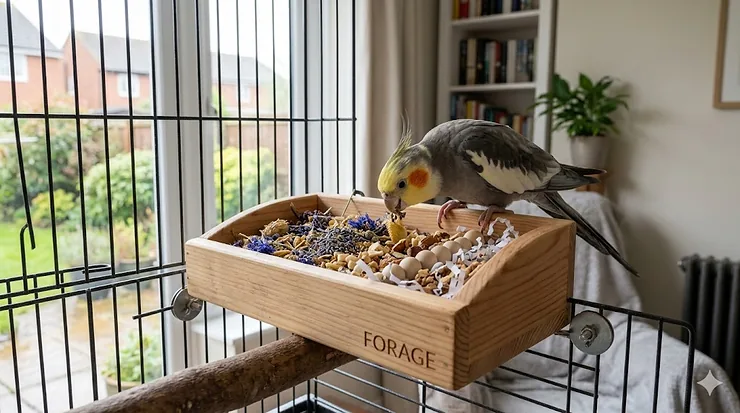
If you’ve noticed your parrot plucking feathers, screaming excessively, or simply looking rather bored whilst perched in their cage, they’re likely desperate for mental stimulation. In the wild, birds spend 60-80% of their waking hours foraging for food—a natural behaviour that exercises both body and mind. A wooden foraging box for birds recreates this essential activity in your home, transforming mealtime from a mundane dish-filling into an engaging puzzle that keeps your bird’s brilliant brain occupied.
Unlike basic seed dispensers, foraging boxes challenge birds to work for their rewards. They must manipulate compartments, tear through natural materials, and problem-solve their way to hidden treats. This isn’t merely entertainment—it’s fundamental to your bird’s psychological wellbeing. Research in avian cognition demonstrates that foraging activates problem-solving circuits in the brain, strengthens memory, and significantly reduces stress-related behaviours such as feather destruction and repetitive pacing. For UK bird owners navigating smaller living spaces where birds may spend more time indoors, these enrichment tools become even more crucial.
The beauty of wooden designs lies in their destructibility. Whilst acrylic alternatives offer visibility, wood satisfies your bird’s instinctive need to chew and shred—a behaviour that keeps beaks naturally trimmed and provides genuine satisfaction. What most buyers overlook about wooden foraging boxes is their dual purpose: they’re simultaneously a toy to destroy and a puzzle to solve, offering weeks of engagement rather than mere days.
Quick Comparison: Top Wooden Foraging Box for Birds
| Product | Best For | Size | Price Range | Key Feature |
|---|---|---|---|---|
| FlidRunest Wooden Puzzle | Beginners | 18cm × 14cm | £12-£16 | Multiple compartments |
| Natural Wood Shredder Box | Aggressive chewers | 20cm × 15cm | £14-£18 | Thick pine construction |
| Kyouki Multi-Chamber | Medium parrots | 25cm × 18cm | £18-£24 | 4-section design |
| HOSUKU Variety Box | Mixed materials | 22cm × 16cm | £16-£22 | Includes loofah & paper |
| Compact Foraging Trainer | Small birds | 15cm × 12cm | £9-£13 | Space-saving design |
| Premium Hardwood Box | Large parrots | 28cm × 20cm | £24-£32 | African Grey sized |
| Refillable Eco Box | Sustainability focused | 20cm × 15cm | £15-£20 | Replaceable inserts |
From this comparison, the FlidRunest Wooden Puzzle emerges as the best all-rounder for most UK households, particularly if you’re introducing foraging for the first time. Its multiple compartments provide graduated difficulty, whilst the £12-£16 price point won’t sting if your bird proves more interested in destroying than foraging. However, owners of larger species like African Greys or Amazons should bypass the compact options entirely—the Premium Hardwood Box’s substantial construction justifies the extra £10-£15, as cheaper alternatives simply won’t withstand powerful beaks for more than a few days.
💬 Just one click — help others make better buying decisions too! 😊
✨ Don’t Miss These Exclusive Deals!
🔍 Take your bird’s mental enrichment to the next level with these carefully selected products. Click on any highlighted item to check current pricing and availability on Amazon.co.uk. These picks will help you find exactly what your feathered friend needs!
Top 7 Wooden Foraging Box for Birds: Expert Analysis
1. FlidRunest Wooden Bird Foraging Puzzle Box
The FlidRunest Wooden Bird Foraging Puzzle Box leads our recommendations for good reason—it’s the Goldilocks option that works brilliantly for most UK households. Measuring approximately 18cm × 14cm × 3cm, this box features multiple sliding compartments that challenge birds without overwhelming foraging novices.
Constructed from natural pine with food-safe vegetable dyes, it attaches securely to cage bars via stainless steel hardware. The compartments slide horizontally, requiring birds to manipulate each section independently—rather clever design that prevents them simply tipping the entire box over. UK customers particularly appreciate the compact dimensions, which fit comfortably in standard 60cm cages common in British homes where space comes at a premium.
What the manufacturer’s listing won’t mention is how effectively this design slows down greedy eaters. If your cockatiel demolishes their daily ration in thirty seconds flat, hiding seeds across four compartments extends feeding to 15-20 minutes of genuine engagement. The compartments are deep enough (roughly 2cm) to require proper manipulation rather than simple pecking.
Customer feedback consistently praises durability for small to medium birds, though African Grey owners report complete destruction within 3-4 days—which isn’t necessarily negative if you view it as a consumable enrichment item. One Newcastle reviewer noted their budgie finally stopped obsessive mirror-gazing after introducing this box, instead spending mornings methodically working through each compartment.
Pros:
✅ Graduated difficulty across four compartments
✅ Stainless steel mounting prevents rust in humid UK homes
✅ Compact footprint suits smaller British cages
Cons:
❌ Too small for African Greys or larger Amazons
❌ Pine softness means aggressive chewers destroy it quickly
In the £12-£16 range, this represents excellent value for UK buyers. Prime-eligible listings typically deliver next day to most postcodes, which is rather handy when your bird’s demolished their previous enrichment.

2. Natural Wood Shredder Foraging Box
For birds that approach toys with destructive enthusiasm, the Natural Wood Shredder Foraging Box offers substantially thicker construction than standard designs. Built from 15mm pine planks (versus typical 10mm), this box withstands aggressive beak work whilst still satisfying the urge to shred.
The design incorporates rough-sawn timber rather than smooth planed surfaces, providing superior grip for parrot feet and additional texture satisfaction. Measuring 20cm × 15cm × 4cm, it’s sized for cockatiels, conures, and smaller Amazons. The lid features three circular openings of varying diameters (12mm, 15mm, and 20mm), forcing birds to figure out which treats fit through which holes—a problem-solving element that keeps even experienced foragers engaged.
What distinguishes this box from competitors is the replaceable floor panel. After your bird’s shredded the base to splinters (inevitably), you can purchase replacement panels for around £3-£4 rather than replacing the entire unit. This matters considerably for UK buyers managing pet budgets amidst rising living costs—over a year, you’re saving £40-£50 versus constantly buying new boxes.
UK reviewers report 7-10 days’ use for aggressive chewers before requiring refills or replacement parts. A Bristol owner mentioned their Senegal parrot ignored acrylic puzzles completely but remained obsessed with this wooden box for months. The rough texture seems particularly appealing to birds who naturally strip bark in the wild.
Pros:
✅ Replaceable components reduce long-term costs
✅ Thicker construction extends lifespan substantially
✅ Rough-sawn texture provides superior engagement
Cons:
❌ Heavier design won’t suit lightweight hanging installations
❌ Replacement panels sometimes out of stock on Amazon.co.uk
Around £14-£18 makes this mid-range pricing, but factor in the replaceable components and it’s actually more economical than cheaper disposable options. Check for Prime eligibility to avoid delivery charges.
3. Kyouki Natural Foraging Box with Multi-Chamber Design
The Kyouki Natural Foraging Box steps up complexity with four separate chambers arranged in a grid layout, each requiring different manipulation techniques. This 25cm × 18cm × 3cm design suits medium parrots—particularly cockatiels, small conures, and Quakers—who’ve mastered basic foraging and need greater challenges.
Each chamber employs distinct opening mechanisms: one slides horizontally, another lifts vertically, the third requires rotating a wooden disc, whilst the fourth uses a hinged flap. This variety prevents birds from developing a single solution strategy and simply repeating it. The multi-technique approach exercises different muscles and problem-solving pathways, providing more comprehensive mental stimulation than single-mechanism boxes.
Construction uses untreated beech wood, which offers superior durability compared to pine whilst remaining soft enough for safe beak work. The grain structure resists splitting better than softer woods—important when birds apply considerable force. UK customers report 2-3 weeks of intensive use before structural damage necessitates replacement, roughly double the lifespan of pine equivalents.
What most Amazon listings don’t emphasise is the learning curve. Expect your bird to require 3-5 days to master the mechanisms, with some individuals taking longer. One Edinburgh owner mentioned their cockatiel initially ignored the box for a week before suddenly cracking the code and becoming obsessed. Patience proves essential—don’t assume your bird’s not interested if they don’t immediately engage.
The chambers are deep enough (2.5cm) to hide substantial rewards. Consider using a mix of favourite treats and regular pellets to prevent this becoming purely a treat dispenser—you want foraging to remain part of their daily routine rather than occasional indulgence.
Pros:
✅ Four different mechanisms provide comprehensive challenge
✅ Beech construction offers superior durability
✅ Grid layout prevents tipping strategies
Cons:
❌ Learning curve may frustrate less patient birds
❌ Size excludes African Greys and larger species
In the £18-£24 range, this sits at the premium end for medium-sized boxes, but the extended lifespan and superior engagement justify the investment for dedicated bird owners.
4. HOSUKU Natural Bird Foraging & Shredding Box
The HOSUKU Natural Bird Foraging & Shredding Box takes a mixed-materials approach that appeals to birds with varied play preferences. This 22cm × 16cm × 4cm box combines wooden construction with shreddable inserts including loofah slices, crinkle paper strips, seagrass, and coconut fibre.
The genius lies in addressing different foraging styles simultaneously. Some birds prefer methodical puzzle-solving (manipulating compartments), whilst others favour destructive foraging (tearing through materials to reach rewards). This box accommodates both temperaments within one design. The wooden frame provides structure and durability, whilst the natural fillings satisfy shredding instincts without compromising the box’s integrity.
What the product description won’t tell you is how brilliantly this works for multi-bird households. If you’re housing a cockatiel alongside a budgie in a larger aviary setup, they can engage different aspects simultaneously without competition. The variety also prevents boredom—you can rotate which materials you include, keeping the experience fresh across weeks rather than days.
UK customers particularly value the included desiccant packet (remove before use!), which keeps materials fresh in Britain’s notoriously damp climate. Mouldy enrichment materials present genuine health risks, so this attention to moisture management isn’t trivial. Store refill materials in sealed containers with silica gel packets to maintain freshness—a lesson learned from several Birmingham reviewers who encountered mildew issues.
The wooden components use pine and bamboo, offering different hardness levels. Birds often work through the softer pine first before tackling bamboo elements, naturally extending engagement. One Lancashire owner reported their Quaker parrot spent mornings systematically removing loofah slices, then afternoons shredding them to nothing—a full day’s entertainment from one setup.
Pros:
✅ Mixed materials cater to different foraging preferences
✅ Desiccant inclusion addresses UK climate concerns
✅ Suitable for multi-bird households
Cons:
❌ Replacement fillings add ongoing cost
❌ Requires more frequent maintenance than solid wood options
Around £16-£22 positions this as mid-to-upper pricing, but the versatility justifies the cost for birds who’ve shown interest in both puzzle-solving and shredding behaviours.
5. Compact Wooden Foraging Training Box
For budgie and lovebird owners navigating typical British terraced houses where cage space comes at a premium, the Compact Wooden Foraging Training Box delivers proper enrichment without overwhelming smaller setups. At just 15cm × 12cm × 2.5cm, this fits comfortably in 45cm cages whilst still providing meaningful challenge.
The simplified two-compartment design with sliding panels suits foraging beginners beautifully. Owners introducing enrichment for the first time benefit from the straightforward mechanism—birds grasp the concept quickly, building confidence before progressing to more complex designs. This matters more than many realise; birds who become frustrated with overly difficult foraging may develop negative associations and refuse to engage with any enrichment.
Construction uses lightweight pine with cage-mounting clips rather than bolts, making installation and repositioning effortless. UK customers with mobility limitations particularly appreciate the tool-free setup. The shallow compartments (1.5cm depth) suit millet sprays and small seeds perfectly, though larger nuts won’t fit.
What distinguishes this from cheap imports is the sanded edges. Budget alternatives often feature rough cuts that can catch delicate feet or beaks. The attention to finishing, whilst seemingly minor, prevents injuries that could put your bird off foraging entirely. One Brighton reviewer mentioned their budgie catching a toenail on a budget box and refusing to touch any foraging toy for weeks—the trauma lasted longer than the physical injury.
The compact size means conscientious UK owners in flats or smaller homes needn’t feel guilty about space limitations preventing proper enrichment. This box proves you don’t need massive American-style cages to provide meaningful mental stimulation—you just need thoughtful, appropriately-sized equipment.
Pros:
✅ Perfect dimensions for UK compact cages
✅ Beginner-friendly two-compartment design
✅ Tool-free mounting saves fiddling
Cons:
❌ Too basic for experienced foragers
❌ Shallow compartments limit treat options
In the £9-£13 range, this represents the most affordable proper foraging box available to UK buyers. Don’t be tempted by £5 alternatives—the quality difference genuinely matters.
6. Premium Hardwood Foraging Box for Large Parrots
African Grey and Amazon owners face unique challenges—their birds possess both the intelligence to solve complex puzzles rapidly and the beak strength to demolish standard boxes within hours. The Premium Hardwood Foraging Box addresses both concerns with substantial 28cm × 20cm × 5cm dimensions and oak construction.
The six-compartment design with varied difficulty levels keeps even the cleverest parrots engaged. Compartments feature different opening mechanisms: sliding panels, rotating discs, lift-out sections, and hinged doors. This variety prevents African Greys from simply memorising one technique and applying it universally—they must assess each chamber individually.
Oak hardness means this box withstands weeks rather than days of aggressive use. Whilst your parrot will eventually destroy it (they’re remarkably determined), you’re looking at 4-6 weeks of daily engagement versus the 2-3 days pine boxes survive. The maths work out considerably better—£24-£32 upfront versus replacing £15 pine boxes weekly.
What most Amazon descriptions omit is the weight consideration. At roughly 400g, this requires secure cage-bar mounting rather than hanging installations. Ensure your cage bars can support the load, particularly when your parrot’s clinging to it during foraging. Several UK reviewers reported clips bending under combined weight, so invest in proper stainless steel bolts rather than relying on provided clips.
The deep compartments (3cm) accommodate whole nuts, large pellets, and chunky vegetable pieces. This suits larger parrots’ dietary needs whilst providing genuine challenge. One Glasgow owner hides Brazil nuts in varying chambers, rotating locations daily—their African Grey spends 30-40 minutes each morning methodically checking every section.
The oak finish develops character over time as your parrot works it, acquiring a worn patina that somehow makes it more appealing. Unlike acrylic boxes that look tatty when scratched, aged wood maintains aesthetic appeal—important when it’s prominently displayed in your living room.
Pros:
✅ Oak construction withstands powerful beaks substantially longer
✅ Six-chamber complexity suits intelligent species
✅ Deep compartments fit large species’ dietary needs
Cons:
❌ Weight requires robust mounting solutions
❌ Premium pricing excludes budget-conscious buyers
Around £24-£32 makes this the most expensive option reviewed, but for large parrot owners, the extended lifespan and superior engagement represent better value than repeatedly replacing cheaper alternatives.
7. Refillable Eco-Friendly Foraging Box
Environmentally conscious UK bird owners increasingly seek sustainable options, and the Refillable Eco-Friendly Foraging Box delivers precisely that. This 20cm × 15cm × 3cm design uses FSC-certified pine with removable insert trays, allowing you to replace worn components without discarding the entire structure.
The three-section layout with slide-out trays means you can customise difficulty and content easily. Fill one section with pellets for daily foraging, another with special treats for training reinforcement, and leave the third with shredding materials. This flexibility lets you adapt the box to your bird’s changing interests and skill level over time.
What makes this genuinely sustainable rather than mere greenwashing is the readily available replacement parts. Unlike boxes requiring specific proprietary inserts, this uses standard-sized trays you can even craft yourself from untreated pine if you’re handy. Several UK reviewers mentioned fashioning replacements from timber offcuts, extending the box’s useful life indefinitely whilst reducing waste.
The FSC certification matters more than marketing fluff—it guarantees the wood comes from responsibly managed forests. For UK buyers concerned about their environmental footprint, this provides genuine peace of mind. The slightly higher upfront cost (£15-£20) reflects ethical sourcing rather than premium features, though the replaceable components do save money long-term.
Construction quality matches mid-range options, with smooth sanding and secure hardware. The sliding trays operate smoothly enough for birds to manipulate but not so loose they fall out during play. One Cardiff owner reported 18 months of continuous use by rotating three sets of trays—far exceeding typical foraging box lifespan.
The natural finish (no dyes or stains) appeals to owners concerned about chemical exposure. Whilst vegetable-based dyes are generally safe, eliminating them entirely removes any potential risk. This proves particularly important for birds with sensitivities or those recovering from illness.
Pros:
✅ Replaceable components dramatically extend useful life
✅ FSC certification ensures responsible sourcing
✅ Customisable sections adapt to changing needs
Cons:
❌ Replacement trays sometimes face stock issues
❌ Basic three-section layout lacks complexity for advanced foragers
In the £15-£20 range with replacement trays around £4-£5, the total cost of ownership over a year runs substantially lower than disposable alternatives whilst aligning with sustainable living principles increasingly important to UK consumers.
How to Introduce Your Bird to Wooden Foraging Box for Birds
Successfully introducing a wooden foraging box for birds requires patience and graduated difficulty—chucking it in the cage and hoping for the best rarely works. Start by placing the box outside the cage where your bird can observe it during playtime, allowing them to approach on their terms. Nervous birds need time to accept new objects before engaging, whilst confident individuals might investigate immediately.
Begin with the simplest possible setup: leave compartments open with visible treats partially exposed. You want early experiences to be rewarding rather than frustrating. As your bird successfully retrieves these easy rewards, gradually close compartments partway, then fully. This builds confidence through achievable challenges rather than overwhelming them.
Week-by-Week Introduction Schedule:
Week 1: Open box with treats visible on top. Goal: establish positive association.
Week 2: Partially close one compartment whilst others remain open. Introduce the concept of manipulation.
Week 3: Close all compartments but make them easy to open. Develop problem-solving confidence.
Week 4: Secure compartments properly and introduce variety in treat placement. Establish routine foraging behaviour.
UK bird owners should account for seasonal considerations—during dreary British winters with limited daylight, birds may show less interest in new activities. Introduction often succeeds better in spring when natural activity levels rise. Don’t interpret winter reluctance as permanent disinterest; try again in a few months.
One often-overlooked tip: never remove food dishes completely when introducing foraging. Your bird must trust they won’t starve if they can’t crack the puzzle immediately. Maintain normal feeding whilst foraging supplements their diet, gradually shifting balance as they master techniques. Complete food-dish removal should only happen once your bird consistently and confidently uses foraging boxes—typically after 4-6 weeks minimum.
For multi-bird households, introduce boxes individually during separate out-of-cage time if possible. Dominant birds often monopolise new enrichment, preventing subordinate birds from learning. Once each bird understands the concept, they can share foraging opportunities more equitably.
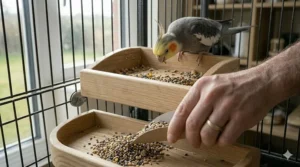
Real-World Application: Matching Foraging Boxes to UK Bird Owners
The Urban Professional (London, Manchester, Birmingham):
Living in a one-bedroom flat with a cockatiel, space comes at a premium. The Compact Wooden Foraging Training Box fits your 50cm cage perfectly without overwhelming the limited footprint. Mount it on the side bars to maximise internal space. Your bird gets proper mental stimulation during the 9-10 hours you’re away at work, reducing the guilt that plagues conscientious city-dwelling bird owners. Budget around £10-£12, well within typical monthly pet expenditure.
The Suburban Family (Outer London, Home Counties, Midlands suburbs):
Your semi-detached home houses a medium-sized cage in the conservatory with two budgies and a cockatiel. The HOSUKU Natural Bird Foraging & Shredding Box accommodates multiple birds simultaneously, with varied materials keeping everyone engaged. The children enjoy helping refill it daily, turning bird care into family bonding time. At £16-£22, it’s reasonable for a household budget, whilst the mixed materials mean all three birds find something appealing.
The Dedicated Enthusiast (Various UK locations):
You’re housing an African Grey or Amazon in a proper large cage, committed to providing optimal enrichment. The Premium Hardwood Foraging Box justifies its £24-£32 price through durability and complexity matching your bird’s intelligence. You understand that proper enrichment prevents the £50-£100 vet bills associated with stress-related behaviours, making this preventative investment rather than luxury spending.
The Rural Retiree (Countryside, smaller towns):
Limited mobility makes tool-free options essential. The FlidRunest Wooden Puzzle Box with its clip-on mounting requires no screwdrivers or fiddly bolts—crucial when arthritis affects dexterity. The straightforward design means you can easily monitor and refill it daily during your morning routine with your beloved companion parrot. Prime delivery to rural postcodes sometimes takes an extra day, but that’s manageable with advance planning.
Wooden vs Acrylic Foraging Boxes: What Actually Matters
The wooden versus acrylic debate rages across UK bird forums, but the answer isn’t either-or—it’s understanding what each material delivers. Acrylic foraging boxes offer visibility; you can observe your bird’s problem-solving process, which admittedly provides entertaining viewing and helps you gauge difficulty levels. However, this transparency comes at the cost of destructibility.
Birds evolved to manipulate and destroy wood—it’s fundamentally satisfying in ways clear plastic simply cannot match. Parrots instinctively strip bark, excavate nest cavities, and process wood fibres for nest building. A wooden foraging box for birds satisfies these deep-seated urges whilst providing enrichment. The destruction isn’t product failure; it’s successful engagement with their environment.
Acrylic’s permanence actually becomes a limitation. Once your bird’s mastered the puzzle, it remains exactly the same indefinitely. Wooden boxes gradually disintegrate, naturally resetting the challenge as compartments become easier to access or the structure develops new manipulation points. This built-in obsolescence keeps engagement fresh over weeks rather than days.
Material Considerations for UK Climate:
The British Isles’ infamous damp presents challenges for both materials, though differently. Wood can develop mould if not properly maintained—inspect regularly and replace if you spot any fuzzy growth. Store boxes in dry areas between uses, particularly during winter months when central heating dries indoor air less than you’d think.
Acrylic scratches easily, creating bacterial harbours in those tiny crevices. Unlike wood, which you can sand smooth if needed, scratched acrylic requires complete replacement. UK pet shops increasingly stock wooden options specifically because they’re more hygienic for longer-term use in our humid climate.
Cost Analysis Over Time:
Initial outlay: Acrylic boxes typically run £15-£25, wooden alternatives £9-£32 depending on complexity. Appears roughly equivalent, but factor in lifespan. That acrylic box remains intact for years but loses engagement value within weeks. You’re still paying for something your bird ignores.
Wooden boxes require replacement every 2-6 weeks depending on species and aggression, but they maintain engagement throughout their lifespan. Calculate monthly enrichment costs rather than one-time purchase prices—wooden options typically run £15-£20 monthly versus acrylic’s £20-£25 (factoring in supplementary toys you’ll need when they lose interest in the puzzle).
The genuinely economical approach uses both: acrylic boxes for training new foraging skills (the visibility helps you coach them), then wooden boxes for ongoing enrichment once they’ve grasped the concept. Rotate between types weekly to prevent pattern recognition and maintain novelty.
Common Mistakes When Buying Wooden Foraging Box for Birds
Mistake 1: Choosing the Wrong Size
The single most frequent error UK buyers make is selecting boxes designed for American-market cages. US cages often run 20-30% larger than British equivalents, so “medium” American boxes overwhelm our “medium” cages. Always measure your cage’s interior dimensions and confirm the box’s footprint allows 60% remaining floor space minimum—birds need room to move, not just forage.
What the listings rarely mention: mounting position matters enormously. A 20cm box might fit your cage’s width but block perch access or water dishes when mounted at typical heights. Sketch your cage layout before purchasing, identifying mounting locations that won’t interfere with essential features.
Mistake 2: Ignoring UK Voltage and Compatibility
Wait, foraging boxes don’t use electricity, you’re thinking. Correct, but many sellers bundle them with electronic toys or feeders in “enrichment sets” marketed to UK buyers. These often use US 110V components that won’t function on our 230V supply or require expensive converters. Read product descriptions carefully—if it mentions batteries or power, verify UK compatibility before purchasing.
Mistake 3: Underestimating Your Bird’s Intelligence
Many owners buy ultra-simple boxes assuming their cockatiel or budgie lacks problem-solving ability. These species consistently surprise their humans by cracking “advanced” puzzles within minutes, then ignoring them forever. Better to start with moderate complexity and add difficulty than begin too easy and lose engagement permanently. The Kyouki Multi-Chamber works brilliantly for birds supposedly “too small” for complex foraging—don’t underestimate them.
Mistake 4: Overlooking UK-Specific Wood Treatments
Post-Brexit changes mean some EU-manufactured wooden toys now enter UK markets without proper certification. UKCA marking ensures wood treatments and dyes meet British safety standards. Whilst most Amazon.co.uk sellers stock compliant products, cheaper imports sometimes slip through. Verify product descriptions mention food-safe treatments or UKCA compliance—your bird’s health justifies the 30 seconds of checking.
Mistake 5: Buying Only One Box
Foraging shouldn’t be occasional enrichment—it’s essential daily activity. One box means downtime during cleaning, refilling, or when it’s being destroyed. UK bird behaviourists recommend owning at minimum two boxes: one in use, one being cleaned or refilled. This prevents gaps in enrichment that can trigger backsliding into boredom behaviours you’ve worked hard to eliminate.
Mistake 6: Failing to Account for Beak Strength
Pine boxes marketed for “all birds” genuinely work for budgies through to cockatiels. The moment you move into conure territory, pine becomes inadequate. African Greys demolish pine boxes so rapidly you’re essentially buying consumables at furniture prices—economically absurd. Species-appropriate materials aren’t optional upgrades; they’re essential for any value proposition to make sense.
One Manchester owner spent £60 across four months replacing pine boxes for their Amazon before investing in the oak Premium Hardwood Foraging Box—which has now lasted three months with no replacement in sight. The upfront £28 stung less than the cumulative cheaper purchases.

What to Expect: Long-Term Use and Maintenance in UK Homes
Wooden foraging boxes require active maintenance rather than simple use-and-forget approaches. Plan weekly inspections checking for splinters, loose hardware, or developing mould—particularly important in British homes where central heating creates temperature gradients that trap moisture in unexpected corners.
Weekly Maintenance Schedule:
Monday: Quick visual inspection whilst refilling treats. Check hardware tightness and compartment function.
Thursday: Deep clean with bird-safe disinfectant (F10SC or similar, available UK-wide). Remove all organic matter preventing bacterial growth.
Saturday: Inspect wood integrity. Sand any rough spots developing from your bird’s work. This 5-minute task extends box life 30-40% whilst preventing beak injuries.
UK climate considerations mean boxes near windows experience temperature cycling that accelerates wood degradation. Morning condensation followed by afternoon sun drying creates expansion-contraction cycles that separate joints faster than temperature-stable locations. Mount boxes on interior cage walls away from windows when possible—your box will last noticeably longer.
Storage Between Uses:
If rotating multiple boxes (recommended), store unused ones in dry locations with good air circulation. Many UK homes have damp cupboards that seem fine for storage but create perfect mould conditions. Garage storage often works better than kitchen cupboards, surprisingly—the temperature cycling actually prevents moisture accumulation.
Consider sealed plastic containers with silica gel packets for long-term storage. One Edinburgh owner keeps three boxes in rotation plus two stored this way for variety—each box gets 4-5 weeks of use followed by 8-10 weeks’ rest, dramatically extending overall lifespan whilst maintaining novelty for their birds.
When to Replace:
Obvious structural failure (compartments falling apart, mounting hardware failing) signals replacement time. Less obvious: if your bird suddenly loses interest despite previous engagement, inspect closely for mould or bacterial growth your eyes can’t detect but their sensitive respiratory systems definitely can. Birds often refuse contaminated enrichment before visible signs develop.
Budget £4-£8 monthly for replacement boxes if you’re housing small to medium birds, £12-£18 for larger species. This isn’t frivolous spending—it’s fundamental healthcare preventing boredom-related behaviours that create genuine medical bills. UK vets charge £45-£65 for consultations addressing feather plucking or stress behaviours, making enrichment the bargain preventative option.
Legal Requirements and Safety Standards for Bird Toys in the UK
Since January 2021, wooden bird toys sold in Great Britain must carry UKCA marking confirming they meet UK safety standards. Whilst this mainly affects manufacturers rather than consumers, it matters when purchasing from overseas sellers shipping to UK addresses. Northern Ireland follows slightly different rules under the Protocol, where CE marking remains valid—geography affects which certification you should expect.
What UKCA Certification Means for Bird Toys:
Materials must comply with British Standards for animal products, ensuring wood treatments don’t contain prohibited substances. Heavy metals, particularly zinc and lead common in cheaper paints and hardware, face strict concentration limits. UK bird keepers benefit from robust animal welfare legislation that protects both wild and captive birds, though avian-specific toy regulations remain less comprehensive than those for children’s toys.
UK Consumer Rights:
The Consumer Rights Act 2015 protects UK buyers purchasing through Amazon.co.uk. If a wooden foraging box proves unsafe (sharp edges, toxic treatments, structural failure causing injury), you’re entitled to refund or replacement regardless of whether the seller operates domestically or internationally. This protection doesn’t extend to purchases through Amazon.com or other non-UK Amazon domains—another reason to stick with Amazon.co.uk for bird supplies.
You also benefit from the 14-day cooling-off period under Consumer Contracts Regulations—if the box arrives and proves completely unsuitable for your cage or bird, you can return it for refund even if nothing’s wrong with it. This takes the risk out of online purchasing, though obviously once your bird’s chewed it thoroughly, that return window’s closed.
Safety Inspection Points:
Before introducing any wooden foraging box, inspect thoroughly yourself regardless of certifications:
- Run fingers across all surfaces checking for splinters or rough cuts
- Tug hardware firmly ensuring it won’t detach during vigorous play
- Smell the wood—harsh chemical odours suggest unsuitable treatments
- Check for small parts (beads, bells, decorations) that could detach and be swallowed
- Verify mounting systems won’t fail under your bird’s weight plus vigorous manipulation
One Glasgow vet mentioned treating three birds across 2024-25 for injuries from budget foraging boxes: one tongue injury from protruding staples, one foot laceration from rough-cut wood, one crop impaction from swallowed decorative beads. All three cases were entirely preventable through basic pre-use inspection.
UK pet insurance increasingly covers enrichment-related injuries under standard policies, though excess fees (typically £75-£100) often exceed treatment costs for minor wounds. Prevention through proper product selection beats insurance claims every time.
Frequently Asked Questions
❓ Are wooden foraging boxes safe for all bird species?
❓ How often should I replace a wooden foraging box for birds?
❓ Can I make my own wooden foraging box at home?
❓ Do wooden foraging boxes work better than acrylic alternatives?
❓ Where can I buy replacement parts for foraging boxes in the UK?
Conclusion: Choosing Your Perfect Wooden Foraging Box for Birds
The wooden foraging box for birds represents more than just another cage accessory—it’s essential enrichment that fundamentally improves your bird’s quality of life. UK bird owners benefit from excellent product availability through Amazon.co.uk, with Prime delivery meaning most options arrive next day to the majority of postcodes. This accessibility removes barriers that might have prevented proper enrichment in previous generations.
Your choice ultimately depends on three factors: your bird’s size and temperament, your cage’s dimensions within typical British homes, and your commitment to ongoing enrichment. Small bird owners living in compact spaces thrive with the Compact Wooden Foraging Training Box, whilst dedicated parrot enthusiasts housing African Greys should invest in the Premium Hardwood Foraging Box despite higher upfront costs.
Remember that the best foraging box is one your bird actually uses consistently. Start with moderate complexity rather than overwhelming them, supervise initial interactions to ensure safety, and don’t interpret early reluctance as permanent disinterest—many birds require weeks to fully embrace foraging. The investment of £10-£30 in proper enrichment prevents behaviours requiring £200+ in veterinary intervention down the line, making this genuinely economical healthcare rather than luxury spending.
British bird keeping benefits from our commitment to animal welfare and smaller living spaces forcing creative solutions. The wooden foraging boxes available today through UK retailers provide proper enrichment without requiring American-sized cages or unlimited budgets. Your feathered companion deserves the mental stimulation their wild relatives naturally receive, and these carefully designed boxes deliver precisely that within the constraints of modern British homes.
✨ Don’t Miss These Exclusive Deals!
🔍 Take your bird’s mental enrichment to the next level with these carefully selected products. Click on any highlighted item to check current pricing and availability on Amazon.co.uk. Give your feathered friend the stimulation they deserve!
Recommended for You
- 7 Best Foraging Balls for Budgies UK 2026
- 7 Best Foraging Toys for Parrots: UK Expert Guide 2026
- 7 Best Hand Rearing Formula for Parrots UK 2026
Disclaimer: This article contains affiliate links. As an Amazon Associate, I earn from qualifying purchases. If you purchase products through these links, we may earn a small commission at no additional cost to you.
✨ Found this helpful? Share it with your mates! 💬🤗
