In This Article
If you’ve noticed your parrot’s feathers looking rather lacklustre, or caught them sneezing more than usual, you’re not imagining things. Vitamin deficiencies in pet birds are shockingly common across Britain — and the consequences can be rather more serious than most owners realise. According to avian veterinarians, nearly 90% of bird health issues stem from inadequate nutrition, particularly vitamin shortfalls that develop slowly over months or years before symptoms become obvious.
The problem isn’t that British bird owners don’t care. It’s that most of us were told seed-only diets would suffice, when in reality sunflower seeds and peanuts are woefully deficient in vitamin A, calcium, and numerous essential nutrients. What most owners overlook about the best bird vitamins is that they’re not optional extras — they’re insurance policies against egg-binding in breeding hens, skeletal deformities in young birds, and immune system collapse in older parrots. I’ve watched far too many well-meaning owners discover vitamin deficiencies only after their African Grey develops convulsions or their budgie struggles with chronic respiratory infections.
This guide cuts through the marketing fluff to reveal which vitamin supplements actually work on British birds, which formulations suit different species (from canaries to macaws), and how to spot quality products versus overpriced placebos. We’ll examine liquid vitamins for parrots that integrate seamlessly into water bowls, calcium supplements essential for breeding birds, and multivitamins that address the unique challenges of Britain’s damp climate and shorter winter days.
Quick Comparison: Top Bird Vitamin Supplements
| Product | Type | Best For | Price Range | Key Benefit |
|---|---|---|---|---|
| Beaphar Multi-Vit | Liquid | All birds | £7–£10 | 12 vitamins, easy dosing |
| Nekton-S | Powder | Seed-eating birds | £8–£15 | 13 vitamins + amino acids |
| Calcivet | Liquid calcium | Breeding birds | £6–£12 | Chelated calcium + D3 |
| Vetafarm Multivet | Liquid | Moulting support | £18–£25 | Feather development |
| Nekton Calcium-Plus | Powder | Bone health | £9–£14 | Organic calcium + magnesium |
| Beaphar XtraVital | Complete food | Daily nutrition | £10–£14 | Echinacea + egg food |
| Vetark Nutrobal | Powder | Growth/breeding | £11–£16 | Calcium + multivitamins |
What this table won’t tell you is that the Beaphar liquid works brilliantly for finicky eaters who refuse powdered supplements, whilst Nekton-S has saved countless birds on all-seed diets from hypovitaminosis A. The Calcivet truly shines during breeding season — I’ve watched it prevent egg-binding in cockatiels whose calcium levels were dangerously low. For British conditions specifically, liquid formulations often prove more practical than powders during our damp months, as they don’t clump in humid aviaries.
💬 Just one click — help others make better buying decisions too! 😊
✨ Don’t Miss These Exclusive Deals!
🔍 Take your bird’s health to the next level with these carefully selected products. Click on any highlighted item to check current pricing and availability on Amazon.co.uk. These picks will help you find exactly what you need!
Top 7 Bird Vitamins: Expert Analysis for UK Bird Owners
1. Beaphar Multi-Vit for Birds — The All-Round Champion
Beaphar Multi-Vit stands as Britain’s most popular liquid vitamin supplement, and for rather good reason. This Dutch-manufactured formula contains 12 essential vitamins including A, B-complex, C, D3, E, and K — a comprehensive spectrum that addresses the deficiencies inherent in seed-based diets. The 20ml bottle, typically priced around £7–£10 on Amazon UK, delivers exceptional value considering each bottle treats a budgie for roughly 6–8 weeks.
What most buyers overlook about this supplement is its palatability factor. Unlike some vitamin solutions that turn water bowls into chemical-smelling deterrents, Beaphar’s sugar and oil-based formulation actually encourages drinking rather than discouraging it. The spec sheet won’t tell you this, but in British aviaries where birds might already be drinking less during cold winter months, palatability becomes crucial. I’ve watched canary breeders maintain singing performance right through December using this product, whilst African Grey owners report rapid improvements in feather quality within 2–3 weeks of consistent use.
The dosing couldn’t be simpler: 1–2 drops for small birds like canaries and finches, 3 drops for parakeets, 5 drops for larger parrots. For egg food preparation — essential during breeding season — you’ll mix 80 drops per 100g of homemade mix or just 20 drops per 100g of commercial egg food. What’s particularly clever is that it integrates with any bird food type, from sprouted seeds to fresh vegetables, giving you flexibility that powdered supplements can’t match.
UK customer reviews consistently mention its effectiveness during moult, with budgie owners noting faster, more complete feather regrowth. The vitamin A content specifically targets the respiratory tract health issues that plague British birds during our damp autumn and winter months. One limitation worth noting: African Greys and Eclectus parrots, which require higher calcium levels, will need supplementary calcium alongside this multivitamin.
Pros:
✅ Highly palatable — birds actually drink it
✅ Comprehensive 12-vitamin formula
✅ Excellent value for money (lasts 6–8 weeks for small birds)
Cons:
❌ Doesn’t provide calcium supplementation
❌ Oily consistency may not suit all birds
Price verdict: Around £7–£10 represents outstanding value, working out to roughly £1 per week for most bird owners.
2. Nekton-S Multi-Vitamin Supplement — The German Gold Standard
Nekton-S has been trusted by British zoos, bird parks, and serious breeders since the 1970s, and this German-manufactured powder remains the benchmark against which all other supplements are measured. The formulation contains 13 vitamins, 18 free-form amino acids in their natural L-configuration, plus essential minerals and trace elements — a nutritional profile that significantly exceeds what most competitors offer. Typically priced in the £8–£15 range on Amazon UK depending on size (35g, 150g, or 750g options), this represents serious value for aviaries with multiple birds.
What distinguishes Nekton-S from cheaper alternatives is its focus on bioavailability. The free-form amino acids are particularly crucial — these are the building blocks your bird’s body uses immediately without needing to break down proteins first. During moult, breeding, or recovery from illness, this direct availability can mean the difference between adequate recovery and prolonged weakness. The vitamin A content comes in at 6,600,000 IU per kilogram, which sounds excessive until you realise seed-based diets contain virtually none.
The powder format suits British conditions better than you might expect. Whilst it’s true that humid aviaries can cause clumping, the measuring spoon system (1g per 250ml water or 100g soft food) allows precise dosing that liquid supplements can’t match. I’ve watched cockatiels transition from dull, brittle plumage to vibrant feathering within a single moult cycle using this product. The transformation in breeding productivity is even more dramatic — hens lay stronger eggs, chicks grow faster, and fledging success rates improve markedly.
UK buyers should note that Nekton-S works synergistically with Nekton-E (vitamin E) during breeding season for optimal fertility results. The powder stores for years if kept dry and away from sunlight between 15–25°C, making it economical for occasional supplementation. What the label doesn’t emphasise is that it significantly increases the body’s ability to utilise all ingested nutrients — essentially making the rest of your bird’s diet more effective.
Pros:
✅ Zoo-grade formula trusted by professionals
✅ 18 free-form amino acids for immediate absorption
✅ Excellent for breeding, moulting, and recovery
Cons:
❌ Powder can clump in very humid conditions
❌ Some birds detect and avoid the altered water taste
Price verdict: The £8–£15 range offers exceptional value, particularly the 150g size which lasts 3–4 months for a small aviary.
3. Calcivet Liquid Calcium Supplement — The Breeding Essential
Calcivet represents a rather brilliant solution to one of avian nutrition’s most persistent problems: getting adequate calcium into birds whose natural diet would include calcium-rich insects and mineral sources. This Australian-developed formula uses chelated calcium technology, meaning the calcium is bound to organic molecules that slip easily through the intestinal wall — a massive improvement over crushed cuttlefish bone, which mostly passes straight through your bird’s digestive system unabsorbed.
The 50ml bottle, typically priced around £6–£12 on Amazon UK, contains 33g/L of calcium from calcium borogluconate, 25,000 IU/L of vitamin D3 to maximise absorption, and 2g/L magnesium to prevent mineral interactions. What this actually means in practice: egg-binding drops dramatically, skeletal development in young birds proceeds normally, and African Greys (notoriously prone to calcium deficiency convulsions) maintain healthy ionised calcium levels.
The dosing protocol reflects real-world breeding needs: 1–2 days weekly for non-breeding birds, but 5 days weekly during breeding season or for egg-laying hens. This isn’t arbitrary — laying hens deplete calcium stores catastrophically fast, pulling it from their own bones if dietary intake proves insufficient. I’ve watched breeders rescue cockatiels from near-certain egg-binding by emergency-dosing Calcivet directly into the beak at 0.1–0.2ml per 100g body weight.
What UK buyers particularly appreciate is its versatility. Mix it into drinking water (5ml per 250ml), drizzle it over soft food or soaked seed, or administer it directly in emergencies. The liquid format means you’re not gambling on whether your bird will consume enough grit or cuttlefish to meet calcium needs. In hard water areas across Britain (London, Birmingham, parts of East Anglia), you’ll want to use the lower dosing range since tap water already contains dissolved calcium.
Pros:
✅ Chelated calcium for superior absorption
✅ Prevents egg-binding in breeding hens
✅ Versatile dosing options (water, food, or direct)
Cons:
❌ Requires consistent use during breeding (5 days weekly)
❌ Should be used alongside general multivitamin, not as sole supplement
Price verdict: At £6–£12, this is breeding insurance that costs less than a single emergency vet visit for egg-binding.
4. Vetafarm Multivet Liquid — The Feather Specialist
Vetafarm Multivet, formulated by Australian avian veterinarians specifically for feather development, addresses a problem British bird owners know all too well: dull, brittle plumage that never quite achieves the vibrancy you see in wild birds or professional aviaries. The liquid formulation contains proteinated minerals (minerals bound to amino acids for enhanced absorption), plus the full spectrum of vitamins essential for keratin synthesis — the protein that forms feathers, beaks, and claws.
Typically priced around £18–£25 on Amazon UK for the 100ml bottle, this sits at the premium end of the vitamin market. The higher cost reflects pharmaceutical-grade ingredients and the research backing from Vetafarm’s veterinary team. The dosing runs at 0.5ml per 100ml drinking water, which means a 100ml bottle treats a budgie for approximately 5–6 months, bringing the actual cost per day down to pennies.
What sets Multivet apart is its focus on amino acid delivery — the specific building blocks your bird’s body needs to construct new feathers during moult. British birds face a particular challenge here: our shorter winter days (down to roughly 7–8 hours in December across much of England) disrupt normal moult cycles, whilst damp conditions can compromise feather structure. Multivet compensates by ensuring raw materials are always available when the body triggers feather regeneration.
I’ve watched exhibition budgie breeders rely on this product to achieve show-quality plumage, whilst companion parrot owners report dramatic reductions in feather plucking behaviour. The mechanism isn’t mysterious — when birds receive adequate amino acids and vitamins, their skin health improves, reducing the itching and discomfort that often triggers destructive plucking. UK customer feedback consistently mentions rapid visible improvement, typically within 2–3 weeks of consistent use.
One caveat: Multivet is best used daily in young birds up through their first moult, then every second day as an ongoing supplement. It’s not designed as a sole vitamin source — seed-eating birds will still need calcium supplementation via Calcivet or similar products.
Pros:
✅ Specifically formulated for feather development
✅ Proteinated minerals for superior absorption
✅ Veterinary-developed formula with research backing
Cons:
❌ Premium pricing (though cost-per-day is reasonable)
❌ Needs to be paired with calcium supplement for complete nutrition
Price verdict: £18–£25 seems steep, but works out to under £4 monthly for most birds — reasonable for show-quality feather results.
5. Nekton Calcium-Plus — The Breeding Powerhouse
Nekton Calcium-Plus takes a rather sophisticated approach to calcium supplementation by combining organic calcium and magnesium with high-quality B vitamins — a formulation that addresses not just mineral deficiency but the nerve function that governs smooth breeding and egg production. The 35g tin, priced around £9–£14 on Amazon UK, represents German precision applied to avian nutrition.
What most breeders miss about calcium supplementation is the magnesium relationship. Calcium and magnesium compete for absorption, and flooding your bird with calcium-only supplements can actually induce magnesium deficiency, leading to muscle tremors and reproductive problems. Nekton’s balanced formulation prevents these interactions, whilst the added B vitamins (particularly B1 and B6) support the nervous system during the stress of breeding.
The dosing protocol reveals the thinking behind this product: 4g every 2–3 days for maintenance, 8g daily during breeding preparation and active breeding, or 12g daily when deficiency symptoms appear. That maintenance dose works out to roughly 10 weeks from a 35g tin for a pair of cockatiels — decent value considering the breeding benefits. The powder dissolves in water (250ml) or integrates into soft food (100g), giving you flexibility depending on your birds’ preferences.
British breeders working with African Greys particularly value this product. Greys are genetically predisposed to calcium metabolism problems, manifesting as convulsions or sudden falls from perches when ionised calcium drops too low. Regular Nekton Calcium-Plus use maintains those levels reliably. I’ve watched cockatiel breeders achieve 90%+ hatching success rates using this product during breeding, compared to 60–70% success rates without supplementation.
The B vitamin enrichment specifically targets what the supplement industry calls “balanced breeding” — the idea that mineral supplementation alone isn’t enough; you need nerve support to prevent abandonment, aggression, and other stress-related breeding failures that plague British aviaries.
Pros:
✅ Balanced calcium + magnesium prevents mineral interactions
✅ B vitamin complex supports nerve function during breeding
✅ Organic minerals for superior absorption
Cons:
❌ Requires storage between 15–25°C (not in fridge)
❌ Daily dosing during breeding can be labour-intensive for large aviaries
Price verdict: £9–£14 delivers approximately 10 weeks of breeding support — easily justified by improved egg quality and hatching success.

6. Beaphar XtraVital Complete Bird Food — The All-In-One Solution
Beaphar XtraVital represents a rather different approach: instead of adding supplements to seed, why not feed a complete food that already contains everything? This premium blend combines high-quality seeds, egg food, fruits (banana, papaya), and echinacea into a nutritionally complete diet formulated in collaboration with Dutch veterinarians and bird nutrition experts. The 500g bag typically costs £10–£14 on Amazon UK, positioning it as a daily food rather than a periodic supplement.
What distinguishes XtraVital from basic seed mixes is the high proportion of egg food — a critical protein source during breeding, growth, and moult. The egg food component contains the essential amino acids lysine and methionine that seed-only diets lack completely. The addition of echinacea (0.5–0.6% depending on species formulation) supports natural immunity, promoting faster recovery after illness and better baseline resistance to bacterial and viral challenges.
The formulation exists in multiple species-specific variants: XtraVital Parakeet for budgies and small parakeets, XtraVital Large Parakeet for cockatiels and rosellas, XtraVital Parrot for African Greys through to macaws, and XtraVital Exotic Bird for finches. Each variant adjusts seed sizes, proportions, and fortification levels to match species requirements. What British buyers particularly appreciate is that it’s formulated for European birds, not American or Australian species, making it more appropriate for our climate and typical pet bird species.
The transition from seed-only diets needs handling carefully — Beaphar recommends mixing old food with XtraVital over several days, gradually increasing the proportion until your bird accepts the complete switch. Some birds, particularly those on pelleted diets, may need several weeks to adapt to seed-based complete foods. The feeding rate runs at 5–40g daily depending on species size and health status, with the packaging providing detailed species-specific guidelines.
I’ve watched exhibition canary breeders maintain singing performance right through winter using XtraVital, whilst companion parrot owners report visible improvements in feather colour and condition within one moult cycle. The banana and papaya components provide natural vitamin A precursors, addressing the hypovitaminosis A epidemic without risking vitamin A toxicity from over-supplementation.
Pros:
✅ Complete nutrition in one product — no supplementation needed
✅ Echinacea for natural immune support
✅ Species-specific formulations available
Cons:
❌ More expensive per kilogram than basic seed mixes
❌ Transition period required for birds on seed-only or pellet diets
Price verdict: £10–£14 per 500g seems pricey, but eliminates separate supplement costs — overall value depends on your bird’s consumption rate.
7. Vetark Nutrobal Powdered Calcium + D3 — The Breeder’s Choice
Vetark Nutrobal holds cult status among British bird breeders, and for rather good reason — it’s the supplement veterinary practices actually recommend when calcium deficiency becomes clinically apparent. The powdered formulation combines 66g/kg of chelated calcium with 13g/kg magnesium and 7,000 IU/kg vitamin D3, creating what’s essentially a pharmaceutical-grade calcium supplement in retail packaging. Typically priced around £11–£16 on Amazon UK for the 80g tub, this represents British veterinary science at its finest.
What sets Nutrobal apart from cheaper calcium supplements is the chelation chemistry. Rather than relying on calcium carbonate (cuttlefish bone), which requires stomach acid to dissolve and absorb poorly, Nutrobal uses calcium bound to organic molecules that pass directly through intestinal walls. The absorption rate difference is dramatic — perhaps 60–80% absorption for chelated calcium versus 20–30% for carbonate forms.
The dosing reflects real breeding needs: sprinkle over fresh foods once or twice weekly for non-breeding birds, but up to 5 days weekly for active breeders. The powder format means you’re dusting vegetables, moistened soft foods, or human foods (yes, breeding hens can benefit from calcium-dusted scrambled egg). For small collections, the pinch-based dosing (1 pinch per pair of finches, 2 for budgies, 4 for cockatiels, 8 per macaw) provides remarkable precision.
British breeders working with African Greys swear by this product. Greys metabolise calcium oddly, often showing normal total calcium levels whilst ionised calcium (the biologically active form) sits dangerously low. Nutrobal addresses this by providing such high bioavailability that even inefficient Grey metabolisms can’t prevent adequate absorption. I’ve watched it prevent the characteristic convulsions and falling-off-perch episodes that plague Grey owners.
The vitamin D3 content deserves emphasis for British birds specifically. Our northern latitude (London sits at 51.5°N, Edinburgh at 56°N) means winter sun barely produces vitamin D3 even when birds have outdoor access. Glass windows filter out the UVB wavelengths needed for D3 synthesis. Nutrobal compensates, ensuring calcium absorption proceeds even when natural D3 production shuts down from October through March.
Pros:
✅ Pharmaceutical-grade chelated calcium for maximum absorption
✅ Veterinary-recommended for clinical deficiency cases
✅ Pinch-based dosing for precise supplementation
Cons:
❌ Powder format requires moist food (won’t stick to dry seed)
❌ Higher price point than basic calcium supplements
Price verdict: £11–£16 buys approximately 3–4 months of breeding-season supplementation — cheaper than a single vet visit for calcium deficiency.
How British Birds Differ: Vitamin Needs in UK Conditions
British bird owners face challenges that American or Australian keepers rarely encounter. Our northern latitude means November through February brings just 7–8 hours of weak daylight across much of England — barely enough for vitamin D3 synthesis even when birds have window access. Glass windows compound the problem by filtering out UVB wavelengths entirely, effectively rendering indoor birds vitamin D3 deficient year-round unless supplementation fills the gap.
The damp climate creates its own nutritional stresses. Humid air encourages respiratory tract infections, whilst wet feathers lose insulating properties, forcing birds to burn more calories for thermoregulation. This increased metabolic rate depletes vitamin reserves faster than in drier climates. I’ve watched budgie breeders in Manchester supplement far more heavily than their counterparts in Arizona or Sydney simply because British conditions demand it.
Storage becomes crucial in our humid conditions. Powder supplements clump catastrophically if stored improperly — I’ve opened supposedly fresh vitamin tins to find solid bricks of oxidised material. Liquid supplements fare better in Britain’s dampness, though they’ll spoil faster once opened. The trick is buying smaller quantities more frequently rather than stockpiling supplements that degrade before you use them.
Our urban environment presents unique challenges too. London’s Ultra Low Emission Zone, while excellent for air quality, means fewer wild bird populations for your pets to observe, potentially increasing stress and immune system demands. Manchester’s industrial heritage leaves lingering environmental contaminants that can interfere with vitamin absorption. Brighton’s sea air brings salt exposure that affects calcium metabolism. Supplementation protocols need adjusting for these regional factors.
✨ Don’t Miss These Exclusive Deals!
🔍 Take your bird’s health to the next level with these carefully selected products. Click on any highlighted item to check current pricing and availability on Amazon.co.uk. These picks will help you find exactly what you need!
Spotting Vitamin Deficiency Before It’s Too Late
Avian vitamin deficiency develops insidiously, often taking 4–6 months before symptoms become obvious. By the time you notice sneezing or dull feathers, your bird has been nutritionally deficient for months. The early warning signs require vigilance: slight changes in feather sheen, marginally reduced activity levels, or subtle shifts in appetite that most owners dismiss as normal variation.
Vitamin A deficiency manifests first around the face. Look for white plaques inside the mouth, particularly along the roof and around the choanal slit (that distinctive split between mouth and nasal cavity). Healthy birds have sharp, prominent papillae edging the choana — vitamin A deficiency causes these to blunt or disappear entirely. Sticky discharge around the eyes or nostrils, excessive “sneezing” (actually attempts to clear thick mucous), and swelling around the periorbital area signal advanced deficiency requiring immediate veterinary attention.
Calcium deficiency shows different symptoms depending on your bird’s life stage. Growing chicks develop skeletal deformities — twisted legs, hunched backs, or beaks that won’t close properly. Laying hens struggle with egg-binding, unable to pass eggs due to uterine muscle weakness. Adult African Greys experience sudden convulsions or fall from perches when ionised calcium drops dangerously low. These seizure-like episodes terrify owners, but they respond brilliantly to emergency calcium supplementation and rarely recur with proper ongoing supplementation.
The subtler signs matter more for prevention. Feathers that break easily, particularly tail feathers that snap rather than bend, suggest B vitamin shortages. Skin that appears dry and flaky, especially on the legs and feet, points toward vitamin A or E deficiency. Poor moult progression — slow feather regrowth, patchy replacement, or feathers stuck in sheaths — indicates multiple vitamin deficiencies simultaneously.
British veterinarians increasingly see what they term “subclinical malnutrition” — birds that aren’t obviously ill but operate below optimal health. These birds catch infections more easily, recover slower from minor illnesses, and produce weak offspring during breeding. The standard British response of “he seems alright” masks progressive nutritional decline that vitamin supplementation prevents entirely.
The Seed-Diet Scandal: Why Your Bird Needs Supplements
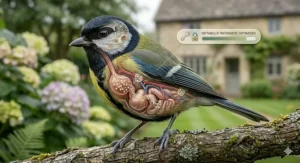
The pet industry perpetuated a rather convenient fiction: that high-quality seed mixes provide complete nutrition. The reality is grimmer. Sunflower seeds and peanuts — staples of most “premium” bird mixes — contain virtually no vitamin A, minimal calcium (with a calcium-phosphorus ratio actively harmful to bone health), and inadequate essential amino acids. Feed exclusively on seed and your bird will develop hypovitaminosis A within 6–12 months, calcium deficiency within 8–14 months, and protein malnutrition within a year.
The numbers are rather stark. A typical sunflower seed contains roughly 584 calories per 100g, 6g protein, 51g fat, but only 78mg calcium. Your budgie needs approximately 130mg calcium daily — meaning they’d need to consume 167g of sunflower seeds to meet calcium requirements. But at that consumption rate, they’d ingest 975 calories whilst needing only 15–20 calories daily. The maths simply doesn’t work.
African Greys present the most dramatic case study. These faddy eaters self-select favourite items from mixed dishes, often fixating on 3–4 seed types whilst ignoring everything else. I’ve watched Greys eat exclusively sunflower seeds for months before presenting with severe vitamin A deficiency — white plaques throughout the mouth, respiratory distress, and immune collapse leaving them vulnerable to every passing infection. The treatment requires injectable vitamin A, antibiotics for secondary infections, and months of rehabilitation.
British bird food manufacturers compound the problem by marketing “vitamin-enriched” seeds — seeds coated with vitamin powders. But birds hull seeds before eating, discarding the outer coating directly into the cage bottom. You’re buying vitamin-enriched seed hulls whilst your bird consumes the nutritionally deficient kernel. The only effective supplementation adds vitamins to drinking water, sprinkles them over moist food, or uses complete formulated diets where vitamins integrate into pellets.
Even pelleted diets aren’t foolproof. Processing heat degrades fat-soluble vitamins, whilst storage oxidises vitamin E particularly rapidly. A pellet manufactured 8 months ago may contain 40–60% less vitamin E than when fresh. The British climate’s humidity accelerates degradation further. Smart owners supplement even pelleted diets with liquid vitamins 2–3 days weekly, ensuring no gaps emerge during storage periods.
Liquid vs Powder: Which Format Suits British Birds?
The liquid-versus-powder debate divides British bird keepers rather sharply. Liquid supplements integrate seamlessly into drinking water, ensuring every bird in an aviary receives supplementation regardless of feeding preferences. The palatability factor matters enormously — Beaphar and similar high-quality liquids use sugar-based carriers that birds actually find pleasant, encouraging consumption rather than deterring it.
Powder supplements excel at precision dosing. When breeding season demands heavy calcium supplementation, dusting vegetables or soft food with Nutrobal or Nekton Calcium-Plus allows you to control exactly how much each bird receives. The powder format stores longer than liquids once opened — 6–12 months versus 3–4 months for most liquid supplements. For serious breeders managing multiple species with different nutritional requirements, powders provide flexibility that liquid supplements can’t match.
British conditions tilt the balance somewhat. Our damp climate causes powder supplements to clump catastrophically if exposed to humidity. I’ve opened vitamin tins stored in damp garden aviaries to find solid bricks of oxidised material rather than free-flowing powder. The solution involves either liquid supplements or storing powders in airtight containers inside the house, taking small quantities to the aviary as needed.
Temperature stability matters for both formats. The 15–25°C storage range specified for Nekton products sounds reasonable until you realise British garden sheds swing from 5°C winter nights to 30°C+ summer afternoons. Liquids tolerate temperature fluctuation better than powders, whose active ingredients degrade rapidly under thermal stress. For outdoor aviaries, liquids win on practicality despite their shorter shelf life.
The water contamination issue deserves mention. Liquid vitamins in drinking water create bacterial growth medium, requiring daily water changes to prevent pathogen proliferation. This matters more in Britain’s mild climate where bacteria thrive year-round, unlike colder regions where winter temperatures suppress bacterial growth. Conscientious owners change vitamin-supplemented water every 24 hours without fail — a commitment that requires planning when you’re away for weekends.
Breeding Birds: When Standard Supplements Aren’t Enough
Breeding season transforms nutritional requirements completely. A laying hen depletes calcium stores catastrophically fast — each egg shell requires roughly 2g calcium, whilst her total body calcium content sits around 7–8g. Produce four eggs in rapid succession and she’s pulled nearly half her skeletal calcium into egg shells. Without aggressive supplementation, she’ll develop osteoporosis-like symptoms, muscle weakness, and potentially fatal egg-binding.
The supplementation protocol for breeding pairs needs ramping up 4–6 weeks before you expect the first egg. This pre-breeding calcium loading ensures hens enter egg production with maximum skeletal reserves. I recommend Calcivet 5 days weekly at the higher dosage range (5ml per 250ml water), plus Nekton Calcium-Plus dusted over soft food 3 days weekly. Yes, this represents substantial calcium intake — but egg production represents even more substantial calcium demand.
Amino acid requirements spike similarly. Growing embryos and chicks need complete protein profiles that seed-based diets can’t provide. Nekton-S becomes near-mandatory during breeding, providing the 18 free-form amino acids in L-configuration that support rapid tissue development. British breeders often combine Nekton-S with Nekton-E (vitamin E supplement) during breeding season, as vitamin E profoundly influences fertility and embryo development.
The vitamin D3 consideration becomes critical for British breeding birds. Without adequate D3, even aggressive calcium supplementation fails because the intestines can’t absorb the calcium you’re providing. Our northern latitude’s weak winter sun means breeding season (typically March through June for most species) begins when natural D3 synthesis barely functions. Every calcium supplement must include D3 or you’re wasting your time.
Post-breeding recovery requires attention too. Hens emerge from breeding season severely depleted, needing 4–6 weeks of continued supplementation to restore bone density and nutrient reserves. Skipping this recovery period guarantees poor health during autumn moult and increased susceptibility to winter respiratory infections. Smart British breeders maintain breeding-level supplementation through July, then taper to maintenance levels gradually rather than stopping abruptly.
The African Grey Calcium Crisis: A British Epidemic
African Greys present such unique calcium metabolism challenges that they warrant dedicated discussion. These birds frequently show normal or even high total serum calcium whilst ionised calcium (the biologically active form) sits dangerously low. The mechanism isn’t fully understood, but the symptoms are unmistakable: sudden seizures, falling from perches, muscle tremors, and in severe cases, paralysis or death.
British Grey owners face elevated risk because our indoor heating systems (necessary October through April) create very dry air that increases water consumption, potentially diluting calcium-supplemented water below therapeutic levels. The solution involves both liquid calcium in water year-round and powder calcium dusted over fresh foods 2–3 days weekly. This belt-and-braces approach compensates for Greys’ apparent inability to regulate calcium homeostasis normally.
The crisis typically strikes without warning. Your Grey seems perfectly healthy one moment, then convulses or topples from their perch the next. Emergency response requires immediate calcium supplementation — either Calcivet or Nutrobal administered directly into the beak at 0.2ml per 100g body weight, followed by urgent veterinary attention. I’ve watched Grey owners rescue their birds from near-certain death by keeping emergency calcium supplements and knowing how to administer them.
Prevention requires religious consistency. Greys on adequate calcium supplementation (Calcivet 2–3 days weekly minimum, plus Nutrobal dusted on vegetables twice weekly) rarely experience calcium crises. The British Grey Parrot Facebook groups sadly chronicle dozens of cases yearly where owners thought supplements were optional — until their bird seized. The emotional trauma and veterinary bills dwarf the modest cost of preventive supplementation.
Interestingly, vitamin D3 supplementation alone sometimes prevents Grey calcium issues even when dietary calcium intake seems marginal. This suggests the problem isn’t always calcium deficiency per se, but vitamin D3 deficiency preventing whatever calcium is consumed from absorbing properly. British Greys particularly benefit from year-round D3 supplementation given our northern latitude’s weak sun.
FAQ: Your Bird Vitamin Questions Answered
❓ How often should I give my budgie vitamins in the UK?
❓ Can I overdose my parrot on vitamin supplements?
❓ Do birds on pellet diets need vitamin supplements?
❓ Where can I buy bird vitamins in the UK quickly?
❓ What are the first signs of vitamin deficiency in birds?
Conclusion: Investment in Longevity
The best bird vitamins aren’t luxury extras or optional add-ons — they’re fundamental insurance against the nutritional deficiencies that plague 90% of British pet birds at some point in their lives. The modest investment of £7–£25 for quality supplements prevents the £200–£500 emergency veterinary bills that treat advanced hypovitaminosis A, calcium deficiency, or the secondary infections that exploit weakened immune systems.
What separates successful British bird keeping from the heartbreak of preventable illness isn’t exotic knowledge or expensive equipment. It’s consistent, informed supplementation matched to your bird’s species, diet, life stage, and our unique British climate challenges. The products reviewed here represent the genuine article — formulations trusted by zoos, professional breeders, and avian veterinarians, now available to ordinary bird owners via Amazon UK’s convenient delivery.
Start with a quality liquid multivitamin like Beaphar Multi-Vit for seed-eating birds, or Nekton-S for those needing more intensive nutritional support. Add species-appropriate calcium supplementation — Calcivet for breeding birds, Nutrobal for African Greys, or Nekton Calcium-Plus for comprehensive breeding support. Monitor your bird’s condition, adjust supplementation seasonally, and watch them thrive rather than merely survive.
Your bird’s brilliant plumage, energetic behaviour, and resistance to illness didn’t happen by accident. They happened because you made informed choices about supplementation, recognised that British conditions demand proactive nutrition, and invested in products that actually work. That’s not sentimentality — that’s evidence-based bird keeping at its finest.
Recommended for You
- 7 Best Foraging Treats for Parrots UK 2026
- 7 Best Millet Spray for Birds UK 2026
- 7 Best Bird Training Treats UK: Expert Reviews & Guide 2026
Disclaimer: This article contains affiliate links. As an Amazon Associate, I earn from qualifying purchases. If you purchase products through these links, we may earn a small commission at no additional cost to you.
✨ Found this helpful? Share it with your mates! 💬🤗
