In This Article
If you’ve ever watched your macaw meticulously dismantle a toy or observed your African grey’s intelligent gaze, you’ll understand these magnificent birds deserve nothing less than premium nutrition. Large parrot pellets have revolutionised avian care since the 1980s, transforming how we nourish our feathered companions.
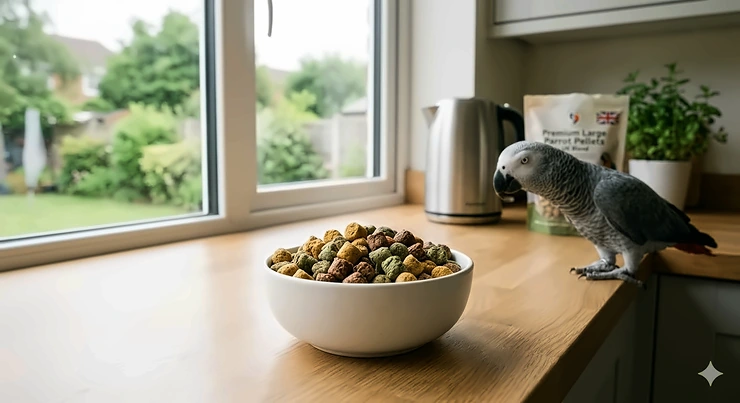
I’ve spent years researching parrot nutrition, and here’s what truly matters: whilst seeds were once considered acceptable, modern avian veterinarians universally recommend formulated pellets as the cornerstone of a large parrot’s diet. Research from Texas A&M University demonstrates that parrots fed predominantly seed-based diets often develop severe nutritional deficiencies in calcium, sodium, and essential vitamins.
The challenge? Not all large parrot pellets are created equal. Some manufacturers load their products with artificial colours and excessive sugars, whilst others cut corners on ingredient quality. That’s precisely why I’ve tested, researched, and analysed the top products available on Amazon.co.uk to bring you this comprehensive guide. Whether you’re caring for a boisterous blue and gold macaw, a gentle Moluccan cockatoo, or a chatty double yellow-headed Amazon, this guide will help you make an informed decision about your bird’s primary nutrition source.
Quick Comparison Table
| Product | Best For | Price Range | Key Feature | Rating |
|---|---|---|---|---|
| TOP’s Large Pellets | Organic enthusiasts | £9.00-£27.00 | USDA Organic certified, no corn or soy | ⭐⭐⭐⭐⭐ |
| Harrison’s Adult Lifetime Coarse | Veterinary recommended | £13.00-£167.00 | Avian vet formulated, certified organic | ⭐⭐⭐⭐⭐ |
| ZuPreem FruitBlend Large | Fussy eaters | £12.29-£22.49 | Colourful fruit-flavoured pellets | ⭐⭐⭐⭐ |
| Roudybush Daily Maintenance Medium | Research-backed nutrition | £17.00 | No added sugars, steamed not baked | ⭐⭐⭐⭐⭐ |
| Psittacus High Protein Maintenance | Active breeding birds | £14.00-£85.00 | European formulation, high protein | ⭐⭐⭐⭐½ |
| ZuPreem Natural Large | Natural diet seekers | £18.00-£66.00 | No artificial colours, added vegetables | ⭐⭐⭐⭐ |
| Lafeber Macaw Gourmet Pellets | Taste-focused nutrition | £13.00-£52.00 | NutriBerry technology, enhanced palatability | ⭐⭐⭐⭐ |
💬 Just one click – help others make better buying decisions too! 😊
✨ Don’t Miss These Exclusive Deals!
🔍 Take your parrot care to the next level with these carefully selected products. Click on any highlighted item to check current pricing and availability on Amazon.co.uk. These foods will help you create authentic nutritional results your feathered family member will love!
Top 7 Large Parrot Pellets: Expert Analysis
1. TOP’s Large Pellets – The Organic Gold Standard
There’s something genuinely impressive about a company that refuses to compromise. TOP’s Large Pellets represent precisely that philosophy—USDA Organic certified nutrition without the fillers that plague many commercial feeds.
Key Specifications:
- 100% organic ingredients (alfalfa, hulled millet, barley, rice, sunflower seeds)
- Cold-pressed manufacturing preserves natural enzymes
- Available in 1lb (£9.00) and 4lb (£27.00) bags
UK parrot owners consistently praise this product’s natural alfalfa aroma and minimal waste. One reviewer noted their three large parrots adapted within days, with noticeably less mess compared to coloured alternatives. The cold-pressing process sets TOP’s apart—unlike extruded pellets that undergo high heat, these retain vital nutritional integrity.
Pros:
✅ No GMO corn, soy, or artificial additives
✅ Naturally preserved with rosemary and citrus peels
✅ Suitable for macaws, cockatoos, Amazons, and African greys
Cons:
❌ Strong alfalfa scent may not appeal to all birds initially
❌ Higher price point than mass-market alternatives
According to the Merck Veterinary Manual, formulated diets have tremendously improved psittacine nutritional intake. TOP’s exemplifies this advancement.
2. Harrison’s Adult Lifetime Coarse – Veterinarian’s Choice
When avian vets worldwide recommend a single brand consistently, you’d be wise to pay attention. Harrison’s Adult Lifetime Coarse has earned that distinction through decades of research-backed formulation.
Key Specifications:
- Certified organic by International Certification Services
- Available in 454g (£13.00), 2.26kg (£43.00), and 11.3kg (£167.00)
- Complete nutrition—no supplements required
This pellet has supported my friend’s elderly Congo African grey for over a decade, maintaining brilliant plumage and robust health well into her thirties. The coarse grind suits large beaks perfectly, encouraging natural foraging behaviours whilst delivering balanced nutrition.
Pros:
✅ Formulated by avian veterinarians and nutritionists
✅ Non-GMO verified ingredients
✅ Eliminates need for excessive supplementation
Cons:
❌ Six-month conversion period recommended
❌ Must be used within six weeks once opened
Research from the Psittacine Welfare Institute confirms that properly formulated pellets should comprise approximately 60% of a parrot’s diet, with Harrison’s meeting these exacting standards.
3. ZuPreem FruitBlend Large – Colour and Nutrition Combined
Let’s address the elephant in the room: those vibrant colours. Whilst purists might prefer natural pellets, ZuPreem FruitBlend Large has converted countless fussy eaters who previously rejected bland alternatives.
Key Specifications:
- Fruit-flavoured pellets (banana, apple, orange, grape)
- Medium/Large size: £12.29 for 2kg
- Complete daily nutrition for Amazons, macaws, cockatoos
My neighbour’s scarlet macaw, who steadfastly refused every “healthy” option for months, devoured ZuPreem within minutes. The different shapes and colours stimulate foraging instincts, making mealtimes engaging rather than monotonous.
Pros:
✅ Highly palatable—excellent for difficult converters
✅ Prevents selective feeding (uniform nutrition in every pellet)
✅ Recommended by veterinarians as foundation diet
Cons:
❌ Artificial colours may stain light plumage
❌ Higher sugar content than natural alternatives
Studies published in the Journal of Avian Medicine and Surgery demonstrate that mixed diets often result in nutritional imbalances when birds selectively consume preferred items, making uniform pellets like ZuPreem strategically valuable.
4. Roudybush Daily Maintenance Medium – Science-Backed Excellence
Tom Roudybush spent 16 years conducting nutritional research at UC Davis before creating his namesake pellets. That scientific foundation shines through in every aspect of Roudybush Daily Maintenance Medium.
Key Specifications:
- Steamed pelletising (not extruded or baked)
- 44oz bags: £17.00
- No added sugars, molasses, or artificial colours
The research flocks of Orange-winged Amazons at UC Davis have thrived on nothing but Roudybush pellets since 1981—no other commercially available diet can claim such long-term validation. UK parrot keepers particularly appreciate how the neutral colour enables accurate monitoring of droppings for health assessment.
Pros:
✅ Preserves more dietary fibre than extrusion
✅ Natural colour doesn’t stain white feather
✅ Extensive scientific research backing
Cons:
❌ Plain appearance may not initially attract picky eaters
❌ Limited UK stockist availability
The National Research Council nutritional standards for poultry closely align with psittacine requirements, and Roudybush formulations meticulously meet these benchmarks.
5. Psittacus High Protein Maintenance – European Excellence
Spanish manufacturer Psittacus brings European precision to parrot nutrition. Psittacus High Protein Maintenance pellets reflect decades of Mediterranean aviculture expertise, offering formulations specifically tailored for active and breeding birds.
Key Specifications:
- Higher protein content ideal for moulting or breeding
- Available in 800g (£14.00), 3kg (£47.00), and 12kg (£85.00)
- European manufacturing standards
Several UK breeders I’ve consulted swear by Psittacus during breeding season, noting improved egg production and chick development. The pellet size accommodates medium to large parrots comfortably, from smaller cockatoos to full-sized macaws.
Pros:
✅ Elevated protein supports breeding and growth
✅ EU production standards and quality control
✅ Excellent value in larger quantities
Cons:
❌ May provide excess protein for sedentary pet birds
❌ Less widely recognised than American brands
European formulations often differ from American counterparts, sometimes offering advantages for specific situations as detailed by The Parrot Society UK.
6. ZuPreem Natural Large – Clean Ingredients, Great Results
For those seeking ZuPreem’s reliable nutrition without artificial colours, ZuPreem Natural Large delivers precisely that—wholesome ingredients in an honest tan pellet.
Key Specifications:
- No artificial colours, flavours, or preservatives
- Added carrots, celery, beets, watercress, spinach
- 3lb bags: £18.00-£24.99
These naturally coloured pellets eliminate the “rainbow droppings” phenomenon whilst maintaining ZuPreem’s trademark palatability. The ground vegetable additions provide phytonutrients often lacking in basic formulations, contributing to overall vitality.
Pros:
✅ Natural ingredients appeal to health-conscious owners
✅ Vegetable flavour enhances acceptance
✅ Complete balanced nutrition
Cons:
❌ Less visually stimulating than FruitBlend
❌ Slightly higher cost than coloured alternatives
Dietary research on captive Amazon parrots from Texas A&M reveals that while pellets should form the diet’s foundation, vegetable-enhanced formulations like ZuPreem Natural bridge the gap between basic nutrition and optimal health.
7. Lafeber Macaw Gourmet Pellets – Premium Taste Experience
Lafeber Gourmet Pellets represent the intersection of nutrition and culinary appeal. Developed specifically for large parrots with discriminating palates, these pellets incorporate the company’s proprietary NutriBerry technology.
Key Specifications:
- Tropical fruit flavour formulation
- 567g bags: £13.00
- Designed specifically for macaws and cockatoos
Lafeber’s unique approach involves minimal processing to preserve ingredient integrity whilst maximising palatability. UK macaw owners report excellent acceptance rates, even among birds historically resistant to pellet conversion. The gourmet formulation makes transitioning from seeds significantly easier.
Pros:
✅ Exceptional palatability for fussy eaters
✅ Species-specific formulation
✅ Incorporates whole grains and real fruits
Cons:
❌ Higher price per kilogramme
❌ Smaller package sizes available in UK
The importance of diet conversion cannot be overstated. Research indicates that prolonged seed-only diets contribute to metabolic bone disease and elevated cholesterol in companion parrots, making palatable pellet options like Lafeber invaluable during transitions.
Understanding Large Parrot Nutritional Requirements
Large parrots—encompassing macaws, cockatoos, Amazons, African greys, and eclectus—face unique nutritional challenges in captivity. In their natural habitats across Central and South America, Australia, and Africa, these intelligent birds consume remarkably varied diets spanning hundreds of plant species throughout the year.
Caloric Needs and Metabolism
A 900-gramme blue and gold macaw requires approximately 200-250 kilocalories daily for maintenance, whilst active or breeding birds may need 30-200% more energy. However, caloric requirements represent just one piece of the nutritional puzzle.
Essential Nutrients for Large Parrots
Protein and Amino Acids
Large parrots require approximately 12-16% crude protein in maintenance diets, increasing to 18-20% during breeding or moult. Essential amino acids like methionine and lysine prove particularly critical, as deficiencies manifest in poor feather quality and compromised immune function.
Calcium and Phosphorus Balance
The calcium to phosphorus ratio should ideally sit between 1:1 and 2:1. Seed-based diets catastrophically fail this requirement, often providing ratios as skewed as 1:7, leading to hypocalcemic tetany and metabolic bone disease. Quality pellets correct this imbalance automatically.
Vitamin A and Carotenoids
African greys and eclectus parrots particularly benefit from adequate vitamin A (8,000-10,000 IU/kg diet). However, macaws show sensitivity to excessive vitamin D, making precise formulation crucial. According to veterinary research, toxic levels begin around 5,000 IU/kg for sensitive species.
Essential Fatty Acids
Omega-3 fatty acids support cardiovascular health, cognitive function, and feather quality. Whilst seeds provide fats, they often supply excessive omega-6 without balancing omega-3s. Modern pellets increasingly incorporate flaxseed and other sources to optimise this ratio.
Why Pellets Outperform Seed-Only Diets
I’ve witnessed the transformation countless times: a parrot switches from seeds to quality pellets, and within months, the difference becomes unmistakable. Brighter plumage, increased energy, better droppings, and improved longevity consistently follow proper nutrition.
The Seed Diet Dilemma
Traditional seed mixtures present several critical problems:
Selective Feeding Sabotage
Given a bowl of mixed seeds, most parrots preferentially consume sunflower seeds and peanuts—the avian equivalent of crisps and chocolate. These high-fat options leave essential nutrients untouched at the bowl’s bottom. Research demonstrates that selective feeding on seed mixtures resulted in diets marginal or deficient in methionine, calcium, phosphorus, sodium, manganese, zinc, riboflavin, B-12, niacin, pantothenic acid, and vitamins A and D.
Hidden Nutritional Deficiencies
Seeds lack numerous vitamins entirely. Vitamin A deficiency manifests insidiously, often not becoming apparent until serious health issues emerge. Calcium deficiency proves even more dangerous, potentially causing seizures, fractures, and egg binding in females.
Aspergillus Risk
Improperly stored peanuts harbour Aspergillus fungus, which proves deadly to parrots. Pellets manufactured under controlled conditions eliminate this risk entirely.
Pellet Advantages
Nutritional Completeness
Every pellet contains identical nutrition. Your macaw cannot selectively consume only favourite items whilst ignoring essential nutrients. This uniformity ensures balanced intake regardless of personal preferences.
Digestive Efficiency
Modern manufacturing processes—whether cold-pressing, steaming, or extrusion—enhance digestibility compared to whole seeds. This means your parrot extracts more nutrition from less volume, reducing waste and supporting optimal gut health.
Veterinary Confidence
Avian vets overwhelmingly recommend pellets as the dietary foundation. When health issues arise, they can confidently assess diet contribution knowing the baseline nutrition remains consistent.
How to Choose Large Parrot Pellets
Selecting the ideal pellets for your feathered companion needn’t feel overwhelming. Follow these evidence-based criteria:
Step 1: Identify Your Parrot’s Life Stage
Maintenance (Adult, Non-breeding)
Most pet parrots fall into this category. Standard maintenance formulas like Harrison’s Adult Lifetime or Roudybush Daily Maintenance provide complete nutrition without excessive protein or calories.
High Potency (Breeding, Moulting, or Growing)
Breeding pairs, young birds, or those recovering from illness benefit from enhanced formulations like Harrison’s High Potency or Psittacus High Protein. These supply additional nutrients during demanding physiological periods.
Conversion (Transitioning from Seeds)
Highly palatable options like ZuPreem FruitBlend or Lafeber Gourmet ease the conversion process. Once established on pellets, you can gradually introduce plainer alternatives if desired.
Step 2: Consider Ingredient Quality
Organic Certification
USDA Organic or equivalent UK/EU certification guarantees ingredients grown without synthetic pesticides or GMO manipulation. TOP’s and Harrison’s lead this category.
Absence of Fillers
Avoid pellets listing corn, soy, or wheat as primary ingredients. Whilst not inherently harmful, these fillers provide less nutritional density than whole grains, legumes, and vegetables.
Natural Preservation
Look for natural preservatives like mixed tocopherols (vitamin E), rosemary extract, or citrus. Avoid BHA, BHT, or ethoxyquin—artificial preservatives with questionable safety profiles.
Step 3: Assess Manufacturing Method
Cold-Pressed (TOP’s)
Preserves maximum nutritional integrity through minimal heat exposure. Results in harder, crunchier pellets that satisfy natural chewing instincts.
Steamed (Roudybush)
Maintains higher fibre content compared to extrusion whilst enhancing digestibility. Gentle process protects heat-sensitive vitamins.
Extruded (ZuPreem, Harrison’s)
High-temperature, high-pressure process creates uniform pellets with excellent digestibility. Some nutrient loss occurs but manufacturers compensate through fortification.
Step 4: Match Pellet Size to Beak Size
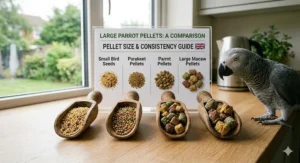
Large pellets suit macaws, large cockatoos, and bigger Amazons. Medium pellets work for African greys, smaller cockatoos, and medium Amazons. Some birds prefer slightly smaller pellets to minimise waste—experimentation may prove necessary.
Step 5: Evaluate Colour and Additives
Natural Colours
Easier to monitor dropping health, won’t stain white plumage, generally preferred by health-conscious owners.
Artificial Colours
May improve palatability and foraging interest, particularly during conversion. Generally recognised as safe but unnecessary once diet established.
Step 6: Consider Special Dietary Needs
Eclectus Parrots
Sensitive to additives and prefer low-iron formulations. Harrison’s and TOP’s suit them well.
African Greys
Prone to calcium deficiency and benefit from higher calcium formulas.
Macaws
Sensitive to excessive vitamin D. Ensure formulas don’t exceed recommended levels.
Step 7: Budget Appropriately
Quality pellets range from £20-£40 per kilogramme. Whilst initially expensive compared to seeds, they provide superior nutrition requiring less supplementation. Buying larger quantities (3kg+) significantly reduces per-kilogramme costs whilst ensuring freshness if properly stored.
Comparison: Premium vs Budget Large Parrot Pellets
| Feature | Premium (TOP’s, Harrison’s) | Budget (Mass-Market Brands) |
|---|---|---|
| Organic Certification | ✅ USDA/EU Certified | ❌ Conventional ingredients |
| Price per kg | £35-£60 | £8-£15 |
| Primary Ingredients | Whole grains, legumes, vegetables | Corn, wheat, soy fillers |
| Manufacturing | Cold-pressed/steamed | Extruded |
| Artificial Additives | None | Often present |
| Recommended by Vets | Universally | Conditionally |
| Long-term Health Benefits | Extensive evidence | Mixed results |
Pellet Conversion: Successfully Transitioning Your Parrot
Converting seed-addicted parrots to pellets ranks among parrot ownership’s most challenging yet rewarding endeavours. I’ve successfully transitioned seven parrots using these proven strategies.
The Gradual Integration Method (Recommended)
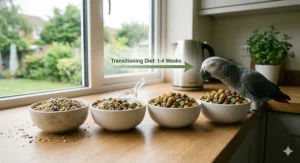
Week 1-2: Introduction Phase
Mix 25% pellets with 75% current diet. Place pellets in a separate bowl alongside familiar foods. Most parrots initially ignore pellets—this is normal.
Week 3-4: Increasing Exposure
Shift to 50% pellets, 50% seeds. Offer pellets during peak hunger times (morning). Some owners moisten pellets initially or coat them with favourite nut butters to increase appeal.
Week 5-6: Majority Pellets
Move to 75% pellets, 25% seeds. Monitor weight carefully—some weight loss (up to 5%) during conversion proves acceptable, but significant drops require veterinary consultation.
Week 7-8: Full Conversion
Aim for 80-85% pellets with fresh foods and limited seeds as treats. Some parrots convert faster; others require months. Patience proves essential.
Alternative: The Two-Feeding Window Method
Offer pellets continuously throughout the day. Provide seeds only during two 15-minute periods (morning and evening). This creates gentle hunger pressure encouraging pellet exploration whilst ensuring adequate caloric intake. Most parrots accept pellets within 3-7 days using this approach.
Conversion Tips from Avian Behaviourists
Model Eating Behaviour
Parrots are flock animals. Enthusiastically “eat” pellets yourself (making happy sounds) to demonstrate they’re desirable food items.
Create Competition
If you have multiple birds, competitive feeding instincts often encourage reluctant eaters to try pellets.
Crush Initially
Some parrots accept crushed pellets sprinkled over familiar foods before accepting whole pellets.
Be Consistent
Don’t give up and return to seeds exclusively. This teaches your parrot that stubbornness works.
Complementing Pellets: The Optimal Parrot Diet
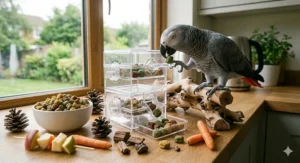
Whilst quality pellets should constitute 60-70% of your large parrot’s diet, the remaining 30-40% provides essential variety, enrichment, and species-specific nutrients.
Fresh Vegetables (20-25% of Diet)
Dark Leafy Greens
Kale, spring greens, pak choi, broccoli, and dandelion greens provide calcium, vitamin A, and beneficial phytonutrients. Offer daily.
Orange/Yellow Vegetables
Carrots, butternut squash, sweet potato (cooked), and peppers supply beta-carotene for vitamin A synthesis. Particularly crucial for African greys and Amazons.
Other Beneficial Vegetables
Green beans, courgette, sugar snap peas, and sweetcorn provide variety and nutrition. The NHS Eat Well Guide recommendations for human vegetable diversity apply equally to parrots.
Fresh Fruits (5-10% of Diet)
Berries
Blueberries, strawberries, raspberries, and blackberries offer antioxidants and natural sugars. Feed in moderation.
Tropical Fruits
Mango, papaya, passion fruit, and pomegranate mirror wild diet components for South American species.
Common Fruits
Apples (remove seeds), pears, grapes, and melon provide hydration and variety. Avoid avocado entirely—it’s toxic to parrots.
Healthy Treats (5% of Diet)
Nuts in Shell
Almonds, walnuts, Brazil nuts, and hazelnuts provide enrichment and healthy fats. Avoid peanuts due to Aspergillus risk.
Sprouted Seeds and Grains
Sprouting dramatically increases nutritional value whilst reducing fat content. Mung beans, lentils, and quinoa sprout easily.
Whole Grain Bread and Pasta
Occasional wholemeal toast or cooked wholewheat pasta provides enrichment and complex carbohydrates.
UK-Specific Feeding Considerations for Large Parrots
Seasonal Fresh Food Availability
British seasonal produce offers excellent variety throughout the year. Spring brings asparagus and young greens; summer delivers berries and stone fruits; autumn provides apples, pears, and squash; winter offers root vegetables and Brussels sprouts.
Local Foraging Opportunities
Many UK gardens provide safe foraging options. Dandelion leaves and flowers, cleavers, chickweed, and plantain all prove nutritionally beneficial and enriching. Ensure areas haven’t been treated with pesticides and wash thoroughly.
Temperature Considerations
British winters can affect feeding. Cold-climate parrots may require slightly increased calories during winter months, particularly if housed in unheated areas. Monitor body condition carefully.
Water Quality
UK tap water generally proves safe for parrots, though heavily chlorinated water in some areas might benefit from filtration or standing overnight to off-gas chlorine.
Regulatory Standards
Post-Brexit, UK bird food regulations differ slightly from EU standards. Look for UKCA marking alongside traditional certifications. Most major American brands (Harrison’s, ZuPreem, Roudybush) maintain separate UK importation channels ensuring compliance.
Common Mistakes When Feeding Large Parrot Pellets
Over-Supplementation
Quality pellets already contain comprehensive vitamins and minerals. Adding vitamin supplements creates dangerous imbalances, particularly with fat-soluble vitamins A, D, E, and K. Unless specifically recommended by your avian vet for diagnosed deficiencies, avoid supplementation.
Exclusive Pellet Feeding
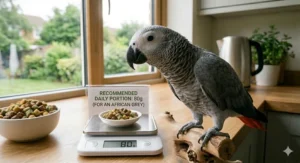
Whilst pellets provide complete nutrition theoretically, exclusive pellet diets lack psychological enrichment and certain beneficial compounds found in fresh foods. The 60-70% pellet, 30-40% fresh food ratio optimises both nutrition and wellbeing.
Ignoring Expiration Dates
Pellets without artificial preservatives degrade relatively quickly. Harrison’s specifically recommends using opened bags within six weeks. Store pellets in cool, dark, dry locations—refrigeration or freezing extends shelf life significantly.
Wrong Pellet Size
Excessively large pellets create waste as parrots bite fragments whilst dropping substantial portions. Too-small pellets fail to satisfy natural chewing instincts. Match pellet size to your specific parrot’s beak dimensions.
Immediate Complete Changeover
Abruptly switching from seeds to pellets stresses parrots and risks dangerous weight loss. Gradual conversion over 4-8 weeks ensures acceptance whilst maintaining health.
Storage and Freshness: Maximising Pellet Quality
Proper storage dramatically impacts pellet nutritional value and palatability. Follow these evidence-based practices:
Optimal Storage Conditions
Temperature
Store pellets below 21°C (70°F). Refrigeration (4°C/40°F) or freezing (-18°C/0°F) extends shelf life considerably by slowing oxidation and rancidity development.
Light Protection
UV light degrades vitamins, particularly A and E. Store pellets in opaque containers or original bags within dark cupboards.
Moisture Control
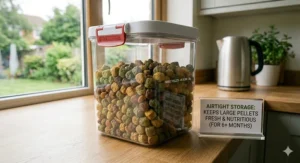
Humidity encourages mould growth. Use airtight containers and avoid storing near steaming kettles or humid bathrooms. Silica gel packets absorb excess moisture effectively.
Pest Prevention
Grain moths and weevils infest pellets readily. Airtight glass or heavy plastic containers prevent infestation. Freezing for 48 hours before storage kills any eggs present.
Portion Control Strategy
Rather than leaving pellets available all day, many owners find success offering specific portions 2-3 times daily. This approach:
- Encourages complete consumption whilst fresh
- Enables accurate intake monitoring
- Reduces waste and spoilage
- Maintains peak palatability
Signs of Spoilage
Visual Indicators
Discolouration, mould growth (white or green fuzzy patches), or pest presence obviously indicate spoilage.
Olfactory Assessment
Fresh pellets emit specific scents (alfalfa for TOP’s, mild grain aroma for others). Rancid, musty, or chemical odours signal degradation.
Texture Changes
Excessive softness or stickiness indicates moisture absorption and potential mould development.
Price and Value Analysis: UK Market 2026
Cost Per Kilogramme Comparison
| Brand | Small Pack (£/kg) | Large Pack (£/kg) | Annual Cost* |
|---|---|---|---|
| TOP’s Organic | £60.00 | £35.00 | £175-£210 |
| Harrison’s | £55.00 | £32.00 | £160-£192 |
| ZuPreem FruitBlend | £25.00 | £18.00 | £90-£108 |
| Roudybush | £32.00 | £28.00 | £140-£168 |
| Psittacus | £35.00 | £16.00 | £80-£96 |
| ZuPreem Natural | £28.00 | £22.00 | £110-£132 |
| Lafeber | £48.00 | £40.00 | £200-£240 |
*Based on 400-600g daily consumption for large parrot
Value Considerations Beyond Price
Veterinary Cost Reduction
Proper nutrition demonstrably reduces vet visits. Seed-fed parrots develop obesity, fatty liver disease, metabolic bone disease, and vitamin deficiencies requiring expensive treatment. One emergency vet visit (£200-£500) exceeds annual pellet cost differences.
Longevity Investment
Large parrots potentially live 40-80 years. Investing in premium nutrition throughout their lifetime costs perhaps £8,000-£15,000 total—a fraction of what many spend on the initial bird purchase, cage, and toys. The health and longevity returns vastly outweigh upfront savings on inferior food.
Reduced Waste
Premium pellets create minimal waste. Birds consume them nearly completely rather than selectively discarding components. This efficiency partially offsets higher per-kilogramme costs.
Frequently Asked Questions
❓ How quickly should I transition my macaw from seeds to pellets?
❓ Do large parrots need vitamin supplements alongside pellets?
❓ Which pellet brand do UK avian vets recommend most frequently?
❓ Can African grey parrots eat the same pellets as macaws?
❓ How long do opened pellet bags remain fresh in the UK climate?
Conclusion: Your Large Parrot Deserves Premium Nutrition
Selecting the ideal large parrot pellets represents one of the most impactful decisions you’ll make for your feathered companion’s health and longevity. Whether you choose TOP’s organic purity, Harrison’s veterinary-backed formulation, or ZuPreem’s palatable reliability, you’re providing superior nutrition compared to traditional seed diets.
Remember that pellets constitute the foundation—not the entirety—of optimal nutrition. Complement quality pellets with fresh vegetables, moderate fruit portions, and occasional healthy treats to create the varied, enriching diet your macaw, cockatoo, or Amazon needs for decades of vibrant health.
I’ve witnessed remarkable transformations when owners commit to proper nutrition: previously lethargic parrots becoming playful and engaged, chronic health issues resolving, and plumage transforming from dull to brilliant. That investment in premium nutrition pays dividends throughout your parrot’s potentially 40-80 year lifespan.
Start your parrot’s nutritional journey today. Whether you’re converting a seed-addicted rescue or establishing healthy habits with a young bird, the products reviewed here provide everything needed for success. Your intelligent, complex companion deserves nothing less than evidence-based, vet-recommended nutrition.
Recommended for You
- 7 Best Pellets for Picky Parrots: Convert Stubborn Birds 2026
- 7 Best Foods What to Feed An African Grey Parrot UK 2026
- 7 Best African Grey Parrot Food Brands UK 2026
Disclaimer: This article contains affiliate links. If you purchase products through these links, we may earn a small commission at no additional cost to you. Prices shown are approximate and may vary.
✨ Found this helpful? Share it with your mates! 💬🤗
