
In This Article
Choosing the right bird cage is one of the most important decisions you’ll make as a bird owner. I’ve spent countless hours researching and evaluating bird cages across the UK market, and I can tell you – not all cages are created equal. A proper bird cage buying guide makes all the difference between a happy, healthy bird and one that’s stressed or uncomfortable.
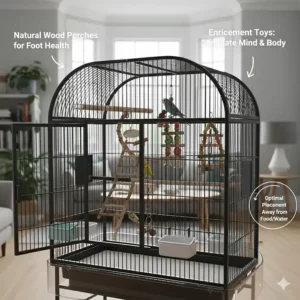
Your bird will spend a significant portion of its life in this enclosure, so getting it right matters tremendously. Whether you’re bringing home a cheeky budgie, an elegant canary, or a chatty parrot, the cage you choose directly impacts their wellbeing, activity levels, and overall happiness. From bar spacing to material safety, cage dimensions to ease of cleaning, there’s plenty to consider before you make that purchase.
According to the RSPCA’s guidance on bird housing, cages should allow birds to spread their wings fully without touching the sides, yet many commercially available cages fall short of this basic requirement. In this comprehensive bird cage buying guide, I’ll walk you through everything you need to know to make an informed decision, backed by real product recommendations available on Amazon.co.uk in 2026.
Quick Comparison Table
| Cage Model | Best For | Price Range | Bar Spacing | Dimensions (H×L×W) | Rating |
|---|---|---|---|---|---|
| Yaheetech 132cm Large Parrot Cage | Small-medium parrots | £56.99-£86.99 | 1.5cm | 132×79×52cm | ⭐⭐⭐⭐ 4.4/5 |
| PawHut Large Bird Cage | Budgies, finches | £79.99-£133.00 | 1.0cm | 133×79×49cm | ⭐⭐⭐⭐ 4.3/5 |
| Yaheetech 160cm Open Top Cage | African Greys, cockatiels | £86.99-£122.99 | 2.5cm | 160×81×77cm | ⭐⭐⭐⭐ 4.5/5 |
| Savic Primo 50 | Small birds (budget) | £38.99-£56.99 | 1.0cm | 56.5×65×38cm | ⭐⭐⭐⭐ 4.2/5 |
| Yaheetech 175cm Deluxe | Multiple birds | £122.99-£156.00 | 1.0cm | 175×81×46.5cm | ⭐⭐⭐⭐½ 4.6/5 |
| PawHut Metal Cage with Stand | Parakeets, canaries | £47.50-£81.99 | 1.1cm | 153×47.5×37cm | ⭐⭐⭐⭐ 4.1/5 |
| Yaheetech Large Budgie Flight Cage | Active flyers | £56.99-£86.99 | 1.2cm | 136×62×43cm | ⭐⭐⭐⭐½ 4.7/5 |
💬 Just one click – help others make better buying decisions too!😊
Top 7 Bird Cages: Expert Analysis
1. Yaheetech 132cm Large Parrot Bird Cage – Best Overall Value
The Yaheetech 132cm Large Parrot Bird Cage strikes an excellent balance between quality and affordability, making it my top pick for UK bird owners in 2026. This powder-coated metal cage features solid construction with a hammered paint finish that resists water and corrosion brilliantly.
Key Specifications:
- Overall dimensions: 132cm H × 79cm L × 52cm W
- Bar spacing: 1.5cm (perfect for small to medium birds)
- Four large feeding doors for easy access
UK customers consistently praise this cage’s spacious design. One reviewer from Manchester noted their cockatiel “loves the space and the toys that came with it,” whilst another from Birmingham appreciated that assembly was straightforward for one person. The cage includes four feeding bowls, two wooden perches, and a pull-out metal tray that separates birds from droppings – essential for hygiene.
The rolling stand with four 360° swivel casters makes repositioning effortless, though a few customers mentioned the bottom tray can feel slightly flimsy. At £56.99-£86.99, it’s competitively priced for the quality you receive.
✅ Pros: Spacious design, excellent value, easy assembly, mobile stand
❌ Cons: Bottom tray could be sturdier, door latches require careful handling
2. PawHut Large Bird Cage with Stand – Best for Multiple Small Birds
For those keeping multiple budgies, finches, or canaries, the PawHut Large Bird Cage offers exceptional space and thoughtful features. This 133cm tall cage provides ample room for several birds to fly and socialise comfortably.
Key Specifications:
- Overall dimensions: 133cm H × 79cm L × 49cm W
- Bar spacing: 1.0cm (ideal for smaller species)
- Eight small doors plus two large front doors
What sets PawHut apart is the inclusion of bird toys straight out of the box – perches, ladders, and platforms that keep your feathered friends entertained. The 1cm bar spacing prevents escapes whilst allowing proper ventilation. UK buyers particularly appreciate the bottom storage shelf for keeping supplies organised.
One customer from Leeds mentioned their two conures have “loads of space to play,” whilst a reviewer from Cardiff noted the cage feels “very sturdy once assembled.” The slide-out tray simplifies daily cleaning, and the four wheels (two with brakes) provide stability and mobility.
Priced between £79.99-£133.00, it’s a mid-range option that doesn’t compromise on features.
✅ Pros: Includes toys and accessories, multiple access points, storage shelf
❌ Cons: Some users report paint chipping over time, latches can be fiddly
3. Yaheetech 160cm Open Top Parrot Cage – Best for Interactive Birds
The Yaheetech 160cm Open Top Parrot Cage features a brilliant dome-top design that opens wide, creating an outdoor perching area for your bird. This is perfect for species like African Greys, cockatiels, and small conures that enjoy climbing outside their cage.
Key Specifications:
- Overall dimensions: 160cm H × 81cm L × 77.5cm W (with roof opened)
- Bar spacing: 2.5cm
- Three feeders and two dowel perches included
This wrought iron cage boasts outstanding strength thanks to its water- and oxidant-resistant paint finish. The open-top design encourages interaction between you and your birds, promoting better socialisation and reducing boredom. A wooden dowel (included) props the dome open securely.
UK customers from Glasgow and Bristol have praised its “substantial build quality” and note that assembly, whilst requiring some time, is straightforward with clear instructions. The four-sided seed guard minimises mess around the cage, and the slide-out tray makes cleaning considerably easier.
At £86.99-£122.99, it’s competitively priced for a cage of this size and quality, particularly given its versatile open-top feature.
✅ Pros: Interactive open-top design, robust construction, effective seed guards
❌ Cons: Larger footprint requires more space, some units arrive with minor damage
4. Savic Primo 50 Bird Cage – Best Budget Option
For first-time bird owners or those on a tighter budget, the Savic Primo 50 delivers surprising quality at an affordable price point. Don’t let the modest cost fool you – this cage provides perfectly adequate space for one or two budgies.
Key Specifications:
- Dimensions: 56.5cm H × 65cm L × 38cm W
- Bar spacing: 1.0cm
- External feeders and water containers
What I particularly appreciate about the Savic Primo 50 is that it arrives pre-assembled, saving you time and frustration. UK buyers consistently mention the pull-out tray makes cleaning simple, and the external food containers allow feeding without disturbing your birds.
A customer from Edinburgh called it “the perfect size for my 2 budgies,” whilst another from Southampton appreciated the “good value for money.” The cage offers decent height for birds to hop between perches, and the plastic base feels sturdy despite being lightweight.
However, some reviewers noted the perches can snap with prolonged use, so consider upgrading to natural wooden perches. At £38.99-£56.99, it’s an excellent starter cage that won’t break the bank.
✅ Pros: Pre-assembled, affordable, easy to clean, suitable for beginners
❌ Cons: Included perches may need replacing, smaller size limits bird numbers
5. Yaheetech 175cm Deluxe Parrot Cage – Best for Multiple Birds or Large Species
The Yaheetech 175cm Deluxe Parrot Cage is an impressive piece of kit that can comfortably house more than five small birds or one large parrot like an African Grey or Sun Conure. This is serious real estate for your feathered family.
Key Specifications:
- Overall dimensions: 175.5cm H × 81cm W × 46.5cm D
- Bar spacing: 1.0cm
- Six wooden perches and 12 doors (10 feeder doors, 2 front composite doors)
This iron and steel construction features a detachable rolling rack that adds mobility and provides storage space underneath. UK customers from Newcastle and Oxford have described it as “massive” with “plenty of room for birds to fly around.” The multiple access points make maintenance and interaction incredibly convenient.
What particularly impressed me is the 59cm ladder included for climbing entertainment. One reviewer mentioned accommodating “more than five lovebirds comfortably,” whilst another noted their African Grey finally had room to truly spread its wings.
The powder-coated finish resists rust and water damage, ensuring longevity. At £122.99-£156.00, it’s a premium investment, but the quality and space justify the price for serious bird enthusiasts.
✅ Pros: Exceptional space, multiple access doors, suitable for various species
❌ Cons: Requires significant floor space, heavier to move despite wheels
6. PawHut Metal Bird Cage with Breeding Stand – Best Design Features
The PawHut Metal Cage with Stand combines functional design with aesthetic appeal. This cage includes everything you need straight from the package, making it ideal for those who want a complete setup without additional purchases.
Key Specifications:
- Overall dimensions: 153cm H × 47.5cm L × 37cm W
- Bar spacing: 1.1cm
- Three wooden perches, one swing, four plastic food containers
What distinguishes PawHut from competitors is the attention to detail in the accessories provided. The wooden swing keeps birds entertained, whilst the four food containers allow for variety in feeding. The powder-coated metal construction offers durability, and the four-wheeled base (with handle) makes repositioning straightforward.
Customers from Liverpool and Brighton appreciate the “two oversized front doors” that provide easy access without disturbing birds unnecessarily. The slide-out tray covered with waterproof paint can be removed and cleaned with water effortlessly.
However, some UK buyers noted the cage “isn’t worth original price” and recommend purchasing during sales. At £47.50-£81.99, it’s reasonably priced when on offer, though build quality can feel slightly lightweight compared to Yaheetech models.
✅ Pros: Complete accessory set, easy access doors, lightweight and mobile
❌ Cons: Build quality varies, best purchased on sale
7. Yaheetech Large Budgie Flight Cage – Best for Active Flyers
The Yaheetech Large Budgie Flight Cage is specifically designed for birds that need substantial horizontal space for flying. Budgies, finches, and canaries will absolutely thrive in this thoughtfully designed enclosure.
Key Specifications:
- Dimensions: 136cm H × 62cm L × 43cm W
- Bar spacing: 1.2cm
- Four feeder doors for external access
This metal cage features a robust stand with rolling wheels, making it easy to move for cleaning or repositioning. UK customers from Devon and Kent have praised the “spacious design” that gives budgies “plenty of room to fly around.” One reviewer specifically mentioned using it for finches and adding “twigs and fake plants with still plenty of room for them to fly.”
The thoughtful placement of feeder doors allows you to refill bowls without opening the main cage, reducing stress for your birds. The lower shelf provides convenient storage for supplies, keeping everything organised and within reach.
At £56.99-£86.99, it offers exceptional value for the flight space provided. The cage’s design prioritises horizontal movement over vertical climbing, making it perfect for species that fly more than they climb.
✅ Pros: Excellent horizontal flight space, external feeding access, good value
❌ Cons: Feeders and bowls can be fragile, assembly requires patience
✨ Don’t Miss These Exclusive Deals!
🔍 Take your bird care to the next level with these carefully selected products. Click on any highlighted item to check current pricing and availability on Amazon.co.uk. These cages will help you create an authentic home your feathered friends will love!
How to Choose a Bird Cage: Essential Factors
Understanding Cage Size Requirements
Size is the most critical factor in your bird cage buying guide. According to RSPCA guidelines, if your bird spends most of their time in the cage, the height, width and depth should be at least twice their wingspan. For birds that spend time outside the cage daily, 1.5 times their wingspan suffices.
A budgie’s wingspan typically reaches 25-30cm, meaning their cage should measure at minimum 60cm in each direction. However, bigger is always better – birds need room to fly, hop between perches, and engage in natural behaviours. I always recommend choosing the largest cage your space and budget allow.
For multiple birds, add 10-20% to the cage size for each additional bird. Research from avian veterinarians indicates that overcrowding leads to stress, aggression, and health problems. Never compromise on space to save a few pounds – your bird’s wellbeing depends on adequate room to move.
Bar Spacing: A Critical Safety Consideration
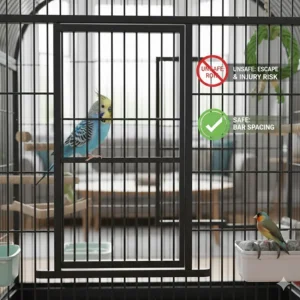
Bar spacing prevents escapes and injuries, yet it’s often overlooked in a bird cage buying guide. The general rule: birds should not be able to fit their head through the bars. For small birds like budgies, canaries, and finches, look for spacing of 0.8-1.5cm. Cockatiels and small conures require 1.5-2cm, whilst larger parrots need 2-2.5cm.
According to UK government regulations, inappropriate bar spacing poses serious safety risks. Birds can become wedged between bars, leading to panic and potential injury or death. I’ve seen cases where owners purchased beautiful cages only to discover the spacing was dangerously wide for their particular species.
Horizontal bars are preferable for climbing species like parrots and cockatiels, as they provide better grip for ascending and descending. Finches and canaries, being primarily flyers rather than climbers, can manage with either orientation.
Safe Materials and Finishes
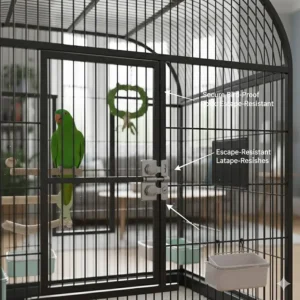
Material safety is non-negotiable in your bird cage buying guide. Powder-coated steel and stainless steel are the safest options. Avoid galvanised wire cages, as the zinc coating can cause severe toxicity if ingested. According to The Parrot Society UK, zinc poisoning is a leading cause of preventable bird deaths.
Lead-based paints are equally dangerous. Always verify that cages use non-toxic, powder-coated finishes. Wrought iron with water-resistant paint offers durability, but ensure the paint doesn’t chip easily – flaking paint can be ingested. Research on safe cage materials emphasises checking for smooth welds without sharp edges that could injure delicate feet or beaks.
Stainless steel cages are the gold standard, offering longevity and complete safety, though they command premium prices. For most UK bird owners, quality powder-coated steel provides an excellent balance of safety, durability, and affordability.
Bird Cage Features to Look For
Door Design and Accessibility
Multiple access points make daily care significantly easier. Look for cages with at least two large front doors plus smaller feeder doors. This allows you to add food and water without opening the main cage, reducing stress for your birds and preventing escapes.
Door latches should be secure enough to prevent clever birds from opening them, yet easy for you to operate. Some species, particularly parrots, are notorious escape artists. I recommend spring-loaded latches or carabiner-style closures for larger, more intelligent birds.
The door opening should be large enough to comfortably accommodate your hand and arm, plus any toys or perches you’ll be installing. Nothing’s more frustrating than struggling to fit accessories through inadequate openings.
Tray Systems and Cleaning Ease
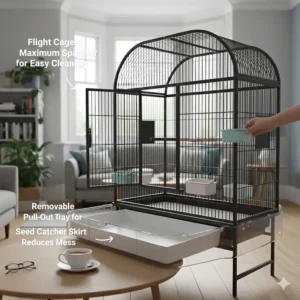
A slide-out bottom tray is essential for your bird cage buying guide. This feature allows daily cleaning without disturbing your birds. Look for trays with raised edges to contain bedding and droppings, and ensure they’re made from easy-to-clean materials like metal or coated plastic.
Some premium cages feature grates that separate birds from the tray, preventing contact with droppings and reducing disease risk. This design also discourages ground-dwelling, which can lead to health issues in certain species.
Wire guards around the base help contain scattered seeds and droppings, keeping your home tidier. These guards should be high enough to be effective but not so high that they impede ventilation or visibility.
Mobility and Placement Options
Wheeled stands offer tremendous flexibility, allowing you to move cages for cleaning, social interaction, or environmental changes. Look for stands with at least two locking wheels to prevent unwanted movement.
The stand height should position the cage at a comfortable level for interaction – typically eye level when you’re seated. This promotes bonding and makes daily care less physically demanding. Storage shelves beneath the cage provide convenient organisation for supplies.
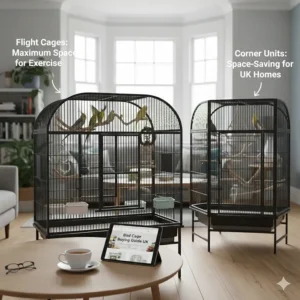
Consider where you’ll place the cage before purchasing. RSPCA recommendations suggest avoiding kitchens (cooking fumes are dangerous), areas with direct sunlight, or draughty spots near doors and windows. The cage should be against a solid wall with the top partially covered to help birds feel secure.
Bird Cage Material Safety and Durability
Understanding Metal Finishes
Powder coating involves applying dry powder electrostatically, then curing it with heat to create a hard, protective finish. This process produces durable, chip-resistant surfaces that don’t contain harmful solvents. Quality powder coating should resist rust and corrosion for years.
Cheaper painted finishes may chip more easily, exposing bare metal underneath. If you notice chipping, inspect the exposed metal carefully. Galvanised metal (containing zinc) should never be left exposed, as birds will inevitably chew it. According to veterinary research on metal toxicity, even small amounts of zinc can cause serious illness.
Stainless steel requires no coating and offers superior durability. Grades 304 and 316 are safest, providing complete resistance to rust and corrosion. Whilst more expensive initially, stainless steel cages can last 50+ years with proper care.
Avoiding Toxic Materials
Never use galvanised wire cages without proper treatment. Zinc oxide (white rust) forms naturally on galvanised surfaces and is highly toxic when ingested. If you must use galvanised wire, scrub it thoroughly with vinegar to remove loose particles and zinc oxide.
Brass and copper components should be avoided entirely. Brass contains both zinc and copper, whilst copper itself can cause toxicity in sufficient quantities. Stick to stainless steel or nickel-plated hardware for latches, hooks, and cage accessories.
Old or antique cages may contain lead-based paints. Unless you can verify the paint composition, assume older painted cages are unsafe. The aesthetic appeal simply isn’t worth the health risk to your beloved bird.
Welding Quality and Construction
Examine cage welds carefully. Smooth, consistent welds indicate quality construction, whilst irregular or pitted welds suggest manufacturing shortcuts. Poor welding can create sharp edges that injure birds and weak points where the cage may eventually fail.
Avoid “punched” or “drilled” cages where vertical bars aren’t welded at all horizontal connection points. Water can enter hollow support bars through unwelded joints, causing internal rust that weakens the structure over time.
Quality cages use welded construction throughout, with all joints properly sealed and finished. This ensures long-term structural integrity and prevents potential injury from loose or protruding wire ends.
Bird Cage Maintenance and Cleaning Tips
Daily Maintenance Routines
Remove and replace cage liners daily to prevent bacterial growth and odour. Newspaper works excellently and is readily available, though some UK bird owners prefer purpose-made cage liners or corn cob bedding. Whatever you choose, consistency is key to maintaining hygiene.
Spot-clean droppings from perches and toys using bird-safe disinfectant. A simple solution of water and white vinegar works well for quick cleanups. Food and water dishes should be washed daily with hot, soapy water and thoroughly rinsed.
Inspect the cage for signs of damage or wear. Check that latches function properly, perches remain secure, and there are no sharp edges developing from wear or bird damage. Early detection prevents potential injuries.
Weekly Deep Cleaning
Once weekly, remove your bird and thoroughly clean the entire cage. A mixture of hot water, washing-up liquid, and white vinegar tackles most grime effectively. For stubborn stains, baking soda paste works wonders without toxic chemicals.
Scrub all bars, perches, toys, and accessories. Pay particular attention to corners and crevices where bacteria accumulate. Rinse everything thoroughly – soap residue can irritate birds’ sensitive respiratory systems.
Allow the cage to dry completely in sunlight if possible. UV rays provide natural disinfection and help eliminate lingering odours. Replace worn perches, damaged toys, and frayed ropes during weekly cleaning sessions.
Preventing Rust and Corrosion
Dry the cage thoroughly after washing to prevent rust spots. Even powder-coated and stainless steel cages benefit from complete drying, as moisture can seep into joints and cause problems over time.
For outdoor aviaries or cages in humid environments, check regularly for rust development. Address any rust spots immediately by sanding the affected area and applying bird-safe paint or coating.
Store cleaning supplies separately from bird food and toys. Even bird-safe cleaners can contaminate food if stored improperly. Keep everything organised in sealed containers to maintain freshness and prevent cross-contamination.
Choosing the Right Cage for Different Bird Species
Budgies and Small Parakeets
Budgies need horizontal space more than vertical height, as they’re active flyers who enjoy darting side to side. Minimum cage dimensions should be 60×40×40cm for a single budgie, though 80×50×50cm or larger is preferable. Bar spacing of 1-1.5cm prevents escapes whilst ensuring proper ventilation.
For pairs or small groups, increase width significantly. Multiple budgies establish territories and flight patterns, requiring adequate space to avoid conflicts. The Yaheetech Large Budgie Flight Cage mentioned earlier provides excellent horizontal space for active flying.
Include varied perch diameters (0.8-1.5cm thick) to exercise feet and prevent bumblefoot. Natural wooden perches are superior to uniform plastic ones. Add toys, mirrors, and bells – budgies are playful and benefit from mental stimulation.
Cockatiels and Conures
Cockatiels combine flying and climbing behaviours, requiring both horizontal and vertical space. Minimum dimensions of 80×60×60cm suit a single cockatiel, though larger is always better. Bar spacing should be 1.5-2cm.
Conures are more robust and energetic, benefiting from sturdy cages with thick bars that withstand vigorous chewing. The Yaheetech 160cm Open Top Cage works brilliantly for these species, offering climbing opportunities and an open play area.
Provide multiple perch heights at varying diameters. Cockatiels and conures love climbing and exploring different levels. Include foraging toys, rope perches, and swings to keep them engaged and mentally stimulated.
African Greys and Amazon Parrots
Large parrots demand substantial space and robust construction. African Greys need minimum dimensions of 90×90×120cm, whilst Amazons require similar or larger. Bar spacing of 2-2.5cm provides security without restricting airflow.
Bar thickness is crucial – these powerful birds can bend thin bars, creating dangerous gaps. Look for cages with 3-4mm diameter bars made from heavy-gauge steel. The Yaheetech 175cm Deluxe provides appropriate space and construction for these impressive species.
Large parrots are highly intelligent and easily bored. Rotate toys regularly, include foraging opportunities, and ensure plenty of perches for climbing. Consider play-top designs that allow supervised out-of-cage time whilst remaining securely tethered.
Finches and Canaries
Finches and canaries are dedicated flyers who rarely climb. Prioritise cage width over height – a cage 90cm wide × 40cm deep × 50cm high suits finches better than a tall, narrow alternative. Bar spacing should be 0.8-1.5cm maximum.
Multiple finches can coexist peacefully if provided adequate space. Add 10% to cage dimensions for each additional bird. Include numerous thin perches (0.5-1cm diameter) positioned at different heights to encourage flying between them.
Avoid overcrowding with toys. Finches need clear flight paths more than interactive playthings. A few swings and bells suffice, leaving open space for exercise. According to Omlet’s finch cage guide, horizontal flight space is the single most important factor for these species.
Cage Placement and Environmental Considerations
Temperature and Ventilation
Position cages away from radiators, fireplaces, and other heat sources. Most pet birds thrive at 18-24°C – temperatures UK homes naturally maintain. Sudden temperature fluctuations stress birds and compromise immunity.
Avoid draughty areas near doors, windows, or air conditioning vents. Birds are surprisingly sensitive to drafts, which can cause respiratory problems. Place a hand near potential cage locations to detect air currents you might not notice otherwise.
Ensure adequate ventilation without creating drafts. Kitchens are particularly dangerous – cooking fumes, especially from non-stick cookware, can be fatal to birds. According to RSPCA environmental guidelines, kitchens should be completely off-limits for bird cages.
Light and Seasonal Considerations
Birds need 10-12 hours of darkness for proper rest. Position cages where you can easily cover them at night without disturbing the household. Natural light cycles help regulate hormones and behaviour, so avoid keeping birds in constantly lit rooms.
Direct sunlight can overheat cages quickly. Whilst some sun exposure benefits vitamin D synthesis, monitor temperature carefully and provide shaded areas. In summer, even morning sun can create dangerous heat buildup in poorly ventilated cages.
UK winters bring shorter daylight hours. Consider full-spectrum lighting that mimics natural sunlight, particularly for species from tropical regions. These bulbs support vitamin D production and promote natural behaviours throughout darker months.
Social Interaction and Placement
Position cages at approximately eye level when seated. This promotes bonding and ensures your bird feels included in family activities. Cages placed too high can encourage dominance behaviours in parrots, whilst low placement may cause insecurity.
Against a solid wall works best, giving birds a sense of security from behind. Covering the top partially with a cloth provides additional safety – birds instinctively watch for aerial predators and appreciate overhead protection.
Family rooms suit social species like budgies and cockatiels who thrive on interaction. However, ensure the cage isn’t directly beside televisions or speakers – excessive noise stresses birds and can damage delicate hearing.
Price Range and Value Analysis
Budget Options (£30-£60)
Budget cages serve well for first-time owners, temporary housing, or very small species. The Savic Primo 50 exemplifies this range, offering basic functionality without unnecessary features. These cages typically use thinner metal, simpler construction, and minimal accessories.
Quality varies significantly in this price bracket. Some budget cages represent genuine value, whilst others are false economies that require replacement within months. Read UK customer reviews carefully, paying attention to long-term durability reports rather than initial impressions.
Budget cages work well for single budgies, canaries, or finches as starter homes. However, plan to upgrade within 1-2 years as your confidence and understanding of bird needs grows. Consider these introductory investments rather than long-term solutions.
Mid-Range Options (£60-£130)
Mid-range cages like the Yaheetech 132cm and PawHut Large Bird Cage offer excellent value for most UK bird owners. This price point delivers robust construction, adequate accessories, and features like wheeled stands and multiple access doors.
Powder-coated steel construction dominates this segment, providing good durability without premium pricing. Bar spacing and construction quality are generally appropriate for intended species. Expect 5-10 years of service with proper maintenance.
This range suits most common pet birds including budgies, cockatiels, small conures, and lovebirds. The investment balances quality with affordability, making it ideal for committed bird owners who want lasting value without breaking the bank.
Premium Options (£130-£200+)
Premium cages feature superior materials, thoughtful design, and exceptional durability. The Yaheetech 175cm Deluxe represents this category’s lower end, whilst stainless steel cages can exceed £500. Construction quality, finish perfection, and included accessories justify higher prices.
These cages suit large parrots, multiple bird households, or owners wanting maximum longevity. Stainless steel options last 50+ years – effectively a lifetime purchase. Enhanced features like play-tops, multiple levels, and sophisticated locking systems add convenience and safety.
For serious aviculturists or owners of expensive bird species, premium cages make economic sense. The initial investment prevents repeated replacements and provides optimal living conditions that promote bird health and happiness.
Benefits vs Traditional Smaller Cages
| Aspect | Large Quality Cages | Small Budget Cages |
|---|---|---|
| Bird Wellbeing | Promotes natural behaviours, reduces stress | Limited movement, potential frustration |
| Longevity | 5-10+ years with care | 1-3 years typical lifespan |
| Features | Multiple doors, wheels, accessories | Basic design, minimal access |
| Resale Value | Retains 40-60% value | Minimal resale market |
| Maintenance | Easier cleaning with slide trays | More labour-intensive |
| Total Cost (5yr) | £12-26 annually | £20-40 annually (replacements) |
Accessories and Enrichment
Essential Perches and Platforms
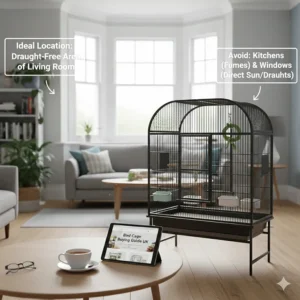
Varied perch diameters exercise feet and prevent arthritis. Include at least three different thickness levels ranging from pencil-thin to thumb-thick. Natural wooden perches from apple, willow, or hazel trees provide texture variety and safe chewing opportunities.
Position perches at different heights to encourage climbing and hopping. Avoid placing perches directly above food and water dishes – droppings contaminate eating areas. According to enrichment specialists, perch placement significantly impacts bird activity levels.
Rope perches suit some species but require regular inspection for fraying. Ingested rope fibres can cause crop impaction, a serious medical emergency. Replace rope perches at first signs of significant wear.
Toys and Mental Stimulation
Rotate toys weekly to maintain novelty and interest. Birds quickly bore of static environments, leading to behavioural problems like feather plucking or excessive vocalisations. A rotation system provides variety without costly constant purchasing.
Foraging toys encourage natural food-seeking behaviours. These range from simple cardboard tubes stuffed with treats to complex puzzle feeders. Foraging occupies intelligent species like parrots and conures, reducing destructive behaviours born from boredom.
Chewing toys are essential for species with continuously growing beaks. Cuttlebone, mineral blocks, and wooden toys serve both entertainment and beak maintenance. Monitor wear patterns – excessive or absent chewing can indicate health issues requiring veterinary attention.
Food and Water Stations
Stainless steel dishes resist bacterial growth better than plastic alternatives. They’re also dishwasher-safe and virtually indestructible. Position dishes where birds can access them easily without perching directly above them.
Multiple feeding stations reduce competition in multi-bird cages. Dominant birds may prevent subordinates from eating, leading to malnutrition in group situations. Separate stations positioned throughout the cage ensure all birds access food.
Consider cage-mounted water bottles for cleaner water. Open dishes accumulate droppings and food debris quickly, requiring multiple daily changes. Bottles maintain cleaner water longer, though some species resist using them initially.
Common Bird Cage Buying Mistakes
Prioritising Aesthetics Over Function
Attractive cages catch the eye, but decorative scrollwork and intricate designs create entrapment hazards. Birds can wedge heads, feet, or wings in ornamental features, causing panic and injury. Functional designs with clean lines prioritise safety over visual appeal.
Coloured cages might coordinate with your décor beautifully, but ensure powder coating quality isn’t compromised for aesthetics. Cheap coloured finishes chip more readily than standard hammertone black or white, potentially exposing toxic metals underneath.
Focus on your bird’s needs first, aesthetics second. A happy, healthy bird in a functional cage brings far more joy than a stressed bird in a showcase piece. Fortunately, many modern cages combine attractive design with proper functionality.
Underestimating Space Requirements
“They’re just small birds” is a dangerous assumption. Even budgies need substantial space for healthy living. Minimum size recommendations represent absolute floors, not ideals. Larger cages invariably improve bird wellbeing and behaviour.
Consider your bird’s wingspan, not just body size. A 12cm budgie has a 25cm wingspan requiring proportionate space. Multiple birds need exponentially more room, not just slightly larger cages.
Future-proof your purchase by choosing larger than currently necessary. Birds live 10-20+ years, and upgrading cages repeatedly proves expensive and disruptive. Start with adequate space from day one.
Neglecting Cleaning Accessibility
A cage that’s difficult to clean becomes neglected, compromising hygiene and bird health. Test door sizes, tray removal, and access to corners before purchasing. If cleaning seems awkward in the shop, it’ll be worse during daily reality.
Multiple small access doors beat single large openings for routine maintenance. You can replace water without opening the entire cage, reducing escape risks and bird stress during everyday tasks.
Removable components simplify deep cleaning. Cages that disassemble partially allow thorough washing without complete dismantling. This encourages regular maintenance rather than dreading major cleaning sessions.
FAQ: Your Bird Cage Questions Answered
❓ What's the minimum cage size for two budgies in the UK?
❓ Are powder-coated bird cages safe for parrots?
❓ How often should I replace my bird's cage?
❓ Can I use a second-hand bird cage safely?
❓ What cage features are essential for first-time bird owners?
Conclusion: Making Your Final Decision
Choosing the right bird cage buying guide has hopefully equipped you with the knowledge to make an informed decision. Remember, this cage will be your feathered friend’s home for years to come, so invest time in research just as you would for any significant purchase.
The products I’ve reviewed represent excellent options across various price points and species requirements. The Yaheetech 132cm Large Parrot Cage offers outstanding value for most UK bird owners, combining quality construction with affordability. For budget-conscious buyers, the Savic Primo 50 provides adequate starter accommodation, whilst the Yaheetech 175cm Deluxe suits those seeking premium space and features.
Prioritise safety above all else. Appropriate bar spacing, non-toxic materials, and robust construction prevent injuries and health issues. Size matters tremendously – always choose the largest cage your space and budget allow. Your bird’s physical and mental wellbeing depends on adequate room to fly, climb, and express natural behaviours.
Consider long-term costs beyond initial purchase. Quality cages require less frequent replacement and often feature better-designed cleaning systems that save time and effort. Factor in accessories, replacement parts, and potential veterinary bills from inadequate housing when budgeting.
Most importantly, observe your bird’s behaviour in their new home. Happy birds vocalise pleasantly, preen regularly, and move confidently throughout their cage. Signs of stress like excessive screaming, feather plucking, or listlessness may indicate housing inadequacies requiring attention. Your bird’s response is the ultimate bird cage buying guide – they’ll tell you if you’ve chosen well.
Recommended for You
- 7 Best African Grey Parrot Cage Sizes 2026
- 7 Best Cockatiel Cage UK 2026 – Expert Reviews & Guide
- Best Cage for 2 Budgies UK: 7 Top Picks 2026
Disclaimer: This article contains affiliate links. If you purchase products through these links, we may earn a small commission at no additional cost to you. Prices shown are approximate and may vary.
✨ Found this helpful? Share it with your mates! 💬🤗
