
In This Article
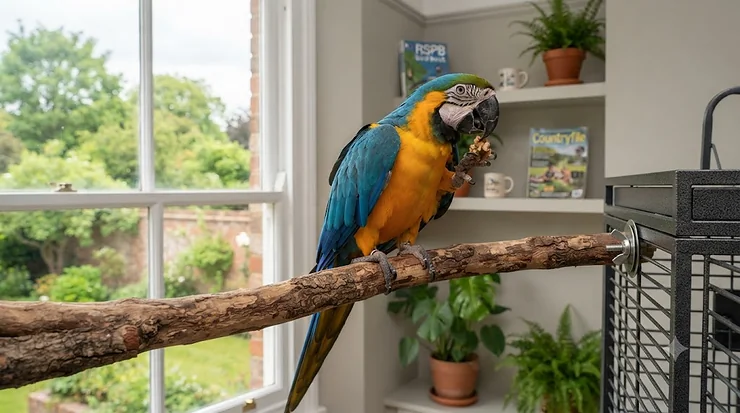
Watch a parrot in the wild for five minutes and you’ll notice something most cage setups get wrong: it never stands on the same branch twice. It hops between thick limbs, thin twigs, rough bark and smooth stems, dozens of times an hour, and every single grip is subtly different. A natural branch parrot perch is the closest thing you can bring indoors to that constantly shifting terrain, and it matters far more than most new owners realise — a bird’s feet are its lifeline, and the wrong perch, used day after day, is a genuine contributor to painful conditions like pododermatitis.
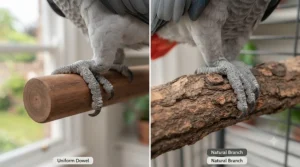
This guide takes an honest, research-grounded look at seven natural wood perches actually available on amazon.co.uk, from budget grapevine multipacks to premium java wood branches built for macaws and cockatoos. You’ll get real specs, aggregated review sentiment, and expert-level analysis of what varied diameter and texture actually do for a bird’s feet — not just marketing copy. As avian veterinary sources at VCA Animal Hospitals note, natural wood branches genuinely outperform uniform dowel perches for both nail wear and everyday comfort, which is exactly the science underpinning every recommendation below.
Whether you’re kitting out a first cage for a parakeet or hunting for a java wood bird perch tough enough for an African grey, there’s a sensible match ahead. Let’s get into it.
Quick Comparison Table
| Product | Wood Type | Diameter Range | Best For |
|---|---|---|---|
| Northern Parrots Java Straight Perch | Java wood | 3-5cm | Medium-large parrots, heavy chewers |
| Sky Pets Java Wood Multi Branch Perch | Java wood | 2-4cm | Small-medium parrots, varied grip |
| CZWESTC 8-Piece Natural Wood Perch Set | Apple wood | 1-3cm | Budgies, cockatiels, parakeets |
| Filhome Natural Wood Parrot Perch | Mixed hardwood | 2-3cm | Conures, small-medium parrots |
| kathson Grapevine Perch (3-Piece) | Grapevine | 1-2.5cm | Budgies, lovebirds, small birds |
| Allazone Natural Grapevine Sticks (4-Piece) | Grapevine | 1.5-3cm | Cockatiels, parakeets |
| Niteangel Wooden Platform Branch Perch | Natural hardwood | 2-4cm | Cockatiels, conures, budgies |
At a glance, the pattern here is diameter matching species size, not just price. A natural branch parrot perch only does its job if your bird’s toes can wrap roughly three-quarters of the way around it — too thin and the grip is unstable, too thick and the bird can’t grip at all. The java wood options at the top of this table suit the strong, heavy-bodied grip of larger parrots, while the grapevine and apple wood picks further down are proportioned for smaller feet.
💬 Just one click — help others make better buying decisions too!😊
Top 7 Natural Branch Parrot Perches: Expert Analysis
1. Northern Parrots Java Straight Perch — toughest option for heavy chewers
The Northern Parrots Java Straight Perch is built from genuine java wood, one of the hardest timbers commonly used in avian products, and it shows in how long these hold up against a determined beak. Java wood’s density means it resists splintering far better than softer natural branches, which matters enormously for larger parrots — macaws, African greys, and Amazons — capable of demolishing a soft perch within weeks. The straight branch shape, sold in varying lengths, gives a long uninterrupted run for a bird to walk, climb and rest along.
Based on the spec comparison with softer wood alternatives, this is the perch to reach for if your bird is a committed wood-destroyer and you’re tired of replacing snapped or splintered perches every month. Reviewers consistently report that java wood perches from this range last considerably longer under heavy chewing than apple or pine branches, with several UK buyers specifically noting they’ve lasted months with African greys and Amazons rather than the weeks typical of softer woods. A fair criticism raised by more than one owner is that java’s density can make it slightly less forgiving underfoot than softer natural branches, so it’s worth pairing with at least one softer perch elsewhere in the cage for variety.
Pros:
- ✅ Exceptional durability against heavy chewing
- ✅ Long straight run suits larger parrot species
- ✅ Natural bark texture aids grip and nail wear
Cons:
- ❌ Firmer underfoot than softer wood alternatives
- ❌ Premium pricing versus generic branch perches
Typically priced in the £15-£30 range depending on length, at the time of research, this sits at the premium end — but for an owner replacing splintered dowels every few weeks, the cost-per-month often works out lower over a full year.
2. Sky Pets Java Wood Multi Branch Perch — varied diameter for natural foot exercise
Where the straight perch above offers one continuous run, the Sky Pets Java Wood Multi Branch Perch takes a different approach: multiple branching stems fanning out from a single mounting point, each with a genuinely different diameter. That’s not a cosmetic detail — avian foot-health guidance consistently points to varied diameter as one of the single most important factors in preventing pressure sores, since a bird’s foot never sits in exactly the same position twice as it moves between branches.
What most buyers overlook about multi-branch perches is that the branching design also functions as enrichment, not just seating — birds naturally investigate, climb, and choose their own resting spot rather than being confined to one fixed grip all day. Aggregated review sentiment for the Sky Pets range describes it as a genuine favourite for smaller-to-medium parrots, with owners of cockatiels and conures particularly praising how the branching shape encourages more movement around the cage; a smaller number of reviews mention that the thinner offshoots can eventually snap under a larger bird’s weight, so this is better matched to small-medium species than to macaws or cockatoos.
Pros:
- ✅ Multiple diameters support natural foot exercise
- ✅ Branching shape adds genuine climbing enrichment
- ✅ Durable java wood construction
Cons:
- ❌ Thinner branches unsuited to larger, heavier parrots
- ❌ More expensive than single straight-branch options
Expect to pay roughly £12-£22 depending on size, at the time of research — solid value for the dual benefit of foot health and enrichment in one fitting.
3. CZWESTC 8-Piece Natural Wood Perch Set — best value multipack for small birds
For anyone setting up a cage from scratch, the CZWESTC 8-Piece Natural Wood Perch Set solves an underrated problem: variety costs money if you buy each perch separately, and this set delivers eight pieces — branches, forks, and small platforms — in one purchase. Made from natural apple wood, a species widely recognised on safe-wood lists as non-toxic and food-safe once properly cleaned, it’s specifically aimed at budgies, cockatiels, and other small-to-medium birds rather than large parrots.
Honestly assessed against buying individual premium branches, the real strength here is coverage: eight differently shaped pieces means a cage can genuinely hit the “several diameters and textures” recommendation that avian foot-health research repeatedly emphasises, without needing to source and mount each piece separately. Reviewers broadly praise the value for money and the tool-free bolt-and-washer installation, with several specifically mentioning noticeably reduced need for nail trims after switching from smooth dowels; a recurring, honest criticism is that individual pieces in a budget multipack like this tend to be smaller and less substantial than a single premium branch, so heavy chewers may work through them faster.
Pros:
- ✅ Eight-piece set covers multiple diameters at once
- ✅ Apple wood is a well-established safe, non-toxic species
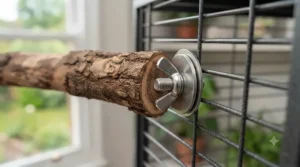
- ✅ Tool-free installation with included hardware
Cons:
- ❌ Individual pieces are smaller than premium single branches
- ❌ Less suited to large parrots or heavy chewers
Usually priced under £15 for the full set, this is one of the strongest value picks on this list for anyone prioritising foot-health variety on a budget.
4. Filhome Natural Wood Parrot Perch — dependable mid-range branch for everyday use
The Filhome Natural Wood Parrot Perch sits comfortably in the middle of this list: a single natural branch, roughly 25cm in length, made from mixed hardwood species rather than one specific premium timber, and priced to match. It’s aimed at conures, cockatiels and similarly sized birds, with a diameter that suits that middle band of species without needing the extreme density of java wood.
Based on the spec comparison with pricier java options, what you’re trading here is raw longevity against heavy chewing for a lower upfront cost, and for owners of moderate chewers rather than committed wood-destroyers, that trade-off is entirely sensible. Reviewer sentiment is generally positive on ease of fitting and natural appearance, with several owners specifically noting their bird took to the varied bark texture quickly compared with a smooth dowel it replaced; a fair number of reviews mention it needing replacement sooner than premium java branches under sustained chewing from larger conure species, which lines up with the expected trade-off for a softer wood at this price point.
Pros:
- ✅ Genuine natural branch texture and shape
- ✅ Well-suited to conures and similar mid-sized birds
- ✅ Affordable entry point into natural wood perching
Cons:
- ❌ Shorter lifespan than premium java wood under heavy chewing
- ❌ Limited size options compared with larger ranges
Typically found around £8-£14, at the time of research, this is a sensible everyday pick rather than a specialist choice — good all-rounder value.
5. kathson Grapevine Perch (3-Piece) — vet-favoured shape for foot health
Grapevine gets singled out repeatedly in avian foot-health discussions, and the kathson Grapevine Perch three-piece set is a solid, affordable way to bring that shape into a cage. Unlike a straight branch, grapevine grows in natural twists and irregular curves, meaning the diameter changes constantly along its length — exactly the kind of variation that distributes a bird’s weight across different points of the foot rather than repeatedly pressing on the same spot, which is the mechanism most directly linked to preventing pododermatitis in captive parrots.
What the spec sheet won’t tell you outright is how much the gnarled, knotty surface texture contributes here too — beyond diameter variation, the naturally rough bark and hard knots on grapevine gently file a bird’s nails during ordinary daily perching, often reducing how often formal nail trims are needed. Reviewers consistently rate this set highly for small birds — budgies, lovebirds, and similarly sized species — with owners frequently commenting on how quickly their bird gravitated to the grapevine over other perches already in the cage; a handful of reviews note the twisted shape can be slightly fiddly to mount securely at first, though most found it manageable with the included hardware.
Pros:
- ✅ Naturally varied diameter supports foot health
- ✅ Rough bark and knots help with natural nail wear
- ✅ Genuinely affordable three-piece set
Cons:
- ❌ Irregular shape can be fiddly to mount initially
- ❌ Best suited to smaller birds rather than large parrots
Typically priced under £10 for the set, at the time of research, this is one of the best value-for-benefit picks on the list given how directly it aligns with vet-recommended foot-health guidance.
6. Allazone 4-Piece Natural Grapevine Sticks — flexible sizing for mixed aviaries
Similar in concept to the kathson set above but pitched slightly differently, the Allazone Natural Grapevine Sticks come as four separate pieces rather than a single fixed multi-branch unit, which gives owners more flexibility to position them independently around a cage or aviary rather than committing to one fixed layout. This matters more than it sounds — being able to space perches at different heights and distances, rather than clustering them all from one mounting point, better reflects how a bird would naturally move between branches in the wild.
Honestly, for households with more than one bird or a larger flight cage, that independent placement is the real advantage over fixed multi-branch perches: you can spread genuine variety across the whole space rather than concentrating it in one corner. Aggregated reviewer feedback is positive on durability and natural appearance, with owners of cockatiels and parakeets particularly favourable; a recurring comment is that, being genuine natural branches, sizing varies piece to piece, so it’s worth expecting some inconsistency rather than uniform dimensions across the set.
Pros:
- ✅ Independent pieces allow flexible cage placement
- ✅ Natural grapevine variation supports foot health
- ✅ Good match for parakeets and cockatiels
Cons:
- ❌ Piece-to-piece size can be inconsistent
- ❌ Not substantial enough for large parrot species
Usually priced in the £8-£13 range, at the time of research, this is a practical pick for anyone managing more than one bird or a larger enclosure.
7. Niteangel Wooden Platform Branch Perch — dual-purpose branch and standing platform
Rounding out the list, the Niteangel Wooden Platform Branch Perch combines a natural branch section with an attached flat platform, giving a bird both a rounded gripping surface and a flatter resting spot in one fitting. That dual design is a genuinely practical solution for mixed-use cages — the platform doubles as a stable feeding or resting spot, while the branch section still delivers the varied-diameter benefit that a flat platform alone can’t provide.
Based on the spec comparison with single-branch perches, the trade-off here is that you’re paying for two functions in one unit rather than maximising branch length, which suits owners short on cage space more than those with room for several separate items. Reviewer sentiment highlights the platform as particularly useful for older or less agile birds that benefit from a stable flat resting area alongside a natural perching option; a fair criticism from a minority of buyers is that the branch portion is shorter than a comparable standalone branch perch, since space is shared with the platform.
Pros:
- ✅ Combines natural branch grip with a stable platform
- ✅ Space-efficient for smaller or crowded cages
- ✅ Useful for older or less agile birds
Cons:
- ❌ Shorter branch section than standalone perches
- ❌ Platform surface needs more frequent cleaning
Typically priced around £10-£16, at the time of research, this is a smart pick for anyone balancing foot-health needs against limited cage space.
Top 7 Products: Specs & Value Comparison
| Product | Wood/Material | Diameter Range | Refill/Replace Frequency | Price Range | Best For |
|---|---|---|---|---|---|
| Northern Parrots Java Straight | Java wood | 3-5cm | Low (very durable) | £15-£30 | Large heavy chewers |
| Sky Pets Java Multi Branch | Java wood | 2-4cm | Low-moderate | £12-£22 | Small-medium, enrichment |
| CZWESTC 8-Piece Set | Apple wood | 1-3cm | Moderate | Under £15 | Small birds, variety |
| Filhome Natural Branch | Mixed hardwood | 2-3cm | Moderate | £8-£14 | Conures, moderate chewers |
| kathson Grapevine 3-Piece | Grapevine | 1-2.5cm | Moderate | Under £10 | Foot-health priority, small birds |
| Allazone Grapevine 4-Piece | Grapevine | 1.5-3cm | Moderate | £8-£13 | Multi-bird cages, flexibility |
| Niteangel Platform Branch | Natural hardwood | 2-4cm | Low-moderate | £10-£16 | Space-limited cages |
Reading across this table, the clearest signal is that java wood options justify their higher price with genuinely lower replacement frequency — useful context if you’re weighing sticker price against how often you’ll be back on amazon.co.uk reordering. The kathson Grapevine Perch stands out as the strongest pure foot-health value pick, since its natural diameter variation does the most vet-recommended work per pound spent, even though it won’t survive a determined macaw the way java wood will.
Benefits vs Traditional Dowel Perches
| Factor | Natural Branch Perches | Standard Dowel Perches |
|---|---|---|
| Diameter variation | Constant, natural | None — uniform throughout |
| Foot pressure distribution | Spread across foot | Concentrated on same spot |
| Nail wear | Natural, ongoing | Minimal |
| Chewing enrichment | High (bark, wood texture) | Low |
| Typical lifespan | Moderate (varies by wood) | Long but foot-health cost |
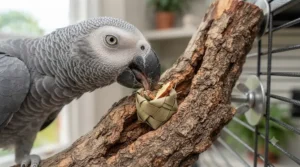
The core problem with dowel perches isn’t that they’re unsafe outright — it’s that their perfectly uniform diameter means a bird’s foot presses on exactly the same points, hour after hour, day after day. Veterinary sources describe this repeated pressure as a direct contributor to pododermatitis, since the plantar surface of the foot never gets a break from load in the same spot. Natural branches solve this simply by not being uniform: every few centimetres, the diameter shifts slightly, which redistributes where the weight lands. The trade-off is that natural wood generally doesn’t last as long as a dense synthetic dowel, but most avian care sources consider that an acceptable cost given what’s at stake for foot health.
Practical Usage Guide: Setting Up Natural Perches Correctly
Getting a natural branch parrot perch home is only the first step — how you install and rotate it matters just as much as which one you buy. Start by inspecting every branch on arrival for sharp splinters, loose bark, or any sign of mould before it goes anywhere near the cage; a quick wipe-down with a damp cloth and full air-dry is sensible even for pre-cleaned commercial products. Position perches at varying heights across the cage rather than all at one level, since height variation encourages more natural movement and exercise than a flat row of identical-height perches ever will.
A common mistake in the first month is mounting every new perch in exactly the same spot as the old dowel it replaced — instead, spread your different diameters and textures around the cage so your bird genuinely has to adjust its grip as it moves, rather than settling on one favourite spot and ignoring the rest. Always leave the perch nearest food and water bowls slightly wider and more stable, since that’s where a bird spends disproportionate time balancing while eating. For maintenance, check branches every few weeks for chew damage, splintering, or loose bark that could trap a toe, and replace promptly once a branch starts looking structurally compromised rather than waiting for it to fail completely.
Real-World Scenarios: Which Perch Suits Your Bird
The dedicated wood-chewer (African grey, Amazon, macaw): Durability has to come first here, or you’ll be reordering every few weeks. A Northern Parrots Java Straight Perch as the primary perch, backed up by a softer secondary branch elsewhere in the cage for variety, gives the best balance of longevity and foot health for a determined chewer.
The small bird starter cage (budgie, lovebird, cockatiel): Foot-health variety matters more than raw toughness at this scale, and cost adds up fast with multiple birds. The CZWESTC 8-Piece Set or kathson Grapevine Perch cover this brief affordably, giving genuine diameter variation without overspending on wood a small bird won’t destroy anyway.
The multi-bird aviary or flight cage: Flexibility to space perches independently across a larger area matters here more than any single fixed unit. The Allazone Grapevine Sticks, mounted separately at different heights and distances, better reflect natural branch spacing than a single clustered multi-branch perch would.
How to Choose a Natural Branch Parrot Perch
- Match diameter to your bird’s foot size first. As a rule of thumb, your bird’s toes should wrap roughly three-quarters of the way around — too tight or too loose both cause problems over time.
- Check the wood species against a safe-wood list. Java, apple, ash, willow and grapevine are all widely recognised as safe; avoid anything from the Prunus family (cherry, plum, apricot) unless verified pesticide- and pit-free.
- Prioritise variety over a single “perfect” perch. Multiple diameters across the cage do more for foot health than any one ideal perch alone.
- Weigh durability against your bird’s chewing habits. A committed chewer needs denser wood like java; a light chewer can use softer, cheaper branches without frequent replacement.
- Inspect bark and texture, not just shape. Rough, knotted bark supports natural nail wear far better than a smooth, sanded surface.
- Consider cage size and available mounting points. Multi-branch or platform-combo perches can deliver more benefit per fitting in a smaller or more crowded cage.
- Plan for rotation and replacement from day one. Natural wood wears out faster than plastic or metal — budget for periodic replacement rather than treating any perch as permanent.
What is a Natural Branch Parrot Perch?
A natural branch parrot perch is a length of untreated, bird-safe wood — often java wood, apple, grapevine, or similar hardwood — mounted inside a cage to give a bird a varied, irregular gripping surface that mimics wild branches, supporting healthier feet, natural nail wear, and chewing enrichment.
Natural Branch Perches vs Rope Perches: Which Wins Where
Rope perches come up constantly as the other “soft, foot-friendly” alternative to dowels, so it’s worth an honest comparison. Rope offers a genuinely different benefit to natural wood: it’s soft, warm underfoot, and can be shaped or bent to fit awkward cage geometry, which makes it a favourite for sleeping perches and for birds with existing foot issues who need extra cushioning. The trade-off is hygiene and durability — rope absorbs moisture and droppings in a way solid wood doesn’t, requires more frequent washing or replacement, and strands can occasionally catch a nail or toe if the weave starts to fray.
Natural branch perches, by contrast, offer that same diameter-variation benefit without the moisture-retention downside, and generally hold up better to a determined chewer since there’s no woven strand to unravel. Most experienced owners and avian care guides land on the same conclusion: use both, not one exclusively — natural wood as the primary daytime and chewing perch, rope reserved for a cushioned sleeping spot or for birds recovering from foot problems where extra softness genuinely helps.
Safe Wood for Parrots: What to Use and What to Avoid
Not every branch that looks natural is actually safe, and getting this wrong matters. Recognised safe species for perches and toys include java wood, apple, ash, willow, grapevine, dogwood, and manzanita — all non-toxic once verified untreated and properly cleaned. Species to avoid altogether include anything from the Prunus family (cherry, plum, apricot, peach, nectarine), which can contain cyanogenic compounds in the wood itself, along with any redwood, due to oils that are considered toxic, and any wood treated with pesticides, varnish, or preservatives, regardless of species.
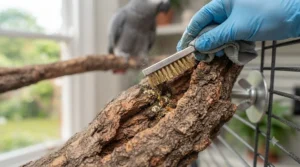
If you’re sourcing branches yourself rather than buying pre-cleaned commercial perches, the Woodland Trust’s tree identification guidance is a genuinely useful starting point for confirming exactly which UK garden or hedgerow tree you’re dealing with before offering it to your bird — misidentifying a species is one of the more common and avoidable mistakes new owners make. Whatever the source, always scrub branches with a stiff brush under running water, avoid anything collected near roads or treated gardens, and let wood dry fully before it goes anywhere near a cage.
Bird Foot Health: Why Perch Variety Actually Matters
This is worth explaining properly rather than taking on faith, because the mechanism is genuinely well understood in avian veterinary literature. A parrot’s foot has a locking mechanism that keeps it gripped tight around a perch, including while sleeping — useful for balance, but it means the same points on the plantar (underside) surface bear weight almost continuously if the perch diameter never changes. Over time, that constant, unvaried pressure can develop into pododermatitis, commonly called bumblefoot: initial redness and thinning of the skin that can progress, if unaddressed, into painful ulceration and, in severe cases, infection reaching bone.
According to veterinary guidance published via the International Veterinary Information Service, perches with no diameter variation are a recognised contributing factor to this condition, alongside obesity, poor diet, and inadequate exercise. The fix isn’t complicated — it’s simply offering several perches of genuinely different diameters and textures throughout the cage, so no single spot on the foot takes the full, repeated load. This is precisely why natural branches consistently outperform dowels in vet guidance: irregularity isn’t a manufacturing flaw, it’s the entire point.
Common Mistakes When Buying a Parrot Perch
One of the most frequent errors is buying a single “ideal” perch and assuming the job is done — foot health depends on variety across multiple perches, not one perfect one. Another common misstep is choosing diameter based on the bird’s overall size rather than actual foot span; a large-bodied but small-footed species can still need a narrower perch than its size suggests. Owners also regularly underestimate how quickly softer natural woods wear down under a determined chewer, leading to a perch that looks fine on delivery but needs replacing within weeks. Finally, it’s easy to overlook proper cleaning and drying of natural branches before installation, which risks introducing mould or pests picked up during storage or transport.
Long-Term Cost & Maintenance
Natural wood perches cost more to maintain over time than a one-off plastic or metal fitting, simply because wood wears, chews down, and eventually needs replacing — but that ongoing cost buys something a permanent perch can’t: genuine foot-health benefit. Budget for replacing softer branches every few months under moderate chewing, and expect premium java wood options to last considerably longer, sometimes six months to a year even with a committed chewer. Maintenance itself is straightforward: wipe down or lightly scrub perches periodically, check for loose bark or splintering every few weeks, and replace promptly once a branch shows structural wear rather than waiting for it to fail while your bird is on it.
Features That Actually Matter (And Those That Don’t)
Genuinely useful: diameter variation along the branch, rough natural bark texture, and confirmed safe wood species. Genuinely secondary: colour or visual “prettiness” of the wood, and elaborate multi-branch shapes that look impressive but don’t actually offer more diameter variation than a simpler design. Worth having but not essential: tool-free mounting hardware, which makes rotation and replacement easier but doesn’t affect the perch’s actual foot-health performance once installed.
Perches for Different Audiences: Matching Species to Wood
Small birds — budgies, lovebirds, canaries — do best with thinner grapevine or apple wood branches in the 1-2.5cm range, since their tiny feet need proportionally narrow diameters to grip properly. Medium birds — cockatiels, conures, small parrots — sit comfortably in the 2-4cm range, where multi-branch java or mixed hardwood options like the Sky Pets Java Wood Multi Branch Perch genuinely shine. Large parrots — African greys, Amazons, macaws, cockatoos — need substantial 3-5cm+ branches with real structural strength, which is exactly where dense java wood options like the Northern Parrots Java Straight Perch earn their premium price. Getting this size match right is arguably more important than any other single buying decision on this list.
Buyer’s Decision Framework
If your bird is a large, powerful chewer, choose dense java wood because softer alternatives simply won’t survive and you’ll spend more replacing them than you would on one durable branch upfront. If your priority is foot health above all else, choose grapevine because its naturally irregular shape does the most vet-recommended diameter-variation work per pound spent. If you’re on a tight budget setting up a first cage, choose a multipack like the CZWESTC 8-Piece Set because it delivers variety across several perches for less than buying premium branches individually. And if cage space is genuinely limited, choose a combination platform-branch design like the Niteangel Wooden Platform Branch Perch because it delivers two functions from one fitting.
FAQ
❓ How often should you replace a natural branch parrot perch?
❓ What is the best wood for parrot perches?
❓ Do natural perches really help with foot health?
❓ How many perches does a parrot cage need?
❓ Is grapevine or java wood better for parrots?
Conclusion
Choosing the right natural branch parrot perch comes down to two honest questions: how big and powerful is your bird’s beak, and how seriously do you want to take foot-health variety? For committed chewers and larger species, the Northern Parrots Java Straight Perch and Sky Pets Java Wood Multi Branch Perch deliver the durability and diameter range that heavier birds genuinely need. For smaller birds and foot-health priority setups, the kathson Grapevine Perch and CZWESTC 8-Piece Set offer excellent value for the science-backed benefits they provide. And for owners juggling multiple birds or limited space, the Allazone Grapevine Sticks and Niteangel Wooden Platform Branch Perch solve those specific practical problems well.
Whichever you choose, remember that no single perch does the whole job — the real win comes from combining several different diameters, textures and wood types across the cage, exactly the way a wild parrot would encounter branches in its own habitat. Get that variety right, alongside proper cleaning and timely replacement, and you’re giving your bird’s feet the best realistic setup available outside the rainforest canopy.
✨ Don’t Miss These Exclusive Deals!
🔍 Take your parrot’s cage setup to the next level with these carefully selected natural perches. Click on any highlighted product to check current pricing and availability on amazon.co.uk. The right mix of perches will help support genuinely healthier feet and happier, more active birds.
Recommended for You
- Hanging Bird Play Gym: 7 Best Cage Top Gyms Reviewed (2026)
- Standing Bird Play Gym: 7 Best Picks for UK Parrots (2026)
- Tabletop Bird Play Gym 2026: 7 Best Compact Picks
Disclaimer: This article contains affiliate links. As an Amazon Associate, I earn from qualifying purchases. If you purchase products through these links, we may earn a small commission at no additional cost to you.
✨ Found this helpful? Share it with your friends! 💬🤗
