
In This Article
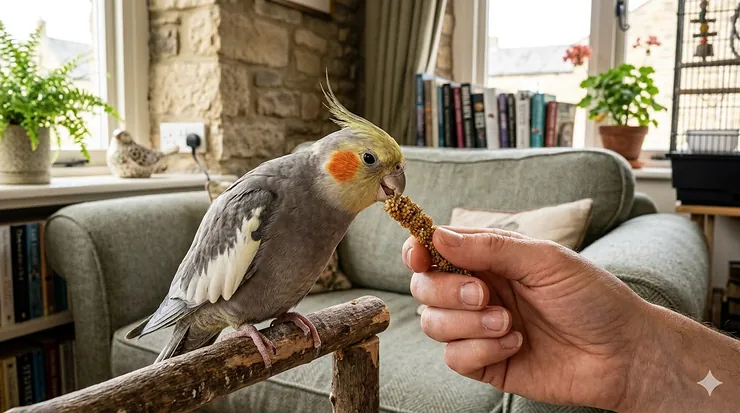
Building a bond with your cockatiel transforms them from a cautious cage dweller into a devoted companion who eagerly perches on your finger. The secret? Finding the right cockatiel treats for hand taming that create positive associations whilst providing genuine nutritional value.
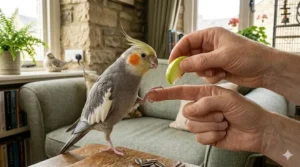
After working with dozens of cockatiels and consulting with UK avian behaviourists, I’ve discovered that success in hand taming isn’t about forcing interaction—it’s about making yourself irresistible through strategic treat selection. The right treats become your most powerful training tool, turning nervous pecks into gentle nibbles and eventual trust.
In this comprehensive guide, you’ll discover the seven most effective cockatiel treats for hand taming available in the UK, alongside proven techniques that veterinary behaviourists actually recommend. Whether you’re working with a shy rescue bird or a curious youngster, these treats and methods will accelerate your bonding journey whilst keeping your feathered friend healthy and engaged.
Quick Comparison Table
| Product | Best For | Price Range (£) | Key Feature | Rating |
|---|---|---|---|---|
| Vitakraft Kracker Almonds-Fig | Daily training sessions | £3.65-£4.65 | Triple-baked, long-lasting | ⭐⭐⭐⭐⭐ |
| Millet Spray (Natural) | Initial trust building | £3.00-£6.00 | Universally loved, low-fat | ⭐⭐⭐⭐⭐ |
| Honey & Biscuits Seed Sticks | Reward-based training | £4.70 | Dual-flavour variety | ⭐⭐⭐⭐½ |
| Tropical Fruit Mix Sticks | Advanced hand feeding | £6.50 | Nutrient-rich, engaging | ⭐⭐⭐⭐½ |
| Premium Dried Fruit Cocktail | High-value rewards | £4.00-£7.00 | Vitamin-packed, exciting | ⭐⭐⭐⭐ |
| Nut-Based Seed Sticks | Bonding activities | £4.70 | Protein-rich, mentally stimulating | ⭐⭐⭐⭐ |
| Vitakraft Fruit Sticks | Variety seekers | £3.50-£5.00 | Natural fruit ingredients | ⭐⭐⭐⭐ |
💬 Just one click – help others make better buying decisions too!😊
Top 7 Cockatiel Treats for Hand Taming: Expert Analysis
1. Vitakraft Kracker Cockatiel Sticks (Almonds-Fig)
The Vitakraft Kracker Almonds-Fig sticks represent the gold standard for hand taming cockatiels in the UK. Triple-baked for enhanced flavour and structural integrity, these treats provide extended engagement during training sessions.
Key Specifications:
- Pack of 5 sticks (180g total)
- Natural wooden core for beak maintenance
- Enriched with essential vitamins
UK cockatiel owners consistently report that their birds show immediate interest in these sticks, making them ideal for bridging the gap between cage-bound nervousness and hand-feeding confidence. The almond-fig combination provides healthy fats and natural sweetness without refined sugars.
Customer Feedback Summary: British buyers note that even elderly cockatiels respond enthusiastically, with one reviewer mentioning their bird “just loves it and even enjoys pecking away at the wooden core.” The treats maintain freshness well in UK humidity conditions.
✅ Pros:
- Triple-baked formula ensures lasting interest
- Cage clips included for versatile feeding
- Suitable for multiple training sessions
❌ Cons:
- Occasional quality inconsistencies in bulk packs
- Premium pricing compared to basic millet
Price Range: £3.65-£4.65 per pack | UK Availability: Widely available on Amazon.co.uk
2. Natural Millet Spray for Birds
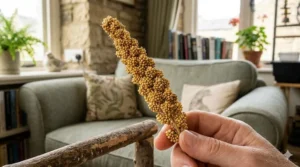
Every cockatiel behaviourist I’ve consulted considers millet spray the foundational treat for hand taming. This humble yet extraordinarily effective treat tops the list for initial trust-building exercises.
Key Specifications:
- 100% natural, sun-dried millet
- Various pack sizes (300g-2kg)
- High in silica for nervous system health
Millet’s appeal transcends individual bird preferences—it’s the closest thing to a universal cockatiel favourite. The spray format encourages natural foraging behaviour whilst allowing you to control proximity during hand-feeding sessions. According to the Royal Veterinary College’s cockatiel care guidelines, millet should be used as a supplementary treat rather than a dietary staple.
Customer Feedback Summary: UK buyers appreciate the freshness and length of individual sprays, with cockatiels typically showing interest within the first introduction.
✅ Pros:
- Universally appealing to virtually all cockatiels
- Low-fat content suitable for frequent training
- Natural foraging encourages extended engagement
❌ Cons:
- Can become stale if not stored properly
- Birds may become overly dependent if overused
Price Range: £3.00-£6.00 per 300g | UK Availability: Amazon.co.uk, pet retailers nationwide
3. Honey & Biscuits Two-in-One Seed Sticks
For cockatiels who’ve mastered basic hand-feeding, the Honey & Biscuits 2-in-1 Sticks introduce flavour variety that maintains training enthusiasm over extended periods.
Key Specifications:
- Two different flavours per pack (115g total)
- Enriched with B vitamins
- Traditional baking technology
These sticks excel at preventing training plateau—that frustrating phase where your cockatiel loses interest in familiar treats. The dual-flavour approach means each training session offers novelty, keeping your bird mentally engaged. The honey provides natural energy whilst the biscuit component adds textural interest.
Customer Feedback Summary: British cockatiel owners report that the hooks attach securely to cage bars, and birds actively work to access the seeds, promoting natural behaviours.
✅ Pros:
- Flavour variety prevents boredom
- Sturdy wooden core withstands enthusiastic pecking
- Excellent value for extended training programmes
❌ Cons:
- Hooks may project at awkward angles on some cages
- Higher sugar content than plain seed options
Price Range: £4.70 for pack of 2 | UK Availability: Amazon.co.uk with free UK delivery
4. Three-in-One Tropical Fruit Mix Sticks (Peanuts, Coconut, Apples)
Once your cockatiel confidently approaches your hand, the Tropical Fruit 3-in-1 Sticks offer premium nutrition wrapped in irresistible flavours that reinforce advanced bonding behaviours.
Key Specifications:
- Three distinct flavours (175g total)
- Contains 9% coconut, 9% nuts, 4% dried apples
- Fortified with vitamin C (20.0 mg/kg)
These treats work brilliantly for teaching step-up commands and extending perching duration. The varied textures—from crunchy nuts to chewy dried fruit—provide sensory enrichment that stimulates natural foraging instincts. The peanut content offers protein for feather health, whilst coconut provides medium-chain fatty acids.
Customer Feedback Summary: One UK reviewer reported their cockatiel finished an entire stick in under 24 hours, demonstrating exceptional palatability. The treats remain structurally sound during enthusiastic eating.
✅ Pros:
- Premium nutrition supports overall health
- Three flavours maintain long-term interest
- Encourages extended foraging behaviour
❌ Cons:
- Higher price point than basic options
- Some birds may favour one flavour over others
Price Range: £6.50 for pack of 3 | UK Availability: Amazon.co.uk with Prime delivery
5. Premium Dried Fruit Cocktail Treat Mix
For high-stakes training moments—teaching recalls or overcoming specific fears—the Dried Fruit Cocktail delivers maximum motivational value in compact portions.
Key Specifications:
- 210g resealable kraft pouch
- Contains papaya, mango, pineapple, banana
- Airtight packaging preserves freshness
This treat shines during critical breakthrough moments in hand taming. The intense flavours and chewy texture create such positive associations that nervous cockatiels often overcome hesitation to access them. The resealable pouch format suits the UK climate, preventing moisture absorption that compromises freshness.
Customer Feedback Summary: British buyers appreciate the variety and report that even fussy eaters show interest in the tropical flavours. The portion control helps prevent overfeeding.
✅ Pros:
- High reward value for challenging training goals
- Vitamin-rich ingredients support immune function
- Resealable packaging maintains quality
❌ Cons:
- Natural sugars require portion moderation
- Some birds need gradual introduction to new flavours
Price Range: £4.00-£7.00 per 210g | UK Availability: Amazon.co.uk via Fulfillment
6. Nut-Based Seed Sticks (Peanuts & Almonds)
The Nut Seed Sticks bridge the gap between basic training treats and premium rewards, offering protein-dense nutrition that supports feather development during moulting seasons.
Key Specifications:
- 9% nut content (peanuts, almonds)
- 115g per pack of 2 sticks
- Enhanced with trace minerals
These sticks work exceptionally well for building duration—teaching your cockatiel to remain on your hand for extended periods. The slower consumption rate (compared to millet) naturally extends training sessions without overwhelming your bird. The protein content particularly benefits young cockatiels developing their adult plumage.
Customer Feedback Summary: UK owners note that the wooden cores remain intact throughout use, providing ongoing beak conditioning even after seeds are consumed.
✅ Pros:
- Protein supports feather health and development
- Extended engagement per stick
- Dual-purpose nutrition and enrichment
❌ Cons:
- Nut allergies (rare in birds) require monitoring
- Slightly messier than compact treats
Price Range: £4.70 for pack of 2 | UK Availability: Amazon.co.uk
7. Vitakraft Australian Cockatiel Fruit Sticks
Rounding out our top selections, the Vitakraft Fruit Sticks cater to cockatiels who respond best to fruity flavours whilst maintaining the quality standards Vitakraft has established in the UK market.
Key Specifications:
- 180g pack with varied fruit inclusions
- Sugar-free formulation
- Cage attachment clip included
These treats excel as variety additions to your training arsenal. Some cockatiels show distinct flavour preferences, and having fruit-based options ensures you can rotate rewards to maintain enthusiasm. The sugar-free formulation addresses concerns about refined sweeteners whilst still delivering natural fruit appeal.
Customer Feedback Summary: British cockatiels display consistent interest across different life stages, from juveniles to senior birds. The sticks maintain structural integrity throughout use.
✅ Pros:
- Natural fruit ingredients without artificial flavours
- Suitable for cockatiels with seed sensitivities
- Part of trusted brand range
❌ Cons:
- Availability can vary by season
- Some birds prefer seed-based treats
Price Range: £3.50-£5.00 per pack | UK Availability: Amazon.co.uk and specialist pet retailers
Understanding Cockatiel Behaviour During Hand Taming
Why Treats Are Essential Training Tools
Cockatiels evolved as prey animals with naturally cautious temperaments. In their native Australian grasslands, wariness ensures survival. This biological programming means your new companion perceives hands—large, unfamiliar appendages—as potential threats rather than sources of affection.
Treats bypass this instinctive fear through positive reinforcement. Each time your cockatiel accepts food from your hand without negative consequences, neural pathways strengthen the association between “hand presence” and “safe reward.” According to RSPCA bird behaviour guidance, this approach respects natural avian psychology whilst building genuine trust.
The process requires patience. Young cockatiels (under six months) typically respond within two weeks of consistent training. Adult birds or rescues with previous negative experiences may need six weeks or longer. Success depends on matching treat value to individual preferences—hence why variety in your treat arsenal proves invaluable.
Reading Your Cockatiel’s Body Language
Effective hand taming requires interpreting subtle communication signals. Cockatiels telegraph their comfort levels through specific behaviours:
Positive Signs:
- Crest held upright and relaxed indicates curiosity
- Leaning forward suggests willingness to approach
- Gentle chirping demonstrates comfort
- Pupil dilation when viewing treats shows excitement
Caution Signals:
- Flattened crest against head signals fear or aggression
- Hissing or wing flapping indicates distress
- Retreating to far perch corner shows overwhelm
- Rapid breathing suggests anxiety
Never force interaction when your cockatiel displays caution signals. Instead, retreat slightly, maintain your treat offering, and allow them to approach at their own pace. This “invitation method” builds confidence rather than eroding it through pressure.
The Science Behind Treat-Based Training
Neuroscientific research into avian learning demonstrates that parrots, including cockatiels, possess cognitive abilities comparable to young primates. They learn through operant conditioning—behaviours followed by positive outcomes increase in frequency.
When you offer a treat immediately after your cockatiel approaches your hand, you’re reinforcing that specific action. The timing proves crucial: rewards delivered within two seconds of the desired behaviour create strong neural connections. Delayed rewards confuse the learning process as birds cannot connect the treat with the earlier action.
Treat quality influences learning speed. High-value treats (those your bird finds most delicious) accelerate behaviour acquisition during challenging training phases. Reserve premium options like dried fruit for breakthrough moments—first voluntary hand approach, first step-up, first extended perching session.
How to Choose the Best Cockatiel Treats for Hand Taming
1. Assess Your Bird’s Current Trust Level
Beginners often select treats based on packaging appeal rather than training stage appropriateness. This mismatch undermines progress. Instead, match treat characteristics to your cockatiel’s comfort zone:
Complete Novices (flee when hands approach): Start with universally appealing, low-value treats like standard millet spray. These familiar foods don’t trigger neophobia (fear of new things) whilst providing motivation to override caution. Offer through cage bars initially, gradually moving your hand closer over multiple sessions.
Intermediate Birds (accept treats through bars but won’t approach open hands): Introduce moderate-value treats with textural variety—seed sticks or honey-based options. These maintain interest across multiple training sessions without overwhelming birds with excessive novelty.
Advanced Trainees (approach hands but hesitate to perch): Deploy high-value treats like dried fruit or nut-based options. These premium rewards justify the “risk” of perching on unfamiliar hands, accelerating the final training stages.
2. Consider Nutritional Balance
Treats occupy a delicate nutritional position. They must be appealing enough to motivate behaviour whilst avoiding displacement of complete nutrition from pellets and vegetables. The Royal Veterinary College recommends treats comprise no more than 10% of daily caloric intake.
Evaluate treat composition:
- Seeds: High in fat; suitable for training but require portion control
- Fruit-based: Natural sugars provide energy; vitamins support immunity
- Nut-containing: Protein supports feather development; omega fatty acids benefit skin health
- Honey-enriched: Quick energy but monitor for overconsumption
Rotate treat types to provide nutritional variety whilst preventing dependency on any single option. This approach mirrors wild cockatiel diets, which vary seasonally as different foods become available in their native habitat.
3. Factor in Texture and Engagement Duration
Training sessions benefit from treats that require time to consume. Instant consumption (like small seeds) limits interaction windows, whereas treats requiring extended effort (like seed sticks) naturally prolong hand proximity without forcing prolonged sessions.
Texture considerations:
- Crunchy: Stimulates natural beak conditioning
- Chewy: Extends consumption time, perfect for building perching duration
- Spray format: Allows gradual consumption whilst encouraging natural foraging
Match texture to session goals. Quick crunchy treats work for rapid-fire repetition of commands. Extended chewy options suit bonding sessions where duration matters more than repetition frequency.
4. Verify UK Availability and Freshness
International products occasionally appear on Amazon UK but shipping delays compromise freshness. Prioritise treats stored and distributed within the UK to ensure optimal quality upon arrival.
Check packaging dates and storage recommendations. Seed-based treats typically maintain peak freshness for 6-8 months when stored in cool, dry conditions. The UK’s variable humidity means airtight containers prove essential for preventing rancidity in fat-rich treats like millet.
5. Consider Cost Versus Training Frequency
Budget-conscious bird owners sometimes hesitate to invest in premium treats, but cost-per-session analysis reveals surprising value. A £6.50 pack of three seed sticks, used strategically during key training moments, often provides more value than repeatedly purchasing £3 basic millet that your bird has lost interest in.
Calculate cost-per-training-session rather than package price. Premium treats used sparingly for high-value moments often prove more economical than constant basic treat consumption that yields diminishing returns.
Proven Hand Taming Techniques Using Treats
The Five-Day Foundation Method
This structured approach, refined through consultation with UK avian behaviourists, establishes trust systematically rather than through random treat offerings.
Day 1-2: Proximity Comfort Position yourself near the cage during mealtimes, speaking softly whilst your cockatiel eats regular food. Hold a millet spray visibly but don’t offer it. This establishes your presence as non-threatening. Repeat 2-3 times daily for 10-minute sessions.
Day 3-4: Through-Bars Introduction Offer millet spray through cage bars, holding it steady regardless of whether your bird approaches. Maintain calm breathing and avoid sudden movements. If your cockatiel refuses, simply leave the treat visible near the cage. Patience here determines future progress—rushing creates setbacks.
Day 5: Open-Door Offering Open the cage door (secure room first!) and position your hand with treat just inside the entrance, below eye level to appear less threatening. Allow your cockatiel to approach when ready. This typically marks the breakthrough moment when birds realise hands provide, rather than threaten.
Progressive Hand-Feeding Stages
After establishing basic trust, progress through these stages at your cockatiel’s pace:
Stage One: Finger-Distance Reduction Each session, move your treat-holding hand slightly closer to your cockatiel’s perching position. Aim for 2-3 centimetre advances per successful session. If your bird retreats, return to the previous distance rather than pushing forward—trust building requires two steps forward, one step back acceptance.
Stage Two: Palm Feeding Introduction Once your cockatiel accepts treats held between fingers, transition to palm feeding. Place small treat pieces in your flattened palm, allowing your bird to step onto your hand to access them. This naturally introduces the stepping-up motion without explicitly teaching it.
Stage Three: Duration Extension Gradually increase the time between treat offering and provision. Start with immediate delivery, then introduce 3-5 second delays whilst your bird remains on your hand. This teaches that perching itself is rewarding, not just treat access.
Training Session Timing and Frequency
Optimal training occurs when cockatiels are alert and moderately hungry—typically early morning or early evening. Avoid training immediately after meals when motivation drops, or during midday rest periods when birds prefer quiet.
Ideal session structure:
- Duration: 10-15 minutes maximum
- Frequency: 2-3 times daily
- Spacing: Minimum 3-hour gaps between sessions
Short, frequent sessions outperform marathon training attempts. Cockatiels have limited attention spans; once interest wanes, continuing achieves nothing beyond mutual frustration. End each session on a positive note—even if minimal progress occurred, finish with successful treat acceptance to maintain positive associations.
Common Mistakes to Avoid
Mistake 1: Inconsistent Session Timing Random training schedules confuse birds. Cockatiels thrive on routine—when they anticipate training times, they prepare mentally, enhancing receptiveness.
Mistake 2: Over-Treating Excessive treat provision during enthusiasm leads to satiation, eliminating motivation for subsequent sessions. Limit training treats to 10% of daily intake, saving high-value options for genuine breakthroughs.
Mistake 3: Multi-Person Training Different family members using varying techniques creates confusion. Designate one primary trainer initially; introduce additional handlers only after solid trust establishment.
Mistake 4: Forced Interaction Grabbing, chasing, or cornering to accelerate progress destroys trust exponentially faster than patient methods build it. Respect withdrawal signals; progress may slow temporarily but overall training time decreases when birds retain confidence.
Building Trust with Cockatiels Beyond Treats
Environmental Enrichment That Supports Taming
Hand taming succeeds faster when cockatiels experience general environmental security. Stressed birds redirect mental resources toward threat assessment rather than social bonding.
Cage Positioning Matters: Place cages at eye level in family areas where birds observe daily routines without excessive traffic startling them. According to RSPCA guidelines, cockatiels need visual contact with their human flock whilst maintaining retreat options when overwhelmed.
Enrichment Reduces Anxiety: Provide foraging toys, varied perch diameters, and safe chewing materials. Birds engaged in natural behaviours experience lower baseline stress, making them more receptive to training initiatives.
Lighting Influences Mood: Cockatiels require 10-12 hours of darkness for proper rest. Insufficient sleep creates irritability that undermines training. Blackout covers or quiet, dim rooms ensure restorative sleep cycles.
Body Language Communication
Your physical presentation influences cockatiel comfort levels as significantly as treat selection:
Approach from Below Eye Level: Descending from above triggers predator-response instincts. Position hands below your cockatiel’s perch height, rising slowly to their level only after they’ve shown interest in treats.
Minimise Direct Eye Contact: Sustained staring signals predatory intent in avian communication. Instead, use peripheral vision whilst focusing primary attention elsewhere—this “soft focus” appears less threatening.
Control Hand Movement Speed: Quick motions startle; glacially slow movements bore. Aim for moderate, predictable speeds that allow your cockatiel to track hand position without alarm.
Manage Your Energy: Birds detect human stress through subtle cues—breathing rate, muscle tension, even scent compounds released during anxiety. Approach training sessions calmly; your cockatiel mirrors your emotional state.
Voice and Sound Considerations
Cockatiels possess excellent hearing and respond strongly to vocal cues. Your training voice should differ from everyday speech to create clear contextual associations.
Develop a Training Voice: Use slightly higher pitch and slower cadence than normal conversation. This pattern signals non-threatening intentions whilst capturing attention. Consistency proves crucial—the same phrases delivered identically help birds predict positive outcomes.
Incorporate Whistling: Many cockatiels respond more enthusiastically to whistles than spoken words. Develop a unique whistle pattern associated exclusively with training sessions. Over time, this becomes a “dinner bell” that immediately focuses attention.
Avoid Negative Sounds: Never shout, hiss, or make sharp sounds during setbacks. These create negative associations that require extensive work to overcome. Instead, simply end unsatisfactory sessions calmly and try again later.
Nutritional Benefits of Quality Training Treats
Essential Nutrients for Growing Bonds
The best cockatiel treats for hand taming serve dual purposes—behavioural motivation and nutritional supplementation. Understanding nutrient profiles helps you select treats that support overall health alongside training goals.
Protein for Feather Development: Cockatiels in moult require increased protein for keratin synthesis. Nut-based treats (8-9% nut content) provide amino acids supporting feather regeneration. This becomes particularly relevant for young birds developing adult plumage or older birds experiencing seasonal moults.
Healthy Fats for Energy: Seeds contain omega-3 and omega-6 fatty acids essential for skin health and cognitive function. However, fat content requires moderation—excessive consumption leads to obesity, particularly in cage-bound birds with limited flight opportunities. The UK’s Animal Welfare Act 2006 emphasises proper nutritional provision as part of duty of care.
Vitamins for Immune Function: Fruit-based treats deliver vitamins A, C, and E—antioxidants supporting immune response. Cockatiels cannot synthesise vitamin C, making dietary sources essential. Dried tropical fruits provide concentrated nutrition without the water content that causes rapid spoilage in UK humidity.
Minerals for Bone Health: Quality treats fortified with calcium and phosphorus support skeletal structure and egg production in breeding females. The ideal calcium-to-phosphorus ratio (2:1) ensures optimal absorption and utilisation.
Avoiding Problematic Ingredients
Not all ingredients suit cockatiel physiology. Certain components, whilst safe for other species, create issues for parrots:
Foods to Strictly Avoid:
- Avocado: Contains persin, deadly to birds even in minute quantities
- Chocolate: Theobromine causes cardiac issues
- Salt: Leads to dehydration and kidney stress
- Artificial Sweeteners: Particularly xylitol, which proves toxic
Questionable Additives:
- Artificial Colours: Provide no nutritional value; some studies suggest behavioural effects
- Preservatives: BHA and BHT may accumulate over time
- Excessive Honey: Natural but high in simple sugars requiring portion control
Scrutinise ingredient lists, prioritising treats with recognisable, whole-food components. The fewer ingredients, generally the better—simple formulations reduce the likelihood of problematic additives.
Balancing Treats with Complete Nutrition
Treats enhance rather than replace balanced diets. A cockatiel’s foundation nutrition should comprise:
60-70% Quality Pellets: Formulated foods provide consistent nutrition regardless of selective eating habits. Brands like Harrison’s offer organic options meeting stringent UK and EU standards.
20-30% Fresh Produce: Dark leafy greens (kale, spinach), orange vegetables (carrot, sweet potato), and safe fruits (apple, pear—seeds removed) deliver phytonutrients absent from processed foods.
5-10% Healthy Treats: Training treats fall within this category. Monitor consumption to prevent displacement of nutritionally complete foods.
Constant Fresh Water: Hydration supports all bodily functions. Change water twice daily, particularly in summer when bacteria multiply rapidly.
Comparison: Traditional vs. Modern Training Approaches
Evolution of Cockatiel Training Methods
Historical approaches to cockatiel taming often emphasised dominance and submission—wing clipping to prevent escape, towel restraint to force handling, isolation to increase dependency. Modern behavioural science has thoroughly discredited these methods as counterproductive.
Traditional Methods (Now Discouraged): Forced handling created stress without building genuine trust. Cockatiels appeared “tame” through learned helplessness rather than positive association. These birds tolerated handling rather than enjoying it, often developing fear-based behaviours like excessive screaming or feather plucking.
Contemporary Positive Reinforcement: Current best practices, endorsed by organisations including the RSPCA, centre on voluntary participation. Birds choose to interact because interaction provides rewards—treats, attention, novel experiences. This approach produces genuinely confident, socially engaged companions.
Benefits vs. Traditional Alternatives
| Aspect | Treat-Based Training | Traditional Methods |
|---|---|---|
| Trust Development | Builds authentic bonds | Creates fearful compliance |
| Training Duration | 2-8 weeks typically | Variable, often longer |
| Long-term Results | Lasting positive associations | May develop anxiety behaviours |
| Bird Welfare | Respects natural behaviour | Often stressful |
| Handler Safety | Minimal bite risk | Higher aggression potential |
Why Treats Outperform Punishment-Based Training
Punishment creates avoidance rather than cooperation. When cockatiels associate hands with negative experiences—even minor ones like forceful grabbing—they develop generalised fear that pervades all interactions.
Conversely, reward-based training leverages natural motivations. Cockatiels inherently seek food, social interaction, and environmental exploration. By linking these innate desires to hand proximity, you create sustainable behaviour patterns that strengthen over time rather than requiring constant reinforcement.
Cockatiel Behavioural Training Beyond Hand Taming
Teaching Step-Up Commands
Once your cockatiel comfortably accepts treats from your hand, introduce the foundational “step-up” behaviour that enables safe handling throughout their life.
Technique:
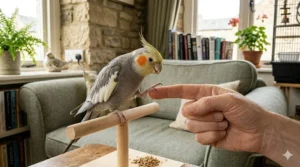
- Position your hand (palm up, fingers together) at chest level whilst your bird perches
- Gently press your index finger against lower chest
- Say “step up” in your consistent training voice
- As your cockatiel lifts one foot to step onto your finger, immediately deliver treat
- Gradually delay treat delivery, requiring full stepping before reward
This command proves invaluable for cage exits, vet visits, and general handling. Practice 5-10 repetitions per session until your bird reliably responds to the verbal cue alone.
Recall Training for Safety
Teaching your cockatiel to fly to you on command prevents dangerous chase scenarios if they escape outdoors or flee into hazardous household areas.
Foundation Steps:
- Start with short distances (30 centimetres)
- Hold high-value treat visibly whilst calling bird’s name plus “come”
- Reward immediately upon landing on your hand
- Gradually increase distance over subsequent sessions
- Practice from various positions and heights
Safety note: Practice only in secure, bird-proofed rooms initially. The UK climate means open windows pose significant escape risks—ensure screens or secured windows before attempting indoor flight training.
Building Tolerance for Handling
Some cockatiels naturally enjoy physical contact; others prefer minimal touching. Respect individual preferences whilst gradually expanding comfort zones:
Head Scratch Introduction: After successful hand-feeding, slowly move fingers toward your cockatiel’s head. If they lean toward your hand, gently scratch around the head crest and cheek areas where they cannot self-preen. If they retreat, simply return to treat offering without forcing contact.
Wing Touch Desensitisation: For vet visits or grooming, cockatiels need wing-touch tolerance. With treats in one hand, use the other to gently touch wing edges. Immediate treat delivery creates positive associations with handling that might otherwise trigger defensive responses.
Frequently Asked Questions
❓ How long does it take to hand tame a cockatiel in the UK?
❓ What treats do cockatiels love most for training?
❓ Can I hand tame an older cockatiel that's never been handled?
❓ How many treats should I give during training sessions?
❓ Are seed sticks better than millet for hand taming cockatiels?
Conclusion
Successfully hand taming your cockatiel transforms them from cautious observer into devoted companion who eagerly anticipates your interaction. The seven treats featured in this guide—from foundational millet spray to premium tropical fruit mixes—provide the motivational tools that make training both effective and enjoyable.
Remember that hand taming isn’t a destination but an ongoing relationship. Even fully tamed cockatiels benefit from continued positive reinforcement sessions that strengthen bonds and provide mental stimulation. The treats you select become part of your unique communication language—each offering represents an invitation to trust, explore, and connect.
Start with millet spray to establish baseline comfort, progress to varied seed sticks for sustained engagement, and deploy premium fruit treats during breakthrough moments. Match treat selection to your cockatiel’s current trust level, rotate options to prevent boredom, and always prioritise quality over quantity.
Your patience, consistency, and strategic treat use will yield results that enrich both your life and your cockatiel’s. Within weeks, that nervous bird eyeing you suspiciously from the back perch can become the chirping companion who flies to your shoulder the moment you enter the room—all because you invested time in building trust the right way, one treat at a time.
Recommended for You
- 7 Best Cockatiel Pellets vs Seed Options UK 2026
- 7 Best Cockatiel Food UK 2026
- 7 Best Budgie Treats for Training 2026 | UK Expert Review
Disclaimer: This article contains affiliate links. If you purchase products through these links, we may earn a small commission at no additional cost to you. Prices shown are approximate and may vary.
✨ Found this helpful? Share it with your mates! 💬🤗
