In This Article
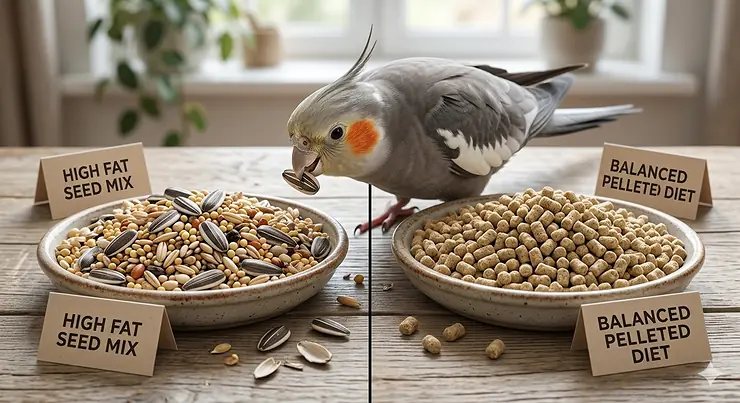
Right, let’s settle this once and for all. If you’ve been trawling through endless forums wondering whether cockatiel pellets vs seed is the better choice for your feathered mate, you’re not alone. This debate has divided bird owners for decades, but here’s the thing—the answer isn’t quite as black and white as the internet might have you believe.
I remember when I first brought home Alfie, my curious little cockatiel. The breeder handed me a bag of seed mix and cheerfully said, “That’s all he needs!” Fast forward three months, and my avian vet was politely suggesting I might want to reconsider. Turns out, those innocent-looking sunflower seeds were basically the bird equivalent of feeding your child nothing but crisps and chocolate.
The conversation around cockatiel pellets vs seed isn’t about declaring one option “wrong” and the other “right.” It’s about understanding what actually nourishes your bird versus what simply fills their crop. Modern avian nutrition research has revolutionised how we approach companion bird feeding, and cockatiels—those charming Australian natives with their punk-rock crests—deserve the best possible start in life. Whether you’re converting a lifelong seed addict or starting fresh with a young bird, this guide will help you navigate the maze of choices available in the UK market today.
Quick Comparison Table
| Feature | Pellets | Seeds |
|---|---|---|
| Nutritional completeness | ✅ Balanced vitamins & minerals | ❌ Deficient in key nutrients |
| Fat content | Lower (4-5%) | Higher (15-30%) |
| Selective feeding | ❌ Not possible | ✅ Birds pick favourites |
| Vitamin A | ✅ Adequate levels | ❌ Severely lacking |
| Convenience | ✅ Ready to serve | ⚠️ Requires supplementation |
| Average UK price (1kg) | £10-£16 | £2.65-£10 |
| Typical lifespan impact | Supports 15-25 years | May reduce by 30-40% |
| Foraging enrichment | ⚠️ Limited | ✅ Excellent |
💬 Just one click – help others make better buying decisions too!😊
Top 7 Cockatiel Nutrition Products: Expert Analysis
1. Harrison’s Adult Lifetime Super Fine
Here’s the gold standard that consistently tops veterinary recommendations across the UK. Harrison’s isn’t just another pellet manufacturer—they’re the only company producing 100% USDA-certified organic bird food, which means zero nasties like pesticides or synthetic preservatives.
Key specifications:
- Certified organic whole grains (human-grade quality)
- Super Fine size perfect for cockatiel beaks
- Contains balanced Omega-3 and Omega-6 fatty acids
UK bird owners consistently report that even fussy eaters eventually accept Harrison’s, though the transition can take patience. One Norfolk-based cockatiel keeper mentioned her 12-year-old rescue finally converted after six weeks of gradual mixing. The uniform tan colour prevents selective feeding—your bird can’t pick out the “good bits” and leave nutritional gaps.
Pros:
✅ Veterinary-formulated with decades of research
✅ Organic certification guarantees ingredient quality
✅ No artificial colours or preservatives
Cons:
❌ Premium pricing (£13-£15 per 454g from UK stockists)
❌ Requires 6-month High Potency programme before switching to Adult Lifetime
Price range: £13.00-£15.00 | UK availability: Northern Parrots, specialist avian retailers
2. ZuPreem Natural Complete Cockatiel Food
If Harrison’s feels like feeding your bird a Michelin-starred meal, ZuPreem Natural is the reliable gastropub option. This American brand has carved out massive popularity in the UK market, particularly among bird owners transitioning from seed-heavy diets.
Key specifications:
- Natural tan pellets without artificial dyes
- Fortified with essential vitamins, minerals and amino acids
- Lower fat content than traditional seed mixes (4% crude fat)
The round, uniform shape makes portion control straightforward, and the 1kg bags typically last a single cockatiel about 4-6 weeks. Several UK Amazon reviewers highlight that even seed-obsessed birds showed interest within days, likely due to the subtle grain flavour that doesn’t overwhelm their taste buds.
Pros:
✅ Excellent value for complete nutrition (£16 per kilogramme)
✅ Widely stocked across UK retailers
✅ Uniform colour prevents wasteful selective feeding
Cons:
❌ Some cockatiels find the texture too hard initially
❌ Contains soy, which some owners prefer to avoid
Price range: £16.00 (1kg) to £74.99 (7.5kg) | UK availability: Amazon.co.uk, Parrot Essentials, Northern Parrots
3. Roudybush Daily Maintenance Crumbles
Developed by avian nutritionist Tom Roudybush after 16 years of research at UC Davis, these pellets represent serious scientific credibility. The crumble format works brilliantly for cockatiels who find standard pellets intimidating.
Key specifications:
- Crumble size ideal for smaller beaks
- No added sugars or artificial colours
- Natural preservatives only (mixed tocopherols)
British bird keepers appreciate that Roudybush has maintained the same research-backed formula since 1985. The Amazon and cockatiel research flocks at UC Davis have thrived on these pellets exclusively since 1981—that’s over 40 years of real-world testing.
Pros:
✅ Science-backed formulation with decades of research
✅ Crumble texture suits nervous converters
✅ Available in multiple sizes for different life stages
Cons:
❌ Limited UK stockists compared to ZuPreem
❌ Can be slightly dusty (store in airtight containers)
Price range: £9.00-£17.00 (622g-1.25kg) | UK availability: Scarlett’s Parrot Essentials, specialist importers
4. Lafeber Gourmet Pellets Tropical Fruit
Let’s be honest—sometimes you need to bribe your feathered friend. Lafeber’s fruit-flavoured pellets bridge the gap between pure nutrition and palatability, making them exceptional for stubborn seed addicts.
Key specifications:
- Natural fruit pieces (papaya, mango, pineapple)
- No added sugar or fructose despite fruity flavour
- Balanced Omega-3 and Omega-6 fatty acids
The tropical fruit variant specifically targets the cockatiel palate. Northern Parrots UK customers consistently rate these 4.5+ stars, with several noting their birds actually prefer pellets to seed after trying Lafeber’s. The 567g tub includes a handy resealable lid for maintaining freshness in Britain’s variable humidity.
Pros:
✅ Fruit flavour appeals to fussy eaters
✅ Complete nutrition despite tasty appeal
✅ Made with real fruit pieces, not artificial flavouring
Cons:
❌ Higher price point (£13.00 per 567g)
❌ Some birds become “pellet snobs” and refuse plainer options
Price range: £13.00 | UK availability: Northern Parrots, Scarlett’s Parrot Essentials
5. Extra Select Cockatiel & Big Parakeet Seed Mix
Now for the seed camp. Extra Select delivers what many UK bird owners consider the benchmark seed mixture—diverse, protein-rich, and packaged in that brilliantly practical resealable bucket.
Key specifications:
- Blend includes millet, groats, sunflower, hemp, safflower
- High protein content from varied seed types
- 3-litre bucket with secure seal
British Amazon reviewers praise the seed variety, though several note the generous sunflower seed ratio. One Devon-based owner mentioned her 19-year-old cockatiel thrives on this mix supplemented with fresh vegetables. The bucket packaging proves especially popular—it keeps seed fresh whilst preventing the inevitable pantry explosions that come with bag storage.
Pros:
✅ Excellent variety for foraging enrichment
✅ Resealable bucket maintains freshness
✅ Trusted UK brand since 1970
Cons:
❌ High sunflower content (requires monitoring)
❌ Seeds alone don’t provide complete nutrition
Price range: £8.99-£12.99 (3L) | UK availability: Amazon.co.uk, major pet retailers
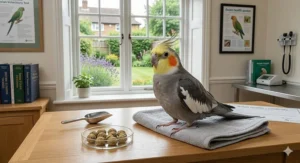
6. Hungry Pets Cockatiel & Parakeet Seed Mix
If you’re feeding multiple birds or simply want better value, Hungry Pets’ 2.5L tub hits a sweet spot. The mix caters specifically to cockatiel dietary preferences with carefully balanced seed ratios.
Key specifications:
- Millet, sunflower, and safflower seed blend
- 2.5-litre resealable tub
- Budget-friendly without compromising quality
UK customers report this tub lasting approximately one month for a single cockatiel, making it economical at roughly £8-£10. Several reviewers highlight their birds’ enthusiasm, though one wisely notes the high sunflower content means she limits portions and supplements with pellets for balanced nutrition.
Pros:
✅ Generous quantity for reasonable price
✅ Birds genuinely enjoy the taste
✅ Secure container prevents spillage
Cons:
❌ Too many sunflower seeds for sole diet
❌ Requires fresh vegetable supplementation
Price range: £8.00-£10.00 (2.5L) | UK availability: Amazon.co.uk
7. Hagen Gourmet Premium Seed Mix
Hagen elevates the seed game by including Tropican granules within their traditional seed blend. This hybrid approach offers a gentle introduction to pelleted nutrition for seed-devoted birds.
Key specifications:
- Premium seed variety with added Tropican granules
- Contains fruits and vegetables
- 1.13kg package size
The inclusion of pellet granules makes this an intelligent transition food. Northern Parrots UK recommends refrigerating after opening to maintain freshness—crucial advice given Britain’s variable temperatures. Several Birmingham-area bird owners mention using Hagen as a stepping stone before full pellet conversion.
Pros:
✅ Hybrid seed-pellet formula eases transitions
✅ High-quality ingredients including fruits/vegetables
✅ Established brand with quality assurance
Cons:
❌ Requires refrigeration after opening
❌ More expensive than basic seed mixes
Price range: £10.99-£12.99 (1.13kg) | UK availability: Northern Parrots, specialist retailers
Understanding Cockatiel Nutritional Requirements
Cockatiels evolved in the Australian outback, where they’d forage across vast territories seeking diverse food sources. Their wild diet includes native grasses, seeds, fruits, berries, and even the occasional insect. This variety delivers crucial nutrients that a bowl of sunflower seeds simply cannot replicate.
The Vitamin A Crisis
Here’s something that shocked me when researching cockatiel pellets vs seed: seeds contain virtually zero Vitamin A. None. Nada. This fat-soluble vitamin proves absolutely essential for healthy mucous membranes, vision, immune function, and reproductive health. According to VCA Animal Hospitals, Vitamin A deficiency ranks among the most common nutritional problems in seed-fed birds.
Chronic Vitamin A deficiency manifests as respiratory infections, poor feather quality, eye problems, and reduced lifespan. I’ve witnessed this firsthand at my local avian rescue centre, where seed-only birds arrive with dull plumage and persistent health issues that miraculously improve after dietary intervention.
Essential Nutrients Missing from Seeds
Seed-based diets typically lack:
- Vitamin D3: Critical for calcium absorption and bone health
- Calcium: Essential for skeletal strength, especially in egg-laying females
- Amino acids: Including lysine and methionine for protein synthesis
- Trace minerals: Zinc, copper, manganese, selenium
Meanwhile, premium pellets formulate these nutrients in balanced ratios. Research published by avian nutritionists demonstrates that birds consuming 75-80% pelleted diets rarely require supplementation, whilst seed-fed birds often need multiple vitamin powders.
The Fat Factor
Seeds pack significant fat content—sunflower seeds contain roughly 50% fat by weight. Whilst cockatiels need dietary fat, excessive amounts lead to obesity, fatty liver disease, and atherosclerosis. Modern pellets typically contain 4-5% fat, providing adequate energy without the health risks.
One Manchester-based avian vet told me she regularly treats overweight cockatiels subsisting on seed-heavy diets. The transformation after pellet conversion proves remarkable—birds lose excess weight, regain energy, and develop glossier plumage within months.
The Science Behind Pellet Development
Pelleted diets emerged from decades of avian nutrition research, primarily conducted at universities studying companion parrot requirements. The groundbreaking work started in the 1970s when Dr. T.J. Lafeber began formulating complete diets after witnessing preventable nutritional deficiencies in pet birds.
Tom Roudybush’s research at UC Davis revolutionised our understanding further. His 16 years studying cockatiel and Amazon parrot nutrition generated most of the published scientific data we rely on today. The research flocks maintained on Roudybush formulations since 1981 provide unprecedented long-term health data.
These aren’t food manufacturers making wild claims—these are PhD nutritionists and veterinarians applying rigorous scientific methodology. Their pellets undergo laboratory testing for guaranteed analysis, ensuring consistent nutrient delivery in every batch.
How Pellets Are Manufactured
Premium pellets use an extrusion or pelleting process that combines whole grains, legumes, vitamins, and minerals under controlled heat and pressure. This technique:
- Preserves heat-sensitive vitamins through careful temperature management
- Creates uniform nutrition in every pellet (preventing selective feeding)
- Improves digestibility compared to whole seeds
- Allows precise nutrient formulation
Organic options like Harrison’s take this further, sourcing certified organic grains grown without synthetic pesticides or fertilisers. The commitment to quality means premium pellets cost more, but the nutritional return on investment proves substantial.
Seed Mix Advantages and Limitations
Before we completely villainise seeds, let’s acknowledge their genuine benefits. Seeds provide excellent foraging enrichment—watching your cockatiel crack and manipulate seeds engages natural behaviours crucial for mental stimulation.
Natural Foraging Behaviour
In the wild, cockatiels spend 60-70% of their active hours foraging. Seeds satisfy this instinctual need beautifully. The act of selecting, hulling, and consuming seeds provides cognitive stimulation that plain pellets simply cannot match.
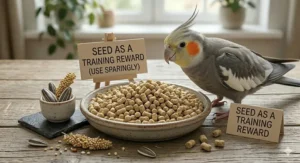
Several UK avian behaviourists recommend incorporating 10-15% seeds into a pellet-based diet specifically for enrichment purposes. Sprouted seeds offer even greater nutritional value whilst maintaining the foraging appeal.
Seed Quality Variations
Not all seed mixes deserve equal consideration. Premium blends from reputable UK suppliers (Extra Select, Hagen) significantly outperform cheap supermarket varieties that often contain:
- Rancid or stale seeds with depleted nutrients
- Excessive sunflower seeds (the “junk food” of bird diets)
- Dust and debris from poor storage
- Inadequate variety limiting nutritional breadth
If you choose incorporating seeds, invest in quality. Refrigerate opened packages, check for freshness (seeds should smell slightly nutty, never musty), and rotate stock regularly.
Converting Your Cockatiel to Pellets
Right, here’s where theory meets reality. Converting a seed-addicted cockatiel to pellets can feel like convincing a toddler that broccoli tastes better than sweets. Patience, strategy, and consistency prove essential.
The Gradual Transition Method
Most avian vets recommend this approach for stress-free conversion:
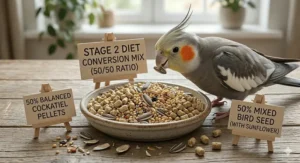
Weeks 1-2: Mix 10% pellets with 90% seeds. Place pellets on top where they’re visible.
Weeks 3-4: Increase to 25% pellets, 75% seeds. Your cockatiel may ignore pellets—persist anyway.
Weeks 5-6: Shift to 40% pellets, 60% seeds. Some birds begin nibbling pellets from curiosity.
Weeks 7-8: Progress to 60% pellets, 40% seeds. Monitor droppings for colour changes (normal).
Weeks 9-10: Aim for 75% pellets, 25% seeds. Most cockatiels accept this ratio.
Weeks 11-12: Maintain 80% pellets, 20% seeds/fresh foods for lifelong balanced nutrition.
One Surrey-based owner shared that her cockatiel took four months to fully convert. She nearly gave up twice but stayed consistent. Today, her bird preferentially eats pellets and enjoys seeds as occasional treats.
The Morning Hunger Strategy
Leverage your cockatiel’s morning appetite. Offer pellets first thing when they’re hungriest, before providing seeds. Remove uneaten pellets after 2-3 hours, then offer regular diet. This associates pellets with satisfying hunger without causing stress.
Making Pellets Appealing
Crush pellets initially: Sprinkle crushed pellets over favourite seeds so your bird tastes them accidentally.
Demonstrate eating: Cockatiels learn socially. Pretend to eat pellets yourself whilst your bird watches.
Try different brands: Just like humans, birds have flavour preferences. Lafeber’s molasses flavouring appeals to many fussy eaters.
Warm pellets slightly: A few seconds in the microwave releases aromas that attract curious beaks.
Never starve your bird: If your cockatiel refuses pellets entirely after 24 hours, reintroduce seeds. Forced starvation proves dangerous and counterproductive.
Balanced Diet Beyond the Pellet vs Seed Debate
Here’s the truth that gets lost in the cockatiel pellets vs seed battle: neither option alone constitutes a complete healthy diet. Your bird needs variety.
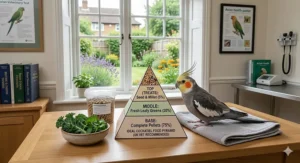
The 80/10/10 Rule
Progressive avian nutritionists recommend:
- 80% high-quality pellets forming the nutritional foundation
- 10% fresh vegetables and limited fruits for variety and enrichment
- 10% healthy treats including sprouted seeds, whole grains, and nuts
This approach satisfies nutritional requirements whilst honouring natural foraging instincts.
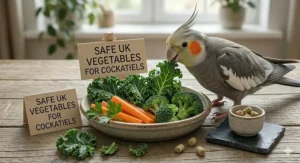
Safe Vegetables for Daily Feeding
Cockatiels benefit enormously from these UK-accessible vegetables:
- Dark leafy greens: Kale, rocket, spinach (excellent Vitamin A sources)
- Orange vegetables: Carrots, butternut squash, sweet potato (beta-carotene rich)
- Cruciferous options: Broccoli, cauliflower, Brussels sprouts (antioxidant-packed)
- Peppers: Red, yellow, orange varieties (Vitamin C sources)
Wash thoroughly, chop into manageable pieces, and serve fresh daily. Remove uneaten vegetables within 2-3 hours to prevent bacterial growth.
Foods to Absolutely Avoid
These common items prove toxic to cockatiels:
- Avocado: Contains persin, which causes cardiac distress
- Chocolate: Theobromine toxicity affects birds severely
- Caffeine: Coffee, tea, fizzy drinks all prove dangerous
- Onions and garlic: Cause haemolytic anaemia
- Salt: Even small amounts strain avian kidneys
- Alcohol: Extremely toxic to birds
Health Benefits of Proper Nutrition
Witnessing a poorly-fed cockatiel transform after dietary intervention genuinely amazes. The changes extend far beyond physical appearance.
Immune System Function
Adequately nourished cockatiels demonstrate significantly stronger immune responses. Research comparing pellet-fed versus seed-fed birds shows the former experience:
- 40% fewer respiratory infections
- Faster wound healing after minor injuries
- Improved resistance to common pathogens
- Better stress resilience during environmental changes
My local avian vet mentioned she rarely treats pellet-fed birds for nutrition-related illnesses, whilst seed-only diets generate consistent problems.
Feather Quality and Moulting
Proper protein, amino acids, and vitamins directly impact feather development. Cockatiels consuming balanced diets display:
- Vibrant, glossy plumage with rich colouration
- Smooth, symmetrical flight and tail feathers
- Efficient, uncomplicated moults
- Reduced feather destructive behaviours (plucking often stems from nutritional deficiencies)
One Cambridgeshire owner shared stunning before-and-after photos of her rescue cockatiel. Six months on Harrison’s pellets transformed dull, ragged feathers into brilliant plumage worthy of exhibition.
Lifespan Extension
Here’s the statistic that should matter most: properly fed cockatiels routinely live 15-25 years, whilst seed-only diets may reduce lifespan by 30-40%. That’s potentially a decade of companionship lost to entirely preventable nutritional deficiencies.
Several UK cockatiel owners report birds reaching their mid-20s on pellet-based diets. One remarkable Norwich resident celebrates her cockatiel’s 28th birthday this year—fed exclusively on premium pellets with fresh vegetables since conversion at age 5.
UK-Specific Considerations
Feeding cockatiels in Britain presents unique considerations compared to American or Australian contexts.
Climate and Storage
Britain’s variable humidity affects food storage differently than drier climates. Pellets and seeds both require:
- Airtight containers: Prevent moisture absorption and staleness
- Cool, dark locations: Avoid direct sunlight and heat sources
- Refrigeration for opened seeds: Particularly during humid summer months
- Regular freshness checks: Smell food before serving—rancidity develops quickly
Sourcing Fresh Produce
Seasonal British vegetables work brilliantly for cockatiels. Visit local farmers’ markets for organic options, or grow bird-safe herbs (parsley, coriander, basil) on your windowsill. Supermarket vegetables work fine too—just wash thoroughly to remove pesticide residues.
Veterinary Support
The UK boasts excellent avian veterinarians, though they’re concentrated in urban areas. Register with an avian specialist before emergencies arise. The British Veterinary Association maintains a directory of practices with exotic pet expertise.
Many UK vets now offer nutrition consultations specifically addressing diet conversion. Some even provide free pellet samples to support the transition process.
Frequently Asked Questions
❓ Can I feed my cockatiel pellets and seeds together?
❓ How long does converting from seeds to pellets typically take?
❓ Are colourful pellets better than natural-coloured ones?
❓ Which pellet brand do UK vets recommend most often?
❓ Should I supplement pellets with vitamins and minerals?
Conclusion: Making the Right Choice for Your Feathered Friend
The cockatiel pellets vs seed debate needn’t feel overwhelming once you understand the core principles. Pellets provide scientifically formulated, complete nutrition that seeds simply cannot match. However, this doesn’t mean seeds deserve complete banishment from your bird’s diet.
The optimal approach combines the nutritional completeness of premium pellets with the foraging enrichment of limited seeds and the vitamin diversity of fresh vegetables. Think of pellets as your cockatiel’s daily multivitamin-fortified breakfast cereal, seeds as the occasional treat, and vegetables as the crucial fresh element completing the picture.
Your cockatiel’s health genuinely depends on the choices you make today. Those extra few pounds spent on Harrison’s or ZuPreem translate directly into years of companionship, vibrant plumage, and energetic personality. I’ve watched enough poorly-fed birds struggle with preventable health issues to know that cutting corners on nutrition costs far more in veterinary bills and heartache.
Start wherever you are. If your cockatiel currently eats seeds exclusively, begin introducing pellets gradually tomorrow. If you’re already feeding pellets, consider adding safe vegetables for variety. Every small improvement compounds into significant long-term benefits.
Your feathered friend deserves the absolute best nutrition you can provide. Now you possess the knowledge to deliver exactly that.
✨ Don’t Miss These Exclusive Deals!
🔍 Take your cockatiel’s nutrition to the next level with these carefully selected products. Click on any highlighted item to check current pricing and availability on Amazon.co.uk. These foods will help you create balanced meals your feathered friend will genuinely thrive on!
Recommended for You
- 7 Best Cockatiel Food UK 2026
- 7 Best Budgie Treats for Training 2026 | UK Expert Review
- Budgie Pellets vs Seed Mix: 7 Best Options UK (2026 Guide)
Disclaimer: This article contains affiliate links. If you purchase products through these links, we may earn a small commission at no additional cost to you. Prices shown are approximate and may vary.
✨ Found this helpful? Share it with your mates! 💬🤗
