In This Article
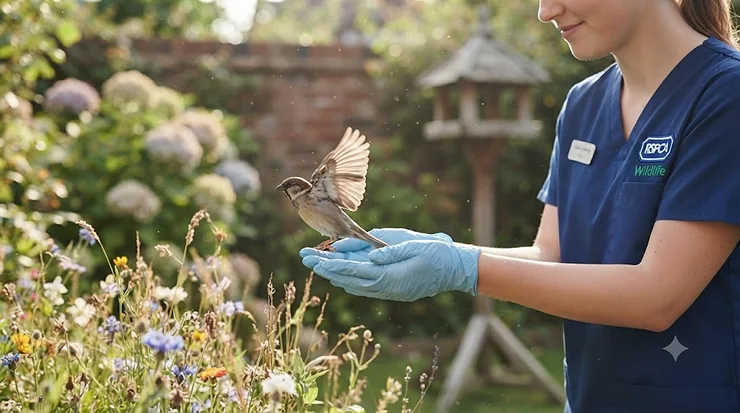
Finding a bird with a drooping wing is one of those moments that scrambles your instincts — do you rush in and wrap it yourself, or do you freeze and hope it sorts itself out? Neither is quite right, and that’s exactly the tension this guide sits in. A self-adhesive bandage for bird wing injury is a genuinely useful piece of kit — the kind vets, falconers, poultry keepers and licensed wildlife rehabilitators reach for constantly — but it is a tool for supporting professional treatment, not replacing it. Cohesive wraps like these stick only to themselves, not to delicate feathers or skin, which makes them far safer than sticking plaster or standard adhesive tape anywhere near a wing.
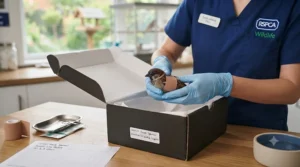
This article digs into seven real, currently available cohesive wraps sold in the UK, explains what actually matters when you’re choosing one, and walks through the wing fracture signs that should send you straight to an avian vet rather than to a bandage roll. We’ll also cover when a splint is genuinely needed, what flight feather damage a wrap can and can’t help with, and how proper first response makes all the difference. Many vets aren’t obliged to treat wildlife for free and aren’t always trained specifically in wildlife care — which is exactly why knowing who to call, and how to keep an injured bird stable in the meantime, matters as much as the product itself. As the RSPCA’s injured wildlife advice makes clear, the golden rule with any injured bird is: contain safely, keep calm, and get expert hands on it fast.
Quick Comparison Table
| Product | Width Options | Adhesion Type | Best For |
|---|---|---|---|
| 3M Vetrap Small Animal Cohesive Bandage | 5cm | Cohesive (sticks to itself only) | Vet-standard reliability |
| Andover PowerFlex Cohesive Bandage | 5cm | High-tension cohesive | Sports-grade holding power |
| AVINLI Vet Wrap Cohesive Bandage | 5cm (2″) | Lightweight non-woven cohesive | Budget multi-bird households |
| WePet Self-Adhesive Pet Wrap | 5cm (2″) | Non-woven, sticks to itself not feathers | Sensitive-skin cases |
| OVIK Health PetFlex No Chew | 5cm (2″) | Bitter-coated cohesive | Birds that peck at dressings |
| Mr. Pen Self Adhesive Bandage Wrap | 5cm (2″) | Elastic cohesive | Discreet, skin-tone finish |
| Primacare WB-7709 Bandage Wrap | 5cm (2″) | Multicolour cohesive, bulk pack | Aviaries and multi-bird carers |
Reading across the table, the pattern that jumps out is width consistency — nearly every serious option sits around the 5cm mark, because anything wider becomes unwieldy on a wing the size of a pigeon’s or a budgie’s. Where the products genuinely diverge is adhesion character: some, like Andover PowerFlex, are built for high-tension holding on working animals, while others, like WePet, are engineered specifically to avoid snagging feathers. If a bird chews or pecks at its own dressing (common in stressed parrots and corvids), the bitter-coated option in this table earns its place regardless of price.
💬 Just one click — help others make better buying decisions too!😊
Top 7 Self-Adhesive Bandages for Bird Wing Injuries: Expert Analysis
1. 3M Vetrap Small Animal Cohesive Bandage — the veterinary-grade benchmark
If you’ve ever watched an avian vet nurse wrap a wing, there’s a decent chance this is the roll in their hand. The 3M Vetrap Small Animal Cohesive Bandage is porous, lightweight, and bonds to itself in layers rather than gluing to skin or plumage, which matters enormously on a structure as fragile as a wing. In practice, that layered self-bonding means the wrap holds tension evenly along the limb instead of pulling unevenly at one point — the difference between gentle, distributed support and localised pinching that can bruise tissue or crimp a feather shaft. Based on the spec comparison with cheaper alternatives, the porous fabric also allows better airflow, which matters because trapped moisture under a wing wrap can soften skin and invite infection during multi-day healing. Reviewers on Amazon rate this roll at roughly 3.9 out of 5 across 166 ratings, with most positive feedback centred on how reliably it “stays put” without slipping, and most criticism aimed at the price-per-roll compared with generic cohesive tapes. This is the pick for anyone working under direct vet instruction who wants the same product professionals reach for. It comes in a single colour per roll at around £10-£15, and given the consistency reviewers describe, it’s a fair value for anyone bandaging more than once.
Pros:
- ✅ Trusted by veterinary professionals across species
- ✅ Bonds only to itself, protecting feathers underneath
- ✅ Porous construction supports airflow during healing
Cons:
- ❌ Pricier per roll than generic non-woven wraps
- ❌ Limited colour choice compared with rival brands
2. Andover PowerFlex Cohesive Bandage — sports-grade holding power
Andover PowerFlex was built for human sports strapping and equine bandaging before pet and avian carers adopted it, and that heritage shows in its tensile strength. What most buyers overlook about this model is that its higher tension threshold means you need noticeably less material to achieve the same support as a softer wrap — useful when you’re trying to minimise bulk on a small bird’s wing without sacrificing hold. The listing confirms it’s sweat-resistant and breathable, eliminating the need for underwrap or adhesive spray, which on a bird translates to fewer extra products touching sensitive skin. On paper this means faster, simpler application, though the trade-off is that its stronger grip demands a lighter touch when wrapping — over-tensioning a cohesive bandage this strong around a wing risks restricting circulation, so this is best suited to confident hands or vet-supervised use rather than a first attempt. Available in bulk packs of 24 rolls at a price that usually sits in the £40-£65 range depending on pack size, it’s more of an investment for rescues and clinics than a one-off household buy. For a single pet bird owner, a smaller multi-roll pack from a different brand may suit better.
Pros:
- ✅ Exceptionally strong hold with less bulk
- ✅ No underwrap or adhesive spray required
- ✅ Sweat-resistant and breathable material
Cons:
- ❌ Strong tension requires careful, light-handed wrapping
- ❌ Bulk packs are a bigger upfront cost for single-bird owners
3. AVINLI Vet Wrap Cohesive Bandage (6 Rolls) — breathable budget multi-pack
For anyone who wants a reliable everyday option without committing to a premium brand, the AVINLI Vet Wrap Cohesive Bandage offers six rolls of 5cm non-woven wrap designed to be safe and comfortable against skin. The product description specifically markets it as suitable for dogs, cats and horses, and the same cohesive, non-adhesive-to-skin mechanism translates well to bird use when applied gently and under guidance. Here’s what to weigh: non-woven cohesive wraps in this budget tier are generally softer and less aggressively tensioned than premium sports tape, which is actually an advantage on smaller or more fragile wings where you want gentle compression rather than maximum grip. Because six rolls come in one pack, this is a sensible choice for households or small rescues managing multiple ongoing cases, or simply wanting spares on hand for redressing. The trade-off with softer, budget-tier cohesive material is that it can lose some of its stick-to-itself strength faster than premium tapes if repeatedly unwound and reapplied, so treat each roll as good for a handful of uses rather than indefinite reuse. At around £10-£18 for six rolls, the cost per application is genuinely competitive.
Pros:
- ✅ Six-roll pack offers strong value per application
- ✅ Soft, gentle cohesion suited to fragile wings
- ✅ Marketed safety profile spans multiple animal types
Cons:
- ❌ Loses grip strength faster with repeated reapplication
- ❌ Less suited to larger, stronger birds needing firmer hold
4. WePet Self-Adhesive Pet Wrap — sticks to itself, not feathers
The standout claim on the WePet Self-Adhesive Pet Wrap listing is blunt and, frankly, exactly what you want to hear for a wing dressing: it sticks only to itself and is “pain-free to pull off” because it won’t bond to fur, feathers or skin. That’s not a marketing throwaway — it’s the single most important property for wing bandaging, since a wrap that grips feathers can pull them out on removal, causing new damage on top of the original injury. What most buyers overlook about this category of wrap is that the “almost non-adhesive to other surfaces” quality cuts both ways: it means gentle removal, but it also means the wrap depends entirely on its own layered tension for hold, so technique during application matters more than with a slightly tackier product. Marketed explicitly for dogs, cats, horses and birds, it’s a genuinely multi-species pick for households with more than one animal needing occasional wound care. Sold in six-roll packs at roughly £8-£14, it undercuts most premium options while still delivering the core safety feature that matters most for feathered patients.
Pros:
- ✅ Specifically marketed as bird-safe and feather-friendly
- ✅ Removes without pulling on feathers or skin
- ✅ Affordable six-roll multi-species pack
Cons:
- ❌ Weaker adhesion to other surfaces needs neat wrapping technique
- ❌ Not reinforced enough for very active or strong birds
5. OVIK Health PetFlex No Chew — bitter-coated anti-peck formula
Stressed birds peck. It’s an instinct, and it’s one of the most common reasons a carefully applied wing dressing ends up in shreds within hours. OVIK Health PetFlex No Chew tackles this head-on with a bitter-tasting, non-toxic coating designed to discourage chewing and picking — a feature borrowed from the equine world, where horses are notorious for stripping their own bandages. Based on the spec comparison with unflavoured cohesive wraps, this bitter additive doesn’t change the wrap’s flexibility or breathability, so you’re not trading comfort for deterrence. Reviewers consistently note that the taste genuinely puts most animals off within the first few attempts, though a minority of particularly determined pets or birds will still peck through eventually — no coating fully bird-proofs a dressing. This is a smart secondary layer of defence rather than a substitute for proper Elizabethan-collar-style prevention or close supervision in the first hours after wrapping, when a stressed bird is most likely to fixate on the unfamiliar sensation on its wing. Priced around £8-£15 for a two-roll pack, it’s a worthwhile add for parrots, corvids and other notably beaky species.
Pros:
- ✅ Bitter coating discourages pecking and chewing
- ✅ No compromise on flexibility or breathability
- ✅ Particularly useful for intelligent, beaky species
Cons:
- ❌ Doesn’t fully stop especially determined birds
- ❌ Smaller pack size than most budget competitors
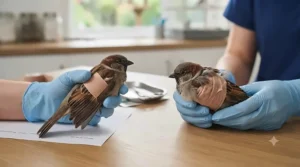
6. Mr. Pen Self Adhesive Bandage Wrap — discreet, skin-tone finish
Sometimes the practical concern isn’t strength or bird-safety at all — it’s simply having a wrap that doesn’t look alarming to visitors, other pets, or a nervous bird owner glancing at their companion for the first time post-injury. The Mr. Pen Self Adhesive Bandage Wrap comes in a skin-coloured finish alongside brighter options across its six-roll pack, and its 5cm by 4.5m rolls give enough length for multiple wraps without waste. What the spec sheet won’t tell you, but general cohesive-bandage physics suggests, is that skin-tone wraps tend to be marginally less visible to a bird trying to peck at “something odd,” which can subtly reduce fixation behaviour compared with a bright, contrasting colour. This is a general-purpose sports and first-aid product rather than one marketed specifically at avian care, so the cohesion and elasticity are tuned for human wrist and ankle strapping — still entirely usable on a bird’s wing with a gentler hand, but not purpose-built the way the WePet or AVINLI options are. At roughly £8-£12 for six rolls, it’s an accessible, everyday buy that doubles up as a household first-aid staple.
Pros:
- ✅ Discreet, low-visibility colour options
- ✅ Generous roll length reduces waste
- ✅ Doubles as general household first-aid tape
Cons:
- ❌ Not purpose-marketed for avian or feathered patients
- ❌ Tension calibrated more for human joints than wings
7. Primacare WB-7709 Self Adhesive Bandage Wrap — bulk 48-roll aviary pack
For breeders, aviary keepers, poultry smallholders or licensed wildlife rehabilitators managing several birds at once, buying single rolls repeatedly is neither economical nor practical. The Primacare WB-7709 Self Adhesive Bandage Wrap solves that with a 48-roll multicolour bulk pack at 5cm by 4.5m each. Here’s what to weigh with bulk buys like this: the per-roll cost drops dramatically, but you’re committing storage space and, realistically, a supply that will outlast most single-bird households by years. Reviewers consistently frame this as a practical stock-up buy for clinics, sports first-aid kits and multi-animal households rather than a specialist avian product, so treat the “bird-safe” element the same way as with Mr. Pen above — sound cohesive principles, general-purpose calibration. The colour variety is a genuine practical bonus in a multi-bird setting, letting carers colour-code different patients or track how long a dressing has been in place at a glance. Pricing typically sits in the £30-£45 range for the full case, which works out to some of the cheapest per-roll costs in this entire roundup.
Pros:
- ✅ Lowest per-roll cost of any option here
- ✅ Colour variety supports easy patient tracking
- ✅ Ideal for aviaries, smallholdings and rescues
Cons:
- ❌ Excessive volume for a single pet bird owner
- ❌ Requires dedicated dry storage for unused rolls
Top 7 Products at a Glance
| Product | Pack Size | Price Range | Best For |
|---|---|---|---|
| 3M Vetrap Small Animal Cohesive Bandage | Single roll | £10-£15 | Vet-directed treatment |
| Andover PowerFlex Cohesive Bandage | 24 rolls | £40-£65 | Clinics and rescues |
| AVINLI Vet Wrap Cohesive Bandage | 6 rolls | £10-£18 | Everyday budget use |
| WePet Self-Adhesive Pet Wrap | 6 rolls | £8-£14 | Feather-safe removal |
| OVIK Health PetFlex No Chew | 2 rolls | £8-£15 | Pecking, beaky species |
| Mr. Pen Self Adhesive Bandage Wrap | 6 rolls | £8-£12 | Discreet everyday finish |
| Primacare WB-7709 Bandage Wrap | 48 rolls | £30-£45 | Aviaries and multi-bird care |
Taken together, this table shows there isn’t a single “best” wrap so much as a best wrap for your situation. A one-off pet bird injury under vet guidance rarely justifies the Andover PowerFlex bulk case, while a rescue centre handling dozens of casualties a year would burn through the 3M Vetrap single rolls far too quickly. The sweet spot for most households sits with the mid-pack options — AVINLI or WePet — which balance cost, feather-safety and manageable quantity without over-committing to stock you’ll rarely use.
Wing Fracture Signs: How to Tell If a Bird’s Wing Is Injured
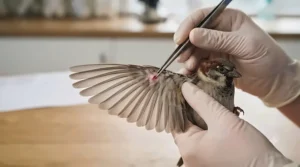
A wing fracture in a bird typically shows up as a droop, an unnatural angle, or a wing dragging along the ground when the bird tries to walk — often paired with visible reluctance or inability to fly. Swelling, exposed bone, bleeding, or the bird holding one wing noticeably lower than the other are all urgent red flags requiring immediate veterinary attention rather than home treatment.
Beyond the obvious visual cues, subtler wing fracture signs include a bird that repeatedly loses balance when perching, one that holds its wings asymmetrically even at rest, or feathers on one side that look permanently ruffled or misaligned where the bone beneath has shifted. Reviewers of wildlife rescue guidance consistently note that pain behaviour in birds is often disguised — as prey species, birds instinctively mask distress, so a bird that seems “calm” may still be in significant pain. That’s precisely why the Wildlife Trusts’ injured bird advice recommends firm, careful handling — small birds cupped in one hand with the head between fingers, medium birds held two-handed with a wing covered by each hand — to prevent a panicked bird from thrashing and worsening a fracture during transport. If you spot any of these signs, your first move should be containment and a call to a vet or wildlife rescue, not reaching for a bandage roll.
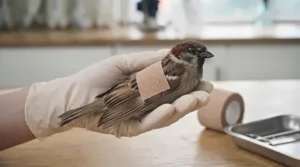
Vet-Directed Wing Wrapping: Getting Technique and Timing Right
A self-adhesive bandage for bird wing injury only does its job well when it’s applied at the right time, in the right way, under the right guidance — timing and technique are not optional extras. Here’s how that typically plays out in practice, whether you’re supporting a vet’s aftercare instructions at home or assisting during an in-clinic wrap.
First, the bird needs to be properly assessed and, where a fracture is suspected, imaged or examined by a vet before any wrap goes anywhere near the wing — wrapping over an undiagnosed break can shift bone fragments and cause more damage. Second, any wrap should immobilise the wing in its natural folded “resting” position against the body, never stretched out or pinned unnaturally, because that resting posture is what the skeleton and muscles are built to tolerate for days at a time. Third, tension is everything: a cohesive wrap should feel snug enough to stay put but loose enough to slide two fingers underneath comfortably — you should never be able to see swelling develop below the wrap line, since that signals restricted blood flow. Fourth, checks matter as much as application; a wrapped wing needs visual monitoring several times a day in the first 48 hours for swelling, discolouration, odour or the bird chewing at the site, all of which warrant an immediate vet recheck. Finally, redressing schedules should follow veterinary instruction exactly — some cases need daily changes, others need the wrap left undisturbed for several days to allow healing to begin, and getting that wrong in either direction can set recovery back.
None of this replaces a hands-on demonstration from a vet or vet nurse the first time you’re asked to help maintain a dressing at home — but understanding the principles means you’re a genuinely useful pair of hands rather than a nervous bystander.
Real-World Scenarios: Matching the Right Wrap to the Right Bird
Scenario one — the budgie with a suspected soft-tissue wing strain. A small pet budgie clips its wing against a cage bar and holds it slightly low but still moves it. Under vet advice following an examination that rules out a fracture, a household might use a small, gentle wrap like the AVINLI Vet Wrap Cohesive Bandage for short-term support, cut down to a narrow strip given the bird’s tiny size, changed as directed and monitored closely for any sign of the wing being held even lower.
Scenario two — the rescued pigeon with a confirmed fracture at a wildlife hospital. Here, a vet or trained rehabilitator applies a proper figure-of-eight wing wrap using clinic-grade material such as 3M Vetrap, often alongside a splint, then manages a multi-week recovery with scheduled redressings and X-ray follow-ups — this is specialist territory, not a DIY job, and it’s exactly the kind of case that falls under formal rehabilitation licensing.
Scenario three — the smallholding poultry keeper managing a flock injury. A chicken or duck injures a wing in a scuffle with another bird. A keeper experienced in basic animal first aid, working with their vet’s guidance, might reach for a bulk pack like Primacare WB-7709 to keep several birds’ dressings maintained economically across a flock, while isolating the injured bird from flockmates to prevent further pecking at the site — a real risk in group housing.
Each scenario shares one thread: the product is chosen to fit both the bird’s size and the level of professional oversight already in place, never as a stand-alone fix.
✨ Don’t Miss These Exclusive Deals!
🔍 Take your wing-care kit to the next level with these carefully selected wraps. Click on any highlighted item to check current pricing and availability. These tools will help you support genuine, vet-guided recovery your feathered companion deserves!
Bird Wing Splint Support: When Wrapping Alone Isn’t Enough
A cohesive bandage alone provides gentle compression and protection, but it does not rigidly immobilise bone the way a proper splint does — and for a genuine fracture, splint support is usually essential alongside, not instead of, the wrap. Vets commonly combine a lightweight splint material (moulded foam, tongue depressors trimmed to size, or purpose-made avian splints) with an outer layer of self-adhesive cohesive bandage that holds the splint firmly in its “figure-of-eight” resting position against the body.
The reasoning here is straightforward: birds have exceptionally light, often partially hollow bones optimised for flight, which means fractures can be unstable and prone to shifting without rigid external support. Bird wing splint support becomes especially important for breaks involving the humerus or the bones nearer the body, where movement risks further internal damage, compared with more peripheral fractures that sometimes heal with wrap support alone under close supervision. What most first-time carers overlook is that a splint applied even slightly incorrectly can cause pressure sores or nerve damage far worse than the original injury — this is squarely a job for a vet or an experienced, licensed rehabilitator, with the bandage wrap’s role limited to holding that professional’s splint work securely in place during the following days.
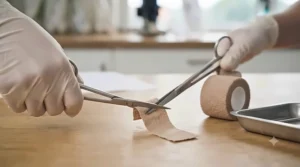
Vet Wrap for Wing Injury vs Standard Bandage Wraps
It’s tempting to think any bandage will do, but there’s a meaningful gap between purpose-built vet wrap for wing injury use and standard adhesive-backed dressings pulled from a generic human first-aid kit.
| Feature | Cohesive Vet Wrap | Standard Adhesive Bandage |
|---|---|---|
| Sticks to feathers/skin | No — bonds only to itself | Often yes, risking feather pull |
| Breathability | High, porous weave | Variable, often lower |
| Reusability during redressing | Can be gently unwound | Usually must be cut and discarded |
| Pressure control | Even, layered tension | Uneven, edge-heavy adhesion |
| Best For | Any of the 7 wraps above | General human wound plasters |
The core difference is mechanical rather than cosmetic: standard adhesive tape is designed to grip skin directly, which is precisely the wrong property for a structure covered in delicate, easily-damaged feathers. Cohesive wraps solve this by bonding only to their own overlapping layers, delivering even compression without a single adhesive “hot spot” that could yank feathers out during removal. For anyone stocking a first-aid kit that might realistically be used on a bird at some point — smallholders, aviary owners, dedicated birdwatchers who assist wildlife rescues — standard plasters simply aren’t fit for purpose here, and a proper cohesive roll from this list is the safer default.
Flight Feather Damage: What a Wing Bandage for Birds Can (and Can’t) Fix
Flight feather damage is a different problem to a bone fracture, and it’s worth understanding the distinction because a wing bandage for birds addresses one and not the other. Feathers themselves are dead keratin structures once fully grown, existing mainly to generate the thrust and lift that make flight possible, as Wikipedia’s flight feather overview explains in more depth — which means a snapped or bent flight feather cannot heal itself the way a bruise or fracture eventually can; it has to grow out and be replaced during the bird’s next natural moult, or in some cases be professionally “imped” (grafted) by an experienced rehabilitator using a donor feather.
What a bandage can do is protect a damaged feather shaft from further breakage while surrounding soft tissue heals, and prevent a bird from further self-traumatising a bleeding feather follicle by pecking at it. What it cannot do is restore lift to a feather that’s already snapped partway along its length — that requires either patient waiting through the moult cycle or specialist feather-imping, which is well outside home first-aid territory. Reviewers consistently note that a bird recovering from feather damage often looks far more dramatic and distressing than its underlying prognosis actually is, since a bird with several damaged primaries but no bone injury frequently makes a full recovery once new feathers grow through. The bandage’s job, in this scenario, is simply to stabilise and protect during that waiting period, alongside veterinary or rehabilitator oversight to check the follicle itself isn’t infected.
How to Choose a Self-Adhesive Bandage for Bird Wing Injury
- Confirm feather-safe adhesion first. Only consider wraps explicitly designed to bond to themselves rather than skin or feathers — this single property matters more than any other spec on the list.
- Match width to bird size. A budgie or finch needs a narrow strip cut from a 5cm roll, while poultry or larger birds can typically handle the full width without modification.
- Prioritise breathability over sheer strength. Unless a vet specifically calls for high-tension support, a softer, more breathable wrap reduces the risk of skin problems developing under a multi-day dressing.
- Consider anti-peck features for beaky species. Parrots, corvids and other intelligent, curious birds benefit enormously from bitter-coated options that discourage self-removal.
- Buy the right quantity for your situation. A single pet bird owner rarely needs a 48-roll bulk case, while an aviary or rescue setting genuinely benefits from the lower per-roll cost bulk buying offers.
- Check colour practicality, not just aesthetics. Bright colours help multi-bird carers track dressings at a glance; skin-tone options suit single-bird households wanting a low-key look.
- Always pair the product with professional guidance. No wrap on this list is a substitute for a vet or licensed wildlife rehabilitator’s diagnosis and hands-on instruction — the “best” product is only as good as the care plan around it.
Safety, Regulations & Common Mistakes for UK Bird Keepers
The single most common mistake people make is treating a self-adhesive bandage for bird wing injury as a first response rather than a supporting tool — wrapping a wing before a vet has ruled out or properly set a fracture can do genuine harm, shifting bone fragments or trapping swelling under pressure. A close second is over-tightening: cohesive wraps are deceptively easy to pull too snugly, and what feels secure to human fingers can restrict a bird’s circulation within hours. Leaving a wrap on too long without checking it is another frequent error — skin under any bandage needs regular inspection, and birds in particular can develop pressure sores quickly given how thin their skin is compared with mammals.
There’s also an important legal dimension for anyone in the UK dealing with wild (rather than owned pet) birds. Most wild bird species are protected, and keeping a disabled wild bird for rehabilitation beyond a short window generally requires registration or a specific licence — vets, for example, can keep certain disabled Schedule 4 species for up to six weeks under general licence before registration is required, while other authorised handlers face a shorter 15-day window, as set out in Defra’s general licence for keeping disabled wild birds. In practice, this means the right move with an injured wild bird is almost always rapid transfer to a vet or licensed wildlife rescue rather than prolonged home care, however well-intentioned. Finally, don’t overlook species-specific handling risks — larger birds like swans or birds of prey can cause real injury to an untrained handler, and expert rescuers exist precisely for these situations.
Frequently Asked Questions
❓ Can I bandage my bird's wing myself at home?
❓ How tight should a wing bandage be?
❓ Does self-adhesive bandage damage bird feathers?
❓ How long does a bird wing injury take to heal?
❓ What should I do if I find an injured wild bird?
Conclusion
A self-adhesive bandage for bird wing injury earns its place in any serious first-aid kit — vet, rescue, aviary or careful pet owner alike — precisely because it does one job extremely well: gentle, even, feather-safe support that holds a dressing or splint in place without adding new damage. What it was never designed to be is a stand-alone diagnosis-and-treatment solution, and every product on this list works best as the final, supporting layer of a care plan built around proper veterinary or licensed rehabilitator input. Whether you land on the vet-standard reliability of 3M Vetrap, the sports-grade strength of Andover PowerFlex, the everyday value of AVINLI or WePet, the anti-peck protection of OVIK Health PetFlex No Chew, the discreet finish of Mr. Pen, or the bulk practicality of Primacare WB-7709, the right choice comes down to your bird’s size, temperament and the level of professional oversight already guiding the recovery. Recognise the wing fracture signs early, get expert eyes on the injury fast, and let the right wrap do what it does best — hold everything gently in place while nature and proper treatment do the rest.
Recommended for You
- Styptic Powder for Bird Nail Bleeding: 7 Best UK Picks (2026)
- Bird First Aid Kit: 7 Must-Have UK Picks for 2026
- Top Rated Bird First Aid Kit Under £25: 7 Best Picks 2026
Disclaimer: This article contains affiliate links. As an Amazon Associate, I earn from qualifying purchases. If you purchase products through these links, we may earn a small commission at no additional cost to you.
✨ Found this helpful? Share it with your friends! 💬🤗
