
In This Article
There’s a particular kind of dread that sets in the first time you notice it: your budgie’s cere, that little patch of skin above the beak, has gone from smooth to something resembling a tiny honeycomb. Maybe there’s a crusty ridge creeping along a toe. Maybe the beak itself looks slightly off, like it’s growing wrong. Nine times out of ten, you’re looking at scaly face mite — and the good news, before you spiral into 2am forum-reading, is that it’s one of the most treatable conditions in budgie keeping. This scaly face treatment for budgies review exists because the internet is stuffed with panic and thin on practical comparison, so we’ve gone straight to the products, the research, and the real aggregated reviews from people who’ve actually used them.
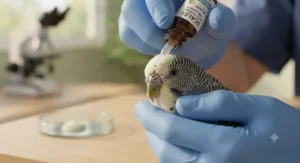
Scaly face mite, caused by a tiny burrowing parasite called Knemidocoptes, is unpleasant but rarely fatal if you catch it early and treat it properly. Left alone, though, it can distort the beak permanently and make eating painful. That’s the entire reason this article exists: to walk you through seven genuinely available, actively sold treatments — spot-ons, oral drops, soothing lotions and in-water solutions — with honest commentary on who each one suits, what the aggregated reviews actually say, and where the real trade-offs lie. We’ll also cover symptoms, beak mite treatment formats, when a vet visit is non-negotiable, and the beak deformity risk that makes prompt action worthwhile. No invented testimonials, no fabricated ratings — just what the research and the reviewers genuinely say.
Quick Comparison Table
Before we get into the detail, here’s the fast-scan version for anyone who just wants to know where to start.
| Product | Format | Best For | Price Range |
|---|---|---|---|
| Vetafarm AVIMEC | Spot-on drops | Budgie-specific first-line treatment | £15-£20 |
| Beaphar Anti-Parasite Spot On | Licensed spot-on pipette | Owners who want a fully licensed UK medicine | £20-£30 |
| Johnson’s Scaly Mite Lotion | Soothing topical lotion | Mild cases and budget-conscious owners | Under £10 |
| Naqua Ivermectin 0.10% Spot-On | Vet-strength spot-on | Multi-bird households on a budget | £10-£15 |
| Naqua Oral Mite Treatment | Oral drops | Birds that resist handling for spot-on dosing | £10-£15 |
| Vetafarm SCATT | Broad-spectrum spot-on | Aviaries with mixed mite and lice issues | £20-£25 |
| S76 + Avian Insect Liquidator | In-water and environmental spray | Larger flocks or recurring infestations | £15-£45 (bundle-dependent) |
Looking at this table, the split really comes down to how many birds you’re treating and how confident you feel handling your budgie. Single-bird households leaning towards a soothing, low-intervention approach tend to gravitate towards Johnson’s Scaly Mite Lotion, while anyone managing an aviary with several affected birds will get better value and coverage from a bottle like Vetafarm SCATT or the S76 system. Worth noting too: only one product on this list, Beaphar Anti-Parasite Spot On, carries a full UK veterinary marketing authorisation — the rest are sold under the small pet animal exemption, which we unpack later in the regulations section.
💬 Just one click – help others make better buying decisions too!😊
Top 7 Scaly Face Treatments for Budgies: Expert Analysis
We’ve picked these seven because they’re genuinely stocked, genuinely reviewed, and cover every realistic budget and bird-handling comfort level — not because they’re the only options that exist. Each one gets the same honest treatment: what it actually does, who it suits, and what real buyers report.
1. Vetafarm AVIMEC — purpose-built for budgerigar scaly face mite
Vetafarm AVIMEC is formulated specifically with budgerigars, finches and canaries in mind, which immediately sets it apart from more generic bird-mite products. It’s an ivermectin-based spot-on solution dosed by body weight — one drop for birds under 30g, two drops for birds between 30-100g — applied directly to bare skin, typically on the thigh.
The active ingredient works systemically once absorbed, meaning it doesn’t just sit on the surface killing what it touches; it circulates and takes out mites as they feed, which is why a single treatment can knock back an infestation that topical-only products might only slow down. Based on the dosing structure, this is clearly designed by people who’ve thought hard about small-bird safety margins rather than scaling down a product meant for parrots.
What most buyers overlook about this brand is that Vetafarm builds its avian range around species-specific dosing rather than one-size-fits-all veterinary crossover products, and that shows in how precisely the drop count is calibrated to budgie bodyweight. Reviewers consistently report visible improvement in the crusty, honeycomb-textured lesions within one to two weeks, with several noting they retreat at the manufacturer’s suggested interval to fully break the mite’s life cycle rather than stopping the moment symptoms fade.
Pros:
- ✅ Dosing calibrated specifically for budgerigar bodyweight
- ✅ Systemic action reaches mites topical products miss
- ✅ Widely stocked by specialist UK bird suppliers
Cons:
- ❌ Requires confident handling to apply drops accurately
- ❌ Some reviewers note the applicator can be fiddly for beginners
In the £15-£20 range for a 50ml bottle that treats dozens of birds, Vetafarm AVIMEC represents strong value if you keep more than one budgie, though a single-bird household is paying largely for shelf life rather than immediate need.

2. Beaphar Anti-Parasite Spot On — the only fully licensed option on this list
Beaphar Anti-Parasite Spot On stands out for one specific reason: it’s an authorised veterinary medicine in the UK, not a product sold under the small pet exemption. That distinction matters more than most owners realise, because a licensed medicine has been through formal safety and efficacy assessment for its stated species and condition, rather than relying on active substances simply being permitted for use.
Each pipette delivers 10 micrograms of ivermectin, effective against roundworms, feather lice, red mites, feather mites, air sac mites and — the one we’re here for — mange mites causing scaly face, with protection lasting up to four weeks. Suitable for birds weighing 20-50g, which covers the vast majority of adult budgerigars comfortably.
Here’s what the spec sheet won’t tell you outright, but the licensing implies: a formally authorised product has generally cleared a higher regulatory bar than exempted alternatives, which is reassuring if you’re treating a bird you’re anxious about, or if your own vet specifically recommends sticking to licensed medicines. Aggregated reviewer sentiment describes the packaging as clear and the application straightforward, though several buyers flag that UK pricing on Amazon can run noticeably higher than the same product bought through a pet shop counter — a pattern worth checking before you commit to buying online.
Pros:
- ✅ Full UK veterinary marketing authorisation
- ✅ Four-week protection window from a single pipette
- ✅ Also covers roundworms and multiple external parasites
Cons:
- ❌ Amazon pricing often higher than high-street pet shops
- ❌ Only two pipettes per pack, so repeat purchases add up
Priced typically in the £20-£30 bracket for two pipettes, Beaphar Anti-Parasite Spot On is the pick for owners who specifically want a licensed medicine and don’t mind paying a premium for that peace of mind.
3. Johnson’s Scaly Mite Lotion — the gentle, long-standing British classic
Johnson’s Scaly Mite Lotion has been a fixture on UK pet shop shelves for decades, and its formula reflects an older, gentler approach: a soothing, non-staining lotion applied directly to affected areas with a small brush, rather than a systemic drop. It’s aimed at controlling the scale-forming symptoms of Knemidocoptes rather than delivering the same fast, blood-borne knockout as an ivermectin spot-on.
In practice, that makes it best suited to catching cases early, before the mite has burrowed deeply and caused significant crusting. Based on the spec comparison with the ivermectin-based products on this list, Johnson’s Scaly Mite Lotion trades some raw knockdown speed for a gentler profile that many long-time budgie keepers still trust, particularly for smaller or more delicate birds.
Reviewers consistently note visible improvement within a few days of daily application, with several long-term customers mentioning they’ve used the brand across multiple birds and multiple decades without issue — a genuinely useful signal of sustained real-world trust, even if it isn’t formal clinical data. A handful of reviews mention that application demands patience, since it needs repeating over several days rather than delivering a single-dose fix.
Pros:
- ✅ Gentle, non-staining formula suits early or mild cases
- ✅ Trusted UK brand with decades of consistent use
- ✅ Simple brush-on application, no dropper precision needed
Cons:
- ❌ Slower acting than ivermectin-based spot-ons
- ❌ Needs repeated daily application over several days
At well under £10 for a 15ml bottle, Johnson’s Scaly Mite Lotion is the most budget-friendly entry here, and genuinely solid value for owners catching symptoms early rather than dealing with an advanced infestation.
4. Naqua Ivermectin 0.10% Spot-On — vet-strength dosing at aviary-friendly cost
Naqua Ivermectin 0.10% Spot-On is manufactured in Kent by a UK pharmaceutical company, and it’s pitched squarely at the small-bird end of the ivermectin spectrum — distinct from the brand’s 1% strength drops, which are reserved for large parrots and would be a dangerous overdose on a budgie. This 10ml bottle is dosed for ornamental birds including budgerigars, canaries and finches.
What most buyers overlook when scanning ivermectin products is that concentration matters enormously in small birds — a formulation built for cockatoos applied at the wrong strength to a 35g budgerigar isn’t a minor miscalculation, it’s a genuine safety issue. That’s precisely why this product’s positioning as the dedicated small-bird strength is worth paying attention to, rather than assuming any ivermectin drop will do.
Aggregated customer sentiment is strongly positive on effectiveness, with several reviewers specifically praising quick delivery and noting visible symptom improvement within roughly a week. The bottle size also makes this a sensible pick if you’re managing more than one affected bird, since the cost per treatment drops considerably compared with buying single-dose products repeatedly.
Pros:
- ✅ Correctly concentrated strength for small ornamental birds
- ✅ UK-manufactured under a government-approved facility
- ✅ Good value per treatment across multiple birds
Cons:
- ❌ Easy to confuse with the brand’s stronger large-bird formula
- ❌ Dropper accuracy takes some practice on a small, wriggly bird
Sitting in the £10-£15 range for 10ml, Naqua Ivermectin 0.10% Spot-On is arguably the sharpest value pick here if you’re comfortable double-checking concentration labels before you buy.
5. Naqua Oral Mite Treatment — for birds that hate being handled
Naqua Oral Mite Treatment takes a different administration route entirely: five millilitres dosed orally rather than applied to skin, aimed at birds weighing between 60g and 500g. For budgies specifically, that’s the upper end of their weight range, so accurate dosing by bodyweight is essential rather than optional here.
The appeal is straightforward — some budgies tolerate a drop of liquid on the beak or in a small amount of food far better than they tolerate being restrained for a skin application. Here’s what the spec sheet won’t tell you, but owner reports suggest: oral dosing can actually reduce overall stress during treatment for flighty or newly rescued birds, which matters because stress itself can suppress immune function and slow recovery from a mite infestation.
Reviewers describe it as effective against the wider mite, lice and flea picture, with one detail worth flagging honestly: this product is formulated across a broader avian weight range than budgie-specific alternatives, so getting the per-bird dose right calls for careful attention to the manufacturer’s weight-based instructions rather than eyeballing it. Aggregated feedback trends positive on outcomes, with fewer complaints about handling difficulty than the spot-on alternatives on this list.
Pros:
- ✅ Avoids the stress of restraining the bird for skin application
- ✅ Suitable across a wide multi-species weight range
- ✅ Also addresses lice and flea burdens simultaneously
Cons:
- ❌ Dosing accuracy is more fiddly at the lower end of budgie bodyweight
- ❌ Less budgie-specific guidance than dedicated products
Typically priced in the £10-£15 range for 5ml, Naqua Oral Mite Treatment earns its place for owners whose birds simply won’t sit still for a spot-on, even if it demands a touch more care at the measuring stage.
6. Vetafarm SCATT — the broad-spectrum choice for mixed infestations
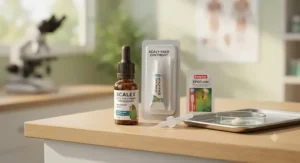
Vetafarm SCATT is positioned as a spot-on covering air sac mite, red mite, scaly face and lice across finches, budgies and canaries in one 50ml bottle — essentially the generalist option when you’re not entirely sure which parasite is causing which symptom, or when a bird is dealing with more than one problem at once.
That breadth is the whole selling point. Based on the spec comparison with the more narrowly targeted products on this list, Vetafarm SCATT makes the most sense in an aviary setting where scaly face might be showing up alongside respiratory symptoms suggestive of air sac mite, since treating only the visible scaly lesions while ignoring a concurrent internal mite issue would leave the bird only partially better.
One detail worth being upfront about: a customer review referenced in the product listing itself points out that instructions asking owners to “apply to the skin on an unaffected area” are somewhat impractical for scaly face specifically, since the condition by definition affects the featherless skin around the cere and legs — there isn’t always much unaffected skin available on a heavily infested bird. That’s a fair critique, and one this article won’t paper over: apply as close to the standard site as the lesions allow, and ask your vet if you’re unsure. Aggregated sentiment otherwise remains positive on efficacy across the range of parasites it targets.
Pros:
- ✅ Covers scaly face, air sac mite, red mite and lice in one product
- ✅ Sensible choice when multiple parasites are suspected
- ✅ 50ml bottle treats many birds across a flock
Cons:
- ❌ Application-site instructions can be impractical on heavily affected skin
- ❌ Broader spectrum means less targeted dosing than a scaly-face-only product
At roughly £20-£25 for the bottle, Vetafarm SCATT suits multi-bird households facing more than one parasite issue rather than a single budgie with textbook, isolated scaly face symptoms.
7. S76 and Avian Insect Liquidator — the flock-and-environment specialist
S76 and Avian Insect Liquidator work as a paired system rather than a single bottle: S76 goes into the drinking water to treat birds without the stress of individual handling, while the Avian Insect Liquidator spray tackles mites living in the cage, nest boxes and housing itself.
Here’s the honest caveat this article promised upfront: Knemidocoptes, the mite behind scaly face, spends its entire life cycle on the bird’s body rather than in the environment, so an environmental spray isn’t the primary weapon against scaly face specifically the way it is against red mite or northern mite, which do live off-host in cracks and crevices. We’re including this pairing not as a scaly-face-first recommendation, but as an honest, useful addition for owners managing larger flocks where scaly face often shows up alongside genuinely environmental mite problems that do need housing treatment.
What most buyers overlook is exactly this distinction between on-bird and in-environment parasites, and a flock keeper juggling several mite types at once benefits from understanding which product tackles which. Aggregated reviews describe the water-based dosing as genuinely convenient for large numbers of birds that would otherwise need to be caught individually, with several keepers specifically praising the reduced handling stress across breeding season.
Pros:
- ✅ Treats large numbers of birds without individual handling
- ✅ Environmental spray tackles mites living in cage and nest boxes
- ✅ Safe to use during breeding and moulting periods per the label
Cons:
- ❌ Not the primary treatment for on-bird scaly face specifically
- ❌ Bundle pricing varies significantly by pack size, so it needs checking carefully
Pricing spans roughly £15 to £45 depending on which bundle size you choose, making S76 and Avian Insect Liquidator better value the more birds and cage space you’re treating at once.
Practical Usage Guide: Applying Scaly Face Treatment Safely at Home
Buying the right product is only half the job — application technique genuinely affects outcomes. Start by weighing your budgie if you can, since almost every spot-on and oral dose here is calibrated by bodyweight, and guessing tends to under-dose (leaving mites alive) or over-dose (unnecessary risk). A simple digital kitchen scale with a small perch or cup works fine for this.
Restrain your bird gently in a soft towel, exposing only the area you need — usually the thigh or the skin between the shoulders, depending on the product. Apply drops directly to bare skin rather than through feathers, since feather contact reduces absorption. For lotions like Johnson’s Scaly Mite Lotion, a soft, clean brush lets you target the crusted areas precisely without overapplying.
A common first-30-days mistake is stopping treatment the moment visible symptoms improve. Mites have a life cycle of several weeks, and most manufacturers — including Vetafarm AVIMEC and Vetafarm SCATT — recommend a second treatment at a set interval specifically to catch newly hatched mites the first dose missed. Skipping that follow-up is the single most common reason scaly face appears to “come back” a few weeks later. Keep affected birds separated from unaffected cage-mates where practical, since the mite spreads through prolonged direct contact, particularly from parent to chick during feeding.
Real-World Scenarios: Matching Treatment to Your Situation
Scenario one — the single pet budgie with early symptoms. A first-time owner spots slight roughness on the cere, no deformity yet, one bird. A gentle option like Johnson’s Scaly Mite Lotion paired with a same-week vet check for confirmation is proportionate here — low intervention, low cost, low stress for a bird that isn’t yet in crisis.
Scenario two — the breeding pair with a chick showing signs. Since scaly face transmits from parent to nestling during feeding, both adults and any affected chicks need treating, ideally with something systemic like Naqua Ivermectin 0.10% Spot-On, dosed carefully by each individual’s weight rather than a blanket amount for the nest.
Scenario three — the aviary keeper with several birds and mixed symptoms. Multiple birds, some scaly, some possibly dealing with red mite or air sac issues too. This is where Vetafarm SCATT for on-bird treatment alongside S76 and Avian Insect Liquidator for the housing genuinely earns its higher combined cost, because treating the birds while leaving mite-infested crevices untouched invites reinfection within weeks.
What is Scaly Face Mite?
Scaly face mite is a parasitic skin condition in budgerigars caused by the burrowing mite Knemidocoptes pilae, which tunnels into the featherless skin of the cere, beak and legs. It produces characteristic honeycomb-textured crusting and, left untreated, can permanently deform the beak.
The mite’s biology explains why treatment timing matters so much. According to the Wikipedia entry on scaly foot, the condition is transmitted between birds through prolonged direct contact and produces tunnels within the skin that trigger dermatitis and the telltale scaly lesions readers recognise. It’s the same mite genus responsible for what’s sometimes called tassel foot on the legs and feet.
Scaly Face Mite Symptoms
Recognising scaly face mite symptoms early genuinely changes the treatment outlook. The most obvious early sign is a rough, honeycomb-like or crusty texture developing on the cere, the fleshy area just above the beak where nostrils sit. As the infestation progresses, similar crusting can spread to the corners of the beak, around the eyes, and down onto the legs and feet, sometimes producing overgrown, flaky scales that give budgies their “tassel foot” nickname when severe.
Behaviourally, affected birds may show reduced appetite if beak movement becomes uncomfortable, and in advanced cases, visible changes to beak shape or length as the tissue underneath is damaged by the mite’s tunnelling. According to research from the University of Florida’s veterinary extension service, mites invade the feather follicles and epidermis of the face, cere and limbs, forming pouch-like cavities as they feed on keratin — which is precisely why surface-only treatments sometimes struggle against established, deeper infestations compared with systemic options.
Beak Deformity Risk: Why Early Treatment Matters
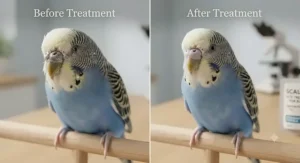
This is the section that makes prompt treatment worth the effort rather than a “wait and see” approach. Because Knemidocoptes tunnels progressively deeper into the tissue around the cere and down the beak, an infestation left untreated for weeks or months can cause genuine structural damage — overgrowth, distortion, or areas of the beak that no longer meet correctly. In severe, long-neglected cases, eating and drinking can become physically difficult, which is a welfare concern rather than a cosmetic one.
The reassuring counterpoint, based on the spec comparison across the treatments in this review, is that catching the condition at the honeycomb-crusting stage rather than the deformity stage tends to respond well to any of the seven products covered here, provided dosing and follow-up treatment are done properly. Beak deformity risk is real, but it’s also largely preventable with reasonably prompt action — this isn’t a condition that demands panic, just attention.
Vet Diagnosis of Scaly Face: When to See an Avian Vet
While several of these treatments are available without a prescription, that doesn’t mean a vet visit is optional, particularly for a first suspected case. An avian vet can confirm Knemidocoptes via a simple skin scraping examined under magnification, rule out lookalike conditions such as liver disease (which can also affect beak appearance) or simple respiratory-linked colour changes around the cere, and advise on dosing for a bird whose exact weight and health status they’ve assessed directly.
The PDSA’s guidance on keeping budgies healthy is a useful general reference point here, noting that budgies are skilled at hiding illness and that any behavioural change is worth investigating promptly with a vet who has experience treating birds specifically, rather than a general small-animal practice. If your budgie shows laboured breathing, stops eating, or the beak looks visibly distorted, that’s an emergency-level vet visit rather than a home-treatment situation — treat scaly face at home only once you’re confident that’s genuinely what you’re dealing with.
How to Choose the Right Scaly Face Treatment
- Confirm the diagnosis first. A quick vet check or skin scraping avoids wasting money and time treating the wrong condition.
- Weigh your bird accurately. Nearly every dosing instruction on this list is bodyweight-based, so a kitchen scale is worth the five minutes it takes.
- Match the format to your bird’s temperament. A flighty, hard-to-handle budgie may do better with an oral or in-water option than a restrained spot-on application.
- Consider household size. A single pet budgie rarely needs a 50ml bottle; an aviary of twenty birds rarely benefits from a single-dose lotion.
- Check for a licensed alternative if you’d prefer one. Beaphar Anti-Parasite Spot On is currently the clearest UK-licensed option among mainstream choices.
- Plan for the follow-up dose from the start. Budget and schedule the second treatment before you begin, rather than deciding reactively.
- Separate affected birds during treatment where your setup allows it, to limit spread to unaffected cage-mates.
Beak Mite Treatment: Spot-On vs Oral vs Topical vs Water-Additive
Different beak mite treatment formats genuinely suit different situations, and there’s no single “best” format independent of your bird and setup.
| Format | Example Product | Strength | Weakness |
|---|---|---|---|
| Spot-on drops | Vetafarm AVIMEC, Naqua Ivermectin 0.10% | Fast, systemic, precise dosing | Requires confident restraint |
| Soothing topical lotion | Johnson’s Scaly Mite Lotion | Gentle, good for mild/early cases | Slower, needs repeat application |
| Oral drops | Naqua Oral Mite Treatment | Lower handling stress | Fiddly dosing at low bodyweights |
| In-water/environmental | S76 and Avian Insect Liquidator | No individual handling, treats housing | Not primary for on-bird scaly face |
Reading across this table, the honest takeaway is that spot-on drops currently offer the strongest evidence of fast, reliable knockdown for established scaly face specifically, while the other formats each solve a different practical problem — gentleness, handling stress, or flock-scale convenience — rather than necessarily outperforming spot-ons on raw efficacy. Choosing between them is less about which is “best” and more about which trade-off suits your bird and your confidence level.
Common Mistakes When Buying Scaly Face Mite Treatments
The single most common mistake is buying a product formulated for large parrots — full-strength 1% ivermectin drops, for instance — and assuming a smaller dose makes it safe for a budgie, when the correct move is buying the dedicated small-bird concentration in the first place, such as the 0.10% strength found in Naqua Ivermectin 0.10% Spot-On. Concentration errors on small birds carry real risk and aren’t something to eyeball.
A second frequent error is buying based on price alone without checking pack size against actual need — a single pet owner buying a 50ml bottle of Vetafarm SCATT intended for flock use will likely have most of it go unused before it degrades, when a smaller-format product would have been better value. Conversely, aviary keepers sometimes underbuy single-dose products and end up paying more per treatment across multiple purchases than a larger bottle would have cost upfront.
Finally, many buyers skip reading whether a product is licensed or exempt, assuming all bird medicines sold on Amazon carry equal regulatory status — they don’t, and knowing the difference matters if you want the added reassurance of full UK marketing authorisation.
Long-Term Cost, Safety and UK Regulations
Most scaly face treatments here cost meaningfully less over a year than a single emergency vet visit for an advanced, neglected infestation, which is the clearest ROI argument in favour of treating early rather than waiting. A £10-£20 bottle that treats a bird (or several) across multiple outbreaks compares favourably against UK avian vet consultation fees, which commonly run from roughly £45 upwards before any medication or further tests.
On the regulatory side, it’s worth understanding how these products are legally sold in the UK. Most of the treatments in this review — aside from Beaphar Anti-Parasite Spot On — are marketed under what’s known as the Schedule 6 exemption. According to gov.uk’s guidance on medicine exemptions for small pet animals, certain medicines for cage birds and other small pets are exempt from full marketing authorisation requirements provided they’re kept exclusively as pets rather than for food production, and provided the active substances used are on an approved list. That’s a legitimate, government-recognised route to market — not a loophole — but it does mean these products haven’t undergone the same individual assessment as a fully licensed veterinary medicine, which is exactly why some cautious owners specifically seek out Beaphar Anti-Parasite Spot On instead.
Frequently Asked Questions
❓ How long does scaly face treatment take to work on a budgie?
❓ Can scaly face mite spread to other budgies?
❓ Is scaly face mite treatment safe for baby budgies?
❓ Do I need a vet to treat scaly face at home?
❓ What happens if scaly face mite is left untreated?
Conclusion
Scaly face mite looks alarming the first time you spot it, but it’s genuinely one of the more manageable conditions a budgie owner will face, provided you act reasonably promptly and choose a treatment that matches your bird’s needs. For most single pet budgies with early, mild symptoms, a gentle option like Johnson’s Scaly Mite Lotion paired with a vet check is proportionate. For anything more established, a dedicated spot-on such as Vetafarm AVIMEC or Naqua Ivermectin 0.10% Spot-On offers faster, systemic knockdown, while Beaphar Anti-Parasite Spot On remains the pick for owners who specifically want a licensed UK medicine. Aviary keepers juggling multiple birds and mixed parasites will get more complete coverage from Vetafarm SCATT or the S76 and Avian Insect Liquidator system.
Whichever route you choose, the same principles hold: confirm the diagnosis, dose by weight, commit to the follow-up treatment, and don’t hesitate to involve an avian vet if anything about your bird’s condition worries you. Scaly face mite responds well to consistent, correctly applied treatment — and most budgies bounce back to their usual cheerful, chattering selves within a few weeks of starting the right one.
✨ Ready to Treat Your Budgie with Confidence?
🔍 Compare current prices and availability on any of the treatments above before you buy, and keep your vet in the loop throughout. A little research now saves your budgie weeks of discomfort later!
Recommended for You
- 7 Top Rated Bird Wormer Under £20 Picks for 2026: Full Guide
- Buy Bird Mite Treatment UK: 7 Best Options Compared (2026)
- 7 Top Immune Support Supplements for Pet Birds in 2026
Disclaimer: This article contains affiliate links. As an Amazon Associate, I earn from qualifying purchases. If you purchase products through these links, we may earn a small commission at no additional cost to you.
✨ Found this helpful? Share it with your friends! 💬🤗
