In This Article
Your bird’s cage looks clean. Then the light catches a film on a perch, a crust under the seed hopper, a sourness you stopped noticing weeks ago. That’s the moment a bird-safe cage disinfectant earns its place on the shelf. You don’t want a bleach-and-pray approach, or whatever lives under the kitchen sink. You want something built to kill germs without turning the room into a chemistry experiment for an animal with a famously delicate respiratory system.
The stakes are real. The Health and Safety Executive explains that breathing in dust from contaminated bird droppings can cause illnesses such as psittacosis. Droppings, spilled seed and damp water bowls are also a buffet for bacteria and mould. Soap and water lift the visible grime. A proper bird-safe disinfectant spray, or a correctly diluted concentrate, deals with what you can’t see.
This guide compares seven real, UK-available products, from budget sprays to vet-grade concentrates. Along the way it covers bacterial and fungal risks, disinfectant contact time, a step-by-step quarantine cleaning protocol, and a realistic disease prevention cage disinfectant routine. One honest note: everything here draws on published label guidance, specifications and aggregated customer ratings. I haven’t tested these products on any bird, and I won’t pretend otherwise. Prices appear as ranges at the time of research, so check current prices before you buy. 🐦
Quick Comparison: Bird-Safe Cage Disinfectant Options at a Glance
| Product | Format | Typical price range | Best For |
|---|---|---|---|
| F10SC | Super-concentrate | Around £20-£29 (200ml) | Multi-bird homes wanting broad coverage |
| Ark-Klens | Concentrate or spray | Roughly £6-£15 | Budget-conscious daily wipe-downs |
| Virkon S | Powder sachets or tablets | Around £15-£20 | Aviaries, breeders, outbreak scares |
| Johnson’s Clean ‘n’ Safe | Ready-to-use spray | Under £10 (500ml) | Quick, no-fuss spot cleaning |
| Safe4 | Concentrate (1L or 5L) | Around £13-£17 per litre | Tiered strengths on a UK-made base |
| Avisafe | Concentrate or spray | Around £10-£22 (500ml spray) | Bird-specific equipment and hand-rearing kit |
| F10 RTU | 1L trigger spray | Under £20 | Convenient vet-brand spraying |
Looking at the table, Ark-Klens and Johnson’s Clean ‘n’ Safe are the easy entry points for a single-bird household. F10SC and Safe4 reward you with more solution per pound, but only if you’re happy measuring. Virkon S is the one to reach for when the stakes rise, such as a flock, a breeder’s shed or a health scare.
💬 Just one click — help others make better buying decisions too!😊
What Is a Bird-Safe Cage Disinfectant?
A bird-safe cage disinfectant is a cleaning product formulated to kill bacteria, fungi and often viruses on cages, perches, bowls and toys, while carrying a low risk to birds when diluted and used as directed. It is usually low in fumes, non-corrosive and designed for use after droppings and debris have been removed.
Here’s the catch most owners miss: “bird-safe” is a marketing phrase, not a protected legal standard. Two bottles can both say it and behave very differently once you check the dilution, the fragrance and the claimed coverage. That’s why this guide leans on what each label and listing actually states. An avian-safe surface disinfectant earns the description through low-residue chemistry, clear dilution instructions and honest limits on where it should be used. A disease prevention cage disinfectant, by contrast, is defined by when you use it: routinely, before trouble starts, rather than as a panic response afterwards.
Top 7 Bird-Safe Cage Disinfectant Products: Expert Analysis
Each product below gets the same treatment: what the spec means in practice, who it suits, what aggregated reviews say, and whether the price range looks fair.
1. F10SC — vet-clinic pedigree in a tiny bottle
F10SC is the heavyweight here, a super-concentrate from Health and Hygiene that its listings say is used in veterinary hospitals and zoos. The published general dilution is 1:250, so a 200ml bottle stretches to roughly 50 litres of made-up solution. That’s months of weekly cage washes for most households. One independent UK roundup describes a dual-active formula, benzalkonium chloride plus PHMB, designed to limit microbial resistance. The listing also states activity against bacteria, fungi and spores, and the formula is unscented.
Based on those specs, it suits owners with several birds, breeders, or anyone worried about mould-prone environments. The unscented formula helps if your bird sulks at strong smells. Amazon listings for the range sit around 4.8 stars across several hundred ratings, and one verified reviewer calls it a trusted product for perches and cages.
Pros:
- ✅ Claims cover bacteria, fungi and spores
- ✅ Unscented formula suits sensitive birds
- ✅ One bottle makes tens of litres
Cons:
- ❌ Higher upfront cost than basic sprays
- ❌ Needs accurate measuring and mixing
Expect roughly £20-£29 for 200ml depending on seller. Per litre of finished solution, that’s excellent value.
2. Ark-Klens — cheapest per litre of finished solution
Ark-Klens from Vetark is the quiet workhorse of UK bird rooms, and its non-scented formula won’t put birds off their perches. The published dilution is 10ml per 5 litres, a 0.025% final solution. Vetark says 250ml makes around 100 litres, which means pennies per wash. It’s a benzalkonium chloride blend, bactericidal against a wide range of bacteria and virucidal against lipophilic viruses. The maker’s own wording says only some viruses and fungi are susceptible, so fungal coverage is more modest here than with F10SC. The listing names E. coli, Salmonella and chlamydia among its targets.
The practical read: this is a superb daily cleaner for bowls, cage trays and surfaces, less so for a mould-heavy situation. The ready-to-use bottle holds roughly 4.6 stars from around 150 ratings. Reviewers mention years of regular use on feeders and bowls, and some refill their trigger bottle from the concentrate.
Pros:
- ✅ Pennies per litre once diluted
- ✅ Non-scented, so less likely to deter birds
- ✅ Spray and concentrate formats available
Cons:
- ❌ Fungal coverage is described as partial
- ❌ Concentrate requires careful dilution
Roughly £6-£10 for ready-to-use and under £15 for concentrate. A strong value pick for everyday hygiene.
3. Virkon S — Defra-listed muscle for outbreak scares
Virkon S is a peroxygen powder, not a gentle wipe-down spray, and that’s the point. A 50g sachet makes 5 litres of pink solution, and the colour shows you what you’ve treated. It’s Defra-approved for poultry and avian influenza orders. Remember that approval is tied to a named product and a specific dilution, and APHA’s own briefing notes show the list changes, so verify the current entry. Retailer copy claims activity against over 500 strains of viruses, bacteria and fungi. That’s a manufacturer-side claim worth reading as marketing, not gospel.
Analytically, it’s overkill for one budgie but ideal for aviaries, breeders and anyone cleaning feeders in a garden. Tablets and sachets save you from guessing quantities. Solutions should be refreshed daily. Tablets sit near 4.7 stars across several hundred ratings, with reviewers describing garden bird-feeding areas. Follow the label for gloves, powder handling and surface compatibility.
Pros:
- ✅ Defra-listed for avian influenza orders
- ✅ Pre-measured sachets reduce mixing errors
- ✅ Pink colour shows treated areas
Cons:
- ❌ Mixed fresh each day, so less convenient
- ❌ Powder handling calls for care
Around £15-£20 for five sachets or fifty tablets. Brilliant for bigger set-ups.
4. Johnson’s Clean ‘n’ Safe — easy spray for daily wipe-downs
Johnson’s Clean ‘n’ Safe Cage Bird Disinfectant is the “grab it, spray it” option. The 500ml bottle is ready to use, so there’s no maths. The listing says it kills bacteria and viruses and leaves a fresh fragrance. It does not claim fungal activity in the copy I found, which matters if damp seed or mould is your worry. The fragrance deserves a thought as well: birds are sensitive to airborne irritants, so apply it to surfaces away from the bird and ventilate.
It suits first-time owners and tight budgets. The bird-cage bottle holds around 4.7 stars from over 400 ratings. Reviewers across the wider Clean ‘n’ Safe range mention a clean finish and no overpowering smell, though I couldn’t verify bird-specific review detail.
Pros:
- ✅ Ready to use with no mixing
- ✅ Very low price per bottle
- ✅ Widely stocked and easy to reorder
Cons:
- ❌ Fragrance may bother sensitive birds
- ❌ Listing doesn’t claim fungal coverage
Roughly £7-£9 per 500ml, with multipacks cheaper per bottle. A sensible bird-safe disinfectant spray for light, regular cleaning.
5. Safe4 — UK-made concentrate with three strength settings
Safe4 Professional Disinfectant Concentrate is a UK-manufactured, general-purpose product marketed as pet-safe. Its published dilutions give you options: 1:100 for daily cleaning, 1:50 for hard surfaces, 1:10 for outbreak use. At 1:100, a 1L bottle makes about 100 litres. The odourless listing states it kills viruses, mycobacteria, fungi and bacteria, and unscented and scented variants exist.
The tiered strengths suit a quarantine cleaning protocol well: heavier mixes for a sick bird’s cage, lighter for routine. The 1:10 outbreak mix is strong, so use it only with veterinary guidance and rinse thoroughly. The honest caveat is that this isn’t an avian-specific product. Ratings hover near 4.8 from more than a hundred reviewers, but I couldn’t verify review text about bird use. Choose odourless and ventilate.
Pros:
- ✅ Three published strengths for different jobs
- ✅ Odourless option available
- ✅ Superb cost per litre made up
Cons:
- ❌ Not formulated specifically for birds
- ❌ Strong mixes demand careful rinsing
Around £13-£17 per litre and roughly £30-£40 for 5L. Excellent value for multi-purpose households.

6. Avisafe — bird-specific formula with clear dilutions
Avisafe from The Birdcare Company (listed under Care Bird on Amazon) is built around halogenated tertiary amines, a different chemistry from the quats in Ark-Klens. Specialist retailers publish bird-specific guidance: 1:100 for cages, bowls and perches, and 1:50 for hand-rearing equipment, nest boxes and heavily soiled areas. The ready-to-use spray is pre-diluted to 1:50 with a five-minute leave time. Coverage is stated as bacteria, viruses, fungi and yeasts. Some retailers describe Defra approval for avian flu, but they quote different dilutions, so check the official Defra list before relying on it.
That suits hand-rearers and breeders. The Amazon ready-to-use listing has only a handful of ratings (4.7 from five), which is too thin to lean on. The concentrate was unavailable there at the time of research.
Pros:
- ✅ Designed for bird equipment specifically
- ✅ Covers yeasts as well as fungi
- ✅ Clear bird-focused dilution guidance
Cons:
- ❌ Very thin review base on Amazon
- ❌ Amazon price can exceed specialist shops
Expect around £10-£22 for 500ml ready-to-use depending on seller. Worth it if you want an avian-specific label.
7. F10 RTU — trigger-spray convenience from a vet brand
F10 RTU is the F10 range’s ready-to-use 1L trigger bottle, the simple route to the F10 family without any mixing. For spot-cleaning a perch, a dish or a play stand, a pre-diluted spray removes the measuring errors that sometimes plague concentrates. The F10 range is marketed for cages, bowls, perches and toys. Check the RTU label for its own contact time, because it can differ from the concentrate.
It makes sense as a bird-safe disinfectant spray for owners who value speed. Ratings sit around 4.4 from just over twenty reviewers, so it’s well-regarded but thinly reviewed.
Pros:
- ✅ No mixing, so fewer dilution mistakes
- ✅ Generous 1L trigger bottle
- ✅ Comes from a well-known vet brand
Cons:
- ❌ Costs more per litre than concentrates
- ❌ Smaller review pool than the concentrate
Under £20 for 1L at the time of research. Fair value for convenience.
Product Specifications Compared
| Product | Published dilution or format | Claimed coverage | Scent | Best For |
|---|---|---|---|---|
| F10SC | 1:250 general dilution | Bacteria, fungi, spores | Unscented | Broad coverage per millilitre |
| Ark-Klens | 10ml per 5L | Bacteria, lipophilic viruses, some fungi | Non-scented | Daily bowls and surfaces |
| Virkon S | 50g per 5L | Viruses, bacteria, fungi | Check label | Outbreak control |
| Johnson’s Clean ‘n’ Safe | Ready to use | Bacteria, viruses | Fresh fragrance | Quick spot cleaning |
| Safe4 | 1:100, 1:50 or 1:10 | Viruses, mycobacteria, fungi, bacteria | Odourless or scented | Tiered routine and quarantine |
| Avisafe | 1:100 or 1:50; spray pre-diluted | Bacteria, viruses, fungi, yeasts | Listed unscented on Amazon | Hand-rearing kit and nest boxes |
| F10 RTU | Ready to use | Check RTU label | Check label | Convenient trigger spraying |
The table shows the real divide. F10SC, Safe4 and Avisafe make explicit fungal claims, while Johnson’s Clean ‘n’ Safe and Ark-Klens are more modest, so match the product to your mould risk. Virkon S sits in its own league for outbreak work. If you only want a bird-safe disinfectant spray with no maths, F10 RTU and Johnson’s Clean ‘n’ Safe are the simplest choices.
How to Choose a Bird-Safe Cage Disinfectant
- Check what it kills. Look for explicit claims on bacteria, fungi and viruses, not just “germs”. A product that skips fungi leaves a gap if you battle damp seed or wet substrate.
- Read the dilution and the contact time. A disinfectant is only as good as its mixing ratio, so use a measuring syringe, not your eyeballs.
- Decide on scent. Unscented is the safer default for birds with sensitive airways, and fragranced products are best used only with good ventilation.
- Pick the format. Concentrates win on cost and sprays win on convenience. The next section compares them directly.
- Verify regulatory claims. Defra’s disinfectant approval scheme guidance explains that approval covers inanimate surfaces only and applies to specific products at specific dilutions. Approval is not a general endorsement.
- Match the size to your flock. One budgie rarely needs 5L of anything, while a breeder will.
Here’s what most buyers overlook: a product can be excellent and still be wrong for you if you won’t use it consistently. The best bird-safe cage disinfectant is the one that fits your routine.

Bacterial and Fungal Risks Inside the Cage
Bacterial threats
Droppings, spilled water and fruit residue let bacteria multiply fast. Vetark names E. coli and Salmonella among its Ark-Klens targets. Chlamydia psittaci, the bacterium behind psittacosis, is the one health agencies stress most. Public health guidance notes it can remain infectious for months when protected by droppings or litter, and that apparently healthy birds can shed it intermittently. That’s why organic debris must be removed before disinfecting.
Fungal threats
Fungal spores love damp seed, soaked paper and humid corners. Aspergillus is a well-known respiratory concern in pet birds. A disinfectant helps but doesn’t fix the cause, so dry your bowls, replace soggy substrate and keep seed storage airtight. These bacterial and fungal risks are why products with explicit fungal claims, such as F10SC and Safe4, deserve a look. The risks drop sharply when disinfectant is paired with dryness and ventilation.
Disinfectant Contact Time: The Step Most Owners Skip
Disinfectant contact time is how long the solution must stay wet on a clean surface to do its job. Spray-and-wipe in two seconds feels efficient, but it often cuts the contact short.
US public health guidance on psittacosis control, the CDC compendium, notes that most disinfectants need roughly five to ten minutes of contact after the surface has been scrubbed free of faeces. Your product label overrides that rule of thumb. For example, Avisafe ready-to-use lists a five-minute leave time. The practical sequence looks like this:
- Remove droppings and debris, wetting them first to avoid dust.
- Scrub with detergent, then rinse.
- Apply disinfectant so surfaces stay visibly wet.
- Wait the full contact time, setting a phone timer if needed.
- Rinse and dry before the bird goes back.
The spec sheet won’t tell you this, but organic dirt neutralises many disinfectants. Skipping the pre-clean is the most common reason a good product underperforms.
Quarantine Cleaning Protocol for New or Sick Birds
A quarantine cleaning protocol is a separate, stricter hygiene routine for a bird whose health status is unknown. VCA Hospitals advises quarantining new birds in a separate room for 30-45 days, with a vet check before introductions. A protocol that works in practice:
- Use a separate room. Close the door, and avoid shared airflow where possible.
- Dedicate the kit. Give the quarantine bird its own bowls, cloths, spray bottle and brush.
- Wear a dedicated cover-up. A smock and separate footwear, as veterinary biosecurity guidance suggests, cut cross-contamination.
- Care for healthy birds first. Leave the quarantined bird until last, then wash your hands.
- Wet before you clean. Dampen droppings with water or disinfectant to avoid airborne dust, and bag the waste.
- Disinfect daily. Wash bowls and trays with detergent, rinse, disinfect for the full contact time, then rinse again.
- Finish with a deep clean. Strip the cage, scrub it, disinfect and dry it before any reuse.
Tiered products like Safe4, or Avisafe at its heavier 1:50 strength, suit this job. Ask your vet before using any strong mix around a sick bird.
Bird-Safe Disinfectant Spray vs Concentrate: Which Format Wins?
A bird-safe disinfectant spray gives you speed. There’s no measuring, no jug, and no wondering whether you diluted correctly. Johnson’s Clean ‘n’ Safe and F10 RTU exist for exactly that job: the evening perch wipe, the quick bowl rinse, the spot where a bird has had an accident.
Concentrates win on economics and flexibility. Ark-Klens, F10SC and Safe4 turn a small bottle into dozens of litres, and you can mix stronger or weaker solutions for different jobs. The catch is human error, as a rushed “splash of this” can mean too weak to work or too strong to be kind to your bird.
My analytical take: buy a concentrate for the big weekly clean, and keep a ready-to-use bottle for everyday spot jobs. You can even refill a labelled spray bottle from your concentrate, which is a common habit among Ark-Klens buyers. Label everything clearly, and never mix different products.
Avian-Safe Surface Disinfectant: What to Treat and What to Replace
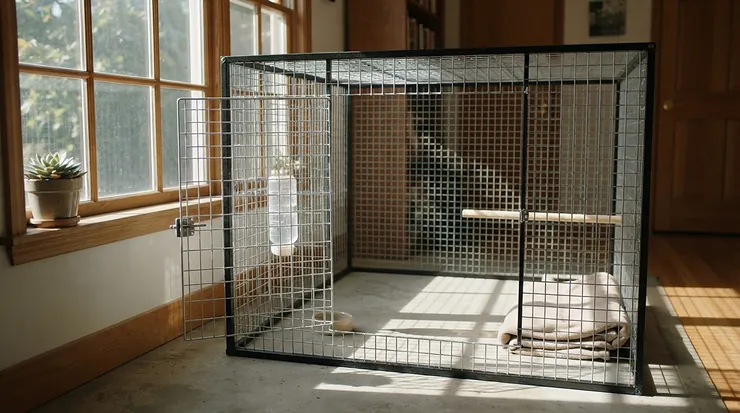
An avian-safe surface disinfectant works best on hard, non-porous surfaces: powder-coated or stainless wire, plastic trays, ceramic or steel bowls, and many toys. These can be scrubbed, soaked for the contact time, rinsed and dried.
Porous items are the problem. Natural wood perches, rope, untreated branches and cardboard soak up droppings and moisture, and a surface wipe can’t reach what’s inside. Many keepers simply replace heavily soiled wooden perches and rope toys rather than trying to rescue them. Always check surface compatibility on the label, particularly for strong chemistries such as Virkon S.
One more principle: disinfectant solution shouldn’t pool. Rinse where the label advises, wipe away puddles, and let everything dry completely before the bird returns. That keeps residue low and makes the whole routine safer.

Bird-Safe Cage Disinfectant vs Household Cleaners
| Option | Strength | Weakness around birds | Best For |
|---|---|---|---|
| Purpose-made bird-safe cage disinfectant | Tested claims, clear dilution | Needs correct mixing and contact time | Routine disinfection |
| Household bleach | Powerful disinfectant | Strong fumes; must be thoroughly rinsed; never mix with other cleaners | Not a first choice for most homes |
| Vinegar solution | Mild, cheap cleaner | Not a tested disinfectant | Light scale and deodorising |
| Scented aerosol sprays | Convenient | Airborne irritant risk for birds | Best avoided near birds |
| Hot soapy water | Removes dirt and debris | Doesn’t claim to disinfect | Essential first step |
The pattern is clear: soap and water are step one, not the finish line. Household options either lack tested claims or bring fumes that are a worse fit for birds. A proper bird-safe cage disinfectant occupies the middle ground, with documented claims and dilution you can control. Where products like Ark-Klens cost pennies per litre, there’s little reason to improvise.
Your Disease Prevention Cage Disinfectant Routine
A disease prevention cage disinfectant only works if you use it on a rhythm. Here’s a schedule that fits a normal life:
- Daily: remove droppings, wash food and water bowls, and spot-spray the perch area with a ready-to-use option such as Johnson’s Clean ‘n’ Safe or F10 RTU.
- Weekly: strip the cage, scrub, disinfect with a concentrate like Ark-Klens or F10SC, respect the contact time, rinse and dry.
- Monthly: deep-clean toys and perches, inspect wooden items for soaking or mould, and replace what’s beyond saving.
- After illness or a new arrival: follow the quarantine cleaning protocol above, and consult your vet about product strength.
Health agencies recommend cleaning cages and food and water bowls daily and wetting droppings before removal, so the daily step isn’t optional. Consistency beats intensity every time. A modest weekly routine outperforms an occasional heroic deep clean.
Real-World Scenarios: Matching Products to Bird Keepers
Scenario 1: one budgie in a flat. The budget is under £15, cleaning happens daily with a big clean weekly, and the bird is a sensitive indoor pet. A bottle of Ark-Klens concentrate for the weekly clean, plus a unscented spray for spot jobs, keeps costs tiny and scent low.
Scenario 2: twelve finches in a garden aviary. Humidity, outdoor droppings and visiting wild birds raise the risk. Virkon S sachets handle regular aviary sanitising, with F10SC for perches, bowls and feeders. Budget runs to £30-£50 a season.
Scenario 3: a new cockatiel in a spare room. A 30-45 day quarantine calls for dedicated gear and daily disinfection. Safe4 (odourless) at its published strengths, or Avisafe for hand-rearing kit, fits well, with the vet’s input on any strong mix.
The pattern: single-bird homes should favour simplicity, while multi-bird set-ups should favour coverage and consistency.
Long-Term Cost and Maintenance
| Product | Rough cost per litre of made-up solution |
|---|---|
| Ark-Klens (concentrate) | Around 10p-15p |
| Safe4 (1:100) | Around 13p-17p |
| F10SC (1:250) | Around 40p-60p |
| Virkon S (sachets) | Around 60p |
| Johnson’s Clean ‘n’ Safe (ready to use) | Around £14-£18 |
| F10 RTU (ready to use) | Around £15-£20 |
| Avisafe (ready-to-use spray) | Around £20-£44 |
These are back-of-envelope estimates from published dilutions and the price ranges seen at the time of research, so treat them as a guide, not a quote. The takeaway is stark: concentrates cost pennies per litre while sprays charge for convenience. For a single bird, even a premium spray might cost only a few pounds a year, so convenience is a reasonable purchase. For bigger set-ups, the concentrate savings stack up fast. Add replacement perches and the occasional spare spray bottle, and the whole disease prevention cage disinfectant budget stays modest.

Frequently Asked Questions About Bird-Safe Cage Disinfectant
❓ How often should I use a bird-safe cage disinfectant?
❓ Can I spray a bird-safe disinfectant spray with my bird in the cage?
❓ What is the best bird-safe cage disinfectant for a budgie?
❓ Where can I buy bird-safe disinfectant spray in the UK?
❓ Do I need to rinse after using a bird-safe cage disinfectant?
Conclusion: Choose a Bird-Safe Cage Disinfectant You’ll Actually Use
The best bird-safe cage disinfectant isn’t the strongest bottle on the shelf. It’s the one that matches your flock, your fragrance tolerance and your routine. For a single bird on a budget, Ark-Klens or Johnson’s Clean ‘n’ Safe do the job without fuss. For broad coverage, including fungal claims, F10SC, Safe4 and Avisafe make strong cases. For aviaries and outbreak scares, Virkon S is the heavy artillery, and F10 RTU is the convenient spray when mixing feels like a chore.
Whichever you choose, the habits matter more than the brand: clean first, respect the disinfectant contact time, rinse and dry, and keep a disciplined quarantine cleaning protocol for new arrivals. Pair that with a steady disease prevention cage disinfectant routine, and you’ll cut the bacterial and fungal risks without turning your home into a lab. If your bird seems unwell, call an avian vet rather than reaching for a stronger bottle. 🐤
✨ Ready to Protect Your Flock?
🔍 Compare the seven options above, click on any highlighted product to check current pricing and availability, and pick the format that suits your routine. A cleaner, safer cage is only one bottle away! 🛒
Recommended for You
- Bird Toy Cleaner Buy: 7 Best Safe Picks For UK Owners (2026)
- Top Rated Cage Cleaner Under £10: 7 Proven Picks (2026)
- Thermostat Heat Lamp For Bird Cage: 7 Best UK Picks (2026)
Disclaimer: This article contains affiliate links. As an Amazon Associate, I earn from qualifying purchases. If you purchase products through these links, we may earn a small commission at no additional cost to you.
✨ Found this helpful? Share it with your friends! 💬🤗
