In This Article
Every parrot keeper knows the moment. You slide out the tray, and there it is: a crust of droppings welded to the grille like limescale on a kettle. A damp cloth just pushes it about. This is where a proper deep clean spray for parrot cages earns its place under the sink. It’s also where choosing badly can cost you more than a ruined Saturday morning, because a parrot’s respiratory system is far less forgiving of fumes than ours.

Here’s the tension. You need something strong enough to loosen weeks of build-up, yet gentle enough for a bird who spends every waking hour within sniffing distance of it. Public-health guidance on psittacosis prevention from the US CDC makes the hygiene case plainly: wet droppings before you clean, avoid dry sweeping, and wash your hands afterwards. A good spray makes all three habits easier.
So I’ve compared seven real products from UK-facing retail listings, from a pocket-money disinfectant to a vet-grade concentrate. The comparison covers how each one handles a heavy duty cage cleaner job, how it copes with stubborn grime, and what you need to know before you spray. None of this is hands-on testing. It’s analysis of published specifications, manufacturer instructions and the review themes I could find, flagged honestly where the evidence is thin.
By the end you’ll know which formula suits your flock. You’ll also know how to tackle baked-on droppings removal without losing your patience, and how to build a monthly deep clean routine that keeps the whole job manageable. Prices below are ranges only, so check current price before you buy.
Quick Comparison: 7 Deep Clean Sprays at a Glance
| Product | Type | Format | Best For |
|---|---|---|---|
| Poop-Off Bird Poop Remover | Droppings-dissolving cleaner | 32 oz trigger spray | Whole-room mess, large parrots |
| Nature’s Miracle Bird Cage & Surface Cleaner | Bio-enzymatic cleaner | 24 oz trigger spray | Odour-prone cages, scent-sensitive homes |
| Potty Pick Up Bird Poop Remover | Cleaner and deodoriser | 32 oz spray top | Budget multi-surface clean-ups |
| Johnson’s Clean ‘n’ Safe Disinfectant Cage Bird Spray | Disinfectant spray | 500 ml trigger spray | Cheap weekly sanitising |
| Vetark Ark-Klens Ready to Use | Cleanser-disinfectant | 500 ml spray | Cleaning and disinfecting in one pass |
| F10 Avian Disinfectant Ready to Use Spray | Vet-grade disinfectant | 1 L spray | Multi-bird homes, post-illness resets |
| F10 SCXD Veterinary Disinfectant Cleanser | Concentrate with detergent | Dilute at 2 ml per litre | Big jobs, best value per litre made up |
The table shows a clear split. Poop-Off, Nature’s Miracle and Potty Pick Up are droppings-removal cleaners that soften and lift mess. Johnson’s Clean ‘n’ Safe, Ark-Klens and the two F10 products are disinfectants, so they kill germs but rely on a cleaner surface to work well. If your cage is genuinely filthy, the strongest combination is a cleaner first and a disinfectant second.
💬 Just one click — help others make better buying decisions too!😊
Top 7 Deep Clean Sprays for Parrot Cages: Expert Analysis
Before the individual write-ups, here’s the data in one place.
| Product | Key Spec | Price Range | Review Picture | Best For |
|---|---|---|---|---|
| Poop-Off Bird Poop Remover | 32 oz; dust-free; multi-surface | Mid-teens to low-£20s | Positive themes in international retail reviews | Heavy mess, whole-room clean-up |
| Nature’s Miracle Bird Cage & Surface Cleaner | 24 oz; bio-enzymatic; unscented | Roughly £8-£15 | Positive, though some use a lot per clean | Caked-on droppings, scent-sensitive homes |
| Potty Pick Up Bird Poop Remover | 32 oz; cleaner plus deodoriser | Around £15 | Not enough verified reviews | Budget multi-surface use |
| Johnson’s Clean ‘n’ Safe Disinfectant Cage Bird Spray | 500 ml; UK-made; fragranced | Under £6 | Not verified | Weekly sanitising on a budget |
| Vetark Ark-Klens Ready to Use | 500 ml; concentrate refill option | Under £10 | Not verified | One-step clean and disinfect |
| F10 Avian Disinfectant Ready to Use Spray | 1 L; pre-diluted 1:250 | Mid-teens | Not verified; vet-trusted per retailers | Convenience, multi-bird homes |
| F10 SCXD Veterinary Disinfectant Cleanser | Concentrate; 2 ml per litre | Higher up-front cost | Not verified | Large cages, frequent deep cleans |
Read this table by use case rather than by price. Nature’s Miracle and Poop-Off suit the “what is this fossilised thing on my tray?” problem, while Ark-Klens and the F10 pair suit hygiene resets. Buyers weighing Johnson’s Clean ‘n’ Safe should note that its bargain price comes with a fragrance, which matters more for birds than for most pets.
1. Poop-Off Bird Poop Remover — dissolves dried droppings on contact
The headline feature is right in the name. Poop-Off is built to break down droppings from every diet type, whether seed, fruit, pellets or nectar. That matters because fruit-heavy mess behaves very differently from a seed-and-pellet crust.
The 32 oz trigger bottle (about 950 ml) is a generous size, and the dust-free formula means less to inhale while you work. Based on the listing, it’s pitched at cages, perches, walls, floors and even soft furnishings, so one bottle covers the cage and the splash zone around it. The sensible reading is that this is a cleaner, not a disinfectant. It lifts the mess; it doesn’t promise to sterilise anything.
It suits owners of larger parrots, such as greys, Amazons and macaws, whose output reaches well beyond the tray. Reviewers on international retail pages describe the same routine: spray, wait a minute or two, then wipe. Several say the smell is milder than other cleaners they’ve tried. I only found these reviews on non-UK listings, so treat them as indicative rather than definitive.
Pros:
- ✅ Softens dried droppings after a short soak
- ✅ Works on cage, perches, walls and floors
- ✅ Large bottle suits multi-bird households
Cons:
- ❌ A cleaner only, not a disinfectant
- ❌ Reviewers still note a faint cleaning smell
Expect a price somewhere between the mid-teens and low-£20s, so check current price. The size makes it fair value for a big bird or a multi-parrot home.
2. Nature’s Miracle Bird Cage & Surface Cleaner — enzyme power without perfume
Where many cleaners mask smells, Nature’s Miracle breaks the source down. Its bio-enzymatic formula digests organic residue, and the listing stresses that it contains no masking perfumes.
For parrot owners, the unscented formula is the real selling point. Strong scents are a known irritant for birds, and VCA Animal Hospitals’ household hazard guidance advises that if you can smell something, it may harm a bird’s airways. A fragrance-free cleaner starts you off on the safer side of that rule. The 24 oz bottle is smaller than the Poop-Off and Potty Pick Up bottles, which matters when you’re soaking a large cage.
The manufacturer’s guidance for caked-on debris is to soak it, then use a rough cloth or brush. That’s honest, realistic advice, and it fits how enzymes work: they need dwell time. Reviewers commonly say hardened droppings come away after a few minutes. A recurring complaint is that heavy build-up uses a lot of product. Pets should stay off treated areas until they’re dry.
Pros:
- ✅ Unscented, with no masking perfumes
- ✅ Enzymes target odour at its source
- ✅ Soak-and-wipe action on hardened droppings
Cons:
- ❌ Smaller bottle drains fast on big cages
- ❌ Enzyme cleaning isn’t disinfection
This sits in roughly the £8-£15 range, though seller pricing varies, so check current price. It’s good value if scent sensitivity is your priority.
3. Potty Pick Up Bird Poop Remover — the do-it-all budget bottle
Potty Pick Up is aimed squarely at droppings from any diet, including seeds, nuts, fruit, nectar, bugs, grains, greens and formulated feeds. The listing describes a dual-action cleaner and deodoriser for cages, perches, walls, toys, feeders and carpets.
In practice, the 32 oz spray-top bottle gives you plenty of liquid for the price. The instructions say to repeat on stubborn stains rather than scrub harder, which is the right approach for beaks that chew on anything. They also say to spot-test first, so do that on powder-coated bars and painted stands before committing a whole cage.
Who is it for? Budget-conscious owners who want one bottle for the cage, the play stand and the carpet beneath. I couldn’t find enough independent reviews of this product to summarise sentiment fairly, so I won’t pretend otherwise. The specification reads like Poop-Off‘s closest rival, but I can’t claim which performs better.
Pros:
- ✅ Large 32 oz bottle for multi-surface use
- ✅ Handles droppings from every diet type
- ✅ Repeat-application approach for stubborn stains
Cons:
- ❌ Few verified independent reviews to lean on
- ❌ Not marketed as a disinfectant
Specialist UK parrot retailers listed it at around £15 at the time of research. Prices may vary, so check current price before buying.
4. Johnson’s Clean ‘n’ Safe Disinfectant Cage Bird Spray — cheapest UK-made option
Value is the story here. Johnson’s Clean ‘n’ Safe is a 500 ml trigger spray described as made in the UK, designed to kill bacteria and viruses, and suitable for cages, aviaries, drinkers and feeding bowls. It’s a spray-and-wipe product, so there’s no mixing and no fuss.
That simplicity is the point. For weekly sanitising between deep cleans, a cheap, fast spray you’ll actually reach for beats a premium concentrate gathering dust. The catch is the “fresh, pleasant fragrance” on the label. For a person that’s a perk, but for a bird it’s a mild warning flag. If you choose it, ventilate well, wipe thoroughly, and let surfaces dry fully before the bird returns.
It also isn’t a heavy duty cage cleaner. A disinfectant works best on surfaces you’ve already cleaned, so pair it with a droppings remover when grime has built up. I couldn’t verify enough independent reviews to summarise sentiment, so the verdict rests on specification alone.
Pros:
- ✅ Very low cost for a disinfectant spray
- ✅ UK-made, with simple spray-and-wipe use
- ✅ Suitable for cages, bowls and aviaries
Cons:
- ❌ Fragranced, which isn’t ideal for sensitive birds
- ❌ Small bottle for deep cleaning big cages
Retail listings put it under £6, so check current price. It’s superb value as a weekly top-up, with the fragrance as the trade-off.
5. Vetark Ark-Klens Ready to Use — vet-trusted cleaning and disinfecting in one
Ark-Klens sells itself on doing two jobs at once. It’s a detergent-plus-disinfectant formula with a deodorising action, recommended on retailer listings against E. coli, Salmonella, psittacosis and flu viruses. It’s also unscented, which suits a bird’s nose.
Here’s what the spec sheet means in practice. The ready-to-use 500 ml spray needs a contact time of roughly three to four minutes before you rinse. If you refill the bottle from the concentrate, the recommended mix is 10 ml per 500 ml of water, and contact time drops to about a minute. Always rinse food and water bowls thoroughly afterwards.
For a standard parrot cage it hits a useful middle ground. It’s more hygienic than a pure cleaner and gentler on the nose than a fragranced disinfectant. Because it’s detergent-led rather than enzyme-led, caked-on crusts benefit from a water pre-soak. A garden-bird retailer displayed a respectable number of customer reviews for the spray, but I couldn’t extract reliable sentiment from them, so I won’t characterise it.
Pros:
- ✅ Unscented, which suits sensitive parrots
- ✅ Cleans, disinfects and deodorises in one product
- ✅ Concentrate refills cut long-term cost
Cons:
- ❌ Needs a rinse after the contact time
- ❌ Heavy crusts need pre-soaking first
The ready-to-use bottle sits under £10 on UK retail listings. Check current price, but the value verdict is strong.
6. F10 Avian Disinfectant Ready to Use Spray — vet-grade protection in a trigger bottle
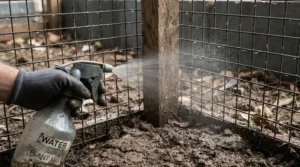
This is the convenience play. The F10 Ready to Use spray arrives pre-diluted at 1:250, in a 1 litre bottle with a spray top. It’s formulated against avian pathogens and designed to be sprayed and left to air-dry on hard surfaces.
What does that mean for you? You skip the measuring, and measuring errors are the most common way people end up with a disinfectant that’s either too weak or needlessly strong. The trade-off is cost: the retailer’s own guidance concedes that buying a concentrate and diluting it yourself works out cheaper over time.
One point deserves emphasis. The product information is explicit that it must not be used in the cage while a parrot is present. Treat that as non-negotiable: bird out, spray, air-dry, bird back. Since it’s a disinfectant, it also works best after you’ve removed visible muck with a cleaner. I couldn’t verify enough independent reviews to summarise sentiment, though retailers describe it as widely used in avian circles.
Pros:
- ✅ Pre-diluted, so no measuring mistakes
- ✅ Spray on and leave to air-dry
- ✅ Generous 1 litre bottle size
Cons:
- ❌ Won’t lift baked-on droppings by itself
- ❌ Cost per litre is higher than concentrate
Listings place it in the mid-teens range. Check current price, since it’s a convenient purchase if you value speed over savings.
7. F10 SCXD Veterinary Disinfectant Cleanser — heavy duty one-step clean and disinfect
If one product here qualifies as a heavy duty cage cleaner, it’s this. F10 SCXD is a concentrate that combines the disinfectant with added detergent, so you can clean and disinfect hard surfaces in a single operation. The general-disinfection mix is 2 ml per litre, which is why a small bottle goes a very long way.
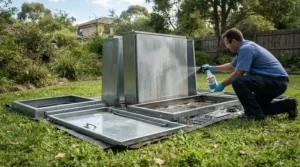
The detergent is both the strength and the catch. Because it leaves a soapy film, the manufacturer says food bowls and anything your bird will mouth should be rinsed with clean water afterwards. Like the other F10 products, it shouldn’t be used in the cage while the bird is present.
This one suits owners with large cages, several birds, or a monthly strip-down routine. It’s less suited to someone who wants a spray they can grab in thirty seconds. A concentrate means decanting into your own labelled bottle, which is a small chore but pays off at scale. I couldn’t verify independent review sentiment for this specific product.
Pros:
- ✅ Cleaner and disinfectant combined in one step
- ✅ Dilutes at 2 ml per litre, so it lasts
- ✅ Suits big cages and multi-bird setups
Cons:
- ❌ Needs mixing and a labelled spray bottle
- ❌ Detergent film means thorough rinsing is essential
The upfront outlay is higher than any spray here, but cost per litre made up is low. Check current price before buying.
What Is a Deep Clean Spray for Parrot Cages?
A deep clean spray for parrot cages is a bird-appropriate cleaning formula, whether enzymatic, detergent-based or disinfectant, applied to soften, lift and remove dried droppings, food residue and bacterial film from bars, trays and perches. Unlike a daily wipe, it’s built for stubborn build-up, and the best ones are low in fumes and used with your bird out of the room.
There are three families worth knowing. Enzymatic cleaners, such as Nature’s Miracle, digest organic residue and tackle odour at the source. Detergent cleaners, such as Poop-Off and Potty Pick Up, rely on surfactants to loosen and lift. Disinfectants, such as Ark-Klens, Johnson’s Clean ‘n’ Safe and the F10 range, kill microbes but depend on a reasonably clean surface to do it properly. The smartest set-up mixes a cleaner with a disinfectant rather than expecting one bottle to do everything.
How to Choose a Deep Clean Spray for Parrot Cages
- Decide what you’re fighting. Fossilised crust calls for an enzyme or surfactant cleaner. Germ control calls for a disinfectant. Most owners need both.
- Check the scent. Unscented formulas are the safer default for birds. If a product is fragranced, ventilate and dry fully.
- Read the contact time. A disinfectant that needs a few minutes’ contact is no use if you wipe it off after ten seconds.
- Note whether the bird must be out. Several products, including the F10 range, specify no bird in the cage during use.
- Match bottle size to cage size. A small bottle that drains in one go is false economy on a macaw cage.
- Weigh concentrate against ready-to-use. Concentrates like F10 SCXD cost less per clean, while ready-to-use sprays save effort.
- Check surface compatibility. Spot-test on any painted or powder-coated finish first.
Heavy Duty Cage Cleaner: When Mild Isn’t Enough
“Heavy duty” is one of those labels that sounds reassuring and means very little. For a bird, it shouldn’t mean bleach, solvents or anything with a sharp chemical smell. It should mean more active cleaning power delivered through longer dwell time, a proper concentration, or a combination of cleaner plus disinfectant.
Among the seven picks, F10 SCXD is the most obvious heavy duty cage cleaner because it merges detergent and disinfectant in one concentrate. Poop-Off and Potty Pick Up are the heavy hitters on pure droppings, thanks to their large bottles and multi-surface remit. Nature’s Miracle earns its place when enzymes need to work through odour trapped in porous plastic trays.
The practical rule is to escalate gradually. Start with the mildest effective option and increase dwell time before you increase strength. Birds that live in heavily soiled cages are often better served by two lighter passes than one aggressive one, because lingering residue and fumes are the real risk. If you’re unsure, ask your avian vet which products they’d trust around your species.
Stubborn Grime Cage Spray: What Actually Dissolves the Gunk
Stubborn grime isn’t one substance. It’s usually a layered mix of urates (the chalky white part of droppings), dried fruit sugars, preen oil and feather dust, all cemented together. Each layer responds to something slightly different, which is why a single wipe rarely clears it.
A good stubborn grime cage spray tackles this in stages. Surfactants, the active ingredients in detergent formulas such as Poop-Off, lower the surface tension so liquid can creep underneath crusts. Enzymes, as in Nature’s Miracle, digest the protein and organic matter. Dwell time is the secret ingredient: sixty seconds is a minimum, and a few minutes for fossilised patches is perfectly reasonable.
Know the usual hiding places. Perch undersides, tray corners, the rim of food dishes and the joins where bars meet the frame collect the worst build-up. A soft nylon brush or an old toothbrush works for crevices without scratching coatings. Resist the urge to reach for abrasive pads, because scratches become future grime traps.
Baked-On Droppings Removal: The Soak-and-Wait Method
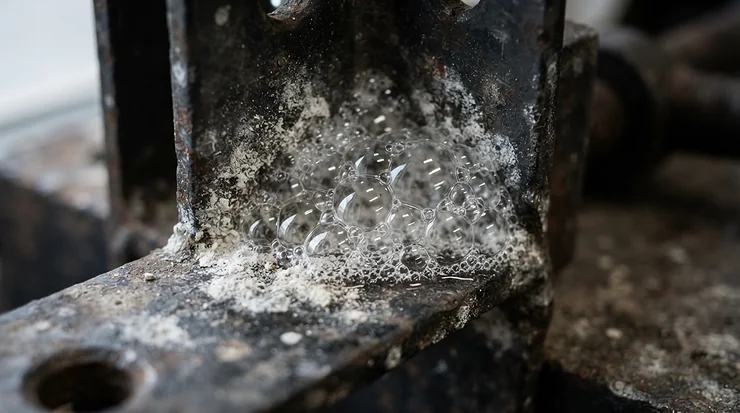
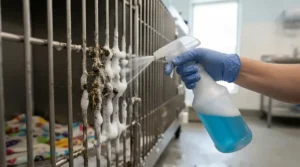
Baked-on droppings removal is mostly a patience game. Dry scraping is the instinctive move and the wrong one: it throws dust into the air, and dried droppings are exactly where respiratory risks live. Wet the mess first, every time.
Here’s the method that works with any of the cleaners above:
- Move your bird to a safe, well-ventilated room.
- Spray generously on the baked-on patches, not just the edges.
- Cover with damp kitchen roll so the product can’t dry out while it works.
- Wait several minutes, longer for the really fossilised bits.
- Loosen with a plastic scraper or soft brush, then wipe clean.
- Repeat if needed. Two gentle passes beat one aggressive scrub.
Potty Pick Up‘s own instructions follow the same logic, advising you to repeat the application on stubborn stains. Nature’s Miracle recommends soaking and then using a rough cloth or brush. If you wear gloves and a mask for this job, which you should, you’re already following the standard advice from health authorities.
Deep Cleaning Parrot Enclosure: A Step-by-Step Guide
A proper deep cleaning parrot enclosure session is a different animal from daily upkeep. Set aside an hour or so, ideally on a day when your bird will happily play elsewhere. The Vet Help Direct guide to pet bird hygiene echoes the basics: clean frequently and always use a pet-safe disinfectant.
- Relocate your bird to a separate, ventilated room with food, water and some toys.
- Strip the cage. Remove perches, toys, bowls and liners.
- Wet the droppings before you disturb anything else.
- Apply your cleaner (for example Poop-Off or Nature’s Miracle) to the tray, bars and base. Let it dwell.
- Scrub and rinse with warm water until no residue or smell remains.
- Disinfect. Use a product such as Ark-Klens or F10 SCXD at the stated dilution, observing the contact time.
- Rinse bowls and perches thoroughly, especially after any detergent-based product.
- Dry completely before reassembling and returning your bird. Damp surfaces breed bacteria.
A common mistake in the first thirty days is skipping step 7. Soap and disinfectant residue on feeding dishes is an avoidable exposure.
Cage Material Compatibility: What Each Surface Can Handle
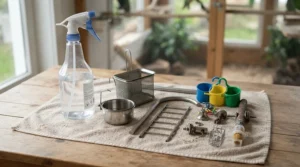
Cage material compatibility is the part of the label most people skip, and it decides whether your cage lasts three years or ten.
- Powder-coated steel is the most common finish. Avoid abrasive scourers and harsh solvents that can chip the coating. A soft brush plus a bird-safe cleaner is the safe route.
- Stainless steel is the most forgiving. The F10 listings say the formula is non-corrosive, which is reassuring for metal parts, but always rinse.
- Galvanised wire can carry zinc, a concern for birds that chew. Check manufacturer guidance and avoid acidic cleaners on it unless the cage maker says otherwise.
- Plastic trays and bowls tolerate most sprays, but scratches harbour bacteria, so replace badly scored items.
- Wooden perches are porous and soak up liquids. Spot-clean lightly, and replace heavily soiled ones instead of soaking.
- Rope and fabric toys hold moisture and residue. Wash them separately or bin them when frayed.
Whatever the material, spot-test first, as Potty Pick Up‘s own guidance recommends, and treat any “suitable for all surfaces” claim as a starting point rather than a guarantee.
Monthly Deep Clean Routine: A Schedule You’ll Actually Keep
A monthly deep clean routine only works if it sits on top of something lighter. The common guidance from avian-supply specialists is to clean and disinfect cages at least weekly, with spot-cleaning in between, so the monthly session is about catching what weekly passes miss.
Daily (5 minutes): Replace liners, wipe visible mess, wash food and water bowls with clean water.
Weekly (20 minutes): Wet-clean the tray, then disinfect. A budget spray such as Johnson’s Clean ‘n’ Safe or Ark-Klens suits this slot, provided you rinse and dry as directed.
Monthly (60-90 minutes): Full strip-down using the step-by-step method above. This is where a cleaner like Nature’s Miracle or Poop-Off earns its keep, followed by a disinfectant like F10 SCXD.
Add a few quarterly checks too: inspect bars for rust or chipped coating, swap worn perches, and rotate toys. Putting the monthly slot in your calendar beats relying on memory, because “I’ll do it this weekend” has a long track record of failing.
Deep Clean Spray vs Everyday Alternatives
| Option | Strengths | Weaknesses | Best For |
|---|---|---|---|
| Dedicated deep clean spray | Formulated for droppings; designed with birds in mind | Costs more than household items | Heavy build-up, routine deep cleans |
| White vinegar and water | Cheap; mild deodoriser | Not a validated disinfectant; may struggle on baked-on mess | Light wipe-downs between cleans |
| Washing-up liquid and warm water | Cuts grease; widely available | Needs thorough rinsing; no disinfection | Bowls, perches, tray scrubbing |
| Pet-safe disinfectant wipes | Quick and tidy | Costly per use; poor on thick crusts | Quick daily touch-ups |
Dedicated sprays win on droppings and speed, but cheaper alternatives still have a role. Vinegar and washing-up liquid are perfectly reasonable for light weekly work. The weak spot is disinfection, so a product like Ark-Klens or one of the F10 products fills that gap properly. Think of the alternatives as supporting cast and the specialist sprays as the main act.
Safety Guide: Fumes, Ventilation and Protecting Yourself
Birds have a highly efficient respiratory system, which is wonderful for flight and awkward for cleaning. VCA’s guidance on household hazards for birds lists cleaning-product fumes among the causes of respiratory trouble and flags PTFE (Teflon) fumes as potentially fatal, even at recommended temperatures.
Some practical rules follow from that:
- Keep your bird in a separate, well-ventilated room during cleaning and until surfaces are fully dry.
- Choose trigger sprays over aerosols, and don’t mix products. Never combine bleach with anything else.
- Avoid scented extras such as candles, plug-ins and air fresheners around the cage.
- Keep PTFE-coated cookware and non-stick appliances away from the home if you keep birds.
There’s also your own health to think about. Tasmania’s public health service advises wearing gloves and a P2 respirator when cleaning bird cages, and dampening droppings first to avoid spreading dust. If your parrot ever struggles to breathe after cleaning, treat it as an emergency and call an avian vet immediately. In Great Britain, disinfectants are regulated as biocides, so check the label for how a product is authorised and follow the directions to the letter.
Long-Term Cost and Maintenance
Cost per clean tells a better story than shelf price. A cheap spray you use every week can outlast an expensive one you ration, and a concentrate can beat both over a year.
| Product | Price Range | Volume | Value Verdict |
|---|---|---|---|
| Johnson’s Clean ‘n’ Safe Disinfectant Cage Bird Spray | Under £6 | 500 ml | Best for weekly sanitising on a budget |
| Vetark Ark-Klens Ready to Use | Under £10 | 500 ml | Strong all-rounder; concentrate refills help |
| Nature’s Miracle Bird Cage & Surface Cleaner | Roughly £8-£15 | 24 oz | Pricier per ml, but unscented |
| Potty Pick Up Bird Poop Remover | Around £15 | 32 oz | Good volume for the money |
| F10 Avian Disinfectant Ready to Use Spray | Mid-teens | 1 L | Convenient, cost rises at scale |
| Poop-Off Bird Poop Remover | Mid-teens to low-£20s | 32 oz | Fair for big mess and big birds |
| F10 SCXD Veterinary Disinfectant Cleanser | Higher up-front | Concentrate | Lowest cost per litre made up |
On volume alone, Potty Pick Up and Poop-Off offer the most liquid per pound among the ready-to-use droppings removers. F10 SCXD looks expensive on the shelf but can become the cheapest option once you’ve diluted it at 2 ml per litre. A sensible budget for most households is one droppings remover and one disinfectant, which together cover every task in this guide.
Maintenance matters too. Rinse and dry spray bottles occasionally, label any decanted concentrate clearly, and store everything locked away from curious beaks, as VCA recommends. Replace worn spray heads before they start misting unevenly.
FAQ
❓ Is a deep clean spray for parrot cages safe to use while my parrot is inside?
❓ How often should I use a heavy duty cage cleaner on a parrot cage?
❓ Can I use vinegar or bleach instead of a deep clean spray for parrot cages?
❓ How long should I leave stubborn grime cage spray before wiping?
❓ Which product suits deep cleaning parrot enclosure jobs with baked-on droppings?
Conclusion
Choosing a deep clean spray for parrot cages comes down to matching the tool to the job. If your problem is fossilised droppings, Poop-Off, Nature’s Miracle and Potty Pick Up are the three cleaners built for it, with Nature’s Miracle the pick if you want an unscented formula. If your priority is germ control, Ark-Klens is the gentlest all-rounder, Johnson’s Clean ‘n’ Safe is the cheapest weekly top-up, and the F10 pair suit vet-grade, multi-bird or post-illness resets.
For most households, the winning combination is one cleaner plus one disinfectant, used in that order. Add a weekly routine, a calendar reminder for your monthly deep clean, and a firm rule that your bird stays out of the room until everything is dry. That’s genuinely all it takes to keep a parrot cage fresh, healthy and free from the dreaded tray crust.
✨ Ready to give your parrot a fresher home?
🔍 Click on any highlighted product above to check current pricing and availability. Choose the cleaner and disinfectant that fit your flock, and make your next deep clean the easiest one yet! 🦜
Recommended for You
- Perch Cleaner For Parrots: 7 Best Picks For Safer Perches (2026)
- Bird-Safe Cage Disinfectant: 7 Proven Picks For UK Owners (2026)
- Bird Toy Cleaner Buy: 7 Best Safe Picks For UK Owners (2026)
Disclaimer: This article contains affiliate links. As an Amazon Associate, I earn from qualifying purchases. If you purchase products through these links, we may earn a small commission at no additional cost to you.
✨ Found this helpful? Share it with your friends! 💬🤗
