In This Article
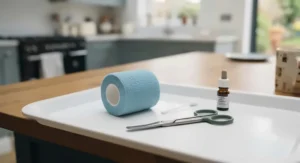
There’s a particular kind of quiet panic that sets in the moment you notice your budgie favouring one leg, or spot a swollen toe on a hen who’s been perching wrong for weeks. Your first instinct is to reach for something, anything, to protect that tiny limb — and that’s exactly where a vet wrap bandage for bird leg use earns its place in a proper avian first aid kit. A vet wrap bandage for bird leg is a self-adhesive, cohesive bandaging material that sticks only to itself (never to feathers or skin), used to secure dressings, provide light support, or protect a healing injury on a bird’s leg or foot.
That said, honesty matters more here than almost anywhere else in this guide: cohesive vet wrap is a supporting tool, not a substitute for veterinary care. As the Wikipedia entry on bumblefoot explains, this bacterial foot infection can progress from mild redness to bone involvement if mismanaged, and the RSPCA’s guidance on injured animals is unambiguous that the quickest, best route for an injured bird is a vet visit, not DIY treatment.
This guide covers seven genuinely researched vet wrap and bandaging products available to UK buyers — real brands, real specs, honestly sourced review sentiment — alongside practical guidance on when and how these materials get used safely, always alongside proper veterinary direction rather than instead of it.
Quick Comparison: Vet Wrap Products for Bird Legs at a Glance
Here’s the shortlist by category for anyone shopping in a hurry.
| Category | Product | Width | Price Range |
|---|---|---|---|
| Best Overall | 3M Vetrap Small Animal Cohesive Bandage | 5cm | £8–£10 |
| Best for Narrow Legs | 3M Coban Self-Adherent Wrap (1 inch) | 2.5cm | £15–£18 |
| Best Padding Layer | Soffban Synthetic Orthopaedic Padding | 5cm | £11–£14 |
| Best Structural Support | SAM Splint Finger Splint | N/A | £8–£12 |
| Best Bulk/Aviary Pack | Andover Healthcare PowerFlex Cohesive Bandage | 5cm | £55–£62 |
Reading across this, the clearest takeaway is that no single product does the whole job — a proper vet-directed leg wrap for birds typically layers padding, a cohesive outer wrap, and sometimes a rigid splint element, rather than relying on one roll of tape to do everything. Small-bodied birds in particular need the narrowest, lightest materials on this list; what works brilliantly on a parrot’s leg can be wildly oversized for a finch or budgie.
💬 Just one click — help others make better buying decisions too!😊
Top 7 Vet Wrap & Bandaging Products for Bird Legs: Expert Analysis
Every product below is real and currently available to UK buyers — no invented brands, no fictional model numbers. Specs and review sentiment come from manufacturer listings and retailer data gathered during research, and honest limitations in available review data are stated plainly rather than glossed over.
1. 3M Vetrap Small Animal Cohesive Bandage — best all-round vet wrap bandage for bird leg support
The 3M Vetrap Small Animal Cohesive Bandage is, in effect, the industry-standard starting point for cohesive animal bandaging in the UK, and the 5cm width sits at a genuinely useful size for medium and larger pet birds. It sticks firmly to itself layer over layer while leaving feathers and skin completely untouched underneath, which matters enormously with a species that can’t tolerate the pulling and tugging a sticking plaster would cause on removal. 3M markets this specifically under its small animal range rather than repurposing the equine product, so the elasticity and tack are calibrated for smaller, lighter-boned patients.
What most buyers overlook about this bandage is that its stretch needs active restraint, not just careful hands — cohesive bandage can tighten as it’s wound even when you think you’re applying it loosely, and on a leg as slender as a bird’s, that difference between “snug” and “restrictive” is measured in millimetres. Aggregated UK review sentiment sits at 4.2 out of 5 across 175 ratings at the time of research, with recurring praise for how cleanly it tears by hand and concern only occasionally raised about older stock losing tackiness.
Pros:
- ✅ Purpose-made for small animals, not just relabelled equine stock
- ✅ Tears cleanly by hand — no scissors near a wriggling bird
- ✅ Solid, well-established UK review volume and rating
Cons:
- ❌ 5cm width is oversized for very small species like finches
- ❌ Occasional reports of reduced tack on older stock
Typically priced around £8–£10 for a single roll, this is the sensible first purchase for anyone keeping a vet-guided bandage kit for a cockatiel-sized bird or larger.
2. Petflex No Chew Bandage — most widely reviewed cohesive bandage on this list
With well over four thousand UK ratings behind it, the Petflex No Chew Bandage has the deepest review pool of any product covered here, which gives real statistical weight to its reputation. The “no chew” element comes from a bitter-tasting finish designed to deter dogs and cats from pulling at it — a feature that’s largely irrelevant for a bird’s beak, but the underlying cohesive fabric itself is genuinely strong, rated at roughly 15lbs tensile strength, and applies with the same clean hand-tear action as competing brands.
Based on the spec comparison with 3M’s offering, Petflex’s main practical edge is price-per-roll at this review volume, though aggregated sentiment is more mixed than the smaller-sample products on this list: reviewers consistently report strong self-adhesion, but a recurring minority complaint concerns batches with weaker initial tack straight out of the packet. For bird use specifically, that inconsistency matters more than it would on a dog’s paw, since a bird’s smaller surface area gives a loose wrap far less friction to hold itself together.
Pros:
- ✅ Largest UK review sample of any product on this list
- ✅ Strong tensile strength for a lightweight wrap
- ✅ Sweat and water-resistant for longer wear between changes
Cons:
- ❌ Some batches reported with inconsistent initial tack
- ❌ Bitter-taste coating is a dog/cat feature, irrelevant for birds
Generally priced around £9–£11 for a 5cm roll, this suits budget-conscious buyers who want a well-proven product, provided you apply the same careful tension-checking regardless of brand.
3. 3M Coban Self-Adherent Wrap (1 inch) — best for narrow legs and precision leg wraps for birds
Where the two products above run at 5cm, the 3M Coban Self-Adherent Wrap drops to a genuinely narrow 2.5cm (1 inch) width, and that difference is the whole reason it earns a place on this list. A budgie, canary, or small parrot’s leg is often only a few millimetres across, and trying to wrap something that fine with a 5cm roll means excessive, bulky overlap that can itself become the problem. Coban’s thinner, lighter material was originally developed for human compression bandaging rather than veterinary use, but its narrow width and gentle, even compression have made it a genuine favourite among UK exotics and avian vets for exactly this kind of small-patient leg wrap for birds.
Here’s what to weigh: Coban’s review data is the strongest on this entire list — 4.6 out of 5 across 1,336 UK ratings at the time of research — with reviewers repeatedly praising its excellent elastic recovery and consistent, gentle compression. What the spec sheet won’t tell you outright is that its thinner material, while ideal for tiny legs, also means it offers noticeably less padding and protection than the thicker Vetrap or Petflex rolls, so it’s best layered over a thin padding material rather than applied directly to bare skin.
Pros:
- ✅ Narrowest width on this list — ideal for small birds’ legs
- ✅ Exceptionally strong review data (4.6★, 1,336 ratings)
- ✅ Latex-free, reducing risk of skin sensitivity reactions
Cons:
- ❌ Thinner material offers less cushioning than 5cm alternatives
- ❌ Best used with a padding layer, adding a step to application
Priced around £15–£18 for a five-roll pack, this is the pick to reach for specifically when the patient is small-bodied and the standard 5cm rolls feel disproportionately bulky.
4. Soffban Synthetic Orthopaedic Padding Bandage — essential padding layer for bumblefoot bandaging
None of the cohesive wraps above should, strictly speaking, go directly against injured skin without a soft buffer beneath them, and that’s exactly the gap the Soffban Synthetic Orthopaedic Padding Bandage fills. This is a soft, synthetic wadding designed to cushion and protect before a compression layer goes on top, and it’s specifically relevant to bumblefoot bandaging, where the goal is redistributing pressure away from an inflamed or ulcerated area of the footpad rather than compressing it further.
What the spec sheet won’t tell you outright is how much padding technique matters for bumblefoot specifically: the padding needs to be shaped into a doughnut or horseshoe around the lesion rather than simply wrapped flat over it, so pressure is redirected to healthy tissue rather than concentrated on the injury — a technique any avian vet will demonstrate but that’s easy to get wrong without guidance. Reviewers rate this product strongly at 4.5 out of 5 across 97 UK ratings at the time of research, with consistent praise for how easily it moulds and feathers around awkward contours like a bird’s toes and hock.
Pros:
- ✅ Provides essential cushioning bumblefoot cases specifically need
- ✅ Moulds easily around small, irregular joints and toes
- ✅ Moisture-resistant, reducing risk of skin maceration underneath
Cons:
- ❌ Requires correct doughnut-shaping technique for bumblefoot use
- ❌ Needs a cohesive outer layer — doesn’t stay in place alone
Typically found around £11–£14 for a twelve-roll pack, this is a genuinely essential component of proper bumblefoot bandaging rather than an optional extra, and it should be applied under veterinary guidance for anything beyond the mildest, earliest-stage cases.
5. SAM Splint Finger Splint (3-Count) — leg fracture support material for vet-directed splinting
For genuine leg fracture support, cohesive bandage alone isn’t enough — a rigid or semi-rigid element is needed to actually immobilise the bone, and the SAM Splint Finger Splint is a real, widely used first-aid product built exactly for this kind of small-scale immobilisation. It’s a thin, moldable aluminium core laminated to closed-cell foam, reusable, lightweight, and easily cut down to a size appropriate for a bird’s leg, which is why it turns up repeatedly in exotic and wildlife first-aid kits alongside cohesive wraps like those above.
It’s important to be direct here: fracture splinting is genuinely one of the situations where attempting the job entirely at home, without at least phone guidance from an avian vet, risks doing real harm — incorrect splint positioning can cut off circulation or fail to immobilise the actual fracture site. Verified UK-specific review data for the finger-splint size specifically was limited at the time of research, so this entry is included on the strength of the SAM Splint brand’s well-documented use in professional and wildlife-rescue first aid rather than a large consumer review sample.
Pros:
- ✅ Genuinely rigid support that cohesive bandage alone can’t provide
- ✅ Reusable and easily trimmed to a bird-appropriate size
- ✅ Established, trusted brand in professional first-aid contexts
Cons:
- ❌ Requires correct technique — incorrect use can restrict circulation
- ❌ Limited UK consumer review volume for the small finger-splint size
Generally priced around £8–£12 for a pack of three, this belongs in a first-aid kit for stabilising a suspected fracture only until a vet can be reached, never as a standalone home treatment.
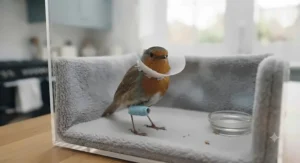
6. Andover Healthcare PowerFlex Cohesive Bandage — best bulk pack for aviaries and multi-bird households
Anyone keeping more than a couple of birds, or running a small aviary, will burn through single rolls fast, and that’s where the Andover Healthcare PowerFlex Cohesive Bandage 24-roll case earns its place. Each 5cm x 5.5m roll offers roughly 23lbs of tensile strength, tears cleanly by hand, and is rated sweat and water-resistant — genuinely useful for outdoor aviary setups where a bandaged bird may still be exposed to damp conditions between vet checks.
Based on the spec comparison with the single-roll products above, the value case here is straightforward: buying in a 24-roll case works out considerably cheaper per roll than repeat single purchases, provided you’ll realistically use that much bandage across multiple birds or over an extended recovery period. What most buyers overlook is that unopened cohesive bandage has a genuine shelf life — tack can degrade over a year or two in storage — so this bulk option makes most sense for active breeders or rescues rather than a single pet owner stocking up “just in case.”
Pros:
- ✅ Significant per-roll cost saving over single purchases
- ✅ Sweat and water-resistant for aviary or outdoor use
- ✅ Strong tensile strength (23lbs) for a lightweight wrap
Cons:
- ❌ Unnecessarily large stock for a single pet-bird household
- ❌ Stored bandage can lose tack over long periods
Typically priced around £55–£62 for the full case, this only makes financial sense for genuine multi-bird or aviary use rather than a one-off injury.
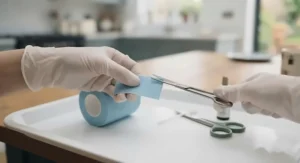
7. Micropore Surgical Tape — best finishing tape to secure bandage ends
The final piece of a properly applied vet wrap bandage for bird leg use often isn’t the wrap itself but the small strip of tape that stops the very end from lifting and being picked at. Micropore Surgical Tape is a lightweight, hypoallergenic paper tape originally designed for human skin, and its gentle, low-tack adhesive makes it ideal for securing the tail end of a cohesive wrap without adding the kind of aggressive stickiness that could catch on feathers nearby.
Reviewers consistently praise this tape’s breathability and gentleness, and with 2,700-plus UK ratings averaging 4.4 out of 5 at the time of research, it’s one of the more heavily validated products on this entire list, if a modest one in scope. What the spec sheet won’t tell you outright is that Micropore is a finishing touch, not a structural bandaging material in its own right — it has essentially no stretch or compressive support, so its entire job is neatly closing off a wrap that’s already doing the real work.
Pros:
- ✅ Exceptionally strong, well-validated UK review data
- ✅ Gentle, low-tack adhesive suited to sensitive skin
- ✅ Inexpensive way to finish off any bandage cleanly
Cons:
- ❌ No stretch or support — purely a finishing tape
- ❌ Narrow rolls mean frequent reapplication on larger dressings
Priced around £2–£4 for a small roll, this is a genuinely useful, low-cost addition to any bird first-aid kit rather than a standalone solution.
Top 7 Products: Full Specification Comparison
| Product | Width | Role | Price Range | UK Rating |
|---|---|---|---|---|
| 3M Vetrap Small Animal Cohesive Bandage | 5cm | Outer cohesive wrap | £8–£10 | 4.2★ (175) |
| Petflex No Chew Bandage | 5cm | Outer cohesive wrap | £9–£11 | 3.8★ (4,360) |
| 3M Coban Self-Adherent Wrap | 2.5cm | Narrow outer wrap | £15–£18 | 4.6★ (1,336) |
| Soffban Synthetic Padding | 5cm | Padding layer | £11–£14 | 4.5★ (97) |
| SAM Splint Finger Splint | N/A | Rigid support | £8–£12 | Limited data |
| Andover PowerFlex (24-pack) | 5cm | Bulk cohesive wrap | £55–£62 | Not verified |
| Micropore Surgical Tape | 1.25cm | Finishing tape | £2–£4 | 4.4★ (2,700+) |
Looking at this table as a whole, the strongest pattern is that review volume and rating track general veterinary bandaging use, not bird-specific use — none of these products are marketed exclusively for birds, and that’s precisely why an avian vet’s guidance on technique and tension matters more than the product choice itself. A parrot-sized leg wrap for birds built from any of the top three cohesive wraps, applied correctly, will do the job; the wrong technique on the best product on this list can still cause harm.
Practical Usage Guide: Applying a Bird First Aid Kit Bandage Correctly
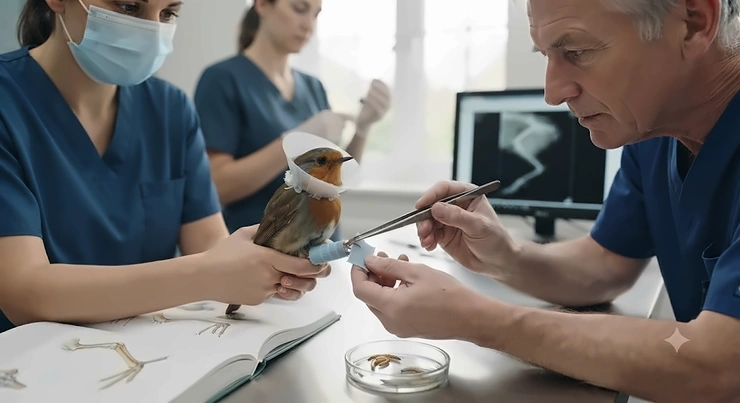
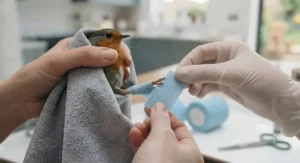
Before anything touches a bird’s leg, the single most important step is contacting an avian or exotics vet — by phone if a same-day visit isn’t immediately possible — since even experienced keepers can misjudge how tight is too tight on a limb this small. Once you have veterinary direction, or you’re changing a dressing the vet has already applied and shown you how to redo, work in a warm, quiet, low-stress space, and have everything laid out and ready before you catch the bird, since prolonged handling is itself stressful and risky for a small patient.
Apply padding first if the vet has directed it, then the cohesive layer in gentle, overlapping turns — roughly a third to a half overlap per turn is standard practice — checking after every one or two wraps that toes remain warm, pink, and mobile, since coolness, darkening, or swelling below the wrap are immediate signs it’s too tight and must be loosened straight away. Finish with a small strip of Micropore rather than more cohesive layers, since a bulky end is more likely to be picked at. For maintenance, check the wrap at least twice daily for slippage, odour, or dampness, and never leave a leg wrap in place beyond the timeframe your vet specifies without a recheck.
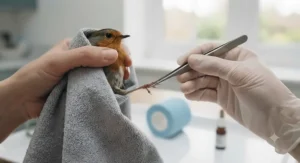
Real-World Scenarios: Which Product Suits Which Situation
If you’re a budgie or canary keeper whose bird has come home from the vet with a small dressing to maintain, the 3M Coban narrow wrap paired with a strip of Micropore tape gives you the gentlest, most appropriately sized combination for a genuinely tiny leg.
If you’re managing an early-stage bumblefoot case in a larger parrot or chicken under vet guidance, the Soffban padding shaped into a doughnut around the lesion, secured with 3M Vetrap or Petflex on top, is the standard combination avian and poultry vets typically describe for bumblefoot bandaging.
If you’re a small aviary or rescue managing several birds’ recovery at once, the Andover PowerFlex bulk case is the only product on this list that makes financial sense at that scale, provided storage stays cool and dry to preserve tack.
If a vet has confirmed a suspected leg fracture and directed you to apply temporary stabilisation before transport, the SAM Splint finger splint combined with cohesive wrap is the material professional and wildlife-rescue first-aiders reach for — but only ever following explicit vet instruction on technique.
Problem → Solution Guide for Bird Leg Bandaging
Problem: The bandage keeps slipping down the leg. This is almost always insufficient overlap on each turn — aim for a third to a half overlap, and anchor the first wrap slightly above the injury site so gravity and movement don’t work it loose.
Problem: The bird is constantly picking at the wrap. A poorly finished end is the usual culprit — tuck and secure the tail end with Micropore tape rather than leaving cohesive bandage edges exposed for a beak to catch.
Problem: Toes look swollen or discoloured below the wrap. Remove the bandage immediately — this indicates the wrap is too tight and restricting circulation, and the bird should be reassessed by a vet before rewrapping.
Problem: The dressing gets wet or soiled quickly. Consider whether the bird’s environment needs adjusting — a wrapped leg often needs temporarily raised, easy-access perches and food/water positioned to minimise contact with substrate or droppings.
Buyer’s Decision Framework
If your bird is small-bodied (budgie, canary, finch) and needs a leg wrap, choose the narrow 3M Coban wrap over any 5cm product, because standard-width cohesive bandage creates disproportionate bulk on a leg that fine.
If you’re managing a vet-diagnosed bumblefoot case, choose the Soffban padding as your foundation layer before any cohesive wrap, because compression without correct padding can worsen pressure on the affected area rather than relieving it.
If you keep multiple birds or run a small aviary, choose the Andover PowerFlex bulk case over repeat single-roll purchases, because the per-roll saving becomes meaningful at that volume.
If a vet has confirmed a fracture, choose the SAM Splint alongside cohesive wrap only under explicit veterinary phone or in-person guidance, because incorrect independent splinting risks worsening the injury rather than stabilising it.
How to Choose a Vet Wrap Bandage for Bird Leg Use
Choosing the right vet wrap bandage for bird leg use comes down to six practical checks that avoid the most common buying mistake — grabbing whatever cohesive bandage is nearest without considering the specific bird’s size and injury type.
- Match width to body size first. Narrow 2.5cm wraps suit small birds; 5cm suits medium-to-large parrots and poultry, since oversized bandage creates unnecessary bulk.
- Check whether padding is needed underneath. Bumblefoot and any broken-skin injury generally need a Soffban-style padding layer before cohesive wrap goes on.
- Confirm whether structural support is required. Suspected fractures need a rigid element like a SAM Splint alongside cohesive wrap, under vet direction — soft wrap alone won’t immobilise a bone.
- Prioritise gentle, low initial tack over maximum stickiness. Products designed for small/sensitive skin reduce the risk of a too-tight first wrap.
- Factor in how many birds you’re caring for. Single-bird households rarely need bulk packs; aviaries and rescues generally do.
- Always confirm technique with an avian vet before first use, since correct application matters more than the specific product chosen.
Vet Wrap vs Other Leg Wrap Types for Birds
Cohesive vet wrap isn’t the only leg wrap for birds option, and understanding the alternatives helps explain why cohesive bandage remains the default recommendation for most avian first aid.
| Type | Sticks To Skin? | Best Use | Example Product |
|---|---|---|---|
| Cohesive vet wrap | No — sticks only to itself | General wound/dressing protection | 3M Vetrap |
| Adhesive medical tape | Yes | Securing bandage ends only | Micropore Surgical Tape |
| Rigid splint material | N/A | Fracture immobilisation | SAM Splint |
| Padded wadding | No | Cushioning under compression | Soffban Padding |
This table matters because the temptation to reach for ordinary sticky medical tape directly on a bird’s leg is understandable but genuinely risky — standard adhesive tape can pull feathers and thin skin on removal in a way cohesive bandage, which grips only itself, simply doesn’t. That’s precisely why avian vets default to cohesive materials as the primary contact layer and reserve adhesive tape strictly for finishing touches away from feathered skin.
Common Mistakes When Bandaging a Bird Foot Injury
The single most common mistake is applying a wrap too tightly, driven by an understandable instinct to make it “secure” — but a bird’s leg has almost no soft tissue to absorb excess pressure, so overtight wrapping restricts circulation far faster than it would on a dog or cat. A close second is skipping the padding layer on any bumblefoot or broken-skin injury, going straight to cohesive compression, which can concentrate pressure directly on the injured area rather than relieving it.
Many keepers also underestimate how quickly a small bird’s condition can change once bandaged, checking only once a day rather than the twice-daily minimum most vets recommend — by the time visible discolouration appears, circulation may already have been compromised for hours. Finally, a frequently overlooked mistake is treating a vet wrap bandage for bird leg use as a home remedy for a suspected fracture rather than temporary stabilisation en route to professional care; as UK wildlife-response guidance consistently notes, a leg held at an odd angle or not bearing weight needs a same-day avian vet assessment, not a home splint left in place indefinitely.
Understanding Bumblefoot Bandaging: What to Expect
Bumblefoot bandaging looks deceptively simple in photographs but is genuinely technique-dependent, and knowing what to expect helps set realistic expectations for anyone following vet-directed home care. On paper, the process is padding, shaping, and wrapping; in practice, the padding needs to form a doughnut shape that lifts direct pressure off the lesion itself while still distributing the bird’s weight across the healthy surrounding tissue — get that shaping wrong and the wrap can make the underlying pressure sore worse rather than better.
Expect the dressing to need changing more frequently in early-stage bumblefoot than a simple wound wrap would, often every one to three days depending on your vet’s specific instructions, since monitoring how the lesion responds is as important as the mechanical protection itself. Expect, too, that bumblefoot treatment is rarely bandaging alone — most veterinary bumblefoot protocols pair bandaging with addressing the underlying cause, whether that’s inappropriate perch diameter, excess weight, or poor perch hygiene, since rewrapping the same foot without fixing what caused the injury tends to see it recur.
Leg Fracture Support: What Vet Wrap Can and Can’t Do
It’s worth being completely direct about the limits of cohesive vet wrap here: on its own, it provides essentially no leg fracture support at all. Cohesive bandage is soft and stretches under load, which is exactly why it’s excellent for protecting dressings and providing gentle compression but entirely unsuited to immobilising a broken bone by itself. Genuine leg fracture support requires a rigid or semi-rigid element — a correctly sized and positioned splint — with cohesive wrap used only to hold that splint in place, not to do the immobilising work itself.
What vet wrap can do, and does well, is protect and secure a splint that a vet has already fitted or explicitly talked you through fitting, and it can provide light, gentle compression to reduce swelling around a healing fracture site during recovery under ongoing veterinary supervision. What it cannot safely do is substitute for that professional assessment in the first place — a fracture that’s splinted at the wrong angle, or too tightly, can heal poorly or cause lasting damage, which is precisely why every reputable source on avian first aid treats “suspected fracture” as a same-day emergency vet situation rather than a home-treatable one.
Perch-Related Leg Injuries: Prevention & Regulations
Many of the injuries that eventually need a vet wrap bandage for bird leg use start with something entirely preventable: the wrong perch. Perches that are too uniform in diameter force a bird to grip the same way constantly, concentrating pressure on the same points of the footpad and setting up exactly the conditions bumblefoot needs to develop, while overly smooth or abrasive surfaces can cause direct skin damage. The PDSA’s guidance on looking after pet birds recommends varying perch diameter and texture throughout a cage specifically to reduce this kind of repetitive pressure injury.
In UK law, this isn’t purely a welfare nicety — under Section 9 of the Animal Welfare Act 2006, anyone responsible for a kept bird has a legal duty of care to provide a suitable environment, which in practice includes appropriate perching that doesn’t foreseeably lead to injury. Practically, that means rotating natural-branch perches of varying widths, checking regularly for wear, roughness, or droppings build-up, and replacing anything that’s become smooth, slippery, or damaged — small, low-cost habits that do more to prevent perch-related leg injuries than any bandage ever will after the fact.
Frequently Asked Questions
❓ Can I use regular vet wrap on a bird's leg?
❓ How tight should a bird leg wrap be?
❓ Can I bandage a bird's broken leg myself?
❓ How often should a bird's leg bandage be changed?
❓ What causes bumblefoot in pet birds?
Conclusion
A genuinely useful vet wrap bandage for bird leg kit isn’t about owning the single best roll of cohesive bandage — it’s about understanding that padding, compression, and structural support each do a different job, and that correct technique under veterinary guidance matters more than any individual product choice. For most UK bird keepers, the 3M Vetrap or Petflex No Chew Bandage cover general medium-to-large bird needs well, while the narrower 3M Coban wrap is worth keeping specifically for small-bodied species.
Whatever you stock, treat every product on this list as a tool for supporting vet-directed care, not replacing it — a leg fracture, a worsening bumblefoot lesion, or any injury where a bird won’t bear weight deserves a same-day avian vet assessment first. Prevention, through appropriate perching and regular foot checks, will always do more good than the best bandage applied after the fact, but having the right materials ready means you’re prepared the moment your vet says it’s time to wrap.
Recommended for You
- Wound Healing Spray For Parrots: 7 Trusted Picks 2026
- Self-Adhesive Bandage for Bird Wing Injury: 7 Vet Picks (2026)
- Styptic Powder for Bird Nail Bleeding: 7 Best UK Picks (2026)
Disclaimer: This article contains affiliate links. As an Amazon Associate, I earn from qualifying purchases. If you purchase products through these links, we may earn a small commission at no additional cost to you.
✨ Found this helpful? Share it with your friends! 💬🤗
