In This Article
Parrot skin is thinner than most owners realise, and it’s covered in feathers that hide the damage until it’s already serious. A missed pin feather bleed, a scrap between cage mates, or a session of frantic feather plucking can turn into an open wound within minutes, and by the time you spot it, you’re standing in the kitchen at 9pm wondering what’s actually safe to put on it. That’s the exact gap a good wound healing spray for parrots is meant to fill — not as a replacement for a vet, but as the thing that stops a small problem becoming an infected one before you can get seen.
This guide walks through seven genuine, currently sold products, compares how they actually perform rather than what the label promises, and digs into the messier questions UK parrot keepers ask most: what’s safe if your bird licks it, what actually helps with self-mutilation wounds, and when a spray simply isn’t enough. Every product here has been checked against its real ingredient list, its manufacturer’s stated use, and the aggregated pattern of genuine customer feedback — no invented reviews, no guessed specs.
Before the product breakdown, it’s worth being precise about what this category of product is and isn’t, because that distinction affects which spray is right for your bird and which situations need a vet visit instead of a bottle from Amazon.
What Is a Wound Healing Spray for Parrots?
A wound healing spray for parrots is a topical liquid, usually antiseptic or enzyme-based, applied directly to minor cuts, pecking injuries, or self-inflicted skin damage to cleanse the area and reduce the risk of bacterial infection while the skin repairs itself. It is not a substitute for veterinary treatment of deep, bleeding, or infected wounds.
That single sentence hides a lot of nuance, though. Birds have unusually thin, delicate skin compared to mammals of a similar size, and they groom obsessively — which means anything sprayed onto their skin is very likely to end up in their mouth within the hour. That single fact is the filter every product on this list has to pass: safe enough to be pecked and preened without poisoning the bird, and effective enough to actually matter.
According to Wikipedia’s entry on feather-plucking, this is a recognised behavioural disorder in captive birds where the animal chews, bites, or pulls at its own feathers, sometimes damaging the underlying skin in the process, and it’s thought to affect roughly one in ten captive parrots. That statistic matters here because a meaningful share of the parrot owners searching for a wound spray aren’t dealing with an accidental scrape — they’re dealing with a bird that is actively injuring itself, which changes both the urgency and the type of product that actually helps.
Quick Comparison Table
| Product | Best For | Price Range |
|---|---|---|
| Net-Tex Poultry Wound Spray | Tightest budget, visible violet tracking dye | Under £20 |
| Vetericyn Plus Antimicrobial Poultry Care Spray | Everyday first-aid box, no-sting daily use | £10-£15 range |
| Miracle Care First Aid Liquid Bandage Spray | Sealing small self-mutilation wounds | Under £15 |
| F10 Antiseptic Solution Ready-to-Use Spray | Broad-spectrum vet-grade disinfection | £20-£25 range |
| PetSilver Wound & Skin Spray | Owners wary of chemical antiseptics | £25-£30 range |
| Zymox Avian Care Topical Spray | Chronic pluckers needing skin repair | £15-£20 range |
| Avifood Skin Soothing Spray for Parrots and Birds | Dedicated parrot-specific aloe formula | Around £30 |
Looking at the spread here, the price gap doesn’t map neatly onto quality — the cheapest option, the Net-Tex Poultry Wound Spray, is genuinely effective for minor cuts, while the most expensive, the Avifood Skin Soothing Spray for Parrots and Birds, earns its premium through parrot-specific formulation rather than raw antiseptic strength. What actually separates these seven is less about price and more about mechanism: silver-based, enzyme-based, and alcohol-free antiseptic formulas each suit a slightly different wound type, which is exactly what the product breakdown below unpacks.
💬 Just one click — help others make better buying decisions too!😊
Top 7 Wound Healing Sprays for Parrots: Expert Analysis
1. Net-Tex Poultry Wound Spray — budget violet-dye wound cleanser
The standout here is the violet dye, which sounds like a gimmick until you’re trying to track a small wound on a grey African parrot under low light. Net-Tex Poultry Wound Spray is a 250ml aerosol formulated around an antibacterial base that cleanses minor cuts and abrasions while leaving a visible tint over the treated area, so you (and, just as importantly, the bird’s cage mates) can see at a glance where the injury is.
On paper this is a poultry-first product, and the label reflects that, but the active mechanism — a topical antibacterial wash — translates directly to companion parrots with minor pecking wounds or small cuts from toys and cage bars. The violet marker also does double duty as a mild deterrent: many keepers report that cage mates are less inclined to peck at an obviously discoloured wound, which matters if you keep multiple birds together. Based on the ingredient profile, it isn’t marketed as a deep-tissue healing agent, so its job is cleansing and marking, not closing significant wounds.
Reviewers consistently note that the aerosol delivery is faster and less stressful than dabbing with cotton wool, particularly with birds that already associate handling with vet visits. A recurring theme in feedback is that the spray needs to be reapplied daily for a few days rather than treated as a one-off fix.
Pros:
- ✅ Violet dye makes tracking small wounds easy
- ✅ Fast aerosol application reduces handling stress
- ✅ Genuinely low cost for a first-aid kit staple
Cons:
- ❌ Formulated primarily for poultry, not parrot-specific
- ❌ Dye can temporarily discolour feathers around the site
Priced under £20 for a 250ml aerosol, this represents strong value as a first-response product, though buyers wanting something purpose-built for parrots should weigh it against the Avifood Skin Soothing Spray for Parrots and Birds further down this list.
2. Vetericyn Plus Antimicrobial Poultry Care Spray — no-sting antibiotic-free formula
Vetericyn Plus Antimicrobial Poultry Care Spray has built its reputation on one specific claim that turns out to be genuinely true: it doesn’t sting on application, which matters enormously with a species that will bite you the moment something feels unpleasant. The 237ml pump spray uses a hypochlorous acid-based antimicrobial technology rather than alcohol or iodine, which explains the lack of a stinging reaction.
What most buyers overlook about this model is that hypochlorous acid formulas mimic a compound the body already produces to fight infection, which is why it’s considered safe even if the bird preens the treated area shortly afterwards. The spec sheet lists it as antibiotic-free and non-irritating, and in practice that translates to a product you can use multiple times a day without building resistance concerns or drying out the skin around the wound.
Reviewers consistently report that it works well on pecking sores, minor cuts, and small skin irritations, with several longer-term keepers specifically praising it for use during the vulnerable pin-feather stage when new feathers are prone to minor bleeding. A common complaint in user reviews is that the mist can be a little fine for precisely targeting a small area, meaning slightly more product gets used than with a direct-stream spray.
Pros:
- ✅ Non-stinging formula suits nervous or biting birds
- ✅ Antibiotic-free, safe for frequent reapplication
- ✅ Trusted brand with a strong bird-specific track record
Cons:
- ❌ Fine mist makes precise targeting slightly harder
- ❌ Less effective on deeper or actively bleeding wounds
At around £12 for the 237ml bottle, this sits firmly in the mid-budget range and offers strong everyday value — reviewers frequently describe it as the bottle they keep permanently in the first aid box rather than one bought for a single incident.
3. Miracle Care First Aid Liquid Bandage Spray — bitter-tasting seal for self-mutilation wounds
This is the product on the list built specifically around the problem that makes parrot wound care so different from wound care in other pets: the bird itself is often the ongoing threat to the healing wound. Miracle Care First Aid Liquid Bandage Spray forms a breathable, waterproof seal over the injury while also containing a bitter-tasting agent designed to discourage the animal from picking at it — a mechanism directly relevant to self-mutilation wounds rather than accidental cuts.
Based on the spec comparison, a liquid bandage works differently from an antiseptic wash: instead of primarily disinfecting, it creates a physical barrier that keeps out dirt and further beak contact while the skin underneath repairs. That distinction matters enormously for a plucking or self-mutilating parrot, because the wound often reopens not from infection but from the bird itself continuing to worry at the site. The bitter-tasting component is the practical difference-maker here, and it’s the same active approach used across licking-deterrent products for dogs and cats, adapted to a species that investigates everything with its beak.
Aggregated feedback across the wider Miracle Care range is generally strong for minor wounds, though it’s worth being upfront that reviews specifically from parrot owners (rather than dog and cat keepers) are harder to verify in volume, so treat results on psittacines as promising but less thoroughly proven than the poultry- and avian-labelled alternatives on this list.
Pros:
- ✅ Bitter taste actively discourages further picking
- ✅ Breathable waterproof seal blocks dirt and debris
- ✅ Compact bottle, easy to carry in a travel first-aid kit
Cons:
- ❌ Not formulated or labelled specifically for birds
- ❌ Fewer verified parrot-specific reviews than avian-branded options
At under £15 for a small bottle, it’s an affordable specialist tool rather than an everyday spray — most keepers reach for it specifically when self-mutilation is the issue, not for routine cuts.
4. F10 Antiseptic Solution Ready-to-Use Spray — vet-grade broad-spectrum disinfectant
If a wound looks anything more than superficial, F10 Antiseptic Solution Ready-to-Use Spray is the option most UK avian vets will already have on their own shelves, which says something about where it sits in terms of clinical trust. Manufactured by Health and Hygiene (Pty) Ltd, F10 is a broad-spectrum antiseptic effective against bacteria, fungi, and viruses, and the 200ml ready-diluted spray needs no mixing before use.
The key spec worth understanding here is “broad-spectrum” in practical terms: unlike a single-mechanism silver or enzyme spray, F10 targets multiple pathogen types simultaneously, which is why it’s the product reached for when a wound looks contaminated, has been open for a while, or sits near a high-bacteria area like the vent. Here’s what to weigh: that broad-spectrum strength is exactly why F10 shouldn’t be your default for every tiny nick — it’s formulated for genuine antiseptic control, not gentle daily maintenance, so reserve it for wounds where infection risk is a real concern.
Reviewers consistently describe it as the disinfectant recommended by their exotic vet, and the aggregated sentiment across its wider range (it’s also sold as a cage and equipment disinfectant) is strongly positive for reliability and shelf life. A recurring theme in feedback is that first-time buyers are sometimes confused by F10’s overlapping product range — solutions, concentrates, and barrier ointments — so double-check you’re buying the ready-to-use antiseptic spray rather than the surface disinfectant variant.
Pros:
- ✅ Broad-spectrum action against bacteria, fungi and viruses
- ✅ Widely used and recommended by UK exotic vets
- ✅ Ready-to-use, no dilution required before application
Cons:
- ❌ Overlapping product range makes it easy to buy the wrong variant
- ❌ Stronger than needed for very minor, superficial nicks
Sitting in the £20-£25 range for 200ml, F10 costs more per bottle than the poultry-branded sprays, but its cost-per-use is competitive given how concentrated its antimicrobial action is against the price of an emergency vet callout for an infected wound.
5. PetSilver Wound & Skin Spray — safe-to-lick chelated silver formula
PetSilver Wound & Skin Spray takes a completely different chemical route to the antiseptic sprays above it: chelated silver in distilled water, with no alcohol, steroids, or synthetic preservatives in the formula. The core selling point, and the one that consistently shows up in genuine buyer feedback, is that it’s explicitly designed to be safe if the bird pecks or licks the treated area — which, given how obsessively parrots preen, is close to guaranteed to happen regardless of what you spray.
What most buyers overlook about silver-based sprays is the mechanism: silver ions have been used for centuries as a natural antimicrobial, working by disrupting bacterial cell function on contact rather than through a synthetic chemical reaction, which is why the formula doesn’t sting and doesn’t carry the same “keep away from mouth” caution that antiseptic solutions typically require. On paper this makes it one of the gentler options on this list, which is a genuine strength for anxious or head-shy birds but a real limitation if you’re dealing with a wound that’s already showing signs of infection.
Reviewers consistently report that it’s well tolerated even by nervous birds, and several keepers of chronic feather-pluckers specifically mention using it as a maintenance spray between vet check-ups rather than a one-off treatment. A common complaint in user reviews is the price relative to bottle size compared with the poultry-branded silver alternatives, though buyers frequently justify it by the reduced anxiety during application.
Pros:
- ✅ Safe if pecked or licked during and after application
- ✅ Gentle, non-stinging formula suits anxious birds
- ✅ All-natural ingredient list with no synthetic preservatives
Cons:
- ❌ Premium price relative to bottle size
- ❌ Milder action, less suited to visibly infected wounds
At £25-£30 for the full-size bottle, this sits toward the premium end, and the value case rests almost entirely on the safe-to-lick claim — if that’s your primary concern, it earns its price; if you need stronger antiseptic action, the F10 Antiseptic Solution Ready-to-Use Spray does more work per spray.
6. Zymox Avian Care Topical Spray — enzyme-powered skin and plumage repair
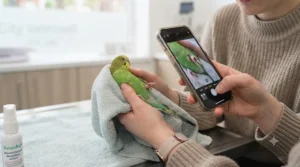
Zymox Avian Care Topical Spray approaches wound care from an angle none of the other six products on this list use: its patented LP3 Enzyme System, combined with aloe vera and zinc gluconate, works by naturally destroying microorganisms rather than chemically disinfecting the wound site. The 2oz bottle is compact, but the formula is doing more than surface cleansing — it’s also aimed at restoring moisture to plumage and strengthening feathers around the affected area, which matters a great deal for birds recovering from feather-destructive behaviour rather than a single accidental cut.
Based on the spec comparison, the enzyme mechanism is genuinely different from silver or hypochlorous acid: LP3 enzymes work continuously against microorganisms and environmental irritants like dirt and pollen for as long as the product remains active on the skin, rather than delivering a single burst of antiseptic action on contact. That’s a meaningful distinction for chronic pluckers, where the skin is repeatedly re-irritated rather than injured once and left to heal — a maintenance mechanism suits that pattern better than a one-shot disinfectant.
Reviewers consistently note visible improvement in skin condition and feather regrowth with regular weekly use, particularly on birds with recurring skin irritation rather than a single acute wound. A recurring theme is that results take longer to show than with a straightforward antiseptic, which tracks with the product’s positioning as a skin-health formula rather than an emergency wound treatment.
Pros:
- ✅ Non-toxic formula, free of steroids and parabens
- ✅ Dual action supports both skin healing and feather condition
- ✅ Well suited to recurring feather-plucking related skin issues
Cons:
- ❌ Small 2oz bottle needs frequent reordering with regular use
- ❌ Slower visible results than a straight antiseptic wash
Priced in the £15-£20 range for the small bottle, cost-per-use runs higher than the larger poultry sprays, but for birds with an ongoing skin condition rather than an isolated cut, the dual healing-and-plumage action arguably justifies the smaller format.
7. Avifood Skin Soothing Spray for Parrots and Birds — aloe vera formula made for parrots
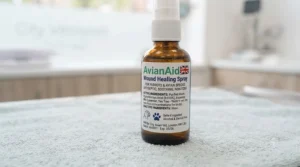
Every other product on this list started life as a poultry, livestock, or general small-animal spray that happens to work on parrots. Avifood Skin Soothing Spray for Parrots and Birds didn’t — it was formulated specifically for companion parrots and cage birds from the outset, and that shows in the ingredient list: distilled water, pure aloe vera, quaternary ammonium compounds, and monolaurin, in a 250ml bottle.
Here’s what the spec sheet won’t tell you outright, but the ingredient science supports: aloe vera carries recognised antiseptic, antibacterial, antiviral, anti-inflammatory, antifungal, and immune-regulating properties, which is an unusually broad action profile for a single plant-derived active. Monolaurin adds a further antimicrobial layer commonly used in formulas designed for sensitive skin. On paper, this makes it one of the most rounded formulas on this list for skin that’s inflamed as well as wounded — a common combination in birds that have been plucking or biting at irritated skin for some time before a visible wound appears.
Given the relative scarcity of large-scale verified customer review data specifically for this niche parrot-brand product compared with the mass-market poultry sprays, it’s worth being transparent: aggregated feedback from UK parrot forums and specialist retailers is positive but comes from a smaller pool of reviewers, so treat the sentiment as encouraging rather than exhaustively proven. What is verifiable is the ingredient sourcing and the fact that it’s stocked specifically through UK parrot specialists rather than generic pet retailers.
Pros:
- ✅ Formulated specifically for parrots, not adapted poultry care
- ✅ Broad natural antimicrobial action from aloe and monolaurin
- ✅ Addresses inflamed skin alongside open wounds
Cons:
- ❌ Premium price point among the seven options
- ❌ Smaller verified review pool than mass-market alternatives
At around £30 for 250ml, this is the most expensive product on the list, and the value case is straightforward: if you want a spray built for a parrot’s skin chemistry from the start rather than repurposed from poultry or livestock use, this is currently the clearest option on the UK market.
Wound Healing Spray for Parrots: Top 7 Compared
| Product | Active Mechanism | Sting-Free | Best For | Price Range |
|---|---|---|---|---|
| Net-Tex Poultry Wound Spray | Antibacterial + violet marker | Yes | Tracking minor wounds | Under £20 |
| Vetericyn Plus Antimicrobial Poultry Care Spray | Hypochlorous acid | Yes | Frequent everyday use | £10-£15 range |
| Miracle Care First Aid Liquid Bandage Spray | Physical barrier + bitter taste | Yes | Stopping self-mutilation | Under £15 |
| F10 Antiseptic Solution Ready-to-Use Spray | Broad-spectrum antiseptic | Yes | Higher infection risk wounds | £20-£25 range |
| PetSilver Wound & Skin Spray | Chelated silver | Yes | Anxious birds, safe-to-lick need | £25-£30 range |
| Zymox Avian Care Topical Spray | LP3 enzyme system | Yes | Chronic pluckers | £15-£20 range |
| Avifood Skin Soothing Spray for Parrots and Birds | Aloe vera + monolaurin | Yes | Inflamed skin plus wounds | Around £30 |
Reading across this table, the mechanism column matters more than most buyers initially assume: a silver or enzyme spray genuinely won’t tackle an actively infected wound the way a broad-spectrum antiseptic like F10 Antiseptic Solution Ready-to-Use Spray will, while an antiseptic wash does nothing to physically stop a determined plucker from reopening the site the way the Miracle Care First Aid Liquid Bandage Spray‘s bitter seal can. Matching mechanism to the actual problem, rather than defaulting to whichever spray is cheapest or most heavily marketed, is the single biggest factor in whether a wound spray genuinely helps.
Practical Usage Guide: Applying Wound Spray to a Parrot Safely
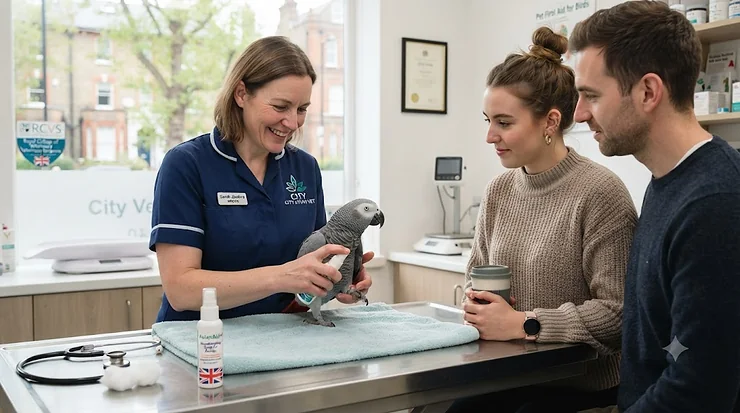
Getting the product onto the wound is often harder than choosing it, so it’s worth having an actual method rather than chasing a stressed bird around the cage. Start by gently restraining the bird in a towel with its head covered — this isn’t cruel, it’s the standard low-stress handling method avian vets use, and it stops the bird from associating your face with the unpleasant sensation.
Hold the spray at least 15cm from the skin and use short bursts rather than a sustained spray, which reduces the chance of product getting into the eyes, nostrils, or mouth. For pin-feather areas or anywhere near the face, spray onto a clean cotton pad first and dab it on rather than spraying directly, since direct sprays near the head are the most common source of accidental eye or sinus irritation. Most of the sprays on this list are designed for two to three applications daily; check the specific product’s instructions, since silver and enzyme formulas like PetSilver Wound & Skin Spray and Zymox Avian Care Topical Spray are generally gentle enough for more frequent use than a stronger antiseptic like F10 Antiseptic Solution Ready-to-Use Spray.
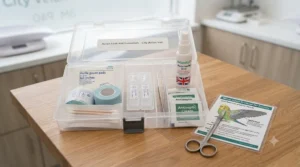
A common mistake in the first 30 days is stopping treatment as soon as the wound looks closed on the surface — skin healing in birds continues beneath a superficial-looking scab for several days longer than it appears, and premature stopping is a frequent cause of wounds reopening. Keep a small dedicated first-aid kit with your chosen spray, clean cotton pads, and a towel together in one place, since fumbling for supplies while holding an injured, stressed bird is where most application accidents happen.
Real-World Scenarios: Matching the Spray to the Situation
Consider three different UK parrot keepers, each searching for the same keyword but needing a different product entirely. The first is a first-time budgie owner whose bird has a small cut from a rough perch edge — no infection risk, low stress tolerance, and a tight budget. For this situation, the Net-Tex Poultry Wound Spray or Vetericyn Plus Antimicrobial Poultry Care Spray covers the need without overspending on antiseptic strength the wound doesn’t require.
The second is an experienced African grey keeper dealing with a long-term feather-plucking habit that has recently progressed into skin damage — a more serious, chronic case where the underlying behavioural cause needs addressing alongside any spray. Here, a combination approach makes sense: the Miracle Care First Aid Liquid Bandage Spray to physically interrupt the picking cycle on active wounds, alongside the Zymox Avian Care Topical Spray for ongoing skin and plumage maintenance between flare-ups, run in parallel with the environmental changes an avian vet or behaviourist would recommend.
The third is a breeder or multi-bird household managing an aviary where pecking injuries between birds are an occasional but recurring issue, and where infection control across several animals is the priority. In that setting, the broad-spectrum reliability of F10 Antiseptic Solution Ready-to-Use Spray earns its higher price through consistency across multiple birds and wound types, while the PetSilver Wound & Skin Spray‘s gentle, safe-to-lick formula suits aviaries where close monitoring of every bird after every application simply isn’t practical.
How to Choose a Wound Healing Spray for Parrots
- Identify the wound type first. A fresh, clean cut needs a different product from a chronically re-injured self-mutilation site — mechanism matters more than brand reputation.
- Check whether it’s safe if licked or preened. Given how often parrots preen treated areas, a spray that isn’t explicitly formulated as safe for ingestion in small amounts is a real risk, not a theoretical one.
- Match strength to severity. Reserve broad-spectrum antiseptics like F10 Antiseptic Solution Ready-to-Use Spray for wounds with real infection risk, and use gentler daily-use formulas for minor, low-risk injuries.
- Consider the delivery method. A fine mist suits broad areas; a direct stream or cotton-pad application suits precise, small wounds near sensitive areas like the face.
- Factor in application frequency. If your bird needs treatment several times a day, a non-stinging, low-irritation formula reduces the cumulative stress of repeated handling.
- Weigh cost-per-use, not just sticker price. A £30 bottle used sparingly on chronic maintenance can be cheaper over a year than a £12 bottle needing daily reapplication.
- Know when a spray isn’t the answer. Any wound that’s deep, won’t stop bleeding, shows swelling or discharge, or is on a repeat-plucking bird that’s drawing blood needs an avian vet, not another bottle from the first-aid shelf.
Antiseptic Wound Care for Parrots: What Actually Matters
Not every antiseptic ingredient marketed for pets is appropriate for a bird. Alcohol-based antiseptics, common in human and general pet first aid, are generally avoided in avian wound care because they can be absorbed through a bird’s thin skin and cause additional irritation or toxicity — which is exactly why every product featured in this guide relies on alcohol-free mechanisms instead, whether that’s hypochlorous acid, chelated silver, an enzyme system, or plant-derived actives like aloe vera.
What most buyers overlook about antiseptic wound care for parrots specifically is that “stronger” doesn’t automatically mean “better” for this species. A broad-spectrum product like F10 Antiseptic Solution Ready-to-Use Spray is genuinely valuable when infection risk is real, but using an aggressive antiseptic on every minor scratch can dry out and irritate skin that’s already compromised, slowing rather than speeding recovery. The features that actually matter here are: an alcohol-free base, a track record of avian-specific or exotic-animal use rather than only mammalian testing, and a delivery method that lets you control exactly how much product reaches the wound. Fragrance, colour (aside from functional tracking dyes like Net-Tex’s violet), and marketing claims about “advanced formulas” matter considerably less than these three fundamentals.
Parrot Wound Spray vs Human or General Pet First Aid Products
A frequent and understandable mistake is reaching for whatever’s already in the household first-aid drawer — a human antiseptic spray, or a dog and cat wound product — rather than buying something bird-specific. The comparison below sets out why that substitution carries more risk than it might seem.
| Factor | Bird-Specific/Avian-Safe Spray | Human or General Pet Product |
|---|---|---|
| Alcohol content | Typically alcohol-free | Often alcohol-based |
| Safe if preened/licked | Formulated with this in mind | Frequently not tested for this |
| Concentration | Calibrated for small body mass | Calibrated for larger mammals |
| Best For | Any parrot or companion bird wound | Not recommended for birds |
The core issue the table highlights is body mass and exposure ratio: a spray dose that’s negligible on a Labrador can represent a proportionally much larger exposure on a 400-gram African grey, particularly once you factor in that the bird will likely ingest some of it through preening within the hour. A second, less obvious factor is that many human and general pet antiseptics rely on alcohol or stronger phenolic compounds precisely because they’re formulated for skin that’s thicker and less permeable than avian skin, which is a mismatch rather than simply “extra strength being wasted.”
Self-Mutilation Wounds: A Problem-to-Solution Guide
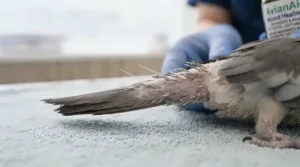
Self-mutilation in parrots — where a bird moves beyond feather plucking into biting or tearing at its own skin — is a genuinely serious escalation, and it’s worth stating plainly: guidance summarising Royal Veterinary College advice, published on pethealth.org.uk, treats any parrot that damages skin or muscle, bleeds, or mutilates itself as an urgent case for an avian vet, not something to watch and wait on. A spray alone will not resolve self-mutilation, because the behaviour typically has an underlying medical or psychological driver that needs identifying first.
Problem: The wound keeps reopening because the bird continues picking at it. Solution: a physical-barrier product like the Miracle Care First Aid Liquid Bandage Spray, combined with addressing the environmental or medical trigger, gives the site a genuine chance to close rather than being repeatedly disturbed.
Problem: The site looks increasingly inflamed rather than healing. Solution: this is a signal to escalate to an avian vet rather than switch sprays — inflammation spreading beyond the original wound edge often indicates infection that a topical spray alone cannot resolve.
Problem: The bird self-mutilates specifically when left alone. Solution: RSPCA guidance on bird behaviour suggests moving out of the bird’s sightline when self-plucking or self-mutilating behaviour starts and staying away for a few minutes rather than rushing back, since attention during the behaviour can inadvertently reinforce it — while still treating any resulting wound with an appropriate spray and contacting a specialist bird vet and certified behaviourist.
Problem: Repeated wounds in the same location despite treatment. Solution: an Elizabethan-style collar, fitted and monitored by a vet, may be needed alongside wound spray so the site can actually heal — spray products treat the wound, not the behaviour causing it.
Infection Prevention and Safety: What UK Bird Owners Need to Know
Infection prevention starts before a wound even appears, with basic cage hygiene, but once skin is broken, the priorities shift. Clean the wound area of visible dirt or debris before applying any spray — product applied over contamination is far less effective, regardless of how strong the antiseptic. Watch for the classic signs that a wound has moved beyond what a spray can manage alone: swelling, discharge, a foul smell, or the bird becoming noticeably less active or fluffed up, all of which point toward a systemic infection needing antibiotics rather than topical care.
According to gov.uk’s animal welfare guidance, UK owners have a legal duty of care under the Animal Welfare Act 2006, which requires that an animal’s needs — including protection from pain, injury, suffering and disease — are met, and failing to seek appropriate treatment can carry serious consequences under the Act. Practically, that means a wound spray is part of reasonable first-response care, not a substitute for veterinary treatment when a wound is genuinely serious — using an antiseptic spray while deliberately avoiding a necessary vet visit would sit awkwardly against that duty of care. Insects and flies are a genuine practical risk too, particularly in warmer months, since an open wound left uncovered outdoors can attract flies; several products designed for reptiles and exotic animals include an insecticidal element for exactly this reason, though most parrot-specific sprays are designed for indoor use where this is less of a concern.
Skin Healing in Birds: What to Expect From a Healing Spray for Bird Cuts
Bird skin heals differently from mammalian skin in one important way: because avian skin is thinner and has a different blood supply pattern, superficial wounds often look dramatic — disproportionate bleeding from what turns out to be a minor cut — but can also close faster than an equivalent mammalian wound once properly cleaned and protected. That’s not a reason to be complacent, though, since the same thin skin is also more vulnerable to a spray formula that’s too harsh.
In practical terms, expect a minor cut treated promptly with an appropriate spray to show visible scabbing within 24-48 hours, with the surrounding area returning to normal colour over a week or so. Feather regrowth over a healed wound site takes considerably longer than skin closure — often several weeks to a full moult cycle — which is why products like the Zymox Avian Care Topical Spray, formulated to support plumage as well as skin, are positioned as longer-term maintenance sprays rather than quick fixes. What the spec sheets won’t tell you, but experienced keepers consistently report, is that a healed wound site often regrows slightly different feather structure the first time round, which is generally cosmetic and temporary rather than a sign of ongoing problems.
Long-Term Cost and Maintenance
Thinking in terms of total cost of ownership rather than per-bottle price changes which of these seven products makes the most financial sense for your situation. A household with one generally healthy parrot that rarely gets hurt might use a single bottle of Net-Tex Poultry Wound Spray across an entire year, making the £17ish outlay genuinely negligible. By contrast, a keeper managing a chronic plucker might work through a small 2oz bottle of Zymox Avian Care Topical Spray every few weeks with regular use, meaning the annual cost climbs well past the sticker price of a single bottle.
The maintenance calculation also has to include the cost of not treating properly: a minor wound that becomes infected because the wrong or under-strength product was used typically means an avian vet consultation, which in the UK commonly runs well into three figures once medication is included — dwarfing even the most expensive spray on this list many times over. Buying the right-strength product the first time, even if it costs more per bottle, is very often the cheaper long-term choice once that risk is priced in.
Common Mistakes When Buying Wound Spray for Birds
The most frequent mistake is buying based on what’s cheapest at the pet shop till without checking whether the formula is alcohol-free and bird-appropriate — a mistake this guide has aimed to make harder to fall into by being explicit about mechanism throughout. A second common error is assuming a single bottle covers every situation; as the comparison table above shows, a silver spray and a broad-spectrum antiseptic are not interchangeable despite sitting in the same product category.
A third mistake is under-treating chronic self-mutilation with spray alone, expecting the product to solve what is often a behavioural or medical issue requiring a vet’s diagnosis. Finally, many keepers store sprays incorrectly — left in direct sunlight or a hot car — which degrades active ingredients faster than the bottle’s shelf-life date suggests, leaving you with a weaker product exactly when you need it to work.
Frequently Asked Questions
❓ Can I use human antiseptic spray on my parrot?
❓ How often should I apply wound healing spray to a parrot's cut?
❓ Is it safe if my parrot licks or preens the wound spray?
❓ What's the difference between a wound spray and a liquid bandage for birds?
❓ When should I take my parrot to a vet instead of using a spray?
Conclusion
Choosing the right wound healing spray for parrots comes down to matching mechanism to the actual problem in front of you rather than defaulting to the most heavily marketed bottle. A minor cut from a rough perch calls for something as straightforward as the Net-Tex Poultry Wound Spray or Vetericyn Plus Antimicrobial Poultry Care Spray, while a bird actively worrying at a self-inflicted wound needs the physical barrier the Miracle Care First Aid Liquid Bandage Spray provides, alongside a serious look at what’s driving the behaviour in the first place.
For wounds carrying genuine infection risk, the broad-spectrum reliability of F10 Antiseptic Solution Ready-to-Use Spray earns its higher price, while anxious birds or keepers wanting the gentlest possible option are well served by PetSilver Wound & Skin Spray‘s safe-to-lick formula. Chronic pluckers benefit most from the ongoing skin and plumage support of Zymox Avian Care Topical Spray, and owners wanting a formula built for parrots from first principles rather than adapted from poultry care will find that in the Avifood Skin Soothing Spray for Parrots and Birds. Whichever you choose, remember that a spray manages minor injuries — it never replaces the judgement of an avian vet when a wound, or the behaviour behind it, looks like more than a spray can handle.
Recommended for You
- Self-Adhesive Bandage for Bird Wing Injury: 7 Vet Picks (2026)
- Styptic Powder for Bird Nail Bleeding: 7 Best UK Picks (2026)
- Bird First Aid Kit: 7 Must-Have UK Picks for 2026
Disclaimer: This article contains affiliate links. As an Amazon Associate, I earn from qualifying purchases. If you purchase products through these links, we may earn a small commission at no additional cost to you.
✨ Found this helpful? Share it with your friends! 💬🤗
