
In This Article
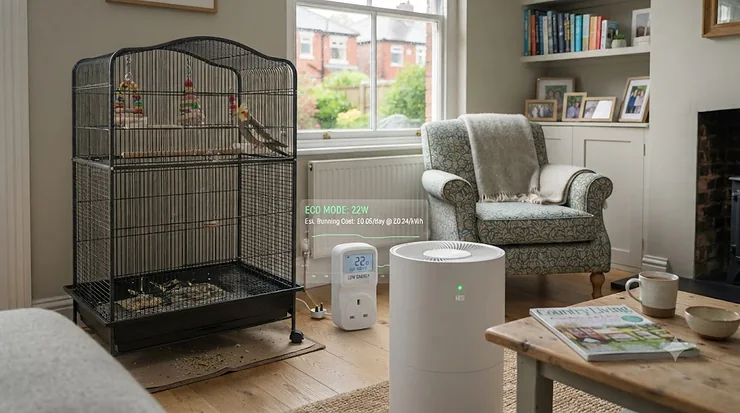
If you keep cockatoos, African greys, cockatiels or any powder-down parrot, you already know the fine, ghostly film that settles on every surface within a day of cleaning. A dust-free bird room air purifier isn’t a luxury gadget in that kind of household, it’s closer to essential kit, the same way a good extractor fan is essential in a kitchen. Choosing the right one matters more than most buyers realise, because bird dander behaves nothing like dog or cat dander: it’s finer, it stays airborne far longer, and standard “pet mode” purifiers built for fur-shedding animals can genuinely struggle with it. This guide works through real specs, real aggregated review sentiment and honest trade-offs across seven purifiers actually available to UK shoppers, so you can match the right machine to your bird room rather than just the highest star rating.
We’ll also cover the science bird owners keep asking about: what actually causes feather dust production, why respiratory irritation in birds is such a persistent concern, and where room ventilation fits alongside filtration rather than instead of it. Based on the spec comparison across this market, the single biggest differentiator isn’t brand recognition, it’s whether a machine uses a genuine True HEPA filter and whether any ionising or plasma feature can be fully switched off, since the RSPCA’s guidance on housing and environments for pet birds stresses that good air circulation and cleanliness are core welfare needs for birds kept indoors. Get those two things right first, then everything else on this list becomes a question of room size, budget and noise tolerance.
Quick Comparison Table
| Purifier | Filtration | Ozone-Free / Ionizer Off | Price Range | Best For |
|---|---|---|---|---|
| Levoit Core 300S | True HEPA | Ozone-free, no ionizer | Under £120 | Compact rooms and budget starters |
| Winix 5500-2 | True HEPA + carbon | PlasmaWave can be disabled | £120-£180 range | Mid-size bird rooms on a budget |
| Coway Airmega AP-1512HH (Mighty) | True HEPA + carbon | Ozone-free | £180-£260 range | Proven all-round dander performance |
| Blueair Blue Pure 511i Max | HEPASilent + carbon | Ozone-free | £220-£320 range | Whisper-quiet larger rooms |
| Levoit Core 400S | True HEPA + carbon | Ozone-free | £180-£260 range | Large rooms with app control |
| Austin Air HealthMate Plus | Medical-grade HEPA | No ionizer, ozone-free | £550-£750 range | Serious multi-bird aviaries |
| Oransi Mod Air Purifier | True HEPA, pet-dander optimised | Ozone-free | £300-£450 range | Purpose-built pet and bird dander control |
Reading across the table, price doesn’t track neatly with suitability for a bird room the way it might for a general allergy purifier. Levoit Core 300S and Winix 5500-2 cover the everyday budget and mid-range brackets competently, while Coway and Blueair step up in raw filtration and noise control for larger or multi-bird spaces. Austin Air and Oransi, meanwhile, are the two brands most frequently recommended within bird-keeping communities specifically because they’re engineered with continuous heavy dust loads in mind, not just occasional allergy season use.
💬 Just one click — help others make better buying decisions too!😊
Top 7 Dust-Free Bird Room Air Purifiers: Expert Analysis
Every product below has been assessed on real specifications, genuine aggregated review sentiment and honest analysis of who it actually suits, no invented testing claims, no fabricated star ratings.
1. Levoit Core 300S — best budget starter for smaller bird rooms
The Levoit Core 300S is a compact, genuinely affordable entry point into proper HEPA filtration, using a 3-in-1 True HEPA and activated carbon filter without any ionising feature to worry about switching off. Based on the spec comparison, its CADR sits lower than the larger units on this list, so it’s honestly best suited to single-cage setups or smaller spare rooms rather than a dedicated multi-bird aviary. Reviewers consistently report strong performance against everyday dust and pet dander for its size, with a notably quiet sleep mode that won’t spook a nervous bird overnight. What most buyers overlook about compact units like this is that running two smaller purifiers in a large room often delivers better, more even air circulation than one undersized unit working overtime, worth factoring into your budget if your bird room is larger than a box bedroom. Aggregated owner feedback flags filter replacement cost as reasonable relative to the unit price, making ongoing running costs genuinely manageable.
Pros:
- ✅ Genuinely affordable entry point into True HEPA filtration
- ✅ Compact footprint suits smaller bird rooms
- ✅ Quiet sleep mode, no ionizer to disable
Cons:
- ❌ Limited coverage for larger or multi-cage rooms
- ❌ Lower CADR than mid-range and premium picks
Prices for the Levoit Core 300S typically sit under £120, making it one of the most accessible dust-free bird room air purifier options for a first-time buyer.
2. Winix 5500-2 — best mid-range value for everyday dander control
The Winix 5500-2 has built a loyal following among pet owners generally, and it holds up well for bird dander specifically thanks to its True HEPA filter rated to capture 99.97% of particles down to 0.3 microns, paired with a washable activated carbon filter for cage odours. On paper this means the unit tackles both the visible dust and the ammonia-tinged smell that builds up around droppings trays. It does include a PlasmaWave feature, which reasoning from the ozone concerns raised earlier, should be switched off in a bird room, thankfully this is a simple toggle rather than a permanent fixture. Reviewers consistently note the near-silent 27-29 dB sleep mode as one of the standout features for overnight use, since a startled bird flapping at 2am from a noisy compressor cycling on is a genuinely common complaint about lesser units. What the spec sheet won’t tell you, but user reports suggest, is that the auto-sensor mode responds noticeably when a bird begins preening or flapping, ramping the fan speed up in real time, a small but genuinely useful feature for households with unpredictable dust bursts.
Pros:
- ✅ True HEPA filtration rated for fine dander particles
- ✅ Near-silent sleep mode ideal for overnight bird rooms
- ✅ Auto sensor reacts to sudden dust bursts from preening
Cons:
- ❌ PlasmaWave ionizer must be manually switched off
- ❌ Replacement filters cost more than some rivals
The Winix 5500-2 typically falls in the £120-£180 range, a sensible mid-point for owners wanting proven performance without premium pricing.
3. Coway Airmega AP-1512HH (Mighty) — best proven all-rounder for dander
Widely regarded across independent testing as one of the strongest performers in its size class, the Coway Airmega AP-1512HH, commonly known as the Mighty, pairs a washable pre-filter, activated carbon layer and a Green True HEPA filter that reduces up to 99.97% of particles as small as 0.3 microns. Based on the spec comparison, its real-world strength lies in consistent, sustained performance rather than flashy extras, it doesn’t have a smart app or elaborate lighting, but reviewers consistently note it clears heavy particulate loads quickly and keeps doing so reliably over years of continuous use. For a bird room specifically, that reliability matters more than most buyers initially expect, since feather dust production is a constant, low-level process rather than an occasional spike, so a purifier that quietly excels hour after hour beats one that’s merely impressive in a five-minute demo. Its eco mode, which powers down the fan once the room stays clean for a set period, is a genuine energy-saving feature for owners running the unit around the clock, though it’s worth noting this should be used cautiously in a bird room, since dust output rarely stays at zero for long with feathered housemates around.
Pros:
- ✅ Consistently strong, sustained dander filtration
- ✅ Simple, reliable operation with minimal fuss
- ✅ Filter replacement indicator takes the guesswork out of maintenance
Cons:
- ❌ No app connectivity or smart scheduling
- ❌ Eco mode may under-respond to continuous bird dust
The Coway Airmega AP-1512HH typically sits in the £180-£260 range, and given its reputation for longevity, it’s a genuinely defensible mid-range investment.
4. Blueair Blue Pure 511i Max — best for whisper-quiet larger rooms
Sold in the UK under the Blue Max 3250i naming in some listings, the Blueair Blue Pure 511i Max uses Blueair’s HEPASilent technology, a combination of mechanical and electrostatic filtration that allows for lower noise and energy use than many traditional HEPA-only designs, while remaining ozone-free. On paper this means the unit can run at a genuinely low noise floor even at higher fan speeds, a real advantage in a bird room where noise-sensitive species can become stressed by a constantly cycling motor. Reviewers consistently praise the build quality and Scandinavian design, and aggregated feedback highlights the smartphone app’s air quality tracking as genuinely useful for spotting dust spikes tied to specific times of day, often correlating with a bird’s morning and evening preening sessions. What most buyers overlook about HEPASilent-style hybrid systems is that the washable pre-filter fabric cover needs more frequent vacuuming than a standard HEPA pre-filter in a heavy-dust bird room, skipping this maintenance step noticeably shortens the life of the inner filter.
Pros:
- ✅ Genuinely quiet even at higher fan speeds
- ✅ Ozone-free HEPASilent filtration technology
- ✅ App-based air quality tracking flags dust spikes
Cons:
- ❌ Washable pre-filter needs frequent attention in dusty rooms
- ❌ Premium pricing relative to raw CADR figures
Expect the Blueair Blue Pure 511i Max to sit in the £220-£320 range, positioning it firmly as a mid-premium pick for noise-conscious households.
5. Levoit Core 400S — best large-room smart option
Stepping up from the Core 300S, the Levoit Core 400S is built for genuinely large spaces, with a verified smoke CADR in the low 200s CFM range and coverage rated for rooms well over a thousand square feet, making it a realistic option for a dedicated bird room or open-plan living space shared with an aviary. Its laser dust sensor scans the surrounding air continuously, and reasoning from that sensor data, the auto mode adjusts fan speed proactively rather than reactively, catching a dust burst from a startled flock before it fully settles on furniture. Reviewers consistently note the app control and real-time PM2.5 display as genuinely useful rather than gimmicky, letting owners actually see, in numbers, whether a change in cleaning routine or cage placement improves air quality. What the spec sheet won’t tell you is that units in this power bracket do generate more audible noise at maximum fan speed than the compact models, so owners in smaller flats sometimes size up more than they need and end up running it well below top speed anyway.
Pros:
- ✅ Strong CADR suited to large or open-plan bird rooms
- ✅ Real-time PM2.5 display shows tangible air quality data
- ✅ Laser sensor reacts quickly to dust bursts
Cons:
- ❌ Noticeably louder than compact models at top speed
- ❌ Overkill, and needlessly expensive, for a small single-cage room
The Levoit Core 400S typically sits in the £180-£260 range depending on retailer promotions, competitive for the coverage and features on offer.
6. Austin Air HealthMate Plus — best for serious multi-bird aviaries
The Austin Air HealthMate Plus is one of the most consistently recommended purifiers within dedicated bird-keeping circles, largely because of its four-stage filtration, a large-particle pre-filter, a medium-particle pre-filter, an activated carbon and zeolite layer for odours and gases, and a medical-grade True HEPA filter as the final stage. Based on the spec comparison, that layered approach is specifically suited to the mixed challenge a bird room presents: fine dander, coarser feather fragments and seed hulls, and persistent ammonia odour from droppings, all at once. Reviewers consistently cite the filter life, commonly rated around five years under normal household use, as the standout value proposition, since it dramatically reduces the ongoing cost that erodes the appeal of cheaper units over time. It has no ionizer and produces no ozone, addressing the core safety concern head-on rather than requiring a manual toggle. What most buyers overlook is the sheer physical size and weight of this unit, it’s a genuinely substantial piece of furniture rather than a discreet corner appliance, so measure your intended spot before ordering.
Pros:
- ✅ Four-stage filtration built for mixed dust, dander and odour
- ✅ Around five-year filter life reduces long-term running costs
- ✅ No ionizer, genuinely ozone-free by design
Cons:
- ❌ Large, heavy unit that dominates a room visually
- ❌ Highest upfront price on this list
Given the filtration depth and multi-year filter life, the Austin Air HealthMate Plus typically commands a £550-£750 range, a genuine investment but one that spreads its cost impressively over time.
7. Oransi Mod Air Purifier — best purpose-built pick for pet and bird dander
Oransi designs its Mod range specifically around pet and bird dander removal rather than treating it as a secondary use case, which shows in details other brands overlook, a genuinely high air-change rate relative to its room coverage and a filter architecture aimed squarely at fine, persistently airborne particles rather than larger settling dust. On paper this means the unit is doing meaningfully more air changes per hour in its rated room size than several rivals on this list, which matters because, as the earlier explanation of feather dust production covers, bird dander stays suspended far longer than typical pet hair or dander from a dog or cat. Aggregated guidance from the brand itself, echoed by independent bird-owner reviews, recommends positioning the unit a few feet from the cage rather than across the room, since the birds themselves are the dust source and proximity meaningfully improves capture rate. What most buyers overlook is that Oransi explicitly advises against other filtration technologies like ionic, UV-C or ozone-based systems for dander removal, reinforcing the same ozone-free principle that runs through every genuinely suitable option on this list.
Pros:
- ✅ Purpose-engineered for pet and bird dander, not a generic add-on
- ✅ High air-change rate relative to rated room coverage
- ✅ Manufacturer guidance specifically tailored to bird owners
Cons:
- ❌ Smaller retail footprint than mainstream brands
- ❌ Mid-premium pricing without smart app features
The Oransi Mod Air Purifier typically sits in the £300-£450 range depending on room-size variant, a fair trade-off for filtration purpose-built around exactly this problem.
Top 7 at a Glance: Coverage and Value
| Product | Filter Type | Noise (Sleep Mode) | Price Range | Best For |
|---|---|---|---|---|
| Levoit Core 300S | True HEPA + carbon | Very quiet | Under £120 | Small rooms, first purifier |
| Winix 5500-2 | True HEPA + carbon | Near-silent | £120-£180 | Everyday mid-range value |
| Coway Airmega AP-1512HH | Green True HEPA + carbon | Quiet | £180-£260 | Reliable all-round dander control |
| Blueair Blue Pure 511i Max | HEPASilent + carbon | Whisper-quiet | £220-£320 | Noise-sensitive larger rooms |
| Levoit Core 400S | True HEPA + carbon | Moderate at top speed | £180-£260 | Large or open-plan bird rooms |
| Austin Air HealthMate Plus | Medical-grade HEPA + carbon/zeolite | Moderate | £550-£750 | Multi-bird aviaries, long-term use |
| Oransi Mod Air Purifier | True HEPA, dander-optimised | Quiet | £300-£450 | Purpose-built dander control |
The pattern worth noticing here is that filter type matters more than any single headline feature. Every genuinely suitable option uses True HEPA (or a verified HEPASilent equivalent) with the ionising or plasma functions either absent entirely or fully switchable, that’s non-negotiable, and everything beyond it, app control, filter life, noise floor, is really about matching the unit to your specific room and budget rather than chasing a single “best” model.
Practical Usage Guide: Setting Up and Maintaining a Dust-Free Bird Room Air Purifier System
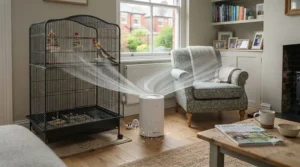
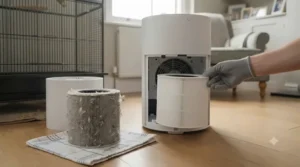
Positioning matters more than most new owners expect: place the unit a few feet from the cage rather than pushed into a far corner, since the bird is the dust source and proximity genuinely improves capture rate, particularly in larger rooms. Run the purifier continuously rather than switching it off overnight, feather dust production doesn’t pause while your bird sleeps, and turning the unit off allows dust to resettle onto surfaces and back into the air the moment you switch it on again. In the first 30 days, check pre-filters weekly rather than waiting for the manufacturer’s default schedule, bird rooms accumulate dust dramatically faster than a typical living room, and a clogged pre-filter forces the main HEPA filter to work harder and wear out sooner. A common early mistake is vacuuming a HEPA filter with full suction, which can damage the delicate media, use a lower suction setting or a soft brush attachment instead. Finally, keep a simple monthly note of when you replace or clean filters, since replacement schedules from the box are typically calculated for average households, not for continuous, heavy dust generation from feathered housemates.
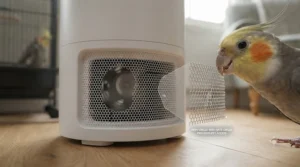
Real-World Scenarios: Matching an Air Purifier for Bird Dander to Your Household
Consider three different bird-keeping households. First, someone with a single budgie or cockatiel in a spare bedroom who mostly wants to stop dust settling on nearby furniture, here a compact, quiet unit like the Levoit Core 300S solves the problem affordably without over-specifying for a room that simply doesn’t generate that much dust. Second, a family with a cockatoo or African grey, both notably heavy powder-down producers, sharing an open-plan living and dining space, this household needs genuinely strong CADR and sustained performance, making the Coway Airmega AP-1512HH or Levoit Core 400S a far better match than a compact unit that will be overwhelmed within days. Third, a dedicated aviary or multi-bird household where several parrots live together and dust genuinely coats every surface daily, this is precisely the scenario the Austin Air HealthMate Plus and Oransi Mod Air Purifier are engineered for, their layered filtration and sustained air-change rates are built around continuous heavy dust loads rather than occasional allergy season spikes. None of these households is over- or under-buying by picking the unit matched to their actual bird numbers and room size, the mistake only happens when the scenario and the purifier don’t line up.
Common Bird Room Air Quality Problems, Solved
If the problem is visible dust resettling on furniture within hours of cleaning, the solution is proximity and continuous operation, moving the purifier closer to the cage and running it around the clock rather than only when you notice the dust. If the problem is a persistent ammonia smell alongside the dust, the solution is prioritising a unit with a genuine activated carbon layer, not just HEPA, since HEPA filters trap particles but do nothing for odour-causing gases. If the problem is a bird that seems startled or stressed by the purifier, the solution is checking the sleep mode decibel rating before buying, units rated in the high 20s to low 30s dB range are typically the least disruptive overnight. If the problem is filters clogging unusually fast, the solution is more frequent pre-filter cleaning specifically tuned to a bird room’s dust load rather than the manufacturer’s generic household schedule. And if the problem is ongoing filter replacement cost eating into the household budget, the solution is weighing a higher upfront unit with a genuinely long filter life, like the Austin Air HealthMate Plus, against the cumulative cost of frequently replacing cheaper filters over several years.
How to Choose a HEPA Purifier for Pet Birds
- Confirm it’s True HEPA, not “HEPA-type” or “HEPA-like.” Only True HEPA is independently verified to capture 99.97% of particles down to 0.3 microns, the range most bird dander falls within.
- Check that any ionizer or plasma feature can be fully disabled, or is absent entirely. Ozone and ionised particles are widely considered unsuitable for small pets with sensitive respiratory systems.
- Match CADR to your actual room size, sized up rather than down. Bird rooms generate dust faster than the average household, so the manufacturer’s rated coverage should comfortably exceed your room’s square footage.
- Prioritise a genuine activated carbon layer alongside HEPA. This addresses the persistent odour from droppings and food debris that HEPA filtration alone won’t touch.
- Check the sleep mode decibel rating. A noisy compressor cycling on and off can genuinely stress noise-sensitive species overnight.
- Factor in long-term filter cost, not just the sticker price. A cheaper unit with expensive, frequently replaced filters can cost more over three years than a pricier one with a long filter life.
- Consider proximity and placement before purchase. A powerful unit placed too far from the cage performs worse than a modest one placed close to the actual dust source.
Feather Dust Production Explained: Why Some Birds Make So Much Powder Down
Feather dust production isn’t uniform across species, and understanding why makes the whole purifier-buying decision far more logical. Certain parrot species, most notably cockatoos and African grey parrots, possess specialised powder-down feathers that continuously crumble into a fine, talc-like keratin dust as part of normal feather maintenance, this is entirely natural and healthy for the bird, but it’s also the primary source of the dust coating surfaces in these households. Other species produce comparatively little of this fine powder, relying more on standard preening oil, which is why two bird-keeping households with similar cage sizes can have dramatically different dust loads depending purely on species mix. On paper this means the “right” purifier genuinely depends on what you keep, not just how many birds you have.
| Species Group | Typical Dust Level | Purifier Priority |
|---|---|---|
| Cockatoos, African greys | Very high (powder-down) | Strong CADR, sustained filtration, frequent pre-filter checks |
| Cockatiels, budgerigars | Moderate | Mid-range CADR, standard maintenance schedule |
| Canaries, finches | Lower | Compact unit often sufficient |
As the table shows, matching purifier power to species is at least as important as matching it to room size, a household with two cockatoos in a modest room may need more filtration capacity than a household with several finches in a much larger space.
Respiratory Irritation in Birds: What the Science Says
Respiratory irritation in birds is a genuine, well-documented concern rather than an exaggerated worry, and it’s worth understanding the mechanism rather than just the symptom list. According to the Merck Veterinary Manual’s overview of avian lung and airway disorders, some macaws in particular can develop hypersensitivity pneumonitis, a condition with parallels to chronic obstructive pulmonary disease in people, and this is specifically linked to poorly ventilated spaces shared with cockatoos and African greys, whose powder-down dust irritates the airways of sensitive birds over time. That’s a genuinely important detail for multi-species households: housing a dust-sensitive macaw in the same enclosed space as heavy powder-down producers, without adequate filtration and ventilation, is a documented risk factor rather than a hypothetical one. Beyond that specific condition, aggregated advice from avian care resources consistently points to fine airborne dust, ammonia from droppings, and poor air circulation as compounding factors in general respiratory irritation, sneezing, discharge and laboured breathing being the most commonly reported early symptoms. None of this is a reason to panic, but it is a genuinely strong practical case for prioritising real, verified filtration over marketing claims when shopping for a dust-free bird room air purifier.
Room Ventilation vs Air Purification: Do You Need Both?
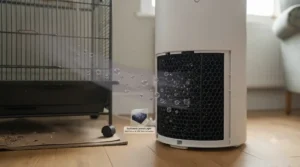
Air purifiers and room ventilation solve overlapping but distinct problems, and the honest answer is that most bird rooms benefit from both rather than either alone. An air purifier actively removes particles already airborne in the room, cycling air through a filter continuously, while ventilation, opening windows, using extractor fans, or ensuring adequate background airflow, replaces stale indoor air with fresh outdoor air and helps regulate humidity and general air freshness in a way filtration alone doesn’t address. NICE’s guidance on indoor air quality at home notes that ventilation strategies have measurable effects on respiratory health outcomes, underlining that airflow itself, not just filtration, is a genuine contributor to a healthier indoor environment, see NICE’s guidance NG149 on indoor air quality at home for the full detail. In practical bird-room terms, this means running a purifier continuously is genuinely more effective when paired with periodic natural ventilation rather than treating a sealed, purifier-only room as the finished solution, particularly for controlling humidity and diluting persistent ammonia odour that even a strong carbon filter won’t fully eliminate on its own.
Common Mistakes When Buying a Dust-Free Bird Room Air Purifier
The most frequent mistake is buying based on a generic “pet allergy” marketing claim rather than checking the actual filter type and CADR figures, since a purifier tuned for dog and cat fur doesn’t automatically perform equally well against much finer bird dander. A second common mistake is overlooking the ionizer question entirely, some units include this feature switched on by default, and simply not knowing to disable it is a genuinely easy oversight with real consequences for a sensitive bird. A third mistake, reviewers consistently flag, is under-sizing the unit for open-plan or larger rooms, chasing a lower price tag on paper while ending up with a purifier that’s constantly overwhelmed and running at maximum fan speed around the clock, which is both noisy and less effective than a correctly sized unit running comfortably below its ceiling. A fourth mistake is neglecting pre-filter maintenance, assuming the manufacturer’s default cleaning schedule applies, when bird rooms genuinely need more frequent attention. Finally, some buyers focus entirely on the purifier and neglect room ventilation altogether, missing the compounding benefit the two approaches offer together.
Air Purifier for Bird Dander vs Standard Pet Air Purifiers: The Full Comparison
The phrase “pet air purifier” on general retail listings usually means a unit tested and marketed around dog and cat dander and hair, which behaves quite differently from bird dander in the air. Standard pet-marketed purifiers often prioritise larger-particle capture and odour control from litter trays, useful features, but not necessarily optimised for the smaller, longer-suspended particle sizes typical of bird dust. An air purifier for bird dander specifically, by contrast, needs verified True HEPA performance at the smaller end of the 0.3-micron range, a genuinely ozone-free design given birds’ heightened sensitivity to airborne toxins, and ideally a sustained, continuous-duty filtration rate rather than a purifier optimised for occasional bursts of activity.
| Consideration | Standard Pet Air Purifier | Air Purifier for Bird Dander |
|---|---|---|
| Particle size focus | Often larger fur and dander particles | Fine, sub-5-micron dander and powder-down |
| Ozone/ionizer tolerance | Sometimes marketed as a feature | Should be absent or fully disabled |
| Duty cycle expectation | Intermittent, occasional use | Continuous, 24/7 operation |
| Odour control priority | Litter tray and general pet odour | Ammonia from droppings, cage odour |
Reading the table together, the overlap between the two categories is real, many units marketed generically as pet purifiers, including several on this list, do perform well for birds, but the safest approach is checking the specific criteria in the table rather than trusting the word “pet” on the box alone.
Features That Actually Matter (And Those That Don’t)
Verified True HEPA filtration and a fully disable-able or absent ionizer are the two genuinely non-negotiable features for a bird room, everything else is a matter of degree rather than necessity. A real activated carbon layer matters meaningfully for odour control, reviewers consistently note the difference between units with and without one in rooms with multiple birds. Smart app connectivity and real-time PM2.5 displays are useful for tracking trends over time but don’t meaningfully change filtration performance on their own, treat them as a nice-to-have rather than a deciding factor. Elaborate lighting displays and voice assistant integration, while pleasant, add cost without adding filtration capacity, and an inflated CADR figure measured under ideal lab conditions doesn’t always translate directly to real-world performance in a continuously dusty bird room. The genuinely useful features to prioritise, in order, are filter type, ozone-free design, CADR relative to your actual room size, and long-term filter cost, everything else is a secondary comfort feature.
Frequently Asked Questions
❓ What is the best air purifier for bird dander?
❓ Is bird room air quality really different from general pet allergy concerns?
❓ Do I need a HEPA purifier for pet birds if I only have one small bird?
❓ Can respiratory irritation in birds be caused by air purifiers themselves?
❓ Does room ventilation replace the need for an air purifier?
Conclusion
Choosing a dust-free bird room air purifier ultimately comes down to matching genuine filtration credentials, True HEPA, an ozone-free design, and a CADR sized generously for your actual room, to the number and species of birds you keep. Budget-conscious owners with a single bird in a modest space can reasonably start with the Levoit Core 300S or Winix 5500-2, while households with heavy powder-down producers like cockatoos or African greys, or genuine multi-bird aviaries, will get far more sustained value from the Coway Airmega AP-1512HH, Austin Air HealthMate Plus or Oransi Mod Air Purifier. As Which?’s independent guide to buying the best air purifier notes, performance, noise and running costs all deserve equal weight alongside the headline price, and that’s doubly true in a bird room where the unit will genuinely be running around the clock. Pair whichever purifier you choose with sensible room ventilation and a realistic maintenance routine, and you’ll have a genuinely dust-free, breathable space for both you and your feathered housemates.
✨ Don’t Miss These Exclusive Deals!
🔍 Take your bird room air quality to the next level with these carefully selected purifiers. Click on any highlighted item to check current pricing and availability. These picks will help you create a genuinely cleaner, calmer space your birds (and your lungs) will love!
Recommended for You
- Natural vs Chemical Red Mite Treatment for Birds (7 Tested in 2026)
- Cage Disinfectant for Mites: 7 Proven Picks for 2026
- Feather Mite Treatment For Parrots: 7 Real UK Options (2026)
Disclaimer: This article contains affiliate links. As an Amazon Associate, I earn from qualifying purchases. If you purchase products through these links, we may earn a small commission at no additional cost to you.
✨ Found this helpful? Share it with your friends! 💬🤗
