In This Article
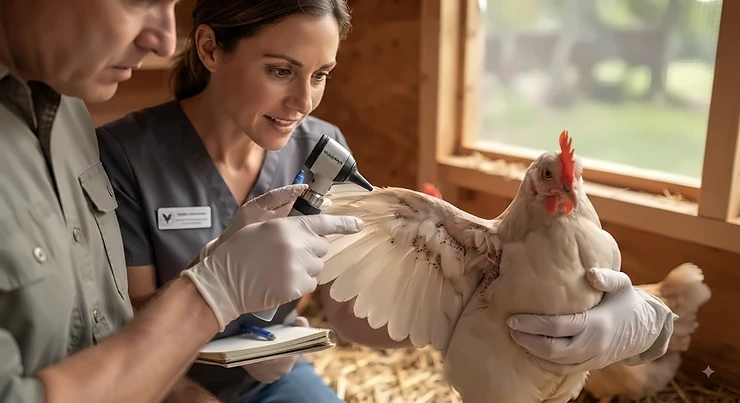
Somewhere around 2am, while your birds are fast asleep on the perch, an army of near-invisible parasites is climbing out of the cracks in your coop and heading straight for them. That’s the maddening thing about red mite — you can clean the house spotless on Saturday morning and still get bitten reports by Tuesday night, because natural vs chemical red mite treatment for birds isn’t really a question of which product smells nicer. It’s a question of understanding an ectoparasite that has evolved specifically to avoid being seen.
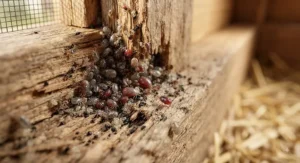
What is natural vs chemical red mite treatment for birds? In short, it’s the choice between plant- and mineral-based methods — diatomaceous earth, tea tree oil, silica dust — that work through physical drying-out effects, versus pyrethrin- or permethrin-based insecticides that attack the mite’s nervous system directly. Both routes can work. Neither works if you only treat the bird and ignore the housing, because Dermanyssus gallinae, the poultry red mite, spends around 90% of its life hidden in your coop’s woodwork rather than on your birds at all.
This guide walks through seven genuinely available UK products — some natural, some chemical, a couple that sit in a grey area between the two — with honest analysis of what each one actually does, who it suits, and where it falls short. We’ll also get into the biology that makes this parasite so stubborn, the safety rules around biocide use that too many bird keepers skip past, and a practical first-month routine you can follow regardless of which camp you land in. Grab a cuppa; this one’s thorough.
Quick Comparison Table
| Product | Type | Best For | Price Range |
|---|---|---|---|
| Barrier Red Mite Powder | Natural (tea tree oil) | Organic-system keepers wanting a bird-safe daily dust | Under £15 |
| Poultry Mite Killer Powder 1KG | Natural (diatomaceous earth) | Budget bulk dusting of coop and dust baths | Under £15 |
| Battles Poultry Red Mite Powder | Natural (plant-based repellent) | Quick on-bird dusting during a flare-up | Under £15 |
| Diatomaceous Earth Red Spider Mite Poultry Feed | Natural (DE, multi-size) | Multi-coop or smallholding use at scale | £10-£35 range depending on size |
| Smite Red Mite Treatment and Disinfectant | Biocide (non-pesticide cleaner) | Deep-cleaning and degreasing before dusting | £15-£25 range |
| Nettex Total Mite Kill Spray | Chemical (permethrin) | Fast knockdown of an active infestation | £10-£20 range |
| ARDAP Pest Control Spray | Chemical (permethrin + pyrethrin) | Severe or resistant infestations as a last resort | £15-£25 range |
Looking at the spread above, you’ll notice the natural options cluster at the lower end of the price range, which makes sense given diatomaceous earth is essentially a mined mineral rather than a manufactured insecticide. The chemical sprays cost more per unit, but a single application of something like ARDAP Pest Control Spray can knock down a colony that would otherwise take Barrier Red Mite Powder several dusting cycles to bring under control. Reviewers repeatedly flag that whichever product you choose, it only earns its price tag when it’s applied to the housing, not just the bird — a theme we’ll come back to throughout this piece.
💬 Just one click — help others make better buying decisions too!😊
Top 7 Red Mite Treatments for Birds: Expert Analysis
1. Barrier Red Mite Powder — organic-approved and gentle enough for daily use
Barrier Red Mite Powder is built around Australian tea tree oil and lavandin oil rather than any synthetic pesticide, which is exactly why the UK’s organic certification bodies allow it in registered organic systems. The active ingredients sit at roughly 1.5% each, carried on a sterilised maize base, so it’s genuinely light-touch — this isn’t a product designed to nuke a colony overnight, it’s designed to make the bird’s feathers and skin an unpleasant place for mites to be.
In practice, that means you’re dusting under the wings, around the vent, and at the base of the feathers, then repeating every few days during an active problem. The manufacturer states it lasts up to six weeks per application, though anyone who’s actually dealt with a heavy infestation will tell you that’s an optimistic ceiling once mite numbers are already high. What most buyers overlook about this product is that it doesn’t taint eggs, which matters enormously if you’re selling or eating what your hens produce — something several of the chemical sprays further down this list explicitly can’t claim.
Aggregated reviewer sentiment is largely positive: several UK buyers on Amazon describe the powder as quick to apply (around 30 seconds per bird) and note that handling birds gently, wing by wing, works better than the more forceful methods sometimes suggested online.
Pros:
- ✅ Approved for use in certified organic poultry systems
- ✅ Does not taint eggs during or after use
- ✅ Pleasant tea tree scent, easy on sensitive skin
Cons:
- ❌ Slower acting than pyrethrin-based sprays on heavy infestations
- ❌ Needs frequent reapplication once numbers are high
Priced under £15 for a 500g shaker, Barrier Red Mite Powder represents solid value for prevention and light infestations, though it’s rarely enough on its own once a coop is genuinely overrun.
2. Poultry Mite Killer Powder 1KG — the budget bulk option for dust baths
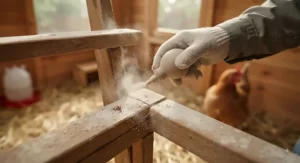
This is diatomaceous earth in its most straightforward form: a food-grade powder made from the fossilised shells of ancient diatoms, sold in a 1kg bag that goes a long way once you’re dusting an entire coop rather than a single bird. The mechanism is mechanical rather than chemical — microscopically sharp silica particles score the mite’s waxy exoskeleton, and the mite dehydrates and dies over the following hours or days.
Because it’s inert, this product carries none of the biocide warnings you’ll see on the sprays later in this list, which is why it’s a favourite for adding directly to a dust bath where birds self-treat. Reviewers consistently report that it works best as a preventative or maintenance product rather than a rescue remedy for a full-blown outbreak, since the drying-out process simply takes longer than a nerve-agent insecticide.
Based on the spec comparison with Diatomaceous Earth Red Spider Mite Poultry Feed further down this list, the practical difference between the two DE products often comes down to particle grade and bag size rather than effectiveness — both rely on the same physical kill mechanism.
Pros:
- ✅ 100% natural with no chemical residue in eggs or meat
- ✅ Doubles as a dust-bath additive birds use themselves
- ✅ No biocide handling precautions required
Cons:
- ❌ Works slowly compared with knockdown sprays
- ❌ Needs a dry, well-ventilated area to remain effective
At under £15 for 1kg, this is about as cheap as red mite prevention gets, and it’s a sensible product to keep permanently stocked even if you end up reaching for something stronger during an active infestation.
3. Battles Poultry Red Mite Powder — fast, targeted on-bird dusting
Battles Poultry Red Mite Powder takes a slightly different approach to the DE-based powders above, using p-menthane-3,8-diol, a plant-derived repellent compound more commonly associated with eucalyptus-based insect repellents for humans. It’s applied straight from the shaker onto the affected areas of the bird, and the manufacturer positions it as giving “lasting protection” rather than an instant kill.
Here’s what the spec sheet won’t tell you, but the product’s own positioning implies: repellents work differently to desiccants like DE. Rather than physically destroying the mite’s exoskeleton, a repellent formulation discourages mites from settling on the bird in the first place, which makes it a smart complement to housing treatment rather than a standalone fix. Reviewers who use it as part of a rotation alongside a housing spray tend to report the best results, whereas those expecting it to clear an entrenched infestation on its own are often disappointed.
Who should care about this one? Anyone dealing with a light-to-moderate problem who wants a no-fuss, shaker-bottle product they can use mid-week without a full coop strip-down.
Pros:
- ✅ Plant-based active ingredient, no synthetic pesticide
- ✅ Simple shaker application directly onto the bird
- ✅ Good for quick top-ups between deep cleans
Cons:
- ❌ Repellent action means it won’t eliminate an existing heavy colony alone
- ❌ Needs pairing with a housing treatment for full control
Sitting under £15 for a 500g tub, it’s a reasonable secondary product rather than your first line of defence against a serious infestation.
4. Diatomaceous Earth Red Spider Mite Poultry Feed — flexible sizing for smallholdings
Sold in 100g, 800g and 2500g bags, this is diatomaceous earth pitched squarely at anyone running more than a couple of birds. The listing recommends 10-15g per square metre applied to walls, floors, perches and nest boxes, with particular attention to joints and crevices — exactly where red mite hides during daylight hours, as we’ll get into later in this guide.
Based on the spec comparison with Poultry Mite Killer Powder 1KG, the main practical advantage here is scale: if you’re treating a walk-in coop, an aviary, or several housing units, buying the 2500g bag works out considerably cheaper per gram than repeatedly restocking 1kg bags. The manufacturer also notes it’s suitable for internal parasite control when added to feed at low percentages, which is a bonus most single-purpose sprays can’t offer.
What most buyers overlook here is grade consistency — the listing itself notes that “not all grades of DE are the same,” and coarser industrial grades used in swimming pool filtration are genuinely unsuitable and potentially harmful if inhaled in quantity. Always confirm you’re buying food or feed grade, which this product is.
Pros:
- ✅ Three bag sizes suit both hobbyists and smallholders
- ✅ Can be applied to housing, birds, and dust baths alike
- ✅ Cost-effective per gram at the largest size
Cons:
- ❌ Dust can irritate the respiratory tract if inhaled during application
- ❌ Slower kill rate than chemical sprays on established infestations
Across its size range, expect to pay somewhere in the £10-£35 bracket depending on quantity, which makes the largest bag genuinely good value for multi-bird setups.
5. Smite Red Mite Treatment and Disinfectant — the deep-clean middle ground
Smite Red Mite Treatment and Disinfectant occupies an interesting space between the natural powders and the outright chemical sprays on this list. It’s marketed as a non-toxic biocidal detergent rather than a pesticide, working by breaking down the grease, organic matter and waxy build-up where mites live and breed, rather than poisoning the mite directly. It’s diluted with water — commonly around a 3-6% solution — and applied with a pressure or knapsack sprayer, then scrubbed and rinsed.
The honest analytical take here is that Smite is doing a genuinely different job to the DE powders and permethrin sprays: it’s a sanitiser and degreaser first, an indirect mite-control tool second. Reviewers consistently note that it’s most effective when combined with a DE-based powder once the coop has dried, which mirrors the manufacturer’s own recommended two-step protocol. As a biocidal product it still carries UK label warnings around eye and skin contact, so it isn’t quite “natural” in the way the tea tree or DE products are, even though it contains no insecticide.
Who should care? Anyone doing a full seasonal deep clean of a wooden coop, particularly where grease and droppings have built up in the joints faster than a dust-based product alone can handle.
Pros:
- ✅ Cleans, sanitises and degreases in a single application
- ✅ Pairs effectively with diatomaceous earth for a two-step routine
- ✅ Safe for use around feeding areas once dry
Cons:
- ❌ Not a standalone pesticide — needs pairing with a killing agent
- ❌ Causes skin and eye irritation if handled without gloves
Expect to pay in the £15-£25 range for a usable concentrate bottle, which, once diluted, stretches across dozens of litres of solution and represents solid long-term value.

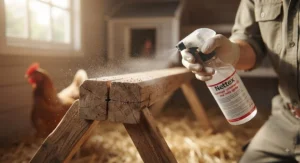
6. Nettex Total Mite Kill Spray — rapid knockdown when you need results fast
This is where we properly cross into chemical mite treatment safety territory. Nettex Total Mite Kill Spray is a permethrin-based insecticide — the ready-to-use solution contains permethrin alongside tetramethrin and benzalkonium chloride, while the aerosol variant adds piperonyl butoxide as a synergist. It’s formulated with an oily base specifically so it penetrates cracks and crevices rather than sitting on the surface, and manufacturer guidance recommends an initial application, a repeat three days later, then weekly maintenance.
On paper, this means faster mite mortality than any of the natural powders above — permethrin disrupts the mite’s nervous system on contact, rather than relying on a slow desiccation process. Reviewers report mites visibly dead “almost instantly,” with a noticeable reduction in activity within a week during a moderate infestation. The trade-off is that this is explicitly a housing-only product; UK labelling is clear that it must never be sprayed directly onto birds, and the coop must be fully dry — typically at least two hours — before birds are returned.
What the spec sheet won’t tell you, but UK biocide guidance makes clear, is that repeated use of the same active ingredient increases the risk of resistance developing in the local mite population, a point we’ll unpack further in the safety section below.
Pros:
- ✅ Fast knockdown against an active, visible infestation
- ✅ Oily formulation penetrates cracks where mites hide
- ✅ Dual disinfectant action alongside pest control
Cons:
- ❌ Must never be applied directly to birds
- ❌ Skin-irritant and flammable aerosol warnings apply
Priced roughly £10-£20 depending on format and size, it’s a solid mid-tier chemical option for keepers who want speed without stepping up to a stronger amateur-use insecticide.
7. ARDAP Pest Control Spray — the heavy-duty option for resistant infestations
ARDAP Pest Control Spray sits at the top end of the chemical treatments in this line-up. It combines permethrin with a pyrethrin-based extract of Tanacetum cinerariifolium (pyrethrum) flowers, obtained via supercritical CO2 extraction — effectively pairing a fast-acting natural-origin knockdown agent with a longer-lasting synthetic residual. The manufacturer claims protection lasting up to six weeks per application, and it’s approved for amateur use against a genuinely broad spread of pests, not just red mite.
Here’s what most buyers overlook: this dual-ingredient approach is precisely why keepers reach for ARDAP Pest Control Spray when other treatments have already failed. Pyrethrins alone break down quickly in light and air, giving rapid but short-lived control; permethrin is more stable, giving the residual “up to six weeks” claim on the label. Used together, you get quick knockdown plus lasting protection in the treated areas — though, as with Nettex Total Mite Kill Spray, it is explicitly not for direct application to birds or animals.
The UK safety data sheet is unambiguous about handling: gloves and a mask are advised, the product is an extremely flammable aerosol, and it’s rated very toxic to aquatic life, so drainage into ponds or waterways must be avoided entirely.
Pros:
- ✅ Dual pyrethrin-permethrin formula for knockdown plus residual
- ✅ Up to six weeks of protection per treated application
- ✅ Effective against resistant, well-established infestations
Cons:
- ❌ Strict handling precautions — gloves, mask, ventilation required
- ❌ Very toxic to aquatic life; unsuitable near ponds or waterways
Available in 400ml and 750ml cans priced roughly £15-£25, it’s best reserved as a targeted, occasional-use tool rather than a routine weekly spray.
Your First 30 Days: A Practical Red Mite Treatment Routine
Whichever camp you land in, the sequence matters more than the specific product. Week one is about assessment and a full strip-out: remove all bedding, scrub every surface you can reach with hot soapy water or a degreaser like Smite Red Mite Treatment and Disinfectant, and pay obsessive attention to joints, screw holes and the underside of perches, since that’s where colonies establish first. Let everything dry completely before applying any dust or spray — damp surfaces reduce the effectiveness of both diatomaceous earth and permethrin-based products alike.
Week two is where most beginners go wrong: they treat once, see fewer mites, and stop. Mite eggs are largely untouched by a single application of almost anything, natural or chemical, so a repeat treatment three to seven days later is non-negotiable regardless of whether you’re using Nettex Total Mite Kill Spray or Poultry Mite Killer Powder 1KG. Dust the birds themselves during this window too, concentrating on the vent area and under the wings.
By weeks three and four you should be moving into maintenance mode — a light dusting of the perch ends and nest boxes every few days, plus a proper deep clean on a monthly rolling basis through the warmer months when mite reproduction accelerates fastest. The most common mistake in this first month isn’t choosing the “wrong” product; it’s under-treating the housing while over-focusing on the birds.
Real-World Scenarios: Matching Treatment to Your Setup
Picture three very different bird keepers, each needing a slightly different answer to the same underlying problem.
First, there’s the back-garden hobbyist with three or four hens in a small plastic or wooden coop, checked daily, treated seasonally. For this profile, a rotation of Barrier Red Mite Powder for prevention and Poultry Mite Killer Powder 1KG for the coop itself covers most scenarios without ever reaching for a chemical spray — the infestation pressure is generally lower with a small, well-ventilated, regularly cleaned setup.
Second, consider the smallholder running fifteen to thirty birds across two or three housing units, often with older wooden structures that have accumulated years of tiny cracks. Here, scale changes the calculation: Diatomaceous Earth Red Spider Mite Poultry Feed in the largest bag size becomes genuinely cost-effective, and a seasonal deep clean with Smite Red Mite Treatment and Disinfectant before dusting tackles the grease build-up that pure powder can’t shift alone.
Third, picture the keeper who’s discovered a full-blown infestation after weeks away, with visible clusters of mites and birds showing anaemia, pale combs or reluctance to roost. This is the scenario where ARDAP Pest Control Spray or Nettex Total Mite Kill Spray genuinely earns its place — a fast chemical knockdown to break the immediate crisis, followed by a switch back to natural maintenance once numbers are under control. Treating this situation with DE alone risks letting the infestation outpace the slower kill rate.
How to Choose Between Natural and Chemical Red Mite Treatment
- Assess infestation severity first. A handful of mites spotted during a routine check calls for prevention-grade natural products; visible clusters, pale combs or reluctant roosting call for faster chemical intervention.
- Check your egg and organic status. If you’re selling eggs under an organic or “no synthetic pesticide” claim, natural options like Barrier Red Mite Powder are effectively mandatory.
- Factor in your housing material and complexity. Older wooden coops with more joints and crevices generally need the penetrating action of a liquid spray or degreaser before dusting works properly.
- Weigh your comfort with biocide handling. Chemical sprays carry gloves, mask and ventilation requirements that some keepers would rather avoid entirely.
- Think about resistance over time. Repeated reliance on a single chemical active ingredient risks resistance building in the local mite population, whereas physical desiccants like diatomaceous earth carry no such risk.
- Consider speed versus sustainability. Chemical sprays win on speed for a genuine crisis; natural products generally win on long-term, low-effort maintenance.
- Budget for the full routine, not just one product. Almost every effective approach on this list is a combination — powder plus spray, or natural plus occasional chemical backup — rather than a single silver bullet.
Bird keepers new to this decision often benefit from reading independent buying guidance alongside product listings; Which? Gardening’s guide to pest and parasite control is a useful, impartial starting point before you commit to a routine.
Understanding Red Mite Nocturnal Behaviour (And Why It Defeats Most Treatments)
This is arguably the single most important thing to understand before buying anything on this list. Dermanyssus gallinae doesn’t live on your birds. It lives in your coop, tucked into cracks, screw holes and the underside of perches, and only emerges after dark to feed for around thirty to sixty minutes before retreating to digest, mate and lay eggs. A peer-reviewed review of the species’ biology notes that mite colonies exposed in lit, open areas are quickly pecked and eaten by the flock itself, which is precisely why the species has evolved to be anocturnal, crevice-dwelling feeder — a behavioural adaptation confirmed in detail by a comprehensive review of poultry red mite biology and control.
This nocturnal habit explains almost every “why isn’t this working” complaint you’ll find in product reviews. Spraying or dusting only the bird misses roughly nine-tenths of the population that’s hiding in the woodwork at the moment of treatment. It also explains why a treatment that seems to work brilliantly for a week can appear to “come back” — surviving mites deeper in the crevices simply re-emerge once the residual effect fades. Research into mite behaviour has also shown that fed mites are drawn back to conspecific aggregation cues left by other mites, meaning colonies tend to re-establish in the exact same joints and corners treated previously unless those specific areas receive follow-up attention.
Practically, this means torch-checking your coop after dark — literally, with a head torch, an hour or so after the birds have settled — is one of the most useful diagnostic habits a keeper can build. You’ll see mites moving on the perches in a way you simply never will during a daytime inspection.
Chemical Mite Treatment Safety: What UK Bird Keepers Need to Know
Every permethrin or pyrethrin-based product mentioned in this guide is legally classed as a biocide in the UK, and biocide use is governed by a specific regulatory framework rather than being a free-for-all. According to HSE’s official guidance on using biocides safely, anyone using these products must read and follow the label instructions precisely, since the product has only been authorised for the specific uses stated on it — using ARDAP Pest Control Spray or Nettex Total Mite Kill Spray for something outside its labelled purpose isn’t simply inadvisable, it’s non-compliant with UK regulation.
The practical safety rules worth internalising: never spray directly onto birds (both products in this guide are explicitly for housing only), always allow the recommended drying time before returning birds to a treated coop, wear gloves and, where indicated, a mask, and store concentrated products out of reach of children and pets. Both permethrin and pyrethrin-based sprays carry “very toxic to aquatic life” warnings, meaning runoff into garden ponds, streams or drains must be avoided — something easy to overlook if you’re hosing down a coop near a garden feature.
There’s also a welfare dimension worth taking seriously. Untreated infestations cause real suffering — a peer-reviewed study on commercial flocks found statistically significant reductions in stress-related behaviours like preening, head scratching and aggressive behaviour, alongside improved blood markers and egg production, following effective acaricidal treatment, as documented in a published welfare assessment of red mite treatment on laying hens. In other words, the safety conversation cuts both ways: correctly used chemical treatment can be a genuine welfare improvement, not just a convenience.
✨ Don’t Miss These Exclusive Deals!
🔍 Take your red mite control routine to the next level with these carefully selected products. Click on any highlighted item to check current pricing and availability. These tools will help you create a genuinely mite-free coop your birds will thank you for!
Natural vs Chemical Red Mite Treatment: The Full Comparison
| Factor | Natural Treatment | Chemical Treatment |
|---|---|---|
| Speed of kill | Slower — days rather than hours | Fast — often within hours of contact |
| Residual protection | Up to 6 weeks, weather dependent | Up to 6 weeks, formulation dependent |
| Egg/organic compliance | Generally compatible | Often restricted or requires withdrawal |
| Resistance risk | None (physical/repellent action) | Present with repeated single-ingredient use |
| Handling precautions | Minimal (dust mask advisable) | Gloves, mask, ventilation required |
| Best For | Barrier Red Mite Powder, Poultry Mite Killer Powder 1KG | ARDAP Pest Control Spray, Nettex Total Mite Kill Spray |
The table above makes the trade-off fairly stark: natural options are safer to handle and carry zero resistance risk, but they ask more of you in terms of frequency and patience. Chemical products close that gap on speed and are genuinely valuable during a severe outbreak, but they demand more careful handling and shouldn’t become your only long-term strategy given the resistance risk documented across the poultry industry. Most experienced keepers, and several of the sourced reviews above, land on a hybrid approach — chemical for the emergency, natural for the maintenance that follows.
Common Mistakes When Treating Red Mite
The single biggest mistake is treating the bird and forgetting the housing, given everything we now know about nocturnal, crevice-dwelling behaviour — a beautifully dusted hen returning to an untreated coop achieves almost nothing. A close second is stopping after one application; because most products, natural or chemical, struggle to kill mite eggs directly, a repeat treatment within a week is essential to catch the next generation as it hatches. Keepers also frequently under-dose diluted concentrates like Smite Red Mite Treatment and Disinfectant, mixing weaker solutions than instructed in an attempt to save money, which simply reduces effectiveness without meaningfully cutting cost.
Another recurring error is applying a chemical spray and returning birds to the coop before it’s properly dry — UK product labels specify drying windows for a reason, and skipping that step risks direct bird exposure to an insecticide that was only ever tested and approved for surface application. Finally, many keepers only check for mites during the day, when the vast majority of the population is deliberately hidden away; a proper night-time torch inspection remains the single most underused diagnostic tool in this entire guide.
Long-Term Cost & Maintenance: Which Approach Actually Saves Money
Run the numbers over a full year rather than a single purchase, and the picture shifts. A 1kg bag of Poultry Mite Killer Powder 1KG at under £15 might need replacing every couple of months during an active problem, putting annual natural-only maintenance somewhere in the £60-£100 range for a small flock — cheap per purchase, but the frequency adds up. A single can of ARDAP Pest Control Spray at £15-£25 lasts considerably longer per application thanks to its six-week residual claim, but repeated reliance on the same active ingredient carries the hidden cost of potential resistance, which can eventually mean needing a stronger, pricier product down the line.
The most cost-effective pattern reported across keeper communities is hybrid: an occasional chemical treatment (perhaps once or twice a year during peak spring-summer mite season) backed by continuous low-cost natural maintenance the rest of the time. This spreads your spend, reduces resistance risk, and matches the seasonal reality that Dermanyssus gallinae reproduction accelerates dramatically in warm weather and slows during winter. Factor in your time too — natural powders demand more frequent, if quicker, top-ups, while chemical sprays demand less frequent but more involved full-coop applications.
Frequently Asked Questions
❓ Is natural red mite treatment as effective as chemical treatment?
❓ Can I use chemical mite treatment if I still eat my hens' eggs?
❓ How long does diatomaceous earth take to kill red mite?
❓ Can red mite treatment products be used on pet birds other than chickens?
❓ How often should I treat for red mite in the UK climate?
Conclusion
There’s no single “best” answer to natural vs chemical red mite treatment for birds — there’s only the best answer for your specific setup, flock size and comfort with handling biocides. For prevention and routine maintenance, natural products like Barrier Red Mite Powder, Poultry Mite Killer Powder 1KG and Battles Poultry Red Mite Powder offer genuine, low-risk effectiveness that fits neatly into a weekly coop routine. For a serious, established infestation, Nettex Total Mite Kill Spray and ARDAP Pest Control Spray bring a speed and residual strength that natural options simply can’t match in the short term, while Diatomaceous Earth Red Spider Mite Poultry Feed and Smite Red Mite Treatment and Disinfectant sit usefully in between as scale and deep-clean solutions respectively.
What matters more than the specific product is the underlying strategy: treat the housing as thoroughly as the bird, repeat every treatment within a week to catch newly hatched mites, and remember that this parasite’s entire survival strategy depends on hiding from you during daylight. Beat that habit with a proper night-time check and a consistent routine, and whichever side of the natural-versus-chemical divide you land on, you’ll be ahead of most red mite infestations before they take hold.
Recommended for You
- Cage Disinfectant for Mites: 7 Proven Picks for 2026
- Feather Mite Treatment For Parrots: 7 Real UK Options (2026)
- Scaly Leg Mite Treatment for Budgies: 7 Proven Fixes
Disclaimer: This article contains affiliate links. As an Amazon Associate, I earn from qualifying purchases. If you purchase products through these links, we may earn a small commission at no additional cost to you.
✨ Found this helpful? Share it with your friends! 💬🤗
