
In This Article
When your finches, canaries, or budgies enter breeding season, their nutritional demands skyrocket. A standard seed mix simply won’t cut it. What most UK breeders overlook is this: chick-rearing protein requirements jump from roughly 8% in a typical seed diet to around 20% during rapid growth phases. That gap? It’s the difference between weak, underdeveloped chicks and robust fledglings that thrive.
Egg food for breeding birds bridges this critical nutritional deficit. These specialised supplements combine real egg proteins with vitamins, minerals, and amino acids that seed alone cannot provide. During the demanding weeks of egg-laying, incubation, and chick-rearing, breeding birds deplete their calcium reserves, burn through protein stores, and require targeted nutrition to maintain reproductive health. The proper egg food doesn’t just support breeding success — it transforms survival rates.
In this comprehensive guide, I’ll walk you through seven exceptional egg food products available on Amazon.co.uk, from budget-friendly options for casual breeders to premium formulations for serious aviculturists. Each product has been evaluated for UK compatibility, nutritional profile, and real-world performance in British breeding aviaries. Whether you’re raising British finches in a Somerset garden or breeding canaries in a Manchester flat, you’ll find the right match here.
Quick Comparison Table
| Product | Best For | Protein Content | Price Range | Package Sizes |
|---|---|---|---|---|
| CéDé Egg Food Canary | General canary breeding | 17.5% | £12-£70 | 1kg, 5kg |
| Quiko Classic Egg Food | All ornamental birds | 17.5% | £8-£65 | 500g, 1kg, 5kg |
| Orlux Gold Patee Red | Red-factor canaries | 16% with canthaxanthin | £10-£50 | 250g, 1kg, 5kg |
| CéDé British Finches | High-protein finch breeding | 21% | £15-£75 | 1kg, 5kg |
| Versele-Laga Eggfood Dry | Budget-conscious breeders | 16% | £7-£35 | 800g, 5kg |
| Quiko Special Red | Colour-feeding canaries | 17.5% with carophyll | £10-£60 | 1kg, 5kg |
| CéDé Tropical Finches | Exotic finch species | 17% | £13-£68 | 1kg, 5kg |
From the comparison above, CéDé British Finches delivers the highest protein concentration at 21% — ideal for intensive chick-rearing in goldfinches or siskins. Budget breeders should note that Versele-Laga Eggfood Dry sacrifices some protein density for affordability, though it remains perfectly adequate for most breeding scenarios. If you’re colour-feeding, Orlux Gold Patee Red and Quiko Special Red both contain canthaxanthin, but the Orlux formulation includes 75mg/kg versus Quiko’s slightly lower concentration — worth considering if you’re exhibiting show birds.
💬 Just one click — help others make better buying decisions too! 😊
Top 7 Egg Food for Breeding Birds: Expert Analysis
1. CéDé Egg Food for Canaries
The Belgian-made CéDé Egg Food for Canaries stands as a reliable workhorse in UK breeding aviaries, built around their signature egg cake formulation. With 31.4% real egg content and 17.5% crude protein, it delivers dependable nutrition without the colour additives that can stain white or mosaic canaries.
What sets CéDé apart is the processing method — whole fresh eggs rather than powdered substitutes, which preserves digestibility. The 9.5% crude fat content strikes a sensible balance: enough energy density for laying hens without tipping birds into obesity during the resting period. In practice, British breeders report excellent acceptance rates even with fussy Norwich canaries. The moisture sits at 10%, meaning it stores well in the UK’s damp climate when kept sealed.
This formulation suits singing, coloured, and posture canaries equally well. The lysine and methionine additions (specific amounts not disclosed by manufacturer) support feather quality during moult — rather important when your birds are regrowing plumage in draughty British autumn weather. Customer feedback from UK buyers consistently mentions reduced embryonic mortality compared to cheaper alternatives, though you’ll want to supplement with additional calcium sources for heavy-laying strains.
Pros:
✅ High egg content (31.4%) ensures excellent digestibility
✅ No colour additives — ideal for white and mosaic varieties
✅ Well-accepted by even selective feeders
Cons:
❌ Mid-range pricing compared to budget options
❌ Requires moistening for optimal palatability
Pricing sits in the £12-£18 range for 1kg, with 5kg tubs running around £65-£75. Reasonable value considering you’re feeding only 25% of the daily ration during breeding. Available with free delivery on Amazon.co.uk for orders over £25.
2. Quiko Classic Egg Food
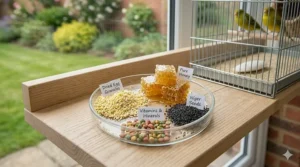
German-engineered Quiko Classic Egg Food has earned its reputation among UK breeders through sheer versatility — equally suited to finches, canaries, budgies, and small parakeets. The standout feature? A 45% egg biscuit base enriched with 1.1% pure honey, which dramatically improves palatability compared to drier formulations.
The 17.5% protein content sits slightly below CéDé British Finches but matches the standard CéDé range. Where Quiko genuinely excels is vitamin fortification: 50,000 IU/kg vitamin A and 150mg/kg vitamin E outstrip many competitors, supporting immune function during the stressful breeding period. The 4,600 IU/kg vitamin D3 is particularly relevant for UK birds spending winter months under grey skies — critical for calcium metabolism and eggshell formation.
British breeders appreciate the oil-free formulation, which extends refrigerated storage life up to one week when moistened. This matters in practice: you can prepare a larger batch Monday morning and feed it through to Friday without rancidity concerns. The honey addition serves double duty — sweetness encourages picky eaters whilst providing a convenient medium for mixing in liquid vitamins or medications when necessary.
One caveat: the higher vitamin D3 content means Quiko should comprise no more than 25% of the daily ration, as stated in manufacturer guidelines. Overfeeding can tip birds into hypervitaminosis D. In mixed aviaries with varying species, this universal appeal simplifies feeding regimens considerably.
Pros:
✅ Honey content makes it highly palatable even for reluctant feeders
✅ Oil-free formula stores better in UK’s humid climate
✅ Universal application across multiple species
Cons:
❌ Vitamin D3 levels require careful portion control
❌ Slightly lower protein than specialist finch formulas
Expect to pay around £8-£12 for 1kg, with 5kg tubs in the £60-£70 bracket. Excellent value given the broad species compatibility — one product serves your entire mixed collection.
3. Orlux Gold Patee Red (Versele-Laga)
Orlux Gold Patee Red targets a specific niche: breeders developing intense red colouration in red-factor canaries, British bullfinches, or certain tropical finches. The 75mg/kg canthaxanthin content maintains plumage colour across breeding and moulting periods, though serious exhibitors should supplement with additional Versele-Laga Can-Tax colour enhancer for peak saturation.
The base formulation resembles standard Orlux dry egg food — 16% crude protein, omega-3 fatty acids for condition, and the proprietary Florastimul prebiotic blend (FOS and MOS). What British breeders often miss is that this isn’t a ready-to-use paste; it’s a dry powder requiring moistening. A few drops of water creates the crumbly texture birds prefer, though some UK breeders add grated carrot for extra carotenoids and moisture.
L-carnitine inclusion enhances fat metabolism, theoretically providing more available energy during the demanding chick-rearing phase. In practice, breeders report good results with Lancashire and Yorkshire canaries, where maintaining condition whilst feeding multiple clutches proves challenging. The lysine and methionine additions (levels undisclosed) support feather development, though the real selling point remains colour maintenance.
One point of confusion: UK buyers sometimes purchase this expecting vibrant red food itself. The product isn’t red — it’s the standard pale yellow egg food with added colourants that express through feather pigmentation over weeks. For white canaries or birds where plumage staining is unacceptable, choose the standard Orlux Canary formula instead.
Pros:
✅ Dedicated colour maintenance formula with 75mg/kg canthaxanthin
✅ Prebiotic blend supports gut health during breeding stress
✅ Dry format offers flexible storage and preparation options
Cons:
❌ Requires additional colour enhancer for show-level results
❌ Lower protein (16%) than high-performance alternatives
Pricing runs approximately £10-£15 for 1kg, scaling up to £45-£55 for 5kg. Best value for dedicated red-canary breeders; questionable for mixed species aviaries.
4. CéDé Egg Food for British Finches
The CéDé British Finches formulation represents the protein heavyweight in this lineup: 21% crude protein and a substantial 33.2% egg content make it purpose-built for demanding chick growth in goldfinches, greenfinches, siskins, and linnets. That extra 3.5 percentage points of protein over standard canary formulas genuinely matters when you’re rearing five hungry fledglings simultaneously.
Belgian formulation includes molluscs and crustaceans alongside standard ingredients — a nod to the insectivorous tendencies many British finch species exhibit during breeding season. The 12% crude fat content runs higher than the canary version (9.5%), providing energy density for active, fast-growing chicks. Calcium sits at 1.0%, phosphorus at 0.4% — sensible ratios for bone development and eggshell formation.
What UK breeders appreciate most is the targeted nutrition for species that naturally consume higher animal protein in the wild. Goldfinches, for instance, feed their young substantial quantities of insects and larvae. This formula approximates that protein profile more accurately than seed-based egg foods. The enhanced protein supports rapid feather development — critical in our abbreviated British summers where late clutches face autumn weather pressure.
One consideration: this richer formulation means careful portion control during the resting period. Feed it daily during active breeding, but scale back to 2-3 times weekly once chicks fledge to prevent obesity. The higher fat content could tip sedentary winter birds into unhealthy weight gain, particularly if you’re keeping British finches in indoor aviaries with limited flight space.
Pros:
✅ Highest protein content (21%) in this review — ideal for intensive chick-rearing
✅ Includes molluscs and crustaceans for species with insectivorous tendencies
✅ Specifically formulated for native British finch species
Cons:
❌ Higher fat content requires careful management outside breeding season
❌ Premium pricing reflects specialised formulation
Budget around £15-£20 for 1kg, with 5kg containers in the £70-£80 range. The premium pays off if you’re breeding British natives seriously; excessive for casual canary breeders.
5. Versele-Laga Eggfood Dry (Standard Canary)
Versele-Laga Eggfood Dry occupies the budget-conscious segment without completely sacrificing quality. The 16% protein content trails the premium options, but for many UK breeding scenarios — particularly with robust canary strains or as supplementary feeding rather than primary protein source — it performs adequately.
The Florastimul prebiotic system (FOS and MOS) supports beneficial gut bacteria, which matters more than casual breeders might realise. Breeding stress, dietary changes, and the demands of egg-laying can disrupt intestinal health, leading to poor nutrient absorption precisely when birds need it most. The prebiotic inclusion helps maintain digestive stability. Omega-3 fatty acids support immune function and feather quality, though specific EPA/DHA levels aren’t disclosed.
Where this product genuinely shines is the dry format’s storage convenience. Britain’s damp climate makes mould a persistent concern with pre-moistened egg foods. The dry powder stores indefinitely when sealed, and you moisten only the portion needed for that day’s feeding. Wastage drops considerably compared to ready-to-use pastes that spoil quickly in summer heat.
The trade-off is protein density. If you’re breeding demanding species like gloster canaries with particularly small chicks, or pushing for multiple clutches, the 16% may prove marginal. It works well as a maintenance egg food year-round or for breeders running modest one-clutch operations. British finch breeders report acceptable results when combining it with live insects for additional protein boost.
Pros:
✅ Budget-friendly entry point for new breeders
✅ Dry format stores excellently in UK’s humid conditions
✅ Prebiotic system supports digestive health during breeding stress
Cons:
❌ Lower protein (16%) may be marginal for intensive breeding programmes
❌ Requires supplementation for high-performance scenarios
Expect to pay around £7-£10 for 800g, with 5kg tubs running £30-£40. Excellent value for hobbyists; serious breeders should invest in higher-protein alternatives.
6. Quiko Special Red Egg Food
Quiko Special Red directly competes with Orlux Gold Patee Red in the colour-feeding niche, formulated specifically for red-factor canaries and other red-plumaged species. The canthaxanthin and carophyll additives maintain colour saturation, though Quiko doesn’t disclose exact concentration levels — a frustration for exhibitors who need to manage dosing precisely.
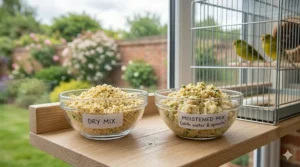
The base formulation mirrors Quiko Classic: 17.5% protein, 6.2% fat, and the vitamin-rich profile including 50,000 IU/kg vitamin A. What differentiates it from the red-factor competition is serving flexibility — Quiko can be fed dry (sprinkled over seed), moistened to crumbly consistency, or even mixed with juice for additional palatability. British breeders working with finicky red canaries appreciate this adaptability.
One practical advantage: the honey content (1.4%) in the Special Red formulation runs slightly higher than Classic, which improves acceptance in birds resistant to dietary changes. If you’re transitioning red canaries from a different brand, the sweetness helps smooth the switch. The rusk and egg biscuit base (28% combined) provides readily digestible carbohydrates for energy during the demanding laying period.
UK customer reviews note good colour maintenance results, though the consensus suggests combining it with sprouted seeds and fresh greens containing natural carotenoids for optimal intensity. The colour additives alone won’t compensate for nutritional deficiencies elsewhere in the diet. During British winter months with limited natural colour sources, consistent feeding becomes particularly important.
Pros:
✅ Flexible serving options (dry, moistened, or mixed with juice)
✅ Higher honey content (1.4%) improves palatability
✅ Well-established brand with consistent UK availability
Cons:
❌ Undisclosed canthaxanthin levels complicate precise colour management
❌ Results require supplementation with fresh greens for peak saturation
Pricing approximates £10-£14 for 1kg, with 5kg bags around £55-£65. Competitive with Orlux for dedicated colour-feeding applications.
7. CéDé Egg Food for Tropical Finches
CéDé Tropical Finches formulation addresses the specialised requirements of estrildid finches — zebra finches, Gouldian finches, star finches, and other Australian and African species popular in UK aviaries. The 17% protein sits between standard canary (17.5%) and British finches (21%), reflecting the moderate growth rates of most tropical species.
What distinguishes this formula is the inclusion of fruit, molluscs, and crustaceans alongside the standard egg base (31.4%). Tropical finches exhibit more varied feeding behaviours than canaries, often consuming insects, fruits, and seeds in the wild. This broader nutritional profile better approximates their natural diet, improving both acceptance rates and chick development outcomes.
British breeders housing tropical finches in heated indoor aviaries report excellent results, particularly with notoriously challenging species like Gouldian finches. The balanced mineral content supports the rapid feather development these species exhibit — critical when British winters limit natural UV exposure for vitamin D synthesis. The formula works well when combined with sprouted seeds and the occasional live insects for peak breeding condition.
One consideration for UK keepers: tropical finches housed in outdoor aviaries during British summer months may benefit from additional protein supplementation, as their higher metabolisms burn through reserves faster than canaries. The 17% protein proves adequate for indoor breeding at controlled temperatures but can run marginal in fluctuating British spring weather when birds expend extra energy on thermoregulation.
Pros:
✅ Specifically formulated for estrildid finch species’ unique requirements
✅ Includes fruit and animal protein to approximate natural diet
✅ Excellent acceptance rates with notoriously selective Gouldian finches
Cons:
❌ May require supplementation for outdoor aviaries in cooler British weather
❌ Mid-range protein content limits use in intensive breeding programmes
Budget approximately £13-£18 for 1kg, with 5kg containers running £65-£75. Essential for serious tropical finch breeders; unnecessary for exclusively canary operations.
Moist vs Dry Egg Food: Which Format Suits British Breeders?
The moist versus dry egg food debate divides UK breeders more than Brexit did. Both formats have legitimate applications, and the “best” choice depends on your specific circumstances, bird species, and British climate considerations.
Dry egg food formulations like Versele-Laga and most CéDé products ship as fine powder requiring water addition before serving. The storage advantage proves compelling in Britain’s notoriously damp conditions — sealed dry powder remains viable for months, even in unheated garden aviaries where condensation is endemic. You moisten only what you’ll use that day, eliminating the spoilage that plagues pre-made pastes during humid British summers.
The preparation ritual adds a minor daily task, though many breeders find the consistency control beneficial. Too wet and birds ignore it; too dry and they scatter it everywhere. The ideal texture resembles damp breadcrumbs — clumpy enough to hold together, dry enough to avoid sticking to feathers. British finch breeders often add grated apple or carrot for moisture and additional nutrients, customising consistency to individual species preferences.
Moist egg food products arrive ready-to-serve, eliminating preparation time and ensuring consistent texture batch to batch. The convenience appeals to time-pressed breeders managing large collections or commercial operations. However, British summer temperatures accelerate spoilage — what sits perfectly fresh Monday morning can develop bacterial growth by Tuesday afternoon if not refrigerated properly.
The practical middle ground many UK breeders adopt: dry formulations during breeding season when you’re feeding daily and want maximum control, switching to convenient moist products during rest periods when occasional supplementation suffices. During British winter when aviaries run cold, even moist products store adequately; summer heat demands the spoilage resistance only dry formats provide.
Regional climate within Britain matters too. Scottish Highland breeders in cool, dry conditions face different challenges than Cornwall aviaries battling coastal humidity. Adjust your format choice accordingly — when in doubt, dry provides more flexibility.

Premium Egg Food Brands: CéDé vs Quiko vs Versele-Laga
The Belgian-German egg food triumvirate dominates UK breeding aviaries, each bringing distinct philosophies to formulation and pricing.
CéDé built its reputation on the proprietary egg cake processing method, incorporating whole fresh eggs rather than cheaper powdered alternatives. This preserves protein bioavailability and improves digestibility — measurable advantages when chicks are doubling body weight in days. The range includes highly specialised formulations (British Finches, Tropical Finches, Bianco for white canaries) that allow precise nutritional matching to specific species needs.
The Belgian company targets serious breeders willing to pay premiums for marginal performance gains. If you’re exhibiting birds at British shows or breeding challenging species like Gouldian finches, CéDé’s targeted nutrition justifies the extra £3-5 per kilogramme. Casual hobbyists breeding robust zebra finches or standard canaries may find the premium excessive for their requirements.
Quiko represents German engineering applied to avian nutrition: comprehensive vitamin fortification, honey for palatability, and universal species compatibility. The philosophy centres on simplified feeding — one product serves your entire mixed aviary rather than juggling multiple specialised formulations. British breeders with diverse collections (canaries, finches, budgies, cockatiels) appreciate the consolidation.
The vitamin levels run aggressive: 50,000 IU/kg vitamin A substantially exceeds many competitors, which proves beneficial during Britain’s dim winter months but requires careful portion control to avoid toxicity. Quiko occupies the mid-market pricing sweet spot — neither budget-basement cheap nor premium-tier expensive, making it accessible to mainstream UK hobbyists.
Versele-Laga (Orlux brand) positions as the value-focused alternative without completely sacrificing quality. The prebiotic Florastimul system adds genuine functional benefit, supporting digestive health during breeding stress. However, the 16% protein in standard formulations trails both CéDé and Quiko, limiting applications in high-performance breeding scenarios.
Where Orlux genuinely competes is specialised colour-feeding products — the Gold Patee Red formulation matches premium alternatives whilst undercutting on price. For UK breeders focused exclusively on red-factor canaries, Versele-Laga offers compelling value. The broader range proves adequate for casual breeding but falls short when results matter commercially.
The verdict for British breeders: invest in CéDé if breeding represents a serious pursuit or income stream, choose Quiko for convenience and reliable results across mixed collections, select Versele-Laga when budget constraints predominate or you’re starting out and learning the craft.
Breeding Season Nutrition: When and How to Feed
The breeding calendar for British bird species follows predictable patterns, though our changeable weather occasionally throws timing into chaos. Understanding when nutritional demands peak allows strategic egg food deployment rather than year-round scattergun feeding.
Pre-breeding conditioning (February-March): Begin introducing egg food 2-3 times weekly whilst birds are still moulting winter plumage. This gradual introduction prevents digestive upset and signals the approaching breeding season. The rising protein intake triggers physiological changes in hens — ovary development, calcium mobilisation, and metabolic shifts preparing for egg production. British breeders often report earlier nesting attempts when pre-breeding conditioning runs consistently.
Active breeding (April-July): Daily egg food provision becomes essential once pairs establish nests. Laying hens require substantial calcium and protein for egg formation — each egg represents roughly 15-20% of the hen’s body weight in a canary. Feed egg food free-choice during this period, allowing birds to self-regulate intake based on demand. Most UK breeders provide egg food in the morning, removing uneaten portions by evening to prevent spoilage, particularly during warmer months.
Chick-rearing (May-August): Protein demands peak during the intensive chick-rearing phase. Parents may visit feeders 100+ times daily when feeding multiple hungry chicks. The egg food should constitute approximately 25% of the total daily ration during active chick-rearing, with high-quality seed mix comprising the remainder. British finch breeders often supplement with live insects (mealworms, waxworms) during this critical period for additional animal protein.
Post-breeding recovery (August-September): After weaning the final clutch, continue daily egg food for 2-3 weeks whilst parents recover condition. Breeding depletes reserves substantially — hens often appear visibly thinner, and both parents show worn plumage from the constant feeding activity. This recovery period prevents carrying weakened birds into the demanding moult.
Maintenance feeding (October-January): Reduce egg food to 2-3 times weekly during the resting period. Complete cessation proves counterproductive — the vitamin and mineral supplementation benefits birds year-round, particularly during Britain’s dark winters when natural vitamin D synthesis virtually ceases. The reduced feeding frequency prevents obesity whilst maintaining nutritional support.
British weather variability means rigid calendars sometimes fail. An unseasonably warm March might trigger early breeding attempts; a cold, wet June could delay second clutches. Observe your birds’ behaviour and adjust feeding accordingly rather than slavishly following dates.
Understanding Chick-Rearing Protein Requirements
The protein demands of rapidly growing chicks represent the most critical nutritional challenge in avian breeding. What many UK hobbyists underestimate is just how dramatic this requirement shift proves.
Adult canaries and finches maintain adequately on seed diets providing 8-12% protein. Their modest metabolisms and completed growth mean protein primarily supports feather maintenance and general tissue repair. Contrast this with newly-hatched chicks: protein requirements leap to 18-20% of diet to support the explosive growth that doubles body weight in mere days.
This gap explains why birds fed exclusively on seed during breeding often produce weak, stunted chicks with poor feather development. The parents instinctively understand the nutritional deficit — many pairs simply refuse breeding attempts when diet proves inadequate, frustrating breeders who can’t identify the underlying cause.
Egg food for breeding birds bridges this critical gap through concentrated animal protein. The egg content provides complete amino acid profiles including the essential lysine and methionine that plant proteins lack. These amino acids directly support feather keratin formation — critical for chicks developing plumage rapidly in preparation for fledging.
The biological imperative becomes clear when examining wild breeding behaviours. British finches naturally synchronise breeding with spring insect emergence, ensuring abundant animal protein precisely when chicks hatch. Captive breeding attempts to replicate this seasonal protein surge through egg food supplementation, providing the concentrated nutrition that seed alone cannot deliver.
Calcium deserves special mention within chick-rearing nutrition. The skeleton mineralises rapidly during growth, demanding substantial calcium intake. Simultaneously, laying hens draw calcium reserves for eggshell production across multiple clutches. This dual demand means calcium supplementation (cuttlefish bone, mineral blocks) becomes non-negotiable during breeding season. The phosphorus in quality egg foods works synergistically with calcium for optimal bone development.
British breeders managing multiple species should recognise that protein requirements vary. Canaries with relatively slow chick growth tolerate moderate protein levels (16-18%) adequately. British goldfinches or tropical Gouldian finches with faster developmental trajectories benefit from higher protein formulations (20-21%). Match your egg food choice to the most demanding species in your collection rather than compromising to the lowest common denominator.
How to Choose the Right Egg Food for Your Birds
Navigating the egg food marketplace requires understanding your specific requirements rather than blindly purchasing whichever product claims “best” on the label. These decision criteria consistently guide successful British breeders toward optimal choices.
Species requirements come first. Canaries tolerate standardised formulations (16-18% protein) perfectly well given their moderate chick growth rates. British finches with more demanding protein requirements benefit from specialised high-protein options (20-21%). Tropical finches including Gouldians and zebra finches appreciate formulations incorporating fruit and insect proteins beyond basic egg content. Match product specification to your birds’ biological needs rather than hoping one-size-fits-all solutions deliver results.
Breeding intensity determines value calculations. Casual breeders managing one or two pairs annually can economise with budget formulations like Versele-Laga, where the modest performance gap versus premium products rarely justifies doubled costs. Serious exhibitors or commercial breeders pushing for multiple clutches across large collections should invest in top-tier products like CéDé British Finches — the marginal improvements in chick survival and development quality compound across dozens or hundreds of birds annually.
Colour-feeding requires specialised formulations. Red-factor canaries, bullfinches, and certain tropical species need canthaxanthin supplementation to maintain plumage saturation. Standard egg foods won’t destroy existing colour but fail to reinforce it through successive moults. If exhibiting birds where colour scoring determines placements, budget for Quiko Special Red or Orlux Gold Patee Red rather than hoping standard formulations suffice.
Storage conditions matter in British climate. Aviaries in heated conservatories or indoor bird rooms tolerate both moist and dry formulations. Garden aviaries subject to Britain’s notorious humidity and temperature fluctuations strongly favour dry formats that resist spoilage and moisture damage. Consider your physical setup when choosing between ready-to-use convenience and storage stability.
Protein concentration aligns with demands. First-time breeders or those managing robust, undemanding species can start with moderate 16-17% protein formulations. Experienced breeders pushing challenging species, managing multiple clutches, or working in commercial contexts should invest in 20-21% protein products that eliminate any possibility of nutritional deficiency.
Budget honestly for consumption rates. A single breeding pair consuming egg food daily during a 12-week breeding season will consume approximately 3-4kg total. A 5kg tub represents excellent value for small operations. Large aviaries housing 20+ breeding pairs require 40-50kg across the season — bulk purchasing becomes economically essential, favouring brands offering 5kg or larger containers at reasonable rates.
Read actual specifications rather than marketing claims. The label stating “premium breeding formula” means nothing without supporting data. Check crude protein percentage, egg content, vitamin fortification levels, and amino acid additions. These hard numbers determine nutritional performance, not the packaging design or advertising slogans.
When uncertain between two comparable products, default to the established European brands (CéDé, Quiko, Versele-Laga) with decades of formulation refinement over cheap generic alternatives with questionable provenance. British breeding success depends fundamentally on nutrition — economising here risks the entire season’s productivity.
Common Mistakes When Feeding Egg Food
British breeders, particularly those new to the practice, consistently stumble over the same preventable feeding errors. Recognising and avoiding these pitfalls dramatically improves breeding outcomes.
Mistake 1: Year-round excessive feeding. Egg food enriches diets during demanding breeding and moulting periods, but year-round free-choice feeding leads inevitably to obesity. Canaries and finches evolved for lean efficiency, not sedentary abundance. Overweight birds suffer reduced fertility, increased egg-binding risk, and shortened lifespans. Feed egg food daily only during active breeding and moulting; reduce to 2-3 times weekly during rest periods.
Mistake 2: Ignoring the 25% rule. Quality egg foods contain concentrated vitamins — particularly fat-soluble vitamins A, D, and E that accumulate in tissues rather than flushing through urine. Manufacturer guidelines typically specify egg food should comprise maximum 25% of daily ration. Exceeding this invites hypervitaminosis, particularly vitamin D toxicity that disrupts calcium metabolism. Feed egg food as supplement alongside quality seed mix, not as replacement.
Mistake 3: Improper moisture levels. Dry egg food moistened into soggy paste becomes unpalatable and spoils rapidly. The target consistency resembles damp breadcrumbs — clumpy enough to hold together when squeezed, dry enough to crumble apart easily. British humidity makes achieving this trickier than in drier climates; add water gradually whilst mixing until texture proves optimal.
Mistake 4: Leaving food overnight. Britain’s mild, damp climate accelerates bacterial growth in moist foods. Egg food left in aviaries overnight — particularly during summer — develops dangerous bacterial loads by morning. Serve fresh egg food in the morning, remove uneaten portions by evening before spoilage begins. This discipline prevents digestive illness precisely when birds are most vulnerable during breeding stress.
Mistake 5: Starting too late in the season. Hens begin physiological preparation for breeding weeks before the first egg appears. Introducing egg food only after clutches are laid means birds attempt reproduction with inadequate nutritional reserves. Begin feeding egg food 2-3 times weekly in late February or early March, escalating to daily provision once pairs establish territories and begin nest-building.
Mistake 6: Relying exclusively on egg food for protein. Even premium formulations cannot replicate the complete nutritional spectrum of varied diets. British finches particularly benefit from live insects (mealworms, waxworms) offering chitinous material and different amino acid profiles than egg-based products. Sprouted seeds, fresh greens, and quality seed mixes work synergistically with egg food rather than being replaced by it.
Mistake 7: Insufficient calcium supplementation. Egg food contains calcium, but rarely enough for heavy-laying hens producing multiple clutches. Cuttlefish bone and mineralised grit must remain available free-choice throughout breeding season. British breeders often discover egg-binding issues trace back to inadequate calcium availability rather than egg food quality deficiencies.
Mistake 8: Serving temperature extremes. Refrigerated egg food served cold proves unpalatable; birds preferentially consume food at or near ambient temperature. Remove moistened egg food from the refrigerator 30 minutes before serving, allowing it to warm to room temperature. Conversely, never heat egg food — high temperatures destroy vitamin content and denature proteins.
Mistake 9: Choosing products based solely on price. The £5 price difference between budget and premium formulations appears significant when purchasing one kilogramme. Across a breeding season where that kilogramme produces 10-15 chicks, the cost differential amounts to mere pennies per bird. Economising on nutrition whilst investing hundreds in housing and equipment proves a peculiar false economy that consistently undermines breeding success.
Mistake 10: Ignoring British weather impacts. Unseasonably cold springs delay breeding attempts; wet summers increase disease pressure; mild autumns extend breeding seasons abnormally. Rigid feeding schedules fail when British weather refuses cooperation. Observe bird behaviour, adjust feeding timing to actual breeding activity rather than calendar dates, and maintain flexibility when the weather gods prove uncooperative.
Reproductive Health in Birds: Beyond Basic Nutrition
Successful breeding depends on comprehensive reproductive health, not merely adequate nutrition. British breeders often focus intensely on feeding whilst overlooking equally critical supporting factors.
Photoperiod manipulation proves essential in Britain’s variable light conditions. Natural daylight in January provides roughly 8 hours illumination at northern UK latitudes; June peaks near 17 hours. Most finches and canaries require increasing day length to trigger breeding readiness. Indoor aviaries benefit from supplemental lighting extending photoperiod to 14-16 hours during pre-breeding conditioning. Gradual increases mimic natural spring progression better than abrupt changes — add 15-30 minutes weekly rather than jumping from 10 to 16 hours overnight.
Calcium availability determines egg production success or failure. Hens producing multiple eggs across successive clutches deplete calcium reserves catastrophically without adequate supplementation. The visible symptom — egg-binding where eggs lodge in the oviduct rather than passing normally — frequently proves fatal without immediate intervention. Prevention beats treatment: ensure cuttlefish bone and mineralised grit remain available free-choice throughout breeding season, replacing them regularly as birds consume the calcium-rich portions.
Environmental stressors sabotage breeding attempts regardless of nutritional perfection. Excessive disturbances, predator threats (cats visible through aviary mesh), inadequate nesting privacy, or temperature extremes all trigger stress responses that suppress reproductive hormones. British garden aviaries must account for neighbourhood cats, corvids, and the occasional sparrowhawk. Visual barriers and strategic placement prevent constant alarm responses that derail breeding behaviour.
Genetics and age fundamentally limit nutritional interventions. First-year females often struggle with fertility and egg-binding regardless of diet quality. Birds exceeding 5-6 years old show declining reproductive performance as ovarian function wanes. Premium egg food cannot compensate for genetic limitations or age-related decline. Select breeding stock carefully, retire ageing pairs from intensive breeding programmes, and maintain realistic expectations about what nutrition alone can achieve.
Disease pressure increases exponentially during breeding season. The stress of reproduction suppresses immune function precisely when close contact between adults and chicks facilitates pathogen transmission. Regular aviary cleaning, proper ventilation, and population density management prove equally important as egg food quality. British dampness particularly favours respiratory pathogens — the best nutrition in the world cannot overcome filthy, overcrowded conditions.
Trace minerals beyond calcium deserve attention. Selenium, iodine, and zinc all play roles in reproductive success, yet seed-based diets often provide inadequate quantities. Quality egg foods include mineral premixes addressing these deficiencies, but free-choice mineral blocks offer insurance against gaps. The red gritstone commonly available in UK pet shops provides beneficial trace minerals alongside calcium.
Vitamin E functions critically in reproductive processes, supporting fertility in both males and females whilst reducing embryonic mortality. The antioxidant properties protect developing eggs from oxidative damage. Most premium egg foods include vitamin E supplementation, but additional sources (wheat germ oil, quality greens) provide insurance during peak breeding demands.
The holistic approach recognises egg food as essential but not sufficient for reproductive success. British breeders balancing nutrition, environment, genetics, and health management consistently outperform those fixating narrowly on feeding alone.
Egg Food vs Traditional Homemade Alternatives
The homemade egg food tradition persists among UK breeders, particularly older fanciers who learned the craft before commercial products dominated. Understanding both approaches’ merits allows informed decision-making rather than dogmatic adherence to either camp.
Traditional homemade egg food follows simple formulas: hard-boiled egg (shell included, finely ground), crushed digestive biscuits or breadcrumbs, perhaps grated carrot or apple for moisture and nutrients. The appeal proves obvious — minimal cost, complete ingredient control, and the satisfaction of self-sufficiency. British breeders particularly appreciate using known-source free-range eggs from local suppliers rather than unnamed commercial products.
However, several significant limitations constrain homemade formulations. Achieving consistent nutrient profiles proves difficult without laboratory analysis — one batch might provide 14% protein, the next 18%, depending on egg size and breadcrumb ratios. Vitamin content varies wildly based on ingredient sources and freshness. The calcium-phosphorus ratio, critical for chick bone development, remains unknown and likely unbalanced. Amino acid profiles lack the lysine and methionine supplementation that commercial products provide.
Commercial egg foods sacrifice some control and romantic self-sufficiency for measurable advantages. The specified protein percentages remain consistent batch to batch. Vitamin fortification addresses known deficiencies in seed-based diets systematically. Amino acid additions ensure complete protein profiles that egg alone cannot provide. Mineral balancing optimises calcium-phosphorus ratios for skeletal development. Prebiotic additions in premium products support digestive health through breeding stress.
The cost comparison favours homemade when calculated per kilogramme, but British labour costs and time opportunity costs complicate the arithmetic. Spending 20 minutes preparing homemade egg food saves perhaps £2 compared to commercial products. If your time values at even minimum wage rates (£11.44/hour in 2026), the “savings” evaporate. Commercial products offer time-efficiency that serious breeders managing large collections particularly appreciate.
Storage stability strongly favours commercial formulations, particularly in Britain’s humid climate. Homemade egg food spoils rapidly — within hours in summer heat. Commercial dry formulations store for months sealed; even moist products stabilise through preservatives and controlled processing. For breeders preparing daily batches this matters little; for those batch-preparing weekly supplies, commercial products prove essential.
The hybrid approach many experienced British breeders adopt combines strengths from both camps. Base nutrition relies on quality commercial egg food ensuring consistent protein and vitamin delivery. Supplemental fresh additions — grated apple, carrot, occasionally a boiled egg for extra richness — provide variety and fresh nutrient sources without sacrificing the foundational consistency commercial products deliver.
This pragmatic middle ground acknowledges commercial products’ nutritional advantages whilst preserving the connection to traditional practices. It allows flexibility — lean entirely on commercial products during peak breeding stress when time becomes scarce, supplement with homemade additions during less demanding periods when time permits the extra effort.
The dogmatic positions on both extremes — purists insisting only homemade suffices, or modernists dismissing traditional approaches entirely — both overlook context-dependent optimization. Choose based on your specific circumstances: collection size, available time, budget constraints, and the demands of species you’re breeding. There’s no single “right” answer applying universally across all British breeding scenarios.
FAQs
❓ Can I feed egg food to non-breeding birds year-round?
❓ How long does moistened egg food remain safe in British summer temperatures?
❓ Do I still need cuttlefish bone if my egg food contains calcium?
❓ Which egg food works best for British native finches like goldfinches and greenfinches?
❓ Is moist or dry egg food better for outdoor aviaries in wet British weather?
Conclusion: Selecting Your Ideal Egg Food
After examining seven exceptional egg food products available on Amazon.co.uk, several clear winners emerge for specific breeding scenarios British aviculturists encounter.
For general canary breeding, Quiko Classic Egg Food delivers the optimal balance of nutritional performance, palatability, and value. The honey content ensures acceptance even with selective feeders, whilst the comprehensive vitamin fortification supports breeding success across varying British conditions. The universal species compatibility means one product serves mixed collections, simplifying feeding regimens considerably.
British finch specialists should invest in CéDé Egg Food for British Finches without hesitation. The 21% protein content and mollusc inclusion directly address the demanding chick-rearing requirements native species exhibit. Yes, it costs more than alternatives, but the improved chick survival and development quality justify every penny when breeding goldfinches, siskins, or other British natives seriously.
Colour-feeding exhibitors face a straightforward choice between Orlux Gold Patee Red and Quiko Special Red, both delivering effective canthaxanthin supplementation. The Orlux edges ahead on value whilst Quiko offers serving flexibility — choose based on whether cost or convenience predominates in your priorities.
Budget-conscious hobbyists or those just beginning their breeding journey will find Versele-Laga Eggfood Dry perfectly adequate for learning the craft. The 16% protein suits modest breeding programmes with robust species, and the dry format teaches proper moisture management essential for future success with premium products.
The underlying principle transcends specific product recommendations: match egg food choice to your birds’ biological requirements, breeding intensity, and your experience level rather than defaulting to whatever appears first in search results. British breeding success depends fundamentally on targeted nutrition during critical reproductive periods — economising here risks the entire season’s productivity. Invest wisely in quality egg food, supplement with fresh foods and live insects, and watch your breeding results transform compared to seed-only approaches.
Recommended for You
- Best Cuttlebone for Birds UK: 7 Top Picks (2026 Guide)
- 7 Best Calcium Supplements for Birds UK 2026
- Best Bird Vitamins: 7 UK Supplements to Keep Parrots Healthy 2026
Disclaimer: This article contains affiliate links. As an Amazon Associate, I earn from qualifying purchases. If you purchase products through these links, we may earn a small commission at no additional cost to you.
✨ Found this helpful? Share it with your mates! 💬🤗
