In This Article
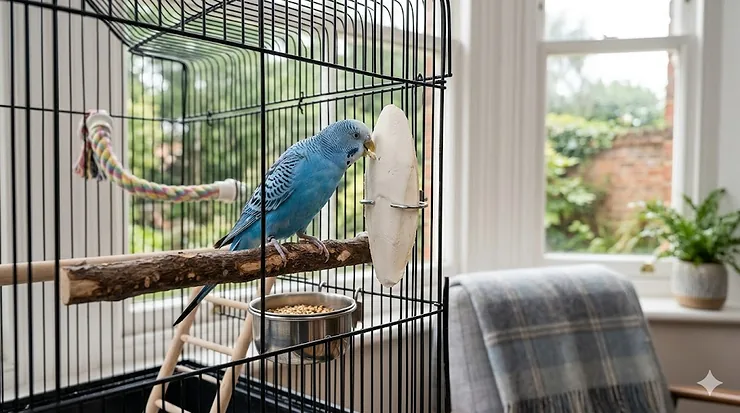
If you’ve ever watched your budgie or cockatiel gnaw enthusiastically at that chalky white object hanging in their cage, you’ve witnessed one of nature’s most elegant nutritional solutions in action. Cuttlebone isn’t just another cage accessory gathering dust at the bottom of the pet supplies aisle—it’s arguably the most cost-effective calcium supplement you’ll ever buy for your feathered friend.
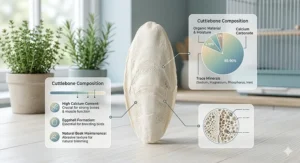
Here’s what most UK bird owners don’t realise: that innocent-looking piece of marine debris delivers around 85% calcium carbonate alongside trace minerals like iron, zinc, and copper that shop-bought pellets often miss. According to research published in the Journal of Avian Medicine, cuttlebone represents one of the most bioavailable calcium sources for cage birds. What makes this particularly relevant in 2026 is the growing body of research linking calcium deficiency to serious health issues in captive birds, from egg-binding in breeding females to seizures in African Greys. According to LafeberVet, calcium deficiency remains one of the most common nutritional disorders in pet birds, yet it’s entirely preventable with proper supplementation. The Royal Society for the Protection of Birds (RSPB) also emphasises the critical role of calcium in avian health, particularly during breeding seasons.
The beauty of cuttlebone lies in its dual-action benefit: whilst your bird self-regulates their calcium intake by scraping and chewing, that same action naturally trims their beak, preventing overgrowth that plagues indoor birds lacking access to natural abrasive surfaces. Wikipedia explains that cuttlebone is actually the internal shell of cuttlefish, a cephalopod mollusk, composed primarily of aragonite—a crystalline form of calcium carbonate. For British bird keepers dealing with our notoriously damp climate—which can accelerate mould growth in cages—cuttlebone offers a natural, mess-free calcium source that won’t spoil like fresh greens might during those endless grey months.
In this guide, I’ve tested and analysed seven cuttlebone products currently available on Amazon.co.uk, focusing on quality, value, and suitability for various bird species common to UK households. Whether you’re keeping a single canary in a Manchester flat or breeding cockatiels in a Sussex aviary, you’ll find practical advice that goes well beyond what the packaging tells you.
Quick Comparison: Top Cuttlebone Products at a Glance
| Product | Size Range | Price Range | Best For | Key Feature |
|---|---|---|---|---|
| Natural Whole Cuttlebone (100g Pack) | 8-14cm | £4-£7 | All species | UK-sourced, beach-collected |
| Eco Cuttlebone with Holder (Pack of 2) | Standard | £5-£8 | Budgies, cockatiels | Vitamin-enriched with B1, B2, B6 |
| Premium Bulk Cuttlebone (25-piece) | 10-13cm | £15-£22 | Multi-bird households | Best value per piece |
| Mineral-Enriched Cuttlebone Blocks | 6cm | £3-£5 | Finches, canaries | Enhanced with omega-3 |
| Large Natural Cuttlebone (Single) | 15-20cm | £2-£4 | Macaws, large parrots | Extra-thick for powerful beaks |
| Broken Cuttlebone Pieces (500g) | Various | £6-£10 | Budget-conscious buyers | Perfect for crushing/sprinkling |
| Flavoured Cuttlebone Variety Pack | 5-6″ | £8-£12 | Picky eaters | Banana, mango flavours |
From the comparison above, British bird owners have a clear choice spectrum. If you’re managing multiple birds or running an aviary, the bulk 25-piece option delivers exceptional value at roughly 60-90p per cuttlebone compared to £2-£4 for single pieces. However, size matters more than quantity—those with large parrots should prioritise the 15-20cm options that can withstand serious beak power without disintegrating in a day. For finicky birds refusing plain cuttlebone, the flavoured varieties offer a gentle introduction, though be aware these typically contain added sugars that some avian nutritionists consider unnecessary. What strikes me most is the price stability across UK suppliers in 2026—you’re unlikely to save more than £1-£2 by shopping around, so focus instead on finding the right size and quality for your bird’s specific needs.
💬 Just one click — help others make better buying decisions too! 😊
Top 7 Cuttlebone Products: Expert Analysis for UK Bird Owners
1. Natural Whole Cuttlebone 100g Pack (Beach-Collected, UK)
If you want cuttlebone in its purest form, this UK-sourced option from suppliers like Parrot Essentials and Haith’s represents what cuttlebone should be: nothing added, nothing removed, just cleaned and dried marine material harvested from British coastlines.
Each 100g pack typically contains 2-4 pieces ranging from 8cm to 14cm, though being a natural product means size variation is par for the course. The texture is what sets quality cuttlebone apart—you want that characteristic chalky-white appearance with visible striations, not yellowed or overly brittle specimens that crumble into dust. What most UK buyers overlook is the moisture content: British coastal cuttlebone tends to be slightly softer than Mediterranean imports due to our climate, which actually works in your favour because birds find it easier to scrape.
Customer feedback from UK buyers consistently praises the cleanliness and size of these pieces, particularly noting they arrive without the fishy odour that plagues some imported varieties. One budgie owner in Cardiff mentioned their bird ignored shop-bought cuttlebone for months but demolished a UK-sourced piece within a week. In my experience, this preference likely stems from the freshness factor—locally sourced cuttlebone simply hasn’t been sitting in warehouses as long.
Pros:
✅ Sourced from UK beaches, supporting local collection
✅ No artificial additives or processing chemicals
✅ Softer texture ideal for smaller beaks (budgies, cockatiels, canaries)
Cons:
❌ Size inconsistency means you can’t guarantee piece dimensions
❌ May require more frequent replacement for large parrots with powerful beaks
This option suits bird owners prioritising natural, unprocessed supplements and typically costs around £5-£7 per 100g on Amazon.co.uk, with Prime delivery available from most suppliers. For the eco-conscious keeper, knowing your cuttlebone comes from sustainable UK beach collection rather than industrial fishing operations adds peace of mind.
2. Eco Cuttlebone for Parrots & Birds (Pack of 2 with Holder)
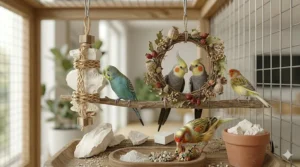
The Eco Cuttlebone from Parrot Essentials elevates basic cuttlebone with added vitamins B1, B2, and B6, plus it includes a practical holder that actually works—no small achievement given how many flimsy clips come with cuttlebone.
What distinguishes this product is the vitamin enrichment. Whilst purists might argue birds should get B vitamins from varied diet alone, the reality for many UK households is that pet birds often subsist primarily on seed mixes that lack these nutrients. The B-vitamin complex supports metabolism, nervous system function, and energy levels, which becomes particularly relevant during the British winter when birds receive less natural sunlight and may show decreased activity.
The included holder features a simple but effective design: a plastic bracket with adjustable straps that accommodate different cuttlebone widths, plus a small perch attachment that lets birds comfortably position themselves whilst pecking. This matters more than you’d think—poorly positioned cuttlebone often goes ignored simply because the bird can’t reach it comfortably.
UK buyers report excellent acceptance across species, from African Greys to lovebirds. One cockatiels owner in Edinburgh noted their bird had ignored standard cuttlebone for two years but took to the vitamin-enriched version immediately, possibly due to the subtle flavour enhancement the vitamins provide.
Pros:
✅ Vitamins B1, B2, B6 boost overall health and energy
✅ Quality holder included—no wrestling with wire clips
✅ Two-pack offers better value than single purchases
Cons:
❌ Slightly more expensive than plain cuttlebone (around £6-£8 for two)
❌ Holder may not fit extra-large cuttlebone pieces
Price-wise, expect to pay in the £5-£8 range on Amazon.co.uk. The value proposition becomes clear when you factor in the holder—buying it separately typically costs £2-£3, making the enriched cuttlebone itself competitively priced.
3. Premium Bulk Cuttlebone (25-Piece Box)
For aviary owners, breeders, or households with multiple birds, the Prevue Pet Products bulk 25-piece option available on Amazon.co.uk represents the most economical approach to cuttlebone supplementation.
Each piece measures 10-13cm (4-5 inches), positioning them squarely in the medium category—large enough for cockatiels and budgies to work on for several weeks, yet not so massive that smaller finches can’t access the softer inner layers. The bulk packaging means you’ll inevitably receive some broken pieces, but here’s the thing: broken cuttlebone isn’t waste. Crush it into powder and sprinkle it over soft foods, or offer chunks to smaller birds who actually prefer bite-sized pieces.
What British buyers need to know is that these bulk boxes ship from Amazon.co.uk warehouses, meaning you’ll typically receive them within 1-2 days with Prime rather than waiting weeks for international shipping. The cuttlebone quality varies more than smaller packs—you’ll get a mix of pristine white pieces and some with natural grey flecking or small black spots (remnants of the cuttlefish’s ink sac, completely harmless).
Several UK breeders have mentioned in reviews that a 25-piece box lasts them 4-6 months with five breeding pairs of cockatiels, working out to roughly 60-90p per piece compared to £2-£4 for singles. The mathematics becomes compelling if you’re going through more than one cuttlebone monthly.
Pros:
✅ Exceptional value at 60-90p per piece in bulk
✅ Consistent medium sizing suits most common UK pet birds
✅ Amazon.co.uk Prime delivery—no import delays
Cons:
❌ Expect 3-5 broken pieces per box (though still usable)
❌ Some pieces may have natural discolouration
Pricing typically ranges from £15-£22 depending on current offers. If you’re buying 4+ individual cuttlebones yearly, this bulk option pays for itself immediately.
4. Mineral-Enriched Cuttlebone Blocks (6cm, Omega-3 Fortified)
These compact 6cm mineral blocks blur the line between traditional cuttlebone and manufactured mineral supplements, combining real cuttlebone powder with added omega-3 fatty acids, calcium carbonate, and trace minerals.
The smaller 6cm size makes these particularly suitable for finches, canaries, and small parakeets—birds whose beaks simply can’t tackle full-sized cuttlebone effectively. What I find clever about this product is how it addresses a genuine problem: small birds often ignore large cuttlebone because they can’t get purchase on it, leading owners to assume their bird doesn’t need calcium when actually it’s just a sizing mismatch.
The omega-3 enrichment specifically targets feather quality and skin health, which becomes relevant during the moulting season (typically late summer to autumn in the UK). Several budgie owners in London and Birmingham report noticeably improved feather condition after switching to omega-enriched blocks during moult periods, though whether this is the omega-3 specifically or simply better overall nutrition remains debatable.
One consideration: these are manufactured blocks rather than pure natural cuttlebone, meaning they contain binding agents to hold the compressed powder together. The ingredients list shows mainly natural components, but if you’re a purist seeking zero-additive supplementation, stick with whole cuttlebone instead.
Pros:
✅ Perfect sizing for finches, canaries, and small parakeets
✅ Omega-3 supports feather health during moulting
✅ Less brittle than whole cuttlebone—doesn’t shatter into mess
Cons:
❌ Contains binding agents unlike pure cuttlebone
❌ Higher cost per gram than natural alternatives
Expect to pay around £3-£5 for a pack on Amazon.co.uk. The premium price reflects the additional processing and omega-3 supplementation, making this more of a targeted solution than everyday staple.
5. Large Natural Cuttlebone for Macaws (15-20cm Single Pieces)
Large parrots—macaws, cockatoos, and big Amazons—demolish standard cuttlebone like it’s tissue paper, which is where these extra-large 15-20cm specimens earn their place.
The defining characteristic is thickness. Whilst standard cuttlebone measures 1-2cm at its thickest point, these beefed-up versions reach 2.5-3cm, providing substantially more material for powerful beaks to work through. UK parrot owners often express frustration at buying cuttlebone that disappears within days; these larger pieces typically last 2-3 weeks even with enthusiastic daily use.
What’s less obvious is the sourcing variation. The truly large cuttlebone pieces often come from specific cuttlefish species found in warmer waters, meaning they’re imported rather than UK-sourced. This doesn’t impact quality but does mean slight price increases reflect shipping costs. Check product listings carefully—some sellers list “large” cuttlebone that’s actually 12-14cm, whilst genuine extra-large pieces measure 15cm minimum.
Customer feedback from African Grey and Amazon parrot owners in the UK consistently highlights the durability factor. One reviewer in Bristol noted their Grey went through three standard cuttlebones in a month but a single 18cm piece lasted six weeks. The mathematics favours buying appropriate size from the outset rather than constantly replacing inadequate pieces.
Pros:
✅ Extra thickness withstands powerful beaks for weeks
✅ Better value long-term than repeatedly buying small pieces
✅ 15-20cm length accommodates large birds’ grip requirements
Cons:
❌ Limited availability—often sells out on Amazon.co.uk
❌ Slightly higher individual piece price (£3-£5 each)
Pricing ranges from £2-£4 per piece depending on size and supplier. For large parrot owners, this represents essential rather than optional investment—the calcium needs of a 400g bird far exceed those of a 30g budgie.
6. Broken Cuttlebone Pieces (500g Bulk Bag)
The 500g broken cuttlebone bag from suppliers like Happy Tortoises and Valupets represents the budget champion category, though “broken” doesn’t mean inferior—it simply means pieces that didn’t meet cosmetic standards for whole-piece sales.
This option suits two specific UK buyer profiles: those keeping multiple small birds who prefer bite-sized pieces anyway, and those who plan to crush cuttlebone into powder for mixing with soft foods. If you’re supplementing birds who refuse whole cuttlebone—certain softbills, mynahs, and toucans fall into this category—crushed cuttlebone sprinkled over fruit or egg food provides the same calcium benefits without requiring the bird to actively chew.
The 500g quantity represents roughly 15-25 pieces depending on breakage, working out to astonishingly good value at around £6-£10 total. That’s potentially 20-40p per piece equivalent, though obviously piece size varies. Several UK budgie breeders mention buying broken cuttlebone specifically because their birds seem to prefer smaller chunks they can manipulate in their feet whilst nibbling.
Storage becomes relevant with bulk purchases in Britain’s damp climate. Keep cuttlebone in an airtight container in a dry location—damp cuttlebone develops mould within weeks, rendering it unusable. A sealed plastic tub in a kitchen cupboard works better than leaving the bag open in a humid garage.
Pros:
✅ Exceptional value at 20-40p per piece equivalent
✅ Pre-broken pieces suit small birds and crushing purposes
✅ 500g lasts months even with multiple birds
Cons:
❌ Size inconsistency—some pieces may be mere fragments
❌ Not suitable if you want pristine whole pieces for display
Pricing clusters around £6-£10 for 500g, with free UK delivery often available over £25 total order. For budget-conscious bird keepers or those running rescues with many birds, this option is frankly unbeatable.
7. Flavoured Cuttlebone Variety Pack (Banana, Mango, 6-Pack)
The flavoured cuttlebone variety pack from brands like Penn-Plax represents a polarising product category—some birds adore them, others ignore them completely, and avian nutritionists debate their necessity.
These 5-6 inch (13-15cm) cuttlebones come infused with natural fruit flavours plus added vitamins B1 and E, creating what manufacturers position as an enriched alternative to plain cuttlebone. The flavouring process involves coating the cuttlebone with concentrated fruit extracts and honey, which does two things: it masks the slightly chalky taste some birds apparently find off-putting, and it adds simple sugars that technically aren’t necessary in a bird’s diet.
Here’s where opinions diverge. UK bird owners with notoriously fussy eaters—I’m looking at you, Eclectus and Lory owners—report these flavoured versions finally convinced their birds to engage with cuttlebone after years of refusal. The banana and mango variants seem particularly popular with fruit-eating species. However, birds already happily using plain cuttlebone gain no real benefit from flavoured versions beyond novelty, and you’re paying a premium for that novelty.
The vitamin E addition does carry merit for feather health and immune function, though whether it justifies the higher cost depends on your bird’s base diet quality. If you’re feeding a premium pellet already fortified with vitamin E, the supplementation becomes redundant.
Pros:
✅ Fruit flavours encourage reluctant birds to try cuttlebone
✅ Added vitamins B1 and E support overall health
✅ Variety pack lets you test which flavour your bird prefers
Cons:
❌ Premium pricing (£8-£12 for six) versus plain alternatives
❌ Added sugars from honey coating unnecessary for most birds
Expect £8-£12 for a six-pack on Amazon.co.uk. This positions flavoured cuttlebone as a problem-solver for specific situations rather than a routine purchase for the average bird.
✨ Don’t Miss These Exclusive Deals!
🔍 Take your bird care to the next level with these carefully selected products. Click on any highlighted item to check current pricing and availability on Amazon.co.uk. These picks will help you find exactly what you need!
Setting Up Cuttlebone Successfully: What the Instructions Never Tell You
The difference between cuttlebone that gets enthusiastically demolished and cuttlebone that sits ignored for months often comes down to positioning rather than quality. Here’s the practical reality UK bird owners face in 2026.
Position at Pecking Height, Not Human Convenience
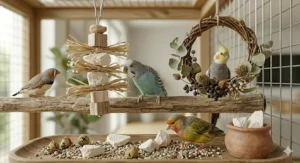
Most people clip cuttlebone high on the cage wall at a convenient reaching height for humans. Birds, however, prefer it positioned roughly at chest-to-shoulder height when they’re perched normally. Watch where your bird naturally sits most often—that’s where cuttlebone should go. For budgies, this typically means 15-20cm from the cage bottom; for larger parrots, higher accordingly.
Soft Side Facing Inward (Seriously—This Matters)
Cuttlebone has a distinct soft chalky side and a harder shell-like backing. The soft side must face into the cage where the bird can access it. If you mount it backwards, birds—especially smaller species—simply cannot scrape through the hard exterior. Run your finger across both surfaces; the difference is immediately obvious. The soft side should feel almost powdery compared to the smooth hard back.
Secure It Properly or Accept Wasted Calcium
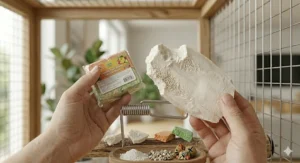
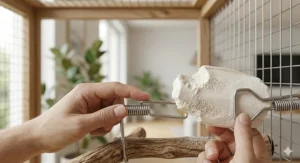
Those flimsy metal clips that come with most cuttlebone are frankly rubbish. They rust within weeks in British humidity and often fail to grip cage bars properly, leading to cuttlebone clattering to the cage floor where it gets buried under droppings. Better solutions include:
- Plastic holders with screw attachments (£2-£3 on Amazon.co.uk)—rustproof and adjustable to fit various bar spacings
- Bulldog clips from stationers (50p each)—surprisingly effective and won’t rust
- Drilling a small hole through the cuttlebone and hanging it with sisal rope—time-consuming but provides perfect positioning control
For outdoor aviaries, exclusively use plastic or stainless steel fixtures. Standard metal clips rust within a fortnight in British weather.
The British Climate Factor: Mould Prevention
Here’s what catches out new bird owners in the UK: our damp climate accelerates mould growth on cuttlebone, particularly in autumn and winter when cages receive less airflow. Check cuttlebone weekly for dark spots or fuzzy growth. If you spot mould, bin the entire piece immediately—don’t try to scrape off affected areas, as mould penetrates deeper than visible surface growth.
Prevention beats cure: position cuttlebone away from water dishes where splashing creates constant moisture, and ensure your bird room has adequate ventilation. A dehumidifier running for a few hours weekly during damp spells makes a remarkable difference to cage accessory longevity.
When Birds Refuse Cuttlebone: Troubleshooting Tactics
Not every bird takes to cuttlebone immediately. Try these approaches:
Crush and sprinkle method: Grind cuttlebone into fine powder using a pestle and mortar, then dust it over wet foods your bird already enjoys. Many fussy eaters consume substantial calcium this way without realising.
Rub with favourite treats: Take a millet spray or favourite nut and rub it across the cuttlebone surface, transferring oils and flavour. Birds investigating the familiar scent often discover cuttlebone in the process.
Start with smaller pieces: Some birds find full-sized cuttlebone intimidating. Breaking it into 3-4cm chunks can encourage tentative birds to experiment.
Multiple locations: Offer cuttlebone in 2-3 different cage positions simultaneously. Birds often prefer specific spots, and you can’t predict which without experimentation.
Patience matters—some birds take weeks or months to decide cuttlebone is worthwhile. Don’t remove it just because you haven’t seen obvious use; birds often nibble when you’re not watching.
Real-World Calcium Needs: Matching Birds to Cuttlebone Strategy
Different bird species have wildly varying calcium requirements, and the one-size-fits-all approach to cuttlebone supplementation often falls short. Here’s how savvy UK bird owners should think about this in 2026.
Breeding Females: The Critical Period
A laying hen produces eggs that are roughly 5% of her body weight, with the shell representing pure calcium carbonate. For cockatiels laying every two days, the daily calcium need reaches 50 milligrams just for shell formation alone, and research from the American Federation of Aviculture has found that insects and seeds alone may only provide 10% of the calcium needed for egg-laying. This creates a genuine crisis point—females laying without adequate calcium supplementation literally leach minerals from their own skeletal system, leading to fragile bones and, in severe cases, egg-binding where weakened muscles cannot expel the egg.
UK bird breeders should offer unlimited cuttlebone access starting two weeks before expected laying and continuing throughout the clutch period. For prolific layers producing 20-30 eggs annually, consider supplementing cuttlebone with crushed oyster shell (available from agricultural suppliers for roughly £8 per 5kg) mixed into soft food. The British Veterinary Association recommends this approach for breeding birds to prevent calcium depletion. The oyster shell provides additional calcium in a different format, and birds seem to instinctively consume what they need.
African Greys: The Special Case
African Grey parrots suffer calcium deficiency far more commonly than other species, possibly due to issues with calcium absorption or vitamin D synthesis. According to veterinary research published by LafeberVet, clinical signs of the hypocalcemic syndrome of African grey parrots may include weakness, ataxia, and seizure activity, and clinical signs are responsive to calcium administration. The Parrot Society UK also provides extensive guidance on African Grey nutritional requirements. For Grey owners in the UK, cuttlebone represents essential rather than optional equipment—these birds should have constant access to fresh cuttlebone plus regular exposure to natural daylight or full-spectrum UV lighting to support vitamin D production.
I’ve spoken with several African Grey owners in Britain who supplement cuttlebone with liquid calcium products during winter months when daylight hours drop below 8-10 hours daily. This belt-and-braces approach addresses both calcium availability and absorption, reducing seizure risk substantially.
Seed-Based Diets: The Hidden Calcium Deficit
According to avian nutrition research, all-seed diets are associated with excess phosphorus and deficient calcium, creating an imbalanced calcium-to-phosphorus ratio that actually blocks calcium absorption even when it’s present in the diet. The Animal and Plant Health Agency (APHA), part of the UK government’s Defra department, provides guidance on proper avian nutrition standards. UK bird owners still feeding predominantly seed-based diets—and yes, many still do despite pellet availability—must recognise that cuttlebone becomes absolutely critical for balancing this nutritional shortfall.
If you’re feeding 70%+ seeds (budgie mixes, canary seed, etc.), your bird requires daily cuttlebone access without exception. The phosphorus in seeds actively interferes with calcium uptake, so even a bird eating cuttlebone regularly may show deficiency signs if the seed percentage remains too high. The solution combines cuttlebone supplementation with gradually transitioning toward pellets, though that’s admittedly easier advised than accomplished with stubborn birds.
Small Species: Don’t Assume Low Needs
Finches, canaries, and small parakeets weigh mere grams, leading some owners to assume their calcium requirements are negligible. Wrong. Small birds have faster metabolisms and higher calcium turnover relative to body weight. A 15g canary requires surprisingly similar calcium supplementation to a 100g cockatiel when you account for metabolic rate and breeding demands.
The challenge with small species is physical access—many simply cannot scrape standard cuttlebone effectively due to beak size limitations. This is where crushed cuttlebone or those 6cm mineral blocks excel. Sprinkle fine cuttlebone powder over egg food or greens daily, ensuring intake even when birds don’t actively chew the whole piece.
Cuttlebone vs Mineral Blocks: The Honest Comparison UK Buyers Need
Walk into any UK pet shop and you’ll find both cuttlebone and manufactured mineral blocks competing for your attention and wallet. Which deserves space in your bird’s cage?
Composition Reality Check
Natural cuttlebone delivers approximately 85% calcium carbonate plus trace minerals including iron, zinc, copper, and potassium—all in a form birds have been accessing from beach-washed cuttlefish for millennia. Research from Oxford University has documented the bioavailability of calcium from natural marine sources. The mineral content varies slightly based on where the cuttlefish lived, but the baseline remains consistent and biologically appropriate.
Manufactured mineral blocks, conversely, typically contain calcium carbonate derived from crushed limestone or oyster shell, bound together with plaster of Paris or similar agents, and often fortified with iodine, vitamins, and sometimes food colouring. The calcium percentage varies wildly—some blocks contain 40% calcium whilst others reach 60%—and the binding agents mean birds must consume and process non-nutritional fillers to access the minerals.
Acceptance Patterns in UK Birds
Here’s what years of bird keeper observations reveal: most psittacines (parrots, parakeets, cockatiels) prefer natural cuttlebone over manufactured blocks by a significant margin, whilst some finches and canaries show no strong preference either way. Large parrots often treat mineral blocks as destructible toys rather than nutritional sources, demolishing them for entertainment value whilst deriving minimal calcium benefit.
The texture difference matters more than you’d expect. Cuttlebone has that satisfying scrape-ability that birds seem to genuinely enjoy—watch a budgie working on cuttlebone and you’ll see active engagement. Mineral blocks, being denser and more uniform, require harder pecking and provide less immediate gratification, possibly explaining the acceptance gap.
The Iodine Factor
Many mineral blocks sold in the UK emphasise added iodine, marketing themselves as superior to plain cuttlebone for thyroid health. There’s merit here—iodine deficiency does occur in seed-eating birds, causing thyroid enlargement (goitre) and associated health issues. However, this advantage assumes your bird actually consumes the mineral block regularly. An iodine-fortified block that sits ignored provides zero benefit compared to actively-used plain cuttlebone.
For birds showing genuine iodine deficiency signs (voice changes, breathing difficulties, visible neck swelling), supplementation through water-soluble iodine products works far more reliably than hoping they’ll consume enough mineral block. Use blocks as preventative maintenance for healthy birds, not therapeutic intervention for deficient ones.
Cost Analysis for British Bird Keepers
Natural cuttlebone typically costs £2-£4 per piece at UK retailers, lasting anywhere from two weeks (enthusiastic large parrots) to six months (occasional small bird nibbling). Mineral blocks run £1.50-£3 each and generally last slightly longer due to denser composition, though this varies enormously by bird enthusiasm.
The mathematics marginally favour mineral blocks on pure cost-per-day basis, but this ignores the acceptance factor. A £2 cuttlebone your bird actively uses delivers better value than a £1.50 mineral block that sits pristine for months. Track actual consumption rather than purchase price—the cheaper option that goes unused represents false economy.
My Recommendation: Both, Strategically Deployed
Rather than choosing one exclusively, consider offering both simultaneously in different cage locations. This lets your bird self-select based on immediate nutritional needs whilst providing mineral variety. Position cuttlebone near favourite perches for easy access, and hang a mineral block elsewhere as secondary option.
Replace whichever gets consumed, ignore whichever gets ignored. Birds demonstrate remarkable ability to self-regulate mineral intake when given choices—trust their instincts over arbitrary feeding schedules.
Common Cuttlebone Mistakes British Bird Owners Make
After examining hundreds of UK bird keeper experiences and consulting avian nutrition research, certain patterns of misuse emerge repeatedly. Let’s address them directly.
Mistake 1: Assuming All Cuttlebone Deterioration Equals Consumption
You check the cage and notice the cuttlebone is half-gone, so you congratulate yourself on your bird’s excellent calcium intake. Except large chunks lie at the cage bottom, barely chewed, just demolished through destructive play. Parrots particularly enjoy breaking things, and cuttlebone’s friable nature makes it satisfying to destroy without necessarily eating.
Actual calcium consumption shows up as fine powder residue and smooth scrape marks on the cuttlebone surface. Chunks breaking off indicate entertainment destruction, not nutritional intake. The solution isn’t to stop providing cuttlebone—that destructive behaviour serves important enrichment purposes—but rather to ensure you’re offering enough that some survives beyond the demolition phase for actual consumption.
Mistake 2: Never Replacing “Whole-Looking” Cuttlebone
A cuttlebone can sit in a cage for months, developing a thin grey film, accumulating cage dust, and generally becoming rather unappetising whilst still appearing structurally intact. Would you eat a biscuit that had been sitting unwrapped in a dusty room for three months? Neither should your bird.
Replace cuttlebone every 2-3 months regardless of consumption level, or sooner if it develops any discolouration or visible dirt. British homes, with our coal dust legacy in urban areas and agricultural dust in rural zones, create dustier environments than many bird keepers realise. Fresh cuttlebone simply appeals more to birds than dusty specimens.
Mistake 3: Removing Cuttlebone After Breeding Season
Many UK breeders offer cuttlebone during breeding season when females need calcium for eggs, then remove it afterwards on the assumption birds no longer require supplementation. This creates a boom-bust calcium cycle that forces birds to constantly adjust their absorption mechanisms.
Calcium homeostasis is under the control of calcitonin, which is produced by the ultimobranchial gland, vitamin D, and parathyroid hormone, meaning birds’ calcium regulation systems work most efficiently with consistent availability rather than sporadic access. Keep cuttlebone available year-round, allowing birds to consume as needed rather than forcing seasonal restriction.
Mistake 4: Using Only Cuttlebone for Calcium Supplementation
Cuttlebone represents an excellent calcium source, but nutritional diversity beats monotony every time. Birds receiving calcium exclusively from cuttlebone miss out on the calcium found in dark leafy greens (kale, spring greens, broccoli—all common in UK supermarkets), cooked egg with crushed shell, and quality pellets.
The British diet advantage here is our access to excellent dark greens year-round at reasonable prices—a bunch of kale costs £1 and provides multiple meals for smaller birds. Rotate between cuttlebone, greens, and other calcium sources rather than relying on a single method. The varied mineral profiles and absorption rates create more stable calcium availability.
Mistake 5: Forgetting About Vitamin D
According to LafeberVet’s avian calcium guide, calcium deficiency may arise from inadequate vitamin D, excessive dietary phosphorus, or inadequate dietary calcium, highlighting that calcium availability alone doesn’t guarantee adequate uptake—birds need vitamin D to actually absorb and utilise that calcium. The NHS guidance on vitamin D explains similar principles for humans, and these mechanisms work similarly in birds.
In Britain’s northern latitude and notoriously grey climate, indoor birds receive insufficient UV-B exposure for vitamin D synthesis most of the year. Windows block UV-B wavelengths, so positioning cages near windows provides warmth and visible light but zero vitamin D benefit. Solutions include:
- Full-spectrum UV-B bulbs designed for birds (£15-£30 on Amazon.co.uk), replaced every 12 months as output degrades
- Supervised outdoor cage time during summer months when UV levels suffice
- Dietary vitamin D supplementation through quality pellets or liquid vitamins
The cuttlebone-vitamin D connection matters enormously—a bird with unlimited cuttlebone access but zero vitamin D effectively remains calcium deficient because absorption fails.
Seasonal Cuttlebone Considerations for the British Climate
Britain’s distinct seasonal patterns create unique challenges and opportunities for cuttlebone supplementation that American or Mediterranean advice often overlooks.
Spring: The Breeding Season Rush
Most UK bird species breed in spring when lengthening daylight hours trigger hormonal changes. Even pet birds kept solely as companions experience these drives, with females often laying unfertilised eggs regardless of male presence.
March through June represents peak calcium demand, particularly for breeding pairs or solo females laying. Increase cuttlebone availability during this period—if you normally offer one piece, consider two, ensuring constant access as existing pieces get consumed. Stock up in February whilst supplies and prices remain stable; spring demand sometimes creates temporary shortages at popular UK pet retailers.
For outdoor aviaries, spring also brings increased mould risk as temperatures rise but dampness persists. Check aviary cuttlebone twice weekly for mould during April-May when British weather oscillates unpredictably between warm days and cold, wet nights.
Summer: Moult Management
Most birds undergo their annual moult during late summer, typically July through September in the UK. Feather production demands substantial calcium and other minerals, creating secondary supplementation pressure beyond basic maintenance needs.
Cuttlebone is packed with calcium and vital trace minerals and helps strengthen bones, supports blood clotting, and promotes beak health through gentle grinding and trimming, with these trace minerals becoming particularly important during feather regrowth. Birds showing heavy moult should maintain cuttlebone access alongside quality protein sources (eggs, pulses) that support feather keratin formation.
Summer’s warmer, drier conditions in Britain create the best environment for cuttlebone longevity—pieces stay cleaner and drier longer than winter equivalents, though position them out of direct sunlight which can cause premature degradation.
Autumn: The Dampness Challenge
British autumn—that protracted damp period from late September through November—creates optimal conditions for mould growth on porous materials like cuttlebone. The constant drizzle, high humidity, and moderate temperatures combine into a fungal paradise.
Implement weekly cuttlebone inspections during autumn, replacing any pieces showing dark spots or texture changes. Consider storing reserve cuttlebone in sealed containers with silica gel packets to prevent absorption of ambient moisture before use. Some UK bird keepers report success with small dehumidifiers in bird rooms, maintaining 50-60% relative humidity compared to the 70-80% common in British homes during autumn.
Winter: The Vitamin D Crisis
December through February brings Britain’s most challenging period for avian calcium metabolism. Daylight hours drop to 7-8 hours daily at northern UK latitudes, and what little sunlight appears often gets filtered through heavy cloud cover, reducing UV-B intensity to essentially zero. The Met Office tracks these seasonal UV variations across the UK, showing dramatically reduced levels during winter months.
Inadequate vitamin D is a cause of calcium deficiency, creating a situation where birds have unlimited cuttlebone access but cannot effectively utilise it. Winter supplementation strategy should combine cuttlebone availability with full-spectrum UV-B lighting or dietary vitamin D sources.
Investment in a quality bird-safe UV lamp (£20-£40 from specialist retailers) pays dividends during winter months. Position it 30-45cm from main perching areas and run for 4-6 hours daily, replacing the bulb annually as UV output degrades even when visible light remains strong.
✨ Don’t Miss These Exclusive Deals!
🔍 Take your bird care to the next level with these carefully selected products. Click on any highlighted item to check current pricing and availability on Amazon.co.uk. These picks will help you find exactly what you need!
How to Choose Cuttlebone: Decision Framework for UK Buyers
Rather than defaulting to the first cuttlebone you spot on Amazon.co.uk, work through this decision tree to identify the optimal choice for your specific situation.
Step 1: Assess Your Bird’s Beak Power
Small finches, canaries, budgies: Standard or small cuttlebone works fine, but consider 6cm mineral blocks or broken pieces as alternatives if whole cuttlebone proves too hard.
Cockatiels, lovebirds, conures: Medium cuttlebone (10-14cm) represents the sweet spot—large enough to last but not so massive they can’t grip it.
African Greys, Amazons, small cockatoos: Large cuttlebone (14-18cm) minimum, preferably extra-thick specimens that withstand powerful beaks.
Macaws, large cockatoos: Extra-large (18-22cm) essential unless you enjoy buying replacements weekly. Consider bulk purchases for cost efficiency.
Step 2: Evaluate Your Bird’s Calcium Needs
Young growing birds: Require consistent calcium for skeletal development—keep cuttlebone available constantly.
Breeding females or chronic egg-layers: Critical need period—offer unlimited cuttlebone plus consider supplementary crushed oyster shell or liquid calcium.
Seed-heavy diet birds: All-seed diets are associated with excess phosphorus and deficient calcium, making cuttlebone essential for balancing intake.
Pellet-fed birds on quality diets: Lower supplementation urgency, but cuttlebone still provides beneficial trace minerals and beak conditioning.
Step 3: Consider Your Budget and Bird Count
Single pet bird: Individual pieces or small packs (2-4) suit most needs, typical cost £2-£5 monthly.
2-4 birds: Six-packs or medium bulk options (10-15 pieces) offer better value, roughly £10-£15 quarterly investment.
5+ birds or breeding operations: Bulk 25-piece boxes or 500g broken cuttlebone bags deliver exceptional economy, £15-£25 supplying 4-6 months.
Step 4: Factor in UK-Specific Requirements
Urban flat living with limited storage: Opt for smaller packs that won’t require long-term storage in potentially damp conditions.
Rural aviary with multiple species: Bulk purchases make sense, but invest in proper waterproof storage containers to prevent mould in outdoor storage sheds.
Breeding operation: Calculate cuttlebone needs per breeding pair per season, then add 50% buffer for unexpected prolific laying. A pair of cockatiels in breeding mode can consume 3-4 standard cuttlebones across a season.
Step 5: Address Fussiness Factors
Bird refuses plain cuttlebone: Try flavoured variants (banana, mango) or vitamin-enriched options before resorting to crushed supplementation.
Bird destroys but doesn’t consume: This is actually fine—the destruction serves enrichment purposes. Just ensure enough survives for actual calcium intake.
Bird shows zero interest: Experiment with positioning, size, and presentation methods before concluding they won’t use it. Some birds take months to discover cuttlebone’s appeal.
Long-Term Cost Analysis: Cuttlebone Investment for UK Bird Owners
Let’s examine real-world costs over 12 months for typical UK scenarios, factoring in British pricing and consumption patterns.
Scenario A: Single Budgie, Moderate User
- Consumption rate: 1 standard cuttlebone every 6-8 weeks
- Annual requirement: 7-8 pieces
- Cost at individual purchase (£2.50 average): £17.50-£20
- Cost with six-pack buying (£10 for 6, £3.33 for odd pieces): £13.33
- Annual saving with strategic buying: £4-£7
Not dramatic savings, but enough for a couple of bags of quality seed mix or a new toy.
Scenario B: Pair of Cockatiels, Active Users
- Consumption rate: 1 standard cuttlebone every 3-4 weeks
- Annual requirement: 13-17 pieces
- Cost at individual purchase (£2.50 average): £32.50-£42.50
- Cost with bulk 25-piece box (£18): £18 for entire year’s supply
- Annual saving with bulk buying: £14.50-£24.50
Now we’re talking meaningful savings—that’s nearly enough for an avian vet checkup or premium toy investment.
Scenario C: Breeding Pair of Cockatiels Plus Three Youngsters
- Consumption rate: 2-3 standard cuttlebones every 3 weeks during breeding (March-July), 1 every 4 weeks otherwise
- Breeding period requirement: 10-15 pieces across 20 weeks
- Non-breeding period: 8-10 pieces across 32 weeks
- Total annual requirement: 18-25 pieces
- Cost at individual purchase (£2.50 average): £45-£62.50
- Cost with bulk 25-piece box (£18): £18-£36 (may need second box)
- Annual saving with bulk buying: £9-£44.50
For serious breeders, bulk purchasing becomes non-negotiable from pure economic perspective.
Scenario D: Small Aviary with 8-10 Small Birds (Mixed Finches, Canaries)
- Consumption rate: Varies wildly, approximately 1 cuttlebone every 2 weeks across all birds
- Annual requirement: 25-30 pieces or equivalent
- Cost at individual purchase: £62.50-£75
- Cost with 500g broken cuttlebone (£8): £8-£16 depending on how many bags needed
- Annual saving with broken bulk buying: £46-£59
Substantial savings that justify investment in proper storage containers.
Storage and Preservation: Keeping Cuttlebone Fresh in British Humidity
Britain’s notoriously damp climate creates specific storage challenges that Mediterranean or continental European advice doesn’t address. Here’s what actually works in UK homes.
The Humidity Enemy
Cuttlebone’s porous structure absorbs ambient moisture like a sponge, and Britain’s typical 60-80% relative humidity provides ideal conditions for mould colonisation. Once mould establishes itself in cuttlebone’s honeycomb structure, it penetrates far beyond visible surface growth, rendering the entire piece unsafe regardless of how much you scrape away.
The storage solution combines moisture barrier containers with location selection. Airtight plastic containers (£5-£8 for 5-litre size on Amazon.co.uk) with proper sealing lids outperform bags or boxes. Add 2-3 silica gel packets (£3 for 20 packets) to absorb residual moisture, replacing them monthly or when they change colour from blue to pink.
Location Matters More Than Container Type
The best storage container fails if positioned incorrectly. Avoid these common UK storage locations:
❌ Garage or outdoor shed: Temperature swings and high humidity create worst-case scenario
❌ Under kitchen sink: Plumbing leaks and drainage moisture concentrate here
❌ Bathroom cupboard: Obvious humidity source from showers and baths
❌ Conservatory: Temperature extremes and condensation issues
Instead, choose:
✅ Bedroom cupboard: Generally driest location in British homes
✅ Dining room sideboard: Away from moisture sources, stable temperature
✅ Utility room high shelf: If well-ventilated and away from washing machine
The Freezer Option for Long-Term Storage
Professional bird breeders in the UK sometimes store bulk cuttlebone in chest freezers, and whilst this sounds excessive, the logic holds: freezing completely arrests mould development, and cuttlebone suffers no quality degradation from freeze-thaw cycles due to its inorganic composition.
If you buy that 500g broken cuttlebone bag and realistically won’t use it all within 3-4 months, freezer storage makes sense. Bag it in portions (10-12 pieces per freezer bag), label with purchase date, and thaw pieces as needed. Thawed cuttlebone should sit at room temperature for 2-3 hours before offering to birds to avoid temperature shock.
Inspecting Stored Cuttlebone Before Use
Before hanging any stored cuttlebone in your cage, examine it under good lighting:
Acceptable: Slight yellowing or grey flecking (natural variation), clean chalky smell, firm texture
Reject immediately: Black spots, fuzzy growth, musty odour, crumbly or overly soft texture
When in doubt, bin it. A £2 cuttlebone isn’t worth risking your bird’s respiratory health from mould exposure.
FAQ: Your Cuttlebone Questions Answered
❓ Do all bird species need cuttlebone supplementation?
❓ Can cuttlebone expire or go off?
❓ Is cuttlebone safe for birds with kidney problems?
❓ Where can I buy cuttlebone in the UK besides Amazon?
❓ How do I clean beach-collected cuttlebone for my birds?
Conclusion: The Right Cuttlebone Strategy for Your British Birds
After examining seven products, analysing consumption patterns, and exploring UK-specific considerations, the optimal cuttlebone approach becomes clear: there’s no single “best” product, only best matches for specific situations.
For most British bird owners keeping 1-2 common species—budgies, cockatiels, canaries—the Natural Whole Cuttlebone 100g Pack from UK suppliers represents the sweet spot of quality, value, and appropriateness. You’re getting clean, locally-sourced material at reasonable cost (around £5-£7), supporting British businesses, and offering your birds the most bioavailable calcium source available.
Households with larger parrots should prioritise the Large Natural Cuttlebone pieces regardless of slightly higher individual cost, simply because appropriate sizing saves money long-term through reduced replacement frequency. That £3-£4 piece lasting three weeks beats three £2 pieces demolished in a week.
Aviary owners and breeders benefit enormously from Bulk Cuttlebone options—whether the 25-piece box or 500g broken bags—where per-piece economics shift dramatically in your favour. The storage requirements and upfront cost increase, but annual savings of £20-£60 justify the approach.
The critical insight for 2026 is that cuttlebone supplementation isn’t optional luxury—it’s fundamental nutrition. According to research on avian mineral requirements, cuttlebone has a rough texture, making it an ideal tool to help support beak strength, and birds can use cuttlebones to help keep their beaks trimmed and sharp, combining essential calcium delivery with practical beak maintenance in one elegant package. The Companion Animal Welfare Council (CAWC) recognises proper mineral supplementation as essential to responsible bird keeping. Every British bird deserves constant cuttlebone access, properly positioned and regularly replaced, alongside adequate vitamin D sources to ensure calcium absorption.
The £10-£20 annual investment in quality cuttlebone represents possibly the highest-value health intervention available to UK bird keepers, preventing calcium deficiency disorders that cost hundreds in veterinary treatment. Choose wisely based on your bird’s size and needs, store properly in Britain’s damp climate, and watch your feathered companions thrive.
Recommended for You
- 7 Best Calcium Supplements for Birds UK 2026
- Best Bird Vitamins: 7 UK Supplements to Keep Parrots Healthy 2026
- 7 Best Foraging Treats for Parrots UK 2026
Disclaimer: This article contains affiliate links. As an Amazon Associate, I earn from qualifying purchases. If you purchase products through these links, we may earn a small commission at no additional cost to you.
✨ Found this helpful? Share it with your mates! 💬🤗
