
In This Article
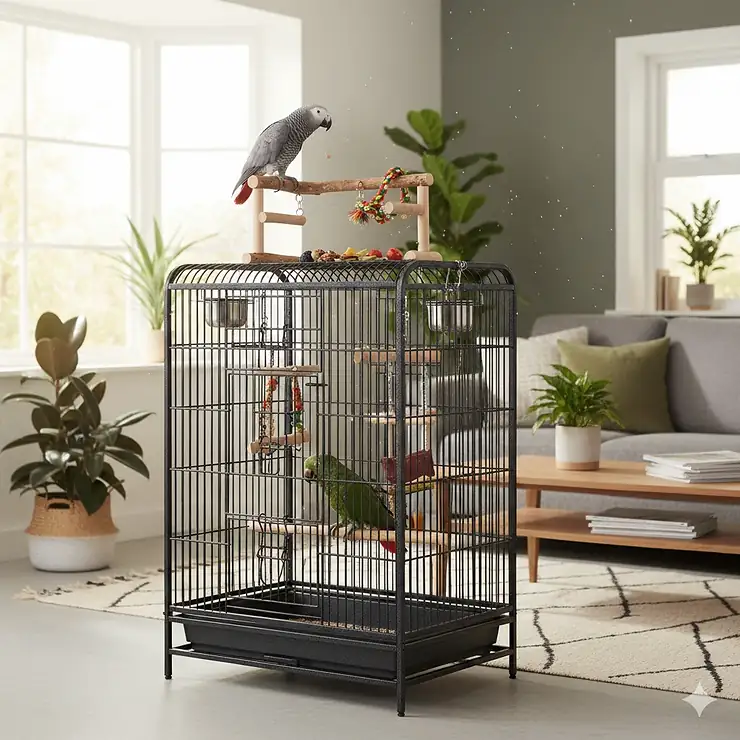
You’ve seen your parrot eyeing that spot atop their cage, haven’t you? That longing gaze upward isn’t just curiosity—it’s a primal need for elevation and security. A play top parrot cage large enough for medium to large birds transforms your feathered companion’s living space from a mere enclosure into a proper territory complete with an adventure playground.
After speaking with dozens of UK parrot owners and reviewing the latest research from The Parrot Society UK, I’ve discovered that investing in a quality play top parrot cage large model can dramatically reduce behavioural issues like excessive screaming and feather plucking. These cages aren’t simply fancy additions; they’re essential welfare provisions that allow your African Grey, Amazon, or Cockatoo to express natural climbing behaviours whilst maintaining that crucial vantage point they crave.
According to the RSPCA’s bird welfare guidelines, parrots require cages large enough to allow full wing-spreading and climbing, with play tops providing crucial additional exercise space. The right bird cage with play area on top gives your parrot freedom to socialise during supervised out-of-cage time whilst remaining safely contained. Whether you’re housing an inquisitive African Grey or a boisterous Amazon parrot, this guide will help you navigate the UK market to find the perfect play top cage with wheels and all the features your bird truly needs.
Quick Comparison Table
| Cage Model | Dimensions (cm) | Bar Spacing | Best For | Price Range |
|---|---|---|---|---|
| Yaheetech Large Budgie Cage | 156 x 64 x 54 | 1.5 cm | Small-medium parrots | £86.99 |
| Liberta Cambridge Play Top | 82 x 56 x 177 | 20 mm | African Greys, Amazons | £479.00 |
| Rainforest Santos Play Top | 92 x 71 x 168 | 25 mm | Large parrots, Cockatoos | £399.99-£699.99 |
| Montana Castell Dome Top | Custom design | 22-24 mm | Medium-large parrots | £475.00 |
| Vision Bird Cage M01 | 60 x 38 x 52 | 12 mm | Cockatiels, small parrots | £46.99 |
| Belize Play Top Cage | 91 x 66 x 175 | 22 mm | Amazons, Eclectus | £350.00-£425.00 |
| Montana San Remo II | Compact design | 18 mm | Budget-conscious owners | £199.00 |
Prices accurate as of January 2026. VAT included.
💬 Just one click – help others make better buying decisions too!😊
✨ Don’t Miss These Exclusive Deals!
🔍 Take your parrot’s well-being to the next level with these carefully selected products. Click on any highlighted item to check current pricing and availability on Amazon.co.uk. These cages will help you create an authentic enriched environment your feathered family member will love!
Top 7 Play Top Parrot Cages Large: Expert Analysis
1. Yaheetech Large Bird Cage with Play Top
If you’re seeking exceptional value without compromising on quality, the Yaheetech Large Bird Cage stands as a brilliant entry point into play top cages. This versatile cage has garnered praise from UK cockatiel and conure owners for its spacious design and practical features.
Key Specifications:
- Dimensions: 156cm (H) x 64cm (W) x 54cm (D)
- Bar spacing: 1.5cm (suitable for medium-small parrots)
- Includes rolling stand with lockable castors
UK customers consistently praise its sturdy construction despite the affordable price point. One reviewer from Manchester noted their Green Cheek Conure settled immediately, particularly enjoying the ladder access to the play top area. The powder-coated finish resists rust—crucial in Britain’s damp climate—whilst the slide-out tray makes daily cleaning surprisingly simple.
Pros:
✅ Excellent value at £86.99
✅ Easy assembly (typically 30-45 minutes)
✅ Smooth-rolling castors for effortless repositioning
Cons:
❌ Bar spacing too wide for budgies
❌ Bars can bend slightly under heavy chewing (not recommended for large macaws)
Available on Amazon.co.uk with Prime delivery options.
2. Liberta Cambridge Play Top Parrot Cage
The Liberta Cambridge Play Top Parrot Cage represents British engineering at its finest. Officially endorsed by the World Parrot Trust following extensive consultation, this cage has become the gold standard for African Grey and Amazon parrot owners across the UK.
Key Specifications:
- Internal dimensions: 80cm x 54cm x 137cm
- Bar spacing: 20mm (perfect for medium parrots)
- Bar thickness: 3mm
- Weight: 38.5kg
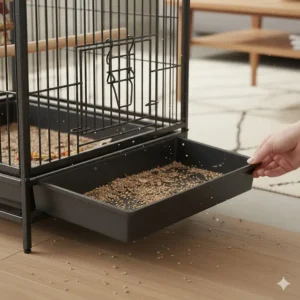
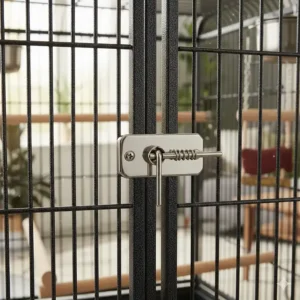
What sets this cage apart is Liberta’s 2nd Edition improvements: reinforced door locks that even clever African Greys struggle to manipulate, thicker frame construction, and superior powder coating that withstands years of beak wear. The play top section includes a full-width perch, two stainless steel bowls, and a removable tray that catches droppings—keeping your living room considerably tidier.
British customers particularly appreciate that it arrives with assembly tools and comes in Stone or Antique finishes to complement home décor. One Surrey-based owner reported their Congo African Grey uses the play top daily for supervised socialisation, transforming from a cage-aggressive bird into a confident companion.
Pros:
✅ World Parrot Trust endorsement
✅ Exceptional build quality
✅ Comprehensive 5-year manufacturer warranty
Cons:
❌ Higher price point at £479.00
❌ Substantial weight requires two people for assembly
Available from Parrotize UK and Northern Parrots with free mainland UK delivery.
3. Rainforest Santos Play Top Parrot Cage
For those seeking premium quality without breaking into Montana Cages’ luxury pricing, the Rainforest Santos Play Top delivers remarkable value. This substantial cage accommodates everything from large Amazons to small Macaws, making it ideal for UK households with multiple or larger parrots.
Key Specifications:
- External dimensions: 92cm x 71cm x 168cm
- Bar spacing: 25mm
- Wire strength: 5mm
- Includes breeder door for nest box attachment
The Santos distinguishes itself with dual ladders flanking the play top perch, encouraging active climbing behaviour. UK breeders favour this model for its versatility—the breeder door transforms it into a breeding cage when needed. The clock-lock mechanism provides security that’s straightforward for humans yet baffling for even the cleverest Timneh Grey.
Customer feedback from UK owners highlights the generous internal space allowing ample toy placement without creating a cluttered environment. The seed catcher extends cage footprint but dramatically reduces floor mess—a feature Lancashire parrot owner Sarah M. described as “absolutely brilliant for my messy Yellow-Naped Amazon.”
Pros:
✅ Versatile design suits breeding or companion birds
✅ Robust 5mm wire resists powerful beaks
✅ Dual ladders promote exercise
Cons:
❌ Large footprint (111cm wide with seed catcher)
❌ Premium pricing at £399.99-£699.99 depending on finish
Available from Everyday Pet Cages and Parrotize UK.
4. Montana Castell Dome Top Cage
Montana Cages represents the pinnacle of European avian engineering, and the Montana Castell exemplifies why discriminating UK parrot owners choose this brand. Manufactured in Germany using patented AVILON® powder coating—completely lead and zinc-free—this cage prioritises safety above all else.
Key Specifications:
- Premium stainless steel construction
- Patented bird-safe locking mechanisms
- Bar spacing: 22-24mm (medium-large parrots)
- AVILON® non-toxic finish
Montana’s attention to detail becomes apparent immediately: stainless steel feeders mount securely (preventing playful parrots from launching them), latching doors stay precisely where positioned, and the dome top design maximises internal headroom for crested species like Cockatoos. The quality justifies the £475.00 price tag, with many UK owners reporting their Montana cages remain pristine after a decade of use.
According to research published in companion parrot welfare studies, appropriate cage design significantly impacts captive parrot wellbeing. Montana’s continuous innovation cycle, informed by avian veterinarians and customer feedback, ensures their cages meet evolving welfare standards.
Pros:
✅ Exceptional longevity (often 15+ years)
✅ Lead and zinc-free guaranteed safety
✅ European patent-protected design features
Cons:
❌ Premium pricing
❌ Limited UK stockists
Available from Garden Feathers and select specialist retailers.
5. Vision Bird Cage M01 with Play Stand
Don’t let the modest price fool you—the Vision Bird Cage M01 punches well above its weight class. Designed specifically for cockatiels and small conures, this Canadian-engineered cage offers innovative features typically found in cages costing twice as much.
Key Specifications:
- Dimensions: 60cm x 38cm x 52cm
- Bar spacing: 12mm (ideal for small parrots)
- Deep base design minimises seed scatter
- Includes perches and feeding stations
Vision’s unique selling point is their debris guard system—the high base walls contain up to 80% of seed hulls and feather dust that typically escape traditional cages. UK cockatiel owners rave about reduced cleaning time, with one Cambridge resident noting she vacuums half as frequently since switching to Vision.
The integrated play stand atop the cage provides a secure area for supervised interaction, though it’s more compact than full play top designs. At £46.99, this represents outstanding value for first-time parrot owners or those housing smaller species where massive cages aren’t necessary.
Pros:
✅ Outstanding value at £46.99
✅ Debris containment saves cleaning time
✅ Perfect sizing for cockatiels and lovebirds
Cons:
❌ Too small for African Greys or Amazons
❌ Limited play top functionality compared to larger models
Available from Aquapet and various UK pet supplies retailers.
6. Belize Play Top Parrot Cage
The Belize Play Top Cage offers that sweet spot between affordability and features, making it immensely popular amongst UK Amazon and Eclectus parrot owners. This spacious cage combines practical design with aesthetic appeal, fitting comfortably into modern British homes.
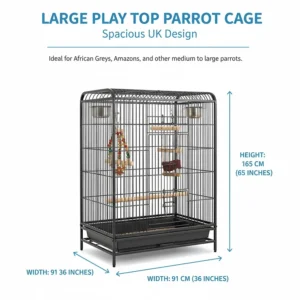
Key Specifications:
- Height: 175cm (including play top)
- Width: 91cm
- Depth: 66cm
- Bar spacing: 22mm
The Belize’s defining feature is its generous play top area—larger than many competitors—providing ample space for climbing ladders, multiple perches, and hanging toys. The removable play top tray is genuinely useful, catching debris when your parrot entertains themselves topside. When you want maximum light penetration into the cage proper, simply remove the tray.
UK owners particularly value the full-width internal perch and smooth-rolling castors that allow effortless cage repositioning to follow sunshine or avoid draughts. The seed catchers work brilliantly, though they do increase overall footprint—something to consider in smaller British homes.
Pros:
✅ Spacious play top area
✅ Well-proportioned for Amazons and Eclectus
✅ Excellent value at £350.00-£425.00
Cons:
❌ Assembly requires patience (60-90 minutes)
❌ Substantial weight (approximately 34kg)
Available from Northern Parrots with free UK mainland delivery.
7. Montana San Remo II Parrot Cage
The Montana San Remo II serves as Montana’s accessible entry point, delivering their legendary quality at a more budget-friendly £199.00. This compact play top cage suits smaller spaces whilst maintaining Montana’s rigorous safety standards and build quality.
Key Specifications:
- Compact footprint ideal for flats
- Bar spacing: 18mm (small-medium parrots)
- AVILON® non-toxic coating
- Includes Montana’s signature secure feeders
Whilst smaller than its Montana siblings, the San Remo II incorporates all the brand’s safety innovations: escape-proof latches, reinforced welds, and that crucial lead-free finish. UK cockatiel and Senegal parrot owners find this size perfect, providing adequate space without dominating their living areas.
The play top, whilst modest, still offers a secure elevated area for supervised interaction. One Brighton-based owner described it as “ideal for our one-bedroom flat—gives our Senegal parrot everything she needs without overwhelming the space.”
Pros:
✅ Montana quality at accessible pricing
✅ Compact design suits UK flats
✅ AVILON® safety coating included
Cons:
❌ Too small for large parrots
❌ Limited play top area compared to full-sized models
Available from Garden Feathers and Montana Cages UK dealers.
Understanding Play Top Cage Benefits
The concept behind a parrot cage with perch on top extends far beyond mere convenience—it addresses fundamental aspects of parrot psychology and welfare. Wild parrots spend considerable time at various heights throughout their day, with elevated positions providing security and territorial advantage. A play top cage benefits your bird by replicating this natural behaviour pattern within your home environment.
Psychological Advantages
Research from avian behaviour specialists demonstrates that parrots experiencing regular out-of-cage time on secure play tops exhibit fewer stereotypic behaviours such as pacing or excessive vocalisation. The play gym parrot cage design allows your bird to participate in household activities whilst maintaining their crucial sense of security. They’re “out” but not vulnerable—a distinction that matters enormously to prey species like parrots.
Physical Exercise Benefits
According to The Parrot Society UK’s beginner’s guide, parrots require substantial daily exercise to maintain physical and mental health. The interactive parrot cage with integrated play area encourages climbing, balancing, and wing-stretching—movements that strengthen muscles and improve coordination. Many UK avian veterinarians specifically recommend play top designs for birds recovering from obesity-related health issues.
Social Integration
A properly utilised play top transforms your parrot from isolated cage dweller to engaged family member. Positioned at appropriate height (ideally eye-level or slightly above when you’re seated), the play top allows your bird to observe and participate in household routines. This social integration proves vital for intelligent species like African Greys and Amazons, whose cognitive needs rival those of young children.
Essential Features to Consider
Bar Spacing Guidelines
Bar spacing represents the most critical safety consideration when selecting any parrot cage. The spacing must prevent your bird from wedging their head between bars whilst allowing comfortable climbing. UK welfare standards, aligned with RSPCA recommendations, suggest:
- Small parrots (Budgies, Lovebirds): 10-15mm
- Medium parrots (Cockatiels, Conures, Senegals): 15-20mm
- Large parrots (African Greys, Amazons, small Cockatoos): 20-25mm
- Extra-large parrots (Macaws, large Cockatoos): 25-32mm
These measurements represent maximum safe spacing. Many quality manufacturers use slightly narrower spacing as an additional safety margin. Never compromise on this specification—a bird with their head trapped between bars faces potential fatal injury.
Material Safety Standards
Britain’s pet product regulations mandate non-toxic finishes on bird cages, but quality varies dramatically. Look for these certifications:
Powder Coating: The industry standard, providing durable, chip-resistant finish. Premium brands like Montana use proprietary formulations (AVILON®) that exceed basic safety requirements.
Stainless Steel: The gold standard for durability and safety, though significantly more expensive. Popular in commercial aviaries and breeding facilities.
Galvanised Steel: Avoid cages with exposed galvanised coating—zinc poisoning represents a genuine risk if parrots chew coating. Quality cages apply powder coating over galvanised base for the best of both worlds.
Door Configuration
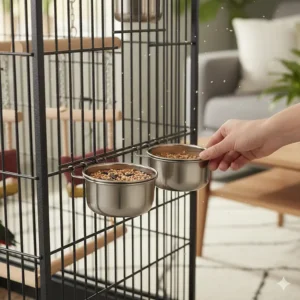
Assess door design carefully. Large front doors (ideally full-height) facilitate easy bird access and cage cleaning. Many UK parrot owners overlook this until attempting to manoeuvre a large Java perch through a small door opening! Additional feeding doors prove convenient for bowl changes without fully opening the cage—particularly useful if your bird displays territorial behaviour during breeding season.
Cage Size Requirements by Species
African Grey Parrots
These intelligent birds require substantial space to thrive. Minimum internal dimensions should be 80cm wide x 60cm deep x 90cm high, though larger proves invariably better. The 20-22mm bar spacing accommodates their powerful beaks whilst preventing escape. African Greys particularly benefit from play top designs, as they’re naturally cautious birds who appreciate surveying their environment from secure elevated positions before venturing out.
Amazon Parrots
Amazons’ robust build and active nature demands generous proportions. Target minimum dimensions of 90cm x 75cm x 100cm internally. These boisterous birds utilise every centimetre of available space, so err on the side of larger cages. The 22-25mm bar spacing suits their beak strength whilst maintaining security. Many UK Amazon owners report their birds spend more time on the play top than inside the cage during supervised hours—testament to how much these social parrots enjoy elevated interaction.
Cockatoos
Crested species require particular attention to height due to their spectacular headgear. Minimum dimensions should provide 100cm+ internal height, ensuring crests don’t brush against cage tops when birds stand upright. The 25mm bar spacing accommodates powerful cockatoo beaks. These emotionally sensitive birds particularly benefit from play top cages, as regular supervised out-time helps prevent the severe behavioural issues cockatoos develop when under-stimulated.
Conures and Caiques
These smaller but hyperactive parrots need surprisingly spacious accommodations. Minimum 75cm x 60cm x 80cm internally provides adequate exercise space. The 15-20mm bar spacing prevents escape whilst allowing comfortable climbing. Despite their modest size, conures and caiques exhibit energy levels that rival much larger species—think “ferret with wings”—making generous cage proportions essential for wellbeing.
Placement and Positioning Tips
Optimal Room Location
Position your play top cage with wheels in a room where family naturally congregates—typically the living room or kitchen diner in British homes. Parrots are flock animals who suffer psychologically when isolated. However, avoid direct placement in cooking areas where non-stick cookware fumes or sudden temperature changes could endanger your bird’s sensitive respiratory system.
Corner positioning maximises your parrot’s sense of security (walls on two sides reduce perceived vulnerability) whilst minimising floor space consumption. Ensure the cage doesn’t sit directly beneath ceiling spotlights or in the path of cold draughts from doors or windows—both common issues in older British housing stock.
Height Considerations
The play top perch should position your parrot at or slightly above human eye level when you’re seated. This height provides psychological comfort for your bird (elevated positions signal safety in parrot cognition) without encouraging dominance behaviours that sometimes develop when birds constantly look down on their humans. In practice, this typically means cage bases sit 30-50cm off the floor—convenient height for most wheeled stand designs.
Temperature and Lighting
UK homes’ central heating creates artificial environment requiring consideration. Position cages away from radiators (overheating risk) and cold exterior walls (temperature fluctuation stress). Parrots require natural daylight rhythm, so placement near windows benefits them—just avoid direct sunlight that could overheat the cage interior. Consider full-spectrum UV lighting during darker British winter months, particularly for species like African Greys who synthesise vitamin D through UV exposure.
Play Top Setup and Enrichment
Essential Play Top Accessories
Transform your basic play top into proper avian adventure playground with these additions:
Perches: Variety is paramount. Include natural wood branches (apple, willow, hazel) in varying diameters (12-40mm for large parrots) to exercise foot muscles and prevent arthritis. Rotate perches monthly to maintain novelty and hygiene.
Foraging Stations: Position stainless steel bowls strategically around the play top for “grazing”—parrots naturally spend hours foraging, and replicating this behaviour promotes psychological health. Hide treats in paper cups or woven baskets to encourage problem-solving.
Toys and Stimulation: Rotate toys weekly to prevent boredom. UK parrot toy suppliers offer brilliant destructible options (balsa wood, paper, natural fibres) that satisfy your bird’s instinct to shred. Avoid toys with small metal parts that could cause zinc or lead poisoning if ingested.
Safety Considerations
Never leave your parrot unsupervised on the play top—even the most placid bird might suddenly take flight towards an open window or harmful household hazard. The play top provides secure socialisation space during supervised time but shouldn’t replace proper flight recall training for those moments when birds do take wing.
Regularly inspect play top equipment for wear. Natural perches can harbour bacteria if not cleaned properly, whilst fraying rope toys pose entanglement risks. Replace questionable items immediately—your bird’s safety isn’t worth the few pounds’ savings.
Maintenance and Cleaning
Daily Maintenance Tasks
Establishing cleaning routines prevents health issues and extends your cage’s lifespan. Daily tasks include:
- Tray cleaning: Remove and wash slide-out tray, replacing liner paper (plain newsprint works brilliantly and costs virtually nothing).
- Bowl hygiene: Wash all food and water bowls with hot soapy water, rinsing thoroughly.
- Perch spot-check: Wipe visible droppings from perches using bird-safe disinfectant.
- Play top tray: Empty and wipe the removable play top tray—this simple step prevents mess accumulating on the cage roof.
Weekly Deep Clean
Dedicate time each week for thorough cleaning:
Remove all toys, perches, and accessories for individual washing. Spray cage bars with bird-safe disinfectant (products like F10 or Johnson’s Aviary & Cage Cleaner available from UK pet suppliers), allowing 10-minute contact time before scrubbing with non-abrasive sponge. Pay particular attention to corners and welds where bacteria accumulate.
Soak removable components in dilute F10 solution, rinse thoroughly, and air dry completely before reassembly. This prevents potential respiratory issues from chemical residues—parrots’ sensitive respiratory systems make proper rinsing non-negotiable.
Rust Prevention
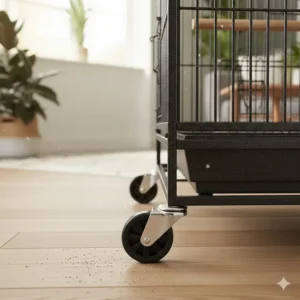
Britain’s humid climate makes rust prevention crucial, particularly if you position cages near kitchens or bathrooms. Quality powder coating resists moisture, but inspect regularly for chips or scratches that expose underlying metal. Touch up minor damage immediately using bird-safe enamel paint available from specialist avian suppliers.
The stainless steel components on premium cages (feeders, latches) require minimal maintenance but benefit from occasional polishing to maintain appearance and hygiene. Many UK owners report Montana and Liberta cages looking nearly new after years of diligent care—proper maintenance protects your investment.
Common Mistakes to Avoid
Undersizing the Cage
The most frequent error UK parrot owners make is selecting cages based on current bird size rather than adult dimensions plus adequate exercise space. A young Amazon parrot might initially seem comfortable in a medium cage, but within months they’ll outgrow it. Always purchase for adult size, considering wingspan rather than body dimensions. Remember: your parrot will spend most of their 40+ year lifespan in this cage—investing in appropriate size from the outset saves money and stress long-term.
Ignoring Bar Orientation
Parrots are climbers who naturally move laterally through canopy vegetation. Cages with primarily vertical bars frustrate this instinct. Quality play top cages incorporate both horizontal and vertical bars, facilitating natural climbing patterns. Some budget cages feature exclusively vertical bars—avoid these designs regardless of attractive pricing.
Overcrowding with Accessories
Enthusiasm for enrichment sometimes leads owners to stuff cages so full of toys and perches that birds can barely move. Your parrot needs clear flight paths for wing-stretching and exercise. A good rule: if you can’t easily manoeuvre your hand through the cage to reach all areas, you’ve over-accessorised. Quality enrichment beats quantity every time.
Budget Considerations
Initial Investment Analysis
Quality play top parrot cage large models range from £85-£700 in the UK market. This substantial variation reflects differences in size, materials, and features rather than arbitrary pricing. Budget approximately:
Entry Level (£85-£200): Suitable for cockatiels, small conures, or first-time owners. Expect basic features with acceptable quality from brands like Yaheetech and Vision.
Mid-Range (£200-£400): The sweet spot for most UK parrot owners. Brands like Liberta and Rainforest offer excellent build quality, comprehensive features, and adequate longevity.
Premium (£400-£700+): Montana Cages and high-end Rainforest models. Exceptional quality, innovative features, and potential 15+ year lifespan justify investment for serious parrot enthusiasts.
Long-Term Value Calculation
Cheap cages often prove expensive. A £100 budget cage lasting three years before rust or structural failure requires replacement costs £33 annually. Conversely, a £450 Liberta cage lasting 12+ years costs £37 annually—comparable cost with dramatically superior quality and bird welfare throughout ownership. Factor in your parrot’s potential 50-year lifespan when considering “expensive” cages—proper housing represents tiny fraction of total ownership costs.
Cost-Saving Strategies
Shop during UK retailers’ seasonal sales (January and summer typically offer best discounts). Many specialist avian suppliers offer payment plans for premium cages. Consider purchasing floor models or customer returns at discount—inspect carefully for damage, but savings can reach 30-40%. Join UK parrot owner groups on social media where members often sell quality used cages when upgrading or sadly, when birds pass away.
Transitioning Your Parrot to New Cage
Preparation Phase
Birds are neophobic—they instinctively fear novel objects that could represent threats. Minimise transition stress through gradual introduction. Position the new cage near your parrot’s existing accommodation several days before transfer, allowing them to observe and investigate it safely from current territory. Place favourite treats atop the new cage, creating positive associations.
Transfer Day Strategy
Choose a calm day without household upheaval. Transfer familiar perches, toys, and food bowls to the new cage—familiar scents and objects provide psychological comfort. Some birds walk confidently into new cages; others require gentle encouragement. Never force the issue—stressed birds may develop negative cage associations lasting months.
If your parrot resists, employ gradual habituation: open the new cage door, place favourite treats progressively deeper inside, and allow your bird to explore at their own pace. Most parrots curiosity eventually overcomes caution, typically within 2-7 days.
Post-Transfer Support
Expect some behavioural changes during initial weeks. Your parrot might vocalise more frequently, display reluctance to enter the cage, or exhibit temporary appetite changes. Maintain consistent routines, provide extra attention, and remain patient. Most birds adjust within 2-3 weeks, subsequently treating their new cage as secure territory.
Play Top vs Traditional Cages
Functional Differences
Traditional solid-top cages confine birds entirely when doors close. Play top designs offer hybrid functionality: secure containment when necessary, plus supervised interaction area requiring less vigilance than full free-flight. This flexibility particularly suits UK households where work schedules limit constant supervision but owners want to maximise quality interaction time.
Play top cages typically cost 20-30% more than equivalent solid-top models—premium justified by additional materials and manufacturing complexity. However, purchasing separate play stands (£50-£200) alongside traditional cages eliminates cost advantage whilst occupying more floor space. The integrated design proves more space-efficient for typical British homes.
Suitability Assessment
Play top cages excel for moderately confident birds who enjoy supervised socialisation. They’re less suitable for severely nervous birds (who might panic when elevated) or those displaying significant aggression (who might use height advantage problematically). Consider your individual bird’s temperament rather than assuming all parrots benefit equally.
UK-Specific Regulations and Standards
The Animal Welfare Act 2006 establishes legal requirements for pet bird accommodation in England and Wales (with similar legislation covering Scotland and Northern Ireland). The Act mandates providing environment allowing birds to exhibit normal behaviour patterns—interpreted by courts and welfare organisations to include adequate space for movement, wing-stretching, and enrichment opportunities.
Whilst no specific minimum cage dimensions exist in UK law, failure to provide appropriate accommodation could constitute an offence under the Act’s general duty of care provisions. The RSPCA’s detailed housing guidelines provide practical interpretation of legal requirements, recommending cages permitting full wingspan extension as absolute minimum.
For birds listed under CITES (Convention on International Trade in Endangered Species)—including many parrots commonly kept in UK homes—additional regulations require proper identification documentation. When purchasing caged birds from breeders or previous owners, ensure appropriate Article 10 certificates are provided. The Animal and Plant Health Agency (APHA) enforces these regulations, with significant penalties for non-compliance.
Frequently Asked Questions
❓ What's the minimum cage size for an African Grey parrot in the UK?
❓ Do play top parrot cages require more cleaning than traditional designs?
❓ Can I use a play top cage outdoors in my UK garden during summer?
❓ Which brands offer the best value play top cages available in the UK?
❓ My parrot refuses to use the play top area—what should I do?
Conclusion: Making the Right Choice
Selecting a play top parrot cage large enough for your African Grey, Amazon, or similarly-sized companion represents one of the most significant decisions in responsible parrot ownership. Throughout this comprehensive guide, we’ve examined seven outstanding options available to UK bird owners in 2026, from the budget-friendly Yaheetech Large Bird Cage at £86.99 to premium Montana Castell at £475.00.
The optimal choice depends on your specific circumstances: species requirements, available space, and budget constraints. However, certain principles apply universally. Never compromise on bar spacing safety or overall dimensions—your parrot’s welfare depends on appropriate accommodation. Quality construction pays dividends through longevity and reduced maintenance, making premium cages surprisingly economical over their 10-15 year lifespans.
For most UK parrot owners housing African Greys or Amazons, the Liberta Cambridge Play Top strikes an excellent balance between features, quality, and value. Its World Parrot Trust endorsement, comprehensive accessories, and proven reliability justify the £479.00 investment. Budget-conscious owners should seriously consider the Rainforest Santos (£399.99-£699.99), which delivers comparable space and features with slightly less premium finishing.
Remember that your play top parrot cage large model serves as your bird’s primary territory for potentially decades. These intelligent, long-lived companions deserve environments facilitating physical health, psychological wellbeing, and opportunities for the natural behaviours evolution programmed into their DNA. The additional space, exercise opportunities, and social integration that quality play top designs provide dramatically enhance captive parrot welfare—transforming basic accommodation into proper avian homes.
Recommended for You
- Wooden Aviary vs Metal: 7 Best UK Options (2026 Guide)
- Vision vs Prevue Bird Cage: 7 Best Models Compared UK 2026
- 7 Best Tall Flight Cage for Finches UK 2026
Disclaimer: This article contains affiliate links. If you purchase products through these links, we may earn a small commission at no additional cost to you. Prices shown are approximate and may vary.
✨ Found this helpful? Share it with your mates! 💬🤗
