
In This Article
If you’re caring for a magnificent macaw, chatty African grey, or charismatic cockatoo, you’ve likely discovered that these intelligent companions have rather particular opinions about their meals. Large parrots aren’t just impressive in size—they’re equally demanding when it comes to nutrition. Finding the right parrot nut mix for large parrots can genuinely transform your feathered friend’s health, energy levels, and even that vibrant plumage you adore.
I remember watching my neighbour’s blue and gold macaw, Archie, absolutely demolish a bowl of mixed nuts whilst completely ignoring his regular pellets. It was quite the revelation. Nuts aren’t simply treats; when chosen correctly, they’re nutritional powerhouses packed with essential fatty acids, proteins, and minerals that mirror what these magnificent birds would forage for in their natural habitats across South America, Africa, and Australia.
However—and this is crucial—not all nut mixes are created equal. Some budget options contain potentially dangerous mouldy peanuts, whilst others are loaded with excessive sunflower seeds that can lead to obesity and liver issues. According to research from The Parrot Society UK, large macaws and African grey parrots are known to favour high-fat nuts such as palm nuts, but these should comprise only 2-4% of their total dietary intake. This comprehensive guide will help you navigate the sometimes confusing world of parrot nut mix for large parrots available in the UK market, ensuring your companion receives optimal nutrition without the health risks.
Quick Comparison Table
| Product | Best For | Key Nuts Included | Price Range (£) | Rating |
|---|---|---|---|---|
| Tidymix Mixed Nut Parrot Treat | All large parrots | Walnuts, Brazil nuts, almonds, cashews | £8-£12 | 4.5/5 |
| Parrot Essentials Premium Tropical Mix | Macaws, cockatoos | 7 nut varieties + fruits | £25-£35 | 4.7/5 |
| Maltbys Fruit, Nut & Veg Mix | African greys, Amazons | Brazil nuts, peanuts, walnuts | £6-£18 | 4.3/5 |
| Tropimix Large Parrot Mix | Eclectus, large species | Peanuts, mixed tree nuts | £18-£24 | 4.4/5 |
| PUUR Large Parrot Seed Mix | Macaws, Amazons | Pine nuts, Brazil nuts | £15-£22 | 4.6/5 |
| Versele-Laga Mega Fruit Mix | General maintenance | Mixed nuts & seeds | £35-£55 | 4.2/5 |
| Harrison’s High Potency | Health recovery | Ground shelled nuts | £16-£45 | 4.8/5 |
💬 Just one click – help others make better buying decisions too! 😊
Top 7 Parrot Nut Mix for Large Parrots: Expert Analysis
1. Tidymix Mixed Nut Parrot Treat (500g)
When it comes to pure, unadulterated nut quality, the Tidymix Mixed Nut Parrot Treat consistently earns top marks from UK parrot enthusiasts. This veterinary-recommended blend contains shelled walnuts, Brazil nuts, almonds, cashews, and peanuts—all human-grade quality ingredients that would be perfectly acceptable on your own dinner table.
Key Specifications:
- Weight: 500g resealable bag
- Nut composition: 90% unsaturated fats (almonds & walnuts)
- Suitable for: African Grey, Amazon, Cockatoo, large/small macaws
UK buyers particularly appreciate that these nuts arrive fresh and free from shells, making them easier for parrots who struggle with harder casings whilst retaining maximum nutrient levels. The almonds provide roughly 26% carbohydrates plus excellent Vitamin E content, whilst the walnuts deliver high-density proteins and essential fatty acids. One reviewer on Amazon.co.uk noted their Major Mitchell cockatoo remained “occupied for ages” with these nuts, demonstrating excellent foraging enrichment value.
Pros:
✅ Human-grade quality ingredients
✅ Veterinary recommended formula
✅ High in beneficial unsaturated fats
Cons:
❌ Currently unavailable on Amazon.co.uk
❌ May require portion control for weight-conscious birds
Price: £8-£12 per 500g bag
Where to buy: Parrot Essentials, specialist UK bird retailers
2. Parrot Essentials Premium Tropical Parrot Food Nut Mix
The Parrot Essentials Premium Tropical Parrot Food Nut Mix represents the Rolls-Royce of parrot nutrition available in the UK. This 500g-2kg blend combines seven different premium tree nuts (almonds, pistachios, pecans, hazelnuts, cashews, macadamia nuts, and walnuts) with pepitas, cinnamon sticks, and dried fruits for comprehensive nutrition.
Key Specifications:
- Available sizes: 500g, 1kg, 2kg
- GMO-free formula
- No corn or peanuts (reduces aflatoxin risk)
- Includes cinnamon sticks for natural foraging behaviour
What sets this mix apart is its sophisticated nutritional profile designed specifically for medium to large parrots including macaws, cockatoos, African greys, and Amazons. The inclusion of macadamia nuts—which are absolutely essential for hyacinth macaws and green-wing macaws—demonstrates genuine understanding of species-specific requirements. UK customers report their birds “go nuts” over this blend, with particularly enthusiastic responses from picky eaters.
Pros:
✅ Seven premium tree nut varieties
✅ Macadamia nuts for large macaw species
✅ No peanuts (eliminates aflatoxin concerns)
Cons:
❌ Premium pricing at £29.99
❌ May be too rich for less active birds
Price: £25-£35 for various sizes
Customer feedback: “My macaw finally found a mix he doesn’t pick through—he actually eats everything!”
3. Maltbys Fruit, Nut & Veg Mix (1kg)
For budget-conscious parrot owners seeking quality without breaking the bank, Maltbys Fruit, Nut & Veg Mix delivers exceptional value. This Hull-based family business (operating since 1904) offers a nutritious blend featuring diced papaya, pineapple, banana chips, peanuts, pumpkin seeds, Brazil nuts, mixed vegetables, and walnut halves.
Key Specifications:
- Weight: 100g, 500g, 1kg options
- Contains: Papaya, pineapple, currants, banana chips, nuts, vegetables
- Added benefits: Rosehips, dried cranberries, dates
The genius of this mix lies in its versatility—it can be fed independently or added to standard parrot food (like No.1 Parrot Food) to enhance nutritional value whilst adding colour, texture, and variety. The Royal Veterinary College’s parrot feeding guidance emphasises the importance of dark leafy greens and varied fruits, which this mix provides alongside the nut content.
UK buyers appreciate the ability to purchase smaller trial sizes (100g at £3-£4) before committing to larger quantities. However, some reviewers noted receiving predominantly banana chips in their bags, suggesting potential consistency issues with batch mixing.
Pros:
✅ Excellent price-to-quality ratio
✅ Multiple size options (100g-1kg)
✅ UK-based family business with 115+ years expertise
Cons:
❌ Inconsistent mixing reported by some buyers
❌ Limited Brazil nuts in some batches
Price: £6-£18 depending on size
Best for: Budget-conscious owners, supplementing existing diets
4. Tropimix Large Parrot Mix (1.8kg)
Highly regarded amongst UK avian veterinarians, the Tropimix Large Parrot Mix combines the best of both worlds: nutritious whole foods and scientifically formulated Tropican granules. This 1.8kg blend includes grains, fruits, nuts, legumes, and those signature peanut-flavoured extruded pellets that parrots find irresistible.
Key Specifications:
- Weight: 1.8kg bag (also available in 20lb for breeders)
- 100% edible (no shells or husks)
- Fortified with essential vitamins, minerals, amino acids
- Suitable for: Amazons, macaws, cockatoos, African greys, Eclectus
The shell-free formula eliminates the aspergillosis fungus risk that can hide in seed husks—a particularly important consideration for young birds. One UK reviewer tragically lost their five-month-old African grey to aspergillosis from contaminated husks, making this mix’s hull-free design especially valuable. The product contains human-grade ingredients subjected to rigorous quality control, with no artificial colourings, flavourings, or preservatives.
Pros:
✅ 100% edible with zero waste
✅ Eliminates aspergillosis risk from shells
✅ Veterinary recommended formula
Cons:
❌ Contains peanuts (potential aflatoxin concern if not stored properly)
❌ Some birds dislike the pellet component
Price: £18-£24 for 1.8kg
Customer feedback: “Better value than Nutriberries and my African grey actually eats everything!”
5. PUUR Large Parrot & Macaw Food Seed Mix (2kg)
For those seeking European quality standards, the PUUR Large Parrot & Macaw Food Seed Mix delivers a gourmet experience with ingredients like mango, pine nuts, chilli pepper, Brazil nuts, and egg products. This 2kg mix specifically targets larger species including African greys, Amazons, scarlet macaws, Eclectus parrots, and blue and gold macaws.
Key Specifications:
- Weight: 2kg bag
- Protein-rich composition with egg products
- Contains prebiotics and crushed oyster shells
- Includes linseed for feather health
The inclusion of crushed oyster shells provides essential calcium for strong bones, whilst the prebiotics support healthy digestion—particularly important for species like Eclectus parrots known for sensitive digestive systems. According to NC State University’s Veterinary Hospital, parrots can resist trying new foods, so the aromatic mango and pine nut combination helps encourage acceptance.
UK customers can expect next-day delivery on orders over £69, making this a convenient option for those maintaining regular feeding schedules.
Pros:
✅ Gourmet ingredients (mango, pine nuts)
✅ Supports feather health during moulting
✅ Free from artificial additives
Cons:
❌ Higher price point (£15-£22)
❌ May be too rich for sedentary indoor birds
Price: £15-£22 for 2kg
Feeding guide: 15-24g daily for macaws (adjust based on body weight)
6. Versele-Laga Mega Fruit Mix (15kg)
Perfect for multi-parrot households or breeding facilities, the Versele-Laga Mega Fruit Mix offers bulk value without compromising quality. This massive 15kg bag contains seeds, nuts, grains, and dried fruits formulated specifically as maintenance feed for large and medium parrots.
Key Specifications:
- Weight: 15kg (also available in smaller sizes)
- Belgian quality standards
- Abundant sunflower seeds (loved by African greys)
- Mixed nuts and dried fruit content
This Belgian-manufactured blend particularly appeals to selective eaters, with UK reviewers noting their African greys prefer this over other brands. The generous sunflower seed content—whilst potentially concerning for weight management—proves irresistible to many parrots. However, the World Parrot Trust’s nutrition guidelines remind us that nuts and high-fat seeds should be provided in small quantities due to their rich nature.
Pros:
✅ Excellent value for multi-parrot households
✅ Preferred by selective African greys
✅ European quality manufacturing
Cons:
❌ High sunflower seed content
❌ 15kg size may exceed shelf life for single-bird owners
Price: £35-£55 for 15kg
Best for: Breeders, aviaries, multi-parrot households
7. Harrison’s High Potency Coarse (454g-2.27kg)
Whilst technically a pellet-based food rather than pure nut mix, Harrison’s High Potency Coarse deserves inclusion due to its ground shelled nuts (sunflower seeds, peanuts) and exceptional nutritional profile. This USDA Organic certified formula represents the gold standard for birds requiring enhanced nutrition—whether they’re recovering from illness, breeding, or converting from seed-based diets.
Key Specifications:
- Sizes: 454g (£16.45), 1lb, 2.27kg (£44.39)
- 100% organic, non-GMO verified
- Veterinarian-formulated complete nutrition
- Crude protein: 18% min, Crude fat: 15% min
Developed by avian veterinarians specifically for species like African greys and large macaws with elevated nutritional requirements, this formula eliminates the need for excessive supplementation. The ground shelled peanuts and sunflower seeds provide familiar flavours that ease conversion for seed-addicted birds, whilst the organic certification ensures freedom from harmful pesticides and GMOs.
UK availability through Amazon.co.uk and specialist retailers makes this premium option accessible nationwide, with Subscribe & Save discounts reducing the per-unit cost.
Pros:
✅ USDA Organic certified
✅ Veterinarian-formulated nutrition
✅ Ideal for health recovery and breeding
Cons:
❌ Premium pricing (£16.45-£44.39)
❌ Some birds resist pellet texture initially
Price: £16.45-£44.39 depending on size
Recommended for: African greys, macaws, birds in recovery, breeding pairs
✨ Don’t Miss These Exclusive Deals!
🔍 Take your parrot’s nutrition to the next level with these carefully selected products. Click on any highlighted item to check current pricing and availability on Amazon.co.uk. These premium nut mixes will help you create authentic health results your feathered companion will love!
Understanding Nutritional Needs: Why Large Parrots Need Nuts
Large parrots—encompassing magnificent species like scarlet macaws, blue and gold macaws, African greys, cockatoos, and Amazons—possess dramatically different nutritional requirements compared to their smaller cousins. In their natural habitats spanning from the Amazon rainforest to the Congo Basin, these birds spend up to 60% of their waking hours foraging for diverse food sources including nuts, seeds, flowers, buds, and unripe fruits.
The Science Behind Nut Nutrition
Nuts provide essential components that pellets alone cannot replicate. Walnuts contain high-density proteins and omega-3 fatty acids crucial for brain function—particularly important for intelligent species like African greys. Brazil nuts offer selenium and omega-6 fatty acids supporting immune function and feather quality. Almonds provide Vitamin E, protein, and roughly 26% carbohydrates for sustained energy.
According to The Parrot Society UK’s comprehensive research, the recommended fat levels for parrots are 2-4% of total dietary intake, considerably lower than productive species like poultry. However, large macaws and African greys naturally favour higher-fat nuts, making portion control essential. A 1,000-1,200g scarlet macaw requires approximately 15-24g of food daily (about 15-20g per kilogram of body weight), with nuts comprising a carefully controlled portion of that total.
Foraging Enrichment Benefits
Beyond pure nutrition, the parrot nut mix for large parrots provides critical mental stimulation. Wild parrots travel vast distances—up to 80 kilometres daily for some macaw species—searching for food. Captive birds denied this natural behaviour often develop stereotypic behaviours including feather plucking, screaming, and aggression.
Whole nuts (especially those in-shell like Brazil nuts, walnuts, or macadamia nuts) require manipulation, problem-solving, and extended handling time. This mimics natural foraging behaviour, keeping your parrot mentally engaged whilst satisfying their instinctual need to work for food. However, you should partially crack extremely hard nuts like Brazil nuts to prevent beak damage or frustration.
Species-Specific Considerations
Different large parrot species have evolved specialised dietary preferences:
Macaws: Hyacinth macaws and green-wing macaws absolutely require macadamia nuts and palm nuts due to their natural diet composition. Their powerful beaks can crack even the hardest shells.
African Greys: These intelligent birds often become obsessed with high-fat sunflower seeds and peanuts (similar to children preferring crisps and chocolate), necessitating strict portion control to prevent obesity and fatty liver disease.
Cockatoos: Particularly prone to obesity, cockatoos benefit from lower-fat nut options like almonds whilst limiting sunflower seed intake.
Amazons: These sturdy birds tolerate moderate fat intake but require diverse nut varieties to prevent selective eating.
How to Choose the Best Parrot Nut Mix for Large Parrots
Selecting the optimal nut mix requires evaluating multiple factors beyond simple taste preferences. Here’s a systematic approach to finding the perfect match for your feathered companion:
Step 1: Assess Your Parrot’s Current Health Status
Begin by honestly evaluating your bird’s body condition. Can you feel their keel bone (breastbone) prominently? They may be underweight and benefit from richer nut mixes. Conversely, if you struggle to locate the keel bone beneath fat deposits, lower-fat options are essential. Consult an avian veterinarian for professional body condition scoring.
Step 2: Verify Ingredient Quality and Freshness
Premium parrot nut mix for large parrots should list specific nut types rather than vague “tree nuts” terminology. Look for “human-grade” or “fit for human consumption” designations, indicating superior quality compared to standard bird-grade ingredients. Check packaging for “best before” dates—nuts deteriorate quickly, with essential vitamins degrading upon exposure to light and air.
Avoid mixes containing excessive peanuts unless they’re certified aflatoxin-free. Mouldy peanuts produce aflatoxin, a toxic compound causing liver damage in birds who are considerably more sensitive than humans to small amounts.
Step 3: Consider Nut Variety and Balance
Excellent mixes contain 5-7 different nut types providing diverse nutritional profiles. Seek combinations including:
- Almonds: Vitamin A (critical for greys and Eclectus), Vitamin E, protein
- Walnuts: Omega-3 fatty acids, proteins, essential fatty acids
- Brazil nuts: Selenium, omega-6 fatty acids (limit to 1-2 weekly due to high selenium content)
- Cashews: Essential minerals, vitamins, easily digestible
- Hazelnuts: Antioxidants, heart health support
- Pecans: Omega-3s, manganese, copper
- Macadamia nuts: Essential for hyacinth and green-wing macaws
Step 4: Evaluate Added Ingredients
Quality mixes often include complementary ingredients enhancing nutritional value:
- Dried fruits: Natural vitamins, but monitor sugar content
- Vegetables: Papaya, carrots provide beta-carotene (converts to Vitamin A)
- Seeds: Pumpkin seeds offer zinc and healthy fats
- Herbs/spices: Cinnamon sticks, chilli peppers provide natural foraging interest
However, beware mixes loaded with cheap fillers like excessive wheat or corn. These inflate volume whilst offering minimal nutritional benefit.
Step 5: Determine Appropriate Portion Sizes
Even the finest parrot nut mix for large parrots requires careful portioning. The general guideline suggests nuts should comprise approximately 10-15% of a large parrot’s daily diet, with the majority consisting of high-quality pellets (50-60%), fresh vegetables (25-30%), and limited fresh fruits (5-10%).
For a 400-500g African grey, this translates to roughly 6-10g of total food daily, with perhaps 1-2g coming from nuts. A 1,000-1,200g scarlet macaw requires 15-24g total daily food, allowing 2-4g from nuts. Always adjust based on activity level, housing temperature, and individual metabolism.
Step 6: Check UK Availability and Value
Prioritise parrot nut mix for large parrots readily available through UK retailers with reliable delivery. Amazon.co.uk, Parrot Essentials, Northern Parrots, and specialist bird shops offer convenient ordering with typically speedy delivery. Calculate price-per-kilogram rather than per-bag to identify genuine value, remembering that premium ingredients justify higher costs when they prevent expensive veterinary bills later.
Step 7: Read Recent UK Customer Reviews
Focus on reviews from UK buyers specifically, as they face identical availability, pricing, and delivery considerations. Look for patterns in feedback rather than isolated complaints—consistent reports of freshness issues or poor packaging deserve serious consideration. Verified purchase reviews carry more weight than unverified testimonials.
Storage and Serving Tips for Maximum Freshness
Proper storage dramatically extends the shelf life and nutritional value of your parrot nut mix for large parrots whilst preventing dangerous contamination:
Optimal Storage Conditions
Store nut mixes in airtight containers placed in cool, dark locations away from direct sunlight. Glass or food-grade plastic containers with secure lids prevent moisture infiltration and discourage insect infestation. The Parrot Society UK recommends dividing large quantities into smaller portions, freezing excess supply in sealed bags, and thawing weekly portions as needed.
Avoid storing near heat sources (ovens, radiators, direct sunlight through windows) as heat accelerates rancidity. Check regularly for signs of spoilage including musty odours, discolouration, or visible mould. When in doubt, discard the entire batch—your parrot’s health isn’t worth the risk of aflatoxin poisoning.
Creative Serving Methods
Transform nut feeding time into enrichment opportunities rather than simply filling a bowl:
Foraging boxes: Hide nuts inside cardboard boxes filled with shredded paper, encouraging natural searching behaviours.
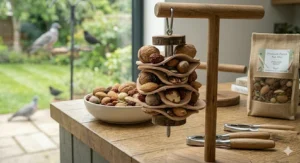
Nut kebabs: Thread whole nuts onto stainless steel skewers, creating vertical challenges.
Puzzle feeders: Utilise commercial foraging toys requiring problem-solving to access nuts.
Training rewards: Reserve especially desirable nuts (macadamias, pecans) as high-value training treats, strengthening your bond whilst teaching new behaviours.
Time separation: Offer fresh fruits and vegetables in morning when birds are hungriest, adding the nut mix only in evening after they’ve consumed healthier options. This prevents selective eating where birds consume only preferred high-fat items whilst ignoring nutritious vegetables.
Monitoring Consumption Patterns
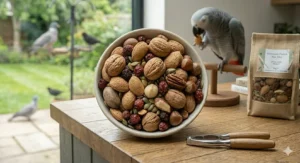
Pay attention to which nuts your parrot favours versus discards. Some birds meticulously extract every almond whilst flinging walnuts to the floor. Adjust future purchases accordingly, though continue offering variety to prevent nutritional deficiencies. If your parrot obsessively hoards certain nuts, they may require portion restrictions to prevent overconsumption and obesity.
Common Mistakes to Avoid With Nut Mixes
Even experienced parrot owners occasionally fall into nutritional traps when incorporating nuts into their companion’s diet. Here are critical errors to sidestep:
Mistake 1: Treating Nuts as Primary Diet
Perhaps the most dangerous misconception suggests that parrot nut mix for large parrots can serve as a complete diet. Whilst delicious and nutritious in moderation, nuts lack sufficient Vitamin A, calcium, and other essential nutrients. Birds maintained exclusively on nut-based diets develop severe deficiencies manifesting as poor feather quality, weakened immune systems, and reproductive failures.
Mistake 2: Ignoring Individual Portion Control
Dumping a generous handful of nuts into your parrot’s bowl daily seems generous but often leads to obesity, fatty liver disease, and cardiovascular problems. Large parrots possess impressive manipulation skills and will absolutely overindulge given unlimited access. Weigh portions using kitchen scales (1-4g depending on species size) rather than eyeballing quantities.
Mistake 3: Purchasing Salted or Seasoned Nuts
Human-grade nuts often contain added salt, sugar, oils, or seasonings dangerous for parrots. Always select plain, unsalted, raw nuts specifically designated for avian consumption or human consumption without additives. Even “lightly salted” varieties contain excessive sodium for birds’ sensitive systems.
Mistake 4: Storing Improperly
Leaving nut mixes in original packaging after opening invites moisture, insects, and rancidity. The oils in nuts oxidise rapidly when exposed to air and light, creating free radicals potentially harmful to your parrot. Transfer to airtight containers immediately upon opening, refrigerating or freezing long-term supplies.
Mistake 5: Overlooking Peanut Risks
Peanuts (technically legumes, not true nuts) carry inherent aflatoxin risks from mould contamination during growth and storage. Whilst reputable UK suppliers maintain quality control standards, peanuts remain the highest-risk nut option. Consider peanut-free mixes for especially sensitive species or birds with compromised immune systems. If feeding peanuts, source only from trusted suppliers and inspect visually for any discolouration or unusual odours before offering.
Mistake 6: Forgetting to Rotate Varieties
Feeding identical nut mixes indefinitely creates nutritional imbalances and boredom. Rotate between different brands and formulations quarterly, introducing novel ingredients whilst maintaining core nutritional standards. This mimics the seasonal dietary variation wild parrots experience whilst preventing selective eating patterns.
Transitioning Your Parrot to Quality Nut Mixes
Converting a parrot from suboptimal diets to quality parrot nut mix for large parrots requires patience, consistency, and strategic planning. Birds are notoriously reluctant to try unfamiliar foods, often viewing dietary changes with deep suspicion.
The Gradual Introduction Method
Rather than immediately replacing your bird’s current diet, begin by mixing small quantities (10-15%) of the new nut mix into their familiar food. Gradually increase the proportion over 2-4 weeks whilst decreasing the old diet, allowing your parrot to adjust both physically and psychologically. Monitor droppings throughout this transition—significant changes in colour, consistency, or frequency warrant veterinary consultation.
Social Eating Techniques
Parrots are highly social creatures who learn feeding behaviours through observation. Sit near your parrot’s cage during mealtimes, enthusiastically eating nuts yourself (or pretending to) whilst offering them to your bird. Make exaggerated “mmm” sounds and demonstrate genuine enjoyment. Many stubborn parrots succumb to social pressure when they observe their trusted human relishing the same food.
The “Plate Sharing” Approach
Offer new nut mixes from your own plate or eating surface rather than their cage bowl. Parrots often perceive food from “the flock leader’s plate” as more desirable and safe than items placed directly in their dishes. This technique particularly succeeds with bonded birds who view their human as a flock member.
Never Starve Your Bird
Resist the dangerous temptation to remove all food except the new nut mix, hoping hunger will force acceptance. Unlike mammals, birds possess extremely high metabolisms and can suffer serious health consequences within hours of food deprivation. Always ensure familiar food remains available whilst encouraging voluntary experimentation with new options.
Celebrating Small Victories
Acknowledge and reward even tiny progress—a quick beak touch, holding a nut briefly, or a single nibble. Positive reinforcement through verbal praise, head scratches, or favourite toys strengthens the association between new foods and pleasant experiences.
Frequently Asked Questions
❓ How much parrot nut mix for large parrots should I feed daily?
❓ Can I feed peanuts to my macaw safely in the UK?
❓ What's the difference between in-shell and shelled nuts for parrots?
❓ Are organic nut mixes worth the extra cost for parrots?
❓ How can I tell if my parrot's nut mix has gone rancid?
Conclusion: Investing in Your Parrot’s Long-Term Health
Selecting the perfect parrot nut mix for large parrots transcends simple shopping—it represents a fundamental investment in your feathered companion’s vitality, longevity, and quality of life. These magnificent creatures, whether they’re chatty African greys, majestic macaws, or affectionate cockatoos, depend entirely upon our nutritional choices to thrive in captivity.
Throughout this comprehensive guide, we’ve explored seven exceptional nut mixes available through UK retailers, each offering distinct advantages for different species, budgets, and dietary requirements. From the budget-friendly Maltbys Fruit, Nut & Veg Mix to the premium Harrison’s High Potency Coarse, quality options exist at every price point.
Remember that the parrot nut mix for large parrots you choose should complement—not replace—a balanced diet rich in quality pellets, fresh vegetables, and limited fruits. Nuts provide essential fatty acids, proteins, and mental stimulation through foraging enrichment, but they require careful portion control to prevent obesity and related health issues.
By prioritising human-grade ingredients, appropriate storage, and species-specific formulations, you’re not merely feeding your parrot—you’re honouring the trust they’ve placed in you as their guardian. That vibrant plumage, those bright eyes, and that playful personality flourishing in your home reflect the nutritional choices you make daily.
Your parrot’s health journey begins with a single decision. Choose wisely, feed thoughtfully, and watch your magnificent companion thrive for decades to come.
✨ Don’t Miss These Exclusive Deals!
🔍 Elevate your parrot’s nutrition with our expertly curated selections. Browse through our highlighted premium nut mixes on Amazon.co.uk to discover unbeatable quality and competitive UK pricing. Your feathered friend deserves nothing less than the finest!
Recommended for You
- 7 Best Large Parrot Pellets UK 2026
- 7 Best Pellets for Picky Parrots: Convert Stubborn Birds 2026
- 7 Best Foods What to Feed An African Grey Parrot UK 2026
Disclaimer: This article contains affiliate links. If you purchase products through these links, we may earn a small commission at no additional cost to you. Prices shown are approximate and may vary.
✨ Found this helpful? Share it with your mates! 💬🤗
