
In This Article
Choosing the right food for your budgerigar isn’t just about filling their bowl—it’s about supporting their vibrant feathers, energetic personality, and long-term health. I’ve spent countless hours researching budgie nutrition and testing various products with my own feathered friends, and I can tell you this: the difference between a thriving budgie and a merely surviving one often comes down to what’s in their food dish.
The world of budgie food can be overwhelming. Walk into any pet shop and you’ll face shelves packed with colourful seed mixes, pellets, and specialist blends. Some cost a few quid, whilst others will set you back considerably more. But here’s what matters: budgies in the wild roam the Australian grasslands consuming a diverse range of seeds, grasses, and vegetation that varies with the seasons. Our challenge as budgie parents is recreating this nutritional diversity in captivity.
Modern avian science has taught us that seed-only diets, once considered standard, are nutritionally inadequate. According to veterinary experts, budgies are vulnerable to obesity, iodine deficiencies, and other nutrition-related problems when fed improperly. The good news? With the right combination of quality seed mixes, pellets, fresh vegetables, and supplements, you can give your budgie everything they need to flourish.
In this comprehensive guide, I’ll walk you through the top-rated budgie food products available on Amazon.co.uk in 2026, explain what makes quality budgie nutrition, and share practical tips from years of bird-keeping experience. Whether you’re a first-time budgie owner or looking to upgrade your feathered friend’s diet, you’ll find everything you need right here.
Quick Comparison Table
| Product | Type | Key Feature | Price Range | Rating |
|---|---|---|---|---|
| Johnston & Jeff Utility Mix | Seed Mix | High-carb maintenance blend | £22.95-£25 (20kg) | 4.6/5 |
| Vitakraft Budgie Food | Fortified Seeds | Iodine vital complex | £8.49-£9.99 (500g) | 4.6/5 |
| Bucktons with Spirulina | Premium Seeds | Natural spirulina boost | £6.50-£8 (500g) | 4.5/5 |
| Extra Select Seed Mix | Complete Feed | Handy storage tub | £6.69 (3L) | 4.6/5 |
| Versele-Laga Prestige | Premium Blend | V.A.M. granules included | £9.99-£12 (800g) | 4.4/5 |
| Lafeber Tropical Fruit Pellets | Pellets | Real fruit pieces | £18-£22 (567g) | 4.3/5 |
| Premium Gourmet Mix | Seed Mix | Foil-fresh resealable | £4.99-£7 (1kg) | 4.6/5 |
💬 Just one click – help others make better buying decisions too!😊
Top 7 Best Budgie Food Products: Expert Analysis
1. Johnston & Jeff Utility Budgie Food
When it comes to reliable, everyday nutrition, Johnston & Jeff Utility Budgie Food stands as a trusted choice amongst UK bird keepers. This carefully formulated maintenance mix has been nourishing budgerigars since 1880, and there’s good reason for its enduring popularity.
Key Specifications:
- Balanced blend of white millet, yellow millet, canary seed, red millet, and vegetable oil
- Available in 20kg bags (excellent value for multiple birds or breeders)
- High carbohydrate content ideal for energy and moulting support
The formula delivers essential vitamins, proteins, amino acids, and iron—particularly valuable during moulting periods when budgies need extra nutritional support. UK customers consistently praise the quality, with one reviewer noting the birds “love it” and another appreciating the “good quality seed” and prompt delivery.
Price: £22.95-£25.00 for 20kg
✅ Pros:
- Exceptional value for money per kilogramme
- Trusted brand with 140+ years of experience
- Clean, fresh seeds with minimal dust
❌ Cons:
- Large bag size may not suit single-budgie households
- Requires supplementation with vegetables and minerals

2. Vitakraft Budgie Food with Iodine Complex
Vitakraft Budgie Food addresses a critical nutritional gap that many budgie owners overlook: iodine deficiency. This German-formulated complete food stands out for its vital complex designed specifically for thyroid health.
Key Specifications:
- Contains iodine vital complex for healthy thyroid function
- Includes honey, cod liver oil, and vitamins A and D
- Vital pellets to strengthen immune system
- Available in 500g convenient size
British budgie owners report impressive results, with one customer describing how their previously lethargic bird showed “immediate improvement” after switching to this mix. The strong herbal aroma divides opinion—some budgies adore it whilst others need time to adjust.
Price: £8.49-£9.99 for 500g
✅ Pros:
- Addresses specific iodine deficiency concerns
- Contains immune-boosting vital pellets
- Great selection of seed varieties
❌ Cons:
- Strong smell may deter fussy eaters initially
- Slightly pricey compared to basic mixes
3. Bucktons Budgerigar Food with Spirulina
For owners seeking a natural nutritional boost, Bucktons Budgerigar Food with Spirulina delivers impressive results. Spirulina, a blue-green algae packed with proteins and antioxidants, supports vibrant plumage and overall vitality.
Key Specifications:
- Enhanced with natural spirulina supplement
- 500g resealable packaging
- Sustainably sourced with FSC-certified packaging
- Dust-free formula for cleaner feeding
Customer feedback highlights the “nice to see no dust like you get on other budgie seeds” and birds clearly enjoying the taste. The addition of spirulina provides protein and essential nutrients often lacking in standard seed mixes.
Price: £6.50-£8.00 for 500g
✅ Pros:
- Natural spirulina provides nutritional boost
- Dust-free for cleaner cages and healthier respiratory environment
- Sustainable, eco-friendly packaging
❌ Cons:
- Some bags arrive with quality control issues
- Premium price point for small quantity
4. Extra Select Budgie Seed Mix
Extra Select Budgie Seed Mix wins points for convenience with its practical storage tub design. Available in 1L, 3L, or 5L sizes, this blend is tailored for indoor budgies with nutritional needs that support year-round health.
Key Specifications:
- High carbohydrate content ideal for moulting birds
- Rich in B vitamins, protein, amino acids, and iron
- Clear, sealed storage tub maintains freshness
- Available in three size options
The formula mimics natural feeding patterns throughout the day. UK reviewers appreciate the quality, though some report damaged containers during delivery. When stored properly in a cool, dry place, this mix maintains optimal freshness.
Price: £6.69 for 3L
✅ Pros:
- Convenient, reusable storage tub
- Size options suit different household needs
- Balanced nutrition for all life stages
❌ Cons:
- Packaging occasionally arrives cracked
- Tub design makes precise portioning challenging
5. Versele-Laga Prestige Budgies
Belgian brand Versele-Laga Prestige represents premium European bird nutrition with over 90 years of expertise. Their budgie formula includes V.A.M. (Vitamins, Amino acids, Minerals) granules for comprehensive nutritional support.
Key Specifications:
- Contains 37% canary seed, multiple millet varieties
- 8% V.A.M. granules for vitamin/mineral fortification
- Includes oyster shell (2%) for calcium
- Enhanced with chia and flax seed
The sophisticated blend provides everything from basic energy needs to specialist nutrients for breeding and moulting. Some finicky budgies pick around the V.A.M. granules initially, but most adapt with patience.
Price: £9.99-£12.00 for 800g; £26-£35 for 20kg
✅ Pros:
- Comprehensive V.A.M. fortification system
- High-quality European ingredients
- Great variety including superfoods like chia
❌ Cons:
- Pricey for regular feeding
- Some budgies reject V.A.M. granules
6. Lafeber Gourmet Pellets Tropical Fruit
For owners wanting to transition budgies to a pelleted diet, Lafeber Gourmet Pellets Tropical Fruit offers an appetising entry point. Made exclusively with natural fruit flavours and real pieces of papaya, mango, and pineapple, these pellets provide complete nutrition.
Key Specifications:
- Contains real papaya, mango, and pineapple pieces
- No added sugar, fructose, or artificial colours
- Balanced Omega-3 and Omega-6 fatty acids
- 567g resealable pouch
According to nutrition experts, pelleted foods provide essential daily nutrients when they comprise 60-80% of the diet. These tropical-flavoured pellets encourage reluctant seed-eaters to try something new. UK customers report mixed results with conversion, noting persistence pays off.
Price: £18.00-£22.00 for 567g
✅ Pros:
- Complete nutritional profile in every pellet
- Natural fruit appeal encourages acceptance
- Reduces selective feeding problems
❌ Cons:
- Expensive compared to seed mixes
- Conversion can be challenging with seed-addicted budgies
- Some report strong “pet food” smell
7. Premium Budgie Food Seed Mix
Rounding out our top picks, this Premium Budgie Food Seed Mix delivers gourmet nutrition in a convenient, foil-fresh resealable pouch. The natural, healthy formulation encourages natural foraging behaviour whilst providing comprehensive nutrition.
Key Specifications:
- 1.8kg in foil-fresh resealable pouch
- Natural and healthy gourmet formulation
- Promotes mental stimulation through foraging
- Suitable for budgerigars and small parakeets
British customers rave about the quality-to-price ratio, with comments highlighting that birds “love it” and eat it quickly. The generous size offers excellent value, particularly for households with multiple budgies.
Price: £4.99-£7.00 for 1kg
✅ Pros:
- Outstanding value for money
- Encourages natural foraging behaviours
- Fresh resealable packaging maintains quality
❌ Cons:
- Some deliveries arrive with packaging damage
- Basic mix requires vegetable supplementation
✨ Don’t Miss These Exclusive Deals!
🔍 Take your budgie’s nutrition to the next level with these carefully selected products. Click on any highlighted item to check current pricing and availability on Amazon.co.uk. These quality foods will help you provide authentic nutritional excellence your feathered friends deserve!
What Makes Quality Budgie Food? Understanding Nutritional Requirements
Budgerigars, those charming little Australian natives, evolved eating a surprisingly diverse diet across vast grasslands. Understanding their nutritional blueprint helps us make smarter food choices.
The Foundation: Seeds vs Pellets Debate
Here’s where budgie nutrition gets interesting. For decades, seed-only diets were standard. Then the pellet revolution arrived, promising “complete nutrition” in convenient nuggets. The truth? Both approaches have merit when done properly.
Research shows that budgies are vulnerable to obesity, iodine deficiencies, and nutrition-related problems on seed-only diets because most commercial seed mixes are high in fat and carbohydrates whilst lacking essential vitamins and minerals. The problem intensifies when budgies selectively eat only their favourite seeds—usually the fattiest millet varieties—whilst ignoring more nutritious options.
However, veterinary experts recommend pelleted food should represent approximately 60-80% of a budgie’s diet, with the remainder comprising fresh vegetables, fruits, and limited seeds. Quality pellets like Harrison’s, Lafeber, or Roudybush provide balanced nutrition in every bite, preventing selective feeding.
The middle ground? A thoughtful combination approach. Use pellets as your foundation (60-70%), supplement with quality seed mix (10-15%), and round out with fresh vegetables (20-25%). This mimics wild dietary variety whilst ensuring complete nutrition.
Essential Nutrients Your Budgie Needs
Protein (12-18%): Critical for feather development, muscle maintenance, and overall growth. Quality seed mixes and pellets should provide adequate protein, though sprouting seeds deliver enhanced nutritional benefits with higher B vitamins through germination.
Fats (3-7%): Necessary for energy and healthy plumage, but easily overdone. Seeds are naturally fatty, which is why limiting them prevents obesity.
Calcium: Often the most deficient mineral in captive budgies. Always provide cuttlebone or mineral blocks. Vitamin D plays a crucial role in calcium absorption, supporting bone health and brain health.
Iodine: Critical for thyroid function. Many UK budgies suffer iodine deficiency, making fortified foods like Vitakraft particularly valuable.
Vitamins A, D3, and E: Support immune function, vision, bone health, and reproduction. Fresh orange vegetables (carrots, sweet potato) provide vitamin A, whilst quality pellets include D3.
The Fresh Food Factor
Here’s what experienced UK budgie keepers know: a mixture of seed and fresh foods, with a mineral block to nibble, emulates the budgie’s wild diet better than anything else.
Offer these daily:
- Dark leafy greens: Kale, spinach, rocket, dandelion leaves (fantastic free forage!)
- Orange vegetables: Grated carrot, sweet potato, butternut squash
- Other veg: Broccoli, peas, sweetcorn, cucumber
- Fruits (limited): Apple (remove seeds!), pear, berries, mango—1-2 times weekly maximum
Always wash thoroughly, chop into budgie-sized pieces, and remove uneaten portions within a couple of hours to prevent spoilage.
Choosing the Best Budgie Food: 7 Essential Factors
1. Assess Your Budgie’s Life Stage
Young budgies (under 6 months) benefit from high-protein formulations supporting rapid growth. Mature adults thrive on maintenance blends. Breeding pairs or moulting birds require enhanced nutrition with extra protein and vitamins. Choose accordingly.
2. Check Seed Freshness
Dead seeds = dead nutrition. Before committing to bulk purchases, test freshness using this simple method: soak seeds overnight, drain, spread on damp kitchen paper, and keep warm for 24 hours. At least 50% should sprout; quality seeds show 80-90% germination.
3. Read Ingredients Carefully
Top-quality mixes list specific seeds: yellow millet, white millet, canary seed, red millet, niger seed, hemp, and limited sunflower. Avoid generic “mixed seeds” labelling. Premium brands like Versele-Laga and Johnston & Jeff clearly itemise percentages.
4. Consider Fortification
Look for added vitamins, minerals, and amino acids. V.A.M. granules (Versele-Laga), vital pellets (Vitakraft), or natural additives like spirulina (Bucktons) provide nutritional insurance.
5. Packaging Matters
Foil-sealed bags maintain freshness far better than basic paper sacks. Resealable options (Premium Gourmet Mix, Lafeber) prevent oxidation and moisture absorption. Storage tubs (Extra Select) offer convenience but check seal quality.
6. Calculate True Cost
That cheap 20kg bag seems brilliant value—until half goes stale before use. For single budgies, smaller quantities with better freshness often prove more economical. Multiple birds? Bulk makes sense if you’ll use it within 2-3 months.
7. Match Budgie Preferences
Some budgies are adventurous eaters; others are dreadfully fussy. Start with smaller quantities when trying new brands. Mix new food gradually with familiar options to encourage acceptance.
Common Budgie Feeding Mistakes (And How to Avoid Them)
Mistake #1: All-Seed Diets
Despite countless warnings, many UK budgie owners still rely exclusively on seed mixes. Seeds lack essential vitamins, minerals, and protein, so should only be a very small part of a budgie’s diet and should never be the entire diet.
Solution: Gradually introduce pellets and fresh vegetables. Even stubborn budgies can convert with patience.
Mistake #2: Unlimited Millet Sprays
Yes, budgies adore millet sprays. But these fatty treats should be occasional rewards, not daily staples. Think of millet as budgie chocolate—delicious but nutritionally unbalanced.
Solution: Limit millet to once or twice weekly. Use it as training rewards or special treats.
Mistake #3: Topping Off Instead of Replacing
That convenient habit of just adding more seed to the bowl? You’re likely feeding your budgie nothing but empty husks whilst fresh seed settles to the bottom, uneaten.
Solution: Empty food dishes daily. Blow away husks. Provide fresh portions. This also helps you monitor appetite—vital for early illness detection.
Mistake #4: Neglecting Fresh Water
Budgies need clean, fresh water daily. Filtered tap water or bottled spring water works perfectly. Avoid distilled water (lacks minerals) and never let water go stale.
Solution: Change water every morning. Clean dishes thoroughly to prevent bacterial growth.
Mistake #5: Ignoring Individual Needs
Each budgie is unique. Molting birds need extra protein. Overweight budgies require lower-fat options. Breeding pairs demand calcium supplementation.
Solution: Observe your budgie’s condition and adjust diet accordingly. When in doubt, consult an avian veterinarian.
Converting Budgies from Seeds to Pellets: A Practical Guide
Transitioning seed-addicted budgies to healthier pelleted diets tests patience, but it’s achievable. Here’s my proven method:
Week 1-2: Introduction Phase
Mix pellets with familiar seed (80% seed, 20% pellets). Don’t expect eating yet—budgies need to recognise pellets as food. Sprinkle pellet crumbs over favourite seeds so they taste it whilst hulling.
Week 3-4: Gradual Shift
Adjust ratio to 60% seed, 40% pellets. Offer pellets first thing morning when hungriest. Most budgies nibble experimentally by now.
Week 5-8: Commitment Phase
Move to 40% seed, 60% pellets. Monitor weight carefully—budgies are stubborn! If weight drops more than 5-10%, slow down. Never completely remove seeds until you’re certain they’re eating pellets.
Month 3+: Maintenance
Aim for 70-80% pellets, 10-15% seeds, 15-20% fresh foods. Success! Your budgie now enjoys complete nutrition.
Important: Always have two food dishes during conversion—one seed, one pellets. This prevents accidental starvation from stubbornness.
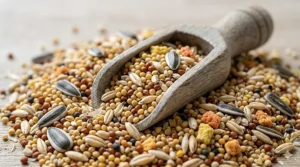
Budgie Food Storage: Keeping Nutrition Fresh
Even premium budgie food loses nutritional value without proper storage. Follow these UK-specific tips:
Cool, Dark, Dry Locations: Store food in sealed containers away from direct sunlight, heat, and humidity. British weather means extra vigilance against dampness—your budgie food mustn’t get mouldy!
Airtight Containers: Transfer opened bags into glass or BPA-free plastic containers with tight-sealing lids. This prevents oxidation and pest infiltration.
Refrigeration for Freshness: Controversial but effective—storing seeds in the fridge extends freshness. Just ensure they’re thoroughly sealed to prevent moisture absorption.
Small Batch Philosophy: Buy quantities you’ll use within 4-6 weeks maximum. Fresher food = better nutrition = healthier budgies.
Check Expiry Dates: Always inspect best-before dates when purchasing. Avoid clearance deals on soon-to-expire products—the “savings” aren’t worth compromised nutrition.
Supplementing Your Budgie’s Diet: Beyond Commercial Food
Quality commercial food provides the foundation, but thoughtful supplementation elevates nutrition to excellence.
Sprouted Seeds: Nutritional Powerhouses
Sprouting seeds deliver enhanced benefits with higher B vitamins through germination, transforming ordinary seeds into vitamin-rich superfoods. It’s remarkably simple:
- Soak seeds 6-24 hours
- Rinse thoroughly twice daily
- Keep warm and moist
- Serve within 2-4 days
Sprouted seeds should comprise 20-30% of daily intake during breeding or moulting periods.
Herbs and Greens
British gardens offer free nutritional gold: dandelion leaves, chickweed, plantain, and various grass seed heads. Budgies evolved eating wild grasses—these natural options delight them whilst providing trace nutrients commercial foods lack.
Mineral Supplementation
Always provide:
- Cuttlebone: Essential calcium source, particularly for egg-laying hens
- Mineral block: Trace minerals and beak-conditioning
- Grit (controversial): Most experts now advise against insoluble grit for budgies, as it can cause crop impaction
Occasional Treats
Safe, healthy treats include:
- Millet sprays (limited!)
- Commercial budgie biscuits
- Small amounts of cooked egg (excellent protein)
- Whole grain toast (unsalted, no butter)
Recognising Nutritional Deficiencies in Budgies
Your budgie’s appearance and behaviour reveal nutritional status. Watch for these warning signs:
Feather Problems: Dull, ragged, or constantly breaking feathers suggest protein, vitamin A, or essential fatty acid deficiencies.
Lethargy: Healthy budgies are active and vocal. Persistent tiredness might indicate poor nutrition or underlying illness requiring veterinary attention.
Obesity: Overweight budgies show keel bone (breastbone) obscured by fat, difficulty perching, and laboured breathing. Reduce high-fat seeds; increase vegetables and exercise opportunities.
Beak and Nail Overgrowth: Whilst requiring veterinary trimming, continuous rapid growth sometimes indicates mineral imbalances.
Frequent Illness: Robust immune systems depend on complete nutrition. Recurrent infections warrant dietary review alongside veterinary care.
If you notice these symptoms, consult an avian veterinarian promptly. Many nutritional problems are reversible with proper dietary changes.
UK-Specific Considerations for Budgie Nutrition
Seasonal Adjustments
British weather impacts budgie nutritional needs. Winter heating creates dry indoor environments—ensure adequate hydration and consider cucumber or lettuce for moisture. Summer heat might require increased vegetable portions with higher water content.
Sourcing Supplements Locally
UK regulations differ from the US and Australia. Some American brands aren’t readily available here, but excellent British and European alternatives exist:
- Johnston & Jeff (UK heritage brand)
- Versele-Laga (Belgian quality)
- Vitakraft (German engineering)
- Bucktons (British manufacturer)
Organic Options
With increasing emphasis on chemical-free living, organic budgie food is gaining popularity. Whilst pricier, organic seeds eliminate pesticide residues. Small UK suppliers often stock organic options through Amazon.co.uk or specialist bird shops.

Frequently Asked Questions
❓ What is the healthiest food for budgies?
❓ How much should I feed my budgie daily?
❓ Can budgies eat human food safely?
❓ How do I know if budgie seeds are fresh?
❓ Should budgies have pellets or seeds?
Conclusion
Choosing the best budgie food isn’t about finding one perfect product—it’s about creating a balanced, varied diet that keeps your feathered friend thriving for years to come. From reliable everyday options like Johnston & Jeff Utility Mix to premium choices like Versele-Laga Prestige and innovative pellets like Lafeber Tropical Fruit, British budgie owners in 2026 have access to exceptional nutrition.
Remember these key principles: prioritise variety, ensure freshness, supplement with vegetables, and always provide clean water. Whether you choose traditional seed mixes or embrace modern pelleted diets, your budgie will flourish when you commit to quality nutrition.
I’ve seen countless budgies transform from dull, lethargic birds into vibrant, energetic companions simply through improved diet. Those bright feathers, cheerful chirps, and playful antics you adore? They all start with proper nutrition.
Take another look at our top seven recommendations, consider your budgie’s specific needs, and make informed choices. Your little friend depends on you for every aspect of their wellbeing—and there’s genuine satisfaction in watching them thrive because you got their diet spot-on.
Happy budgie keeping, and here’s to many healthy, joyful years with your feathered companion!
Recommended for You
- 7 Best Hospital Cage with Heat Lamp UK 2026
- 7 Best Large Budgie Cage for 4 Birds UK 2026
- 7 Best Premium Bird Cages UK 2026
Disclaimer: This article contains affiliate links. If you purchase products through these links, we may earn a small commission at no additional cost to you. Prices shown are approximate and may vary.
✨ Found this helpful? Share it with your mates! 💬🤗
