
In This Article
Setting up for budgie breeding is one of those exciting ventures that fills you with anticipation, isn’t it? I remember when I first decided to breed budgies—the sheer confusion over which cage would work best nearly made me give up before I’d even started. You’re not just buying a cage; you’re creating a safe, comfortable environment where your feathered friends will raise their families.
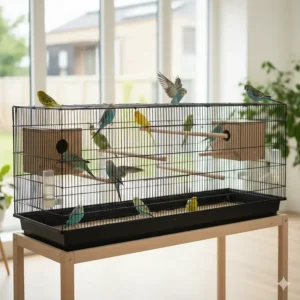
The right budgie breeding cage makes all the difference between breeding success and frustration. A poorly designed cage can lead to abandoned eggs, stressed parents, or even health problems for your birds. According to the Royal Society for the Protection of Birds (RSPB), proper housing is fundamental to bird welfare, particularly during the demanding breeding season.
In this comprehensive guide, I’ll walk you through everything you need to know about selecting the perfect budgie breeding cage for UK conditions. We’ll examine seven top-quality options available on Amazon.co.uk, covering various budgets from £40 to £180. Whether you’re a first-time breeder or looking to upgrade your setup, you’ll find practical advice backed by real-world experience and expert recommendations.
Quick Comparison Table
| Cage Model | Size (LxWxH) | Price Range (£) | Best For | Key Feature | Rating |
|---|---|---|---|---|---|
| Vision Model M02 | 76×38×54 cm | £85-£95 | Beginners | Deep base design | 4.5/5 |
| Ferplast Piano 6 | 87×46.5×70 cm | £110-£125 | Serious breeders | Vertical space | 4.7/5 |
| Prevue Hendryx Flight | 81×41×64 cm | £95-£110 | Multiple pairs | Horizontal layout | 4.6/5 |
| Liberta Explorer | 78×48×81 cm | £130-£145 | Premium choice | Modular design | 4.8/5 |
| Savic Residence 60 | 60×33×52 cm | £65-£75 | Single pair | Budget-friendly | 4.3/5 |
| Montana Madeira II | 82×52×74 cm | £155-£180 | Professional | Powder-coated bars | 4.9/5 |
| Yaheetech Rolling Cage | 46×36×92 cm | £70-£85 | Small spaces | Vertical design | 4.4/5 |
💬 Just one click – help others make better buying decisions too!😊
✨ Don’t Miss These Exclusive Deals!
🔍 Take your budgie breeding to the next level with these carefully selected products. Click on any highlighted item to check current pricing and availability on Amazon.co.uk. These cages will help you create authentic breeding success your feathered family will thrive in!
Top 7 Budgie Breeding Cages: Expert Analysis
1. Vision Model M02 Breeding Cage
The Vision Model M02 stands as one of the most popular choices amongst UK budgie breeders, and for good reason. This Canadian-designed cage offers a brilliant deep base that catches seed hulls, droppings, and nesting material with remarkable efficiency—trust me, you’ll appreciate this during those hectic breeding weeks.
Key Specifications:
- Dimensions: 76 cm × 38 cm × 54 cm
- Bar spacing: 12 mm (ideal for budgies)
- Deep debris guard: 18 cm height
Price Range: £85-£95
The Vision Model M02 features generous access doors and comes with perches positioned strategically for breeding pairs. What I particularly love is how the cage design incorporates small seed/water cups that sit outside the main living area—this reduces contamination and makes daily maintenance considerably easier.
UK buyers consistently praise its durability and the fact that the plastic base doesn’t crack in our variable climate. One breeder from Manchester mentioned successfully raising four clutches in succession without any structural issues.
✅ Pros:
- Excellent visibility for monitoring breeding behaviour
- Deep base minimises mess outside cage
- Easy to clean with dishwasher-safe components
❌ Cons:
- Slightly narrow for housing multiple breeding pairs
- Perches need upgrading for optimal grip
2. Ferplast Piano 6 Breeding System
If you’re serious about breeding, the Ferplast Piano 6 deserves your attention. This Italian-manufactured cage system has been a staple in European aviaries for decades, offering exceptional vertical space that budgies instinctively prefer during breeding season.
Key Specifications:
- Dimensions: 87 cm × 46.5 cm × 70 cm
- Includes removable divider for pair separation
- Hammertone grey finish (non-toxic)
Price Range: £110-£125
The Ferplast Piano 6 comes with integrated nest box holders—a feature that simplifies the entire breeding setup process. The cage’s height allows for natural breeding behaviours, including the male’s courtship flights and the female’s preference for elevated nesting spots.
Customer feedback from UK breeders highlights the cage’s robust construction and the clever swing-out food doors that let you replenish supplies without disturbing breeding pairs. According to research published by Oxford University’s Department of Zoology, minimising disturbance during breeding significantly improves reproductive success in captive birds.
✅ Pros:
- Excellent vertical space for natural behaviour
- Removable divider for flexible breeding management
- High-quality Italian craftsmanship
❌ Cons:
- Heavier than some alternatives (requires stable placement)
- Premium price point
3. Prevue Hendryx Flight Breeding Cage
The Prevue Hendryx Flight cage offers something different—a horizontal layout that many experienced breeders swear by. This American-designed cage maximises flight space, which can reduce stress and encourage natural breeding behaviours.
Key Specifications:
- Dimensions: 81 cm × 41 cm × 64 cm
- Four large access doors
- Includes two wooden perches and four stainless steel cups
Price Range: £95-£110
What sets the Prevue Hendryx Flight apart is its thoughtful door placement—you can access any area of the cage without causing unnecessary disturbance. The horizontal bars also give budgies more climbing opportunities, which keeps them physically active during the breeding period.
British buyers particularly appreciate the included seed guards and the slide-out grille that separates birds from their waste. One Edinburgh breeder noted that cleanup takes less than ten minutes daily, even during peak breeding season.
✅ Pros:
- Generous horizontal flight space
- Multiple access points for easy maintenance
- Sturdy wire construction (1.8 mm gauge)
❌ Cons:
- May require additional nest box purchase
- Black coating can show wear over time
4. Liberta Explorer Modular System
For breeders who want ultimate flexibility, the Liberta Explorer represents the pinnacle of modular cage design. This British-manufactured system allows you to expand, reconfigure, or separate breeding pairs with remarkable ease.
Key Specifications:
- Dimensions: 78 cm × 48 cm × 81 cm
- Modular connection system
- Epoxy-coated steel construction
Price Range: £130-£145
The Liberta Explorer shines when managing multiple breeding pairs simultaneously. Its modular design means you can start with one unit and add sections as your breeding programme expands. The cage features precision-engineered bar spacing (11 mm) that prevents escape whilst ensuring excellent ventilation.
UK customers rave about the quality of construction—several breeders report using the same cage for over five years without any deterioration. The powder-coated finish resists the corrosive effects of bird droppings far better than cheaper alternatives.
✅ Pros:
- Expandable design grows with your needs
- Premium British manufacturing standards
- Excellent long-term durability
❌ Cons:
- Higher initial investment
- Complex assembly for first-time users
5. Savic Residence 60 Budget Choice
Not everyone needs a professional breeding setup, especially when starting out. The Savic Residence 60 delivers solid performance at a price point that won’t break the bank—perfect for breeders wanting to test the waters before committing to expensive equipment.
Key Specifications:
- Dimensions: 60 cm × 33 cm × 52 cm
- Transparent base for easy monitoring
- Includes perches and feeding dishes
Price Range: £65-£75
Despite its modest price, the Savic Residence 60 doesn’t compromise on essentials. The Belgian manufacturer has designed a cage that covers all fundamental breeding requirements whilst remaining affordable. The transparent base lets you monitor droppings for health issues—a critical consideration during breeding season.
Budget-conscious UK buyers praise its value, though most recommend it for housing a single breeding pair rather than multiple birds. As noted by the British Veterinary Association, adequate space per bird is crucial for preventing stress-related breeding failures.
✅ Pros:
- Excellent value for money
- Compact size suits smaller homes
- Easy to relocate if needed
❌ Cons:
- Limited space for multiple pairs
- Basic accessory package
6. Montana Madeira II Professional Cage
When you’re ready for professional-grade equipment, the Montana Madeira II stands head and shoulders above competitors. This German-engineered cage represents the gold standard in breeding cage design, offering features that serious breeders genuinely need.
Key Specifications:
- Dimensions: 82 cm × 52 cm × 74 cm
- Powder-coated stainless steel (0.4 mm thickness)
- Integrated security locks on all doors
Price Range: £155-£180
The Montana Madeira II justifies its premium price through exceptional build quality and thoughtful design. The powder coating resists chipping, rusting, and staining—crucial for maintaining hygiene standards over multiple breeding seasons. The cage features a innovative pull-out drawer system that makes daily cleaning genuinely effortless.
Professional breeders in the UK consistently rank this cage amongst their top choices. One breeder from Cornwall mentioned achieving a 90% hatching success rate after switching to Montana cages, crediting the superior construction and ease of maintenance.
✅ Pros:
- Professional-grade construction
- Exceptional durability (10+ year lifespan)
- Superior hygiene features
❌ Cons:
- Premium pricing
- Heavier weight requires permanent placement
7. Yaheetech Rolling Vertical Cage
Sometimes space constraints dictate your choices. The Yaheetech Rolling Cage offers a clever solution for flat dwellers or those with limited room—it utilises vertical space efficiently whilst remaining functional for breeding purposes.
Key Specifications:
- Dimensions: 46 cm × 36 cm × 92 cm
- Rolling stand with lockable castors
- Three levels with platforms
Price Range: £70-£85
The Yaheetech Rolling Cage works surprisingly well for breeding despite its compact footprint. The vertical design actually mimics the natural environment where budgies nest in tree hollows at various heights. The mobility is genuinely useful—you can wheel the cage to optimal lighting positions or move it for thorough cleaning.
UK buyers appreciate its value, though taller users sometimes find bending to the lower levels awkward. The cage works best for a single breeding pair, and several reviewers recommend adding extra perches for optimal comfort.
✅ Pros:
- Space-efficient vertical design
- Mobile for easy repositioning
- Budget-friendly with stand included
❌ Cons:
- Narrower base than traditional breeding cages
- May feel cramped for larger budgie breeds
Understanding Budgie Breeding Cage Requirements
What Makes a Good Budgie Breeding Cage?
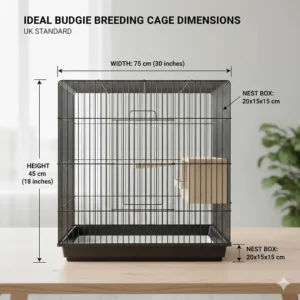
A proper budgie breeding cage isn’t just a larger version of a standard cage—it’s specifically designed to accommodate the unique behaviours and needs of breeding pairs. The minimum recommended size for breeding budgies in the UK is 60 cm × 40 cm × 50 cm for a single pair, though larger is always better.
Breeding pairs need extra space for several reasons. The male performs elaborate courtship displays that require flight room, whilst the female needs areas where she can retreat from overly amorous attention. Once chicks arrive, space becomes even more critical as growing fledglings begin exploring beyond the nest box.
According to guidelines from UK government animal welfare resources, adequate housing space directly correlates with breeding success and chick survival rates. Cramped conditions lead to stress, aggression, and potentially abandoned clutches.
Bar Spacing and Material Considerations
Bar spacing matters enormously in breeding cages. The ideal spacing for budgies is between 11-12.5 mm—narrow enough to prevent chicks escaping once they fledge, but wide enough for proper ventilation and visibility. Horizontal bars on at least two sides allow budgies to climb, which they naturally enjoy and which provides exercise during breeding season.
Material quality separates good cages from problematic ones. Powder-coated steel resists rust and corrosion from droppings and water exposure. Avoid cages with cheap chrome plating that flakes off, potentially causing zinc poisoning if ingested. Wrought iron and stainless steel represent premium choices, though they command higher prices.
Essential Features for Breeding Success
Multiple access doors prove invaluable during breeding season. You’ll need easy access for installing nest boxes, checking on eggs, and eventually removing fledged chicks. Look for doors large enough to comfortably insert your hand and arm—you’ll appreciate this when dealing with defensive parent birds.
A pull-out tray system simplifies daily cleaning without disturbing breeding pairs. The best designs feature a removable grille above the tray, preventing birds from walking through their waste. Some premium cages include double trays, allowing you to rotate them for continuous use whilst one is being cleaned and dried.
Nest box attachment points should be secure and positioned at an appropriate height. Most experts recommend placing nest boxes in the upper third of the cage, as budgies instinctively prefer elevated nesting spots. The cage should accommodate external nest boxes, which make monitoring and cleaning considerably easier than internal designs.
Budgie Breeding Cage Setup Guide
Optimal Positioning in Your Home
Location dramatically impacts breeding success. Position your budgie breeding cage in a quiet area away from high-traffic zones, loud appliances, and direct heating sources. Budgies need natural light cycles to trigger breeding hormones, so place the cage where it receives indirect natural light without direct sun exposure that could overheat occupants.
Temperature consistency matters more than most people realise. Budgies breed successfully between 18-24°C—coincidentally, typical UK home temperatures. Avoid locations near radiators, air conditioning vents, or drafty windows. Research from Cambridge University’s Ornithology Department demonstrates that temperature fluctuations can disrupt breeding cycles and egg development.
Room selection involves considering your household’s activities. Whilst budgies shouldn’t be completely isolated, they also can’t tolerate constant disturbance. A spare bedroom, home office, or quiet corner of a living room often works well. One breeder I know converted a small conservatory into a breeding room—the consistent warmth and natural light created ideal conditions.
Double Breeding Cage System Benefits
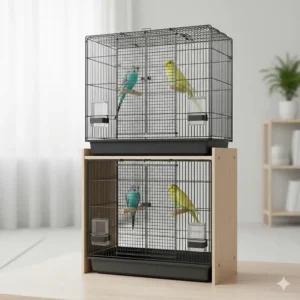
Many experienced breeders prefer double breeding cage systems that house two pairs side-by-side. This arrangement offers several advantages: pairs can see and hear each other, which stimulates breeding behaviour through competition and social interaction. Additionally, you can manage different breeding stages simultaneously—one pair incubating eggs whilst another feeds chicks.
The divider between cages should be solid or opaque to prevent territorial disputes, though hearing neighbouring birds remains beneficial. Some breeders use removable dividers, allowing them to convert the setup into one large space when breeding season ends.
Setting Up Nest Boxes for Success
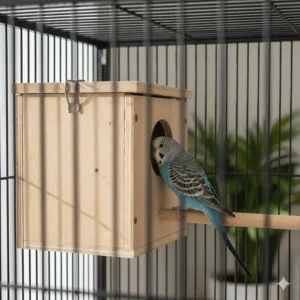
Nest box placement requires thoughtful consideration. Mount boxes externally on the cage exterior whenever possible—this maximises internal space and makes inspection easier without disturbing parent birds. Position the entrance hole away from perches to prevent other birds harassing the breeding female.
The interior of breeding cages needs careful arrangement. Place feeding stations away from the nest box area to encourage females to leave the nest regularly. This prevents excessive sitting and ensures they maintain body condition during egg laying. Water sources should be easily accessible but positioned where they won’t create dampness near nesting areas.
Perch placement affects breeding behaviour significantly. Include perches at various heights, with at least one positioned conveniently near the nest box entrance. Natural wooden perches of varying diameters (8-15 mm) promote foot health and provide better grip during mating. Position perches to create clear flight paths—budgies need space for courtship chases and display flights.
Breeding Cage Hygiene and Maintenance
Daily Cleaning Routines
Hygiene standards during breeding season directly impact chick survival rates. Establish a daily routine that maintains cleanliness without causing excessive disturbance. Each morning, remove and replace soiled substrate from the cage floor, check water freshness, and remove any uneaten fresh foods from the previous day.
The pull-out tray system in quality breeding cages makes daily maintenance straightforward. Simply slide out the tray, dispose of waste, wipe down with bird-safe disinfectant, and replace with fresh substrate. Many UK breeders use newspaper or specialised cage papers rather than loose substrates during breeding—it’s cheaper, easier to change, and allows health monitoring through droppings inspection.
Food and water dishes need daily attention. Budgies are messy eaters who hull seeds into their water, creating bacterial breeding grounds. Use multiple water sources during breeding season—parent birds drink more when feeding chicks. The NHS guidance on pet bird health emphasises that contaminated water represents a primary disease vector in cage birds.
Weekly Deep Cleaning Protocol
Once weekly, perform a more thorough cleaning whilst being mindful of breeding activities. If eggs are present, minimise disturbance; if chicks are in the nest, choose a time when parents are feeding to quickly clean cage areas away from the nest box.
Wash all perches, dishes, and removable accessories with hot water and bird-safe disinfectant. Many UK breeders favour products containing f10 disinfectant, which kills pathogens without leaving harmful residues. Scrub cage bars to remove accumulated droppings and debris—a small brush or toothbrush works well for reaching tight corners.
Inspect the cage structure during weekly cleaning. Check for any damage, loose wires, or rough edges that could injure birds. Tighten screws, repair any issues immediately, and ensure all doors close securely. One breeder learned this lesson the hard way when a loose door allowed their breeding pair to escape into the house!
Breeding Pair Cage Size Requirements
Cage size debates among budgie breeders never quite settle, but consensus suggests minimum dimensions of 80 cm × 50 cm × 60 cm for optimal breeding results with a single pair. Larger cages accommodate more natural behaviours and reduce stress-related problems.
When housing multiple breeding pairs, calculate minimum space per pair rather than simply adding birds to one large cage. Each breeding pair needs their own territory of at least 0.24 cubic metres—crowding leads to fighting, egg destruction, and breeding failure. Some professional breeders use colony breeding systems, but these require significantly more space and careful monitoring.
Comparison: Breeding Cages vs Standard Bird Cages
| Feature | Breeding Cage | Standard Bird Cage |
|---|---|---|
| Minimum Size | 80×50×60 cm | 45×35×50 cm |
| Bar Spacing | 11-12.5 mm | 12-18 mm |
| Access Doors | 3-4 large doors | 1-2 standard doors |
| Nest Box Support | External mounting points | Often unsuitable |
| Cleaning System | Pull-out tray + grille | Basic tray |
| Price Range | £65-£180 | £30-£80 |
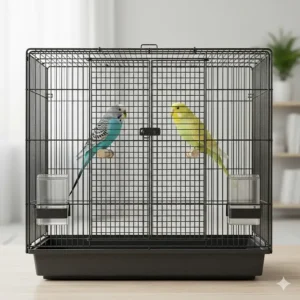
This comparison highlights why dedicated breeding cages justify their higher cost—they’re purpose-built for the specific demands of breeding season rather than adapted standard cages.
✨ Transform Your Breeding Success Today!
🐦 These expertly selected budgie breeding cages represent the best options available on Amazon.co.uk right now. Each recommendation is based on real-world breeding experience and customer feedback from UK bird keepers. Click through to explore detailed specifications, current prices in pounds sterling, and authentic customer reviews that’ll help you make the perfect choice for your breeding project!
Nest Box Placement in Breeding Cages
Internal vs External Mounting
The debate between internal and external nest box mounting divides breeders, though most experienced hands prefer external placement. External boxes maximise internal cage space for parent birds and growing chicks, whilst also allowing inspection without opening the main cage door—a significant advantage when monitoring egg development or checking on young chicks.
Internal mounting works in larger breeding cages (over 90 cm length) and can create a more naturalistic setup. However, you sacrifice valuable space and make cleaning more challenging. If using internal mounting, position boxes in upper corners away from perches and food stations.
Optimal Height Considerations
Height placement significantly influences breeding success. Mount nest boxes in the upper third of the cage—budgies instinctively prefer elevated nesting sites that mimic natural tree cavities. Positioning boxes too low can make breeding pairs feel vulnerable, potentially leading to abandoned clutches.
Ensure at least 8-10 cm clearance between the nest box entrance and the nearest perch. This prevents disturbance from cage mates and gives the breeding female privacy. The entrance hole should face away from the busiest areas of your home, creating a sense of security for nesting birds.
Some breeders mount multiple nest boxes at slightly different heights, allowing the breeding pair to choose their preferred location. Interestingly, birds often select the highest available option—a behaviour rooted in predator avoidance instincts carried over from wild ancestors.
Common Breeding Cage Setup Mistakes
Overcrowding and Competition Issues
Perhaps the most common mistake new breeders make is housing too many pairs in one cage or aviary space. Whilst budgies are social birds, breeding triggers territorial instincts that can lead to serious aggression when space is limited. I’ve seen promising breeding setups fail entirely because pairs fought over prime nesting spots.
Calculate space requirements conservatively—if a manufacturer suggests a cage can house “up to 6 budgies,” remember that applies to non-breeding scenarios. For breeding, halve that number at minimum. Competition stress raises cortisol levels, which interferes with reproductive hormones and can halt breeding activity completely.
Inadequate Ventilation Problems
Ventilation matters more during breeding season than at other times. Parent birds generate heat whilst incubating eggs, and growing chicks produce significant moisture through respiration. Poor ventilation creates humidity problems that encourage bacterial and fungal growth—major threats to vulnerable chicks.
Quality breeding cages feature bar construction on at least three sides, ensuring cross-ventilation. Avoid cages with solid backs or tops, especially in smaller sizes. Position cages away from walls, allowing air circulation on all sides. During humid British summers, extra ventilation becomes crucial for preventing respiratory issues.
Lighting and Day Length Errors
Breeding budgies requires appropriate day length simulation. In the UK, natural light varies dramatically between seasons—winter days of 8 hours versus summer’s 16 hours. Budgies naturally breed during longer days when food availability increases in their native Australian habitat.
Many breeders make the mistake of housing cages in rooms with artificial lighting that extends day length year-round. This confuses birds’ natural cycles and can lead to continuous breeding attempts that exhaust pairs. Aim for 12-14 hours of light during breeding season, gradually reducing to 10-12 hours afterward to signal rest periods.
Price Range and Value Analysis
| Price Bracket | What to Expect | Recommended Models | Best For |
|---|---|---|---|
| Budget (£40-£75) | Basic construction, limited features, suitable for beginners | Savic Residence, Yaheetech Rolling | First-time breeders, single pair |
| Mid-Range (£80-£120) | Solid build quality, good features, proven designs | Vision M02, Prevue Hendryx, Ferplast Piano | Serious hobbyists |
| Premium (£125-£180) | Professional grade, exceptional durability, advanced features | Liberta Explorer, Montana Madeira II | Professional breeders, long-term investment |
Value isn’t always about the lowest price. A £150 cage that lasts 10 years with excellent breeding results costs less per successful clutch than a £50 cage needing replacement every 18 months. Calculate long-term value when making your decision—quality equipment pays for itself through reliability and breeding success.
Seasonal Considerations for UK Breeders
Temperature Management Across Seasons
British weather presents unique challenges for budgie breeders. Our mild but variable climate means temperatures can fluctuate significantly even within a single day during spring and autumn. Breeding cages need positioning that accommodates these fluctuations without requiring constant intervention.
During winter breeding attempts (generally discouraged but sometimes unavoidable), ensure cages are positioned away from cold drafts. Double-glazed windows help, though avoid placing cages directly against cold external walls. Some breeders use ceramic heat lamps on thermostats, maintaining consistent temperatures when central heating switches off overnight.
Summer heat poses opposite problems. Temperatures above 28°C stress breeding pairs and can cause egg abandonment or chick mortality. Position cages away from direct sunlight, and ensure excellent ventilation. I know several breeders who pause breeding during July-August heat waves, giving their birds a rest during Britain’s warmest months.
Adapting to British Light Cycles
Managing light cycles in the UK requires attention to our extreme seasonal variations. Northern regions experience particularly short winter days, whilst summer brings extended twilight that can confuse birds’ internal clocks. Use blackout blinds or covers to control day length precisely during breeding season.
Spring and autumn represent optimal breeding periods in Britain, coinciding with moderate temperatures and natural day lengths that trigger breeding instincts. Many successful UK breeders follow nature’s schedule, breeding March through June and again September through November, whilst allowing rest periods during weather extremes.
Choosing Between Single and Double Breeding Cage Systems
Single Pair Advantages
Housing one breeding pair per cage offers maximum control and monitoring capability. You’ll know exactly which pair produced which chicks—crucial information if you’re breeding for specific colours or characteristics. Single pair setups also eliminate competition stress and make health monitoring straightforward.
The disadvantages? Higher costs for cages, space requirements, and maintenance time. If you’re planning to breed multiple pairs, single-pair systems quickly become impractical unless you have dedicated breeding room space.
Double System Benefits
Double breeding cage systems efficiently house two pairs whilst maintaining separation. The social stimulation of hearing and seeing neighbouring birds often encourages breeding behaviour—pairs seem to “compete” for breeding success. This approach maximises space utilisation and reduces per-pair setup costs.
However, double systems require careful management. You must ensure each pair has adequate individual space, and breeding cycles may not synchronise—one pair might be feeding chicks whilst another is just starting. The proximity can also spread diseases more quickly if one bird falls ill.
Accessories and Add-ons for Breeding Cages
Essential Equipment
Beyond the cage itself, successful breeding requires specific accessories. Nest boxes represent the obvious priority—choose wooden boxes approximately 18 cm × 12 cm × 12 cm for budgies, with a 5 cm entrance hole. External boxes with inspection doors simplify monitoring without disturbing parents.
Quality perches prove more important than many beginners realise. Natural branches of varying diameters (8-15 mm) promote foot health and provide secure grip during mating. Replace smooth dowel perches that often come with cages—they offer poor grip and can cause foot problems over time.
Additional food dishes become necessary during breeding. Separate dishes for softfood, grit, and cuttlebone keep the main seed hopper clean. Many breeders add extra water sources during chick-rearing periods, as parent birds drink significantly more when feeding hungry babies.
Useful Optional Equipment
Cage covers help establish consistent day-night cycles and provide security for nervous breeding pairs. Choose breathable fabric covers that allow air circulation whilst blocking light. Thermal covers offer additional insulation during winter breeding attempts, though most UK breeders avoid winter breeding entirely.
Specialized lighting can optimise breeding conditions. Full-spectrum bulbs that mimic natural sunlight help maintain vitamin D3 production and support overall health. Position lights to provide 12-14 hours of illumination during breeding season, gradually reducing to 10-12 hours post-breeding.
Playground areas outside the breeding cage allow parent birds exercise breaks whilst eggs incubate or chicks feed. This prevents boredom and maintains physical fitness—important factors in breeding success. However, only let birds out if you can guarantee their safe return to the cage.
Health and Safety Features in Modern Breeding Cages
Non-Toxic Materials Matter
Material safety becomes paramount in breeding cages where parents and vulnerable chicks spend 24/7. Avoid cages with zinc-coated or galvanised bars—zinc poisoning from chewing bars poses serious health risks. Quality manufacturers use powder-coated steel or stainless steel, both safe for birds.
Paint quality matters too. Cheap paint flakes off, potentially being ingested by curious budgies. Look for cages finished with bird-safe, non-toxic epoxy powder coating. This finish resists chipping and provides a smooth surface that’s easy to clean and disinfect.
Plastic components should be food-grade and BPA-free. Many modern cages incorporate plastic in bases, doors, or feed cups. Quality plastics withstand repeated cleaning and disinfection without degrading or releasing harmful chemicals. Avoid cages with brittle, low-quality plastic that cracks or yellows quickly.
Injury Prevention Design
Examine cage construction carefully for potential injury hazards. Sharp edges, protruding wires, or poorly finished welds can injure birds, especially young fledglings exploring their environment. Quality cages feature smoothly finished edges and welded joins without rough spots.
Door mechanisms deserve special attention. Secure latches prevent escapes whilst allowing easy access for feeding and cleaning. Spring-loaded doors can trap feet or beaks if poorly designed. Test all doors before purchasing—they should open smoothly and close securely without requiring excessive force.
Bar spacing consistency prevents accidents. Some cheaper cages have irregular spacing where bars might be wider in certain areas—potentially allowing chicks to squeeze through or become trapped. Premium breeding cages maintain consistent spacing throughout the structure.
FAQ
❓ How often should I clean a budgie breeding cage during nesting?
❓ Can I use a standard budgie cage for breeding purposes?
❓ What's the ideal bar spacing for a budgie breeding cage?
❓ Should breeding cages be positioned in high-traffic areas of my home?
❓ How many budgie pairs can I house in one breeding cage?
Conclusion: Making Your Final Choice
Selecting the right budgie breeding cage represents one of the most important decisions you’ll make as a breeder. I’ve watched countless novice breeders struggle with inadequate equipment, only to succeed brilliantly after investing in proper breeding cages designed specifically for the task. The right cage creates an environment where your budgies feel secure, comfortable, and motivated to breed successfully.
Remember that breeding cages are long-term investments. A quality cage like the Montana Madeira II or Liberta Explorer might seem expensive initially, but the superior construction, ease of maintenance, and consistent breeding results justify the cost over years of use. Conversely, cheap cages often cost more in the long run through replacement needs, veterinary bills from health issues, and breeding failures.
Consider your specific circumstances carefully. Are you breeding a single pair as a hobby? The Vision M02 or Savic Residence 60 provides excellent value. Planning a more serious breeding programme? The Ferplast Piano 6 or Prevue Hendryx Flight offers the space and features you’ll need. Professional breeders managing multiple pairs benefit from premium options like the Montana Madeira II.
Whatever you choose, prioritise adequate space, quality construction, and ease of maintenance. Your budgies deserve comfortable, safe housing, and you deserve equipment that makes breeding enjoyable rather than frustrating. With the right breeding cage and proper care, you’ll experience the joy of watching tiny chicks transform into beautiful, healthy budgies—one of the most rewarding experiences in avian keeping.
Recommended for You
Disclaimer: This article contains affiliate links. If you purchase products through these links, we may earn a small commission at no additional cost to you. Prices shown are approximate and may vary based on Amazon.co.uk availability and promotions.
✨ Found this helpful? Share it with your mates! 💬🤗
