
In This Article
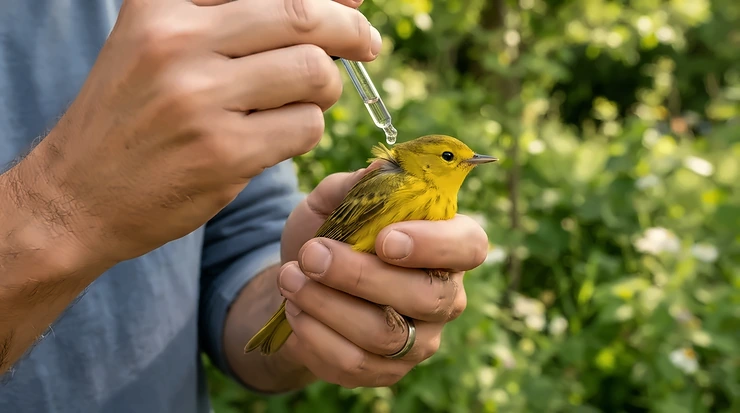
Air sac mite treatment for canaries is a course of anti-parasite medication, usually ivermectin or moxidectin given as a skin drop or in drinking water, that kills Sternostoma tracheacolum mites living in a bird’s windpipe and air sacs. It works best when every bird is treated together, the cage is cleaned, and a vet confirms the diagnosis.
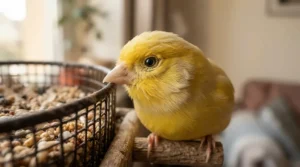
Your canary has stopped singing. Or the song cuts out halfway through a phrase, like a radio losing signal. Then you hear it: a faint click with every breath, a squeak, a little gurgle. Birds hide illness brilliantly, so by the time the sound is audible, the problem has often been building for a while.
Here is the first thing worth knowing. Vet Times notes that these mites are common in finches and only occasionally found in canaries. So a wheezing canary is not automatically an air sac mite case, and guessing wrong wastes precious days.
This guide compares seven real products that UK keepers use or consider. Some treat the mites directly, and some deal with the cage they live in. I haven’t tested any of them. Everything below comes from product labels, regulatory documents and published reviews, and I flag where I couldn’t verify something. Where ratings exist, I describe them as aggregated reviewer sentiment, never as my own results.
Quick Comparison: Air Sac Mite Treatment for Canaries at a Glance
| Product | Type | Active ingredient | Targets air sac mites? | Price range (indicative) | Best For |
|---|---|---|---|---|---|
| Beaphar Anti-Parasite Spot On Small Birds | Skin spot on | Ivermectin | Yes (on label) | Under £10 | Budget-conscious single-bird owners |
| Vetafarm Scatt | Skin drops | Moxidectin | Yes (on label) | Roughly £15-£20 equivalent, import-dependent | Breeders wanting one-drop dosing |
| S76 | Drinking water | Ivermectin | Yes (on listing) | £60-£70 for the 250ml size | Larger flocks |
| Vetafarm MoxiVet Plus | Drinking water | Moxidectin | Yes (on label) | Check current price | Quarterly flock control |
| Vetafarm Avian Insect Liquidator | Cage/bird spray | Permethrin, PBO, methoprene | No (external mites) | Roughly £10-£20 | Environment control |
| Johnson’s Anti-Mite & Insect Spray | Spray | Pyrethrum, PBO | No (external mites) | Under £15 | UK-licensed cage mite control |
| F10SC Veterinary Disinfectant | Disinfectant | Quaternary/biguanide blend | No | Mid-to-high £teens | Cage hygiene |
The table shows a split that listings tend to blur. Only four of these seven products make air sac mite claims at all. The other three are support acts that protect against re-infestation and secondary infection. If budget is tight, Beaphar Anti-Parasite Spot On Small Birds is the cheapest way in. For a flock, S76 and MoxiVet Plus save you from catching every bird, but their dosing is less precise.
💬 Just one click — help others make better buying decisions too!😊
Top 7 Air Sac Mite Treatment for Canaries: Expert Analysis
1. Beaphar Anti-Parasite Spot On Small Birds — cheapest ivermectin spot on for canaries
The headline is price. A two-pipette pack costs well under £10, which makes this the lowest-risk way into ivermectin spot on treatment.
Each pipette holds 10µg of ivermectin and is labelled for birds weighing 20-50g. The label gives one pipette per bird, repeatable after four weeks, and lists air sac mites among the target parasites. In practice, that 20g floor is the detail to respect. Some stockists warn explicitly that using it on lighter birds risks overdosing. Canary weights vary by breed and sex, so weigh your bird on accurate kitchen scales first.
Based on the label wording, there is a catch for wheezing birds. The manufacturer says not to use it on sick or convalescent birds. A canary with audible breathing trouble arguably qualifies, so this product suits routine control or a vet-endorsed plan better than a panicked midnight experiment. Application matters too. The label stresses applying to skin or soft down, because the outer feathers repel liquid and render the dose useless.
Reviewer sentiment: I couldn’t find enough independent review data to summarise honestly. The retailer listings I checked carried no reviews.
Pros:
- ✅ Very low cost per treated bird
- ✅ Pre-measured pipette removes dosing guesswork
- ✅ Marketed under the UK small-pet exemption scheme
Cons:
- ❌ Not for birds under 20g
- ❌ Label warns against use on sick birds
Price and value: under £10 for two pipettes. Excellent value if your bird meets the weight and health criteria.
2. Vetafarm Scatt — one-drop moxidectin, the breeder’s favourite
Scatt is the product people mean when they search for air sac mite drops for finches.
The active ingredient is moxidectin at 1000µg/mL. One retailer’s directions say to apply one drop to birds under 30g and two drops to birds weighing 30-100g, placed on bare skin. Another suggests re-treating three to four times a year for air sac mite prevention. That is dosing simple enough for a nervous first-timer. A single 50ml bottle contains hundreds of treatments, which is generous for a pet keeper and efficient for a breeder.
Reviewer sentiment: one US retailer showed 91% positive ratings across 11 reviews. Another listing showed 4.6 out of 5 across 335 reviews. Reviewers frequently describe canaries seeming perkier within days. A few reported lingering problems, which is a reminder that a drop cannot fix a misdiagnosis.
Be careful about sourcing. Vetafarm’s own Australian page says the product is not in Australian stores, and I found no UK high-street stockist. Supply may rely on importers, so ask your vet about suitability before buying.
Pros:
- ✅ One drop per bird is quick and low-stress
- ✅ Positive aggregated reviews for canaries
- ✅ One bottle lasts years
Cons:
- ❌ UK availability is patchy and unverified
- ❌ A 50ml bottle is far more than most keepers need
Price and value: roughly £15-£20 equivalent in US listings before shipping and import costs. Check current price.
3. S76 — treats a whole flock through drinking water
If you keep twenty canaries, catching every one is itself a stress hazard. S76 is designed for that scenario.
The Fab Finches listing describes it as an ivermectin-in-water treatment for air sac mites, red mite, feather mites, lice and roundworms, and it follows a four-week plan. The 250ml bottle was listed in the £60-£70 range at the time of research, with smaller sizes also sold. Availability on amazon.co.uk may depend on third-party sellers, so check the listing.
Reviewer sentiment: on eBay, the product held 4.8 out of 5 from 39 ratings. Reviewers reported breathing improving within a couple of days. Several called it excellent but expensive for the volume, and one stressed that completing all four weeks and treating the environment is essential.
Here is the tension. Vetafarm-sourced guidance discourages ivermectin in drinking water because the chemical degrades and intake varies between birds. S76 is a specially formulated product, but the dose each bird gets still depends on how much it drinks. For flocks, that trade-off is usually worth it. For one pet canary, it probably isn’t.
Pros:
- ✅ No catching or handling needed
- ✅ Strong aggregated reviewer sentiment
- ✅ Covers worms, lice and several mite types
Cons:
- ❌ Expensive for the 250ml size
- ❌ Individual dose depends on water intake
Price and value: £60-£70 for 250ml. Good value for large flocks, poor for single birds.
4. Vetafarm MoxiVet Plus — moxidectin water treatment with a quarterly rhythm
Think of MoxiVet Plus as maintenance rather than rescue.
Vetafarm describes it as a moxidectin (1mg/mL) treatment for air sac mites, scaly face mites, feather mites, ticks and several worm types. For small passerines such as finches, the label dose is 2ml per litre of drinking water. The medicated water is supplied for 24 hours, and treatment is repeated every three months. The 24-hour window means you must remove other water sources, including baths. Otherwise some birds will simply drink less of the medicated water.
I couldn’t verify UK stockists or independent customer reviews. That is a real gap and not something to paper over. Treat it as a candidate to raise with your avian vet rather than a ready-made recommendation.
Pros:
- ✅ Broad coverage of internal and external parasites
- ✅ Short 24-hour treatment window
- ✅ Suits scheduled quarterly flock control
Cons:
- ❌ UK availability not verified
- ❌ No independent reviews found
Price and value: check current price, as sellers vary. Value depends entirely on sourcing.
5. Vetafarm Avian Insect Liquidator — knocks back external mites in the cage
This is not an air sac mite treatment, and it does not claim to be. It earns its place because re-infestation from the environment undoes good medication.
The formula combines piperonyl butoxide, permethrin and methoprene, an insect growth regulator. The maker promises instant knockdown and up to six weeks of residual protection on treated surfaces. It comes ready to use or as a concentrate, and the directions cover cages, perches and nest boxes. For direct use, the label says to spray from 30-40cm.
Be practical about it. Spray the empty cage, perches and nest boxes, let them dry, and keep a wheezing bird well away from the mist. I wouldn’t aim an aerosol at a bird already struggling to breathe without vet approval.
Reviewer sentiment: retailer reviewers describe it clearing pests from aviaries effectively. None of them are canary air sac mite stories, which is exactly what you’d expect.
Pros:
- ✅ Long residual protection on surfaces
- ✅ Covers perches, nest boxes and cage bars
- ✅ Ready-to-use format saves mixing
Cons:
- ❌ Does not treat air sac mites
- ❌ UK stockists vary
Price and value: roughly £10-£20 depending on size and seller. Good value as a cage companion to the medicine.
6. Johnson’s Anti-Mite & Insect Spray — British-licensed spray for cage mites
The appeal here is familiarity. The regulator’s Summary of Product Characteristics names canaries, budgerigars and pigeons as target species.
It contains 0.8% pyrethrum extract and 1.0% piperonyl butoxide. The document says to spray each bird for four to six seconds, from about 38cm, at the rear, parting the feathers. It warns against breathing the mist and spraying into eyes. For multiple birds, it advises spraying the cage and letting the mist fall on the surroundings where mites breed. Note that the SPC I read was revised in March 2010, so always follow the current pack label.
What this means for you: pyrethrum knocks mites down fast but doesn’t linger as long as permethrin. It is a sensible weekly cage-hygiene tool, but not an air sac mite cure. And “do not breathe spray mist” is a good reason to keep it far from a wheezing bird.
I couldn’t verify reviewer data, so I won’t characterise it.
Pros:
- ✅ UK-licensed with canaries named on documentation
- ✅ Fast knockdown of external mites
- ✅ Widely available through UK pet retailers
Cons:
- ❌ No air sac mite activity
- ❌ Aerosol mist is risky near respiratory cases
Price and value: typically under £15. Fair value for routine cage hygiene.
7. F10SC Veterinary Disinfectant — cage hygiene that backs up the medicine
A wheezing bird is not always a mite bird. Fungal infections such as aspergillosis also cause tracheal and breathing trouble, as Vet Times explains. Clean cages reduce one of those risks.
UK retailers list F10SC as a concentrate used at 2ml per litre of water for general disinfection. It’s described as active against bacteria, viruses, fungi and spores, and as non-corrosive. The big practical rule: it cannot be used in the cage while the bird is present, so dilute, wash, air dry and return the bird. A 100ml bottle makes a large volume of working solution.
Reviewer sentiment: shoppers on one retailer listing said a little goes a long way and that the price felt high until they saw how much it diluted.
Pros:
- ✅ Highly diluted, so one bottle lasts
- ✅ Broad activity against bacteria, viruses and fungi
- ✅ Non-corrosive on metal cage bars
Cons:
- ❌ Doesn’t kill mites directly
- ❌ Bird must be absent during application
Price and value: 100ml sat around £14-£19 in UK listings. Strong value per litre of solution.
Tracheal Mites: What Is Actually Happening Inside Your Bird?
Tracheal mites sounds like a minor annoyance. In truth, the mite Sternostoma tracheacolum is a respiratory parasite measuring about half a millimetre, and it lives in the trachea, lungs and air sacs.
According to veterinary guidance supplied by Vetafarm, the whole life cycle from egg to adult takes only about six days. Mites pass between birds when adults feed each other or feed chicks, and free-living mites in the environment also contribute. That speed is why a single treated bird in a shared aviary can be re-infected within the week. It’s also why every bird must be treated at once.
The mites feed in the airway, causing irritation, inflammation and mucus. That narrows an airway already about the width of a pencil lead. A Merck Veterinary Manual entry on air sac mites covers a related species, Cytodites nudus, and notes it has been found in canaries and is hard to identify. That is the second reason to involve a vet: mites can sometimes be seen only with transillumination or on post-mortem.
Reviewing the case literature, one Brazilian report described a Belgian canary that died from this parasite with a concurrent foot infection. Mites are rarely the whole story. Poor condition, stress and overcrowding make everything worse.

Clicking Breathing: What the Sound Tells You (and What It Doesn’t)
Clicking breathing is the sign most keepers describe first. Lafeber’s avian guidance says birds often produce a high-pitched squeak or click with each breath. Those noises can be heard for days or weeks before true labour sets in.
That gives you a window. Use it.
What the sound does not tell you is the cause. The same source lists other culprits, including aspergillosis, seed foreign bodies, and an enlarged thyroid compressing the airway. A thyroid-related click often comes with voice change and regurgitation. A mite-related click is more likely to come with loss of song, sneezing, head shaking and open-mouth breathing, particularly in finches. Each cause needs different treatment.
Practical observation helps your vet. Note when the click happens: after flying, at night, only when singing? Take a short video with sound. Record weight too. A loss of even a gram matters in a bird this small. Those notes turn a vague phone call into a proper triage.
✨ Don’t Miss These Exclusive Deals!
🔍 Take your bird’s recovery to the next level with these carefully selected products. Click on any highlighted item to check current pricing and availability. These tools will help you create a calmer, mite-free home your canary will sing in again!
Canary Mite Treatment for Wheezing Birds: What to Do in the First 24 Hours
When your canary is wheezing, canary mite treatment for wheezing birds starts with stabilising the patient, not buying a bottle.
1. Keep the bird warm, quiet and undisturbed. Lafeber notes that, with labour-breathing birds, a clinician’s initial response is often hands-off because handling is a stressor in itself. Move the cage somewhere calm and draught-free, and keep your hands out of it unless you must.
2. Phone an avian-experienced vet today. Tell them about the sound, the song change, the weight and the flock size. Ask directly whether they suspect mites or something else, and whether an ivermectin spot on is appropriate.
3. Don’t apply anything blindly. Beaphar’s label advises against use on sick birds. A spray mist is hazardous for the airway. Medicating the wrong disease buys nothing.
4. Prepare for a worse-before-better moment. Veterinary poultry references warn that after heavy infestations, the sudden die-off of mites can make breathing temporarily worse before it improves. That’s one more reason to treat under veterinary guidance.
5. Quarantine, then clean. Separate the affected bird, then use a disinfectant such as F10SC on empty equipment. Treat the cage with Johnson’s Anti-Mite & Insect Spray or Avian Insect Liquidator when no bird is present.
Air Sac Mite Drops for Finches: Can You Use the Same Product on a Canary?
Many air sac mite drops for finches are labelled for both finches and canaries, and that’s no accident. Both are small passerines with similar anatomy and similar vulnerability.
Scatt is the classic example. Its label covers ornamental birds including budgerigars, finches and canaries, and its dose is based on body weight: one drop under 30g, two drops for 30-100g. That makes it easy to adapt across a mixed aviary.
The catch is weight. Finches like zebra finches weigh well below 20g, which is below the Beaphar Spot On floor. That means a product perfectly right for your canary may be wrong for the finch next door. Always check the weight band on the specific product.
Mixed collections add another layer. The stockist notes on Beaphar Spot On say to treat all birds in the cage or aviary at once, and the label specifically warns against use on small finches. If you keep both, you may need two products, so an avian vet’s guidance is worth the call.
Finally, drops only work when they reach the skin. Part the feathers at the back of the neck, apply the dose to bare skin and keep the bird warm until dry.
How to Choose Air Sac Mite Treatment for Canaries
Use these six steps to narrow the choice.
- Get a diagnosis first. Clicking can come from mites, fungus, a thyroid problem or a foreign body. A vet saves you from treating the wrong thing.
- Weigh your bird. The Beaphar Spot On band begins at 20g, and overdosing is a stated risk below it.
- Match the method to the flock. One bird suits a spot on or drop. Twenty birds suit a water treatment such as S76 or MoxiVet Plus.
- Check legality and sourcing. In the UK, small-pet exemption products are marketed under Schedule 6 of the Veterinary Medicines Regulations. Import-only products need a vet’s view.
- Plan the environment. Pair medicine with a cage spray and disinfectant, since mites and eggs persist in the surroundings.
- Schedule the repeat. Spot-on labels say repeat after four weeks if required, and some water treatments run quarterly.
Spot On vs Water Treatments vs Sprays
| Method | Examples | Precision | Stress to birds | Best For |
|---|---|---|---|---|
| Skin spot on | Beaphar Spot On, Scatt | High | Moderate (handling) | Single birds, small groups |
| Drinking-water dose | S76, MoxiVet Plus | Lower | Low | Large flocks |
| Cage and bird spray | Johnson’s Anti-Mite & Insect Spray, Avian Insect Liquidator | Not applicable to air sac mites | Moderate (mist) | Environment control |
The table points to a trade-off. Spot-on methods give each bird a measured dose, but you must catch and handle it. Water methods spare you the handling but let a thirsty bird overdose and a reluctant one under-dose. For a single sick canary, precision usually beats convenience. Sprays are worth buying only as supporting actors, because neither spray product makes an air sac mite claim.
Practical Guide: A 30-Day Air Sac Mite Treatment Plan for Canaries
This guide assumes your vet has confirmed or strongly suspects mites. Follow your vet and the pack label over any generic schedule.
Day 1: Prepare. Weigh every bird and record it. Separate any bird that’s visibly struggling. Clean the cage using F10SC, rinse, and let it dry completely before the birds return.
Day 1-2: Treat every bird. Whether you use a spot on or drops, treat the entire flock at once, applied to skin and not feathers. Keep treated birds warm until dry. Then wash your hands, because the Beaphar Spot On label tells you to.
Day 3-7: Watch and weigh. Look for a quieter click, returning song and steadier weight. If breathing worsens sharply, call your vet immediately.
Day 14: Environment sweep. Respray empty cages, perches and nest boxes with Avian Insect Liquidator or Johnson’s Anti-Mite & Insect Spray. Wash soft furnishings near the cage at high temperature.
Day 28: Decide on a repeat. The Beaphar Spot On label allows retreatment after four weeks if required. Your vet should make that call.
First 30 days, common mistakes: treating only the sick bird, skipping the cage, applying to feathers, and stopping early because the click faded.
Real-World Scenarios: Matching Products to Owners
The solo pet owner. One hen canary, indoors, a modest budget and no other birds. Your sensible route is a vet visit, then Beaphar Spot On if the weight and health criteria are met. Add F10SC for the cage. Total outlay stays small.
The hobby breeder with twelve birds. Handling twelve birds during breeding season is risky. A water treatment such as S76 may suit, with Avian Insect Liquidator on nest boxes and a vet-agreed schedule.
The mixed aviary keeper. Canaries, zebra finches and a Gouldian share a flight. Weight bands conflict, so product choice matters. Scatt has a weight-based dose range, but sourcing is uncertain. This is the scenario where a vet’s advice is worth the most.
Ivermectin Spot On: How It Works and the Rules Around It in the UK
An ivermectin spot on is absorbed through the skin and works systemically, which is how it reaches mites in the airway. The label on Beaphar Spot On states that it controls parasites for up to four weeks.
The legal frame matters. GOV.UK’s guidance on the small pet animal exemption explains that certain medicines for cage birds can be sold without a marketing authorisation under Schedule 6 of the Veterinary Medicines Regulations. The scheme covers birds kept in cages or aviaries and has an entry allowing ivermectin in cage birds. Products must carry the words “For animal treatment only,” and the rules cap the number of cage birds treated per pack.
Prescription-only medicines are different. Some ivermectin products sold for livestock circulate in forums, but dosing a canary from a cattle bottle is hazardous and not something I’d recommend. A 25g bird has almost no margin for arithmetic errors, and a vet can prescribe appropriate strengths.
Common Mistakes When Buying and Using Air Sac Mite Treatment
Buying before diagnosing. Clicking has several causes, and mites are only one.
Ignoring the weight band. The Beaphar Spot On lower limit exists for a reason.
Spraying a struggling bird. Johnson’s own documentation warns against breathing the mist. An airway already compromised by mites is a poor place to introduce more irritants.
Treating one bird. With a six-day life cycle, untreated cage mates re-seed the mites.
Forgetting the environment. Even the S76 reviewers emphasised that mite eggs and hiding places must be dealt with, including soft furnishings.
Trusting forum dosing. Anecdotes about livestock ivermectin tell you what people did, not what is safe.
Long-Term Cost and Prevention
| Product | Treats | Cost logic | Value verdict |
|---|---|---|---|
| Beaphar Spot On | Air sac mites, others | Low per-bird cost | Excellent for singles |
| Scatt | Air sac and scaly face mites | One bottle, many doses | Excellent if sourced legally |
| S76 | Multiple parasites | High upfront, shared across flock | Good for flocks |
| F10SC | Hygiene only | Dilutes heavily | Strong value |
The analysis is straightforward. Cheap spot ons dominate for one or two birds, and the arithmetic flips for flocks, where a pricey bottle spread across many birds starts to make sense. The biggest long-term saving, though, is prevention: quarantining new birds, cleaning cages regularly, and avoiding overcrowding. A new bird from a pet shop is a classic route into a clean collection, so isolate arrivals before introducing them.
FAQ
❓ Can I buy air sac mite treatment for canaries without a prescription in the UK?
❓ How long does an ivermectin spot on take to work on a canary?
❓ How often should I repeat air sac mite drops for finches and canaries?
❓ Is clicking breathing always a sign of mites?
❓ What is the cheapest canary mite treatment for wheezing birds that is still safe?
Conclusion
Air sac mite treatment for canaries is less about the cleverest product and more about getting the sequence right. Diagnose before you medicate. Weigh the bird. Treat every bird at once. Clean the cage. Repeat on schedule.
On the evidence I could verify, Beaphar Anti-Parasite Spot On Small Birds is the budget starting point for a single canary of the right weight, with the caveat that its label discourages use on sick birds. Scatt offers appealing one-drop dosing and generally positive reviewer sentiment, though UK sourcing is uncertain. S76 and MoxiVet Plus suit flocks, accepting the dosing trade-offs of drinking water. Avian Insect Liquidator, Johnson’s Anti-Mite & Insect Spray and F10SC do not cure air sac mites but protect your recovery from the environment.
A clicking canary deserves attention today, not next week. Ring your vet, jot down what you hear and see, and use this guide to ask better questions.
Recommended for You
- Aspergillosis Prevention For Pet Parrots: 7 Essential Picks (2026)
- Acrylic Bird Bath For Aviary: 7 Best Picks & Costly Mistakes (2026)
- Bath Perch For Budgies: 7 Best Picks For UK Cages (2026)
Disclaimer: This article contains affiliate links. As an Amazon Associate, I earn from qualifying purchases. If you purchase products through these links, we may earn a small commission at no additional cost to you.
✨ Found this helpful? Share it with your friends! 💬🤗
