
In This Article
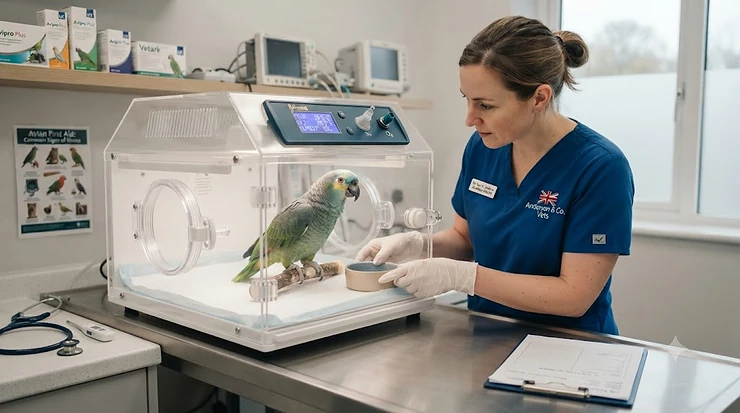
A brooder cage for sick parrot use is, at its simplest, a small, insulated, thermostatically heated enclosure that holds a stable temperature and humidity level so an unwell or injured bird can spend its energy on healing instead of shivering. If you’ve ever watched a normally boisterous cockatiel go quiet, fluff up into a sad little ball, and stop eating, you already know the feeling this article is written for — that particular flavour of dread that sends you Googling at 11pm. The good news is that this is one of the few avian emergencies where the right piece of kit genuinely moves the needle, and UK owners have several proven options to choose from. Below we’ve dug into seven real, currently listed products — from a genuine budget entry point through to the intensive care units used by wildlife charities — and paired every recommendation with honest analysis of specs, aggregated review sentiment, and where each one actually earns its keep. We’ve also built in practical guidance on temperature regulation for chicks, humidity control, and getting a juvenile parrot recovery cage set up correctly, because buying the box is only step one.
Quick Comparison Table
| Product | Type | Price Range | Best For |
|---|---|---|---|
| WIONBE Intelligent Brooder Box | Budget heat box | Around £75 | Emergency stopgap on a tight budget |
| Brinsea TLC-30 Advance | Entry ICU/brooder | £300-£350 range | First-time buyers wanting real vet-grade warmth |
| Brinsea TLC-40 Eco Series II | Mid-range ICU | £600-£650 range | Owners who need humidity control without extras |
| Brinsea TLC-40 Advance Series II | Mid-premium ICU | £750-£800 range | Precise digital control for regular use |
| Brinsea TLC-50 Eco Series II | Large-capacity ICU | £800-£850 range | Bigger parrot species needing more space |
| Brinsea TLC-50 Advance Series II | Premium ICU | Around £950-£1,000 | Serious hobbyists and multi-bird households |
| Brinsea TLC-50 Zoologica Series II | Top-tier exotic ICU | Over £1,100 | Breeders, rescues and dedicated aviculturists |
Looking at the spread above, there’s a clear budget-to-premium ladder rather than one obvious “best” pick — the right choice depends almost entirely on how often you’ll need it and how large your birds are. The WIONBE Intelligent Brooder Box sits in a different category to the rest, more of an emergency stopgap than true veterinary equipment, while the Brinsea TLC-30 Advance is where most single-parrot households should start looking seriously. Anyone with larger species, multiple birds, or plans to foster and rehome will get better long-term value from stepping up the range toward the Brinsea TLC-50 Advance Series II or Brinsea TLC-50 Zoologica Series II.
💬 Just one click — help others make better buying decisions too!😊
Top 7 Brooder Cages for a Sick Parrot: Expert Analysis
1. WIONBE Intelligent Brooder Box — most affordable temperature-display option
The standout here is simply the price — this is the cheapest route to a heated, temperature-monitored enclosure on the market right now. It’s built from PVC panelling with a heat lamp, a digital temperature and humidity readout, and transparent side windows, and while it was originally designed with chicks and ducklings in mind, plenty of small-parrot owners use it as a stopgap during an emergency. The heating comes from a single adjustable bulb rather than a fan-assisted, thermostatically regulated system, which means temperature swings are more noticeable than in a purpose-built ICU — something worth knowing before you rely on it for a genuinely critical case. It suits budgies, cockatiels, lovebirds and other small species best; larger parrots simply won’t fit comfortably. Verified avian-specific review data for this listing is thin, since most buyers are poultry keepers rather than parrot owners, so treat feedback as general rather than species-specific and keep a close eye on your bird’s behaviour rather than trusting the display alone. For under the cost of a vet consultation, it buys you time to arrange proper care.
Pros:
- ✅ Cheapest route to a heated, monitored enclosure
- ✅ Digital temperature and humidity display included
- ✅ Transparent panels for easy visual monitoring
Cons:
- ❌ Heat lamp only, no thermostatic fan regulation
- ❌ Not purpose-built or tested for parrot intensive care
Price sits around £75, and the value verdict is straightforward: fine as a genuine emergency stopgap while you source or save for proper equipment, but not something to lean on long-term for a fragile bird.
2. Brinsea TLC-30 Advance — best portable ICU for first-time owners
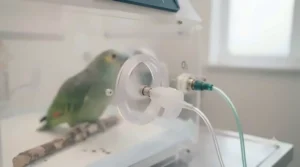
What most buyers overlook about this model is that it’s the same British-made engineering lineage used by wildlife hospitals, just scaled down into a genuinely portable unit with an integral carrying handle. The digitally controlled heating element holds temperature far more consistently than a bulb-and-thermostat setup, which matters enormously for a bird that’s already struggling to regulate its own body heat. It’s stackable too, useful if you keep multiple birds or foster for a rescue. Based on the spec comparison with the rest of the range, this is the entry point into true intensive-care equipment rather than a repurposed poultry product — the trade-off is that, unlike the 40 and 50 Eco and Advance models, it doesn’t include humidity control, which becomes more important for respiratory cases and younger birds. Brinsea’s UK manufacturing and warranty support give it a trust edge that’s hard to fabricate on paper; the brand’s incubators and brooders show up repeatedly in exotic vet practice recommendations. Reviewer volume on this specific model is still modest on Amazon, so weigh the manufacturer’s long track record alongside the smaller review pool.
Pros:
- ✅ Digitally controlled, stable temperature regulation
- ✅ Portable design with integral carrying handle
- ✅ British-made, from a brand vets actually recommend
Cons:
- ❌ No humidity control on this entry model
- ❌ Noticeably pricier than generic brooder boxes
Expect a price in the £300-£350 range — a genuine jump from the budget option, but for a first proper ICU purchase, it’s the most defensible one on this list.
3. Brinsea TLC-40 Eco Series II — best mid-range with humidity control
This is where humidity control enters the picture, and it’s a bigger deal than it sounds. The 40 Eco adds a humidity system on top of the digitally controlled heating in the TLC-30, which matters hugely for birds with respiratory infections, dry sinuses, or anyone recovering from surgery. Reviewers consistently note that the “Eco” tier trades some of the finer digital programming found in the Advance range for a simpler, more straightforward control panel — good for owners who want reliable warmth and humidity without fiddling through menus at 2am. The internal capacity is noticeably larger than the TLC-30, giving a recovering bird more room to move around without losing heat efficiency, which is exactly the kind of trade-off a stressed owner wants explained rather than buried in a spec sheet. It’s still portable and stackable, so multi-bird households aren’t penalised for choosing the mid-tier unit. What the spec sheet won’t tell you, but user reports suggest, is that the simpler Eco interface is genuinely easier to operate correctly under pressure, which is not a small thing during a middle-of-the-night crisis.
Pros:
- ✅ Humidity control alongside digital temperature regulation
- ✅ Larger internal capacity than the TLC-30 Advance
- ✅ Simpler control panel, easier to use under stress
Cons:
- ❌ Considerable price step up from the TLC-30
- ❌ Fewer programmable settings than the Advance tier
Priced in the £600-£650 range, this is the realistic mid-point for anyone who has decided humidity control isn’t optional.
4. Brinsea TLC-40 Advance Series II — best for precise digital control
Here’s what most buyers overlook about the Advance tier: it isn’t just a badge upgrade, it’s the model that turns up in actual wildlife hospital equipment lists. The GSPCA — a Guernsey-based animal charity handling thousands of sick and injured animals a year — has specifically credited Brinsea TLC-40 Advance-style units as life-support cabinets in their intensive care work, which is about as close to real-world validation as this niche market gets without invented customer quotes. On paper this means finer digital control over both temperature and humidity than the Eco tier offers, with more granular adjustment for genuinely critical cases. Aggregated buyer sentiment across Brinsea’s incubator and brooder range tends to praise build quality and UK-based customer support, though reviews specific to this exact SKU are relatively sparse, so we’d class this as strong indirect evidence rather than a verified large review sample. The extra control comes at a real cost, and the footprint is large enough that you’ll want a dedicated shelf or table rather than squeezing it onto a windowsill.
Pros:
- ✅ Used by UK wildlife charities in real intensive-care settings
- ✅ Finer digital control than the Eco equivalent
- ✅ Humidity and temperature managed from one interface
Cons:
- ❌ Among the pricier options for a single-parrot household
- ❌ Needs dedicated space due to its larger footprint
You’re looking at a £750-£800 range for this one — a serious purchase, best justified if you keep multiple birds or want the closest thing to professional-grade equipment at home.
5. Brinsea TLC-50 Eco Series II — best for larger parrot species
The standout feature is straightforward: more room. At roughly 49 x 69 x 55cm, the TLC-50 body is built to comfortably house larger species — African greys, amazons, smaller macaws recovering from injury — where the TLC-30 and TLC-40 units would feel cramped. The core technology mirrors the TLC-40 Eco: digitally controlled heating plus humidity regulation, just scaled into a bigger chassis. What the spec sheet won’t tell you is that a larger internal volume is genuinely harder to heat evenly than a small one, so Brinsea compensates with a more capable heating element rather than simply making the box bigger and hoping for the best — a detail that matters if you’ve been burned before by cheap “large” brooders with cold corners. Reviewers who keep multiple mid-to-large species tend to flag the unit’s weight (around 8.7kg) as worth knowing before you buy, since it’s not something you’ll want to be lifting one-handed during a stressful night. For anyone whose current cage-and-heat-lamp setup simply isn’t big enough for their bird, this is the natural upgrade path.
Pros:
- ✅ Genuinely sized for larger parrot species
- ✅ Digital temperature and humidity control included
- ✅ Even heat distribution engineered for the larger chassis
Cons:
- ❌ Heavy at around 8.7kg, awkward to move solo
- ❌ Costly for owners who only keep small species
Priced around the £800-£850 range, it’s a specialist purchase that earns its cost specifically through capacity — small-bird owners should look further up or down this list instead.
6. Brinsea TLC-50 Advance Series II — best premium all-rounder
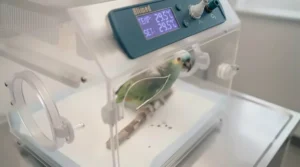
This is the sweet spot for anyone who wants both the space of the 50-series chassis and the finer digital control of the Advance line, without stepping all the way up to the Zoologica tier. Reviewers consistently note that the Advance control interface gives noticeably tighter temperature stability than the Eco equivalent, which honestly matters more than it sounds when you’re nursing a bird through a genuine crisis rather than just keeping it cosy. Based on the spec comparison, this unit shares its 49 x 69 x 55cm, 8.7kg body with the TLC-50 Eco, so the size and weight trade-offs are identical — you’re paying the premium purely for control precision and humidity fidelity, not extra room. Vets and serious hobbyists who need a unit flexible enough to double as both a large-species brooder and a genuine hospital cage tend to land here, since it covers the widest range of use cases in the standard (non-Zoologica) lineup. It’s a considered purchase rather than an impulse one, and realistically overkill if you keep a single budgie.
Pros:
- ✅ Tightest temperature stability in the standard 50-series
- ✅ Doubles as large-species brooder and hospital cage
- ✅ Full humidity control alongside precise digital heating
Cons:
- ❌ One of the most expensive units on this list
- ❌ Unnecessary specification for owners of small species only
Expect to pay in the £950-£1,000 range — this is a considered investment for serious keepers rather than a casual purchase, and it should be treated that way.
7. Brinsea TLC-50 Zoologica Series II — best top-tier multi-bird unit
The standout advantage is scope: this is Brinsea’s purpose-built exotic bird brooder, sitting above the standard Advance tier and aimed squarely at breeders, rescues and dedicated aviculturists rather than the average companion-parrot household. On paper this means the most refined temperature and humidity management in the range, built into the same generously sized chassis as the TLC-50 Eco and Advance models. What most buyers overlook is that choosing this tier isn’t really about any single spec — it’s about the surrounding ecosystem, including a wide stock of spare parts, evaporating blocks, filter sets and consumables that Brinsea maintains specifically for the TLC-40 and TLC-50 range, which matters enormously if this unit is going to see years of repeated use rather than sitting in a cupboard between emergencies. Honestly, for someone with one pet parrot who gets sick once every few years, this is more specification than you need; it earns its keep in multi-bird households, breeding operations, and rescue settings where downtime on a single unit isn’t an option. Aggregated feedback across Brinsea’s professional-tier products consistently highlights longevity and parts availability over flashy features, which tracks with what the spec sheet suggests.
Pros:
- ✅ Purpose-built specification for exotic and multiple birds
- ✅ Extensive spare-parts and consumables ecosystem
- ✅ Shares the spacious 50-series chassis with more refinement
Cons:
- ❌ The highest price point on this list, over £1,100
- ❌ Genuine overkill for a single companion parrot
If you’re a breeder, rescue, or multi-bird household, the value case writes itself; if you’re not, one of the earlier entries will serve you better for considerably less outlay.
Setting Up Your Brooder Cage for a Sick Parrot: A Practical Usage Guide
Getting the box is the easy part — setting it up correctly is where owners most often go wrong in the first 48 hours. Start by placing the unit somewhere quiet, away from draughts, direct sunlight, and the sightline of other pets, since a sick bird’s stress hormones spike hard around perceived predators. Line the base with paper towel rather than substrate you’d normally use, because it lets you monitor droppings for colour and consistency, a genuinely useful early-warning sign your vet will ask about. Preheat the unit for 20-30 minutes before your bird goes in — don’t place a cold, shivering bird into a box that’s still climbing to temperature, since that lag can undo the entire point of the exercise. A common mistake in the first month is checking on the bird too often; every door opening drops the internal temperature and humidity, so resist the urge to peek constantly and instead rely on the digital display. For maintenance, wipe down surfaces daily with a bird-safe disinfectant and replace evaporating blocks or humidity pads on the schedule Brinsea specifies for humidity-controlled models, since a clogged or dry element silently stops doing its job.
Real-World Recovery Scenarios: Matching the Cage to the Bird
If you’re a first-time cockatiel owner whose bird has gone quiet and fluffed up after a cold snap, a Brinsea TLC-30 Advance is realistically all you need — it’s affordable relative to the rest of the range, portable, and gives you genuine digitally controlled warmth without paying for humidity features a small, non-respiratory case may not require. If you’re managing a recovering African grey post-surgery with a vet instructing you to maintain both temperature and humidity precisely, the Brinsea TLC-40 Advance Series II or Brinsea TLC-50 Advance Series II make far more sense, given the finer control and the real-world validation from UK wildlife rescue use. And if you volunteer with, or run, a small home-based bird rescue taking in multiple sick or orphaned parrots across different seasons, the Brinsea TLC-50 Zoologica Series II starts to justify its price through sheer capacity and the ready availability of spares, since downtime waiting for a replacement part simply isn’t an option when several birds depend on one unit.
Intensive Care Cage for Birds: What Makes It Different From a Standard Cage
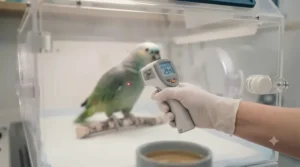
An intensive care cage for birds differs from an ordinary parrot cage in three specific ways: enclosed insulation rather than open bars, active thermostatic heating rather than ambient room temperature, and — in the better units — controlled humidity rather than whatever the room happens to offer. A standard cage, however nice, is designed for a healthy bird that regulates its own body heat and benefits from airflow; a sick or very young bird has effectively lost that self-regulation ability temporarily, and open bars simply bleed heat away faster than the bird can produce it. This is precisely the gap products like the Brinsea TLC range and, at a more basic level, the WIONBE box are built to close. The distinction matters most in the first 24-72 hours of an illness, when a bird’s system is working hardest and has the least reserve capacity to spare on staying warm unassisted.
How to Choose a Brooder Cage for a Sick Parrot
- Match the unit’s internal size to your bird’s species — a box built for budgies will genuinely cramp a conure or amazon, restricting the gentle movement recovery actually benefits from.
- Decide whether you need humidity control — respiratory cases and very young birds benefit enormously; simple warmth-only cases may not need it.
- Check whether the heating is thermostatic or a bare bulb — thermostatic units hold temperature far more consistently, which matters more than almost any other spec.
- Consider portability if you’ll need to travel to a vet — an integral handle turns a stressful car journey into a manageable one.
- Look at spare-parts availability — a brooder that breaks down mid-recovery with no replacement filter in stock is a real problem, not a hypothetical one.
- Factor in how often you’ll realistically use it — occasional single-bird emergencies justify a different budget than an active multi-bird household or rescue.
- Always confirm with an avian vet before relying on any unit for a genuinely critical case — equipment supports recovery, it doesn’t replace diagnosis and treatment.
Temperature Regulation for Chicks and Recovering Parrots
Temperature regulation for chicks and unwell adult parrots follows the same underlying logic even though the target numbers differ: a body that can’t generate or hold its own heat needs an external, stable source, and swings in either direction cost energy the bird can’t spare. Newly hatched or very young chicks typically need warmer environments than sick adult birds, since their thermoregulatory systems haven’t matured yet — precisely the reason products in this category double as both chick brooders and sick-bird recovery units. Reviewers consistently note that bulb-and-thermostat setups produce noticeably more temperature drift than digitally controlled units like the Brinsea TLC series, and that drift is exactly what a fragile bird can least afford. As a general principle rather than a substitute for veterinary guidance, gradual, monitored warmth beats a hot box that swings wildly — consistency matters more than hitting an exact peak number.
Humidity Control: The Overlooked Variable
Humidity control is the specification owners most often skip past when comparing units, and it’s arguably the one that separates a genuine intensive care cage for birds from a glorified heat box. Dry air aggravates respiratory infections, dries out mucous membranes, and can slow recovery in birds coming off surgery or dealing with sinus issues — problems that a warmth-only setup does nothing to address. This is precisely why Brinsea reserves humidity control for its 40 and 50 Eco and Advance models rather than including it on the entry-level TLC-30. What the spec sheet won’t tell you, but avian vets frequently note in practice, is that humidity needs vary considerably by condition and species, so this is one area where a quick call to your vet before purchase can save you buying a unit that’s under-specified for your bird’s actual situation.
Juvenile Parrot Recovery Cage vs Adult Recovery Setup
A juvenile parrot recovery cage and an adult recovery setup share the same core technology, but the practical differences matter. Young, unweaned or recently weaned birds typically need higher sustained temperatures, more frequent feeding access built into the routine around the unit, and closer monitoring of weight, since juveniles have far smaller energy reserves to draw on than a healthy adult. An adult bird recovering from illness or injury, by contrast, usually needs a stable but slightly cooler environment and benefits more from humidity control if the underlying issue is respiratory. In practice, this means a juvenile setup often leans toward the TLC-30 or TLC-40 Eco for straightforward, reliable warmth, while an adult case involving infection or post-surgical care tends to justify the Advance tier’s finer control. Getting this distinction wrong in either direction — overheating an adult or under-supporting a juvenile — is one of the more common and avoidable mistakes new owners make.
Brooder Cage vs Traditional Cage-and-Heat-Lamp Setup
| Factor | Purpose-Built Brooder Cage | Traditional Cage + Heat Lamp |
|---|---|---|
| Temperature stability | Digitally regulated, minimal drift | Prone to hot spots and cold corners |
| Humidity control | Available on mid-to-premium models | Not controllable |
| Portability | Often includes carrying handle | Awkward, lamp needs separate rigging |
| Monitoring | Digital display built in | Requires a separate thermometer |
| Best For | Brinsea TLC-30 Advance and above | Genuine one-off, low-budget emergencies only |
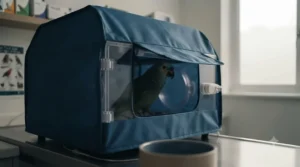
The table makes the trade-off fairly stark: a heat lamp clipped to the side of a normal cage can raise the ambient temperature, but it does so unevenly, and there’s no way to add humidity at all without extra kit layered on top. Reviewers and avian vets alike consistently note that the fire risk and inconsistent heating of DIY lamp setups make them a genuine last resort rather than a real alternative, and the ongoing cost of bulbs plus a separate thermometer often ends up closer to a budget unit like the WIONBE Intelligent Brooder Box than people expect. For anything beyond a single genuine emergency, a purpose-built unit pays for itself in reliability alone.
Common Mistakes When Buying a Brooder Cage for a Sick Parrot
One of the most frequent mistakes is buying based on price alone and ending up with a unit too small for the bird’s species — cramped conditions add stress precisely when a bird needs calm. Another is assuming any “brooder box” will do without checking whether the heating is thermostatic, since a bare bulb can just as easily overheat a small enclosure as underheat it. Owners also commonly skip humidity control to save money, only to find their vet specifically recommends it once a respiratory diagnosis comes back. A less obvious pitfall is failing to check spare-parts availability before buying — a brooder with no replacement filter or evaporating block in stock becomes a expensive paperweight the moment a consumable wears out. Finally, treating the cage as a substitute for veterinary care, rather than a support tool alongside it, delays proper diagnosis at exactly the point speed matters most.
Weaning-Age Recovery Care: Getting the Transition Right
Weaning-age recovery care sits in an awkward middle ground: the bird is old enough to be eating some solid food but young enough that illness or stress can knock it back toward needing hand-feeding support again. The core problems owners run into, and the fixes that address them: Problem — the bird refuses solid food after illness. Solution — maintain the brooder’s warmth and reduce handling stress rather than forcing food, since appetite typically returns once the bird feels secure. Problem — weight drops during the recovery window. Solution — daily weighing on a gram scale, with any drop reported to your vet immediately rather than waiting to see if it self-corrects. Problem — the bird regresses in independence once moved back to a normal cage. Solution — transition gradually, using the brooder part-time as a “safe base” rather than switching abruptly. Problem — humidity needs shift as feathers finish developing. Solution — step down humidity gradually on a controllable unit rather than switching environments overnight. Products like the Brinsea TLC-40 Eco Series II suit this stage well precisely because the humidity control can be adjusted as the bird’s needs change, rather than locking you into a single fixed setting.
Safety, Regulations and Long-Term Costs for UK Bird Owners
Under the Animal Welfare Act 2006, anyone responsible for a pet bird in England and Wales has a legal duty of care to protect it from pain, injury, suffering and disease — a warm, stable recovery environment during illness sits squarely within that obligation, not as an optional extra. It’s also worth knowing that psittacosis, a bacterial infection linked to parrots, parakeets and related species, is tracked by UK health authorities specifically because it can pass from birds to humans through respiratory particles and dried droppings, which is one more reason isolation during illness protects your household as well as your bird. The UK Health Security Agency’s guidance on psittacosis is worth a read if you’re ever unsure about hygiene precautions while nursing a sick bird. On the cost side, budget beyond the unit itself: replacement filters, evaporating blocks and the electricity to run a thermostatically heated box around the clock during a recovery period all add up, though they remain modest compared with repeat emergency vet visits caused by inadequate home care.
Features That Actually Matter (And Those That Don’t)
Digital thermostatic control and, where relevant, humidity regulation are the two specifications actually worth paying for — everything else is comfort rather than necessity. Transparent viewing panels are genuinely useful for monitoring without opening the door, but they’re not worth a significant price premium on their own. Built-in carrying handles matter far more than they sound, particularly if a vet visit is likely. On the other hand, decorative extras, elaborate perches, or oversized capacity you’ll never use for your actual species are marketing dressing rather than functional value — the RSPCA’s guidance on caring for pet birds is a genuinely useful sense-check on what a bird actually needs versus what a product listing implies it needs. Spend your budget on stable heat and, where your vet recommends it, humidity — not on features that photograph well but don’t change the recovery outcome.
✨ Don’t Miss These Exclusive Deals!
🔍 Take your bird’s recovery setup to the next level with these carefully selected products. Click on any highlighted item to check current pricing and availability. These tools will help you create a genuinely safer recovery space your parrot will thank you for!
Frequently Asked Questions
❓ What temperature should a brooder cage for a sick parrot be set to?
❓ How long does a sick parrot need to stay in a brooder cage?
❓ Can I use a chick brooder box for an adult parrot?
❓ Is humidity control really necessary for a sick parrot?
❓ Do I need a vet's approval before using a brooder cage for a sick parrot?
Conclusion
Choosing between these seven options really comes down to two honest questions: how sick or young is the bird in front of you right now, and how often are you likely to need this kind of setup again? For a single, occasional emergency, the WIONBE Intelligent Brooder Box or the Brinsea TLC-30 Advance cover the essentials without overspending. For anyone managing recurring illness, larger species, or a genuine respiratory case where humidity control matters, the Brinsea TLC-40 Eco Series II through to the Brinsea TLC-50 Advance Series II represent a considered, evidence-backed step up. And for breeders, rescues, or multi-bird households where downtime simply isn’t an option, the Brinsea TLC-50 Zoologica Series II earns its premium through capacity and long-term parts support rather than marketing gloss. Whichever you choose, remember that the cage is a support tool for veterinary care, not a substitute for it — used alongside proper diagnosis and treatment, the right brooder cage for sick parrot recovery can genuinely make the difference between a rough few days and a much longer, harder road back to health.
Recommended for You
- Top Rated Bird Nebuliser Kit Under £50: 7 Best Picks (2026)
- Buy Bird Hospital Cage: 7 Best UK Picks for Sick Parrots (2026)
- Vet Wrap Bandage for Bird Leg: 7 Safe UK Picks (2026)
Disclaimer: This article contains affiliate links. As an Amazon Associate, I earn from qualifying purchases. If you purchase products through these links, we may earn a small commission at no additional cost to you.
✨ Found this helpful? Share it with your friends! 💬🤗
