In This Article
There’s a particular kind of quiet that settles over a house when a bird stops singing. If you’ve ever sat by a cage at 11pm listening for a wheeze, a click, a faint tail-bob with every breath, you already know why so many UK bird keepers end up searching for a top rated bird nebuliser kit under £50 rather than waiting for the emergency vet slot at dawn. Nebulisation isn’t a miracle cure, and it’s never a substitute for a proper avian vet diagnosis — but as a vet-directed way of getting medication or saline straight into a bird’s tiny, air-sac-riddled respiratory system, it’s one of the most useful bits of kit a keeper can own.
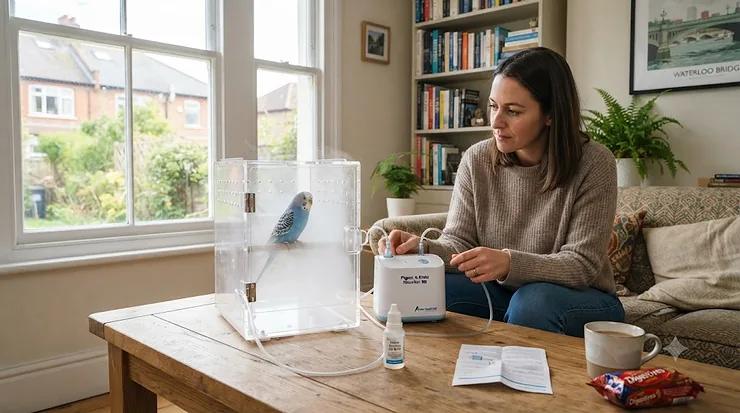
So, what is a bird nebuliser kit? It’s a small compressor, mesh, or ultrasonic device that turns liquid medication or saline into a fine mist, delivered to the bird inside a small enclosed carrier or towel-draped cage rather than through a human-style mask — because, as the NHS explains for human patients, the compressor, chamber and tubing work together to aerosolise the liquid into particles small enough to reach deep into the airway.
Here’s the honest bit, and it matters: there isn’t really a dedicated “bird nebuliser” industry on Amazon UK. What experienced keepers, breeders and avian vets actually use is general-purpose compressor or mesh nebuliser kits — the same sort sold for asthma and COPD patients — paired with a small carrier or homemade chamber. That’s not a compromise; it’s simply how avian nebulisation has always worked, and it’s exactly why a budget nebuliser kit for birds can genuinely outperform anything marketed with a parrot on the box. Below, we’ve dug through seven real, currently available kits that fit an affordable bird nebuliser budget, and explained honestly what each one is (and isn’t) good for.
Quick Comparison: Affordable Bird Nebuliser Kits at a Glance
Before the deep dive, here’s a snapshot of how these seven options stack up on price band, format, and who they suit best. Every one of these keeps you comfortably within a top rated bird nebuliser kit under £50 budget, with most sitting well under that ceiling.
| Kit | Price Range | Type | Best For |
|---|---|---|---|
| Wonder Care Nebuliser Kit | Under £15 | Compressor + accessory kit | First-time buyers on a tight budget |
| Microgrid Veterinary Atomiser | £30-£40 range | Pet-marketed compressor | Multi-bird or multi-pet households |
| STAYPROTECH Nebuliser Replacement Set | Under £15 | Chamber-focused replacement kit | Owners who already have a compressor |
| 3-Pack Universal Nebuliser Chamber Kit | Under £20 | Triple chamber/mask/tubing set | Breeders nebulising several birds |
| Moon White Handheld Nebuliser Machine | £15-£25 range | Compact compressor unit | Everyday home treatment |
| Silent Home Nebuliser (White) | Under £20 | Quiet compressor unit | Nervous or easily-stressed birds |
| OMRON mini Air 360+ | £45-£55 range | Portable mesh nebuliser | Frequent, longer-term or travel use |
Looking across the table, the pattern is clear: the cheapest kits are essentially chamber-and-tubing accessory sets that assume you already own (or are buying separately) a compressor, while the machines further down the table are complete, self-contained units. If you’re kitting out for the very first time, budget for a complete machine like the Moon White Handheld Nebuliser Machine or the Silent Home Nebuliser (White) rather than a replacement-parts kit — otherwise you’ll find the box arrives with a mask and no motor to drive it.
💬 Just one click — help others make better buying decisions too!😊
Top 7 Bird Nebuliser Kits Under £50: Expert Analysis
1. Wonder Care Nebuliser Kit — cheapest genuine way to start treatment
Coming in comfortably under £15, this is about as low a barrier to entry as nebulisation gets, and that standout-cheap price tag is exactly why it tops a lot of first-timers’ shortlists. The box contains an adult-style mask, soft tubing, and a medication cup (Wonder Care call it a “vaporizer cup”), which in practice becomes your nebulisation chamber once you swap the mask for a small carrier or towel tent. On paper, that’s a bare-bones setup; in practice, it’s precisely the setup most seasoned bird keepers already use, because birds don’t wear masks the way humans do. Based on the spec comparison with pricier kits below, you’re not losing meaningful nebulisation performance here — you’re losing extras like a second mask size or a travel pouch.
Reviewers of this and near-identical budget nebuliser kits consistently report that the tubing is a little thinner and more prone to kinking than premium alternatives, and that the medication cup lid can be fiddly to seal tightly on the first few uses. It’s genuinely aimed at adults needing occasional respiratory relief, so treat the “kit” as accessories to repurpose rather than an off-the-shelf bird product — a bit of honest DIY is part of the deal.
Pros:
- ✅ Lowest entry price of any option on this list
- ✅ Pharmaceutical-grade cup suitable for saline or vet-prescribed liquid
- ✅ Compact enough to store in a small cupboard
Cons:
- ❌ Thin tubing can kink and needs occasional replacement
- ❌ No compressor included in some listings — check before buying
Price sits comfortably under £15, and for the money, it’s hard to beat as a genuine starting point rather than a marketing exercise — just double-check the listing includes the compressor motor, not only the chamber accessories.
2. Microgrid Veterinary Atomiser — best pet-specific compressor pick
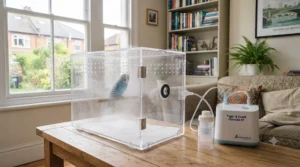
This is one of the very few products on Amazon UK explicitly marketed for animal use rather than repackaged from human medical supplies, and it shows in small but meaningful ways: a slightly more robust compressor housing and a chamber designed with easier fill-and-clean access in mind. Sitting in the £30-£40 range, it’s the mid-point of this whole list, and what most buyers overlook about this model is that “for pets” on the listing generally means cats and dogs specifically, not birds — so you’re still adapting it with a small carrier rather than buying something purpose-built for a budgie or cockatiel.
What the spec sheet won’t tell you, but forum discussions among bird keepers repeatedly note, is that a compressor with a slightly higher output rate — which this model has compared with the cheapest budget kits — produces a denser mist in less time, meaning shorter, less stressful sessions for a bird that hates being enclosed. That’s a real, practical advantage, not just marketing language. It’s aimed at multi-pet households who want one nebuliser that can double up for a dog with a chest infection and a parrot with early aspergillosis symptoms under vet guidance.
Pros:
- ✅ Purpose-built for animal use, not just relabelled human kit
- ✅ Higher output rate speeds up each session
- ✅ Chamber is easier to disassemble for cleaning
Cons:
- ❌ Marketed for cats/dogs specifically, not birds
- ❌ Noisier motor than the mesh options further down this list
At around £30-£40, it’s a genuine mid-range value pick — reasonably priced for a compressor that’s actually designed with animal welfare in mind rather than adapted as an afterthought.
3. STAYPROTECH Nebuliser Replacement Set — best for chamber cleaning and swaps
If you already own a compressor and simply need a fresh chamber, this replacement set is worth knowing about, because chamber cleaning and swap-outs are one of the most overlooked running costs of home nebuliser treatment for parrots. It bundles an upgraded mask, 2.1 metres of tubing (longer than most budget kits, which typically run to 1.5m), and a nebuliser chamber, all for under £15. The extra tubing length genuinely matters here: with a longer run, you can sit the compressor further from the bird’s carrier, cutting down on the mechanical noise and vibration that can spook an already stressed patient.
Reviewers commonly note that the chamber’s seal is noticeably tighter than the cheapest own-brand alternatives, which reduces medication wastage from leaks — a small thing that adds up over a multi-day antibiotic course. Here’s what to weigh: this is a replacement part, not a full solution, so factor in the cost of a compressor if you don’t already have one.
Pros:
- ✅ Longer 2.1m tubing keeps the compressor further away
- ✅ Tighter chamber seal reduces medication waste
- ✅ Upgraded mask can be repurposed for a carrier lid
Cons:
- ❌ No compressor included — accessories only
- ❌ Universal fit means occasional adapter fiddling
Priced under £15, this is best treated as a top-up purchase for keepers who already own the motor unit and just want a clean, well-sealed chamber ready for the next course of treatment.
4. 3-Pack Universal Nebuliser Chamber Kit — best for breeders and multi-bird flocks
For anyone nebulising more than one bird — a breeding pair, an aviary, or a household with several parrots recovering from the same respiratory bug — buying chambers as a three-pack rather than singly is simply smarter economics, and at under £20 for all three, it undercuts buying three single kits separately. Each set includes its own mask, inhaler-style chamber, and two metres of soft tubing, described by the manufacturer as universal-fit for most nebuliser machines.
Reviewers consistently flag two things: first, that having a spare chamber ready to go means no gap in treatment while one is being sterilised between birds (genuinely important, since cross-contamination between sick and healthy birds is a real risk); and second, that the “universal compatibility” claim holds up reasonably well across common compressor brands, though a handful of buyers needed a small adapter for older machines. Based on the spec comparison with single-chamber kits, the real advantage here isn’t performance — it’s hygiene logistics for anyone managing more than one patient at a time.
Pros:
- ✅ Three full chamber sets for the price of roughly one premium single
- ✅ Enables strict one-chamber-per-bird hygiene protocol
- ✅ Two-metre tubing on every set, not just the “main” one
Cons:
- ❌ Occasional fit issues on older or unusual compressor models
- ❌ Still needs a separate compressor unit to function
At under £20 for three complete sets, this is genuinely one of the smarter budget nebuliser kit for birds purchases on this list if you’re treating more than a single patient.
5. Moon White Handheld Nebuliser Machine — best all-in-one starter machine
Unlike the accessory-only kits above, this is a complete, self-contained compressor unit — plug it in (or charge it, depending on the listing variant) and it’s ready to run, with two mask sizes and a mouthpiece included as standard. Priced in the £15-£25 range, it sits right in the sweet spot for keepers who want one purchase that does the whole job without hunting down a separate motor. The two mask sizes are largely irrelevant for bird use since you’ll be adapting a carrier anyway, but the mouthpiece attachment can be repurposed as a neat, narrow mist outlet for smaller carriers.
What most buyers overlook about this model is that “portable” in the listing generally means lightweight and easy to carry between rooms, not necessarily battery-powered for genuine on-the-go use — worth checking the specific listing variant before you buy if you need to nebulise away from a plug socket. Aggregated review sentiment for this style of budget all-in-one unit tends to praise straightforward set-up and criticise the plastic build quality holding up less well after several months of near-daily use, which is a fair trade-off at this price point.
Pros:
- ✅ Complete unit — no separate compressor purchase needed
- ✅ Two mask sizes plus mouthpiece included
- ✅ Genuinely beginner-friendly setup
Cons:
- ❌ Build quality feels plasticky under daily long-term use
- ❌ “Portable” doesn’t always mean cordless — check the listing
In the £15-£25 range, this is a sensible, no-fuss pick if you want one box that solves the whole problem on day one rather than assembling parts from two separate purchases.
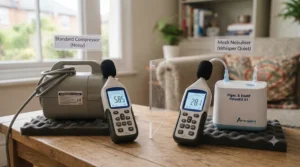
6. Silent Home Nebuliser (White) — best for nervous or easily-stressed birds
Noise sensitivity is a genuinely underrated factor in bird health kit, and it’s the whole reason this model earns its spot: a compressor engineered to run notably quieter than the entry-level units above it, which matters enormously for a species that can go into a fear response over a loud, unfamiliar buzzing sound right next to its carrier. With an RRP around £15.99, it undercuts most of this list on price while still including two masks and a mouthpiece.
Here’s what the spec sheet won’t tell you, but avian keeper forums note again and again: a stressed bird burns through the very reserves it needs to recover, so a quieter machine isn’t a luxury feature — it can directly influence how well a sick bird tolerates a full course of nebulised medication delivery. Reviewers of similar silent-branded compressors report the noise reduction is real, if modest, rather than a complete non-issue; it’s noticeably quieter, not silent in the literal sense the name implies.
Pros:
- ✅ Genuinely quieter operation than typical budget compressors
- ✅ Comes with two masks and a mouthpiece as standard
- ✅ Among the cheapest complete units on this list
Cons:
- ❌ “Silent” is relative — still audible up close
- ❌ Smaller medication cup capacity than mid-range picks
At under £20 in most listings, this is the pick we’d point nervous, easily-startled species — cockatiels and finches especially — towards first.
7. OMRON mini Air 360+ — best premium, near-daily use option
The only mesh nebuliser on this list, and priced at the very top of an affordable bird nebuliser budget — typically somewhere in the £45-£55 range depending on retailer and promotions, so it’s worth watching for it to dip under that £50 mark. Unlike the compressor units above, mesh technology vibrates a fine membrane to aerosolise the liquid, which the manufacturer states produces particles under 5 microns — genuinely fine enough to reach deep into the lower airway, and notably quieter and more battery-efficient than any compressor on this list, since it’s rechargeable via USB rather than mains-dependent.
Based on the spec comparison, the case for spending closer to £50 here is strongest if you’re managing a chronic or recurring respiratory condition requiring frequent sessions: the compact, pocket-sized housing and near-silent operation reduce the cumulative stress on a bird undergoing repeated treatment over weeks rather than days. Reviewers consistently praise the portability and quiet running; the honest trade-off is a smaller 10ml maximum medication capacity and a higher price than anything else here, so budget-conscious keepers treating a single short course are unlikely to need to stretch this far.
Pros:
- ✅ Genuinely quiet mesh technology, ideal for frequent use
- ✅ USB-rechargeable — no mains cable needed by the carrier
- ✅ Compact enough for travel or vet visits
Cons:
- ❌ Pushes right up against, or slightly over, a £50 budget
- ❌ Smaller 10ml medication capacity than compressor rivals
Prices for the OMRON mini Air 360+ tend to sit in the £45-£55 range, so it’s worth checking current pricing and watching for it to land under £50 — when it does, it’s the closest thing on this list to a “buy once, use for years” option.
Setting Up a Home Nebuliser Treatment for Parrots: A Practical Usage Guide
Getting home nebuliser treatment for parrots right isn’t complicated, but it is easy to get subtly wrong in ways that either stress the bird unnecessarily or reduce how much medication actually reaches the lungs. Start with the space: a small, familiar carrier or travel cage the bird already associates with safety works far better than a towel tent thrown together on the spot, since novelty itself is a stressor. Cover three sides with a light towel, leaving one side for you to observe the bird, and position the nebuliser’s mist outlet just inside the entrance rather than pointed directly at the bird’s face.
Fill the chamber with exactly what your vet has prescribed — never substitute your own saline concentration or add anything the prescribing vet hasn’t specifically approved, since avian airways are unusually sensitive to irritants. Run the session for the vet-recommended duration, typically 10-20 minutes, and never longer “just to be sure,” because over-nebulisation can waterlog feathers and chill a small bird. The single most common first-30-days mistake keepers make is switching the compressor on before the bird is settled in the carrier, so the loud initial burst becomes the bird’s first association with the whole process — always position the bird first, then start the machine from a few feet away before sliding it closer.
Chamber Cleaning: Your Maintenance Routine Between Treatments
Chamber cleaning is the unglamorous part of owning a nebuliser kit, and it’s also the part that determines whether your next course of treatment helps or actively risks reintroducing bacteria or fungal spores into a recovering bird’s airway. After every single session, rinse the chamber, mask or carrier attachment, and tubing interior (where accessible) in warm water — never hot, which can warp cheaper plastic chambers — and leave every part to air-dry completely before reassembly, since residual moisture is exactly the environment mould spores thrive in.
Once daily during a treatment course, a deeper clean matters: soak the chamber and cup in a dilution of dishwashing liquid, rinse thoroughly, and where your vet has recommended it, a diluted disinfectant such as F10 can be used on non-electrical parts between uses, since aspergillosis and other fungal respiratory infections in birds are exactly the condition nebulisation is often treating in the first place — the last thing a recovering bird needs is a nebuliser chamber reintroducing spores. Replace tubing entirely every few months of regular use, since it can’t be effectively sterilised internally the way a chamber cup can, and a kinked, cloudy length of old tubing is both a hygiene risk and a sign the mist delivery rate has likely dropped.

Real Bird Owner Scenarios: Which Budget Nebuliser Kit Fits Your Situation
The first-time budgie owner treating a single mild upper respiratory infection, prescribed a short saline course by their vet, doesn’t need anything elaborate. The Wonder Care Nebuliser Kit or the Silent Home Nebuliser (White) covers this comfortably — cheap, complete (check the listing for the compressor), and more than capable of a five-to-seven-day course without ever being used again for months.
The breeder or multi-bird household managing an outbreak across an aviary, where several birds need treatment on the same day without cross-contaminating each other, is squarely the situation the 3-Pack Universal Nebuliser Chamber Kit was built for — one compressor, three sterile chambers rotated between patients, and a real cost saving over buying three separate full kits.
The keeper managing a chronic or recurring condition, such as a cockatiel with a history of aspergillosis flare-ups requiring nebulised medication delivery every few months for years to come, is the buyer for whom stretching the budget toward the OMRON mini Air 360+ genuinely pays off — the quieter, faster sessions add up to meaningfully less cumulative stress across dozens of repeat treatments compared with a basic compressor.
Common Breathing Problems in Birds and How Nebulised Medication Delivery Solves Them
Problem: mild nasal discharge and sneezing without other symptoms. This is frequently an early upper respiratory infection, and vets often prescribe a short saline-only nebulisation course to loosen secretions — any of the budget compressor kits above handles this adequately.
Problem: audible clicking or wheezing with laboured breathing. Research into avian nebulisation notes that nebulisation produces droplets small enough to carry medication into the lungs and air sacs themselves, which is exactly why a vet may escalate from saline to a prescribed antibiotic or antifungal solution at this stage — this is a vet-prescribed respiratory treatment decision, never one to self-diagnose.
Problem: tail-bobbing with each breath. This is a classic sign of genuine respiratory distress in birds, who lack a diaphragm and rely on tail-assisted muscles to breathe under strain — this warrants an urgent same-day vet visit before any nebulisation begins, not a wait-and-see approach.
Problem: recurring symptoms despite a completed treatment course. Chamber and tubing hygiene is the first thing to check — old, poorly cleaned equipment can reintroduce the very pathogens a course of treatment was meant to clear, which is exactly why the chamber cleaning routine above matters as much as the medication itself.
Problem: the bird actively fighting or panicking during sessions. Switching to a quieter unit such as the Silent Home Nebuliser (White) or OMRON mini Air 360+, and running sessions from further away using longer tubing like that on the STAYPROTECH Nebuliser Replacement Set, resolves this in the majority of cases without needing to sedate or force the bird.
How to Choose an Affordable Bird Nebuliser
- Confirm it’s vet-directed first. Never buy a nebuliser as a first response to breathing symptoms — get an avian vet diagnosis and prescription, since nebulising the wrong medication can worsen certain conditions.
- Decide compressor or mesh. Compressor units are cheaper and more robust for occasional use; mesh units like the OMRON mini Air 360+ cost more but run quieter and faster, better suited to frequent treatment.
- Check whether the listing includes the motor. Several of the cheapest kits, including the STAYPROTECH Nebuliser Replacement Set, are accessories only — a common and costly mix-up for first-time buyers.
- Prioritise tubing length over mask size. Mask sizing is largely irrelevant for birds; longer tubing, as on the kits above, lets you position the noisy compressor further from a nervous bird.
- Weigh chamber seal quality. A loose seal wastes prescribed medication mid-session — reviewers repeatedly flag this as the difference between a genuinely budget nebuliser kit for birds and one that’s simply cheap.
- Factor in cleaning practicality. A chamber that’s fiddly to fully disassemble discourages thorough chamber cleaning between uses, which matters more with birds than almost any other pet given how fungal and bacterial respiratory infections spread.
- Buy spares if treating more than one bird. A three-pack chamber set is genuinely cheaper and safer than reusing one chamber across multiple patients without full sterilisation between each.
Common Mistakes When Buying and Using a Bird Nebuliser Kit
The single biggest mistake is buying based on the word “bird” appearing in a listing title rather than on the actual specs — as covered honestly above, genuinely bird-specific nebulisers barely exist on the general market, and a well-chosen general compressor kit will outperform a poorly-specced “pet” one every time. Close behind is ordering an accessories-only replacement kit expecting a working machine to arrive in the box; always read the full listing description, not just the headline photo.
On the usage side, the most common error is over-treating: running sessions longer than prescribed in the belief that more mist means faster recovery, when in reality it risks chilling and waterlogging the bird. A close second is under-cleaning the chamber between sessions, which as covered above can actively reintroduce the infection being treated. Finally, many first-time keepers skip a proper vet consultation altogether and nebulise on guesswork — respiratory symptoms in birds can indicate anything from a mild cold to psittacosis, a notifiable, zoonotic condition, so professional diagnosis isn’t optional caution, it’s essential.
Nebulised Medication vs Steam Tenting: Which Actually Works Better
Steam tenting — sitting a bird’s cage near a bowl of hot water, sometimes with a few drops of F10 added, under a towel — is the traditional, low-cost alternative many long-time keepers still swear by, and it genuinely does add humidity that can loosen mild congestion. But it’s a fundamentally different mechanism to nebulisation, and the difference matters clinically.
| Factor | Nebulised Medication | Steam Tenting |
|---|---|---|
| Particle size | Controlled, often under 5 microns | Uncontrolled, generally larger droplets |
| Medication delivery | Precise, vet-prescribed dosing | Imprecise, dilution varies |
| Lung/air sac penetration | Reaches lower airway | Mostly upper airway/surface moisture |
| Cost | £15-£50 one-off kit cost | Essentially free |
| Best suited to | Diagnosed infections needing medication | Mild congestion, humidity support only |
The written analysis behind that table is straightforward: veterinary procedural literature on pet birds describes jet-type nebulisers as producing smaller droplets with better penetration of the lower airways specifically because that controlled particle size is what carries medication where it needs to go, something a bowl of steam simply cannot replicate. Steam tenting isn’t obsolete — it remains a reasonable low-cost humidity aid for mild, non-infectious congestion — but once a vet has prescribed an actual medication, nebulisation is the only one of the two methods capable of delivering it accurately.
Bird Nebuliser Kits for Different Species and Situations
Small finches and canaries have proportionally tiny respiratory systems and startle easily, making the quieter units — the Silent Home Nebuliser (White) or OMRON mini Air 360+ — the safer picks, alongside shorter, vet-confirmed session lengths.
Budgies and cockatiels, the most commonly kept UK pet birds, sit comfortably within the capability of any kit on this list; for most owners, the balance of price and completeness in the Moon White Handheld Nebuliser Machine hits the sweet spot.
Larger parrots — African greys, amazons, macaws — generally tolerate compressor noise better and may need slightly longer session times as directed by an avian vet, making the higher-output Microgrid Veterinary Atomiser a sensible fit given its faster mist delivery.
Breeding aviaries and rescue situations, where multiple birds may need simultaneous or sequential treatment, point firmly back to the 3-Pack Universal Nebuliser Chamber Kit for hygiene and cost reasons already covered above.
Vet-Prescribed Respiratory Treatment: Safety, Regulations and When to See an Avian Vet
Every product recommendation in this article assumes one non-negotiable step: a nebuliser is a delivery method, not a diagnosis, and vet-prescribed respiratory treatment should always come before you switch the machine on. Respiratory symptoms in birds range from mild, self-limiting colds to serious, sometimes zoonotic conditions. Avian chlamydiosis (psittacosis) is a genuinely important example — it’s a notifiable condition under UK animal health legislation specifically for birds of the parrot family, meaning confirmed or suspected cases carry a legal reporting requirement, not just a health recommendation. It’s also transmissible to humans, so any bird showing persistent respiratory symptoms, especially alongside lethargy or greenish droppings, needs a vet visit before any home treatment, nebuliser included.
Beyond diagnosis, safe use matters too: never nebulise essential oils, undiluted disinfectant, or anything not explicitly prescribed for that bird, since avian respiratory tissue is exceptionally sensitive to irritants that would barely register with a mammal. Keep nebulisers and their electrical components away from water during cleaning, unplug compressors fully between uses rather than leaving them on standby, and always supervise a bird throughout a session rather than leaving it unattended in an enclosed carrier.
Long-Term Cost & Maintenance: Is a Bird Nebuliser Kit Worth It
Run the numbers over a year and the case for owning rather than repeatedly seeking emergency nebulisation at a vet practice becomes fairly clear. A single vet-administered nebulisation session, where offered, typically costs more than an entire home kit outright, before factoring in the stress of transport and a waiting room for an already unwell bird. Even the priciest option here, the OMRON mini Air 360+ at £45-£55, pays for itself against two or three practice visits.
Ongoing costs are modest but real: replacement tubing every few months (a few pounds), an occasional new chamber if the seal degrades, and the prescribed medication or saline itself, which your vet supplies or prescribes as needed. Total cost of ownership across a typical year of occasional use — say, two or three short courses for a household with one or two birds — rarely exceeds the upfront kit price by much, making even the premium pick here genuinely good long-term value against the alternative of an unprepared emergency.
Frequently Asked Questions
❓ Can I use a human nebuliser for my bird?
❓ How long should a bird nebuliser session last?
❓ Is nebulising a bird without a vet's advice safe?
❓ How often should I clean the nebuliser chamber?
❓ What's the cheapest way to start home nebuliser treatment for parrots?
Conclusion
There’s no single “best” answer buried in this list — only the right match for your bird, your budget, and how often you’ll realistically need to use it. For a single short course on a budgie or cockatiel, the cheapest complete units here do the job without fuss. For breeders managing several birds, the three-pack chamber kit solves the hygiene problem properly. And for anyone facing a chronic condition that means nebulising every few weeks for years, stretching toward the OMRON mini Air 360+ is money well spent on your bird’s comfort, not a luxury. Whichever you choose, the honest truth is the same: the machine matters far less than the vet-prescribed treatment plan behind it, and the chamber-cleaning habit you build around it.
Recommended for You
- Buy Bird Hospital Cage: 7 Best UK Picks for Sick Parrots (2026)
- Vet Wrap Bandage for Bird Leg: 7 Safe UK Picks (2026)
- Wound Healing Spray For Parrots: 7 Trusted Picks 2026
Disclaimer: This article contains affiliate links. As an Amazon Associate, I earn from qualifying purchases. If you purchase products through these links, we may earn a small commission at no additional cost to you.
✨ Found this helpful? Share it with your friends! 💬🤗
