
In This Article
Hand-rearing a parrot chick is rather like navigating through fog whilst juggling china plates — one wrong move and things can go spectacularly pear-shaped. The formula you choose forms the cornerstone of your chick’s early development, influencing everything from feather quality to immune system strength. Yet walk into any pet shop or browse Amazon.co.uk, and you’re confronted with an overwhelming array of powders, each promising miraculous results.

What most British bird keepers discover the hard way is that hand rearing formula for parrots isn’t just about nutrition — it’s about digestibility, consistency, and species-specific requirements. A formula that produces robust African Grey chicks might prove entirely unsuitable for delicate budgies. Factor in Britain’s damp climate (which affects storage), varying availability of products on Amazon.co.uk versus the US market, and the critical importance of temperature precision (our 230V kettles heat differently than American appliances), and you begin to appreciate why so many first-time hand-feeders struggle.
This comprehensive guide examines seven proven formulas available on Amazon.co.uk, each tested by British breeders and backed by veterinary research. Whether you’re rescuing an orphaned chick, supplementing parent-raised babies, or embarking on a full breeding programme, understanding these products will save you costly mistakes and, quite possibly, tiny lives. According to The Parrot Society UK, faulty nutrition remains the primary cause of disease problems in captive parrots — making formula selection genuinely life-or-death.
Quick Comparison: Top Hand Rearing Formulas at a Glance
| Formula | Best For | Protein Content | Price Range (GBP) | UK Availability |
|---|---|---|---|---|
| Kaytee Exact | All species, beginners | 22% | £25-£115 | Amazon.co.uk Prime |
| NutriBird A21 | High-protein species (Cockatoos, Amazons) | 21% | £15-£25 | Excellent stock |
| Harrison’s Juvenile | Large psittacines, organic preference | Certified organic | £35-£60 | Good availability |
| Askio NestCare High Fat | African Greys, Macaws, high-energy chicks | 21% protein, 9% fat | £20-£35 | Specialist retailers |
| Tropican Hand-Feeding | All parrots, fledgling stage | Balanced formula | £18-£30 | Variable stock |
| Harrison’s Recovery | Newborns, sick birds, day 1-2 feeding | 35% protein | £8-£15 (56g) | Limited stock |
| Avi Plus Phase 2 | Two weeks+, most parrot species | 20% protein | £18-£28 | Amazon.co.uk |
From this comparison, the Harrison’s range emerges as the premium choice for those prioritising certified organic ingredients, whilst Kaytee Exact offers the broadest species compatibility at mid-range pricing. What’s particularly relevant for UK buyers is that NutriBird and Versele-Laga products often arrive faster than American brands, as they’re manufactured in Belgium with established UK distribution networks.
💬 Just one click — help others make better buying decisions too! 😊
Top 7 Hand Rearing Formulas for Parrots: Expert Analysis
1. Kaytee Exact Hand Feeding Formula — The Industry Standard
Kaytee Exact has earned its reputation as the formula veterinarians recommend when they’re hedging their bets. Developed over 40 years ago, it’s one of the most researched products available and has successfully reared everything from tiny finches to massive macaws.
The formula delivers 22% protein with added probiotics (Lactobacillus acidophilus and others) to support digestive health — particularly crucial in the first fortnight when chicks’ gut flora is establishing. Digestive enzymes including amylase and protease ensure carbohydrates and proteins break down efficiently, which matters enormously when you’re feeding a three-day-old chick with a crop no larger than a grape.
For British bird keepers, one practical consideration stands out: this formula mixes smoothly even with our hard water. Many breeders in areas like London and the Southeast struggle with limescale affecting consistency, but Exact maintains its creamy pudding texture regardless. The mixing ratio adjusts with chick age — starting at 1 part formula to 3 parts water for day-one hatchlings, thickening to 1:2 as they mature.
UK customers consistently praise its shelf stability (critical in our damp climate) and note that chicks accept it readily, though some report the smell as rather agricultural. Available in 500g tubs through to 2.3kg bags on Amazon.co.uk, though larger sizes often ship from overseas sellers with longer delivery times.
Pros:
✅ Extensively researched and veterinary-approved
✅ Probiotics support gut health from day one
✅ Compatible with hard water (crucial for UK)
Cons:
❌ Larger sizes may have extended delivery
❌ Distinctive smell some find off-putting
Price: Around £25-£115 depending on size. The 500g tub typically sits in the £25-£35 range, offering good value for small-scale breeders or those trying their first hand-rearing.
2. NutriBird A21 High Protein Hand-Rearing Food — European Excellence
Belgian-made NutriBird A21 addresses a gap many British breeders notice: formulas specifically designed for high-protein requiring species like Cockatoos, Amazons, and large parakeets. At 21% protein with 9% fat content, it delivers concentrated nutrition without the excessive bulk that can lead to crop impaction.
The Opti-digest blend combines enzymes, organic acids, and probiotics in ratios optimised for European avian species (which, let’s face it, share more genetic similarities with British-bred parrots than their American cousins). Opti-feather technology promotes vibrant plumage development, whilst Opti-growth provides minerals, vitamins, and amino acids in proportions that support rapid but controlled development.
What distinguishes this formula in UK conditions is its formulation for cooler ambient temperatures. American formulas sometimes assume warm climates; this one performs reliably even in draughty British conservatories and sheds. The mixing instructions progress from remarkably liquid (1:6 formula-to-water for day-old chicks) to substantial consistency by weaning, giving you precise control over texture.
UK delivery from Parrot Essentials and other British retailers means next-day availability in most postcodes, though Amazon.co.uk stock can be variable. The 800g tub runs around £15-£20, excellent value given the concentrated formulation means you use less per feed.
Pros:
✅ Formulated for cooler European climates
✅ Species-specific high-protein formulation
✅ UK-based sellers ensure rapid delivery
Cons:
❌ Not ideal for low-protein species (budgies, cockatiels under 21 days)
❌ Amazon.co.uk stock fluctuates
Price: Around £15-£25 for 800g to 3kg sizes — mid-range pricing with premium results.
3. Harrison’s Juvenile Hand-Feeding Formula — Organic Premium
For breeders who won’t compromise on ingredient quality, Harrison’s Juvenile sets the benchmark as the first certified organic parrot formula. Created by Dr. Greg Harrison, a double board-certified avian specialist, this addresses growing concerns about pesticide residues affecting chick development.
The formula uses organic whole grains and legumes with naturally occurring vitamins and minerals — no synthetic additives, no GMO ingredients, no shortcuts. For chicks, this translates to cleaner nutrition with reduced toxic load on developing livers and kidneys. Particularly relevant for UK breeders working with rare species or conservation programmes where every chick matters enormously.
Mixing instructions specify bottled drinking water at precisely 39°C (103°F), not boiled tap water, reflecting Harrison’s exacting standards. From day one for species like Pionus, African Greys, Amazons, and Macaws; from day seven for most other parrots; and from day 21 for cockatiels — the precision here prevents the developmental issues that plague less discriminating feeding protocols.
Availability on Amazon.co.uk runs sporadic; specialist UK retailers like Parrot Essentials and Northern Parrots maintain better stock. The 454g bag typically costs £35-£50, positioning this firmly in premium territory. For serious breeders or those rearing endangered species, the peace of mind justifies the premium.
Pros:
✅ Certified organic, non-GMO verified ingredients
✅ Developed by leading avian veterinarian
✅ Reduces toxic load on developing organs
Cons:
❌ Premium pricing (£35-£60)
❌ Inconsistent Amazon.co.uk availability
Price: Around £35-£60 for 454g — a premium formula commanding premium pricing.
4. Askio Nature NestCare High Fat Hand Feeding Formula — Energy Powerhouse
Askio Nature NestCare High Fat tackles the specific challenge of fast-growing, high-energy species like African Greys, Macaws, and Eclectus parrots. With 21% protein and 9% fat, it delivers concentrated calories that fuel rapid development without requiring enormous feed volumes that distend crops.
The enrichment profile reads like a nutritionist’s wishlist: Omega-3 fatty acids for neurological development, B-complex vitamins for metabolism, calcium for bone growth, and trace elements in bioavailable forms. The high coconut oil content provides medium-chain triglycerides that metabolise efficiently even in chicks with immature digestive systems.
For British conditions, the smooth mixing consistency proves valuable. Our damp climate can cause clumping in some powders; this formula dissolves cleanly even in humid environments. The corn flour and wheat flour base digests readily, whilst dried egg provides complete proteins with excellent amino acid profiles.
Preparation involves mixing at approximately 45°C (113°F) and cooling to 38-41°C before feeding — precision that matters enormously with such concentrated nutrition. Feed too hot and you risk crop burns; too cool and the fats may not emulsify properly. UK buyers ordering through Parrot Essentials typically receive next-day delivery; Amazon.co.uk listings appear intermittently.
Pros:
✅ High energy density for rapid growth
✅ Omega-3 enriched for brain development
✅ Smooth consistency in humid conditions
Cons:
❌ Not suitable for species requiring lower fat
❌ Temperature precision critical
Price: Around £20-£35 for 1kg — excellent value for high-performance nutrition.
5. Hagen Hari Tropican Hand-Feeding Formula — No Artificial Additives
Tropican Hand-Feeding from Hagen’s Avicultural Research Institute represents decades of parrot nutrition research distilled into a clean-label formula. No artificial preservatives, colours, or flavours — addressing growing concerns amongst UK breeders about synthetic additives affecting long-term health.
The balanced protein levels support steady growth without the metabolic stress that excessive protein can impose on developing kidneys. Formulated for optimal digestion, it accommodates the delicate balance required from hatching through fledgling stages. Simply add hot water and mix — the convenience appeals to busy breeders managing multiple clutches.
What British bird keepers particularly value is the formula’s performance in cooler temperatures. Unlike some products that become sticky or separate when ambient temperature drops (common in British sheds and outbuildings), Tropican maintains consistency. The high-calorie content means fewer feeds per day as chicks mature, reducing the sleep-deprived zombie phase every hand-feeder experiences.
UK availability through Parrot Essentials offers reliable stock with free delivery on orders over £39 — worth considering if you’re also ordering feeding syringes or brooder equipment. Amazon.co.uk listings vary. Pricing sits in the £18-£30 range for typical sizes.
Pros:
✅ No artificial additives or preservatives
✅ Backed by extensive research institute
✅ Performs well in cooler UK temperatures
Cons:
❌ Variable Amazon.co.uk stock levels
❌ May require supplementation for specific species
Price: Around £18-£30 depending on size — competitive mid-range option.
6. Harrison’s Recovery Formula — Critical Care Specialist
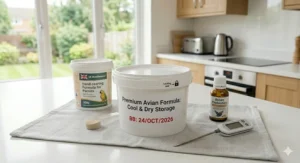
Harrison’s Recovery occupies a specialised niche: newborn chicks (day 1-2), debilitated birds, and medical cases requiring easily digestible nutrition. At 35% protein and 19% fat, this packs extraordinary nutritional density into minimal volume — critical when crop capacity measures in millilitres.
The soy protein isolate base provides complete amino acids without the digestive challenge of whole grains. High-oleic sunflower oil delivers essential fatty acids that support cellular repair and immune function. For UK rehabilitators working with orphaned wild bird nestlings or breeders managing weak hatchlings, this formula has saved countless lives.
Mixing ratio varies from 1:1 to 1:3 formula-to-water depending on the bird’s condition and age, with temperature held strictly at 39°C. The easily assimilated nutrients mean stressed digestive systems can extract maximum benefit from minimal intake. Particularly valuable for small insectivorous species that struggle with starch digestion.
The 56g tub available on Amazon.co.uk through Northern Parrots costs around £8-£15 — expensive per gram but remember this is specialist medication-grade nutrition, not bulk feeding formula. Most breeders keep one tub in reserve for emergencies rather than using it as primary feed.
Pros:
✅ Highest protein density for critical cases
✅ Easily digested by stressed systems
✅ Ideal for orphaned wild bird rescue
Cons:
❌ Premium pricing (£8-£15 for 56g)
❌ Not intended for routine feeding
Price: Around £8-£15 for 56g — specialist pricing reflecting specialist application.
7. Avi Plus Parrot Hand Rearing Food Phase 2 — Practical Workhorse
Avi Plus Phase 2 represents the no-nonsense approach: solid nutrition without marketing frills or premium pricing. Formulated for parrots removed from nests around two weeks of age (when most British breeders begin hand-feeding), it delivers 20% protein and 8% fat in balanced ratios.
The ingredient list reads reassuringly straightforward: wheat, maize, specially prepared soya, casein, whole egg, with calcium carbonate and phosphate balanced for optimal bone development. All ingredients manufactured for human consumption standards — a detail that matters when you’re syringe-feeding something worth several hundred pounds.
What distinguishes this formula is its instant-mix convenience. The busy aviculturist juggling day job, family, and breeding programme appreciates the time savings. Mix approximately one measure of powder to two measures of cooled boiled water, warm to 38-40°C, and feed. No complex ratios, no guesswork, no drama.
UK availability through Amazon.co.uk varies but the 1kg bag typically costs £18-£28. For breeders working with common species (cockatiels, lovebirds, budgies), this offers reliable performance at budget-friendly pricing. Not the choice for rare species or those demanding certified organic, but for practical British breeders, it delivers where it counts.
Pros:
✅ Straightforward mixing, minimal fuss
✅ Human-grade ingredients
✅ Budget-friendly pricing
Cons:
❌ Not suitable for day-one hatchlings
❌ Basic formulation lacks premium features
Price: Around £18-£28 for 1kg — excellent value for money.
How to Choose the Right Hand Rearing Formula: Critical Factors
Selecting hand rearing formula for parrots requires more nuance than grabbing the first tub that promises results. The formula feeding your neighbour’s cockatiel might prove disastrous for your African Grey chick. Several critical factors determine success or failure, and understanding these prevents costly mistakes.
Species-Specific Nutritional Requirements
Not all parrots are created equal nutritionally. The order Psittaciformes comprises roughly 410 species across four families, each with distinct dietary requirements shaped by millions of years of evolution. Large macaws require high energy density to fuel rapid growth whilst maintaining bone strength. African Greys need balanced protein without excess that stresses developing kidneys. Budgies and cockatiels thrive on moderate protein levels that larger species would find inadequate.
The protein-to-energy ratio matters enormously. High-protein formulas (21-22%) suit Cockatoos, Amazons, and large parakeets experiencing rapid development. Mid-range protein (18-20%) works for most common species. Low-protein options (16-18%) prevent metabolic stress in delicate species. Getting this wrong typically manifests as stunted growth, skeletal deformities, or fatty liver disease emerging months later.
Age-Appropriate Formulation
Day-one hatchlings require ultra-digestible formulas like Harrison’s Recovery with minimal bulk and maximum nutrient density. Their crops measure millimetres; digestive enzymes barely function. By week two, most chicks graduate to standard formulas like Kaytee Exact or NutriBird A21, which provide balanced nutrition through fledgling stages.
The progression from liquid to semi-solid consistency mirrors natural development. Start watery (1:6 powder-to-water), gradually thicken as crop capacity and digestive efficiency improve. Rushing this causes crop stasis — the nightmare scenario where partially digested food sits fermenting, requiring veterinary intervention. The Avian Nutrition Resource provides additional research-backed guidance on species-specific nutritional requirements, though availability of scientific data for many parrot species remains limited.
UK Climate and Storage Considerations
Britain’s damp climate wreaks havoc with powdered formulas prone to moisture absorption. Clumping renders formula unusable; mould growth can poison chicks within hours. Look for formulas with moisture-resistant packaging and proven performance in humid conditions. Kaytee Exact and NutriBird both maintain quality despite British weather; some American imports struggle.
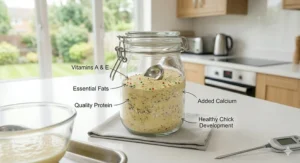
Storage protocol matters: sealed container, cool location (not refrigerated), used within 6-8 weeks of opening. Our temperate climate means less extreme temperature fluctuation than continental regions, but humidity remains the enemy. Silica gel packets in storage containers earn their keep preventing moisture infiltration.
Mixing and Temperature Precision
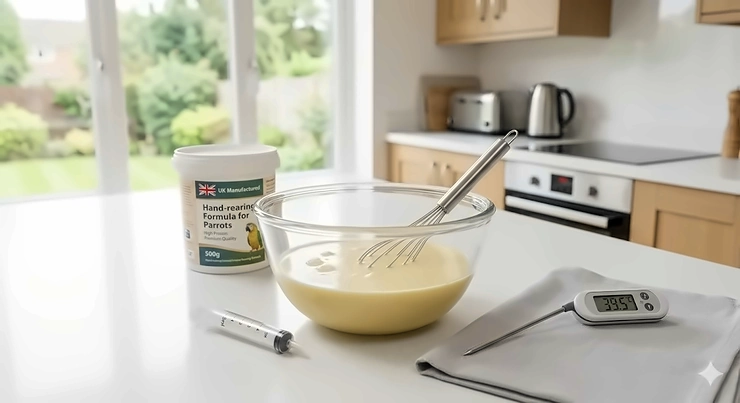
The oft-repeated mantra “test on your wrist” for temperature checking is spectacularly unreliable. Your wrist tolerates temperatures that would scald a chick’s crop. Invest in a digital thermometer; aim for 38-41°C (100-105°F) without exception. Too cool and chicks refuse food or digest poorly; too hot and you inflict crop burns requiring weeks of recovery.
British tap water varies wildly — London’s hard water versus Scottish Highland soft water perform differently. Some breeders use bottled water; others filter their tap supply. Hot water temperature from our 230V kettles reaches boiling faster than American appliances, requiring careful cooling protocols. Mix formula with hot water, allow to stand for settling, then cool to feeding temperature whilst monitoring with thermometer.
Step-by-Step Hand-Feeding Guide: British Best Practices
Successfully hand-rearing parrot chicks demands precision, consistency, and rather more sleep deprivation than most people anticipate. This structured approach, refined through years of British breeding experience, minimises common pitfalls whilst maximising chick survival and health.
Preparation and Equipment Setup
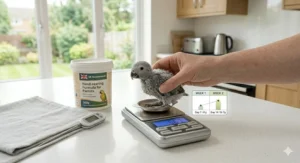
Before your first feed, assemble critical equipment: digital thermometer (non-negotiable), feeding syringes (bent-tip spoons for older chicks), clean mixing bowls, kitchen scales accurate to 2g, and a brooder maintaining precise temperature. Many British breeders use modified fish tanks with heating pads, though purpose-built brooders prove more reliable if budget permits.
Temperature requirements start at 35-37°C for day-one hatchlings, gradually reducing to 30°C by two weeks, then further to 24°C as pin feathers emerge. Our cooler British ambient temperatures mean heating requirements persist longer than in warmer climates. Monitor with multiple thermometers; trust but verify.
Hygiene protocols matter enormously. Sterilise feeding equipment between clutches using Milton sterilising solution (readily available in any UK supermarket). Wash hands thoroughly before handling chicks. Keep preparation surfaces scrupulously clean. Cross-contamination causes bacterial infections that spiral rapidly in compromised immune systems.
Mixing Formula: Getting Consistency Right
Start by weighing formula powder precisely — volume measurements introduce unacceptable variation. For newly hatched chicks, the ratio begins extremely liquid (1 part powder to 6 parts water for NutriBird A21, for example). Heat water to approximately 45°C using your kettle, then mix thoroughly, allowing formula to hydrate for one minute. This standing time prevents the lumps that plague hurried mixing.
Stir vigorously — a small whisk proves invaluable — then cool to 38-41°C before feeding. In British room temperatures (typically 18-20°C), this cooling takes 5-10 minutes. Test temperature using thermometer inserted into the mixture centre, not just surface temperature. The microwave option seems convenient but creates dangerous hot spots; avoid unless you’re willing to stir extremely thoroughly and temperature-check meticulously.
Consistency should flow from a spoon like thick custard for older chicks; thinner and more liquid for hatchlings. If formula thickens excessively on standing (common in cooler environments), add small amounts of warm water to restore proper texture. Never feed formula that’s gone lumpy or separated — discard and start fresh.
Feeding Technique and Frequency
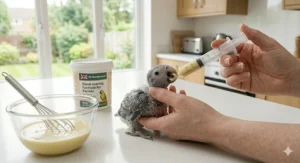
Position the chick securely but gently — never restrain the head, as this prevents swallowing and risks aspiration. For very young chicks, feeding occurs every 1-2 hours from 5:00 to 23:00. Yes, this means setting alarms through the night; yes, it’s exhausting; no, there’s no shortcut.
As chicks mature, feeding intervals extend. Eyes-closed chicks need 3-4 hourly feeds; eyes-open chicks progress to 4-6 hours; fledglings manage 6-8 hours. The crop empties completely before next feeding — check by gentle palpation. Feeding atop undigested food causes crop stasis, the single most common hand-feeding disaster.
Feed quantity equals approximately 10% of body weight per session, which is why daily weighing matters. A 20g chick receives roughly 2ml formula. Fill the crop until comfortably full but not distended — experience teaches this feel, though initially, you’ll probably underfeed from excessive caution (preferable to overfeeding and crop rupture).
Watch for feeding response — healthy chicks bob heads vigorously and swallow actively. Reluctant feeders signal problems: formula too cold, bird too cold, or illness developing. Never force-feed an unresponsive chick; seek veterinary advice immediately.
Weaning: The Transition Nobody Warns You About
Weaning typically begins around 6-8 weeks for small species, 10-12 weeks for larger parrots. Place seed, pellets, and soft foods within reach when chicks start leaving the brooder. Reduce hand-feeding frequency gradually — drop one session every few days whilst monitoring weight closely.
The British approach favours patience over American-style abrupt weaning. Our climate means chicks develop slightly slower; our bird-keeping culture values thorough socialisation over rapid turnover. Most UK breeders continue morning and evening hand-feeds whilst encouraging independent eating during daytime.
Weight should stabilise or increase marginally during weaning. Drops exceeding 10% signal excessive weaning stress — resume additional hand-feeds temporarily. The entire process spans 2-4 weeks; rushing causes profound stress that manifests as behavioural issues months later.
Common Hand-Feeding Mistakes and How to Avoid Them
Even experienced British breeders occasionally stumble over these pitfalls. Recognising them early prevents escalation from minor issue to veterinary emergency.
Temperature Miscalculation
The “wrist test” remains the most widespread mistake. Human skin tolerates temperatures that scald delicate crop tissue. Invest £10 in a digital thermometer; consider it insurance against £200 veterinary bills treating crop burns. Every single feed requires temperature checking — no exceptions, no shortcuts.
Cold formula causes crop stasis. Chicks refuse cold food instinctively; if you’ve managed to get them to eat it anyway, digestion stalls and bacterial overgrowth begins. In British homes averaging 18-20°C, formula cools rapidly. Small bowls of warm water underneath feeding containers maintain temperature during feeding sessions.
Inconsistent Schedule
Parrot chicks operate on biological clocks more reliable than any Swiss watchmaker. Feed at 09:00 one day and 11:00 the next, and you’ll discover just how loudly a hungry chick can scream. Inconsistency causes metabolic stress, uneven growth, and behavioural issues.
Set alarms. Write schedules. Coordinate with family members. British breeders often underestimate this commitment, assuming flexibility when in reality, young chicks demand rigid consistency for the first month. Holiday plans become impossible; social events get declined; you’ll smell vaguely of parrot formula for weeks.
Contaminated Equipment
Our damp British climate promotes bacterial and fungal growth faster than continental climates. Equipment that’s merely “rinsed” between feeds becomes a bacterial culture farm within hours. Sterilise thoroughly between clutches; wash meticulously between individual feeds. Milton solution, boiling water, or dishwasher cycles all work — pick one and stick with it religiously.
Crop Overloading
The temptation to “top up” a chick that didn’t eat much last feed leads straight to disaster. The crop must empty completely before refilling. Feeding atop partially digested food causes compaction, fermentation, and potential crop rupture. When in doubt, wait another hour and check again. Hungry chicks are noisy but safe; overfed chicks are quiet but at risk.
Frequently Asked Questions About Hand Rearing Formula for Parrots
>
❓ What temperature should hand rearing formula for parrots be when feeding?
❓ How often should I feed newborn parrot chicks in the UK?
❓ Can I use UK tap water for mixing parrot hand rearing formula?
❓ Which hand rearing formula works best for African Grey parrots in British conditions?
❓ How long does opened hand rearing formula last in UK climate?
Conclusion: Building Strong Foundations for Healthy Parrots
Selecting the right hand rearing formula for parrots represents one of the most consequential decisions British bird keepers face. Get it right and you’ll watch healthy, vibrant chicks develop into confident, well-adjusted companions. Get it wrong and you’re looking at stunted growth, metabolic disorders, or worse outcomes nobody wants to contemplate.
The seven formulas examined here each serve specific niches within UK parrot breeding. Kaytee Exact delivers reliable, broadly compatible nutrition for the majority. NutriBird A21 excels with high-protein species and European climate conditions. Harrison’s formulas command premium pricing but reward with certified organic purity. Askio Nature NestCare targets high-energy species requiring concentrated nutrition. Each has earned its place through proven performance in British conditions.
Beyond formula selection, success demands precision, consistency, and unwavering attention to detail. Temperature monitoring, hygiene protocols, feeding schedules — these aren’t optional extras but fundamental requirements. The learning curve proves steep, but British breeders benefit from strong avicultural communities, specialist retailers providing expert advice, and veterinary support when complications arise. Worth noting: if you’re breeding parrots with outdoor access, UK regulations require registration with the Animal and Plant Health Agency (APHA) — a requirement many new breeders overlook.
Remember that hand-rearing remains intensive, exhausting, and occasionally heartbreaking work. It’s also profoundly rewarding when done properly, creating bonds between human and bird that last decades. The chick you’re feeding at 03:00 whilst questioning your life choices becomes the companion enriching your days for potentially 50+ years. That perspective makes the sleepless nights worthwhile.
✨ Don’t Miss These Exclusive Deals!
🔍 Take your parrot care to the next level with these carefully selected products. Click on any highlighted item to check current pricing and availability on Amazon.co.uk. These picks will help you find exactly what you need!
Recommended for You
- 7 Best Egg Food for Breeding Birds UK 2026
- Best Cuttlebone for Birds UK: 7 Top Picks (2026 Guide)
- 7 Best Calcium Supplements for Birds UK 2026
Disclaimer: This article contains affiliate links. As an Amazon Associate, I earn from qualifying purchases. If you purchase products through these links, we may earn a small commission at no additional cost to you.
✨ Found this helpful? Share it with your mates! 💬🤗
