
In This Article
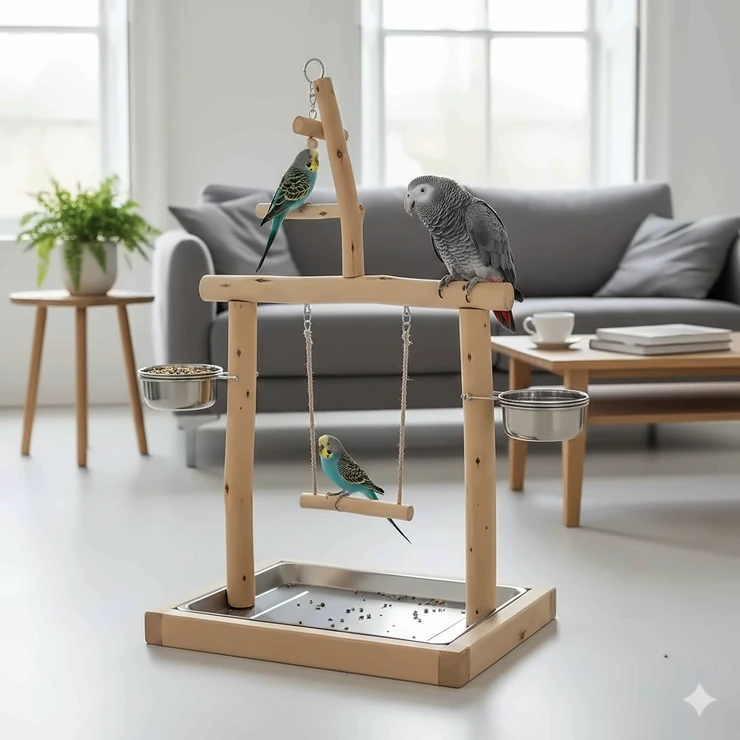
I’ve spent years working with parrot owners across Britain, and there’s one question I hear repeatedly: “How can I keep my parrot entertained outside the cage?” The answer, quite simply, is a quality parrot play stand with bowls.
Think about it for a moment. In the wild, parrots spend their days foraging, climbing, and socialising across vast territories. Yet we expect them to be content in a cage? That’s where a well-designed play stand becomes absolutely essential. According to research from the University of Lincoln, environmental enrichment ranks among the top welfare concerns for captive parrots, with inadequate opportunities to express natural behaviours leading to stress and abnormal behaviour patterns.
A proper play stand isn’t just furniture—it’s a gateway to better mental and physical health for your feathered companion. The integrated bowls mean your parrot can enjoy meals and water whilst exploring their designated space, mimicking the natural feeding behaviours they’d exhibit in their native habitat. Whether you’ve got a chatty African Grey, an energetic Cockatiel, or a magnificent Macaw, there’s a stand designed specifically for their needs.
In this comprehensive guide, I’ll walk you through the seven best options currently available on Amazon.co.uk, covering everything from compact tabletop models to premium java tree stands. You’ll discover which features truly matter, what to avoid, and how to choose the perfect stand for your specific situation.
Quick Comparison Table
| Product | Best For | Price Range | Key Feature | Rating |
|---|---|---|---|---|
| PawHut Bird Play Stand | Mobile convenience | £25-£45 | Four rolling wheels | 4.3/5 |
| Tabletop Parrot Stand | Small spaces | £18-£28 | Compact design | 4.4/5 |
| Java Tree Mini Stand | Natural perching | £79-£115 | Sustainably sourced | 4.8/5 |
| King’s Round Dish Stand | Easy cleaning | £35-£50 | Large tray design | 4.5/5 |
| Forest Parrot Stand | Medium-large parrots | £85-£120 | Stainless steel components | 4.6/5 |
| PawHut T-Stand | Budget-friendly | £18-£25 | Ladder included | 4.2/5 |
| Java Medium Table Stand | African Greys/Amazons | £115-£165 | Hand-finished wood | 4.7/5 |
💬 Just one click – help others make better buying decisions too! 😊
✨ Don’t Miss These Exclusive Deals!
🔍 Take your parrot’s playtime to the next level with these carefully selected products. Click on any highlighted item to check current pricing and availability on Amazon.co.uk. These tools will help you create authentic enrichment your feathered friend will love!
Top 7 Parrot Play Stands with Bowls: Expert Analysis
1. PawHut Bird Play Stand with Wheels
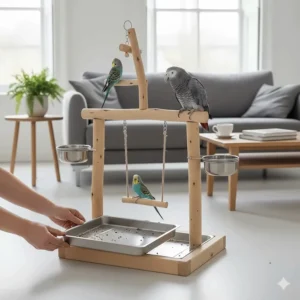
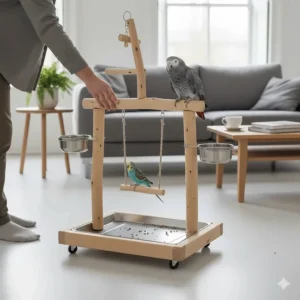
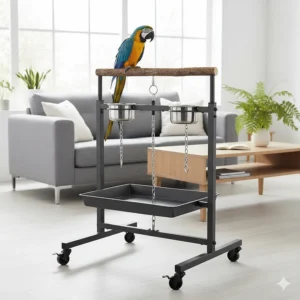
Right, let’s start with an absolute cracker. The PawHut Bird Play Stand has become incredibly popular amongst UK parrot owners, and for good reason. This wheeled wonder gives you the flexibility to move your bird’s play area wherever you fancy—from the sunny conservatory in the morning to the lounge for evening telly time.
Key Specifications:
- Overall dimensions: 111cm (H) x 60cm diameter
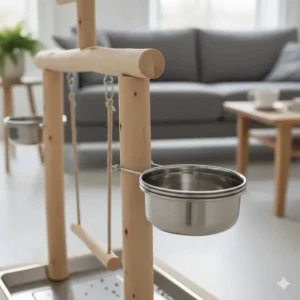
- Two stainless steel bowls (11cm diameter)
- Four rolling wheels (two with brakes)
- Removable round tray for easy cleaning
Price: £25.99-£44.99
UK buyers absolutely rave about the mobility aspect. One customer from Manchester noted, “Being able to wheel the stand between rooms means our cockatiel gets to spend time with different family members throughout the day.” The stainless steel bowls are dishwasher-safe, which is brilliant for busy households.
✅ Pros:
- Exceptional portability with lockable wheels
- Sturdy wooden perches at varying heights
- Large catch tray minimises floor mess
❌ Cons:
- Assembly required (roughly 30 minutes)
- May be too tall for smaller bird species
2. Tabletop Parrot Stand with Toy Hanger
For those working with limited space, this compact tabletop bird stand is an absolute godsend. Measuring just 46cm wide, it fits comfortably on most tables or countertops, yet still provides all the essential features your parrot needs.
Key Specifications:
- Built width: 46cm x 31cm depth x 58.5cm height
- Two metal feeding bowls (8.5cm diameter)
- Integrated toy hanger (30cm height)
- Removable cleaning tray
Price: £18.99-£26.99
What makes this stand particularly clever is the ladder design on one side, encouraging natural climbing behaviours. The RSPCA recommends providing climbing opportunities as essential enrichment for captive parrots, helping maintain both physical fitness and mental stimulation.
✅ Pros:
- Perfect for budgies, cockatiels, and small conures
- Incredibly affordable without sacrificing quality
- Easy to relocate for cleaning
❌ Cons:
- Limited height for larger parrot species
- Toy hanger may be too lightweight for vigorous chewers
3. Java Tree Mini Tabletop Stand
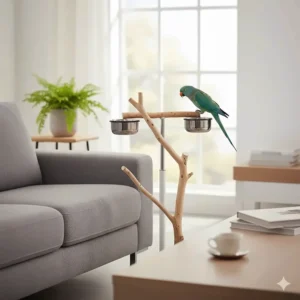
Now we’re talking serious quality. Java wood stands represent the pinnacle of natural parrot perches, and this mini version brings that excellence to smaller spaces. Each tree is individually selected, hand-sanded, and oven-baked for durability.
Key Specifications:
- Hand-crafted from sustainable coffee tree wood
- Includes one feeding bowl
- Base dimensions: approximately 40cm x 30cm
- Tree height: around 45-50cm (varies naturally)
Price: £79.00-£115.00
The beauty of java wood lies in its incredible hardness—even the most determined chewers struggle to make much impact. One reviewer from Edinburgh shared, “After destroying three wooden perches in six months, our African Grey has barely marked this java stand in over a year.” The natural branch variations provide different diameter perches, which is excellent for foot health.
✅ Pros:
- Exceptionally durable and long-lasting
- Natural aesthetic blends with home décor
- Varying branch diameters promote foot exercise
❌ Cons:
- Premium pricing
- Natural wood may develop hairline cracks (cosmetic only)
- Each tree is unique, so appearance varies
4. King’s Round Dish Table Top Stand
This ingenious design features a large, dish-shaped catch tray that’s genuinely game-changing for mess management. The round design means there are no corners for debris to collect, and the whole thing wipes clean in seconds.
Key Specifications:
- Built diameter: 50cm
- Height: 53cm with perch
- Two screw-on metal feeding bowls (12cm diameter)
- Wood dowel perch (3cm diameter)
Price: £35.00-£49.99
What particularly impresses me is the thoughtful bowl placement. They’re positioned at different heights, allowing you to offer water at one level and food at another, encouraging natural foraging movements. Research from Cambridge University’s Animal Welfare journal emphasises how important naturalistic feeding presentations are for parrot welfare.
✅ Pros:
- Brilliant mess containment
- Quick and easy cleaning
- Stable base prevents tipping
❌ Cons:
- Fixed perch position offers limited climbing variety
- Bowls can be fiddly to remove for cleaning
5. Forest Parrot Stand
Designed specifically for medium to large parrots, the Forest Parrot Stand is a substantial piece of equipment that provides an excellent play area for African Greys, Amazons, and even smaller Cockatoos.
Key Specifications:
- Dimensions: 70cm x 70cm x 166cm
- Two stainless steel feeder bowls
- Removable stainless steel tray
- Suitable for birds up to Macaw size
Price: £85.00-£120.00
The height advantage here cannot be overstated. Parrots naturally feel safer at elevated positions, and this stand accommodates that instinct beautifully. A customer from Bristol noted, “Our Amazon parrot absolutely loves being able to survey the room from his perch. He’s noticeably more relaxed and vocal since we got this stand.”
✅ Pros:
- Professional-grade construction
- Stainless steel components resist corrosion
- Provides excellent vantage point for larger birds
❌ Cons:
- Requires significant floor space
- Higher price point
- Heavy—not easily portable
6. PawHut Portable T-Stand
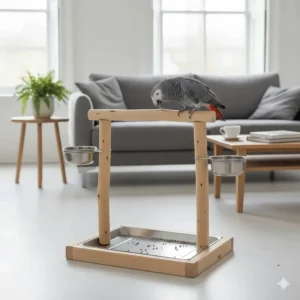
Budget-conscious bird owners, listen up. This PawHut T-Stand delivers remarkable value whilst still providing essential features for smaller to medium parrots.
Key Specifications:
- Dimensions: 27cm (H) x 43cm (L) x 32cm (W)
- Two stainless steel bowls
- Wood ladder included
- Removable base tray
Price: £18.99-£23.27
Don’t let the affordable price fool you—this stand punches well above its weight. The wood perch provides a comfortable grip, whilst the included ladder adds an element of physical challenge. It’s particularly popular with first-time parrot owners who want to test the waters without breaking the bank.
✅ Pros:
- Outstanding value for money
- Compact and easily stored
- Simple assembly process
❌ Cons:
- Not suitable for large parrot species
- Ladder may be too narrow for some birds
- Limited perching variety
7. Java Medium Tabletop Tree Stand
We’re finishing strong with another java wood masterpiece, this time sized perfectly for African Greys, Amazons, and similar medium parrots. The craftsmanship on these stands is simply outstanding.
Key Specifications:
- Base dimensions: 58cm x 36cm
- Tree height: approximately 60cm
- Single feeding bowl included
- Hand-finished and heat-treated wood
Price: £115.00-£165.00
Every tree undergoes a month-long preparation process involving cleaning, de-barking, hand-sanding, and oven-baking. This creates an extraordinarily hard surface that withstands even aggressive chewing. The natural branch formations encourage exploration and provide mental stimulation—crucial for intelligent species like African Greys.
✅ Pros:
- Perfect size for medium parrot species
- Exceptional durability and longevity
- Natural appearance enhances any room
❌ Cons:
- Premium investment
- Natural variations mean exact appearance varies
- Requires regular inspection for loose bark
Understanding Parrot Enrichment Needs
Before diving into purchase decisions, let’s address something fundamental: why does your parrot actually need a play stand? It’s not just about keeping them occupied—though that’s certainly part of it.
The Science Behind Environmental Enrichment
Parrots possess remarkable intelligence. They’re problem-solvers, social creatures, and incredibly curious explorers. When confined to a cage for extended periods, they experience what researchers call “environmental impoverishment.” This leads to stress, boredom, and often manifests as problematic behaviours like feather plucking or excessive screaming.
Environmental enrichment—which includes play stands, foraging opportunities, and social interaction—addresses these needs directly. A play stand serves as a designated “territory” outside the cage where your parrot can exercise, socialise, and engage in natural behaviours without the stress of cage confinement.
How Play Stands Support Natural Behaviours
In their natural habitats, parrots spend considerable time perching on branches of varying diameters, foraging for food, and surveying their surroundings from elevated positions. A well-designed play stand replicates these opportunities:
Perching variety: Different diameter perches exercise foot muscles and prevent pressure sores that can develop from standing on uniform surfaces all day.
Foraging opportunities: Integrated bowls allow you to present food in ways that encourage natural foraging behaviours, rather than simply filling a dish.
Social positioning: Being at eye level (or slightly above) with family members allows parrots to feel included in household activities whilst maintaining their instinctive preference for elevated positions.
Physical exercise: Climbing ladders, moving between perches, and navigating the stand’s features provides essential physical activity that captive birds often lack.
Essential Features to Consider
Material Quality and Safety
This isn’t negotiable. Your parrot will chew, scratch, and possibly attempt to dismantle whatever you provide. Materials must be non-toxic and parrot-safe. Stainless steel bowls are infinitely preferable to plastic, which harbours bacteria and breaks down when chewed. Wood should be untreated and free from varnishes or paints containing heavy metals.
Java wood deserves special mention here. As a sustainable hardwood from coffee trees, it’s naturally resistant to splintering and extraordinarily durable. The heat-treatment process ensures any potential parasites or bacteria are eliminated, making it safer than many other wood options.
Bowl Configuration
Two bowls minimum. This allows you to offer fresh water in one and food in the other without mixing. Some advanced owners use multiple bowls to create “foraging stations” with different treat types, encouraging exploration and decision-making.
Bowl placement matters enormously. They should be positioned where droppings from perches above won’t contaminate them (basic hygiene), yet still within comfortable reach. Screw-on bowls are generally more secure than clip-on varieties, which determined birds can sometimes remove.
Cleaning Accessibility
Let’s be brutally honest: parrots are messy. Food debris, shed feathers, droppings, and destroyed toy remnants accumulate quickly. A play stand with a removable tray makes daily cleaning manageable rather than a dreaded chore.
Look for smooth surfaces without intricate crevices where bacteria can hide. The easier something is to clean, the more likely you’ll maintain it properly—and cleanliness directly impacts your bird’s health.
Stability and Base Design
A toppling stand terrifies parrots and can cause injury. Wide, heavy bases or wheeled designs with locking mechanisms provide essential stability. If you’ve got particularly rambunctious parrots who launch themselves around energetically, invest in something substantial. Your nerves (and your parrot’s safety) will thank you.
Comparison: Metal vs Natural Wood Stands
| Feature | Metal Stands | Natural Wood Stands |
|---|---|---|
| Durability | Excellent (rust-resistant steel) | Outstanding (especially java wood) |
| Maintenance | Quick wipe-down cleaning | Requires periodic inspection |
| Aesthetics | Modern, clinical appearance | Natural, organic look |
| Price | Generally more affordable | Premium pricing for quality wood |
| Chewing resistance | Cannot be chewed | Withstands chewing (hardwoods) |
| Foot comfort | Requires added perch covers | Naturally comfortable texture |
Portable vs Stationary: Which Design Suits You?
Portable T-Stand Advantages
Wheeled or lightweight tabletop models offer incredible flexibility. Move your parrot’s play area to sunny spots, bring them closer during family meals, or relocate to quieter areas during stressful periods like construction work or parties.
For birds who struggle with territorial aggression, portable stands allow you to create “neutral zones” away from their primary cage, reducing stress during training or socialisation.
Stationary Stand Benefits
Larger, heavier stands become permanent fixtures that your parrot recognises as “their space.” Some birds feel more secure with consistent territorial boundaries, finding comfort in predictable locations.
Stationary stands typically offer more substantial construction, accommodating larger parrots and heavier toy arrangements. They’re also less likely to shift unexpectedly, which matters for nervous or elderly birds who’ve experienced falls.
Setting Up Your Play Stand for Success
Optimal Placement
Windows provide natural light and entertainment (watching outdoor birds, people, traffic), but avoid direct sunlight that could overheat your parrot. Similarly, stay away from draughty areas near doors or air conditioning vents.
Position the stand where your parrot can observe household activities without being in the centre of chaos. Many parrots enjoy being slightly elevated with a wall behind them—it satisfies their instinct to have protected “backing” whilst surveying their territory.
Enrichment Add-Ons
Don’t stop at the basic stand. Enhance it with:
Foraging toys: Hide treats in puzzle feeders attached to the stand, encouraging problem-solving and extending eating time naturally.
Chewing materials: Safe wood blocks, paper chains, or natural fibre ropes satisfy the destructive urge whilst protecting your furniture.
Rotating toy selection: Swap toys weekly to maintain novelty and prevent boredom. Store favourites temporarily and reintroduce them later for renewed interest.
Size Matters: Matching Stands to Parrot Species
Small Parrots (Budgies, Lovebirds, Parrotlets)
Tabletop stands work brilliantly. Your small parrots don’t need towering heights—in fact, overly large spaces can feel threatening. Compact designs with perches around 1-2cm diameter suit their tiny feet perfectly.
Budget: £15-£30 typically covers quality options suitable for small species.
Medium Parrots (Cockatiels, Conures, Senegals)
You’re looking at stands between 40-60cm height with perches ranging from 2-3cm diameter. These birds appreciate some elevation but aren’t large enough to require floor-standing models necessarily.
Budget: £25-£60 covers most needs, with java wood options pushing towards £80-£115.
Large Parrots (African Greys, Amazons, Small Cockatoos)
Substantial stands become essential. Heights of 60cm+ allow these intelligent birds to survey their domain comfortably. Perch diameters should reach 3-4cm to properly support their weight without causing foot strain.
Budget: £60-£165 depending on materials and construction quality.
Extra-Large Parrots (Macaws, Large Cockatoos)
Floor-standing models only, please. These magnificent birds require heavy-duty construction with perches 4cm+ in diameter. Look for stands specifically rated for large species—general “parrot stands” often aren’t robust enough.
Budget: £100-£200+ for appropriate quality.
Maintenance and Hygiene Best Practices
Daily Tasks
Remove uneaten fresh foods and replace water. A quick wipe of the feeding bowls and catch tray takes two minutes but prevents bacterial growth that could sicken your parrot.
Weekly Deep Clean
Disassemble removable components and wash with pet-safe disinfectant. Thoroughly dry everything before reassembly—damp wood harbours mould, which is particularly dangerous for birds’ sensitive respiratory systems.
Monthly Inspection
Check for loose screws, cracked wood, frayed ropes, or other wear that could pose hazards. Java wood may develop superficial cracks as it ages—these are normal and cosmetic unless they create sharp edges or instability.
Budget Considerations: Finding Value
Entry-Level Options (£15-£30)
Simple tabletop metal stands provide basic functionality without frills. Perfect for testing whether your parrot actually uses a play stand before investing heavily. Also suitable as secondary stands in different rooms.
Mid-Range Quality (£30-£80)
This sweet spot offers solid construction, proper materials, and features like removable trays and multiple perches. Most households find their perfect match here.
Premium Investment (£80-£165+)
Java wood stands, large floor models, and specialty designs dominate this category. The quality difference is tangible—these stands can last decades with proper care, making them surprisingly economical long-term.
Value Analysis Table
| Price Point | Typical Lifespan | Annual Cost | Best For |
|---|---|---|---|
| £15-£30 | 2-3 years | £5-£15/year | Small birds, trial purchases |
| £30-£80 | 5-7 years | £4-£16/year | Medium parrots, general use |
| £80-£165 | 10+ years | £8-£16/year | Large parrots, premium quality |
Common Mistakes to Avoid
Choosing Based on Aesthetics Alone
That gorgeously ornate stand might look stunning in your lounge, but if it’s covered in decorative elements your parrot can’t safely interact with, it’s functionally useless. Prioritise your parrot’s needs over your interior design preferences.
Neglecting Size Requirements
“They’ll grow into it” doesn’t apply to play stands. An oversized stand intimidates small parrots, whilst undersized options frustrate and potentially injure larger birds. Match the stand to your parrot’s current size and species.
Skimping on Quality for Price
That £12 stand with questionable reviews might seem tempting, but replacing it three times in two years costs more than investing £40 in quality construction initially. Factor in your time dealing with returns and your parrot’s stress adjusting to multiple stands.
Forgetting About Play Stand Supervision
Play stands aren’t babysitters. Never leave your parrot unattended on a stand for extended periods, especially initially. They can become tangled in toys, knock over bowls, or attempt flight and injure themselves. Gradual introduction with supervision builds confidence safely.
FAQ: Your Questions Answered
❓ Can I use a play stand for multiple parrot species together?
❓ How often should I replace wooden perches on play stands?
❓ Are wheeled play stands safe, or will they tip easily?
❓ What's the minimum time my parrot should spend on their play stand daily?
❓ Can outdoor play stands be used indoors as well?
Conclusion: Choosing Your Perfect Stand
After examining dozens of options and speaking with countless UK parrot owners, here’s the truth: there’s no single “best” play stand. Instead, there’s the right stand for your specific situation—your parrot’s size, your living space, your budget, and your lifestyle.
If mobility matters most, the PawHut wheeled stands deliver unbeatable convenience at reasonable prices. Space-conscious households will adore compact tabletop options like the Tabletop Parrot Stand, which provides full functionality without dominating rooms. And for those seeking absolute quality and natural beauty, java wood stands represent an investment that rewards you for years.
Remember that a play stand is just one component of comprehensive enrichment. Combine it with regular out-of-cage time, varied diet presentation, social interaction, and mental stimulation through training and foraging opportunities. Your parrot’s wellbeing depends on the whole package, not any single element.
Start with the recommendations in this guide, consider your specific circumstances, and don’t be afraid to ask questions in parrot owner communities or at your avian vet. The perfect stand is out there waiting—probably sitting in an Amazon.co.uk warehouse right now, ready to transform your parrot’s daily life.
Your feathered friend deserves the enrichment, exercise, and engagement a quality play stand provides. Make 2026 the year you invest in their happiness.
Recommended for You
- 7 Best Natural Wood Perch for Parrot 2026 – Expert Reviews UK
- 7 Best Budgie Breeding Cages UK: Expert Guide 2026
- 7 Best Walk In Aviary UK 2026
Disclaimer: This article contains affiliate links. If you purchase products through these links, we may earn a small commission at no additional cost to you. Prices shown are approximate and may vary.
✨ Found this helpful? Share it with your mates! 💬🤗
